

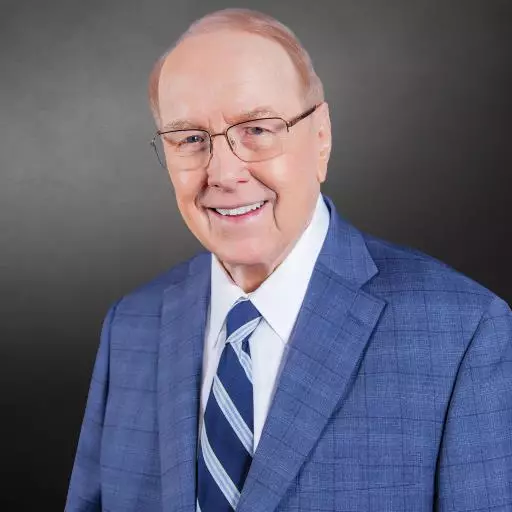
Living the Good Life, Part 1


Money, power, and success promise fulfillment but leave a deep emptiness. On today’s edition of Family Talk, we revisit a timeless conversation Dr. James Dobson had with his dear friend, Chuck Colson, founder of Prison Fellowship and former aide to President Richard Nixon. They discuss Chuck’s book, The Good Life, and how prison and brokenness led him to discover that real meaning comes from giving your life away.
Dr. James Dobson: Welcome everyone to Family Talk. It's a ministry of the James Dobson Family Institute, supported by listeners just like you. I'm Dr. James Dobson, and I'm thrilled that you've joined us.
Roger Marsh: Well, welcome to Dr. James Dobson's Family Talk, the broadcast division of the Dr. James Dobson Family Institute. I'm Roger Marsh, the vice president of content here at the JDFI. I'm also the executive producer and co-host of the Family Talk program.
Today's broadcast is one that you are really going to enjoy because it features a classic conversation with our own Dr. James Dobson and his dear friend, Chuck Colson. We've all heard people talk about the good life. But what exactly does it really mean? Does it involve career success? Maybe it involves a house on a beach somewhere, watching your children flourish?
Well, on today's edition of Family Talk, we're going to hear part one of a conversation Dr. Dobson recorded with his good friend, Chuck Colson, the founder of Prison Fellowship, who is the author of the book called The Good Life. It's a challenging and inspiring conversation about purpose, meaning, and truth.
I know for me personally, having worked with Chuck Colson for about five years prior to working with Dr. James Dobson, these are two of the finest men I ever met and had the privilege to work with. I'm so grateful that they are now reunited in heaven, enjoying their eternal reward. But for right now, we get to enjoy their fabulous conversation kicking off right now on today's edition of Dr. James Dobson's Family Talk.
Dr. James Dobson: Chuck Colson has been our guest for more than 24 years since he first came by and we got acquainted. He's become almost like a brother to me. We talk regularly on the phone about events and issues that are occurring in the country, and we get together whenever we can. Today is one of those times.
I once flew to Florida—we were talking about this at lunchtime—I once flew down to Florida and spent an entire day with Chuck and Patty, talking about issues we care about, sharing ideas, and praying together. I still, Chuck, have the notes from that day. I'm sure you recall it as well.
Chuck Colson: Great memories of that day.
Dr. James Dobson: Chuck is a former presidential aide to Richard Nixon and the founder of the international ministry Prison Fellowship. He's the author of 23 books and a very popular speaker. He holds a BA degree from Brown University and a law degree from George Washington University and is a constitutional scholar, constitutional lawyer.
Chuck has been married to Patty, a great lady, for 41 years. He's the father of three children and has five grandchildren. You could take the whole program talking about the things that Chuck has done.
Chuck Colson: It's nice to be this far along in my life that you get an introduction like that and they don't mention you're an ex-convict.
Dr. James Dobson: You're actually getting away from Watergate a little bit, aren't you?
Chuck Colson: No, I was traced down by the press in the feverish pursuit. I said to many of them what I'd say to you, I'd say to anybody, and that is thank God for Watergate. I look back now at how God has used what happened to my life when I was President Nixon's assistant, thought I was on the top of the world, and I end up in a prison cell thinking my life is over.
No, in the sovereignty of God, He chose to use my defeat to do some magnificent things around the world. So I'm grateful for what I've been through.
Dr. James Dobson: Well, that links directly into the title and the content of your new book, The Good Life: Seeking Purpose, Meaning, and Truth in Your Life. You wrote this because many people in this country and in Western countries especially, but around the world, don't know why they have meaning and don't know what is true.
Chuck Colson: It's the biggest thing going on in America and Western Europe today, the search for meaning. What is it? You can understand why it is, particularly as the polls show it among young people and college students and teenagers. They're saying what's the meaning of life? What's my purpose? Why am I here?
I mean, look at Rick Warren's book, 22 million copies sold of that book. He's hitting a raw nerve. People are asking that question. They are asking it because they're growing up in a vacuum. You talk to college students today, they're taught there is no truth, there is no meaning, life is all random, it doesn't make any sense, you just live for the moment, overcome the nothingness by your own heroic individualism.
They're not buying that because something in them, I call it the imago Dei, is telling them that isn't so. That's a lie. So they're searching for answers. What I try to do in this book is kind of look back on my life and try to see what really counted, what really mattered the most, what was the most important thing.
What lessons have I learned since I wrote Born Again? This book in that sense is more personal than any book I've written except Born Again because it's reflecting on my experiences, experiences of others I've known, all leading to the question of how do you find meaning and purpose in life.
Dr. James Dobson: Well, let's talk about the good life. What in the world is it? How do you define it?
Chuck Colson: It's not what people think it is. What people think it is when you hear that is the Budweiser good life. It's money, power, possessions, leisure, everything focused on me, which is what the culture is telling us. As you'll see in this book, it's a total dead end.
I use the story of Dennis Kozlowski, who started out as a poor kid and got the scholarship to college and gets to the head of a major corporation and then milks it blind and ends up with a $2 million party for his trophy wife in Sardinia. That's got to be the most barren way to end your life.
Or Jack Welch, the iconic head of General Electric, who when asked after open-heart surgery—here's a guy who made $500 million as CEO of GE, one of the top business leaders in America—someone asked him, "Did you have an epiphany during your heart surgery?" He said, "Yes, I did. I vowed never to let a bottle of wine costing less than $100 cross my lips."
What a barren way to look at life. I think it's a dead end. I think you find the meaning in life by giving yourself away, not by satisfying yourself. In other words, the things which you think will gratify yourself.
Biggest day for me in my ministry was winning the Templeton Prize and going to Buckingham Palace and the million dollars which went to the ministry. But I've forgotten that, and I don't even know where the medal is that I got that day from Prince Philip.
But I keep letters from inmates whose lives have been changed. I share some of them in the book. The most gratifying thing at 73 years old is to be able to think that your life was used to help others. I take such pride in the people I've worked with and known.
There was a fellow who was in the middle of a riot and I met him and he was leading the riot out in Walla Walla, Washington. I preached that night, he came to Christ and then he led a whole movement to turn that prison around. He got out of prison—he was the toughest guy in the system—got out of prison and spent the last 10 years of his life before he died discipling disadvantaged kids in the streets of Dallas. Those things give you great pleasure. That's a great reward. That's the good life.
Dr. James Dobson: It's my impression that a sizable number of people, maybe not the majority, but a sizable number of people who are midlife and beyond have some vague remembrance of the value system that you and I believe, and that there is meaning to life and it's not all found in money and the things that people are chasing.
Doesn't it break your heart as it does mine that the college students and high school students that are coming along now have had no exposure to that value system and they have no clue as to why life has meaning?
Chuck Colson: Even the boomers, you're absolutely right, even the boomers have a heritage, a Christian heritage in their background. They carry that legacy with them. So they've got something to refer to.
Generation X and the younger people have no basis of reference because they've been told by every professor, every teacher, that there is no truth. Nothing is knowable. So they drift through life with no sense of commitment or attachment to anything.
But the good news is that as you and I know, the imago Dei is planted in us. The image of God is in us. We are asking questions. There's a divine restlessness, as one scholar put it. There is what the study at Dartmouth showed some years ago called Wired to Connect.
I don't know if you remember that study, but it showed that people are basically genetically disposed to want relationships and genetically disposed to be seeking God. So young people have this in them and something is making them very restless, something's making them very dissatisfied with what they're getting.
They have no basis to fall back on as you and I did growing up, or our kids did growing up, but still they're asking the questions. That's one of the reasons I wrote this book.
Dr. James Dobson: Wasn't it Saint Francis of Assisi who said that there is a God-shaped vacuum inside of us and that we're never comfortable until it is filled by a relationship?
Chuck Colson: Francis of Assisi said some things like that. The most common quote is Pascal, who talked about a God-shaped hole inside human beings. He didn't say it exactly that way, but that was the point.
I think people through the ages, I think all of the great Christian writers and thinkers have recognized that there is this sense within people that they're searching for something more. Saint Anselm's famous formulation: God is that greater than that which you can conceive.
We know that to be so. People know that to be so. I wrote this book this way, I think a book like this is so needed, not only to equip those younger people, not only to give answers to those younger people, but to equip us older folks to be able to answer the questions of the younger people.
I consider this book to be the most accessible and best work on apologetics I've done because it goes through a reasoned defense. Once you've gotten to the point in your reasoning where you realize that the object of life is to give your life away, then what you want to be sure is you're giving it to the truth.
Dr. James Dobson: Now, let's focus on what you just said. The object of life is to give yourself to others.
Chuck Colson: The purpose of life, which will fulfill you most, obviously the most important other is God.
Dr. James Dobson: Elaborate on that for those young people who have heard and believed the notion that there is no God, there is no design, there is no designer, there is no destination but the grave. We have no meaning, there is no truth, no absolute truth, no truth of any type.
It's all relative, it's all an individual perception and they're out chasing the good life. They're coming out of college perhaps and they're now going to move into a profession—maybe it's the medical profession, maybe who knows what it is—and that if they reach the goals that they've set for themselves there and if they become financially successful that they're going to be fulfilled. Destroy that myth because it is a myth.
Chuck Colson: It's going to destroy itself for them because they're going to confront reality. They're going to discover that a world without rules is a world you can't live in.
What they discover is chaos, and they suddenly discover people do things to them they don't like and then they say, "But it shouldn't be that way." What they were taught was it can be any way everybody chooses. So they run into reality themselves in the course of their lives.
They also discover that all the hedonism on college campuses and the hooking up and all the stuff that goes on is bankrupt. They feel a loss of self-worth and self-dignity. It's dehumanizing. They soon find that out.
I tell the story in this book, it was a very poignant one of John Ehrlichman who was very close to me in the White House. Older listeners will remember that name. He was one of the handful of people closest to the President, President Nixon.
Dr. James Dobson: He and Haldeman, the Berlin Wall.
Chuck Colson: He and Haldeman, the Berlin Wall. John Ehrlichman when he got all through Watergate ended up being tried and went to prison. He left his wife in the middle of the trial, got remarried, went off to live on a mountaintop in Santa Fe, got remarried again, divorced and remarried again.
He ended up alone because he had shut everybody else out of his life, believed there was no purpose to it all, was in desperate pursuit of self-vindication. It was like Augustine said, "Lord, spare me the lust of self-vindication."
He couldn't defend himself, he couldn't prove himself. I ministered to him just before he died in a little nursing home in Atlanta. It was the most pathetic sight I've ever seen. Here was a guy who was a Christian Scientist so he couldn't believe in sin, so he could never reconcile what happened to him in the White House.
He'd cast everybody out of his life and I was the only person that came back to see him. His family had left him, everything. It was the most tragic picture. But it's a picture that is a parable for all young people today. If you go through life trying to vindicate yourself, trying to prove yourself, trying to gratify yourself and disregard others, you will die alone in a nursing home. Life ends that way.
Dr. James Dobson: Let's personalize it, Chuck, because you went to law school and then your professional career took off and began to develop. You wound up in the White House, very close to Richard Nixon. In fact, your office was just a few feet away from him.
You were probably the most powerful person in the White House and you could—on one occasion you shared with me—you could pick up the phone and call for a Marine helicopter or send a detachment of Marines anywhere in the world. You had all that power and the influence on the most powerful man in the world. Were you satisfied with yourself at that time? Did you have the good life?
Chuck Colson: No, I certainly did not have the good life. I was a kid growing up in the Depression, nobody in my family had gone to college. I earned scholarships, I was an officer in the Marine Corps in the Korean War. I ended up as the youngest administrative assistant in the Senate.
I was bound and determined to get right to the top, and at age 38, I was in the office next to the President looking over the south lawn of the White House. I thought to myself a number of times, "Boy, my grandfather who was an immigrant to this country would certainly be pleased if he saw what could happen. This is the American dream fulfilled."
When the election in 1972 was over, we'd won by a landslide, and Watergate was beginning. I was beginning to feel really uncomfortable with who I was. Even before I thought I was going to be on trial. Well before. Life was empty. What do you do after you've done that and you're 40 years old?
What other mountains are you going to conquer? I had heard a lot of people in my life and I thought back on it. I was coming under conviction and I didn't know it until I was witnessed to by a friend that year I got out of the White House.
Witnessed to by a friend who read to me from C.S. Lewis's wonderful little book, Mere Christianity. I was struck, overwhelmingly struck with my own sinfulness and realized for the first time in my life what the gospel was, that Christ died on the cross so I could be forgiven.
If it weren't for that, Jim Dobson, I tell you and everybody listening to us, I'd be dead today because I would have suffocated in the stench of my own sin. So yeah, I know the good life, I know how bankrupt the so-called good life is, and I know where the good life really is.
Dr. James Dobson: It's an oxymoron to say, and yet it's true, that the good life for you started in prison.
Chuck Colson: Oh, absolutely. Absolutely. That's why on all these interviews I've been doing this year, I've been saying to people, "Thank God for Watergate."
They say, "Are you trying to revise history?" when I said that Mark Felt was not a hero for leaking things to Woodward and Bernstein. They say, "You're trying to revise history." I say, "No, I thank God for Watergate."
"Well, you don't really literally mean that." Yes, I do literally mean that. Because that got my attention. God was able to speak to me. I wouldn't have heard Him before. I was too hardheaded, too prideful, too stubborn, too determined to get to the top.
Finally, I heard God's voice and I realized what my life had become. Thank God, look what's happened. We're in 108 countries around the world with ministry to prisoners, the least of these in our society. It's the most thrilling thing in the world.
Dr. James Dobson: What was it like for you, Chuck, to have all that power and influence and to be eminently successful in the political realm and to find yourself in a prison where you were strip-searched going in and in this tiny cell where guards came by and shined the light in your eyes at night? What was that like?
Chuck Colson: I talk about that in the book quite a bit because I can reflect on it now with a little bit of detachment. I never really was troubled by being locked up because I'd been in the Marines and I'd lived in everything. I was able to handle that.
There were two things that bothered you. One is you're separated from your family. I mean, I know what Wired to Connect means. You really care about your kids and your wife, you're passionately concerned about your family.
The other thing was I thought I'll never do anything significant again. I thought my life was at an end. I write in this book that so much of life is a paradox. You can't know the good until you realize how bad you are.
You can't do something really good until you've been broken and discover where the real good is. Out of the worst defeat in my life has come the greatest victory, God's victory. It's not very pleasant to be going through tough times. I've been going through kind of a tough one this year with two children with cancer. That's about as tough as it gets. That's tougher than prison.
And there are times when God seems kind of far away in the midst of really tough times. But I've discovered He isn't far away. I've discovered God is God. He doesn't depend upon my emotions or my feelings at the moment.
So what you do is remember who God is and remember that this life is but a moment. Remember that what really matters is not the difficult time you're going through, but how it affects you. In other words, how do you react to it?
If you react to it with trust in God and a trust in His sovereignty, you're going to come out better for it. Sometimes the very worst things that ever could happen to you are going to turn out to be the very best.
You're going to see how God's redeeming plan—He redeems suffering. Every bit of suffering I've gone through, He's redeemed. He's used it for His purposes. If you keep this in mind.
Dr. James Dobson: You had cancer yourself?
Chuck Colson: I had what we thought was cancer at the time. Turned out to be benign, but I didn't know that for about five years. But yes, I had two-thirds of my stomach out and almost died from an infection in the hospital.
I write about that as well because it's a great example of providence, what happened when I was in that hospital. In a hospital suite at Georgetown Hospital in Washington, right above me I heard the chairs going and moving all the time.
After I'd been in the hospital about three weeks and was finally mobile and with an IV because of the infection, tubes hanging out of me on all sides, the head of the hospital came one day and he said, "I never knew what you went through in Watergate, Mr. Colson, but I just threw that fellow Bob Woodward from the Washington Post out of the room upstairs." I said, "Whose room upstairs was it?" He said, "Bill Casey, head of the CIA."
Dr. James Dobson: Yes.
Chuck Colson: He tried to get in. You may remember that Woodward later wrote he got in and recorded what Casey said. Well, Bill Casey was an old friend of mine and so my wife called Sophia, who was Bill's wife, and immediately he had me come up.
Turned out on the logs I was only one of five people to get in his room while he was in the hospital. He had had major brain surgery. He was not able to talk. When I walked in he went "Uh, uh," smiling and grunting, but he could not get words out.
Yet Bob Woodward told the world that he had that last conversation. That was untrue. Just plain untrue. I testified to that later when Bob Woodward's book came out.
Dr. James Dobson: But Bill Casey told the world that he had that last talk. That was untrue.
Chuck Colson: Bill was an old friend of mine and I walked in and he couldn't talk to me, but tears were rolling down his eyes when I was there. We talked for about an hour.
At the end of it, I said, "Bill, I know you're Catholic and a strong believer. You know that cross up on the wall?" There was a crucifix, Georgetown Hospital. I said, "You know what that means? That Jesus died for your sins and you're forgiven and you personally can have eternal life."
Now the tears are flowing down his cheeks. We had a fabulous time of prayer together holding hands in that little room. I often thought that had to be an important moment in Bill Casey's life.
I wouldn't have been there if I hadn't had an infection which kept me in the hospital for 28 days. I'd have been out in five days. So God knows what He's doing. If you're suffering right now and you're listening to this broadcast, be patient, trust in God.
You will see, I promise you, in due course that that suffering will be redeemed, as hard as it is right now. The important thing is how it affects you and what you do in response to it, not the thing which is happening to you.
Dr. James Dobson: I knew this program was going to get away from us, and it has and our time is gone. Chuck, we have to continue this conversation. There is so much in this book.
The title of it is The Good Life: Seeking Purpose, Meaning, and Truth in Your Life. We're talking to people right now, and I know we are by the tens of thousands, maybe more than that, who are just plodding through life and have no idea why. They have no sense of meaning and purpose.
I'm still aware that there are many people that listen who do not know Jesus Christ. They've never had an encounter with Him and never had a reason to that they've understood. This is a book that will get at that issue. Chuck, this book really is an evangelistic tool in its own way, isn't it?
Chuck Colson: Absolutely. I wrote it so believers could be equipped with the arguments to defend their faith, but also so that you could give it to a nonbeliever. It doesn't quote the Bible until you get near the end of the book. Give it to a nonbeliever and tell them to read it. I think on its own it will lead them to the Lord.
Dr. James Dobson: Chuck, this is an outstanding book. I hope it has the same kind of success that you've had with so many other books—Born Again and Loving God and many of your earlier books which really dealt with the passion that's within you for Jesus Christ. Thanks for being with us today, and we'll pick it up next time.
Chuck Colson: Jim, thank you for having me. Great, terrific.
Roger Marsh: Well, what a powerful conversation between two dear and longtime friends, Dr. James Dobson and Chuck Colson. On today's edition of Dr. James Dobson's Family Talk, Chuck reminded us of a truth that's easy to forget: that the good life isn't found in money, power, or possessions. It's found in giving ourselves away to others and, most of all, to God.
Now, if you'd like to learn more about Chuck Colson's book, The Good Life, or to hear today's program again, just visit JDFI.org. As I mentioned at the start of the program, Dr. Dobson went home to be with the Lord last August 21st. Chuck Colson preceded him in his eternal reward reception back in 2012. What a glorious reunion those two friends have had, being with the Lord right now in His presence full-time.
I've got some exciting news to share with you as we wrap up today's edition of Dr. James Dobson's Family Talk. In honor of America's 250th anniversary, right now we have a special July matching grant in effect.
Thanks to some incredibly generous friends of our ministry, every gift you give to the Dr. James Dobson Family Institute this month will be matched dollar-for-dollar up to $250,000. As a listener-supported ministry, we rely on friends like you to keep these important conversations on the air and to provide the many other resources that the Dr. James Dobson Family Institute creates to strengthen families here in America and literally all around the world.
Now, you can make a secure donation when you visit JDFI.org. That's JDFI.org or DrJamesDobson.org. You can also call a member of our constituent care team. That number is 877-732-6825.
If you prefer, you can drop us a line through the U.S. Postal Service. Our ministry mailing address is The Dr. James Dobson Family Institute, P.O. Box 39000, Colorado Springs, Colorado, the zip code 80949. Once again, our ministry mailing address is The Dr. James Dobson Family Institute, or you can just use those initials, JDFI, for short, P.O. Box 39000, Colorado Springs, Colorado, 80949.
Well, I'm Roger Marsh and thanking you so much for listening to Family Talk today. From all of us here at the Dr. James Dobson Family Institute, we invite you to join us again next time for part two of this conversation featuring Dr. James Dobson and his dear friend Chuck Colson.
They'll be discussing living the good life on the next edition of Dr. James Dobson's Family Talk, the voice you trust for the family you love. This has been a presentation of the Dr. James Dobson Family Institute.
Featured Offer

A new school year brings fresh opportunities—and new challenges. Between homework, activities, sports, and busy schedules, it's easy to lose sight of what matters most.
Our free 3-day email series, Back-to-School Wisdom for Parents, will equip you to navigate the coming months with greater confidence and intentionality.
Past Episodes
- A Biblical Look at the Family
- A Challenge to Pastors
- A Family in Crisis
- A Father to the Fatherless: The Story of Two Friends
- A Father's Commitment to His Daughter
- A Heart for Romanian Orphans
- A Journey of Widowhood and Grief
- A Marriage Made in Heaven
- A Mom's Heart of Prayer
- A Nation Abandoned by God
- A Picture of Life
- A Sober Update on Military Culture
- A Traditional Family
- A Tragic Account of Mistaken Identity
- A Visit to the Shores of Normandy
- A Visit With the Legendary Pat Boone
- Abraham Lincoln: The Faith of a President
- Adrenaline & Stress
- Adult Children of Alcoholics
- Albert & DeeDee Pujols: Giving Honor to God
- Alone Yet Not Alone
- America: A Call to Humility
- American Heritage Girls
- American Marxism
- An Abusive Childhood: Climbing Out of the Pit
- An Attitude of Gratitude
- Autism
- Avoiding Infidelity
- Back From the Brink of Divorce
- Beauty In Brokenness
- Becoming a Culture Warrior
- Being a Conservative Crusader
- Being a Father at Work and Home
- Being a Smart Stepmom
- Being Jesus to Your Neighbors
- Being There for Your Son
- Between a Rock and a Grace Place
- Bonhoeffer: A Hero Then and Now
- Boys and Puberty
- Breaking the Bonds of Welfare
- BUG-Puberty
- Building a Christian Home
- Building a Safe Haven In Marriage
- Building hedges Around Your Marriage
- Bullying
- Buyer Beware
- Charlie & Lucy Wedemeyer: A Message of Hope
- Children and Stress
- Choosing to See
- Christian Men & Sexuality
- Christianity and Wokeness
- Christ's Influence on History
- Cleaning House: Raising Responsible Kids
- Coach John Wooden
- College
- Confronting Guilt in Motherhood
- Congressman Frank Wolf: A Modern-Day Wilberforce
- Courageous Choices
- Courageous Manhood
- Creative Ideas for Child Discipline
- Crystal Peaks Youth Ranch
- Culture Watch
- Current Economic Tsunami
- Defend Life
- Defending Religious Liberty in the Courts
- Defunding Planned Parenthood
- Delicate Mother-In-Law Relationships
- Depression: Encouragement for the Journey
- Developing a Firsthand Faith
- Digital Invasion
- Divorce
- Dr. Ken Hutcherson: A Defender of Truth
- Dr. Ravi Zacharias: Finding My Destiny in Delhi
- Faith and Family: Raising Kids Right
- Family Finances
- Fierce Beauty
- Fighting to Preserve DOMA
- Finance
- Finding Healing After Sexual Abuse
- Finding Hope for Your Heart
- Finding Joy Amidst Cancer and Loss
- Finding New Intimaacy in Prayer
- Finding Success in a Failing Economy
- Finding True Forgiveness
- Forgiving God
- Forgiving My Father
- Foundation For Successful Families
- Free At Last
- Freeing the Family From Pornography
- From Santa to Sexting: Protecting Your Middle-Schooler
- Fueling the Passion
- Girl's Uncovered
- God Bless America
- God Is At At Work
- God Made Us a Family
- God Makes Lemonade
- God Restored Me
- God Restored Me For a Purpose
- God’s Grace Is Sufficient
- God's Tender Heart for Single Moms
- God's Way or My Way
- God's Wisdom for Raising Children
- Going All Out For Your Wife
- Greg Laurie
- Greg Laurie: A Changed Life
- Guarding Your Grandchild’s Heart
- Healing the Past and Moving On
- Healing the Wounded Spirit
- Healthy Habits
- Help for Angry Moms
- Help for Employed Moms
- Help for Hurting Teens
- Help for Parents of Prodigal Children
- Help, I'm a Spouse AND a Parent Now!
- Helping Teens Find Their Purpose
- Her Role in the Home
- Homeschooling & Beyond
- Homeschooling Today
- Honoring Our Average Joes
- Hooking Up
- Hope for Hurting Hearts
- Hope in the Midst of Unexpected Pregnancies
- Horses and Healing: New Hope for Kids
- Hutch: A Man Filled With Hope
- I Will Never Leave Thee
- I, Isaac, Take You, Rebekah
- In God We Still Trust
- Infertility and Miscarriage
- Insights on Radical Islam
- Integrity in Business
- Is America Imploding?
- James Dobson v Kathleen Sebelius: How will you get involved?
- Jealousy
- Jesus Vs. Muhammad
- Jim & Jill Kelly
- Landscape of America
- Laying Up Treasure in Heaven
- Lean Body, Fat Wallet
- Learning Disorders
- Life & Laughter with Ken Davis
- Life Without Limbs
- Live to Forgive: A Family Story of Pain and Redemption
- Living Through Loss of Spouse
- Living With Less So Your Family Has More
- Living with Less: Heading into the Holidays
- Living With the Strong Willed Child
- Loneliness in Marriage
- Longing for Marriage
- Love For a Lifetime
- Loving Those Left at Home
- Macaroni At Midnight
- Managing Your Home and Time
- Marriage in a Facebook World
- Marriage Survival Skills
- Marriage That Can Go the Distance
- Marriage: The State of Our Union
- Mary Crowley
- Memories of the Holocaust
- Mentoring Boys and Men
- Merging Premarital Expectations
- Ministering to the Elderly
- Ministry of Hymns
- Miscarriage: Grieving the Loss
- Mojave Desert Cross
- My Adoption Story
- My Autistic Son
- My Mission: Capturing a Dictator
- One Woman’s Journey of Grief & Hope
- One-on-One with Bill Gaither
- Online Dangers: Protecting Kids from Pornography
- Online Dangers: Protecting Marriages from Pornography
- Overcoming Childhood Traumas
- Overcoming the Heartaches of Life
- Overcoming the Shame of the Past
- Parenting 101: From Discipline to Sexuality
- Parenting Basics: The First Years
- Parenting Newborns and Those Early Years
- Phill Kline: Challenging an Abortion Giant
- Plugged In: Teaching Your Children to Be Media Savvy
- Politics and the Bible
- Prodigal Child
- Protecting Life and Liberty
- Protecting Your Child in a Dark Culture
- Putting an Arm Around the Post-Abortive Woman
- Raising a Handicapped Child
- Raising Boys: Routine Panic
- Raising Boys: Wounded Spirits
- Raising Kids Who Love the Lord
- Raising Men of Honor
- Raising the Standard of Excellence
- Reaching Out to Youth in Need
- Reaching the Taliban For Christ
- Real Moms, Real Jesus
- Reignite: How to Bring Joy Back into Your Life for Enduring Faith
- Religious Persecution in America
- Republican Majority
- Rescued From a Life of Ruin
- Resolving Money Conflicts in Marriage
- Revival Rising
- Scripture and the Family
- Sexuality & Singles
- She Calls Me Daddy
- Single Adults
- Singleness: Waiting for God's Best
- Singles and Sexuality
- Spiritual Mismatch
- Spiritual Training of Children
- Stand For Life In Your Community
- Staying Christian in a Pagan Culture
- Staying Strong in College
- Stepping Away from the Common Life
- Straight Talk to Young Couples
- Strengthening Military Families
- Strong Fathers, Strong Daughters
- Suicide
- Teaching Your Kids About Sex
- Ten Habits of Happy Mothers
- The Bachmanns: Their Story of Faith and Family
- The Barretts: An Amazing Adoption Story
- The Battle for Civilization
- The Battle for Marriage Continues
- The Cross: The Center of the Family
- The First Year of Marriage
- The Flipside of Feminism
- The Future of the Family: Fact and Fiction
- The God-Wild Marriage
- The Healing Power of Forgiveness
- The Heart of a Cowboy
- The Heart of the Santorum Family
- The High Cost of Low Living
- The Hope of Heaven
- The Hormone Swing
- The Immunization Debate
- The Impact of Truth on My Life
- The Insidious Nature of Infidelity
- The Joy of Good News
- The Joys and Challenges of Adoption
- The Joys and Challenges of Pregnancy
- The Key to Your Child's Heart
- The Kids Are Gone...Now What?
- The Miracle That Saved a Marriage
- The Powerful Influence of a Wife
- The Pro-Life Movement Reaches a New Generation
- The Threat of Islamic Terrorism
- The Unbelieving Spouse
- The Use and Abuse of Power
- The Value of Manhood
- The Value of One Life
- The Vital Role of Fathering
- The Way of the Wise
- To Dads & Daughters … with Love
- Tolerating the Intolerable
- Tony Dungy: A Man of Quiet Strength
- Tough Love For Kids
- Truth: Can We Both Be Right?
- Turning Hearts 180-Degrees Toward Life
- We Help; Jesus Heals
- Welcome To Our Table
- What Does Freedom of Religion Mean?
- What Has Feminism Done for You Lately?
- What Parents Should Know About Teens
- What's It Like Being Married to Me?
- What's Wrong with Being a Nice Guy?
- When Life Brings You Thorns
- When Unemployment Hits Your Home
- When You're in Love
- Why Men Leave the Church and How to Get Them Back
- Why Purity Matters
- Why We Fight For Life
- Women and Emotional Infidelity
- Women and Friendships
- Women and Intimacy
- Women in Combat: Understanding the Consequences
- Wounded Spirit

Video from Dr. James Dobson
Featured Offer
A new school year brings fresh opportunities—and new challenges. Between homework, activities, sports, and busy schedules, it's easy to lose sight of what matters most.
Our free 3-day email series, Back-to-School Wisdom for Parents, will equip you to navigate the coming months with greater confidence and intentionality.
About Family Talk
Family Talk is a Christian non-profit organization located in Colorado Springs, Colorado. Founded in 2010 by Dr. James Dobson, the ministry promotes and teaches biblical principles that support marriage, family, and child-development. Since its inception, Family Talk has served millions of families with broadcasts, monthly newsletters, feature articles, videos, blogs, books and other resources available on demand via its website, mobile apps, and social media platforms.
The Dr. James Dobson Family Institute (JDFI) is a Christian non-profit ministry located in Colorado Springs, Colorado. Founded initially as Family Talk in 2010 by Dr. James Dobson, the organization promotes and teaches biblical principles that support marriage, family, and child development. Since its inception, Family Talk has served families with broadcasts, monthly newsletters, feature articles, videos, blogs, books, and other resources available on demand via their website, mobile apps, and social media platforms. In 2017, the ministry rebranded under JDFI to expand its four core ministry divisions consisting of the Family Talk radio broadcast, the Dobson Policy and Education Centers, and the Dobson Digital Library.
Dr. Dobson's flagship broadcast called, “Dr. James Dobson’s Family Talk," is aired on more than 1,500 terrestrial radio outlets and numerous digital channels that reach millions each month.
About Dr. James Dobson
Dr. James Dobson is the Founder Chairman of the James Dobson Family Institute, a nonprofit organization that produces his radio program, “Dr. James Dobson's Family Talk.” He has an earned Ph.D. from the University of Southern California and holds 18 honorary doctoral degrees. He is the author of more than 70 books dedicated to the preservation of the family including, The New Dare to Discipline, Love for a Lifetime, Life on the Edge, Love Must Be Tough, The New Strong-Willed Child, When God Doesn't Make Sense, Bringing Up Boys, Bringing Up Girls, and, most recently, Your Legacy: The Greatest Gift. Dr. Dobson served as an associate clinical professor of pediatrics at the University of Southern California School of Medicine for 14 years and on the attending staff of Children’s Hospital of Los Angeles for 17 years in the divisions of Child Development and Medical Genetics. He has advised five U.S. presidents and served on eight national commissions. Dr. Dobson has been married to Shirley for 64 years, and they have two grown children, Danae and Ryan, and two grandchildren.
Contact Family Talk with Dr. James Dobson
540 Elkton Drive
Suite 201
Colorado Springs, CO 80907
877.732.6825