

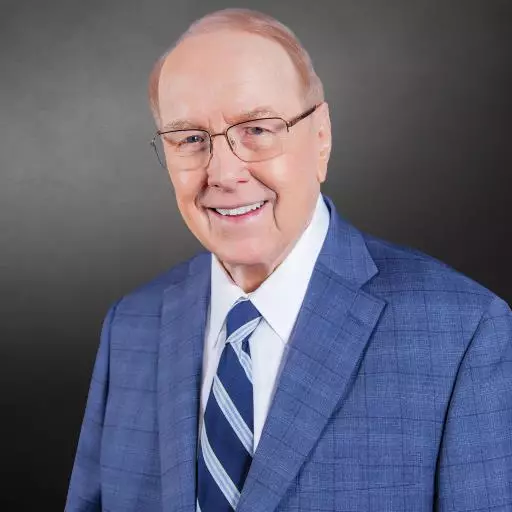
How to Turn Thanksgiving Into Thanks-Living - II


True thanksgiving goes far beyond a once a year holiday. On today’s edition of Family Talk, the late Dr. Adrian Rogers continues his timeless message about turning thanksgiving into thanks-living. He shares powerful biblical insights about offering God our praise, prayer, possessions, and purity as daily spiritual sacrifices.
Dr. James Dobson: Well hello everyone, I'm James Dobson and you're listening to Family Talk, a listener supported ministry. In fact, thank you so much for being part of that support for James Dobson Family Institute.
Roger Marsh: Welcome to Family Talk. I'm Roger Marsh and I really hope you had a wonderful Thanksgiving yesterday with family and friends or maybe who friends who are more like family than your own family is.
Now that the holiday has passed though, here's an important question to consider, on a day that many consider to be one of the busiest shopping days of the year, called Black Friday. How can we cultivate gratitude today and throughout the rest of the holiday season, let alone the rest of the year?
Is thankfulness just a warm feeling we experience once a year or is God calling us to something deeper? On today's edition of Dr. James Dobson's Family Talk, we're bringing you part two of a powerful message from the late Pastor Adrian Rogers, who went home to be with the Lord back in 2005, but this message still rings true the day after Thanksgiving, 2025. It's about turning Thanksgiving into Thanks-Living.
Now, Pastor Rogers served for over three decades as senior pastor of Bellevue Baptist Church in Tennessee. He was also a best-selling author and founded the ministry called Love Worth Finding, which continues reaching people in 150 countries, plus, all over the world.
On the last edition of Dr. James Dobson's Family Talk, Pastor Rogers challenged us with the first of five spiritual sacrifices that we can offer to God as an expression of genuine thanksgiving. On today's edition of Family Talk, he'll complete that teaching, showing us how true gratitude involves not just our words, but our whole lives.
Here now is Pastor Adrian Rogers to continue his message on turning Thanksgiving into Thanks-Living on today's edition of Dr. James Dobson's Family Talk.
Guest (Male): All right, now let me mention another kind of a sacrifice. Now remember, we're talking about the sacrifices of Thanksgiving. First of all, your person. Now, right behind that should come the sacrifice of your praise. Turn with me to Hebrews chapter 13. Hebrews chapter 13 and look at if you will in verse 15.
By Him therefore, and the Him refers to Jesus. By Him therefore, let us offer the sacrifice of praise. Underscore it. The sacrifice of praise. Have you ever thought of your praise as being a sacrifice? When you offer the sacrifice of praise, I'm going to tell you something that may amaze you. God had rather have your praise than have your money.
Your praise is of more value to God than whatever you put in the offering plate this morning. That is, if it is genuine praise. And I have a verse, I found a verse that proves that. Psalm 69, verses 30 and 31. Don't turn to it, let me read it to you. I will praise the name of God with a song and will magnify Him with thanksgiving. This also shall please the Lord better than an ox or a bullock that hath horns and hooves.
Do you know how much an ox was worth in this day? That would be like you coming to the church this morning and saying, "I'm going to give my Mercedes." An ox was extremely valuable. A man had an ox and he was a wealthy man. But God says here that your praise, your song of thanksgiving will please the Lord more than your material gifts.
Now, I want to tell you that praise is no substitute for your material gifts. And we're going to see that later on. But I'm saying this morning if you could only understand how important your praise is. And your praise ought to be a way of life. Look at our verse again, verse 15. "By Him therefore, let us offer the sacrifice of praise to God." What's that next word? Continually. Continually.
Folks, listen to me. You do not come to church to praise the Lord. You're to bring your praise with you to church. You don't commence your praise here, you continue your praise here. You are to praise the Lord continually. And the reason that some of us do such a poor job of praising God when we come to church to praise Him corporately is, we haven't been praising Him privately.
Psalm 34 verse 1, "I will bless the Lord at all times. His praise shall continually be in my mouth." And we are to come to the Lord's house today and just worship the Lord. And we're to worship Him not grudgingly. Nobody ought to have to beg us to sing. That you should have to be coerced to sing. The Bible says in Psalm 119 verse 108, "Except I beseech thee, the freewill offerings of my mouth."
The freewill offerings of my mouth. God help us to offer to Him this morning the sacrifice of praise. Now, there's a third sacrifice I want to mention. First of all, remember, we give our bodies a living sacrifice. That's our person. Secondly, there's the offering to God the sacrifice of praise. That's just the fruit of our lips continually. It means more, ladies and gentlemen, than your giving your wealth is for you to give your worship to our great God.
Now here's the third thing, and very closely akin to our praise, but not exactly the same, is our prayer. Our prayer. That's the third sacrifice of Thanksgiving. And that is our prayer. Our person, our praise and now our prayer. Let me give you the verse. Are you ready for it? Psalm 141 and verse 2. Listen to it. Listen to it. "Let my prayer be set forth before Thee as incense." Now, if you again don't mind marking your Bible, underscore the word incense. "And the lifting of my hands as the evening sacrifice." There's our word sacrifice again.
In all of these scriptures, we have the word sacrifice. Okay? Psalm 141 verse 2, "The lifting of my hands as the evening sacrifice." Now, your prayer is to be like two things. Number one, it is to be like incense. And number two, it is to be like the evening sacrifice. Now what does this mean? What is incense? Incense is perfume. That in order for that perfume to be released, it has to be put on the fire. It is burned. And as it is burned, the aroma is perfume that just goes up in smoke.
Now, your prayer, the Bible tells us in Revelation chapter 5 that that incense is the prayer of the saints. Incense in the Old Testament that ascends up, that sweet-smelling smoke that goes up, is like our prayer that goes up to God. Now, the Old Testament Jews worshipped in a tabernacle. And if you were to walk in the front door of the tabernacle, you would come into the tabernacle, and as you approach the tabernacle, there in that outer court is a great altar made of brass. It was called the brazen altar. There was a fire in that altar.
And that fire was kindled from Heaven. That's very important that you understand this. That Aaron the high priest and others, they didn't strike a match and light that fire. Of course, they had no matches, but they couldn't light it with fire from any other fire or lightning or anything else. That fire had to be kindled from Heaven. It was holy fire in that brass altar. And it was on that altar that the animals were burned and consumed. That pictured Jesus dying for our sins. That fire from Heaven pictures the wrath of God, the holy wrath of God against sin.
Then you would walk into that tabernacle, and in that tabernacle on one side would be a beautiful candelabra, on the other side would be a table with bread on it called showbread that the priest would eat, and the candelabra, this pictures Christ our sacrifice, that's the altar. And the showbread pictures Christ our sustenance that we feed on Him. And then over here, the candelabra pictures Christ our sight. Christ our sacrifice, Christ our sustenance, Christ our sight.
And then we come to another altar, which was a golden altar. Now, this golden altar is right in front of a curtain. And behind that curtain is the Holy of Holies. And the golden altar was the altar of incense. And as the priest would come in morning and evening to trim the lamps, he would first go and he would offer incense upon that golden altar. But now let me tell you that the fire in the golden altar was kindled by fire from the brazen altar. It's very important you understand this.
That the priest always had to make certain that the fire that was in this altar was the fire that was in that altar, and the fire in that altar was fire from Heaven. Now, he would come in with this incense, which was especially concocted for God alone, and he would burn it. Now, of course, if there were no fire in the altar, no incense would rise to God. If there were strange fire in the altar, what the Bible calls strange fire was fire that God did not ignite. If there were strange fire, there would be swift judgment for offering to God something with strange fire, that is fire that God had not ignited.
Now, if this brazen altar is Christ our sacrifice, and this candlestick is Christ our sight, and this is Christ our sustenance, and this is Christ our supplication, that prayer that ascends to God, that just makes way so we can go into the Holy of Holies with Christ our satisfaction. Do you understand? Where we know the Lord, where we meet the Lord, where we are satisfied and the deepest longings of our heart are met. But friend, you cannot come into the Holy of Holies unless you come to the altar of incense, which is prayer.
But wait a minute. You cannot come to the altar of incense unless you come to the brazen altar. Don't try to offer prayer that is not prayer based on the blood of Jesus Christ. Okay? We enter into the holiest by the blood of Jesus Christ. And don't try to offer any prayer that does not have in it the fire of God's sacrifice and God's holiness. And then when I come to Him, I can burn incense to Him, if that incense is based upon the blood of Jesus Christ. But the Bible says if I regard iniquity in my heart, the Lord will not hear me.
Friend, you have no basis to come to God except by the blood. And when you come by the blood, and then you come to that golden altar, and you begin to pray like sweet perfume, that prayer goes to God. And that, my friend, the Bible calls a sacrifice. You are a priest. You are a priest. Did you offer any incense this morning? Morning and evening, the priest would go into the tabernacle to trim the lamps. Have you been in there yet?
I mean, you say that you love God. You say that you belong to Him. You say that you're a priest. Have you offered the sacrifice of prayer? Have you? That's a sacrifice. Not just coming to God to get things done. Oh, friend, listen to our verse again. What a beautiful verse it is. Listen to it. Psalm 141 verse 2. "Let my prayer be set before Thee as incense. And the lifting up of my hands as the evening sacrifice." Isn't that beautiful? The lifting of my hands as the evening sacrifice. Oh God, just as that Old Testament priest would go in there the evening to trim the lamps, oh God, I want to go in. I want to enter into that Holy of Holies, and God, I want to just lift my hands and spread my hands to You as, dear Lord, the evening sacrifice.
Incense with strange fire was judged. Incense with no fire is useless. That fire pictures what Jesus did for us on the cross. All right, now let me mention the fourth sacrifice. The first one, what was it? Our bodies. That's our person. The second, our praise. The fruit of our lips. The third, our prayer. The fourth of these spiritual sacrifices is our possessions. Now, I don't think because something is spiritual that it has to be immaterial. We are to give our possessions.
Now you're in Hebrews chapter 13, and we read verse 15 that speaks of the sacrifice of praise. Now, Hebrews chapter 13, turn back to it. Yes, we've already left it. Turn back to it. Hebrews chapter 13, and verse 16. Let's look at it. "But to do good and to communicate forget not, for with such sacrifices God is well pleased." There again he uses the word sacrifice. Now remember, we are to offer the sacrifices of Thanksgiving. Okay? Now look at it again. "With such sacrifices God is well pleased."
What does this word communicate mean anyway? Does it mean to write letters to someone? Does it mean to call someone on the telephone? Well, the Old King James says to communicate. So, I looked it up last night in four other translations than the King James. One translation gives this word communicate to distribute. The other gives it to share. The other gives it to be generous. The other gives it to be liberal. So, to distribute, to share, to be generous, to have a liberal spirit, that's what it means to communicate, not just to talk to people.
It means to take our material possessions, the things that God has given us, and when we come to church, or when we give by whatever means and whatever mode, when we give, it is to be a spiritual sacrifice. The Apostle Paul received a missionary gift from the church at Philippi, and he wrote back and he said in Philippians chapter 4 verse 8 that the gifts that were sent from you were a sacrifice acceptable, well pleasing to God.
And so, today, you want to show your thanksgiving? Show it in your giving. In your giving. Does your giving really show what you think of God? It really does, whether you think it or not. You know, there's some folks that come to church on Sunday and they give God a tip. They give God the crumbs. They give God the leftovers. Do you know what a lot of folks do? I mean, they literally do this. They have their budget, and they get the budget out, and they say, "All right, we've got so much for the house payment. We've got to pay that. So much for the utilities, we have to pay that. So much for the car payment, we've got to pay that. So much for Sears, we've got to pay that. So much for so-and-so." Well, let's throw Goldsmith in. Everybody gets a chance here. And, and, and Dillard, I'll quit right here. And we've got to pay that.
And so, so we've got all these things we have to pay. Then there's, you know, tuition and these things. And they say, "Now, what's left? What's left? Do we have anything to give to God? What's left?" Hey, folks, do you know what you ought to do? Before you write a check to anybody or anything else, you ought to make a gift to Jesus first. You know what the Bible says, "Honor the Lord with the firstfruits of thine increase." The firstfruits. Not what's left. Don't give God the crumbs. Don't give God the leftovers. Don't see if there's anything left for God.
That's the problem. Listen, friend, God doesn't want a place in your life. Everybody says, "Give God a place in your life." He doesn't want it. Well, you say, "Yes, you're right, giving prominence in your life." He doesn't want prominence. He demands preeminence. Preeminence. You're to honor the Lord with your substance and with the firstfruits of all thine increase. I was reading in Malachi, it's something. In Malachi chapter 1 verse 8, and this is what the Lord said to the people of his day, "You offer the blind for sacrifice. And if ye offer the blind for sacrifice, is it not evil? And if ye offer the lame and the sick, is it not evil? Offer it now unto thy governor, will he be pleased with thee or accept thy person, saith the Lord of hosts."
Do you know what they were doing? They were saying, "Well, we got to make an offering to the Lord." Well, we got an old blind calf over here. Let's give that blind calf. And we've got a, we've got a sick goat. That goat's not going to live anyway. Let's bring it down to the priest and and and let the priest kill it. Malachi said, "You're offering blind animals and crippled animals to God? Why don't you take it over here and give it to the governor and see if the governor will accept it?"
You know, that people, we give to God things we wouldn't give to one another for Christmas presents or birthday presents. To our God. Now folks, listen. We don't just give to the church because the church needs it. We don't give to a cause. It's a sacrifice to God. Friend, if there were not a need in this world, and if we just took the money that was given on Sunday and burned it up. By the way, we ain't going to do it. But I mean, just put it in a furnace and burn it up. It'd still be a blessing just to come and give it.
Do you believe that? I do. That's what they did with the Old Testament sacrifices, they burned them up. They burned them up. They weren't given to a need, they were given to God. It was put on an altar and it was consumed. It didn't serve any utilitarian purpose. We just gave it because we wanted to give it to a great God as a sacrifice of His goodness to us. We need to get out of this thing saying, "Well, I don't know whether I agree with that need or I don't think I'm going to give to this cause." Friend, we're giving to God.
We're giving to God. It's a sacrifice to our great God. "Every man giveth as he purposeth in his heart, so let him give. Not grudgingly or of necessity." That is, you're not giving to a cause, you're not giving because somebody has made you do it. Not giving grudgingly or of necessity, "for God loveth a cheerful giver." One last thing, and I'll be finished. Not only is there the sacrifice of our possessions, one last of these five Thanksgiving sacrifices, the sacrifices of Thanksgiving. There is finally the sacrifice of a broken and a contrite spirit, which I want to call the sacrifice of purity.
Would you turn to Psalm 51 here for just a moment? By the way, all of these sacrifices are based on first of all of what He has done for us. And we just turn around and we do back to Him because of what He has done for us. We first love Him because He loved us. We give to Him because He first gave unto us, "and of thine own have we given unto Thee." Now look if you will in Psalm chapter 51 and verse 17. "The sacrifices of God are a broken spirit, a broken and a contrite heart, O God, Thou wilt not despise." That's the last of these five sacrifices I want to suggest this Thanksgiving.
Do you have that sacrifice, a broken and a contrite spirit? Why did I call it the sacrifice of purity? Because David had sinned. And what was it that broke David's heart? His sin against God. You see, God was so good. Notice in Psalm 51 verse 1, "Have mercy upon me, O God, according to Thy lovingkindness, according to the multitude of Thy tender mercies, blot out my transgressions." Do you know what it was that led David to a broken spirit? Do you know what it was? It was not David's badness. It was God's goodness. God's goodness.
The Bible tells us over in the book of Romans that it is the goodness of God that leads us to repentance. Not the badness of man. God is so good. How could we sin against such love? How can you this Thanksgiving season, one who suffered, bled and died for you? If you say you love Him, then get rid of the sin that breaks His heart. Get rid of it. A broken and a contrite spirit. Oh friend, I said that our sins were the nails that nailed Him to that tree and our hard hearts the hammers that drove those nails. A broken and a contrite spirit Thou wilt not despise.
We sit in our churches on some Sunday mornings acting like we've done God a favor when we get here. Haughty, unbent, unbroken. Oh, how we ought to bow down before our great God and and just say, "Oh God, in brokenness and humility, I offer, dear God, tears."
Featured Offer

A new school year brings fresh opportunities—and new challenges. Between homework, activities, sports, and busy schedules, it's easy to lose sight of what matters most.
Our free 3-day email series, Back-to-School Wisdom for Parents, will equip you to navigate the coming months with greater confidence and intentionality.
Past Episodes
- A Biblical Look at the Family
- A Challenge to Pastors
- A Family in Crisis
- A Father to the Fatherless: The Story of Two Friends
- A Father's Commitment to His Daughter
- A Heart for Romanian Orphans
- A Journey of Widowhood and Grief
- A Marriage Made in Heaven
- A Mom's Heart of Prayer
- A Nation Abandoned by God
- A Picture of Life
- A Sober Update on Military Culture
- A Traditional Family
- A Tragic Account of Mistaken Identity
- A Visit to the Shores of Normandy
- A Visit With the Legendary Pat Boone
- Abraham Lincoln: The Faith of a President
- Adrenaline & Stress
- Adult Children of Alcoholics
- Albert & DeeDee Pujols: Giving Honor to God
- Alone Yet Not Alone
- America: A Call to Humility
- American Heritage Girls
- American Marxism
- An Abusive Childhood: Climbing Out of the Pit
- An Attitude of Gratitude
- Autism
- Avoiding Infidelity
- Back From the Brink of Divorce
- Beauty In Brokenness
- Becoming a Culture Warrior
- Being a Conservative Crusader
- Being a Father at Work and Home
- Being a Smart Stepmom
- Being Jesus to Your Neighbors
- Being There for Your Son
- Between a Rock and a Grace Place
- Bonhoeffer: A Hero Then and Now
- Boys and Puberty
- Breaking the Bonds of Welfare
- BUG-Puberty
- Building a Christian Home
- Building a Safe Haven In Marriage
- Building hedges Around Your Marriage
- Bullying
- Buyer Beware
- Charlie & Lucy Wedemeyer: A Message of Hope
- Children and Stress
- Choosing to See
- Christian Men & Sexuality
- Christianity and Wokeness
- Christ's Influence on History
- Cleaning House: Raising Responsible Kids
- Coach John Wooden
- College
- Confronting Guilt in Motherhood
- Congressman Frank Wolf: A Modern-Day Wilberforce
- Courageous Choices
- Courageous Manhood
- Creative Ideas for Child Discipline
- Crystal Peaks Youth Ranch
- Culture Watch
- Current Economic Tsunami
- Defend Life
- Defending Religious Liberty in the Courts
- Defunding Planned Parenthood
- Delicate Mother-In-Law Relationships
- Depression: Encouragement for the Journey
- Developing a Firsthand Faith
- Digital Invasion
- Divorce
- Dr. Ken Hutcherson: A Defender of Truth
- Dr. Ravi Zacharias: Finding My Destiny in Delhi
- Faith and Family: Raising Kids Right
- Family Finances
- Fierce Beauty
- Fighting to Preserve DOMA
- Finance
- Finding Healing After Sexual Abuse
- Finding Hope for Your Heart
- Finding Joy Amidst Cancer and Loss
- Finding New Intimaacy in Prayer
- Finding Success in a Failing Economy
- Finding True Forgiveness
- Forgiving God
- Forgiving My Father
- Foundation For Successful Families
- Free At Last
- Freeing the Family From Pornography
- From Santa to Sexting: Protecting Your Middle-Schooler
- Fueling the Passion
- Girl's Uncovered
- God Bless America
- God Is At At Work
- God Made Us a Family
- God Makes Lemonade
- God Restored Me
- God Restored Me For a Purpose
- God’s Grace Is Sufficient
- God's Tender Heart for Single Moms
- God's Way or My Way
- God's Wisdom for Raising Children
- Going All Out For Your Wife
- Greg Laurie
- Greg Laurie: A Changed Life
- Guarding Your Grandchild’s Heart
- Healing the Past and Moving On
- Healing the Wounded Spirit
- Healthy Habits
- Help for Angry Moms
- Help for Employed Moms
- Help for Hurting Teens
- Help for Parents of Prodigal Children
- Help, I'm a Spouse AND a Parent Now!
- Helping Teens Find Their Purpose
- Her Role in the Home
- Homeschooling & Beyond
- Homeschooling Today
- Honoring Our Average Joes
- Hooking Up
- Hope for Hurting Hearts
- Hope in the Midst of Unexpected Pregnancies
- Horses and Healing: New Hope for Kids
- Hutch: A Man Filled With Hope
- I Will Never Leave Thee
- I, Isaac, Take You, Rebekah
- In God We Still Trust
- Infertility and Miscarriage
- Insights on Radical Islam
- Integrity in Business
- Is America Imploding?
- James Dobson v Kathleen Sebelius: How will you get involved?
- Jealousy
- Jesus Vs. Muhammad
- Jim & Jill Kelly
- Landscape of America
- Laying Up Treasure in Heaven
- Lean Body, Fat Wallet
- Learning Disorders
- Life & Laughter with Ken Davis
- Life Without Limbs
- Live to Forgive: A Family Story of Pain and Redemption
- Living Through Loss of Spouse
- Living With Less So Your Family Has More
- Living with Less: Heading into the Holidays
- Living With the Strong Willed Child
- Loneliness in Marriage
- Longing for Marriage
- Love For a Lifetime
- Loving Those Left at Home
- Macaroni At Midnight
- Managing Your Home and Time
- Marriage in a Facebook World
- Marriage Survival Skills
- Marriage That Can Go the Distance
- Marriage: The State of Our Union
- Mary Crowley
- Memories of the Holocaust
- Mentoring Boys and Men
- Merging Premarital Expectations
- Ministering to the Elderly
- Ministry of Hymns
- Miscarriage: Grieving the Loss
- Mojave Desert Cross
- My Adoption Story
- My Autistic Son
- My Mission: Capturing a Dictator
- One Woman’s Journey of Grief & Hope
- One-on-One with Bill Gaither
- Online Dangers: Protecting Kids from Pornography
- Online Dangers: Protecting Marriages from Pornography
- Overcoming Childhood Traumas
- Overcoming the Heartaches of Life
- Overcoming the Shame of the Past
- Parenting 101: From Discipline to Sexuality
- Parenting Basics: The First Years
- Parenting Newborns and Those Early Years
- Phill Kline: Challenging an Abortion Giant
- Plugged In: Teaching Your Children to Be Media Savvy
- Politics and the Bible
- Prodigal Child
- Protecting Life and Liberty
- Protecting Your Child in a Dark Culture
- Putting an Arm Around the Post-Abortive Woman
- Raising a Handicapped Child
- Raising Boys: Routine Panic
- Raising Boys: Wounded Spirits
- Raising Kids Who Love the Lord
- Raising Men of Honor
- Raising the Standard of Excellence
- Reaching Out to Youth in Need
- Reaching the Taliban For Christ
- Real Moms, Real Jesus
- Reignite: How to Bring Joy Back into Your Life for Enduring Faith
- Religious Persecution in America
- Republican Majority
- Rescued From a Life of Ruin
- Resolving Money Conflicts in Marriage
- Revival Rising
- Scripture and the Family
- Sexuality & Singles
- She Calls Me Daddy
- Single Adults
- Singleness: Waiting for God's Best
- Singles and Sexuality
- Spiritual Mismatch
- Spiritual Training of Children
- Stand For Life In Your Community
- Staying Christian in a Pagan Culture
- Staying Strong in College
- Stepping Away from the Common Life
- Straight Talk to Young Couples
- Strengthening Military Families
- Strong Fathers, Strong Daughters
- Suicide
- Teaching Your Kids About Sex
- Ten Habits of Happy Mothers
- The Bachmanns: Their Story of Faith and Family
- The Barretts: An Amazing Adoption Story
- The Battle for Civilization
- The Battle for Marriage Continues
- The Cross: The Center of the Family
- The First Year of Marriage
- The Flipside of Feminism
- The Future of the Family: Fact and Fiction
- The God-Wild Marriage
- The Healing Power of Forgiveness
- The Heart of a Cowboy
- The Heart of the Santorum Family
- The High Cost of Low Living
- The Hope of Heaven
- The Hormone Swing
- The Immunization Debate
- The Impact of Truth on My Life
- The Insidious Nature of Infidelity
- The Joy of Good News
- The Joys and Challenges of Adoption
- The Joys and Challenges of Pregnancy
- The Key to Your Child's Heart
- The Kids Are Gone...Now What?
- The Miracle That Saved a Marriage
- The Powerful Influence of a Wife
- The Pro-Life Movement Reaches a New Generation
- The Threat of Islamic Terrorism
- The Unbelieving Spouse
- The Use and Abuse of Power
- The Value of Manhood
- The Value of One Life
- The Vital Role of Fathering
- The Way of the Wise
- To Dads & Daughters … with Love
- Tolerating the Intolerable
- Tony Dungy: A Man of Quiet Strength
- Tough Love For Kids
- Truth: Can We Both Be Right?
- Turning Hearts 180-Degrees Toward Life
- We Help; Jesus Heals
- Welcome To Our Table
- What Does Freedom of Religion Mean?
- What Has Feminism Done for You Lately?
- What Parents Should Know About Teens
- What's It Like Being Married to Me?
- What's Wrong with Being a Nice Guy?
- When Life Brings You Thorns
- When Unemployment Hits Your Home
- When You're in Love
- Why Men Leave the Church and How to Get Them Back
- Why Purity Matters
- Why We Fight For Life
- Women and Emotional Infidelity
- Women and Friendships
- Women and Intimacy
- Women in Combat: Understanding the Consequences
- Wounded Spirit

Video from Dr. James Dobson
Featured Offer
A new school year brings fresh opportunities—and new challenges. Between homework, activities, sports, and busy schedules, it's easy to lose sight of what matters most.
Our free 3-day email series, Back-to-School Wisdom for Parents, will equip you to navigate the coming months with greater confidence and intentionality.
About Family Talk
Family Talk is a Christian non-profit organization located in Colorado Springs, Colorado. Founded in 2010 by Dr. James Dobson, the ministry promotes and teaches biblical principles that support marriage, family, and child-development. Since its inception, Family Talk has served millions of families with broadcasts, monthly newsletters, feature articles, videos, blogs, books and other resources available on demand via its website, mobile apps, and social media platforms.
The Dr. James Dobson Family Institute (JDFI) is a Christian non-profit ministry located in Colorado Springs, Colorado. Founded initially as Family Talk in 2010 by Dr. James Dobson, the organization promotes and teaches biblical principles that support marriage, family, and child development. Since its inception, Family Talk has served families with broadcasts, monthly newsletters, feature articles, videos, blogs, books, and other resources available on demand via their website, mobile apps, and social media platforms. In 2017, the ministry rebranded under JDFI to expand its four core ministry divisions consisting of the Family Talk radio broadcast, the Dobson Policy and Education Centers, and the Dobson Digital Library.
Dr. Dobson's flagship broadcast called, “Dr. James Dobson’s Family Talk," is aired on more than 1,500 terrestrial radio outlets and numerous digital channels that reach millions each month.
About Dr. James Dobson
Dr. James Dobson is the Founder Chairman of the James Dobson Family Institute, a nonprofit organization that produces his radio program, “Dr. James Dobson's Family Talk.” He has an earned Ph.D. from the University of Southern California and holds 18 honorary doctoral degrees. He is the author of more than 70 books dedicated to the preservation of the family including, The New Dare to Discipline, Love for a Lifetime, Life on the Edge, Love Must Be Tough, The New Strong-Willed Child, When God Doesn't Make Sense, Bringing Up Boys, Bringing Up Girls, and, most recently, Your Legacy: The Greatest Gift. Dr. Dobson served as an associate clinical professor of pediatrics at the University of Southern California School of Medicine for 14 years and on the attending staff of Children’s Hospital of Los Angeles for 17 years in the divisions of Child Development and Medical Genetics. He has advised five U.S. presidents and served on eight national commissions. Dr. Dobson has been married to Shirley for 64 years, and they have two grown children, Danae and Ryan, and two grandchildren.
Contact Family Talk with Dr. James Dobson
540 Elkton Drive
Suite 201
Colorado Springs, CO 80907
877.732.6825