

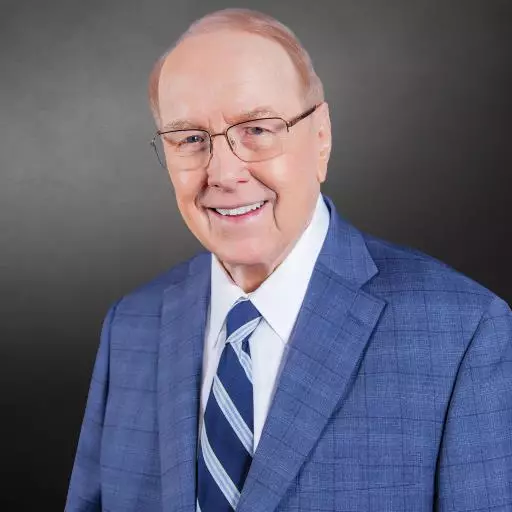
Breaking the Bonds of Welfare, Part 2


The Church, not the government, holds the real answer to helping those in need. On today’s edition of Family Talk, Dr. James Dobson continues his conversation with Star Parker about her book, Uncle Sam’s Plantation. She explains why welfare programs have devastated black families, and how Christians can become the true safety net for struggling families.
Dr. James Dobson: Welcome everyone to Family Talk, it's a ministry of the James Dobson Family Institute, supported by listeners just like you. I'm Dr. James Dobson and I'm thrilled that you've joined us.
Roger Marsh: Well welcome to Family Talk. I'm Roger Marsh. Today we are bringing you part two of a powerful conversation featuring our own Dr. James Dobson and Star Parker, founder and president of the Center for Urban Renewal and Education.
Star Parker has consulted with Congress on welfare reform. She's the author of several books and speaks on college campuses all across the nation. Her message may ruffle some feathers at times, but it really does come from the perspective of someone who lived this struggle firsthand.
Dr. Dobson knew Star Parker for decades and his respect for her work ran deep. Here's what he shared about his guest as he introduced the conversation.
Dr. James Dobson: I have been amazed by her story and her victory over an addiction to welfare that dragged her into a cycle of poverty. She was really quite hopeless for a period of time as well, but she was able to escape through God's power.
Now, she has some provocative perspectives about welfare reform and the need of the church to step up and take care of the poor and the needy. Her thoughts may be a complete departure from what many people have come to believe in terms of government's responsibility for welfare.
But I know it will challenge our listeners to hear what she has to say because this is not theoretical. She lived it. She knows what she's talking about. And one of the things that I've heard her say is that when Jesus was speaking to 5,000 people who became hungry, he turned to his disciples and said, "You feed them."
Now, I take that to mean the church has the responsibility to reach out to people in need. We can't let them starve to death. The safety net belongs first to the church. That's going to irritate some people because the church has financial needs too, but I believe God will bless those that do what Jesus said: that inasmuch as you do it unto the least of these, my brothers, you do it unto me.
And that's what she's trying to get across in the interview we're going to hear. Star Parker is the president and founder of CURE, which stands for the Center for Urban Renewal and Education. She's a frequent speaker before Congress and to a variety of groups on the topic of welfare reform.
She is highly respected and hated, I might say. She's written about the matter extensively and I know that our listeners are going to find her practical advice both biblical and challenging. Star, we were talking last time about the difficulties in your early life, the rebellion.
You had four abortions which you just didn't even seem to comprehend as a problem. You kind of trivialized the whole thing and were deeply dependent upon welfare and so on. Let's get right back into that content. You've got in your book, Uncle Sam's Plantation, a description of three kinds of poor people. Describe those categories for me.
Star Parker: What I'm doing in chapter one is talking about poverty and trying to define it. Because if we're going to be in a war that we spend the type of money we do, over a billion dollars a day, I figured maybe we should know what poverty looks like.
So, I looked at the economically challenged. And God loves them. I mean, these are the ones that I believe that when Jesus in the Sermon on the Mount was talking about how blessed this group is, this is what he had in mind. But then we also have the lazy poor.
And this is the group that took tremendous advantage of the compassion of Americans in the welfare state. Who knows? That idea may have worked if we did not start this whole entitlement mentality growing to where people actually believe that they do not have to be a part of their own life.
I had bought into that. That's one of the reasons in my rebellious state that I could live so lawlessly and carefree is because I figured somebody else would clean up any mess behind me. You're just conditioned to believe these things when you're growing up in this type of situation.
Dr. James Dobson: They sort of owed it to you. Is that it?
Star Parker: They owed it to you. That was one strong message in Black America and still is today. In fact, we have four generations now.
Dr. James Dobson: Is that related to the legacy of slavery?
Star Parker: So, they try to attach it to the legacy of slavery. And I've even debated people like Jesse Jackson on this issue that keeps insisting that it's related. But yet, when you look at most of the social pathologies playing in Black America today, these are new phenomenons.
This wasn't 50 years ago. Black households were healthy during that time. They may have been poor, but they were healthy. And we did not see the escalation of just ill behavior: the violence, the lack of understanding that we should get an education and other things that we're seeing today.
So, I think a lot of it is just the idea that I don't have to think about it. And racism or the perception of racism is just an excuse. I used that excuse myself quite often that all America's racist anyway, why do I need to mainstream? I'm not going to get a job.
Dr. James Dobson: Well, there is racism in America, but you don't seem to be angry about it.
Star Parker: Well, because there's nothing that the politicians can do about it. I mean, let's face it. Racism is like any other sin: a sin. And it's something that individuals will have to work through daily as they work through their lives.
But it's not something that we can orchestrate some great master plan and one-size-fits-all redistribution program about. How in the world would we ever even think that that could happen?
Dr. James Dobson: In fact, instead of solving it, it seems to me that the Left tries to perpetuate that racism. Many of the movies create great anger and hostility and violence.
Star Parker: They do. I address that in my book as well, that just the term "minority" is a political term. And there is racism as you just pointed out, but there's also a whole industry that's built off of the perception of racism.
And it's a few-billion-dollar industry. So, you're absolutely right that those that can continue to further this idea and make people believe that America's not for them because somebody else is going to pull the rug from under them, it gives that group of people an excuse not to do what's best for their own lives and for their children.
Dr. James Dobson: Have you found doors closed to you because of being Black?
Star Parker: Oh, I don't know. What kind of doors? Dr. Dobson, you know me. I'm going to go in any door even if it's locked. I don't know. But I don't think about that either. It hasn't. I have fun being Black. I just have a good time with it.
And I believe that when God painted me Black, it was for a purpose. And I think that even in our history, as dear as that is and as big a struggle as it was, like in any struggle or any pain, there is a purpose and there's deeper meaning.
As you mentioned earlier in our private discussion about the loss of my 14-year-old, I'm having an even deeper understanding of the beauty in pain and in suffering. And so when you look at the struggle of Blacks in this country, if we could just recognize that God placed me here for a purpose, then we would realize that we have a significance even being here in America.
So, I have a good time with it and most of my friends, even my white friends, we have a great time with it.
Dr. James Dobson: You have such a healthy attitude, Star. That's why I like you and how much I appreciate what you're trying to do, because you're really trying to teach some of those attitudes to both the Black and the white community.
Star Parker: I think so, because most of the things that we're trying to solve politically, we can address ourselves just in our own personal relationships, just in our own personal time. Okay, so the third group is the poor in spirit. And they are the ones that if we could do anything to help folks, this is the group that we should concentrate our attention on.
So, I spent time working in and consulting on the federal welfare bill because I wanted the other group off, the lazy poor. Just cut them off. Let them understand that they have to mainstream their lives. The other group, the economically challenged, there are still things we need to do to reduce the tax burden, to stop the micromanagement and monopoly over education in their communities and allow for school choice.
But the poor in spirit, the broken, those that have a crisis in their lives, the only way that we're going to really help them is when we start engaging them one-on-one.
Dr. James Dobson: Describe such a person.
Star Parker: Oh, some of their pictures are just so sad and I give a lot of personal stories of people that I've come across in my book. But they would be someone that perhaps grew up in an abusive household and by the time they were of age to run away, they did run away and they perhaps then got involved in prostitution.
And they then themselves had children and they're on drugs and they just cannot manage their lives. And their children now have no other perspective of what life looks like. They're not sending them to school whatsoever and they're just lost. They're in the inner cities, they're on the street corners.
Dr. James Dobson: It goes on generation by generation.
Star Parker: And it just goes on generation after generation. But the beginning, I think, was in real brokenness. And that's why it's so important that the body of Christ that has the real answers engage themselves with them so that we can tenderly bring them back into the fold.
And we start with morality. We go right back to those principles of morality and abstinence and the family. Before you fix the problem, let's prevent it. And that's one place to start. It is absolutely and that's why even though there were some that thought that welfare reform was a cruel measure, it was actually a big help measure because what it did was said you are going to have to start looking at your sexuality and what you're doing with this. You cannot live irresponsibly anymore.
And the beautiful thing that's an unknown secret, because media will not let the public know, is how many stories that we have of welfare moms who now have re-engaged themselves with their homes, with their husband, the father of the three children and other things.
But you're absolutely right. If we don't start focusing ourselves on family life and stop these messages that you can just live any way that you want to, we're going to see more brokenness.
Dr. James Dobson: Do you talk to kids? Do you talk to junior highers, for example?
Star Parker: Sometimes. Actually, after I left welfare, went into business a little while and then started working on these ideas in social policy, I started going more into the housing projects. And that's when I figured I can't do this by myself and began to engage the Black churches.
But I do some schools, mostly on the college level, to talk to those that are going into policy to try to help change their thinking when it comes to how we are going to help people, is it public or private. But because the challenge is the way that the government has monopolized education, it's very difficult to bring a message of my sort into those school environments.
It's one of the reasons I'm adamantly supportive of school choice. I really believe that every church should be a school and that they should deliberately go find these kids that are in broken situations and put them in these schools so that they can put a worldview in them that is consistent with the message maybe Mom is delivering.
All of these mothers are not just clueless. Some of them are doing everything they can, but they have a very limited resource. And then they have the media telling them that, "Oh no, you don't want to listen to your mom." Then they have the school telling them, "Oh, you don't have to listen to that." Every institution in our society is 100% broken.
Dr. James Dobson: Let's wade into a really controversial area, Star. Do the Jesse Jacksons of the world really get angry at you? I mean, you are saying the opposite of what they're saying.
Star Parker: Oh, they don't like me because when you look at it, they have, as I mentioned in my book, the way that they've engineered this Uncle Sam's Plantation is just like the plantations of the South. And they have gatekeepers. And these overseers are not pleased when one slave tries to escape, and I'm trying to free the slaves. So, no, they're not happy and will do anything to keep the welfare state as it is.
Dr. James Dobson: Why is the Black community so vulnerable at this point?
Star Parker: I think the Black community is vulnerable for change at this point. But the reason that Blacks have traditionally bought into Democrat policy and Democrat representation is because of the Civil Rights movement. Life was very, very difficult and Democrats were the ones that were there to say we're going to make sure that you're not discriminated against.
If you look at what's happened in Black America over the last 50 years, the abortion: 40% of abortion. Well, Margaret Sanger wanted to get rid of Blacks. It was like genocide, these guys. So, they were effectively able to work with the churches and now it's hard-pressed to find a pastor who will step out and say I'm pro-life and I'm going to make sure that we overturn Roe v. Wade. Well, the same thing happened in other areas as well, economic areas.
When you look at the condition of Black America, 65% of African Americans in the middle class work for some form of government. So, there is a natural hostility against Republicans who say limit government's role, because they're looking at it personally to say but that means my job.
It's one reason they have investments in affirmative action policy because another 30% work for a government-funded corporation or government-subsidized corporation. You rid of affirmative action, they feel there goes my job. The lies of the Left are entrenched.
As I mentioned, the Congressional Black Caucus leadership continues to say that racism is the reason that our communities are becoming worse or in the problems that we're confronted with with poverty. If we could just get these guys to redistribute more money, then we could solve some of your problems. And people believe that.
Dr. James Dobson: I'm in an organization called the Arlington Group and there's a great effort to reach out to Black pastors and I'm really excited about what I see happening.
Star Parker: Very excited. And seeing Blacks coming to the table on the homosexual marriage issue have a legitimacy in making the case because the sexual misconduct that has already plagued our neighborhood has broken our family. So, this is a time to heal ourselves, not to expand the definition of marriage.
So, we can make a real clear case to get a federal bill passed. What I've attempted to do through CURE and in even in my writings with my book and my articles with Scripps Howard is to help them connect this traditional worldview, their biblical worldview, with the way they also look at policy issues.
Because economically, we do see that the Scripture sees it one way and what the Democrats have been promoting is another way. We also see this in schools. There is no reason that the government should control the education within our inner cities.
But in the media, you get distorted pictures and the Black press, I mean, we are seeing so much information in the Black press. I sum it down to a couple of things. One is when you look at how people get their news, African Americans in general will see their news as opposed to read their news.
The interesting thing about reading your news is there's no inferences there. You can make a decision based on what you've just read through your own worldview. Whereas if you hear news and in particular it comes out of Black leaders who they trust, they're telling you what to think.
We are starting to see a little bit of movement away from just this blind trust, but we're not seeing the embracement on the other side yet, mostly because there's no relationship with the Republicans or with conservatives. But I'm going to keep pushing the envelope because I think that until we purge ourselves of these sins and until we really adopt a 100% biblical worldview, we're not going to solve any of these other social crises.
Dr. James Dobson: What are you telling your daughter, Star? What are you telling her about welfare?
Star Parker: Oh, she knows it by now, doesn't she? My interesting thing that you would ask that when you think about where I began with this girl. I mean, I used to leave her home, I was so into drugs and stuff, I would leave her home and she was barely old enough to answer the door, the phone and I would just leave her there and not even know what time I would return.
But by being able to place her in a Christian school and being able to then adopt a new worldview and try to help her with that, she married young. She's married today and her and her husband are doing pretty well and she works with me part-time running my office.
And I just believe that when you show kids one way to go and you live that example, that nine times out of ten they're going to be able to live it. But we know that it's not always true. I mean, we cannot look at a one-size-fits-all model or say that if I do step one, two, three and four, it's all going to work out.
Because my second daughter is as beautiful a child as she was and was just my right hand, everyone knew her very well and just loved the Lord, made one bad choice and it cost her her life.
Dr. James Dobson: She died under very unfortunate circumstances and I know you don't want to go into it and I won't ask you, but our people should pray for you. That's very, very hard.
Star Parker: You know, I don't mind talking about it because I think that—in fact, I know because I have had to work these things through personally—I know that when the Lord looks at our lives and he tells us that he loves us and when people are in this type of pain to where they have to actually bury somebody that they love dearly and they cannot understand all the questions surrounded it and you go through a hundred questions in your mind of what if, should have, and all these things.
But the Lord is just so precious that he just gave me new meaning and a sense of being in Psalm 23, Psalm 139, and Psalm 145. And this just became like my medicine every day.
Dr. James Dobson: She would have been with you on this trip, wouldn't she?
Star Parker: Oh, absolutely. This was my sidekick. That was my little sidekick. But, you know, unfortunately, her life ended soon. But if I look at all that God delivered me from to even have had the ability to have her, because I've counseled women who have had one abortion one time and they agonize over that and now they can't have any children.
Dr. James Dobson: And you had four abortions.
Star Parker: And I look at and then got this beautiful gift and I got to keep her for 14 years. I really look at the blessing in what I had there. I would love to have had her for longer, but just the 14 years I had her I'm just very encouraged by.
Dr. James Dobson: Star, I find you fascinating to talk to. The title of your book is Uncle Sam's Plantation: How Big Government Enslaves America's Poor and What We Can Do About It. And I believe that.
And we were talking at break time about the fact that if we're not careful, your message starts to sound like a lack of compassion. You know, as though you really don't care about hurting people and poor people. That's not true at all. You're looking for what's best for them and government is not best for them.
Star Parker: No, it isn't. When Jesus said go and sin no more, he did her a favor.
Dr. James Dobson: And the Lord has done a work in your life, too, hasn't he? Do you realize—I'm sure, it's a rhetorical question—but what the probabilities were when you were 18 years old that you would be sitting here today talking about this subject and writing this book and being influential like you are in this way?
Star Parker: Well, I have thought about it and I thank God that he's called me to this great work because I figure if he can save me, then surely he can do it for the rest of them that are out there just in despair. And so I've just dedicated my life to being a hope and an encouragement.
And on the political front, I figured I'll do the Harriet Tubman. While they're trying to come up with some political formula, I'm going to go get one out at a time. Because they just don't belong to Uncle Sam. God has a much bigger plan and purpose for their lives.
And there is something in it for all of us because when we have a healthy society, we don't need government intruding in every area of our life. And for people that are in welfare and they're struggling through how they're going to meet the deadlines as well as how they're going to re-engage their lives in society, I think that they should be encouraged to know that God will help them for one thing.
But then also when they go through the classes that they're instructed to go through now, that they should pull out the jewels that are available within those classes to establish themselves some goals. And they might be little goals in the beginning.
One of the things that I teach in my goal-setting workshops to welfare moms is that perhaps they should share an apartment with somebody else so that they can share babysitting responsibility so one can go back to night school and do other things to start re-engaging in their own life.
I think that if people are feeling benevolent, then they should go to their church and to their pastor and say maybe we could start a little program here. And if we're far from a crisis area, which rarely they're not—the people are hurting all over society. It's not just in our inner cities.
But if they are far and they happen to live in an area that perhaps is doing pretty well, then maybe that church should look for ways and partnerships with others that do have need, that need is overwhelming. One of the things I find in the inner city is the problems are so overwhelming to these churches that they don't know where to begin.
They don't have the resources to do it all and they don't know which part they should do. So, if there's a specialist out in the suburbs, maybe they can teach that to the inner-city urban ministry and then that church can become one of its strategic ministry partners.
Dr. James Dobson: And this is the answer. This is the answer. The answer's the church. The answer's Jesus Christ.
Roger Marsh: Even though the government tries to be everyone's provider, it can't offer what people need most. That is personal care, genuine relationships, and the hope of the gospel. You've been listening to Dr. James Dobson's Family Talk and a challenging conversation featuring Dr. James Dobson himself and Star Parker.
They've been discussing welfare, poverty, and the church's calling to serve the vulnerable. Dr. Dobson had some closing thoughts about today's conversation that are worth hearing, so I encourage you to stick around to hear what he had to say.
And if you missed any portion of this two-day conversation or if you want to share it with a friend, we encourage you to visit JDFI.net. Well, if you're a mom who could use some daily encouragement, I want to tell you about a powerful resource we've created.
It's called Empowering Moms and this email series was designed specifically for mothers who are running households, raising children, and trying to do it all. You'll receive time-tested truths and daily encouragement to help you be the best mom you can be.
These messages offer practical parenting advice along with spiritual renewal to inspire you every day. To sign up for our free Empowering Moms email series, go to JDFI.net, search for that title, Empowering Moms, and you'll be led right to that resource.
The conversations we bring you on Family Talk all point to the driving mission of the Dr. James Dobson Family Institute: to preserve and promote the institution of the family and the biblical principles upon which it is based.
Day after day we are working to introduce as many people as possible to the gospel of Jesus Christ while also defending the sanctity of human life, religious freedom, and righteousness in our culture. But we can't continue this work without partners like you who share our commitment to biblical truth.
Your gift today helps us keep broadcasting these important conversations to families all across America. And you can make a secure donation when you go to JDFI.net. That's JDFI.net. Or you can give us a call. Our constituent care team is ready to help when you call 877-732-6825. That's 877-732-6825.
And now, here once again is Dr. James Dobson and his closing thoughts on today's conversation with Star Parker.
Dr. James Dobson: What she had to say today, I hope strikes a chord in the hearts and minds of our listeners. At least they ought to think about it. Give her a hearing, especially with regard to the responsibility of Christians to be the safety net, to reach out to those who can't care for themselves.
It's our God-given task as the Christian community to take care of the needy and the poor. I mean, Jesus talked about that repeatedly in the gospels. And yet the government has taken it upon itself to give handouts and, pardon me, but I think it's often done for political reasons: to make people dependent on government and then you vote for those that are offering entitlements.
As Star Parker said, the government does not have an arm to put around these people, but we do. Now let me make it clear. Our hearts go out to the families who are in need, who are on welfare, who are trying to raise children and keep a roof over their heads and can't find a job.
I mean, there are needy people out there. And Jesus had needy people around him and he very frequently reached out to those who were blind or paralyzed or had other needs. So we can't ignore them. That's not what we do. But we can't depend on the government because there is so much waste in government welfare and entitlement programs. There is a better way and it's us.
Roger Marsh: Amen. Well, I'm Roger Marsh and from all of us here at Family Talk and the Dr. James Dobson Family Institute, thanks for listening today.
Be sure to join us again next time right here for another edition of Dr. James Dobson's Family Talk, the voice you can still trust for the family you love. This has been a presentation of the Dr. James Dobson Family Institute.
In our digital age, technology can both connect us and challenge us. That's why the Dr. James Dobson Family Institute is here: to help you navigate those complex times with wisdom from God's Word.
When you're feeling overwhelmed by parenting challenges or seeking biblical guidance for your marriage, our resources provide the practical help you need right when you need it most.
Through our daily broadcasts, timeless books, and digital resources, we're here with you every step of the way. Thank you so much for partnering with us. Together, we're building a legacy of faith, family, and freedom that will endure for generations to come.
Featured Offer

Every marriage faces pressure. Busy schedules, financial stress, unmet expectations, poor communication, and unresolved conflicts can slowly create distance in a relationship. Many couples love each other deeply, yet feel stuck and are unsure how to reconnect and move forward in a healthy way.
Dr. James Dobson’s newly revised digital download, 10 Tips for a Long-Lasting Marriage, offers:
- Clear, trusted guidance for navigating common marital challenges
- Encouragement for couples who feel stuck or disconnected
- A practical strategy for building a marriage that doesn’t just survive—but truly thrives
This free resource is designed to help you strengthen your relationship with clarity, hope, and confidence.
Past Episodes
- A Biblical Look at the Family
- A Challenge to Pastors
- A Family in Crisis
- A Father to the Fatherless: The Story of Two Friends
- A Father's Commitment to His Daughter
- A Heart for Romanian Orphans
- A Journey of Widowhood and Grief
- A Marriage Made in Heaven
- A Mom's Heart of Prayer
- A Nation Abandoned by God
- A Picture of Life
- A Sober Update on Military Culture
- A Traditional Family
- A Tragic Account of Mistaken Identity
- A Visit to the Shores of Normandy
- A Visit With the Legendary Pat Boone
- Abraham Lincoln: The Faith of a President
- Adrenaline & Stress
- Adult Children of Alcoholics
- Albert & DeeDee Pujols: Giving Honor to God
- Alone Yet Not Alone
- America: A Call to Humility
- American Heritage Girls
- American Marxism
- An Abusive Childhood: Climbing Out of the Pit
- An Attitude of Gratitude
- Autism
- Avoiding Infidelity
- Back From the Brink of Divorce
- Beauty In Brokenness
- Becoming a Culture Warrior
- Being a Conservative Crusader
- Being a Father at Work and Home
- Being a Smart Stepmom
- Being Jesus to Your Neighbors
- Being There for Your Son
- Between a Rock and a Grace Place
- Bonhoeffer: A Hero Then and Now
- Boys and Puberty
- Breaking the Bonds of Welfare
- BUG-Puberty
- Building a Christian Home
- Building a Safe Haven In Marriage
- Building hedges Around Your Marriage
- Bullying
- Buyer Beware
- Charlie & Lucy Wedemeyer: A Message of Hope
- Children and Stress
- Choosing to See
- Christian Men & Sexuality
- Christianity and Wokeness
- Christ's Influence on History
- Cleaning House: Raising Responsible Kids
- Coach John Wooden
- College
- Confronting Guilt in Motherhood
- Congressman Frank Wolf: A Modern-Day Wilberforce
- Courageous Choices
- Courageous Manhood
- Creative Ideas for Child Discipline
- Crystal Peaks Youth Ranch
- Culture Watch
- Current Economic Tsunami
- Defend Life
- Defending Religious Liberty in the Courts
- Defunding Planned Parenthood
- Delicate Mother-In-Law Relationships
- Depression: Encouragement for the Journey
- Developing a Firsthand Faith
- Digital Invasion
- Divorce
- Dr. Ken Hutcherson: A Defender of Truth
- Dr. Ravi Zacharias: Finding My Destiny in Delhi
- Faith and Family: Raising Kids Right
- Family Finances
- Fierce Beauty
- Fighting to Preserve DOMA
- Finance
- Finding Healing After Sexual Abuse
- Finding Hope for Your Heart
- Finding Joy Amidst Cancer and Loss
- Finding New Intimaacy in Prayer
- Finding Success in a Failing Economy
- Finding True Forgiveness
- Forgiving God
- Forgiving My Father
- Foundation For Successful Families
- Free At Last
- Freeing the Family From Pornography
- From Santa to Sexting: Protecting Your Middle-Schooler
- Fueling the Passion
- Girl's Uncovered
- God Bless America
- God Is At At Work
- God Made Us a Family
- God Makes Lemonade
- God Restored Me
- God Restored Me For a Purpose
- God’s Grace Is Sufficient
- God's Tender Heart for Single Moms
- God's Way or My Way
- God's Wisdom for Raising Children
- Going All Out For Your Wife
- Greg Laurie
- Greg Laurie: A Changed Life
- Guarding Your Grandchild’s Heart
- Healing the Past and Moving On
- Healing the Wounded Spirit
- Healthy Habits
- Help for Angry Moms
- Help for Employed Moms
- Help for Hurting Teens
- Help for Parents of Prodigal Children
- Help, I'm a Spouse AND a Parent Now!
- Helping Teens Find Their Purpose
- Her Role in the Home
- Homeschooling & Beyond
- Homeschooling Today
- Honoring Our Average Joes
- Hooking Up
- Hope for Hurting Hearts
- Hope in the Midst of Unexpected Pregnancies
- Horses and Healing: New Hope for Kids
- Hutch: A Man Filled With Hope
- I Will Never Leave Thee
- I, Isaac, Take You, Rebekah
- In God We Still Trust
- Infertility and Miscarriage
- Insights on Radical Islam
- Integrity in Business
- Is America Imploding?
- James Dobson v Kathleen Sebelius: How will you get involved?
- Jealousy
- Jesus Vs. Muhammad
- Jim & Jill Kelly
- Landscape of America
- Laying Up Treasure in Heaven
- Lean Body, Fat Wallet
- Learning Disorders
- Life & Laughter with Ken Davis
- Life Without Limbs
- Live to Forgive: A Family Story of Pain and Redemption
- Living Through Loss of Spouse
- Living With Less So Your Family Has More
- Living with Less: Heading into the Holidays
- Living With the Strong Willed Child
- Loneliness in Marriage
- Longing for Marriage
- Love For a Lifetime
- Loving Those Left at Home
- Macaroni At Midnight
- Managing Your Home and Time
- Marriage in a Facebook World
- Marriage Survival Skills
- Marriage That Can Go the Distance
- Marriage: The State of Our Union
- Mary Crowley
- Memories of the Holocaust
- Mentoring Boys and Men
- Merging Premarital Expectations
- Ministering to the Elderly
- Ministry of Hymns
- Miscarriage: Grieving the Loss
- Mojave Desert Cross
- My Adoption Story
- My Autistic Son
- My Mission: Capturing a Dictator
- One Woman’s Journey of Grief & Hope
- One-on-One with Bill Gaither
- Online Dangers: Protecting Kids from Pornography
- Online Dangers: Protecting Marriages from Pornography
- Overcoming Childhood Traumas
- Overcoming the Heartaches of Life
- Overcoming the Shame of the Past
- Parenting 101: From Discipline to Sexuality
- Parenting Basics: The First Years
- Parenting Newborns and Those Early Years
- Phill Kline: Challenging an Abortion Giant
- Plugged In: Teaching Your Children to Be Media Savvy
- Politics and the Bible
- Prodigal Child
- Protecting Life and Liberty
- Protecting Your Child in a Dark Culture
- Putting an Arm Around the Post-Abortive Woman
- Raising a Handicapped Child
- Raising Boys: Routine Panic
- Raising Boys: Wounded Spirits
- Raising Kids Who Love the Lord
- Raising Men of Honor
- Raising the Standard of Excellence
- Reaching Out to Youth in Need
- Reaching the Taliban For Christ
- Real Moms, Real Jesus
- Reignite: How to Bring Joy Back into Your Life for Enduring Faith
- Religious Persecution in America
- Republican Majority
- Rescued From a Life of Ruin
- Resolving Money Conflicts in Marriage
- Revival Rising
- Scripture and the Family
- Sexuality & Singles
- She Calls Me Daddy
- Single Adults
- Singleness: Waiting for God's Best
- Singles and Sexuality
- Spiritual Mismatch
- Spiritual Training of Children
- Stand For Life In Your Community
- Staying Christian in a Pagan Culture
- Staying Strong in College
- Stepping Away from the Common Life
- Straight Talk to Young Couples
- Strengthening Military Families
- Strong Fathers, Strong Daughters
- Suicide
- Teaching Your Kids About Sex
- Ten Habits of Happy Mothers
- The Bachmanns: Their Story of Faith and Family
- The Barretts: An Amazing Adoption Story
- The Battle for Civilization
- The Battle for Marriage Continues
- The Cross: The Center of the Family
- The First Year of Marriage
- The Flipside of Feminism
- The Future of the Family: Fact and Fiction
- The God-Wild Marriage
- The Healing Power of Forgiveness
- The Heart of a Cowboy
- The Heart of the Santorum Family
- The High Cost of Low Living
- The Hope of Heaven
- The Hormone Swing
- The Immunization Debate
- The Impact of Truth on My Life
- The Insidious Nature of Infidelity
- The Joy of Good News
- The Joys and Challenges of Adoption
- The Joys and Challenges of Pregnancy
- The Key to Your Child's Heart
- The Kids Are Gone...Now What?
- The Miracle That Saved a Marriage
- The Powerful Influence of a Wife
- The Pro-Life Movement Reaches a New Generation
- The Threat of Islamic Terrorism
- The Unbelieving Spouse
- The Use and Abuse of Power
- The Value of Manhood
- The Value of One Life
- The Vital Role of Fathering
- The Way of the Wise
- To Dads & Daughters … with Love
- Tolerating the Intolerable
- Tony Dungy: A Man of Quiet Strength
- Tough Love For Kids
- Truth: Can We Both Be Right?
- Turning Hearts 180-Degrees Toward Life
- We Help; Jesus Heals
- Welcome To Our Table
- What Does Freedom of Religion Mean?
- What Has Feminism Done for You Lately?
- What Parents Should Know About Teens
- What's It Like Being Married to Me?
- What's Wrong with Being a Nice Guy?
- When Life Brings You Thorns
- When Unemployment Hits Your Home
- When You're in Love
- Why Men Leave the Church and How to Get Them Back
- Why Purity Matters
- Why We Fight For Life
- Women and Emotional Infidelity
- Women and Friendships
- Women and Intimacy
- Women in Combat: Understanding the Consequences
- Wounded Spirit

Video from Dr. James Dobson
Featured Offer
Every marriage faces pressure. Busy schedules, financial stress, unmet expectations, poor communication, and unresolved conflicts can slowly create distance in a relationship. Many couples love each other deeply, yet feel stuck and are unsure how to reconnect and move forward in a healthy way.
Dr. James Dobson’s newly revised digital download, 10 Tips for a Long-Lasting Marriage, offers:
- Clear, trusted guidance for navigating common marital challenges
- Encouragement for couples who feel stuck or disconnected
- A practical strategy for building a marriage that doesn’t just survive—but truly thrives
This free resource is designed to help you strengthen your relationship with clarity, hope, and confidence.
About Family Talk
Family Talk is a Christian non-profit organization located in Colorado Springs, Colorado. Founded in 2010 by Dr. James Dobson, the ministry promotes and teaches biblical principles that support marriage, family, and child-development. Since its inception, Family Talk has served millions of families with broadcasts, monthly newsletters, feature articles, videos, blogs, books and other resources available on demand via its website, mobile apps, and social media platforms.
The Dr. James Dobson Family Institute (JDFI) is a Christian non-profit ministry located in Colorado Springs, Colorado. Founded initially as Family Talk in 2010 by Dr. James Dobson, the organization promotes and teaches biblical principles that support marriage, family, and child development. Since its inception, Family Talk has served families with broadcasts, monthly newsletters, feature articles, videos, blogs, books, and other resources available on demand via their website, mobile apps, and social media platforms. In 2017, the ministry rebranded under JDFI to expand its four core ministry divisions consisting of the Family Talk radio broadcast, the Dobson Policy and Education Centers, and the Dobson Digital Library.
Dr. Dobson's flagship broadcast called, “Dr. James Dobson’s Family Talk," is aired on more than 1,500 terrestrial radio outlets and numerous digital channels that reach millions each month.
About Dr. James Dobson
Dr. James Dobson is the Founder Chairman of the James Dobson Family Institute, a nonprofit organization that produces his radio program, “Dr. James Dobson's Family Talk.” He has an earned Ph.D. from the University of Southern California and holds 18 honorary doctoral degrees. He is the author of more than 70 books dedicated to the preservation of the family including, The New Dare to Discipline, Love for a Lifetime, Life on the Edge, Love Must Be Tough, The New Strong-Willed Child, When God Doesn't Make Sense, Bringing Up Boys, Bringing Up Girls, and, most recently, Your Legacy: The Greatest Gift. Dr. Dobson served as an associate clinical professor of pediatrics at the University of Southern California School of Medicine for 14 years and on the attending staff of Children’s Hospital of Los Angeles for 17 years in the divisions of Child Development and Medical Genetics. He has advised five U.S. presidents and served on eight national commissions. Dr. Dobson has been married to Shirley for 64 years, and they have two grown children, Danae and Ryan, and two grandchildren.
Contact Family Talk with Dr. James Dobson
540 Elkton Drive
Suite 201
Colorado Springs, CO 80907
877.732.6825