

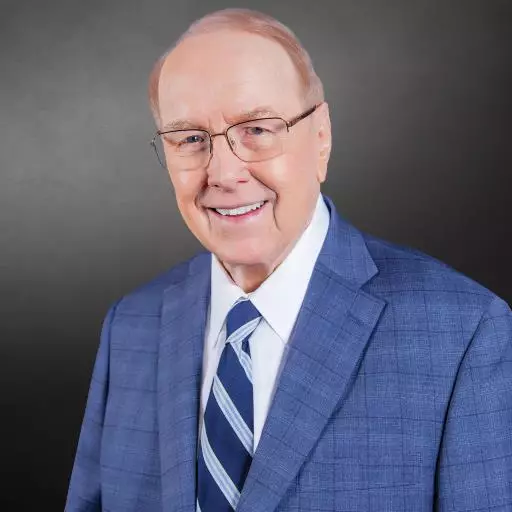
Ask the Experts: Trusting Scripture


Skeptics have spent centuries trying to disprove the Bible, yet the evidence keeps pointing back to its truth. On today’s edition of Family Talk, Dr. James Dobson gathers a distinguished panel of Christian apologists, including Lee Strobel and Josh McDowell, to examine the historical case for Scripture.
Dr. James Dobson: Welcome everyone to Family Talk. It is a ministry of the James Dobson Family Institute, supported by listeners just like you. I am Dr. James Dobson and I am thrilled that you have joined us.
Roger Marsh: Welcome to Family Talk. I am Roger Marsh. Have you ever had someone ask you why you believe what you believe about Jesus Christ and then found yourself struggling to give a solid answer in return? Well, guess what, you are not alone. But in First Peter chapter three, we are told to always be prepared to give an answer to everyone who asks about the hope that we have, and to do so with gentleness and respect.
On today's Family Talk broadcast, you are going to hear a really remarkable conversation. Dr. Dobson sat down with a panel of biblical experts to explore the evidence behind our faith. You are going to hear from Lee Strobel, Alex McFarland, Josh McDowell, Dr. Erwin Lutzer, Dr. Frank Turek, Dr. David Noebel, and Dr. Gary Habermas.
These are men who have spent their lives searching the Scriptures for truth and answers, and some of them came to Christ as skeptics. Together, they will unpack the historical proof for the reliability of God's Word, the reality of the resurrection, and why apologetics matters for the next generation. So, let's join Dr. Dobson now along with this incredible panel for today's edition of Family Talk.
Dr. James Dobson: Josh, what is the evidence that demands a verdict?
Josh McDowell: First of all, whenever you discuss Christ, the claims to deity and the resurrection, you have to look at the Scriptures. Are they true? Are they historically accurate and reliable? I had to answer two questions as a non-believer. Is what I have today what was written down or has it been changed? What people didn't like they took out, what they did like they put in. The second question I had to answer—and anyone has to answer—was what was written down true?
On the first question—now this is just being brief—on the first question, whenever you compare anything in history, you apply an historiography. A part of any major historiography—a good one, the study of the authenticity of history—is a bibliographical test. Literature of antiquity is written on material that would perish and, therefore, they would have to copy it over and over and over again.
So you ask two questions. One, what is the distance from the original to the closest copy of any literature, not the Bible or anything else? With the New Testament, we go back within 60 to 70 years. The average of any other literature is about a 900 to 1,000-year gap.
Second, you ask the number of manuscripts. This is what I didn't know. The more manuscripts you have, the easier it is to reconstruct the original and see if it is accurate, if it is reliable, if anything has been added or taken away. The average in history—Thucydides, many people consider the most accurate historian: eight manuscripts. Herodotus: eight manuscripts. Sophocles: 193. Aristotle on the Poetics: 49. Of the New Testament, we now have over 24,000 manuscripts and, probably looks like now, a discovery of another 5,000 and over 50,000 portions. The number two manuscript in all of history is the Iliad by Homer with 643 manuscripts.
Dr. James Dobson: How many prophecies are there in the Old Testament that were fulfilled in Jesus?
Josh McDowell: I would say there's about 200 and some major prophecies with about 130 ramifications. In other words, a prophecy was made and then later it was added to. There's about 333 prophecies the average person says were all fulfilled in Christ.
Dr. James Dobson: The probabilities of that occurring by chance are zero, aren't they?
Josh McDowell: Yes.
Dr. James Dobson: Lee, you told us that you were an atheist, you were a journalist, and you looked into this question very critically. You were not looking for faith; you were looking really to satisfy yourself that it wasn't true.
Lee Strobel: When I was a journalist at the Chicago Tribune, I ran into all kinds of nutcases who would claim to be God. I investigated some mental hospitals and things; I found all kinds of folks like that. So, anybody can claim to be God. The question is, can you back it up?
Jesus backed it up because He returned from the dead. We have the evidence of the empty tomb that everybody in the ancient world admitted. The tomb was empty on the third day. The question was how it got empty, but nobody claimed the body was still in it. Secondly, we have eyewitnesses—over 515 different eyewitnesses to Jesus Christ, including skeptics whose lives were transformed 180 degrees as a result of encountering the resurrected Christ.
We have early accounts. These are not legends that grew up many centuries later or even many, many decades later. But we have actually provided for us, recorded for us by the Apostle Paul, a creed that was recited by the earliest Christians that contains the essence of Christianity.
This creed says that Jesus died—why?—for our sins, that He was buried, that He was resurrected from the dead, and then it mentions names of specific eyewitnesses who encountered Jesus and whose lives were changed as a result. This creed has been dated by scholars from a wide range of theological beliefs to as early as two to three years after the life of Jesus Christ, and the beliefs that make up that creed go right back to the cross itself. So, this is not mythology and legend that developed in the many centuries after the life of Jesus. This is a news flash from ancient history that can be trusted as being true.
Dr. James Dobson: Frank and David, you haven't spoken. Let's get your thoughts.
Frank Turek: I want to piggyback on what Lee just said there. There is another angle to this. It helps me believe that the New Testament writers didn't make this up. It is called the principle of embarrassment. If you find something in an historical text that is embarrassing to the author or authors, it's probably true. You want to take those things out.
Look at the New Testament. It is filled with embarrassing details about the authors. Think about the authors. One of the biggest for me is that they were cowards. They were rebuked. Peter was rebuked when Jesus said, "Get behind me, Satan." Now, don't you think if they were making that up, Peter would have gone over to Mark and said, "Hey Mark, you know the part about the Lord calling me Satan? Can we leave that out?"
What about this? Where were the disciples when the tomb was discovered? They were hiding for fear of the Jews. The disciples ran away. Who discovered the empty tomb? The women. Now, in a culture like that, you would never have the women discover the empty tomb if you were making up a story. Why? Because a woman's testimony was considered inadmissible in a court of law.
Secondly, who wrote this down? The men. Now, would any man in here ever say that you were hiding for fear of the Jews while the women went down and discovered the empty tomb? There is no way. You would say we marched right down there, we moved that sissy Roman guard out of the way, and then we saw Jesus, who congratulated us on our great faith, and then we went and we comforted the trembling women. Right? They didn't make it up. This is real.
Dr. James Dobson: David?
David Noebel: The issue today for many young people is science. Basically, science is king. They've been told that, and they have been told that they are Christians and therefore they're people of faith, but "we're scientists and we have all the facts on our side."
What we do at the Summit is the following technique. Number one, who is the father of modern science? That turns out to be a Christian. Then we look at 41 sciences, and every one that founded those sciences is a Christian. Then we look at astronomy and archaeology and discover that those two sciences are very friendly to Christianity and the Bible. So you can actually use this type of material and convince them that the atheist is the one who demands the faith.
Alex McFarland: I think it is very important to explain to young people that the average person today thinks that all the religions of the world are essentially the same and only superficially different. What we need to help them to see is that the opposite is true—that all the religions of the world are actually fundamentally different from Christianity.
This would be a good opportunity to point out, for example, on the issue of salvation. All the other religions of the world, with no exception, believe basically in works righteousness. It is only Christianity, because Jesus Christ died on that cross and paid for sinners, it is only we who can offer people eternal life freely. In fact, we say that you cannot work for it because it has to be God's work. There is no other religion in the world that makes the claims of Jesus that we have been talking about and that actually offers people eternal life. Someone could be listening to this program today who feels alienated from God and wonders how they can approach the Almighty. Well, the answer is through Jesus and receive the free gift that He offers to everyone who savingly believes.
Dr. James Dobson: Boy, that strengthens my faith.
Lee Strobel: If I could just add one thing you mentioned earlier, Dr. Dobson, that what if somebody approached Dr. Habermas and said, "What evidence do you have for the faith being true?" I think there are certain people like myself and Josh McDowell and others who have those kinds of intellectual barriers. But there's other kinds of barriers that people have: psychological barriers. And they may not even be aware of that.
Paul Vitz, who's a psychologist at New York University, has done a book in which he studies the famous atheists through history. He found that every single one of them either had a father who abandoned them when they were young, or died when they were young, or they had a terrible relationship with their father. So you go back to Camus and Sartre and Marx and Freud and you go right down the line, up to Madalyn Murray O'Hair, and you see this pattern and the inability to trust and seek after a Heavenly Father if your earthly father has—you're holding him responsible for abandoning you or you have a terrible relationship. So sometimes it is something as subtle as that, that deters people from seeking the truth about Jesus.
Dr. James Dobson: You had an interview many years ago with Hugh Hefner.
Lee Strobel: I sat down with him to talk to him about his view of God, and he has a very vague view of God and certainly not a Christian perspective. It was pretty much indistinguishable from agnosticism, to be honest. I asked him at one point, I said, "Now, my understanding is that you had a very cool and a very distant and a very detached relationship with your father. Is that true?" And he said, "Well, yes, that's true."
I told him about this study that Dr. Vitz did about the fathers and so forth. I said, "Do you think it might be possible that your inability to reach out to a Heavenly Father is because you had such a bad relationship with your earthly father? Could that be a reason?" He looked at me and he said, "You know, I think it very well may be the reason."
So here he is conceding that perhaps that is a barrier in his own quest to find out about spiritual issues. So I think some people who don't realize that this may be a barrier, when they hear about this, they may want to pause and say, "Well, wait a minute. Is this a deterrent to me seeking after my Heavenly Father?"
Dr. James Dobson: Josh, when you spoke in chapel, you went right to the heart of that issue—that relationships with parents lead directly to or directly away from a commitment and an understanding and a faith in Jesus Christ. What is that connection?
Josh McDowell: In Psalm 26, verse 3, King David said, "I've been constantly aware of your unfailing love and I've lived according to your truth." There's a direct correlation between relationships and love and engendering to believe and wanting to believe.
One of the greatest barriers in a household today, or even evangelical homes, is that the child does not believe in the depth of my heart that my daddy that says the resurrection is true and the deity of Christ—really, truly loves me. That becomes an emotional barrier to believing the truth.
This is across the spectrum. In today's culture, we not only need to be equipped intellectually and everything to show that it is credible, that it's true; we must be able to show that it is relationally relevant. Because if we don't, many will walk away. But the problem today is coming into church, well, it is all experience, it's feelings and emotions. Show it's relationally relevant. But if you can't show it's credible, then you'll have kids living New Age and calling it biblical Christianity.
Dr. James Dobson: That is so significant to us as Christians because what that really means is that those of us who would give our lives for Christ and are doing the best we can within our own limitations to serve him, and we have these little children growing up around our feet. The probabilities of losing them and them not following in our footsteps is greatly increased if we're too busy to build those relationships. I think you can love a child immeasurably and you don't get around to showing it to him or her. This relates directly to what I consider to be our primary responsibility as parents, which is to lead our children to the feet of Jesus.
Alex McFarland: You know, Dr. Dobson, years ago Edith and Francis Schaeffer wrote that the family is the church in miniature. It is in the family that a child first learns lessons about rights, responsibilities, reward, and punishment. It is in the home that the child forms their first impressions of God. It's no accident, no secret, that the home and the church have been under attack. And so if ever there were a time for every individual Christian, churches corporately, to be at their best, to be vigilant, to be absolutely representing Jesus on a consistent, daily, personal basis, this is the time. This is the hour for the home, the church, individual believers to be at their best.
Dr. James Dobson: What other aspect of this apologetics topic should we address while I've got this marvelous panel here?
Frank Turek: I just wanted to say, piggyback on what Josh said. He mentioned, it may have been over lunch, that 90% of Christians who go away to university lose their faith in the first semester or so. I think part of the reason for that is because we haven't obeyed the greatest commandment: Love the Lord your God with all your heart, soul, and mind.
If you come to Christ because of emotional reasons—you have an emotional high of some kind or, as Josh said, it's working for me now—then you can leave Christ because of an emotional low. You will not leave Him, however—I'm speaking intellectually at this point—you will not leave Him if you know that the evidence is true beyond a reasonable doubt that He was and is who He said He was. If you have the evidence, that's why apologetics is so important. You have to know not only what you believe, but why you believe it. And that's why everybody here on the panel, I think, is so important because that's what we're trying to do.
Josh McDowell: Let me take that a step further. There's a step further in apologetics here and truth. You've got to know what you believe and why you believe it, but I believe biblically a conviction is more than that. It is experiencing it, especially today. See, almost everyone of us in this room, people listening now, the adults, in our mindset, the way we were raised, the way we were trained: if it is true, it will work. Our kids do not think that way. They do not process truth that way. Almost every single kid processes this way: if it works, it is true. And if they don't see that it works, you can have some of the greatest arguments in all the world and they'll walk away. They've got to know what they believe, why they believe it, and experience it in their life. 89% of born-again church kids will say you know something is true if it works.
Frank Turek: Lying works. I mean, I'm going into apologetic mode here, Josh. Lying works and it's not true.
Josh McDowell: That's right. That's why you've got to be able to show it's credible and relationally relevant. That's why it is not either-or; it's both. It's relationships and truth.
Dr. Gary Habermas: For the last few decades, I was pretty surprised. I came from a skeptical viewpoint to Christianity too. I told my mother after my grad work that I was very close to becoming a Buddhist. I was enamored by this question of doubt. I've been studying the doubt subject for about 30 years and lately we've been testing this with a clinical psychologist friend of mine.
About 80%, as nearly as we can tell, about 80% of all Christians who doubt—this also works with unbelievers—the majority of people who doubt, doubt not for factual but for emotional reasons. And so if we don't have something that melds the head and the heart, you don't get through. But there's something else there. You just don't not get through. As in evangelism, they don't keep what they first committed themselves to. So if you come for emotional reasons, as has already been mentioned, you reject for emotional reasons. The majority of people who ask questions ask "what if" questions in spite of the data. It is "what if it's false? All these religions of the world, what if we missed the boat?" You have all these facts, but "what if we missed the boat?" So part of this is not just knowing what you believe, but it is a discipline. It's having the discipline to train your thoughts and your feelings to follow the data.
Dr. James Dobson: Dr. Lutzer, we've all been aware, I think, that the book "The Da Vinci Code" has been enormously successful in the secular marketplace and probably a lot of Christians have read that book too. It's not fact; it is fiction and yet it is taken as fact. You've written a book. Give me the actual title.
Dr. Erwin Lutzer: The actual title is "The Da Vinci Deception." First of all, I want to agree that it is the most serious attack against Christianity that I've ever encountered because people are reading it and they are believing it. "The Da Vinci Code" attacks the two things that are most important to us: the deity of Christ by saying that Christ was a mere man until the Council of Nicaea in 325 when Constantine made Him into a god; and then secondly, that the Gnostic Gospels are more reliable than the New Testament.
Now, of course, when you look at it from that standpoint, you realize that "The Da Vinci Code" is really a house of cards held together by ropes of mist. In other words, it is indeed a novel. But because it wraps itself in history and quotes the Gnostic Gospels where Mary Magdalene is referred to, it concludes that Mary Magdalene was married to Jesus, they had a child, the Holy Grail actually is Mary Magdalene because she bore in her own body the blood of Christ.
Very briefly, two things. First, Constantine did not invent the deity of Jesus Christ. It is true that he was at the Council of Nicaea, gave the opening speech, but the delegates came to this conclusion. It's taught in the New Testament; the early church fathers believed in the deity of Christ 200 years before the Council of Nicaea.
Secondly, the Gnostic Gospels are fraudulent. The early church knew about them and we know that for a couple of reasons. Number one, the Gospel of Philip, for example, was written in about the year 250 A.D. Now, I have a question for everyone. Whose understanding of George Washington would you rather accept: someone who knew him and lived with him, or someone who wrote about him 200 years after he existed? So the Gnostic Gospels are not reliable. There are so many arguments that could be given to show that, but unfortunately, we have people reading this novel and they're going to say to themselves that the church has hidden this from us, you know, there's been this conspiracy. Jesus wanted to build the church on Mary Magdalene and lo and behold, men stole it from her and they built it on Peter. And the answer is nonsense.
Dr. James Dobson: And that is dangerous.
Dr. Erwin Lutzer: Very dangerous.
Dr. James Dobson: You know, when I was in college, I was a psychology major and I wanted to know everything I could about human behavior. I called my mother—I was 19 years old—I called my mother and I said, "Guess what, Mom?" And she said, "What?" I said, "I'm going to go to a satanic church on Sunday because I just want to observe. I want to see what they do and what they think." She begged me not to do that and implored me, and even put it on a personal level: "Don't do it for me."
Dr. Erwin Lutzer: You had a very wise mother.
Dr. James Dobson: And I listened to her and I didn't go, and I have been grateful ever since that I didn't put that nonsense in my head.
Dr. Erwin Lutzer: Yes, and it is so important for people to understand that when their young people read this, what they need to do is to make sure they get the facts. You know, I've had people say, "Well, as long as you know the Bible, you're okay." That isn't true because unless you know something about the Council of Nicaea, unless you understand the Gnostic Gospels, you can't answer "The Da Vinci Code." I would like to turn that into a positive and say to those who are listening who've read "The Da Vinci Code" or their children have read it: use it as an opportunity to teach your children about the deity of Christ and the reliability of the New Testament manuscripts. Compare the Gnostic Gospels with Josh McDowell's book, "Evidence That Demands a Verdict."
Dr. James Dobson: In other words, apologetics for children. They need it too. Maybe not on the level we're talking about here, but they need to understand why.
Lee Strobel: One of the reasons I ended up doing youth editions of my books is because we had such demand by young people saying—well, they said, you know, because I took that first step toward atheism when I was a kid, a youngster in junior high school, because I had questions and nobody was willing to engage with me and to give me answers. If we can help inoculate the kids against the kind of skepticism they're going to encounter in high school and college, then they'll be better off for it.
Roger Marsh: You know, that's the funny thing about our faith. So many people assume that following Jesus means you check your brain at the door when, in reality, the evidence for the resurrection stands up to the hardest questions a skeptic can throw at it.
You have been listening to a special edition of Dr. James Dobson's Family Talk, a recording where Dr. Dobson sat down with an incredible panel of biblical experts: Lee Strobel, Dr. David Noebel, Alex McFarland, Dr. Erwin Lutzer, Josh McDowell, Dr. Frank Turek, and Dr. Gary Habermas. If you would like to hear today's program again or share it with a friend, go to drjamesdobson.org.
Now our panel today talked about how important it is to reach young people with real answers, and today I want to tell you about two resources especially for the parents who are raising up that next generation. For fathers, it's our Strong Dads series, which offers valuable tools from Dr. Dobson to empower you in your role. And for mothers, the Empowering Moms series, which delivers practical parenting advice along with daily guidance to renew and inspire you.
To sign up for both or for either, just visit drjamesdobson.org and search for those titles, "Strong Dads" and "Empowering Moms." Those are two different resources. Again, go to drjamesdobson.org, search for the titles "Strong Dads" as well as "Empowering Moms," and we'll get you signed up for both of those free email series.
One of the deepest desires we have here at the Dr. James Dobson Family Institute is to introduce as many people as possible to the gospel of Jesus Christ, and we are pursuing that mission through broadcasts like the one you just heard today. If this program has strengthened your faith and given you confidence in the truth of Scripture, we invite you to partner with us. Your gift of any amount helps us keep broadcasting biblical truth to those who need to hear it.
To make a secure donation, visit our website at drjamesdobson.org. You can also get there even faster when you type in jdfi.org. You can also speak with a member of our constituent care team; that number is 877-732-6825. That's 877-732-6825. Or if you prefer, you can write to us. Our ministry mailing address is The Dr. James Dobson Family Institute, P.O. Box 39000, Colorado Springs, Colorado, the zip code 80949.
Well, I'm Roger Marsh and on behalf of all of us here at Family Talk and the Dr. James Dobson Family Institute, thanks so much for joining us today. Be sure to tune in again next time right here for another edition of Dr. James Dobson's Family Talk, the voice you trust for the family you love.
This has been a presentation of the Dr. James Dobson Family Institute.
Featured Offer

A new school year brings fresh opportunities—and new challenges. Between homework, activities, sports, and busy schedules, it's easy to lose sight of what matters most.
Our free 3-day email series, Back-to-School Wisdom for Parents, will equip you to navigate the coming months with greater confidence and intentionality.
Past Episodes
- A Biblical Look at the Family
- A Challenge to Pastors
- A Family in Crisis
- A Father to the Fatherless: The Story of Two Friends
- A Father's Commitment to His Daughter
- A Heart for Romanian Orphans
- A Journey of Widowhood and Grief
- A Marriage Made in Heaven
- A Mom's Heart of Prayer
- A Nation Abandoned by God
- A Picture of Life
- A Sober Update on Military Culture
- A Traditional Family
- A Tragic Account of Mistaken Identity
- A Visit to the Shores of Normandy
- A Visit With the Legendary Pat Boone
- Abraham Lincoln: The Faith of a President
- Adrenaline & Stress
- Adult Children of Alcoholics
- Albert & DeeDee Pujols: Giving Honor to God
- Alone Yet Not Alone
- America: A Call to Humility
- American Heritage Girls
- American Marxism
- An Abusive Childhood: Climbing Out of the Pit
- An Attitude of Gratitude
- Autism
- Avoiding Infidelity
- Back From the Brink of Divorce
- Beauty In Brokenness
- Becoming a Culture Warrior
- Being a Conservative Crusader
- Being a Father at Work and Home
- Being a Smart Stepmom
- Being Jesus to Your Neighbors
- Being There for Your Son
- Between a Rock and a Grace Place
- Bonhoeffer: A Hero Then and Now
- Boys and Puberty
- Breaking the Bonds of Welfare
- BUG-Puberty
- Building a Christian Home
- Building a Safe Haven In Marriage
- Building hedges Around Your Marriage
- Bullying
- Buyer Beware
- Charlie & Lucy Wedemeyer: A Message of Hope
- Children and Stress
- Choosing to See
- Christian Men & Sexuality
- Christianity and Wokeness
- Christ's Influence on History
- Cleaning House: Raising Responsible Kids
- Coach John Wooden
- College
- Confronting Guilt in Motherhood
- Congressman Frank Wolf: A Modern-Day Wilberforce
- Courageous Choices
- Courageous Manhood
- Creative Ideas for Child Discipline
- Crystal Peaks Youth Ranch
- Culture Watch
- Current Economic Tsunami
- Defend Life
- Defending Religious Liberty in the Courts
- Defunding Planned Parenthood
- Delicate Mother-In-Law Relationships
- Depression: Encouragement for the Journey
- Developing a Firsthand Faith
- Digital Invasion
- Divorce
- Dr. Ken Hutcherson: A Defender of Truth
- Dr. Ravi Zacharias: Finding My Destiny in Delhi
- Faith and Family: Raising Kids Right
- Family Finances
- Fierce Beauty
- Fighting to Preserve DOMA
- Finance
- Finding Healing After Sexual Abuse
- Finding Hope for Your Heart
- Finding Joy Amidst Cancer and Loss
- Finding New Intimaacy in Prayer
- Finding Success in a Failing Economy
- Finding True Forgiveness
- Forgiving God
- Forgiving My Father
- Foundation For Successful Families
- Free At Last
- Freeing the Family From Pornography
- From Santa to Sexting: Protecting Your Middle-Schooler
- Fueling the Passion
- Girl's Uncovered
- God Bless America
- God Is At At Work
- God Made Us a Family
- God Makes Lemonade
- God Restored Me
- God Restored Me For a Purpose
- God’s Grace Is Sufficient
- God's Tender Heart for Single Moms
- God's Way or My Way
- God's Wisdom for Raising Children
- Going All Out For Your Wife
- Greg Laurie
- Greg Laurie: A Changed Life
- Guarding Your Grandchild’s Heart
- Healing the Past and Moving On
- Healing the Wounded Spirit
- Healthy Habits
- Help for Angry Moms
- Help for Employed Moms
- Help for Hurting Teens
- Help for Parents of Prodigal Children
- Help, I'm a Spouse AND a Parent Now!
- Helping Teens Find Their Purpose
- Her Role in the Home
- Homeschooling & Beyond
- Homeschooling Today
- Honoring Our Average Joes
- Hooking Up
- Hope for Hurting Hearts
- Hope in the Midst of Unexpected Pregnancies
- Horses and Healing: New Hope for Kids
- Hutch: A Man Filled With Hope
- I Will Never Leave Thee
- I, Isaac, Take You, Rebekah
- In God We Still Trust
- Infertility and Miscarriage
- Insights on Radical Islam
- Integrity in Business
- Is America Imploding?
- James Dobson v Kathleen Sebelius: How will you get involved?
- Jealousy
- Jesus Vs. Muhammad
- Jim & Jill Kelly
- Landscape of America
- Laying Up Treasure in Heaven
- Lean Body, Fat Wallet
- Learning Disorders
- Life & Laughter with Ken Davis
- Life Without Limbs
- Live to Forgive: A Family Story of Pain and Redemption
- Living Through Loss of Spouse
- Living With Less So Your Family Has More
- Living with Less: Heading into the Holidays
- Living With the Strong Willed Child
- Loneliness in Marriage
- Longing for Marriage
- Love For a Lifetime
- Loving Those Left at Home
- Macaroni At Midnight
- Managing Your Home and Time
- Marriage in a Facebook World
- Marriage Survival Skills
- Marriage That Can Go the Distance
- Marriage: The State of Our Union
- Mary Crowley
- Memories of the Holocaust
- Mentoring Boys and Men
- Merging Premarital Expectations
- Ministering to the Elderly
- Ministry of Hymns
- Miscarriage: Grieving the Loss
- Mojave Desert Cross
- My Adoption Story
- My Autistic Son
- My Mission: Capturing a Dictator
- One Woman’s Journey of Grief & Hope
- One-on-One with Bill Gaither
- Online Dangers: Protecting Kids from Pornography
- Online Dangers: Protecting Marriages from Pornography
- Overcoming Childhood Traumas
- Overcoming the Heartaches of Life
- Overcoming the Shame of the Past
- Parenting 101: From Discipline to Sexuality
- Parenting Basics: The First Years
- Parenting Newborns and Those Early Years
- Phill Kline: Challenging an Abortion Giant
- Plugged In: Teaching Your Children to Be Media Savvy
- Politics and the Bible
- Prodigal Child
- Protecting Life and Liberty
- Protecting Your Child in a Dark Culture
- Putting an Arm Around the Post-Abortive Woman
- Raising a Handicapped Child
- Raising Boys: Routine Panic
- Raising Boys: Wounded Spirits
- Raising Kids Who Love the Lord
- Raising Men of Honor
- Raising the Standard of Excellence
- Reaching Out to Youth in Need
- Reaching the Taliban For Christ
- Real Moms, Real Jesus
- Reignite: How to Bring Joy Back into Your Life for Enduring Faith
- Religious Persecution in America
- Republican Majority
- Rescued From a Life of Ruin
- Resolving Money Conflicts in Marriage
- Revival Rising
- Scripture and the Family
- Sexuality & Singles
- She Calls Me Daddy
- Single Adults
- Singleness: Waiting for God's Best
- Singles and Sexuality
- Spiritual Mismatch
- Spiritual Training of Children
- Stand For Life In Your Community
- Staying Christian in a Pagan Culture
- Staying Strong in College
- Stepping Away from the Common Life
- Straight Talk to Young Couples
- Strengthening Military Families
- Strong Fathers, Strong Daughters
- Suicide
- Teaching Your Kids About Sex
- Ten Habits of Happy Mothers
- The Bachmanns: Their Story of Faith and Family
- The Barretts: An Amazing Adoption Story
- The Battle for Civilization
- The Battle for Marriage Continues
- The Cross: The Center of the Family
- The First Year of Marriage
- The Flipside of Feminism
- The Future of the Family: Fact and Fiction
- The God-Wild Marriage
- The Healing Power of Forgiveness
- The Heart of a Cowboy
- The Heart of the Santorum Family
- The High Cost of Low Living
- The Hope of Heaven
- The Hormone Swing
- The Immunization Debate
- The Impact of Truth on My Life
- The Insidious Nature of Infidelity
- The Joy of Good News
- The Joys and Challenges of Adoption
- The Joys and Challenges of Pregnancy
- The Key to Your Child's Heart
- The Kids Are Gone...Now What?
- The Miracle That Saved a Marriage
- The Powerful Influence of a Wife
- The Pro-Life Movement Reaches a New Generation
- The Threat of Islamic Terrorism
- The Unbelieving Spouse
- The Use and Abuse of Power
- The Value of Manhood
- The Value of One Life
- The Vital Role of Fathering
- The Way of the Wise
- To Dads & Daughters … with Love
- Tolerating the Intolerable
- Tony Dungy: A Man of Quiet Strength
- Tough Love For Kids
- Truth: Can We Both Be Right?
- Turning Hearts 180-Degrees Toward Life
- We Help; Jesus Heals
- Welcome To Our Table
- What Does Freedom of Religion Mean?
- What Has Feminism Done for You Lately?
- What Parents Should Know About Teens
- What's It Like Being Married to Me?
- What's Wrong with Being a Nice Guy?
- When Life Brings You Thorns
- When Unemployment Hits Your Home
- When You're in Love
- Why Men Leave the Church and How to Get Them Back
- Why Purity Matters
- Why We Fight For Life
- Women and Emotional Infidelity
- Women and Friendships
- Women and Intimacy
- Women in Combat: Understanding the Consequences
- Wounded Spirit

Video from Dr. James Dobson
Featured Offer
A new school year brings fresh opportunities—and new challenges. Between homework, activities, sports, and busy schedules, it's easy to lose sight of what matters most.
Our free 3-day email series, Back-to-School Wisdom for Parents, will equip you to navigate the coming months with greater confidence and intentionality.
About Family Talk
Family Talk is a Christian non-profit organization located in Colorado Springs, Colorado. Founded in 2010 by Dr. James Dobson, the ministry promotes and teaches biblical principles that support marriage, family, and child-development. Since its inception, Family Talk has served millions of families with broadcasts, monthly newsletters, feature articles, videos, blogs, books and other resources available on demand via its website, mobile apps, and social media platforms.
The Dr. James Dobson Family Institute (JDFI) is a Christian non-profit ministry located in Colorado Springs, Colorado. Founded initially as Family Talk in 2010 by Dr. James Dobson, the organization promotes and teaches biblical principles that support marriage, family, and child development. Since its inception, Family Talk has served families with broadcasts, monthly newsletters, feature articles, videos, blogs, books, and other resources available on demand via their website, mobile apps, and social media platforms. In 2017, the ministry rebranded under JDFI to expand its four core ministry divisions consisting of the Family Talk radio broadcast, the Dobson Policy and Education Centers, and the Dobson Digital Library.
Dr. Dobson's flagship broadcast called, “Dr. James Dobson’s Family Talk," is aired on more than 1,500 terrestrial radio outlets and numerous digital channels that reach millions each month.
About Dr. James Dobson
Dr. James Dobson is the Founder Chairman of the James Dobson Family Institute, a nonprofit organization that produces his radio program, “Dr. James Dobson's Family Talk.” He has an earned Ph.D. from the University of Southern California and holds 18 honorary doctoral degrees. He is the author of more than 70 books dedicated to the preservation of the family including, The New Dare to Discipline, Love for a Lifetime, Life on the Edge, Love Must Be Tough, The New Strong-Willed Child, When God Doesn't Make Sense, Bringing Up Boys, Bringing Up Girls, and, most recently, Your Legacy: The Greatest Gift. Dr. Dobson served as an associate clinical professor of pediatrics at the University of Southern California School of Medicine for 14 years and on the attending staff of Children’s Hospital of Los Angeles for 17 years in the divisions of Child Development and Medical Genetics. He has advised five U.S. presidents and served on eight national commissions. Dr. Dobson has been married to Shirley for 64 years, and they have two grown children, Danae and Ryan, and two grandchildren.
Contact Family Talk with Dr. James Dobson
540 Elkton Drive
Suite 201
Colorado Springs, CO 80907
877.732.6825