

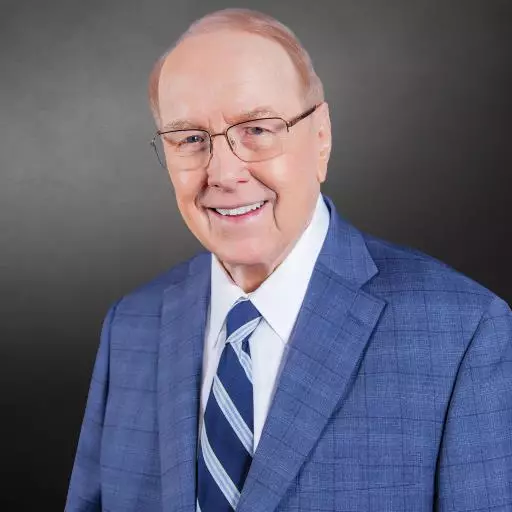
Storming the Beach: Remembering the Sacrifice of D-Day, Part 1


On June 6, 1944, 160,000 Allied troops stormed the beaches of Normandy in the battle that turned the tide of World War II. On today’s edition of Family Talk, Dr. James Dobson welcomes retired Lieutenant General Jerry Boykin to honor the upcoming anniversary of D-Day. General Boykin shares his father’s firsthand account of the Normandy landings, and reflects on the courage, sacrifice, and brotherhood that defined the Greatest Generation.
Dr. James Dobson: Welcome everyone to Family Talk. It's a ministry of the James Dobson Family Institute, supported by listeners just like you. I'm Dr. James Dobson, and I'm thrilled that you've joined us.
Roger Marsh: Well, welcome to a very special edition of Dr. James Dobson's Family Talk. I'm Roger Marsh, and today we are bringing you a special program that Dr. Dobson recorded several years ago for the 75th anniversary of D-Day, the historic Allied invasion of Normandy, France, that helped turn the tide of World War II. That took place on June the 6th.
In this recording, Dr. Dobson is joined by Retired Lieutenant General Jerry Boykin, an original member of Delta Force, commander of the legendary Green Berets, decorated war hero, and the son of a sailor who was wounded driving a Higgins boat ashore at Omaha Beach. Together, they will reflect on the courage, the brotherhood, and the extraordinary cost of that pivotal day. So, sit back and enjoy this powerful conversation featuring Dr. James Dobson and the panel talking about storming the beach, remembering the sacrifice of D-Day, on today's edition of Family Talk.
Dr. James Dobson: Well, hello everyone. I'm James Dobson, host of the radio program Family Talk, and I want you to know that I'm especially pleased to have you join us on this particular day. I wonder if anybody out there knows why. What is this day that we're commemorating today?
If you don't know, it's the anniversary of the battle known as D-Day, which was the turning point in World War II. That historic battle occurred on June 6, 1944, when the US forces and its allies crossed the English Channel at 6:00 AM and stormed five beaches at Normandy, France. One of them was designated Omaha, where 2,400 men, almost all of them American, were cut down on the sandy beach that day before the sun had gone down.
These courageous men, many of them were actually boys 17 or 18 years of age right out of high school, were tasked with defeating the powerful German army that was dug in on the cliffs above. Nothing like that battle has been seen in world history. I think that's not an overstatement.
The armada crossing the English Channel that day was 6,900 ships and more than 11,000 airplanes, which ultimately included 160,000 men in a titanic struggle. In total, 9,000 men were killed or wounded in the next few days. Today, we're very privileged to have with us one of my heroes, who has a connection to D-Day.
He is Lieutenant General Jerry Boykin, one of America's greatest military leaders. He was an original member of the US Army's Delta Force and he commanded the legendary Green Berets. He was also involved in military missions in Iran, Grenada, and Somalia, where the infamous Black Hawk Down battle was fought. General Boykin received the Bronze Star, two Purple Hearts, and other commendations too numerous to recount.
In addition to his prolific military career, he's the author of five books, the best known of which is General Boykin's autobiography, *Never Surrender*. General Boykin is also the executive vice president of the Family Research Council. He's an honorable man of God and an American patriot. General Boykin, my friend, it's so good to talk to you, especially about a subject like this, where we're going to discuss the most hallowed of days.
Jerry Boykin: Doctor, I can't tell you what a privilege it is to be with you on this very special day.
Dr. James Dobson: Tell us how you feel about what happened on D-Day.
Jerry Boykin: My dad grew up on a tobacco farm in eastern North Carolina, and at 17 years old, he slipped away from the farm and enlisted in the Navy. He and four of his brothers were there in the European theater, and he was the only one wounded. He was actually wounded there on D-Day at Normandy, helping bring troops ashore at Omaha Beach.
He was in the Navy, but he was driving a landing craft, and they took a direct hit. He doesn't remember anything except waking up in the Bethesda Naval Hospital.
Dr. James Dobson: He was driving one of the Higgins boats, right?
Jerry Boykin: That's right. He was driving a Higgins boat. When he woke up, he woke up in the hospital in Portsmouth. I said Bethesda, but it was actually Portsmouth Naval Hospital.
Dr. James Dobson: Do I understand they were hit by a mortar shell?
Jerry Boykin: Well, they're not sure. He's not sure whether it was a mortar or whether it was one of the large 75-millimeter guns or something, but most likely it was just a lucky shot with a mortar that just happened to land and hit that boat. But it blinded him in his left eye and he spent the rest of his life as a disabled veteran.
But when I took him to see *Saving Private Ryan*, it was a difficult experience for him as he watched that and you could see the things were coming back to him and you could see that it was emotional.
Dr. James Dobson: I imagine that was a difficult moment for you too, wasn't it?
Jerry Boykin: It was very difficult for me. He'd said so very little about what happened that day and then all of a sudden he was reliving it.
Dr. James Dobson: Tell me if he affirmed the accuracy of that movie.
Jerry Boykin: Yes, he did. He confirmed that the fire from the Germans was just as intense as it was portrayed in that movie. He remembered that as he was coming ashore. He remembered that vividly.
Dr. James Dobson: When the movie ended, Shirley and I didn't move. We didn't feel like moving. We were so touched by what we had seen that we just sat there and we were both in tears. I don't think any other movie has ever had that impact on me. Seeing what actually happened on that day and the days afterward was just terribly emotional for me. Was it for you?
Jerry Boykin: Oh, absolutely. You think about the 160,000 troops coming across that beach that day and a large portion of those were Americans. As you said earlier, these were 17 and 18-year-old boys literally that had been forced to become men very quickly.
Stop and think about this. Many of our millennials today have a notion about this thing called safe space. Well, when those 17 and 18-year-olds came across that beach that day, the only safe space was on the other side of the German lines and they had to fight to get there. I've got to tell you, they were truly the greatest generation.
Dr. James Dobson: Let's get back to your dad. How old was he when that occurred?
Jerry Boykin: He had just turned 18 years old in April and this was the 6th of June that D-Day occurred.
Dr. James Dobson: And he was blinded in one eye for the rest of his life.
Jerry Boykin: Yeah.
Dr. James Dobson: But it's interesting you said that he didn't talk about it much. Imagine something so significant in your life like this and not sharing it with anybody. But that was characteristic of that generation, wasn't it?
Jerry Boykin: Well, that's exactly right. And what was interesting was he would talk to his brothers who were also—they weren't at D-Day, they weren't there on the Normandy beaches, but they were World War II veterans. And he would talk to them, but he wouldn't talk to other people. If they were not a veteran and had not been there, he wouldn't talk to them about it.
I think it was because he was just unsure how they would react or respond to him. But that was what, among other things, that made me determined to be in the military because I saw that there was a brotherhood between veterans, especially those that had been in World War II. And I wanted to be part of that.
Dr. James Dobson: Do I understand that there were six boys in his family and all five of them served in the war?
Jerry Boykin: There were six boys in his family and one of them was beyond draft age, so he did not serve. But there were five of the six that did serve.
Dr. James Dobson: Were any of the others wounded?
Jerry Boykin: No, he was the only one that was wounded and the others came home unscathed. But it was interesting as to how they looked up to him actually because they knew that he had been in a situation where it would go down in history as one of the great battles of history and they actually looked up to him and admired him because he had been on those beaches that day and they knew the significance of that.
Dr. James Dobson: I knew that you had said when it came down to your generation, there was absolutely nothing for you to do but to be a military man. That that was pretty much understood in your family and especially by your dad. Is that correct?
Jerry Boykin: There's no question about that. I knew as did my brother that if you are a male and your name is Boykin, you were going to serve in the military. Now, not necessarily for a career because neither my dad nor his brothers made a career of it, but we knew we were going to serve. It was an obligation to pay our dues to be able to enjoy the freedoms and the privileges that America offers.
Dr. James Dobson: And those boys that signed up, many of them were right out of high school as I said. And they—I wonder if they really knew what they were getting into because it was just so horrendous.
Jerry Boykin: Unless you've experienced combat, you can't imagine what combat is like and I am sure that they did not know what they were getting into. They knew they were going to do their part to serve the country, to protect and defend the freedoms of this nation, and to some extent to avenge the atrocities of Pearl Harbor, but I don't think they knew what combat was going to be like, particularly at the beaches of Omaha.
Dr. James Dobson: Tell me how young, immature men like that, boys really, deal with fear, abject fear. I mean, they had to know that they were going right into the face of death. They ran across those beaches with machine gun fire and mortar shells just raining down on them. And they did it. It's amazing to me that they did it. How does that come about?
Jerry Boykin: Well, here's my answer that is two things. Number one is leadership. You've got to have non-commissioned officers and officers that have the courage to get out there under the worst of circumstances and lead these men into battle. You've got to lead the way. That's why the motto of the infantry is "follow me." You've got to lead and they've got to follow.
The second thing is, though, one of the most fundamental reasons as to why in the military we build strong teams and strong units is because it is a brotherhood. And what you wind up with is you wind up with a situation where you're not going to let your buddy down.
If he gets out of that Higgins boat and you see him up to his waist or to his neck in water, you're going in right behind him because you don't want to let him down. You don't want to disappoint him and you want to be there if something happens to him because that is it's all part of the brotherhood. But that comes from a lot of training and developing men into brothers in arms.
Dr. James Dobson: I've heard it said that people assume that guys go into battle like that for God and country, but it's really above that for each other. Is that correct?
Jerry Boykin: There's no question about it. You may serve on a day-to-day basis because you've taken an oath to the Constitution. But when you're in combat, it is about the guy on your right and left, your front and your back. It is about your brothers.
And Dr. Dobson, you stop and think about going back to the Battle of Mogadishu. Most people don't realize that we were fighting for 18 hours in the city of Mogadishu over two dead bodies, two pilots that we could not get out of a helicopter and nobody was going to leave them.
It's a very sacred code of honor and it's encapsulated in what they call the Ranger Creed, which says, "Never shall I leave a fallen comrade to fall into the hands of the enemy." And that is what we were fighting for there. And there was a lot of that in World War II. They fought alongside each other because they were a brotherhood.
Dr. James Dobson: You know, I'm sure that most American people who happen to know about D-Day don't realize that those who survived the Normandy landings and made it to the top of the cliffs had to fight all the way to Germany for what, three or four more months before it was all over.
Jerry Boykin: That's right.
Dr. James Dobson: So many of them were dead by the end of that day. Others died along the way. I mean, the price they paid is just impossible to calculate. And yet the schools are not teaching about it.
Jerry Boykin: No, and it's such an important part of our history. Dr. Dobson, if you're a young American growing up today, there's a pretty good chance that you're not patriotic. In fact, surveys show that as much as 57% of the young people that are surveyed today are not proud to be Americans.
But you can't fail to be proud to be an American if you know the history of this country. If you know what those boys did on that beach that day, if you understand what they did at the Chosin Reservoir in Korea just a few years later, if you know the sacrifices that were made in Vietnam, it tends to make you a whole lot prouder to be an American. And I think that the failure of teaching and stressing history is a major failure in our society today.
Dr. James Dobson: There's a story that I've heard that I'd like you to elaborate on, where the men who ran across that beach at Omaha got to kind of a barrier where they were sort of protected from the machine gun fire above. And they were jammed up against that barrier. It has a name, I can't remember what it is, but they were paralyzed there, paralyzed by fear.
And there was a possibility that that whole thing could collapse and the Allied armies could have been driven back into the sea. And there was a moment where the decision had to be made: you either die here or you die on the way up these cliffs, let's go, or something like that. Can you elaborate on that?
Jerry Boykin: Yeah, I've heard the same story and I think even in the movie *Saving Private Ryan*, they showed some of that. And I think that where this occurred was at Pointe du Hoc. Pointe du Hoc was where the 2nd Ranger Battalion was tasked with scaling a 100-foot cliff to get up to the German guns up on the top there because those German guns could have been very, very damaging and threatening to the entire operation.
So that's exactly what they said: "We're going to the top. And we can stay here and die or we can go up there and take our chances." So that's my understanding of what happened.
Dr. James Dobson: Ronald Reagan spoke up at Pointe du Hoc, and he talked about those men. In fact, the survivors, some of them were there on the cliff, at the top of the cliff, on D-Day, I think it was the 40th anniversary of D-Day. And he gave one of the most powerful speeches that any president has ever given. It was written by Peggy Noonan. Are you acquainted with that speech?
Jerry Boykin: I am, and I've read that speech. And I've also seen excerpts from the speech by video. And he actually had some of those men that scaled that cliff there that day with him, and I'm sure you saw them.
What's so unique about that generation is they just didn't consider themselves heroes. They considered themselves having done their part. They came home and started their lives when they got back to the United States. And it was like if you say to them, "You're the greatest generation," it's sort of like they just look at you like, "What does that mean?" Still today, if you get around some of these 90-plus-year-old veterans, they're very humble people.
Dr. James Dobson: You know, I've shared this before, but it really never leaves me. That the men who paid that price, those who died and the ones who were wounded and facing that horrendous challenge, came home and it was their children during the 1960s who were in college or a little bit later who hated them.
They hated their parents. The phrase "don't trust anyone over 30." And there was this tremendous rebellion. They didn't appreciate the price that had been paid for their freedom.
Jerry Boykin: Yeah, some of them were the dope-smoking hippies of the 60s that were out there burning American flags and draft cards and protesting the war in Vietnam. And it's very, very sad. I will tell you, I was not one of those. I was in ROTC and eagerly awaiting my opportunity to go serve when I graduated from Virginia Tech. But that's exactly right and it's hard to explain.
But again, part of it is this lack of focus on history, of the history of this nation. You and I, we really enjoy history and we read. We read about the Founding Fathers and the Revolutionary War, and we read about the sacrifices that have been made. And we know who these Founding Fathers were just because they've come alive through our reading.
But that is not the norm. My generation, quite frankly, was probably the last generation that really got a dose of history where history was taken seriously in terms of its ultimate benefits to our society. They don't know today especially.
But even in my day as a college student, it was amazing to me that they didn't know about so much of what I had grown up with. You know, so much about World War II and about D-Day and wanting to know more and hanging on every word when I'd hear these old veterans talk about it. And my generation in general didn't know a whole lot about that.
Dr. James Dobson: Did that play a key role in your willingness to give your life to the defense of your country?
Jerry Boykin: Absolutely. Absolutely. I was proud to be an American. I wanted to do my service and I went into situations where I was scared to death. But when you have the responsibility for leadership, you just you get over that. You work through it because courage is not the absence of fear. It's overcoming your fear.
Dr. James Dobson: Tell us some more about your dad. What do you remember about him?
Jerry Boykin: Well, I said that he didn't make a career of the military and that is not entirely true. He's an interesting guy in that he was a disabled veteran, he got discharged, he married his sweetheart, started raising his family, and then the Korean War came along and the Army had a program that would allow disabled veterans that could still function to actually come into the Army.
And he went in the Army. They took him back in. So he went in the Army and he served through the Korean War and then he was discharged a second time. And then he applied to go to work for the US Marine Corps. So he actually worked 32 years for the Marine Corps at Cherry Point Marine Air Station to include a tour in Vietnam with the Marines.
He loved it. He had taken an oath. He felt strongly about that. He was not a high school graduate, but he was a very smart man and he understood the importance of people being willing to serve and that's what he wanted to do. And he never wanted anything out of America but opportunity. That's it.
He wanted opportunity. He believed in the mandate to love our neighbors. He demonstrated that in the way he lived his life. He believed that it was his responsibility to take care of his family. When his parents, who were sharecroppers in eastern North Carolina there, when they were no longer able to farm and they had no place to go, he actually took his Navy disability pension and built a house for them.
And they lived in that house until they both died. And that was about taking care of his own family. He didn't look for any outside help. He didn't think the government was responsible to take care of him and his family. He knew that that was his mandated responsibility.
Dr. James Dobson: My goodness, they're made out of something else. Well, there's so much to talk about here. We've been talking to Retired Lieutenant General Jerry Boykin on this anniversary of the D-Day landings on June 6, 1944. There is so much here. I've enjoyed this conversation, Jerry. Would you come back and be with us next time to kind of finish this conversation?
Jerry Boykin: You know I will. I'll be there anytime you need me. And I look forward to being on your program because I think that you have an incredible audience.
Dr. James Dobson: Let's leave our listeners with a thought. I think I read that you said your father was a man's man. He was, wasn't he?
Jerry Boykin: Oh, indeed he was. He was an athlete, a hunter, a fisherman, an outdoorsman, but he was also a man that had very strong principles and values and he lived by them.
Dr. James Dobson: Well, you and I have been blessed to have such a man as a father. Hey, thanks for being with us and we'll talk again next time.
Jerry Boykin: Thank you, Doctor.
Roger Marsh: This has been a presentation of the Dr. James Dobson Family Institute.
Dr. James Dobson: With today's Family Talk Minute, here's Dr. James Dobson. Very few stories are as gripping as Herman Melville's novel, *Moby Dick*. And like most literary classics, its theme is as timeless as the age. The story focuses, of course, on the great whaling ship, the Pequod, under the leadership of Captain Ahab.
The crew quickly learns that Ahab is on a quest to track down and kill Moby Dick, the great white whale that took his leg years ago. He confesses his burning desire for revenge, and soon Ahab is alone in a small boat, facing the giant with nothing more than a harpoon. And with all the hate and strength he can muster, he thrusts the harpoon into the whale, only to find its rope wrapped around his neck.
He's dragged into the depths of the sea and drowned. It's a haunting but insightful tale about what happens when a person is consumed by vengeance. For more information, visit drdobsonminute.org.
Featured Offer

Every marriage faces pressure. Busy schedules, financial stress, unmet expectations, poor communication, and unresolved conflicts can slowly create distance in a relationship. Many couples love each other deeply, yet feel stuck and are unsure how to reconnect and move forward in a healthy way.
Dr. James Dobson’s newly revised digital download, 10 Tips for a Long-Lasting Marriage, offers:
- Clear, trusted guidance for navigating common marital challenges
- Encouragement for couples who feel stuck or disconnected
- A practical strategy for building a marriage that doesn’t just survive—but truly thrives
This free resource is designed to help you strengthen your relationship with clarity, hope, and confidence.
Past Episodes
- A Biblical Look at the Family
- A Challenge to Pastors
- A Family in Crisis
- A Father to the Fatherless: The Story of Two Friends
- A Father's Commitment to His Daughter
- A Heart for Romanian Orphans
- A Journey of Widowhood and Grief
- A Marriage Made in Heaven
- A Mom's Heart of Prayer
- A Nation Abandoned by God
- A Picture of Life
- A Sober Update on Military Culture
- A Traditional Family
- A Tragic Account of Mistaken Identity
- A Visit to the Shores of Normandy
- A Visit With the Legendary Pat Boone
- Abraham Lincoln: The Faith of a President
- Adrenaline & Stress
- Adult Children of Alcoholics
- Albert & DeeDee Pujols: Giving Honor to God
- Alone Yet Not Alone
- America: A Call to Humility
- American Heritage Girls
- American Marxism
- An Abusive Childhood: Climbing Out of the Pit
- An Attitude of Gratitude
- Autism
- Avoiding Infidelity
- Back From the Brink of Divorce
- Beauty In Brokenness
- Becoming a Culture Warrior
- Being a Conservative Crusader
- Being a Father at Work and Home
- Being a Smart Stepmom
- Being Jesus to Your Neighbors
- Being There for Your Son
- Between a Rock and a Grace Place
- Bonhoeffer: A Hero Then and Now
- Boys and Puberty
- Breaking the Bonds of Welfare
- BUG-Puberty
- Building a Christian Home
- Building a Safe Haven In Marriage
- Building hedges Around Your Marriage
- Bullying
- Buyer Beware
- Charlie & Lucy Wedemeyer: A Message of Hope
- Children and Stress
- Choosing to See
- Christian Men & Sexuality
- Christianity and Wokeness
- Christ's Influence on History
- Cleaning House: Raising Responsible Kids
- Coach John Wooden
- College
- Confronting Guilt in Motherhood
- Congressman Frank Wolf: A Modern-Day Wilberforce
- Courageous Choices
- Courageous Manhood
- Creative Ideas for Child Discipline
- Crystal Peaks Youth Ranch
- Culture Watch
- Current Economic Tsunami
- Defend Life
- Defending Religious Liberty in the Courts
- Defunding Planned Parenthood
- Delicate Mother-In-Law Relationships
- Depression: Encouragement for the Journey
- Developing a Firsthand Faith
- Digital Invasion
- Divorce
- Dr. Ken Hutcherson: A Defender of Truth
- Dr. Ravi Zacharias: Finding My Destiny in Delhi
- Faith and Family: Raising Kids Right
- Family Finances
- Fierce Beauty
- Fighting to Preserve DOMA
- Finance
- Finding Healing After Sexual Abuse
- Finding Hope for Your Heart
- Finding Joy Amidst Cancer and Loss
- Finding New Intimaacy in Prayer
- Finding Success in a Failing Economy
- Finding True Forgiveness
- Forgiving God
- Forgiving My Father
- Foundation For Successful Families
- Free At Last
- Freeing the Family From Pornography
- From Santa to Sexting: Protecting Your Middle-Schooler
- Fueling the Passion
- Girl's Uncovered
- God Bless America
- God Is At At Work
- God Made Us a Family
- God Makes Lemonade
- God Restored Me
- God Restored Me For a Purpose
- God’s Grace Is Sufficient
- God's Tender Heart for Single Moms
- God's Way or My Way
- God's Wisdom for Raising Children
- Going All Out For Your Wife
- Greg Laurie
- Greg Laurie: A Changed Life
- Guarding Your Grandchild’s Heart
- Healing the Past and Moving On
- Healing the Wounded Spirit
- Healthy Habits
- Help for Angry Moms
- Help for Employed Moms
- Help for Hurting Teens
- Help for Parents of Prodigal Children
- Help, I'm a Spouse AND a Parent Now!
- Helping Teens Find Their Purpose
- Her Role in the Home
- Homeschooling & Beyond
- Homeschooling Today
- Honoring Our Average Joes
- Hooking Up
- Hope for Hurting Hearts
- Hope in the Midst of Unexpected Pregnancies
- Horses and Healing: New Hope for Kids
- Hutch: A Man Filled With Hope
- I Will Never Leave Thee
- I, Isaac, Take You, Rebekah
- In God We Still Trust
- Infertility and Miscarriage
- Insights on Radical Islam
- Integrity in Business
- Is America Imploding?
- James Dobson v Kathleen Sebelius: How will you get involved?
- Jealousy
- Jesus Vs. Muhammad
- Jim & Jill Kelly
- Landscape of America
- Laying Up Treasure in Heaven
- Lean Body, Fat Wallet
- Learning Disorders
- Life & Laughter with Ken Davis
- Life Without Limbs
- Live to Forgive: A Family Story of Pain and Redemption
- Living Through Loss of Spouse
- Living With Less So Your Family Has More
- Living with Less: Heading into the Holidays
- Living With the Strong Willed Child
- Loneliness in Marriage
- Longing for Marriage
- Love For a Lifetime
- Loving Those Left at Home
- Macaroni At Midnight
- Managing Your Home and Time
- Marriage in a Facebook World
- Marriage Survival Skills
- Marriage That Can Go the Distance
- Marriage: The State of Our Union
- Mary Crowley
- Memories of the Holocaust
- Mentoring Boys and Men
- Merging Premarital Expectations
- Ministering to the Elderly
- Ministry of Hymns
- Miscarriage: Grieving the Loss
- Mojave Desert Cross
- My Adoption Story
- My Autistic Son
- My Mission: Capturing a Dictator
- One Woman’s Journey of Grief & Hope
- One-on-One with Bill Gaither
- Online Dangers: Protecting Kids from Pornography
- Online Dangers: Protecting Marriages from Pornography
- Overcoming Childhood Traumas
- Overcoming the Heartaches of Life
- Overcoming the Shame of the Past
- Parenting 101: From Discipline to Sexuality
- Parenting Basics: The First Years
- Parenting Newborns and Those Early Years
- Phill Kline: Challenging an Abortion Giant
- Plugged In: Teaching Your Children to Be Media Savvy
- Politics and the Bible
- Prodigal Child
- Protecting Life and Liberty
- Protecting Your Child in a Dark Culture
- Putting an Arm Around the Post-Abortive Woman
- Raising a Handicapped Child
- Raising Boys: Routine Panic
- Raising Boys: Wounded Spirits
- Raising Kids Who Love the Lord
- Raising Men of Honor
- Raising the Standard of Excellence
- Reaching Out to Youth in Need
- Reaching the Taliban For Christ
- Real Moms, Real Jesus
- Reignite: How to Bring Joy Back into Your Life for Enduring Faith
- Religious Persecution in America
- Republican Majority
- Rescued From a Life of Ruin
- Resolving Money Conflicts in Marriage
- Revival Rising
- Scripture and the Family
- Sexuality & Singles
- She Calls Me Daddy
- Single Adults
- Singleness: Waiting for God's Best
- Singles and Sexuality
- Spiritual Mismatch
- Spiritual Training of Children
- Stand For Life In Your Community
- Staying Christian in a Pagan Culture
- Staying Strong in College
- Stepping Away from the Common Life
- Straight Talk to Young Couples
- Strengthening Military Families
- Strong Fathers, Strong Daughters
- Suicide
- Teaching Your Kids About Sex
- Ten Habits of Happy Mothers
- The Bachmanns: Their Story of Faith and Family
- The Barretts: An Amazing Adoption Story
- The Battle for Civilization
- The Battle for Marriage Continues
- The Cross: The Center of the Family
- The First Year of Marriage
- The Flipside of Feminism
- The Future of the Family: Fact and Fiction
- The God-Wild Marriage
- The Healing Power of Forgiveness
- The Heart of a Cowboy
- The Heart of the Santorum Family
- The High Cost of Low Living
- The Hope of Heaven
- The Hormone Swing
- The Immunization Debate
- The Impact of Truth on My Life
- The Insidious Nature of Infidelity
- The Joy of Good News
- The Joys and Challenges of Adoption
- The Joys and Challenges of Pregnancy
- The Key to Your Child's Heart
- The Kids Are Gone...Now What?
- The Miracle That Saved a Marriage
- The Powerful Influence of a Wife
- The Pro-Life Movement Reaches a New Generation
- The Threat of Islamic Terrorism
- The Unbelieving Spouse
- The Use and Abuse of Power
- The Value of Manhood
- The Value of One Life
- The Vital Role of Fathering
- The Way of the Wise
- To Dads & Daughters … with Love
- Tolerating the Intolerable
- Tony Dungy: A Man of Quiet Strength
- Tough Love For Kids
- Truth: Can We Both Be Right?
- Turning Hearts 180-Degrees Toward Life
- We Help; Jesus Heals
- Welcome To Our Table
- What Does Freedom of Religion Mean?
- What Has Feminism Done for You Lately?
- What Parents Should Know About Teens
- What's It Like Being Married to Me?
- What's Wrong with Being a Nice Guy?
- When Life Brings You Thorns
- When Unemployment Hits Your Home
- When You're in Love
- Why Men Leave the Church and How to Get Them Back
- Why Purity Matters
- Why We Fight For Life
- Women and Emotional Infidelity
- Women and Friendships
- Women and Intimacy
- Women in Combat: Understanding the Consequences
- Wounded Spirit

Video from Dr. James Dobson
Featured Offer
Every marriage faces pressure. Busy schedules, financial stress, unmet expectations, poor communication, and unresolved conflicts can slowly create distance in a relationship. Many couples love each other deeply, yet feel stuck and are unsure how to reconnect and move forward in a healthy way.
Dr. James Dobson’s newly revised digital download, 10 Tips for a Long-Lasting Marriage, offers:
- Clear, trusted guidance for navigating common marital challenges
- Encouragement for couples who feel stuck or disconnected
- A practical strategy for building a marriage that doesn’t just survive—but truly thrives
This free resource is designed to help you strengthen your relationship with clarity, hope, and confidence.
About Family Talk
Family Talk is a Christian non-profit organization located in Colorado Springs, Colorado. Founded in 2010 by Dr. James Dobson, the ministry promotes and teaches biblical principles that support marriage, family, and child-development. Since its inception, Family Talk has served millions of families with broadcasts, monthly newsletters, feature articles, videos, blogs, books and other resources available on demand via its website, mobile apps, and social media platforms.
The Dr. James Dobson Family Institute (JDFI) is a Christian non-profit ministry located in Colorado Springs, Colorado. Founded initially as Family Talk in 2010 by Dr. James Dobson, the organization promotes and teaches biblical principles that support marriage, family, and child development. Since its inception, Family Talk has served families with broadcasts, monthly newsletters, feature articles, videos, blogs, books, and other resources available on demand via their website, mobile apps, and social media platforms. In 2017, the ministry rebranded under JDFI to expand its four core ministry divisions consisting of the Family Talk radio broadcast, the Dobson Policy and Education Centers, and the Dobson Digital Library.
Dr. Dobson's flagship broadcast called, “Dr. James Dobson’s Family Talk," is aired on more than 1,500 terrestrial radio outlets and numerous digital channels that reach millions each month.
About Dr. James Dobson
Dr. James Dobson is the Founder Chairman of the James Dobson Family Institute, a nonprofit organization that produces his radio program, “Dr. James Dobson's Family Talk.” He has an earned Ph.D. from the University of Southern California and holds 18 honorary doctoral degrees. He is the author of more than 70 books dedicated to the preservation of the family including, The New Dare to Discipline, Love for a Lifetime, Life on the Edge, Love Must Be Tough, The New Strong-Willed Child, When God Doesn't Make Sense, Bringing Up Boys, Bringing Up Girls, and, most recently, Your Legacy: The Greatest Gift. Dr. Dobson served as an associate clinical professor of pediatrics at the University of Southern California School of Medicine for 14 years and on the attending staff of Children’s Hospital of Los Angeles for 17 years in the divisions of Child Development and Medical Genetics. He has advised five U.S. presidents and served on eight national commissions. Dr. Dobson has been married to Shirley for 64 years, and they have two grown children, Danae and Ryan, and two grandchildren.
Contact Family Talk with Dr. James Dobson
540 Elkton Drive
Suite 201
Colorado Springs, CO 80907
877.732.6825