

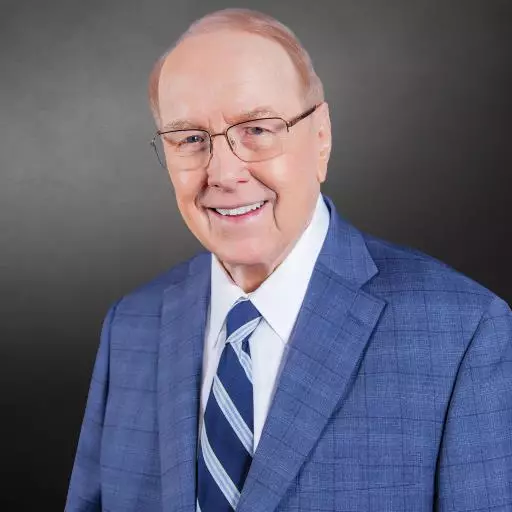
Defeating Dementia, Part 1


Alzheimer’s disease is one of the most feared diagnoses in America—but lifestyle choices may dramatically lower your risk. On today’s edition of Family Talk, Dr. James Dobson welcomes vascular surgeon and author Dr. Richard Furman to discuss his book, Defeating Dementia. They explore how diet, exercise, and weight management can reduce your chances of developing Alzheimer’s by as much as 67 percent.
Dr. James Dobson: Welcome everyone to Family Talk. It's a ministry of the James Dobson Family Institute, supported by listeners just like you. I'm Dr. James Dobson, and I'm thrilled that you've joined us.
Roger Marsh: Welcome to Family Talk, the broadcast division of the Dr. James Dobson Family Institute. I'm Roger Marsh. Here's a sobering statistic for you: according to the Alzheimer's Association, an estimated 7.4 million Americans are currently living with Alzheimer's dementia, and projections suggest that the number of new cases could double by the year 2050.
For families walking through this season right now, the fear and grief can feel all-consuming. The question many are quietly asking is, "Could this happen to me?" On today's edition of Dr. James Dobson's Family Talk, Dr. Dobson sits down with his longtime friend, Dr. Richard Furman, for a candid and deeply encouraging conversation about what we can actually do to lower our risk of developing dementia.
Dr. Furman brings over 30 years of experience as a vascular surgeon and has served as president of both the North Carolina chapter of the American College of Surgeons and the North Carolina Surgical Society. He also co-founded World Medical Mission, the medical arm of Samaritan's Purse. Dr. Furman's book, *Defeating Dementia*, grew out of watching his mother-in-law decline through every stage of Alzheimer's and discovering that the research points to real, actionable hope. The conversation is coming up for you right now on today's edition of Dr. James Dobson's Family Talk.
Dr. James Dobson: Today, we're going to talk about a very difficult subject that many families are dealing with today, and that is the debilitating diagnosis of Alzheimer's. We were talking here in the studio just a few minutes ago and agreed that, from our perspective, this may be the cruelest disease of all.
Did you know that, according to the Alzheimer's Association, 5.7 million Americans are living with it? Projections are that that number will rise to 14 million by the year 2050. An even more sobering statistic is that half of all Americans who are now 85 or older are afflicted by this horrible disease. Half of the Americans who have reached that age. I haven't, but I know a lot of people who have and who are suffering with it.
I said this is one of the most cruel of all illnesses. Let me tell you why. It robs patients of their memories of childhood and courtship and parents and awareness of grandchildren and friends. It strips them of fellowship with God and a reflection on life. Every good thing is taken away, especially the marital relationship, dating, and the fun things, and the humor, and the vacations. Everything you've experienced is gone. Only one party remembers them.
It is devastating for victims and families alike. Those closest to those afflicted often suffer their own private hell. I don't use that word often, but this comes close to it. There is no cure for it, but there may be an avenue to prevention, and that's what we're going to talk about today.
This is what makes this program so important. I said also before we went on the air that this may be one of the most important topics that we have dealt with in many years. It's relevant to everybody, including the millennials, who are sometimes accused of being self-absorbed. Many of their grandparents are going through it, and some of their parents will walk this path. Life passes awfully quickly, so it's relevant to you, too. In fact, you may be in the best position to prevent it, and we'll talk more about that.
The book that we're going to be discussing today is a must-read by all of us. It's titled *Defeating Dementia*. It's written by my guest and wonderful friend, Dr. Richard Furman, a cardiologist and surgeon who has been in practice for 30 years. He has been the surgeon and the physician for Franklin Graham and Billy Graham, and, of course, the Samaritan's Purse folks. I wish I could take the time to tell you all of the things that he's done. Dick, welcome back to Family Talk. It's so good to have you here.
Dr. Richard Furman: It's great to be here again, Dr. Dobson. Good to be here.
Dr. James Dobson: We've discussed several of your books in previous programs, and I've appreciated them all. But this one is unique. Do you feel that way about it?
Dr. Richard Furman: It's the most exciting one I've ever written and the most informative. It is the one that everybody ought to know about, *Defeating Dementia*.
Dr. James Dobson: Did I overstate the case of what Alzheimer's is like?
Dr. Richard Furman: No, it's known to be the most dreaded disease in America. People dread that more than cancer. Studies show that if you ask that question. To watch your mother-in-law, Mrs. Dell, as I put in the book, watch her go through 15 years of the progressive stages of Alzheimer's, it is hard to believe.
Dr. James Dobson: I mentioned also before we went on the air that I have a very good friend, also a physician, whose wife has been experiencing Alzheimer's, and now she is dying. I've followed it closely. It's a tender spot. I don't know how people deal with it. You wrote about your mother-in-law in your book. I've got a paragraph from that book. Would you read it for us?
Dr. Richard Furman: It says, "What drove you to write this book?" I watched my mother-in-law progress through the three stages of Alzheimer's. I watched her go from being an active middle-aged lady to beginning to forget little things like her car keys and not remembering where she was driving to and calling someone on the phone and not remembering who she was calling when they answered.
I saw her lose everyday independence the day I got her doctor to write a prescription which we placed on the refrigerator stating "no driving." Then came the walker, the wheelchair, and finally being bedridden and completely dependent on caregivers.
Dr. James Dobson: So you've watched this, not only as a physician taking care of patients medically but inside your family.
Dr. Richard Furman: Right, and that's what really got me. I'm a physician. I always thought it was the genes, but I was just wondering what's going on in her brain.
Dr. James Dobson: Until recently, medical science thought it was primarily genetic, right?
Dr. Richard Furman: Right. We thought the genes were a big part of it. But when I started reading and studying the medical literature to see what part genes really have to play with it, it was remarkable for me as a doctor to realize it's not nearly as significant as I thought. Only 5% of Alzheimer's is due to the Alzheimer's gene that guarantees you're going to have Alzheimer's.
There's another gene, APOE4, which 10 to 20% of Americans have, which makes you more prone to have Alzheimer's. But it doesn't mean you're going to have Alzheimer's, nor does it mean you're not going to have Alzheimer's unless you do something about it. The things that you have control over are three lifestyles that you can change.
Dr. James Dobson: That's got to be encouraging, isn't it?
Dr. Richard Furman: It's very encouraging. I was shocked.
Dr. James Dobson: Each of us is on the hook for our own health, really, at that stage.
Dr. Richard Furman: That's exactly what I want the reader of this book to realize: that the road you're on determines your destination.
Dr. James Dobson: Before you tell us that, give us the evidence for it. The Journal of the American Medical Association is one of the most prestigious journals in medicine around the world. They did a study of 1,800 patients over a period of 14 years. This is hard research.
Dr. Richard Furman: It followed these people for 14 years, and they found that the ones who ate properly versus the ones who ate the bad food were 40% more likely to develop Alzheimer's. That was shocking.
What was even more dramatic was they had a group of them that exercised and a group that didn't. The ones that exercised had a 48% less likelihood of developing Alzheimer's. Then there was another group that did both, they ate properly and exercised properly, and they had a 67% less likelihood.
Dr. James Dobson: I hope everybody got that because those are significant statistics. Go back and think about that. If I walked up to you and I said that, without a great deal of effort, you can lower your risk 67% just by doing these three things, man alive, I think I could sell that.
Dr. Richard Furman: That only covered the food and the exercise. I got to thinking about the third lifestyle: the weight. This was what was shocking: if you are overweight, you've doubled your odds of getting Alzheimer's. If you're obese, you've tripled your chances of getting Alzheimer's.
This is something that everybody ought to know. Those three different lifestyles can change your future.
Dr. James Dobson: Give them to us again.
Dr. Richard Furman: The food that you eat was the 40%, the exercise was the 48%, and the combination was the 67%. But the weight is important. If you're overweight, it doubles your odds of developing Alzheimer's. If you're obese, it triples your odds. The more you read about these three lifestyles, they all zero in on the health of your arteries.
Dr. James Dobson: In fact, that's what your book is really about. It's about the health of the arteries.
Dr. Richard Furman: You can't do a study of the literature about Alzheimer's that it doesn't come back to the health of your arteries. At least a third of the articles will talk about how the health of your heart is similar to the health of your brain. There are things we can be doing that protect the blood flow. You've got to have the nutrients and oxygen going into the brain, but it also has to clear out the debris of the brain. That blood flow is the most significant part of defeating Alzheimer's.
Dr. James Dobson: We're going to talk about each of those three because it's really important to understand what's going on. The title of this book is magnificent: *Defeating Dementia*. Can you really make that statement? Can you really say to America and the world, "You probably don't have to go this route"?
Dr. Richard Furman: Exactly. Everybody listening to us today and everybody that reads the book is being presented a fork in the road. They're going to decide if they continue on like they are or if they are going to commit to a change. The book goes through all of the different steps of what we can be doing to defeat dementia.
Dr. James Dobson: I was 54 years of age, and I was playing basketball three times a week. I absolutely loved it. It was the most fun part of my week. I went up for a layup and shot the ball clear over the basket, and I knew something was drastically wrong. I had chest pain and I had a heart attack. That threatened my life, and I could have died right there, but it saved my life because I made some changes very quickly and I kept them.
One of them was exercise. The second is I changed my way of eating. It was radical. You spend 10 days in a cardiac care unit not knowing if you're going to live, it gets your attention. I lay there and I said, "Lord, if You give me another chance, I won't mess it up."
A lot of people change their diets for a short time. It's so hard. The whole culture takes you in the other direction. I just had a birthday, and there was stuff presented to me there that I haven't eaten in a while. But then the third one was the hardest for me, and that's weight. You would think exercising that amount would keep the weight off, but you still have to exercise a lot of discipline.
Dr. Richard Furman: It's all intertwined. Didn't your father have heart attacks?
Dr. James Dobson: My dad had four brothers, and all five of them died of coronary artery disease. My grandmother had a stroke and my grandfather had a heart attack. Seven of them on the paternal side died of heart attacks or strokes. And here I am, healthy-seeming.
Dr. Richard Furman: The first time you ever told me that, Dr. Dobson, it just ran through my mind. Your exercise increased your "hero" HDL cholesterol, which cleans out those arteries. Exercising every day for those years has saved your life. That's why you're sitting here today. You made that commitment to exercise. There's so much to exercise that's so significant not only with your heart but with Alzheimer's.
Dr. James Dobson: I had no idea that I was affecting my brain.
Dr. Richard Furman: Anytime you affect your heart, you're affecting your brain with more blood flow. Exercise increases your good HDL which cleans out your arteries. There's not a pill you can take to increase your HDL. Exercise is the main thing.
Also, exercise increases the strength of your heart. It's like lifting weights to get your biceps thicker. Someone who exercises has a heart that is much thicker and stronger, so it's more efficient. Not only did you clean out your arteries, but you increased the strength of your heart. There's no medicine that will increase the strength of your heart.
There was a study where they studied people who exercised the most and the least. The ones in the bottom 10% were twice as likely to develop Alzheimer's, and they followed them along with PET scans.
Dr. James Dobson: That's scary.
Dr. Richard Furman: Well, just let that sink in. They followed it along, and the ones that didn't exercise had beta-amyloid building up in their brain. More and more you read these articles, even walking is considered great exercise with Alzheimer's.
One study showed that if you can't walk one lap or a quarter of a mile versus someone who walks two miles a day, they were double the chance of getting Alzheimer's. So even walking is a great exercise in preventing Alzheimer's. It enhances the other lifestyles. It convinces your mind that if you exercise, you are going to eat differently and lose some weight.
They're all intertwined. I'd say the one most important takeaway from this program: get yourself a goal to exercise five to six days a week starting today, even if it's just walking.
Dr. James Dobson: It also affects other organs of the body, doesn't it? Those same disciplines affect diabetes and cancer and any number of things. It's general health.
Dr. Richard Furman: With weight loss, you think of colon cancer and breast cancer. Exercise is related to your weight, and your weight's related especially to those two cancers. It affects a lot more of your body than we have time to discuss today.
Dr. James Dobson: As a matter of fact, our time is gone, but we're not through talking about this. I want to talk about those three disciplines next time. You've flown out here to be with us, so we're going to just continue talking right now, and then we'll let people hear tomorrow what we're saying today. Dick, I appreciate you so much. You've become a great friend to me.
Dr. Richard Furman: Well, it's mutual.
Dr. James Dobson: We both love the same Lord. I'd forgotten you'd had that heart attack long ago, and it just dawned on me whenever you told me a few weeks ago about it, that that's what saved your life.
Dr. Richard Furman: You said you'd never seen anything quite like that.
Dr. James Dobson: The main artery, the widow-maker, was totally blocked and the left and right circumflex were also 30 and 40% blocked.
Dr. Richard Furman: Deciding to exercise is why you're here. That's the one most significant factor you picked up on. That's why I want the readers to realize, don't wait on something like that. Just read the book and let that be the inspiration.
Dr. James Dobson: The book is *Defeating Dementia: What You Can Do to Prevent Alzheimer's*. Wouldn't you like to have a book that said what you can do to prevent cancer? You can probably lower the risk, but it's out there and people get a surprise with cancer. But here, you're making a definitive statement about what you can do to prevent Alzheimer's and other forms of dementia. That's a good news story.
Dr. Richard Furman: It was surprising to me as a physician. But it's something that I realized there are things we can be doing. Dr. Furman, next time, I'm most interested in how you can detect Alzheimer's. There is a way to know that you've got work to do, and we'll tell people how next time.
Roger Marsh: The road you're on determines your destination. On today's edition of Family Talk, Dr. Richard Furman showed us that when it comes to Alzheimer's, that road is more within our control than most of us even realize. You're listening to Dr. James Dobson's Family Talk, featuring part one of Dr. Dobson's conversation with Dr. Richard Furman. They've been discussing his book, *Defeating Dementia*.
If you'd like to hear this program again, share it with a friend, or learn more about this powerful resource, visit JDFI.net. Dr. Dobson served for 17 years on the attending staff of Children's Hospital of Los Angeles and for 14 years as an associate clinical professor of pediatrics at USC before dedicating his life fully to ministry.
He believed that faith and medicine were never meant to be in separate corners, that the God who knit us together in our mother's womb cares deeply about how we care for the bodies He gave us. That conviction is woven into the DNA of the ministry here at the Dr. James Dobson Family Institute.
We exist to strengthen families through biblical truth, to share the Gospel of Jesus Christ with as many people as possible, and to defend the sanctity of human life in all its God-given dignity. This sacred mission continues through the faithful generosity of listeners who believe it matters. If today's program encouraged you, equipped you, or simply gave you hope for someone you love, we invite you to stand with us.
You can call a member of our constituent care team at 877-732-6825. If you prefer, you can also send a donation through the US Postal Service. Our ministry mailing address is: Dr. James Dobson's Family Talk, P.O. Box 39000, Colorado Springs, Colorado, the zip code 80949. Or to give a gift securely online, go to JDFI.net.
I'm Roger Marsh, and on behalf of all of us here at Family Talk and the Dr. James Dobson Family Institute, thanks so much for listening today. Be sure to join us again next time right here when Dr. Richard Furman returns with specific practical steps you can take right now to lower your risk of dementia. That's coming up on the next edition of Dr. James Dobson's Family Talk, the voice you trust for the family you love.
Featured Offer

Every marriage faces pressure. Busy schedules, financial stress, unmet expectations, poor communication, and unresolved conflicts can slowly create distance in a relationship. Many couples love each other deeply, yet feel stuck and are unsure how to reconnect and move forward in a healthy way.
Dr. James Dobson’s newly revised digital download, 10 Tips for a Long-Lasting Marriage, offers:
- Clear, trusted guidance for navigating common marital challenges
- Encouragement for couples who feel stuck or disconnected
- A practical strategy for building a marriage that doesn’t just survive—but truly thrives
This free resource is designed to help you strengthen your relationship with clarity, hope, and confidence.
Past Episodes
- A Biblical Look at the Family
- A Challenge to Pastors
- A Family in Crisis
- A Father to the Fatherless: The Story of Two Friends
- A Father's Commitment to His Daughter
- A Heart for Romanian Orphans
- A Journey of Widowhood and Grief
- A Marriage Made in Heaven
- A Mom's Heart of Prayer
- A Nation Abandoned by God
- A Picture of Life
- A Sober Update on Military Culture
- A Traditional Family
- A Tragic Account of Mistaken Identity
- A Visit to the Shores of Normandy
- A Visit With the Legendary Pat Boone
- Abraham Lincoln: The Faith of a President
- Adrenaline & Stress
- Adult Children of Alcoholics
- Albert & DeeDee Pujols: Giving Honor to God
- Alone Yet Not Alone
- America: A Call to Humility
- American Heritage Girls
- American Marxism
- An Abusive Childhood: Climbing Out of the Pit
- An Attitude of Gratitude
- Autism
- Avoiding Infidelity
- Back From the Brink of Divorce
- Beauty In Brokenness
- Becoming a Culture Warrior
- Being a Conservative Crusader
- Being a Father at Work and Home
- Being a Smart Stepmom
- Being Jesus to Your Neighbors
- Being There for Your Son
- Between a Rock and a Grace Place
- Bonhoeffer: A Hero Then and Now
- Boys and Puberty
- Breaking the Bonds of Welfare
- BUG-Puberty
- Building a Christian Home
- Building a Safe Haven In Marriage
- Building hedges Around Your Marriage
- Bullying
- Buyer Beware
- Charlie & Lucy Wedemeyer: A Message of Hope
- Children and Stress
- Choosing to See
- Christian Men & Sexuality
- Christianity and Wokeness
- Christ's Influence on History
- Cleaning House: Raising Responsible Kids
- Coach John Wooden
- College
- Confronting Guilt in Motherhood
- Congressman Frank Wolf: A Modern-Day Wilberforce
- Courageous Choices
- Courageous Manhood
- Creative Ideas for Child Discipline
- Crystal Peaks Youth Ranch
- Culture Watch
- Current Economic Tsunami
- Defend Life
- Defending Religious Liberty in the Courts
- Defunding Planned Parenthood
- Delicate Mother-In-Law Relationships
- Depression: Encouragement for the Journey
- Developing a Firsthand Faith
- Digital Invasion
- Divorce
- Dr. Ken Hutcherson: A Defender of Truth
- Dr. Ravi Zacharias: Finding My Destiny in Delhi
- Faith and Family: Raising Kids Right
- Family Finances
- Fierce Beauty
- Fighting to Preserve DOMA
- Finance
- Finding Healing After Sexual Abuse
- Finding Hope for Your Heart
- Finding Joy Amidst Cancer and Loss
- Finding New Intimaacy in Prayer
- Finding Success in a Failing Economy
- Finding True Forgiveness
- Forgiving God
- Forgiving My Father
- Foundation For Successful Families
- Free At Last
- Freeing the Family From Pornography
- From Santa to Sexting: Protecting Your Middle-Schooler
- Fueling the Passion
- Girl's Uncovered
- God Bless America
- God Is At At Work
- God Made Us a Family
- God Makes Lemonade
- God Restored Me
- God Restored Me For a Purpose
- God’s Grace Is Sufficient
- God's Tender Heart for Single Moms
- God's Way or My Way
- God's Wisdom for Raising Children
- Going All Out For Your Wife
- Greg Laurie
- Greg Laurie: A Changed Life
- Guarding Your Grandchild’s Heart
- Healing the Past and Moving On
- Healing the Wounded Spirit
- Healthy Habits
- Help for Angry Moms
- Help for Employed Moms
- Help for Hurting Teens
- Help for Parents of Prodigal Children
- Help, I'm a Spouse AND a Parent Now!
- Helping Teens Find Their Purpose
- Her Role in the Home
- Homeschooling & Beyond
- Homeschooling Today
- Honoring Our Average Joes
- Hooking Up
- Hope for Hurting Hearts
- Hope in the Midst of Unexpected Pregnancies
- Horses and Healing: New Hope for Kids
- Hutch: A Man Filled With Hope
- I Will Never Leave Thee
- I, Isaac, Take You, Rebekah
- In God We Still Trust
- Infertility and Miscarriage
- Insights on Radical Islam
- Integrity in Business
- Is America Imploding?
- James Dobson v Kathleen Sebelius: How will you get involved?
- Jealousy
- Jesus Vs. Muhammad
- Jim & Jill Kelly
- Landscape of America
- Laying Up Treasure in Heaven
- Lean Body, Fat Wallet
- Learning Disorders
- Life & Laughter with Ken Davis
- Life Without Limbs
- Live to Forgive: A Family Story of Pain and Redemption
- Living Through Loss of Spouse
- Living With Less So Your Family Has More
- Living with Less: Heading into the Holidays
- Living With the Strong Willed Child
- Loneliness in Marriage
- Longing for Marriage
- Love For a Lifetime
- Loving Those Left at Home
- Macaroni At Midnight
- Managing Your Home and Time
- Marriage in a Facebook World
- Marriage Survival Skills
- Marriage That Can Go the Distance
- Marriage: The State of Our Union
- Mary Crowley
- Memories of the Holocaust
- Mentoring Boys and Men
- Merging Premarital Expectations
- Ministering to the Elderly
- Ministry of Hymns
- Miscarriage: Grieving the Loss
- Mojave Desert Cross
- My Adoption Story
- My Autistic Son
- My Mission: Capturing a Dictator
- One Woman’s Journey of Grief & Hope
- One-on-One with Bill Gaither
- Online Dangers: Protecting Kids from Pornography
- Online Dangers: Protecting Marriages from Pornography
- Overcoming Childhood Traumas
- Overcoming the Heartaches of Life
- Overcoming the Shame of the Past
- Parenting 101: From Discipline to Sexuality
- Parenting Basics: The First Years
- Parenting Newborns and Those Early Years
- Phill Kline: Challenging an Abortion Giant
- Plugged In: Teaching Your Children to Be Media Savvy
- Politics and the Bible
- Prodigal Child
- Protecting Life and Liberty
- Protecting Your Child in a Dark Culture
- Putting an Arm Around the Post-Abortive Woman
- Raising a Handicapped Child
- Raising Boys: Routine Panic
- Raising Boys: Wounded Spirits
- Raising Kids Who Love the Lord
- Raising Men of Honor
- Raising the Standard of Excellence
- Reaching Out to Youth in Need
- Reaching the Taliban For Christ
- Real Moms, Real Jesus
- Reignite: How to Bring Joy Back into Your Life for Enduring Faith
- Religious Persecution in America
- Republican Majority
- Rescued From a Life of Ruin
- Resolving Money Conflicts in Marriage
- Revival Rising
- Scripture and the Family
- Sexuality & Singles
- She Calls Me Daddy
- Single Adults
- Singleness: Waiting for God's Best
- Singles and Sexuality
- Spiritual Mismatch
- Spiritual Training of Children
- Stand For Life In Your Community
- Staying Christian in a Pagan Culture
- Staying Strong in College
- Stepping Away from the Common Life
- Straight Talk to Young Couples
- Strengthening Military Families
- Strong Fathers, Strong Daughters
- Suicide
- Teaching Your Kids About Sex
- Ten Habits of Happy Mothers
- The Bachmanns: Their Story of Faith and Family
- The Barretts: An Amazing Adoption Story
- The Battle for Civilization
- The Battle for Marriage Continues
- The Cross: The Center of the Family
- The First Year of Marriage
- The Flipside of Feminism
- The Future of the Family: Fact and Fiction
- The God-Wild Marriage
- The Healing Power of Forgiveness
- The Heart of a Cowboy
- The Heart of the Santorum Family
- The High Cost of Low Living
- The Hope of Heaven
- The Hormone Swing
- The Immunization Debate
- The Impact of Truth on My Life
- The Insidious Nature of Infidelity
- The Joy of Good News
- The Joys and Challenges of Adoption
- The Joys and Challenges of Pregnancy
- The Key to Your Child's Heart
- The Kids Are Gone...Now What?
- The Miracle That Saved a Marriage
- The Powerful Influence of a Wife
- The Pro-Life Movement Reaches a New Generation
- The Threat of Islamic Terrorism
- The Unbelieving Spouse
- The Use and Abuse of Power
- The Value of Manhood
- The Value of One Life
- The Vital Role of Fathering
- The Way of the Wise
- To Dads & Daughters … with Love
- Tolerating the Intolerable
- Tony Dungy: A Man of Quiet Strength
- Tough Love For Kids
- Truth: Can We Both Be Right?
- Turning Hearts 180-Degrees Toward Life
- We Help; Jesus Heals
- Welcome To Our Table
- What Does Freedom of Religion Mean?
- What Has Feminism Done for You Lately?
- What Parents Should Know About Teens
- What's It Like Being Married to Me?
- What's Wrong with Being a Nice Guy?
- When Life Brings You Thorns
- When Unemployment Hits Your Home
- When You're in Love
- Why Men Leave the Church and How to Get Them Back
- Why Purity Matters
- Why We Fight For Life
- Women and Emotional Infidelity
- Women and Friendships
- Women and Intimacy
- Women in Combat: Understanding the Consequences
- Wounded Spirit

Video from Dr. James Dobson
Featured Offer
Every marriage faces pressure. Busy schedules, financial stress, unmet expectations, poor communication, and unresolved conflicts can slowly create distance in a relationship. Many couples love each other deeply, yet feel stuck and are unsure how to reconnect and move forward in a healthy way.
Dr. James Dobson’s newly revised digital download, 10 Tips for a Long-Lasting Marriage, offers:
- Clear, trusted guidance for navigating common marital challenges
- Encouragement for couples who feel stuck or disconnected
- A practical strategy for building a marriage that doesn’t just survive—but truly thrives
This free resource is designed to help you strengthen your relationship with clarity, hope, and confidence.
About Family Talk
Family Talk is a Christian non-profit organization located in Colorado Springs, Colorado. Founded in 2010 by Dr. James Dobson, the ministry promotes and teaches biblical principles that support marriage, family, and child-development. Since its inception, Family Talk has served millions of families with broadcasts, monthly newsletters, feature articles, videos, blogs, books and other resources available on demand via its website, mobile apps, and social media platforms.
The Dr. James Dobson Family Institute (JDFI) is a Christian non-profit ministry located in Colorado Springs, Colorado. Founded initially as Family Talk in 2010 by Dr. James Dobson, the organization promotes and teaches biblical principles that support marriage, family, and child development. Since its inception, Family Talk has served families with broadcasts, monthly newsletters, feature articles, videos, blogs, books, and other resources available on demand via their website, mobile apps, and social media platforms. In 2017, the ministry rebranded under JDFI to expand its four core ministry divisions consisting of the Family Talk radio broadcast, the Dobson Policy and Education Centers, and the Dobson Digital Library.
Dr. Dobson's flagship broadcast called, “Dr. James Dobson’s Family Talk," is aired on more than 1,500 terrestrial radio outlets and numerous digital channels that reach millions each month.
About Dr. James Dobson
Dr. James Dobson is the Founder Chairman of the James Dobson Family Institute, a nonprofit organization that produces his radio program, “Dr. James Dobson's Family Talk.” He has an earned Ph.D. from the University of Southern California and holds 18 honorary doctoral degrees. He is the author of more than 70 books dedicated to the preservation of the family including, The New Dare to Discipline, Love for a Lifetime, Life on the Edge, Love Must Be Tough, The New Strong-Willed Child, When God Doesn't Make Sense, Bringing Up Boys, Bringing Up Girls, and, most recently, Your Legacy: The Greatest Gift. Dr. Dobson served as an associate clinical professor of pediatrics at the University of Southern California School of Medicine for 14 years and on the attending staff of Children’s Hospital of Los Angeles for 17 years in the divisions of Child Development and Medical Genetics. He has advised five U.S. presidents and served on eight national commissions. Dr. Dobson has been married to Shirley for 64 years, and they have two grown children, Danae and Ryan, and two grandchildren.
Contact Family Talk with Dr. James Dobson
540 Elkton Drive
Suite 201
Colorado Springs, CO 80907
877.732.6825