

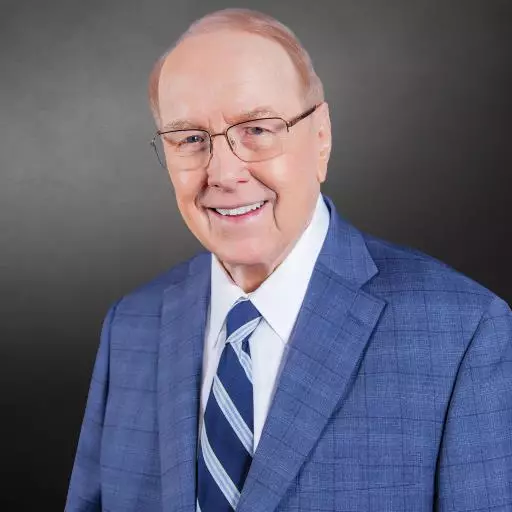
The 4 Wills of God: Discovering God’s Purpose for Your Life


How can you know you’re walking in God’s will? On today’s edition of Family Talk, Dr. James Dobson continues his conversation with Dr. Emerson Eggerichs about his book, The Four Wills of God. They explore biblical principles for trusting Christ, living in purity, and giving thanks even in life’s darkest valleys. Discover practical guidance for following God’s universal will, and experiencing His unique purpose for your life.
Dr. James Dobson: You're listening to Family Talk, the radio broadcasting division of the James Dobson Family Institute. I am James Dobson, and I'm so pleased that you've joined us today.
Roger Marsh: Well, welcome to Family Talk. I'm Roger Marsh, and on today's program, we're continuing a fascinating conversation featuring our own Dr. James Dobson and his friend, Dr. Emerson Eggerichs. Now, on the last edition of Family Talk, Dr. Eggerichs revisited the premise of his popular book, Love and Respect.
On today's Family Talk program, he'll be talking with Dr. Dobson about his 2018 work entitled The 4 Wills of God. In it, Dr. Eggerichs unpacks four passages of Scripture that can help us discern what God wants for our lives and give us peace about the decisions we make along the way. So here now are Dr. James Dobson and his guest, Dr. Emerson Eggerichs, on today's edition of Family Talk.
Dr. James Dobson: Well, Dr. Eggerichs, thank you for being back with us. Last time we talked about love and respect. What a wonderful concept that is. Your book is still out there. It's still available. You've sold over 2 million copies. You ought to sell 10 million more because this is one of those rare concepts that really does have the power to change marriages and to preserve marriages and to prevent divorce. And it's because it comes straight out of Scripture. You didn't create anything here, did you?
Dr. Emerson Eggerichs: It was there before I was born. It'll be there after I'm dead. I'm irrelevant.
Dr. James Dobson: It comes down to love and respect. Give us the formula again.
Dr. Emerson Eggerichs: The correlation is when she feels unloved, she tends to react in a way that feels disrespectful to him. She's not trying to be, but that's how she appears. And then when he feels disrespected, he reacts in a way that feels unloving. He's not trying to be unloving, but that's how she feels.
This is based on Ephesians 5:33, where God commands the husband to love and the wife to respect. I believe in part to prevent that crazy cycle. But Doc, again, I have to credit you. You were the one in 2004 who saw this and you let the world know that this message was very, very important. Because of your credibility and influence, this thing has gone crazy in a wholesome sense.
Dr. James Dobson: If we're going to have time for your new book, we better get at it. The title of it is The 4 Wills of God. I want to hear what they are and how you came to this conclusion. First, tell me if a person can really fully understand the will of a God who doesn't speak for himself. He speaks through his word, but he doesn't sit down with you and say, "Now look, this is what I want you to do." You can find it in the Scripture, but how does a person come to the conclusion that these are the four biggies, this is what we absolutely must do?
Dr. Emerson Eggerichs: Well, you and I both have come to that point where we trusted what Christ said, that man shall not live by bread alone, but by every word that proceeds out of the mouth of God. You and I believe in what we call a revelatory worldview. God is there, Christ is his Son, and he has spoken.
He has spoken through the prophets, he's spoken through the apostles, and he's spoken in these last days through his Son. Those of us familiar with Scripture know that we're quoting key verses on that. You and I, without apology, have aligned ourselves with the worldview of Christ.
We believe Abba Father's there. He loves us, he's for us, and he has spoken. But he isn't going to sit down with us and tell us specifically. It doesn't work that way. He's already spoken through Christ and through the apostles.
What's fascinating to me is that when we pay attention, we suddenly discover some things. There are four passages in the New Testament that are unparalleled. They're matchless. There's more to the will of God than these four. But these four identify God's will with a specific behavior.
As I've mentioned to you before, I had the privilege of studying the Bible 30 hours a week for nearly 20 years. As the senior pastor, I was to exposit the Scripture. That gave me time to track down a lot of things. This isn't new to me. This has been known, but I have used this now for almost 40 years of my counseling and pastoral help to people because this framework has not only helped other people, it's been the framework that Sarah and I have sought to live.
These four passages have really helped us. The reason this is important is there is a type of person out there that fears missing God's will. They panic. It is this fear that they're going to miss it, they're going to do something wrong.
Dr. James Dobson: You know, I can imagine many people feeling like I have on occasion when faced with a very important decision. I just wish the Lord Jesus would come and sit across the table from me and tell me exactly what he wants. Take this job, don't take that one. Move here. Have another child. All those very practical everyday kinds of questions where most of us would really like to get a telegram or something. Tell me exactly what to do and I'll go and do it. But he gives you the word and he says follow these principles and you will see it. And that's what you have written about.
Dr. Emerson Eggerichs: Yes, and I believe in signs, wonders, and miracles. I believe as you do that there are moments when God heals somebody and the medical profession itself says this is beyond our grasp how anything like this could ever happen. That'd be a miracle.
Signs are things that it points to. The fishermen were told cast your nets over the side. Well, they'd fished all night, and then they have this great catch. Well, that's not a miracle because there could be carpenters standing there watching this thinking that's just a coincidence. But they knew that was a sign.
And then there are moments where there are wonders. It's like we get chills. It's like we just sense something. It's not necessarily a sign, but like God showed up, something happened here. All of us want to live in these miraculous signs and wonders things.
But that isn't always the way he works. When you study the prophets, it can be three decades between miracles. The broader point we're making is God comes crashing in at certain moments, but those moments are not going to be daily.
So how do we live week after week when those kinds of interventions are not there? How do we know we're doing his will? How do we know we're not missing it? In this book, I've unpacked these four passages that in the simplest way is this: these four passages say this is the will of God. If you do these four, then you're doing the will of God.
Dr. James Dobson: How can you miss the will of God if you're doing it? Let's get to them. Let's talk about them. What's the first?
Dr. Emerson Eggerichs: Well, the first one that I highlight is what Jesus said in John 6:40: "This is the will of my Father, that you behold the Son, and he who beholds the Son and believes in him will have eternal life, and I myself will raise him up on the last day." Jesus is saying, "This is the will of my Father." It is a unique thing. And what is it? Believe in Jesus Christ.
Dr. James Dobson: That's a foundation for everything. You can't know the will of God without honoring his Son.
Dr. Emerson Eggerichs: There would be secularists out there who would be very uncomfortable with that because they can't stand exclusivity. But Jesus himself says this. You and I came to a point where we said, "I trust Christ. I believe in him." If anybody's the perfect gentleman, it was Jesus of Nazareth. He has influenced the world second to none. He said, "This is the will of my Father, that you behold me and believe in me. Trust me."
As I referenced earlier, my mom and dad had problems in their marriage. I came to Christ because I was sent to military school at age 16. I asked Jesus Christ to come into me to forgive me. It was at a Billy Graham film called For Pete's Sake. Something happened. I know he shows up everywhere.
Something happened to me, Doc. My mom, dad, sister, and brother-in-law all were watching me. None of them were believers. I went to Wheaton. I was headed to West Point. That's where I was wanting to go, but I found out Billy went to Wheaton. I didn't know anything. So I applied to Wheaton because I thought Billy and I were the only two that knew what was going on. It's maturity on my part.
So I applied to Wheaton. My mom, my dad, my sister, and brother-in-law, who was a professor, all came to Christ my freshman year. My mother came to me with an open Bible at age 53, tears rolling down her cheeks. She said, "All my life it was right here, of placing my faith in Jesus and having a personal relationship with him." That is one of God's universal wills, believe in Jesus Christ. It applies to all Christians through all generations, right?
But what we are all hungry for is the unique will of God for our life. I make this point: when we follow the universal will of God, it triggers our experience of the unique will of God.
Dr. James Dobson: So the two dimensions to it right there. Put it into words. What's the difference between universal and unique?
Dr. Emerson Eggerichs: The universal would be these declarations in Scripture that we've been talking about. God said, "This is my will." So we tend to say that's his universal will. There isn't anybody that there's a footnote in the Greek that says Dr. Dobson is an exception, he doesn't have to believe in Jesus Christ. In the Greek text, that's not going to be. Everyone is called to believe.
Jesus is expecting universally that everyone's going to follow that will. That's a universal will. It's global, all time, for everyone. If you come to that point where you're struggling, but you say, "Christ, I'm going to trust you in the midst of this situation," I don't know if I should go through Door A or Door B.
Well, it may be that you're at a point of difficulty because he wants you to revisit. Are you trusting him? Have you even come to Christ yet? Are you getting ahead of yourself on that? I know that was the case. My dad lost his job. When he lost his job, he didn't know what he was going to do, but during that time, his heart was tender and he discovered that God had orchestrated that so that he would discover this personal relationship with Christ. My dad used to get teary-eyed realizing that God had orchestrated that moment of frustration to bring him to the love of Christ.
Dr. James Dobson: Well, apply it to yourself. You were not raised in a Christian home. You were not taught early on about the fundamentals of the faith. And yet the Lord found you. He was really looking for you, wasn't he? He was calling you when you didn't even hear it.
Dr. Emerson Eggerichs: Powerful, powerful moment. Exactly. But to your point, Jesus Christ came into me and something happened. I remember it was at Liberty Theater in Mexico, Missouri, at Missouri Military Academy. Walking back to that campus, I began to experience the unique presence and peace of Christ in my life that I didn't even know that I didn't have.
The people who are listening right now, if you align yourself with the universal will of God, believing in Jesus Christ and opening your heart asking him to forgive you, he went to the cross for you, he died for you. It isn't about you being good enough. He's the one that died in your place.
That's what I heard that day, that I could be forgiven of everything I'd done wrong. I placed my faith in Jesus Christ. Subsequent to that, all these things began to happen in my life, these unique things that you could chalk up to coincidence. But as my good friend Sam Ericsson, Harvard Law graduate, said, coincidence after coincidence after coincidence is no longer a coincidence. Furthermore, it is my incidence with God's incidence. It is a coincidence.
Dr. James Dobson: You know, you are a living example of the foolishness of the notion taught by early psychologists that an individual is the sum total of his experiences and that you are what you have been taught. And there is no free will and there is no opportunity to choose. If you're raised in a particular faith or a particular point of view, that's what you inevitably will become. You made an independent decision in your teen years to say there's something wrong with that, there's more here than this. And it was the voice of God that was calling you. That blesses me.
Dr. Emerson Eggerichs: Oh, it was a huge thing. And I add to that, if you take that position, then what do you say to the woman who's been sexually abused for years? Is she a hopeless, helpless victim that's damned forever because she has no way of getting out of that? That is a very, very, very dark position to take.
I believe that even though we can be deeply wounded and hurt and we can be damaged, we're not destroyed. And the freedom that we have to your point, I came out of some miserable stuff. That did not mean that now I was destined to be an unhappy soul. When I heard that God could forgive me, that I could ask Christ to come into me, that I could experience his peace, wow, I invite everybody to consider that.
Dr. James Dobson: The title of the book is The 4 Wills of God: The Way He Directs Our Steps and Frees Us to Direct Our Own, Dr. Emerson Eggerichs. This clock is moving fast and we've only dealt with one of the four wills of God. Let's talk about the second one. We're not going to get all through. Some people are going to have to buy the book and you wouldn't mind if they did that.
Dr. Emerson Eggerichs: No, in fact, I would love for people to give it to a grandson or a daughter. Those of you who have lived this way, you know this and this book is designed to help individuals. And the idea is this, that when we do these four universal wills of God, it triggers or activates the unique will of God.
But when it doesn't, and you still don't know if I should go through Door A or Door B, I make this point that if I am trusting Christ, for instance, and another one is 1 Thessalonians 4:3, this is the will of God, your sanctification, that you abstain from sexual immorality.
Dr. James Dobson: That's number four, isn't it?
Dr. Emerson Eggerichs: Well, BAGS, B-A-G-S is an acronym that I put together. Believe in Jesus Christ, Abstain from sexual sin, Give thanks in everything (1 Thessalonians 5:18), and Submit in doing what's right (1 Peter 2:13-15).
When I am believing in Christ, when I'm abstaining from sexual sin, when I'm giving thanks in everything, and when I'm submitting and doing what's right when I could do what's wrong and get away with it, when I follow those four, I believe God begins to respond to that individual.
I believe with all my heart, Doc, that you've lived by those four, whether you were conscious of it or not. God has looked at you so that when 1 John 3:22 says, "Beloved, if our heart does not condemn us, we have confidence before God that in whatever we ask of him, we receive because we keep his commandments, starting with those four wills, and do the things that are pleasing in his sight."
Here's what I've recognized. Every person I've seen that God has used greatly has been keeping his commandments. Whether they were conscious of these four or not, they had aligned their heart. There was no way they were going to step outside of those. We look at Billy Graham's life. We know that man lived for Christ. He lived in humility, and we believe God's hand was on him because of that.
So there is a price to pay. But I say to people, the price is so little. If you follow these four and you decide on your watch this is how I'm going to live, I believe God will respond to you. But if he doesn't respond to you, here's what's so beautiful. You can go through Door A or Door B. That's really secondary as long as you continue to do these four. You're doing his will.
You're continuing to actively trust. You're continually walking in moral purity. Jesus said the pure shall see God. You're giving thanks for things in spite of your understanding and you continue to do what's right regardless. You continue to do that way and you can go through Door A or Door B. Relax. Just relax. You're not going to miss his will when you're doing his will.
Dr. James Dobson: Boy, that is good stuff. You know, I read just this morning when I first got up that more than 80% of today's young people are involved sexually in what the Bible would identify as willful, on purpose, deliberate sin, living outside the will of God. And it's very difficult to please God when you're doing that. In fact, I would say it's impossible.
He will not tolerate it. He will prick your conscience and make you uncomfortable until you deal with this. But everything else in terms of the will of God occurs and flows out of that obedience, doesn't it?
Dr. Emerson Eggerichs: Hugely so. I address at length what we're up against with the millennials and what they are hearing as the culture. So our appeal always is that each of us has to come to a point where do we really believe God is there and Christ is his Son and has God really spoken? And is he a cosmic killjoy out to ruin our party, or does he really love us?
I believe there are enough Christ-followers among the millennials that they know this. I spoke to 150 of them and I said, you know when I get to the section in the chapter on sex, the publisher said, "Well, your book sales are going to be killed because the millennials are not going to believe this." My position is I don't adhere to that.
I believe that they've been influenced. I believe they think that they got to live together, for instance, in order to learn how the other person is. But for those who love Jesus Christ, you and I would both say to them, the Lord is not going to ultimately honor your life. Hebrews says, "Adulterers and fornicators, the Lord will discipline." The Lord disciplines because he loves us. Hebrews 12 is talking about that.
So I appeal to that person out there who knows that Christ has changed them. He's come into them, he's forgiven them, but they've moved into this particular arena and they know in their conscience as you're saying that it's not right. So the question is do they have the courage to follow Christ or are they going to give in to their culture and miss out on what God has for them?
Dr. James Dobson: We're almost out of time. You know many of the churches today begin with praise songs. Some of those praise songs have great substance to them. Many of them don't. Many of them have no theology, no specific understanding of Scripture, and often no poetry and no expression of the Gospel. Let me remind you of a little praise song that I wonder if you remember. I'm not going to sing it because I have enough trouble talking. But it says:
Trust and obey, for there's no other way to be happy in Jesus, but to trust and obey. That's really what you're... You were mouthing those words as I spoke them.
Dr. Emerson Eggerichs: Just sang it on Sunday in a traditional service down in Macon, Georgia. Trust and obey, there's no other way. And that's really the choice that you had to come to, Billy Graham had to come to, every person who's ever been a Christ-follower has had to take a position on this.
Is that because God is somehow trying to make us unhappy, or does he know something and he's calling us to trust him? At the deepest recesses of each heart, you and I I suppose would be Christian hedonists. We want to be happy. We don't want to be sad.
I document all the sadness to the hookup generation. It's not working. So pragmatically, it's not working. It leads to death really, one form or another.
Dr. James Dobson: The last one we have time to talk about is giving thanks. Now, your wife Sarah had bilateral mastectomy many years ago and she began giving God thanks. How in the world did she do that?
Dr. Emerson Eggerichs: Well, she would say she was giving thanks before then and that she continued to give thanks through that. But we always point out that not only is she a great model and has influenced our family tremendously, but you don't give thanks for evil. You don't give thanks for the cancer. You don't give thanks that you're going to die.
But there is this text that most of us know, Romans 8:28, that God is working all things together for good to those who love him and are called according to his purpose. There's this sense that I trust God. I trust Christ.
She was giving thanks, "Lord, I don't know how you're going to use my cancer. I don't know how you're going to use this double mastectomy. I don't know if I'm going to die in five years. But I thank you that you're going to use this. I thank you because I love you. I thank you because I trust you."
This, I believe, is a crisis of faith for someone who may be listening because circumstances haven't turned out. There's a tendency either we're going to be like Job or Job's wife. Job's wife said, "Curse God and die." I think because she was cursing God and wanted to die. She had lost her family, our empathy goes to her. But Job made a decision not to sin and he made a decision to trust God and to praise God. God gives, God takes away, blessed be the name of the Lord.
Dr. James Dobson: Even if you slay me, yet will I trust him. What a great man.
Dr. Emerson Eggerichs: It's unbelievable. He had lost everything. That's right. And so it would be natural to say, "Well, why would you give God thanks when God could have prevented it?" And this is a stumbling block. Intellectuals say there are three scenarios. God is all loving, God is all powerful, and there's evil in the world.
We know there's evil in the world. But Jesus Christ is on the cross and he believed God was all loving and all powerful and the reality of evil was there. He didn't see the inconsistencies of those three. They all live together.
So as believers, we've got to come to a point where we will ask why. Jesus on the cross said, "My God, my God, why?" That is okay. It's not un-Christ-like to ask why. But eventually each of us has to come to a point where we will make a decision to trust him.
I will thank you, I will praise you, I will give thanks to you. I will trust you on the basis of what I do understand about you in the face of the unanswered question. I will not choose to distrust what I understand about you in the face of the unanswered question. Each of us comes to that crossroads where we have to make a decision. Am I going to be like Job or am I going to be like Job's wife?
This is not superficial stuff. Some who are listening are in deep pain right now. But Sarah was on death's door. I've got a woman who's a good friend who was in satanic sexual abuse for years, the evil that came to her.
She came to me for counsel and I just said, "Hey, in the midst of all this pain, have you ever given thanks?" Not for this, but in spite of this. Well, she got up and walked out. But she went back and she began to give thanks to God. He even said, "God help me give thanks to give thanks," you know.
Something began to happen. I quote her in this book about how God began to uniquely respond. Again, do the universal will of God, and I tell story after story and then God begins to uniquely respond.
My heart goes out to that person who's stuck here. Give God an opportunity to respond to you. But you have to move first. You have to make a decision that I'm going to trust this universal will. I'm going to follow this. I'm going to act on this even though I can't comprehend why I should or how I fully should do this. But in my childlike way, I'm going to do this. I just say, God isn't asking for a whole lot. He's very gracious, he's very loving. Just move in that direction and watch what begins to happen.
Dr. James Dobson: Dr. Eggerichs, let's end this conversation with another Scripture. You base everything you do on Scripture, don't you?
Dr. Emerson Eggerichs: Try to.
Dr. James Dobson: That's the reference for everything you write about, everything I've seen that you've done. But Psalm 100 verse 4 says, "Enter his gates with thanksgiving and into his courts with praise. Be thankful unto him and bless his name." That's pretty straightforward. We're out of time, sir. Thank you for being our guest for two days. It's been a pleasure talking to you again. We've worked together for has it been 20 years?
Dr. Emerson Eggerichs: Since 2003, yes.
Roger Marsh: Dr. Eggerichs reminds us that when we align our lives with God's revealed will, we can trust him with the rest. You've been listening to Dr. James Dobson's Family Talk. Hope you've enjoyed Dr. Dobson's conversation with Dr. Emerson Eggerichs. Now, if you missed any part of today's program or the last broadcast discussion on love and respect, you can listen again at JDFI.net. There you'll also find information about Dr. Eggerichs' book called The 4 Wills of God and his ministry, Love and Respect Ministries. Again, you'll find all that information and more at JDFI.net.
Programs like the one you just heard reach families every day with biblical wisdom and practical encouragement, and that's only possible because of friends like you. When you donate to the Dr. James Dobson Family Institute, you're helping us share biblical truth with families who are searching for guidance in their marriages, their parenting, and their walk with the Lord.
Every day we hear from listeners who tell us how these programs have strengthened their faith and given them practical wisdom for life's toughest decisions. Your gift of any amount helps us continue in this ministry. To make a secure donation, visit JDFI.net or call 877-732-6825. That's 877-732-6825.
Well, I'm Roger Marsh. Thanks so much for making Family Talk a part of your day, and be sure to join us again next time right here for another edition of Dr. James Dobson's Family Talk, the voice you trust for the family you love.
This has been a presentation of the Dr. James Dobson Family Institute.
Featured Offer

Every marriage faces pressure. Busy schedules, financial stress, unmet expectations, poor communication, and unresolved conflicts can slowly create distance in a relationship. Many couples love each other deeply, yet feel stuck and are unsure how to reconnect and move forward in a healthy way.
Dr. James Dobson’s newly revised digital download, 10 Tips for a Long-Lasting Marriage, offers:
- Clear, trusted guidance for navigating common marital challenges
- Encouragement for couples who feel stuck or disconnected
- A practical strategy for building a marriage that doesn’t just survive—but truly thrives
This free resource is designed to help you strengthen your relationship with clarity, hope, and confidence.
Past Episodes
- A Biblical Look at the Family
- A Challenge to Pastors
- A Family in Crisis
- A Father to the Fatherless: The Story of Two Friends
- A Father's Commitment to His Daughter
- A Heart for Romanian Orphans
- A Journey of Widowhood and Grief
- A Marriage Made in Heaven
- A Mom's Heart of Prayer
- A Nation Abandoned by God
- A Picture of Life
- A Sober Update on Military Culture
- A Traditional Family
- A Tragic Account of Mistaken Identity
- A Visit to the Shores of Normandy
- A Visit With the Legendary Pat Boone
- Abraham Lincoln: The Faith of a President
- Adrenaline & Stress
- Adult Children of Alcoholics
- Albert & DeeDee Pujols: Giving Honor to God
- Alone Yet Not Alone
- America: A Call to Humility
- American Heritage Girls
- American Marxism
- An Abusive Childhood: Climbing Out of the Pit
- An Attitude of Gratitude
- Autism
- Avoiding Infidelity
- Back From the Brink of Divorce
- Beauty In Brokenness
- Becoming a Culture Warrior
- Being a Conservative Crusader
- Being a Father at Work and Home
- Being a Smart Stepmom
- Being Jesus to Your Neighbors
- Being There for Your Son
- Between a Rock and a Grace Place
- Bonhoeffer: A Hero Then and Now
- Boys and Puberty
- Breaking the Bonds of Welfare
- BUG-Puberty
- Building a Christian Home
- Building a Safe Haven In Marriage
- Building hedges Around Your Marriage
- Bullying
- Buyer Beware
- Charlie & Lucy Wedemeyer: A Message of Hope
- Children and Stress
- Choosing to See
- Christian Men & Sexuality
- Christianity and Wokeness
- Christ's Influence on History
- Cleaning House: Raising Responsible Kids
- Coach John Wooden
- College
- Confronting Guilt in Motherhood
- Congressman Frank Wolf: A Modern-Day Wilberforce
- Courageous Choices
- Courageous Manhood
- Creative Ideas for Child Discipline
- Crystal Peaks Youth Ranch
- Culture Watch
- Current Economic Tsunami
- Defend Life
- Defending Religious Liberty in the Courts
- Defunding Planned Parenthood
- Delicate Mother-In-Law Relationships
- Depression: Encouragement for the Journey
- Developing a Firsthand Faith
- Digital Invasion
- Divorce
- Dr. Ken Hutcherson: A Defender of Truth
- Dr. Ravi Zacharias: Finding My Destiny in Delhi
- Faith and Family: Raising Kids Right
- Family Finances
- Fierce Beauty
- Fighting to Preserve DOMA
- Finance
- Finding Healing After Sexual Abuse
- Finding Hope for Your Heart
- Finding Joy Amidst Cancer and Loss
- Finding New Intimaacy in Prayer
- Finding Success in a Failing Economy
- Finding True Forgiveness
- Forgiving God
- Forgiving My Father
- Foundation For Successful Families
- Free At Last
- Freeing the Family From Pornography
- From Santa to Sexting: Protecting Your Middle-Schooler
- Fueling the Passion
- Girl's Uncovered
- God Bless America
- God Is At At Work
- God Made Us a Family
- God Makes Lemonade
- God Restored Me
- God Restored Me For a Purpose
- God’s Grace Is Sufficient
- God's Tender Heart for Single Moms
- God's Way or My Way
- God's Wisdom for Raising Children
- Going All Out For Your Wife
- Greg Laurie
- Greg Laurie: A Changed Life
- Guarding Your Grandchild’s Heart
- Healing the Past and Moving On
- Healing the Wounded Spirit
- Healthy Habits
- Help for Angry Moms
- Help for Employed Moms
- Help for Hurting Teens
- Help for Parents of Prodigal Children
- Help, I'm a Spouse AND a Parent Now!
- Helping Teens Find Their Purpose
- Her Role in the Home
- Homeschooling & Beyond
- Homeschooling Today
- Honoring Our Average Joes
- Hooking Up
- Hope for Hurting Hearts
- Hope in the Midst of Unexpected Pregnancies
- Horses and Healing: New Hope for Kids
- Hutch: A Man Filled With Hope
- I Will Never Leave Thee
- I, Isaac, Take You, Rebekah
- In God We Still Trust
- Infertility and Miscarriage
- Insights on Radical Islam
- Integrity in Business
- Is America Imploding?
- James Dobson v Kathleen Sebelius: How will you get involved?
- Jealousy
- Jesus Vs. Muhammad
- Jim & Jill Kelly
- Landscape of America
- Laying Up Treasure in Heaven
- Lean Body, Fat Wallet
- Learning Disorders
- Life & Laughter with Ken Davis
- Life Without Limbs
- Live to Forgive: A Family Story of Pain and Redemption
- Living Through Loss of Spouse
- Living With Less So Your Family Has More
- Living with Less: Heading into the Holidays
- Living With the Strong Willed Child
- Loneliness in Marriage
- Longing for Marriage
- Love For a Lifetime
- Loving Those Left at Home
- Macaroni At Midnight
- Managing Your Home and Time
- Marriage in a Facebook World
- Marriage Survival Skills
- Marriage That Can Go the Distance
- Marriage: The State of Our Union
- Mary Crowley
- Memories of the Holocaust
- Mentoring Boys and Men
- Merging Premarital Expectations
- Ministering to the Elderly
- Ministry of Hymns
- Miscarriage: Grieving the Loss
- Mojave Desert Cross
- My Adoption Story
- My Autistic Son
- My Mission: Capturing a Dictator
- One Woman’s Journey of Grief & Hope
- One-on-One with Bill Gaither
- Online Dangers: Protecting Kids from Pornography
- Online Dangers: Protecting Marriages from Pornography
- Overcoming Childhood Traumas
- Overcoming the Heartaches of Life
- Overcoming the Shame of the Past
- Parenting 101: From Discipline to Sexuality
- Parenting Basics: The First Years
- Parenting Newborns and Those Early Years
- Phill Kline: Challenging an Abortion Giant
- Plugged In: Teaching Your Children to Be Media Savvy
- Politics and the Bible
- Prodigal Child
- Protecting Life and Liberty
- Protecting Your Child in a Dark Culture
- Putting an Arm Around the Post-Abortive Woman
- Raising a Handicapped Child
- Raising Boys: Routine Panic
- Raising Boys: Wounded Spirits
- Raising Kids Who Love the Lord
- Raising Men of Honor
- Raising the Standard of Excellence
- Reaching Out to Youth in Need
- Reaching the Taliban For Christ
- Real Moms, Real Jesus
- Reignite: How to Bring Joy Back into Your Life for Enduring Faith
- Religious Persecution in America
- Republican Majority
- Rescued From a Life of Ruin
- Resolving Money Conflicts in Marriage
- Revival Rising
- Scripture and the Family
- Sexuality & Singles
- She Calls Me Daddy
- Single Adults
- Singleness: Waiting for God's Best
- Singles and Sexuality
- Spiritual Mismatch
- Spiritual Training of Children
- Stand For Life In Your Community
- Staying Christian in a Pagan Culture
- Staying Strong in College
- Stepping Away from the Common Life
- Straight Talk to Young Couples
- Strengthening Military Families
- Strong Fathers, Strong Daughters
- Suicide
- Teaching Your Kids About Sex
- Ten Habits of Happy Mothers
- The Bachmanns: Their Story of Faith and Family
- The Barretts: An Amazing Adoption Story
- The Battle for Civilization
- The Battle for Marriage Continues
- The Cross: The Center of the Family
- The First Year of Marriage
- The Flipside of Feminism
- The Future of the Family: Fact and Fiction
- The God-Wild Marriage
- The Healing Power of Forgiveness
- The Heart of a Cowboy
- The Heart of the Santorum Family
- The High Cost of Low Living
- The Hope of Heaven
- The Hormone Swing
- The Immunization Debate
- The Impact of Truth on My Life
- The Insidious Nature of Infidelity
- The Joy of Good News
- The Joys and Challenges of Adoption
- The Joys and Challenges of Pregnancy
- The Key to Your Child's Heart
- The Kids Are Gone...Now What?
- The Miracle That Saved a Marriage
- The Powerful Influence of a Wife
- The Pro-Life Movement Reaches a New Generation
- The Threat of Islamic Terrorism
- The Unbelieving Spouse
- The Use and Abuse of Power
- The Value of Manhood
- The Value of One Life
- The Vital Role of Fathering
- The Way of the Wise
- To Dads & Daughters … with Love
- Tolerating the Intolerable
- Tony Dungy: A Man of Quiet Strength
- Tough Love For Kids
- Truth: Can We Both Be Right?
- Turning Hearts 180-Degrees Toward Life
- We Help; Jesus Heals
- Welcome To Our Table
- What Does Freedom of Religion Mean?
- What Has Feminism Done for You Lately?
- What Parents Should Know About Teens
- What's It Like Being Married to Me?
- What's Wrong with Being a Nice Guy?
- When Life Brings You Thorns
- When Unemployment Hits Your Home
- When You're in Love
- Why Men Leave the Church and How to Get Them Back
- Why Purity Matters
- Why We Fight For Life
- Women and Emotional Infidelity
- Women and Friendships
- Women and Intimacy
- Women in Combat: Understanding the Consequences
- Wounded Spirit

Video from Dr. James Dobson
Featured Offer
Every marriage faces pressure. Busy schedules, financial stress, unmet expectations, poor communication, and unresolved conflicts can slowly create distance in a relationship. Many couples love each other deeply, yet feel stuck and are unsure how to reconnect and move forward in a healthy way.
Dr. James Dobson’s newly revised digital download, 10 Tips for a Long-Lasting Marriage, offers:
- Clear, trusted guidance for navigating common marital challenges
- Encouragement for couples who feel stuck or disconnected
- A practical strategy for building a marriage that doesn’t just survive—but truly thrives
This free resource is designed to help you strengthen your relationship with clarity, hope, and confidence.
About Family Talk
Family Talk is a Christian non-profit organization located in Colorado Springs, Colorado. Founded in 2010 by Dr. James Dobson, the ministry promotes and teaches biblical principles that support marriage, family, and child-development. Since its inception, Family Talk has served millions of families with broadcasts, monthly newsletters, feature articles, videos, blogs, books and other resources available on demand via its website, mobile apps, and social media platforms.
The Dr. James Dobson Family Institute (JDFI) is a Christian non-profit ministry located in Colorado Springs, Colorado. Founded initially as Family Talk in 2010 by Dr. James Dobson, the organization promotes and teaches biblical principles that support marriage, family, and child development. Since its inception, Family Talk has served families with broadcasts, monthly newsletters, feature articles, videos, blogs, books, and other resources available on demand via their website, mobile apps, and social media platforms. In 2017, the ministry rebranded under JDFI to expand its four core ministry divisions consisting of the Family Talk radio broadcast, the Dobson Policy and Education Centers, and the Dobson Digital Library.
Dr. Dobson's flagship broadcast called, “Dr. James Dobson’s Family Talk," is aired on more than 1,500 terrestrial radio outlets and numerous digital channels that reach millions each month.
About Dr. James Dobson
Dr. James Dobson is the Founder Chairman of the James Dobson Family Institute, a nonprofit organization that produces his radio program, “Dr. James Dobson's Family Talk.” He has an earned Ph.D. from the University of Southern California and holds 18 honorary doctoral degrees. He is the author of more than 70 books dedicated to the preservation of the family including, The New Dare to Discipline, Love for a Lifetime, Life on the Edge, Love Must Be Tough, The New Strong-Willed Child, When God Doesn't Make Sense, Bringing Up Boys, Bringing Up Girls, and, most recently, Your Legacy: The Greatest Gift. Dr. Dobson served as an associate clinical professor of pediatrics at the University of Southern California School of Medicine for 14 years and on the attending staff of Children’s Hospital of Los Angeles for 17 years in the divisions of Child Development and Medical Genetics. He has advised five U.S. presidents and served on eight national commissions. Dr. Dobson has been married to Shirley for 64 years, and they have two grown children, Danae and Ryan, and two grandchildren.
Contact Family Talk with Dr. James Dobson
540 Elkton Drive
Suite 201
Colorado Springs, CO 80907
877.732.6825