

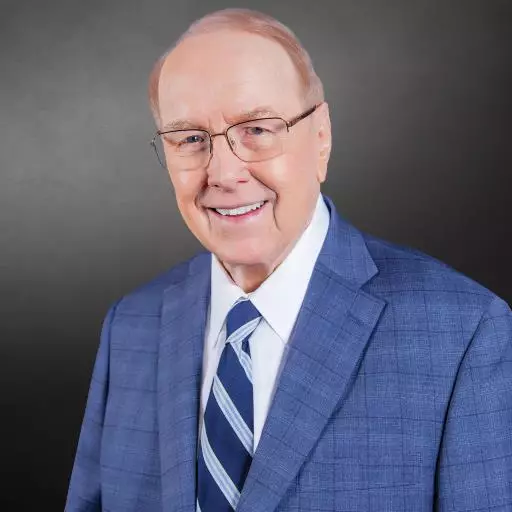
Giving Thanks for God’s Blessings, Part 2


Giving thanks comes easily when the table is full. It’s much harder when life brings pain. On today’s edition of Family Talk, Dr. James Dobson continues his inspiring conversation with Dr. R.T. Kendall about his book, Just Say Thanks! Dr. Kendall explains why God notices every word of thanks, and how gratitude can transform your prayer life. He also shares how parents can raise grateful children by example.
Dr. James Dobson: You're listening to Family Talk, the radio broadcasting division of the James Dobson Family Institute. I am that James Dobson, and I'm so pleased that you've joined us today. Well, welcome to Family Talk, the broadcast division of the Dr. James Dobson Family Institute. I'm Roger Marsh, and even though Thanksgiving may be behind us, the opportunity to give thanks never ends. And for parents, gratitude is something our children especially will learn by watching us. On today's Family Talk broadcast, we are returning for part two of a classic conversation featuring Dr. James Dobson and his longtime friend, pastor and author, Dr.
R. T. Kendall. They will discuss why saying thank you really does matter to God, and how easily we overlook answered prayers and what our families can do differently in the area of expressing gratitude. So here now is part two of Giving Thanks for God's Blessings, the title we've given today's broadcast featuring Dr. James Dobson and Dr. RT Kendall here on Family Talk.
Dr. RT, it's always good to have you here, and you do offer us such practical advice on Christian living. Thank you for coming back to be with us.
Dr. R. T. Kendall: You are very, very kind to honor me in this way. Let's talk about Just Say Thanks. Let's start with the history of this country, the United States of America, and the pilgrims coming and where Thanksgiving came from. You have studied that era, as all of us have in elementary school. That was way back before the schools were kind of forced to mention Thanksgiving without saying who we're giving thanks to. That bothers me a lot. Well, the origin of Thanksgiving, which I talk about in the book Just Say Thanks, goes into the principles that lie behind the book. There are three major principles. Principle number one, God loves gratitude.
Principle number two, God hates ingratitude. And principle number three is that gratitude must be taught. I began to realize this when I was minister at Westminster Chapel. You urge people to be thankful, but we decided to have prayer meetings in which we wouldn't even let people put petitions to the Lord until they spent maybe 15 minutes just thanking him for things. When we first started out, I said, look, no prayer requests, no petitions, just thank him. And there was silence. I said, well, isn't anybody here thankful? I said, what about saying thank you for Jesus? How's that for a start? Oh, well, of course.
Well, thank you, Lord, for dying on the cross. That's good. Thank him for the Holy Spirit. Thank him for saving us. And before it was over, people were running into each other. They couldn't wait. They realized how thankful they ought to be. And so when it comes to our Thanksgiving Day, God notices gratitude, and he notices ingratitude. Jim, you know the story of the 10 lepers that Jesus cleansed, and one came back to say thank you. And you know what his first comment was? Where are the 9? God notices ingratitude. we are made in the image of God, and we know what it is if people thank us, we say, well, don't mention it, but woe unto them if they don't.
Well, God is like that. He wants us to thank him. And so this country was born by pilgrim fathers coming over on the Mayflower to be thankful to God, and they were God-fearing people. But would you believe that the first year they were here, they starved to death. And you would think, well, Lord, this isn't honoring us. here we are doing this for you. And yesterday, when we were talking about this, it seems that God hides his face, and sometimes God doesn't make sense. The title of your book, we don't understand it. But what happened was that a year later, when they were blessed with the harvest and with food, they were so thankful
that out of it came our Thanksgiving Day. And so one of the reasons God hides his face, and one of the reasons he allows himself to be misunderstood and he doesn't make sense, is to teach us to be thankful, because when he does show his face again, we say, Lord, never again will I be unthankful.
Dr. James Dobson: Do you know what most school children think of Thanksgiving as being related to? To whom do they think we're thankful?
Dr. R. T. Kendall: This is the tragedy, isn't it? We're living in a time when people don't even know. They think it's about turkey and watching football.
Dr. James Dobson: Now, they think it's the Indians for giving them corn. That's what they think that was intended, but it was a profoundly spiritual moment for them. They were thankful to God. I pray that this year, as people go through this holiday, which they think of as just another holiday frequently, that, that an effort will be made in the family to make it very clear to children to whom we are grateful, and to give it a context, and I'm afraid we've kind of lost that.
Dr. R. T. Kendall: Well, had they not starved the first year, I really wonder if there would have been Thanksgiving Day. You see, it was because, it was because they come over here and they don't have any food, and it's an awful first year, and they were, they began to pray to God, please help us, please help us. And when they began to experience God's bounty, they were determined to be grateful, and the result was Thanksgiving Day. Did you know that the first Thanksgiving Day was ordered after the first harvest in Plymouth Colony in 1621? Special days were often appointed in New England for Thanksgiving or fasting, and beginning in Connecticut in 1649, the observance of an annual harvest festival spread throughout New England, and by the end of the 18th century, it was becoming a habit.
George Washington, our first president, proclaimed the first national Thanksgiving in 1789, and with Abraham Lincoln's proclamation in 1863, it became an annual observance, and then by an act of Congress in 1941, Thanksgiving Day became the fourth Thursday of November. But sadly, few Americans know its history, and I'm afraid not many care.
Dr. James Dobson: You know, many people who do not share our faith believe that you can teach the history of this country, but you just can't do it in a spiritual way. I would like to see them teach that history as history. If that's the best we can do, teach that.
Dr. R. T. Kendall: This is the way it was. This is the way it was.
Dr. James Dobson: This is the way it was. RT, let me ask you to reconcile what you're saying about giving thanks in hard times with two illustrations in the scriptures, two eras, two aspects of God's people. the first was when the children of Israel were rescued from Egypt, and they were now in the wilderness, and they were going through really, really hard times. I mean, I can't imagine what it was like, you know, it was dusty and hot, and they didn't have any new clothes, and they were afraid they weren't going to have enough water to drink, and they got kind of tired of eating manna. I get tired of eating anything that is good if I eat it every day, and they got tired of that, and they began to grumble and complain.
And the Lord was very irritated at them, and he rebuked them for grumbling because he had done this great miracle to rescue them, and they're out there complaining to him, even though they were going through something that most of us would consider very difficult. Fast forward now to King David's time, and David went through hard times too, and it was a civil war, which was a result of his sin, but he was going through real difficulty, and his own son had declared war on him. And if you read the Psalms from that era, you see that David was in agony, and he let the Lord know about his agony. But the Lord had a heart for David.
He did not condemn him for his depression and his discouragement and the other things he was saying. What was the difference between the two?
Dr. R. T. Kendall: Well, what happened at the end of the era after the children of Israel, you know, God set up Passover. The whole purpose of Passover was to make the children of Israel thankful that God had spared them and delivered them from Pharaoh's bondage. You see, Passover was designed to make the nation of Israel a thankful people. And so God is determined to teach us Thanksgiving, to teach us to be thankful. And he did the same exact thing with David, and he's doing with all of us. The design for his hiding his face from us is to make us so thankful that we never forget how good he is to us.
Dr. James Dobson: You know, I heard a sermon on this, and I'd like to add to what you just said and answer my own question in this way. The difference between those two circumstances, the children of Israel and David's time, was that the children of Israel said, God is not with us, and David said, God is with us. you know, they were both frustrated, they were both agitated, they were both hurting, but David did not translate that into a, either a disrespect or disregard for God. The children of Israel did. Is that accurate?
Dr. R. T. Kendall: Exactly, exactly. And you see, the Passover is repeated in the New Testament in the Lord's Supper. I have a whole chapter on the Lord's Supper. I've got a chapter on Palm Sunday. Even on Palm Sunday, when they were thanking God for selfish reasons, they said, ah, Messiah has come, he's going to deliver us. God still accepted their praise.
Dr. James Dobson: We were talking yesterday about the many difficult circumstances that people experience, and you were saying that our Heavenly Father wants us to give thanks, not for these things that we're going through, but in them. And we have a wonderful example right here in our family. I don't want to name this family because I haven't asked for their permission to do so, but the husband is a member of our board of directors, and he is going through a very difficult time that requires chemotherapy and all that that implies. And it's not easy. It's not easy. And I called his sweet wife the other day, and I asked how he was doing, and she told me something that's very relevant to this day.
She said, you know what we do every night? She said, we gather as a family. They have one child who's married, so the four of them gather at the table, and as they eat their food, they take turns giving thanks for all the good things in their lives. Here he is just suffering and has been for a couple of years, and they're sitting around, and she said, we always finish our food before we finish our thanks. Isn't that incredible? How could only a Christian could do that? You know, those who don't know him don't understand that at all. How could you possibly sit around a table saying, thank you, Lord, for all the good things you're doing when one is going through such hardship and difficulty, and because of that, all 4 of them are.
I, that really blessed me, and I'm sure it will you.
Dr. R. T. Kendall: Well, that is what is honoring to God. And as I said yesterday, as it is true, you cannot outgive the Lord, you cannot out-thank the Lord. And the irony is, what starts out to be like a sacrifice, you have to kind of force yourself, and it takes a little effort. It ends up being an almost selfish enterprise because you just can't wait to thank him for everything, and then he blesses you more and more and more. And I would urge anybody to learn to be thankful. God notices it, and he rewards you with a measure of his presence that is so real and so wonderful that you thank him for everything that has happened.
You will eventually thank him for all of the past.
Dr. James Dobson: RT, what do you say to the people, and there are many of them, and I have been here myself, who, when they have their prayer time with the Lord, are inclined to start telling him about all the things they want him to do, all the things they need, all of the difficulties in their lives, and what needs to happen to fix that, and it's a wish list, you know, it helped me with my job and all those things. There's nothing wrong with praying that way because he cares about every aspect of our lives, but that's not enough, is it?
Dr. R. T. Kendall: Well, it goes back to the very reason I wrote this book, Just Say Thanks. It's Philippians 4:6. He says, do not be anxious about anything, but in everything by prayer and petition, with thanksgiving, make your request to God. Ask him for anything, but be thankful and be just as particular in remembering what he's done for you as you are in what you want him to do for you. What often happens is he answers our prayer and we forget it. And the things that meant so much to us. If I could just tell you a personal story. One day the Lord shook me rigid. He said, RT, are you grateful that you went through Oxford University?
I said, well, yes. He said, you come from Kentucky. You come from the hills of Kentucky, and you went through Oxford. Have you ever thanked me for that? Well, I said, Lord, you know I'm thankful. You didn't tell me. I said, oh. He said, I made you minister of Westminster Chapel. Are you thankful for that? I said, well, you know I am. You didn't tell me. And I felt horrible. And then he began to show me other things, the most elementary things, the most fundamental things. I said, Lord, you know I'm thankful. But he said, you didn't tell me. And I wrote this book to show that God notices it. We say, he knows I'm thankful.
That's not good enough. So when Paul says, put your prayer in petitions, yes, but do it with thanksgiving. Be as particular in thanking him for what he's already done as you want him to be in answering your prayer. And you talk about that making a difference in your life. That will change your life and will change your prayer life as well.
Dr. James Dobson: Right on that point, I had a thought that I think is as close to being profound as anything I'm likely to come up with. It's a simple little idea. someone suggested to me, or maybe I thought it myself, that God reads your thoughts. He knows every idle word. He knows everything going on in your head. Nothing is hidden from him. Why do you need to tell him when he knows that? this is not a surprise to God. Why does he need to tell him? And then it hit me that there is no relationship in eavesdropping. Yes, he can hear your thoughts, but he wants a relationship with you, and he wants you to tell it just like a wife wants her husband to tell her that he loves her, even though she knows it, right?
Dr. R. T. Kendall: That's more like with praying itself, you know, Jesus said your heavenly Father knows what you have need of before you ask him. You might as well say, well, then we won't even tell him then. Ah, we do tell him. In the same way he wants us to be thankful. Just say thanks.
Roger Marsh: Well, I'm Roger Marsh, and you are listening to a special edition of Dr. James Dobson's Family Talk, a deeply meaningful conversation featuring Dr. Dobson and his longtime friend, Dr. R. T. Kendall. They're discussing Dr. Kendall's book called Just Give Thanks. We're taking a breather here to remind you that if you want more information about that book or any other resources on the giving of thanks, we encourage you to visit us at Dr. James Dobson.org. That's Dr. James Dobson.org. Now, as we jump back into the program here, Dr. R. T. Kendall is asked to speak about instilling gratitude in children and to talk to the parent who is right now experiencing children in the home who aren't particularly grateful or thankful.
So let's return to today's edition of Dr. James Dobson's Family Talk.
Dr. R. T. Kendall: Well, I would first say to the parent, are you thankful to God for what he's done for you?
Guest (Female): Do you show it?
Dr. R. T. Kendall: That's it. You see, if we want to mentor our children, we've got to be examples. And if our children don't see in us hearts of gratitude, it's pretty hard to say you ought to be thankful. If we set an example and show how grateful to God we are for the big things, for the little things, I mean, thank him for everything. I mean, tomorrow morning, when I go through my journal, I will thank him for this moment, the privilege of being on this program. I'll thank him for every little thing. He likes that. You cannot thank him enough, and you cannot out-thank the Lord, and eventually he blesses you so much that, as I said, it becomes almost selfish to do it.
Dr. James Dobson: Mm-hmm. Yeah, and not only gratitude to the Lord, I think, but gratitude to each other within the family. you need to teach children how to express that gratitude to you. They need to learn that, and maybe the parents are not used to saying that themselves. I find a lot of people have great difficulty putting into words any kind of expression of thankfulness. And so if you teach them to be thankful to you, that's a small step to teach them to be thankful to God. That's the key. In our family, Shirley will get on me for saying this, but when we were dating, she did not know how to express thanks.
And she had a birthday, and I bought her a gift for her birthday. And the way she reacted to it, I thought she was not happy with the gift. And she conveyed to me a lack of gratitude. The truth of the matter was she did appreciate it. She didn't know how to say it. And she has come a long ways in that regard, and she is one of the most thankful people I know. Yes. She will write notes to people to just say how much she appreciated every little thing that people do. And I know how thankful she is to the Lord. So they're linked together, aren't they? Well,
Dr. R. T. Kendall: you say, how do we come to him in prayer? The most appropriate verse for Thanksgiving Day is Psalm 100, verse 4, enter his gates with thanksgiving. This is the way you should start praying. And he wants us to be thankful. And the way to start praying is to be thankful. And maybe the way to start being thankful is to read your book. The title of it is Just Say Thanks. This is loaded with scripture, isn't it? It's all the principles that you talked about. It is totally scriptural. Yeah. And you said at the start of the program last time that this topic is somehow linked to your previous broadcasts on forgiveness.
How do they link? Because total forgiveness will change a life. The person who learns to forgive totally and set people free and let them off the hook will change your life. In the same way, once you start saying thank you to the Lord for everything and you develop a life, an example of gratitude, you're just never the same again. You know, I'm basically a theologian, and Charles Spurgeon said the purpose of theology is to change lives, and saying thanks changes a life. It is the secret to a greater blessing of the Holy Spirit upon your life, and the reward of his presence is worth it all. Well, you are very,
Dr. James Dobson: very generous with your thanks in reference to your friends. I do love you, Dr. RT Kendall, I love you. my great friend, and I trust that this book is going to just reverberate around, not only this country, but throughout the world. And then the other book, Strength for the Day, 365 Timeless Prayers and Conversations with God by Dr. RT and Louise Kendall, and your wife Louise put that together. It's a pleasure having you here.
Dr. R. T. Kendall: Thank you, and happy Thanksgiving.
Dr. James Dobson: And the same to you and Louise.
Roger Marsh: Well, on today's Family Talk broadcast, Dr. James Dobson and Dr. R. T. Kendall reminded us that gratitude is something that we can practice as well as pass along to our children, and that is a gift worth giving all year long. If you've been listening from a crowded mall or standing in a long checkout line here on this Black Friday, you're probably hunting for the best deals on Christmas gifts, but you know, some of the most meaningful Christmas presents won't be found on a store shelf. As you make your Christmas gift giving list, be sure to visit JDFI.org. You'll find encouraging broadcasts and resources on marriage, parenting, and growing in your relationship with Christ.
For example, consider sharing this two-part conversation, giving thanks for God's blessings, with someone who could really use a reminder of God's goodness. It's a truly thoughtful gift that can spark conversations that last well beyond the holiday season. And while you're shopping, if you will, please remember that Family Talk is the broadcast division of the Dr. James Dobson Family Institute. We are completely listener supported, and your financial contributions help us bring biblical wisdom and practical encouragement to families all across the country. You can make a secure gift online when you go to DrJamesDobson.org.
If it's easier, just type in those initials, JDFI.org. They're one and the same. You can also write to us. Our ministry mailing address is the Dr. James Dobson Family Institute, PO Box 39000, Colorado Springs, Colorado, the zip code 80949. And with Giving Tuesday coming up this Tuesday, December the 1st, please bear in mind that we'll have a special opportunity for you to have your gift doubled on that day as well. Well, for all of us here at Family Talk and the Dr. James Dobson Family Institute, I'm Roger Marsh. Thanks so much for listening. Be sure to join us again next time right here for another edition of Dr.
James Dobson's Family Talk, the voice you trust for the family you love. This has been a presentation of the Dr. James Dobson Family Institute. With today's Dr. Dobson Minute, here's Dr. James Dobson.
Unidentified Speaker: What do you get for the child who has absolutely everything? Well, that's a question Richard Crane dealt with every year on his son's birthday. So one year he just decided to ask him. The Crane family lived in a castle high on a hill beside a stretch of beach along the Atlantic Ocean. Across the sea lay the small town of Ipswich, Massachusetts, a city of 7,000 people living in stark contrast to the kind of life the Cranes enjoyed. When Richard asked his son Cornelius what he'd like to have, the boy answered, I'd like to invite all the children of Ipswich to a party on our beach. Well, it was a big request, but an unselfish one, so Richard granted it.
You know, it's not that difficult to make an impact on your world. All you really have to do is put the needs of others ahead of your own.
Roger Marsh: For more information on this topic, visit DrDobsonMinute.org.
Featured Offer

Amid the busyness of the Christmas season, take time to reflect on the greatest gift of all—Jesus Christ.
In just 3–5 minutes a day, explore God’s promises, the miracle of the Incarnation, and the lasting hope we have through our Savior.
Make time for what matters most this Christmas.
Sign up to receive this free 12-day devotional series in your inbox.
Past Episodes
- A Biblical Look at the Family
- A Challenge to Pastors
- A Family in Crisis
- A Father to the Fatherless: The Story of Two Friends
- A Father's Commitment to His Daughter
- A Heart for Romanian Orphans
- A Journey of Widowhood and Grief
- A Marriage Made in Heaven
- A Mom's Heart of Prayer
- A Nation Abandoned by God
- A Picture of Life
- A Sober Update on Military Culture
- A Traditional Family
- A Tragic Account of Mistaken Identity
- A Visit to the Shores of Normandy
- A Visit With the Legendary Pat Boone
- Abraham Lincoln: The Faith of a President
- Adrenaline & Stress
- Adult Children of Alcoholics
- Albert & DeeDee Pujols: Giving Honor to God
- Alone Yet Not Alone
- America: A Call to Humility
- American Heritage Girls
- American Marxism
- An Abusive Childhood: Climbing Out of the Pit
- An Attitude of Gratitude
- Autism
- Avoiding Infidelity
- Back From the Brink of Divorce
- Beauty In Brokenness
- Becoming a Culture Warrior
- Being a Conservative Crusader
- Being a Father at Work and Home
- Being a Smart Stepmom
- Being Jesus to Your Neighbors
- Being There for Your Son
- Between a Rock and a Grace Place
- Bonhoeffer: A Hero Then and Now
- Boys and Puberty
- Breaking the Bonds of Welfare
- BUG-Puberty
- Building a Christian Home
- Building a Safe Haven In Marriage
- Building hedges Around Your Marriage
- Bullying
- Buyer Beware
- Charlie & Lucy Wedemeyer: A Message of Hope
- Children and Stress
- Choosing to See
- Christian Men & Sexuality
- Christianity and Wokeness
- Christ's Influence on History
- Cleaning House: Raising Responsible Kids
- Coach John Wooden
- College
- Confronting Guilt in Motherhood
- Congressman Frank Wolf: A Modern-Day Wilberforce
- Courageous Choices
- Courageous Manhood
- Creative Ideas for Child Discipline
- Crystal Peaks Youth Ranch
- Culture Watch
- Current Economic Tsunami
- Defend Life
- Defending Religious Liberty in the Courts
- Defunding Planned Parenthood
- Delicate Mother-In-Law Relationships
- Depression: Encouragement for the Journey
- Developing a Firsthand Faith
- Digital Invasion
- Divorce
- Dr. Ken Hutcherson: A Defender of Truth
- Dr. Ravi Zacharias: Finding My Destiny in Delhi
- Faith and Family: Raising Kids Right
- Family Finances
- Fierce Beauty
- Fighting to Preserve DOMA
- Finance
- Finding Healing After Sexual Abuse
- Finding Hope for Your Heart
- Finding Joy Amidst Cancer and Loss
- Finding New Intimaacy in Prayer
- Finding Success in a Failing Economy
- Finding True Forgiveness
- Forgiving God
- Forgiving My Father
- Foundation For Successful Families
- Free At Last
- Freeing the Family From Pornography
- From Santa to Sexting: Protecting Your Middle-Schooler
- Fueling the Passion
- Girl's Uncovered
- God Bless America
- God Is At At Work
- God Made Us a Family
- God Makes Lemonade
- God Restored Me
- God Restored Me For a Purpose
- God’s Grace Is Sufficient
- God's Tender Heart for Single Moms
- God's Way or My Way
- God's Wisdom for Raising Children
- Going All Out For Your Wife
- Greg Laurie
- Greg Laurie: A Changed Life
- Guarding Your Grandchild’s Heart
- Healing the Past and Moving On
- Healing the Wounded Spirit
- Healthy Habits
- Help for Angry Moms
- Help for Employed Moms
- Help for Hurting Teens
- Help for Parents of Prodigal Children
- Help, I'm a Spouse AND a Parent Now!
- Helping Teens Find Their Purpose
- Her Role in the Home
- Homeschooling & Beyond
- Homeschooling Today
- Honoring Our Average Joes
- Hooking Up
- Hope for Hurting Hearts
- Hope in the Midst of Unexpected Pregnancies
- Horses and Healing: New Hope for Kids
- Hutch: A Man Filled With Hope
- I Will Never Leave Thee
- I, Isaac, Take You, Rebekah
- In God We Still Trust
- Infertility and Miscarriage
- Insights on Radical Islam
- Integrity in Business
- Is America Imploding?
- James Dobson v Kathleen Sebelius: How will you get involved?
- Jealousy
- Jesus Vs. Muhammad
- Jim & Jill Kelly
- Landscape of America
- Laying Up Treasure in Heaven
- Lean Body, Fat Wallet
- Learning Disorders
- Life & Laughter with Ken Davis
- Life Without Limbs
- Live to Forgive: A Family Story of Pain and Redemption
- Living Through Loss of Spouse
- Living With Less So Your Family Has More
- Living with Less: Heading into the Holidays
- Living With the Strong Willed Child
- Loneliness in Marriage
- Longing for Marriage
- Love For a Lifetime
- Loving Those Left at Home
- Macaroni At Midnight
- Managing Your Home and Time
- Marriage in a Facebook World
- Marriage Survival Skills
- Marriage That Can Go the Distance
- Marriage: The State of Our Union
- Mary Crowley
- Memories of the Holocaust
- Mentoring Boys and Men
- Merging Premarital Expectations
- Ministering to the Elderly
- Ministry of Hymns
- Miscarriage: Grieving the Loss
- Mojave Desert Cross
- My Adoption Story
- My Autistic Son
- My Mission: Capturing a Dictator
- One Woman’s Journey of Grief & Hope
- One-on-One with Bill Gaither
- Online Dangers: Protecting Kids from Pornography
- Online Dangers: Protecting Marriages from Pornography
- Overcoming Childhood Traumas
- Overcoming the Heartaches of Life
- Overcoming the Shame of the Past
- Parenting 101: From Discipline to Sexuality
- Parenting Basics: The First Years
- Parenting Newborns and Those Early Years
- Phill Kline: Challenging an Abortion Giant
- Plugged In: Teaching Your Children to Be Media Savvy
- Politics and the Bible
- Prodigal Child
- Protecting Life and Liberty
- Protecting Your Child in a Dark Culture
- Putting an Arm Around the Post-Abortive Woman
- Raising a Handicapped Child
- Raising Boys: Routine Panic
- Raising Boys: Wounded Spirits
- Raising Kids Who Love the Lord
- Raising Men of Honor
- Raising the Standard of Excellence
- Reaching Out to Youth in Need
- Reaching the Taliban For Christ
- Real Moms, Real Jesus
- Reignite: How to Bring Joy Back into Your Life for Enduring Faith
- Religious Persecution in America
- Republican Majority
- Rescued From a Life of Ruin
- Resolving Money Conflicts in Marriage
- Revival Rising
- Scripture and the Family
- Sexuality & Singles
- She Calls Me Daddy
- Single Adults
- Singleness: Waiting for God's Best
- Singles and Sexuality
- Spiritual Mismatch
- Spiritual Training of Children
- Stand For Life In Your Community
- Staying Christian in a Pagan Culture
- Staying Strong in College
- Stepping Away from the Common Life
- Straight Talk to Young Couples
- Strengthening Military Families
- Strong Fathers, Strong Daughters
- Suicide
- Teaching Your Kids About Sex
- Ten Habits of Happy Mothers
- The Bachmanns: Their Story of Faith and Family
- The Barretts: An Amazing Adoption Story
- The Battle for Civilization
- The Battle for Marriage Continues
- The Cross: The Center of the Family
- The First Year of Marriage
- The Flipside of Feminism
- The Future of the Family: Fact and Fiction
- The God-Wild Marriage
- The Healing Power of Forgiveness
- The Heart of a Cowboy
- The Heart of the Santorum Family
- The High Cost of Low Living
- The Hope of Heaven
- The Hormone Swing
- The Immunization Debate
- The Impact of Truth on My Life
- The Insidious Nature of Infidelity
- The Joy of Good News
- The Joys and Challenges of Adoption
- The Joys and Challenges of Pregnancy
- The Key to Your Child's Heart
- The Kids Are Gone...Now What?
- The Miracle That Saved a Marriage
- The Powerful Influence of a Wife
- The Pro-Life Movement Reaches a New Generation
- The Threat of Islamic Terrorism
- The Unbelieving Spouse
- The Use and Abuse of Power
- The Value of Manhood
- The Value of One Life
- The Vital Role of Fathering
- The Way of the Wise
- To Dads & Daughters … with Love
- Tolerating the Intolerable
- Tony Dungy: A Man of Quiet Strength
- Tough Love For Kids
- Truth: Can We Both Be Right?
- Turning Hearts 180-Degrees Toward Life
- We Help; Jesus Heals
- Welcome To Our Table
- What Does Freedom of Religion Mean?
- What Has Feminism Done for You Lately?
- What Parents Should Know About Teens
- What's It Like Being Married to Me?
- What's Wrong with Being a Nice Guy?
- When Life Brings You Thorns
- When Unemployment Hits Your Home
- When You're in Love
- Why Men Leave the Church and How to Get Them Back
- Why Purity Matters
- Why We Fight For Life
- Women and Emotional Infidelity
- Women and Friendships
- Women and Intimacy
- Women in Combat: Understanding the Consequences
- Wounded Spirit

Video from Dr. James Dobson
Featured Offer
Amid the busyness of the Christmas season, take time to reflect on the greatest gift of all—Jesus Christ.
In just 3–5 minutes a day, explore God’s promises, the miracle of the Incarnation, and the lasting hope we have through our Savior.
Make time for what matters most this Christmas.
Sign up to receive this free 12-day devotional series in your inbox.
About Family Talk
Family Talk is a Christian non-profit organization located in Colorado Springs, Colorado. Founded in 2010 by Dr. James Dobson, the ministry promotes and teaches biblical principles that support marriage, family, and child-development. Since its inception, Family Talk has served millions of families with broadcasts, monthly newsletters, feature articles, videos, blogs, books and other resources available on demand via its website, mobile apps, and social media platforms.
The Dr. James Dobson Family Institute (JDFI) is a Christian non-profit ministry located in Colorado Springs, Colorado. Founded initially as Family Talk in 2010 by Dr. James Dobson, the organization promotes and teaches biblical principles that support marriage, family, and child development. Since its inception, Family Talk has served families with broadcasts, monthly newsletters, feature articles, videos, blogs, books, and other resources available on demand via their website, mobile apps, and social media platforms. In 2017, the ministry rebranded under JDFI to expand its four core ministry divisions consisting of the Family Talk radio broadcast, the Dobson Policy and Education Centers, and the Dobson Digital Library.
Dr. Dobson's flagship broadcast called, “Dr. James Dobson’s Family Talk," is aired on more than 1,500 terrestrial radio outlets and numerous digital channels that reach millions each month.
About Dr. James Dobson
Dr. James Dobson is the Founder Chairman of the James Dobson Family Institute, a nonprofit organization that produces his radio program, “Dr. James Dobson's Family Talk.” He has an earned Ph.D. from the University of Southern California and holds 18 honorary doctoral degrees. He is the author of more than 70 books dedicated to the preservation of the family including, The New Dare to Discipline, Love for a Lifetime, Life on the Edge, Love Must Be Tough, The New Strong-Willed Child, When God Doesn't Make Sense, Bringing Up Boys, Bringing Up Girls, and, most recently, Your Legacy: The Greatest Gift. Dr. Dobson served as an associate clinical professor of pediatrics at the University of Southern California School of Medicine for 14 years and on the attending staff of Children’s Hospital of Los Angeles for 17 years in the divisions of Child Development and Medical Genetics. He has advised five U.S. presidents and served on eight national commissions. Dr. Dobson has been married to Shirley for 64 years, and they have two grown children, Danae and Ryan, and two grandchildren.
Contact Family Talk with Dr. James Dobson
540 Elkton Drive
Suite 201
Colorado Springs, CO 80907
877.732.6825