

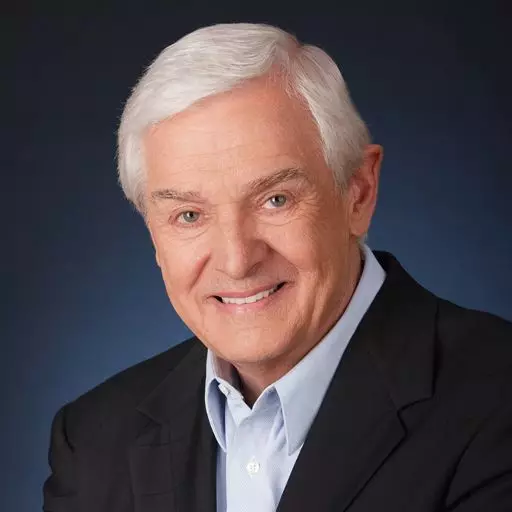
Facing Our Fears With Faith, Part 1


From unstable employment to unsafe neighborhoods, it's no wonder so many people live in the grip of fear. If you’re one of them, take heart. Dr. David Jeremiah shares four things you can do when you feel afraid.
David Michael Jeremiah: From our volatile economy to violence in our streets, the world can be a pretty frightening place. What can we do when we find ourselves in the grip of fear? Today on Turning Point, Dr. David Jeremiah turns to the 34th Psalm and offers four things we can do when we're afraid. We don't have to feel helpless. From the series Making Sense of It All, here's David with advice on facing our fears with faith.
Dr. David Jeremiah: I love Psalm 34. I hope when we're done teaching it you'll love it too. It's a turn-to portion of God's Word. I write this passage of scripture in many books when I sign books or Bibles because it is a greatly encouraging passage. Psalm 34: Facing our fears with faith.
Faith is believing when you can't see. Fear is fearing when you don't know. And there are two options: Faith is the best. When you put your trust in Christ, He will help you with your fears. When you know He's available and you praise Him and walk with Him and rest in Him, which is what you learn to do in Psalm 34, everything will be different. We'll get to the teaching of it in just a moment, but first another reminder of our resource for the month of July.
This month we make available a wonderful book honoring our 250th anniversary as a nation. It's called 100 Bible Verses that Made America. And it was written by Robert Morgan, who's one of my best friends and a tremendous teacher and expositor. And these verses will just light you on fire as you realize how deeply rooted we are as a nation in the Word of God.
It's a beautiful hardcover book that we'd love to send you for your gift of any size during this month to Turning Point. All you have to do is send your gift and say, "Send me the book on the verses that made America." It will be on its way to you before you know it. And now let's take part one of this wonderful Psalm, Psalm 34: Facing Our Fears with Faith.
Open your Bibles to the 34th Psalm, Psalm 34. I want to talk with you about facing our fears with faith. This is a fearful world in which we live, isn't it? These are difficult times. It's fearful just listening to the news, watching the news channels any given day, all the things that could happen.
I remember hearing about a summer night during a violent thunderstorm when a mother was tucking her small boy into bed. She was about to turn off the light when he asked her with a tremor in his voice, "Mommy, will you sleep with me tonight?" The mother smiled and gave him a reassuring hug. She says, "I can't, honey. I have to sleep with your daddy." There was a long silence broken at last by his shaky little voice, "The big sissy."
I don't know about you, but sometimes when you look at the formidable things that are happening around us, you can turn into a big sissy pretty quickly. There is really no feeling in the world that I can compare the icy grip of fear. And it comes in so many different varieties.
Author Craig Massey says there are six general categories of fear: the fear of poverty, the fear of criticism, the fear of the loss of love, the fear of illness, the fear of old age, and finally, the fear of death. Now, maybe this isn't an exhaustive list, but almost everything you and I are afraid of falls under the category of one of those larger umbrella categories of Craig Massey.
Someone has described fear as a small trickle of doubt that flows through the mind until it wears a channel into which all of your thoughts are drained. Tiny fears, almost unperceived fears, can build up day by day until we find ourselves paralyzed and unable to function.
I read the book that was written by Max Lucado called Fearless. In this book, he paints the picture of our fearful generation. He said each sunrise seems to bring fresh reasons for fear. There're talking layoffs at work, slowdowns in the economy, flare-ups in the Middle East, turnovers at headquarters, turn-downs in the housing market, upswings in global warming, outbreaks of Al-Qaeda cells. Some demented dictator is collecting nuclear warheads the way others collect fine wines. A strain of Asian flu is boarding flights out of China.
The plague of our day, terrorism, begins with the word terror. We are fearful of being sued, of finishing last, of going broke. We fear the mole on our back, the new kid on the block, the sound of the clock as it ticks closer to the grave. We sophisticate investment plans, create elaborate security systems, and legislate stronger military. And yet today, we depend on mood-altering drugs more than any generation in history.
According to one study that Lucado did in his book, ordinary children today are more fearful than psychiatric patients were in the 1950s. And as most of you know, fear is no respecter of people. Fear is not a private domain of the weak. It strikes at the best of us.
It does not restrict itself to the individual, but sometimes it can be transmitted to others. It is most dangerous, especially for the Christian, in its ability to slap handcuffs and shackles on us and keep us from the things that God wants us to do, bound up in a prison of frustration and hopelessness. In this prison, God can actually become the perceived enemy instead of the deliverer.
Now, of course, we all know that fear in itself is not bad. Fear is a gift from God designed to give our bodies the sudden burst of strength and speed that we need in times of emergency. But when fear becomes a permanent condition, it can paralyze the spirit. It can keep us from taking the risks of generosity and love and vulnerability that characterize citizens of God's kingdom.
How many of us have discovered that in times of fear and anxiety, we usually find ourselves opening our Bible and turning to the Psalms? It just happens to be the place where we have been before at such times. And there is no better place to turn in the Bible when you are afraid than to the Psalms.
In the Psalms we have mostly the writings of David, who not only recorded for us his praise and his prayers, but went out of his way in his discussions with the Lord to give us understanding of the situations that were going on in his own life. I've often thought that the book of Psalms is more like a journal than it is anything else. It is David's entries in every day what's happening in his life and then he reflects it back to God.
Now, in the Psalms there are 14 different Psalms which are introduced by words that link that particular Psalm to some particular event in the life of the psalmist. We find the connection of these words very helpful to us if we want to understand the meaning of the Psalm. For instance, in Psalm 34, if you will look right under the title, right under the word 34, you will notice in most of our Bibles they have this ascription: "A Psalm of David when he pretended madness before Abimelech, who drove him away, and he departed."
Now, that's put there to help us understand the scenario in which David found himself when he wrote the words we're about to study. The psalmist we are told was in a situation, a particular situation, and we can go back to 1 Samuel chapters 21 and 22 and the surrounding chapters, and we can recover that moment in David's life.
Once we do that, Psalm 34 takes on a whole new meaning. Now we understand what David was going through. We understand his fear when he wrote these words. Now, for many of you, this will be an unnecessary review, but for all of us so that we can be on the same page, let me take you back and set the stage for why this Psalm was written.
As many of you know, when King David was just a boy, a teenager, King Saul was the most powerful man in his nation. When the nation of Israel was challenged by the Philistines to send out a warrior to fight against Goliath, no one, including King Saul, volunteered for that assignment. You see, Goliath was somewhere between nine foot six and ten feet tall, who championed the Philistine army.
He had challenged the Israelites to send out their best warrior and they would have it out once and for all. This was going to be a war of economy: one man against another, whoever wins, the whole war's over. If Goliath won, the Israelites would be their servants. And if the warrior of Israel won, the Philistines would serve the Israelites.
Now, unfortunately, Israel couldn't find a candidate for this role. No one wanted to volunteer for the opportunity to be a hero. None of the soldiers of the Israeli army stepped up. And even King Saul, who we now know from reading behind the scenes was one of the tallest men of Israel, even King Saul wanted nothing to do with it.
So on a particular day, as you remember, David shows up at the front bringing some food from home to give to his soldier brothers. And he walks in on the discussion about why nobody's going to go out and fight Goliath. This has to be one of the funniest moments in Jewish history.
When diminutive David walks in and volunteers to go out and meet the giant, I was watching one of the early morning news shows, they had on the Guinness World Records tallest man in the world and he was eight foot something. When he stood up, he just kept standing up. I mean, he was huge. Goliath was a foot taller than him. I couldn't get over just thinking about that.
And you can't blame them. I mean, don't be too hard on the Israelites. Don't even be too hard on Saul. Who wants to sign up to die today? That's pretty much what it was like. But David walks in in his innocent bravery with his little bag full of food for his brothers and he says, "I'll do it." They try to talk him out of it, but he won't have it. And so they decide if he's going to go out and fight the giant, he better put on Saul's armor.
Second funniest moment in Jewish history. Saul was probably six-five, David was probably five-two. Saul was 240, David was 130. And it didn't take him long to figure out that Saul's armor was not going to be an asset. So in essence, David walks out to meet the giant with nothing other than five stones, a slingshot, and the promise of Almighty God.
And you know the story: one stone and Goliath was defeated. David comes back into the camp carrying his head and he becomes the instant folk hero of the entire nation. So far, so good. But the women of Israel get involved in the celebration. And according to 1 Samuel 18:7, the women sang a song as they danced and said, "Saul has slain his thousands, and David his ten thousands."
And verse 8 of the same chapter says, "And Saul was very angry and the song displeased him greatly. They have ascribed to David ten thousands and to me they have ascribed only thousands. What more can David have but the kingdom?" And here's the key: so Saul eyed David from that day forward. He wasn't admiring him. He eyed him. That means he watched him for the opportunity to take him out.
The hatred that Saul had for David out of the jealousy instead of acknowledging him was so strong that Saul determined the only way he could survive was to kill David. For the next several years, David lived on the run. Always looking over at his shoulder, always moving his family from this place to that place, never being able to relax and feel safe because around the next corner might be one of Saul's archers, one of his executioners.
Finally, after living like this for many months, David did a foolish thing. Up until this time, he had walked in obedience even though he was running from Saul. He felt like God was with him. And you read that part of the Old Testament, you see that David had a lot of experiences, but God was always a part of it. But one day David got up and decided to take things into his own hands.
And before you look at me like, "Why would he do that?" we've all been there and done that, haven't we? Someone has said that fatigue makes cowards of us all. David was tired and at this particular point, he makes this bad decision. He takes things into his own hands and here's what he did: he decided that if he was going to get any rest from the pursuing Saul and his army, the only place he would be safe would be in the camp of Israel's enemies.
So David goes to the Philistines and tries to hide out on the other side. Now, he chooses as his place of hiding a city by the name of Gath. Here is the beginning of the stupidity that often is a part of our lives when we get out of fellowship with God. When we get out of fellowship with God, we can do some really stupid things. David decides to go to Gath and hang out. Does Gath register with anyone? Gath was the hometown of Goliath. It's where he grew up.
On the way to Gath, David's hungry and he stops in a little village, the village of Nob, in order to get some food. And while he is there, he asks them if they have any weapons, because he doesn't have any weapons. And they said, "Yeah, we only have one weapon." The high priest told him that the only weapon he knew about was the sword of Goliath, which had been kept as a trophy of David's victory. And David took Goliath's sword and headed for Gath.
You talk about a death wish. And it didn't take very long for the citizens of Gath to figure out who was in their midst. They put two and two together and they realized that the man who had slain their giant was right there in their midst. Here's what the record says in 1 Samuel 21: "And the servants of Achish said to him, 'Is this not David the king of the land? Did they not sing of him to one another in dances saying, 'Saul has slain his thousands, and David his ten thousands'?'"
Quite interesting, the hit parade in Israel had made it to Philistia. How about that? Now, David took these words to heart. I think that's one of the understatements of the Bible. If you were David, wouldn't you have taken those words to heart? Is this not David? And he was very much afraid of Achish, the king of Gath.
So David changed his behavior before them, pretended madness in their hands, scratched on the door of the gate and let his saliva fall down on his beard. And Achish said to his servants, "Look, you see the man is insane. Why have you brought him to me? Have I need of madmen that you have brought this fellow to play the madman in my presence? Shall this fellow actually come into my house?"
So David departed from there and escaped to the cave of Adullam. So when his brothers and all his father's house heard it, they went down there to him. Now go back to Psalm 34 and let's read that ascription again: "A Psalm of David when he pretended madness before Abimelech, who drove him away, and he departed." This Psalm was written by David right after this experience.
And by the way, don't be confused by the interchange of the terms Abimelech and Achish. Abimelech is a term which is like the term Pharaoh. So Achish was the Abimelech of Philistia. He was the Pharaoh, and those two words are not in conflict with each other. Now, it's not hard to imagine how frightening it must have been for David when he realized that he was surrounded by the Philistines who hated him. In his mind, he thought he was dead. You talk about fear.
Now he has escaped through acting like he had gone out of his mind and he runs to this cave called the cave of Adullam. And there for at least a while, he is alone before his family and his brothers join him. He's tired of living out of a suitcase. He'd been anointed king and he hadn't had one single day of actually being king yet. 15 years transpired from his first anointing until he became king. He's frustrated, he's discouraged and fearful, and out of that experience, he produces the words of Psalm 34.
I wish I could teach every word of this Psalm because every word is important. But since we're talking about fear today, let me just touch on the principles that deal with that subject. What does David do at this moment in his life that I can do, that you can do when we're tempted to be afraid?
Well, the first thing he does is almost counter-intuitive. It almost is a disconnect. When we are afraid, we can offer up our praise to God. Verses 1 through 3: "I will bless the Lord at all times; His praise shall continually be in my mouth. My soul shall make its boast in the Lord; the humble shall hear of it and be glad. Oh, magnify the Lord with me and let us exalt His name together."
Many of the great praise songs that we sing are right out of this Psalm. You know this one: "I will bless the Lord at all times, I will bless the Lord at all times; His praise shall continually be in my mouth." Right out of the scripture. That's why we love to sing it.
Well, David walks into this cave and he begins to sing praise to God. He moves from the pain of his life to the praise of his lips. And if you underline your Bible, you will notice that there are five different phrases here to describe his first response to fear: "I will bless the Lord at all times. His praise shall continually be in my mouth. My soul boasts in the Lord. Oh, magnify the Lord and exalt His name together."
David says he will bless the Lord at all times and His praise will be continually in his mouth. Now, how many of you know it's easy to sing a song in the day of prosperity? It's a totally different thing to sing a song in the night of adversity. But David will sing his song in the night of adversity. And notice, it says and his song will be in his mouth. He sings out loud.
Not just a song in his heart, that's okay. David sings a song out loud. He's singing his song out loud to God. I wonder what that sounded like in the cave. Did you ever sing in a cave? Whoa. Good or bad, you hear yourself.
So the Bible says he recovers from this moment of terror and fear. His heart is still pounding. He's still realizing that he's escaped by the skin of his teeth, that he should be dead. And out of his love for the Lord, out of the fear of his heart, he begins to sing praise to God.
You know, it's a courageous thing to sing praise to the Lord when we don't feel like it. Mostly when we're afraid we don't feel like singing to the Lord, to begin to lift up His name when we are cast down. But the courage of obedience at this point may be the most important principle I have ever learned about dealing with the difficult moods and modes of life.
Sometimes we have to do what we do out of obedience and watch how the Lord takes that and turns everything around for us. Sometimes we have to say, "Lord, I'm going to worship You today and I do not feel like worshipping You, but here I go." One of the reasons we are so blessed in this generation is that we can carry worship and the means of worship around with us wherever we go. In our CDs, in our cars, in our phones, we're never away from the opportunity to plug in to some worship song that we know that honors the Lord and begin to lift up His name in praise.
My suggestion to you in your fearful moments, when your anxiety starts to reach its fingers out and clutch at your heart, find some praise music that has meant something to you in the past, something that you know well, and just begin to sing it. Whether you're a good singer or not, lift your voice up in joyful praise to the Lord. Sing along with the singers on the CD. Praise the name of God.
David Michael Jeremiah: Amen. Amen. Hey friends, we have a beautiful study guide that goes with this series and all the CDs of all the teaching. A wonderful set to be the foundation for your small group or your Sunday school class or with whatever group you meet to study and research the Bible. This is a great series for small group discussion. You can get the study guides from davidjeremiah.org and the CDs come from the same place.
So get in touch with us and order these materials and make use of them while this is fresh in your mind, while you've been listening to these messages. You be a conveyor of the same truth to others and share it with them. Thank you so much for being with us as we start this new week together. Look forward to seeing you tomorrow right here on this good station. I'm David Michael Jeremiah. Thanks for listening.
For more information on Dr. Jeremiah's series Making Sense of It All, please visit our website where we also offer two free ways to help you stay connected: our monthly magazine Turning Point and our daily email devotional. Sign up today at davidjeremiah.org/radio. That's davidjeremiah.org/radio or call us at 800-947-1993. Ask for your copy of Robert J. Morgan's inspiring book 100 Bible Verses that Made America. It's yours for a gift of any amount.
You can also purchase the Jeremiah Study Bible in the English Standard, New International, and New King James Versions, available in your choice of handsome and durable cover-ups. Get all the details when you visit our website davidjeremiah.org/radio. This is David Michael Jeremiah. Join us tomorrow as we continue the series Making Sense of It All on Turning Point with Dr. David Jeremiah.
Featured Offer

| Had there been no Bible, the nation would not have been born as it was. Perhaps it would not have been born at all. Through the founders, leaders, and defining moments of American history, Scripture helped shape the values and convictions that formed our nation. This powerful resource from Robert J. Morgan explores the biblical roots behind America’s foundation and reminds us why God’s Word still matters today. |
Past Episodes


Video from Dr. David Jeremiah
Featured Offer
| Had there been no Bible, the nation would not have been born as it was. Perhaps it would not have been born at all. Through the founders, leaders, and defining moments of American history, Scripture helped shape the values and convictions that formed our nation. This powerful resource from Robert J. Morgan explores the biblical roots behind America’s foundation and reminds us why God’s Word still matters today. |
About Turning Point
Turning Point's Mission: Delivering the Unchanging Word of God to an Ever-Changing World
About Dr. David Jeremiah
Dr. David Jeremiah is the founder of Turning Point for God, an international broadcast ministry committed to providing Christians with sound Bible teaching through radio and television, the Internet, live events, and resource materials and books. He is the author of more than fifty books including The Book of Signs, Forward, and Where Do We Go From Here? David serves as senior pastor of Shadow Mountain Community Church in San Diego, California, where he resides with his wife, Donna. They have four grown children and twelve grandchildren.
Contact Turning Point with Dr. David Jeremiah
USA
Turning Point
PO Box 3838
San Diego, CA 92163
CANADA
PO Box 70509 RPO Oak St
Vancouver, BC V6M 0A3
UNITED KINGDOM
PO Box 1532
Hemel Hempstead
HP1 9QX
USA
1-877-998-0222
CANADA
800-946-4300
UNITED KINGDOM
0800-058-2856