

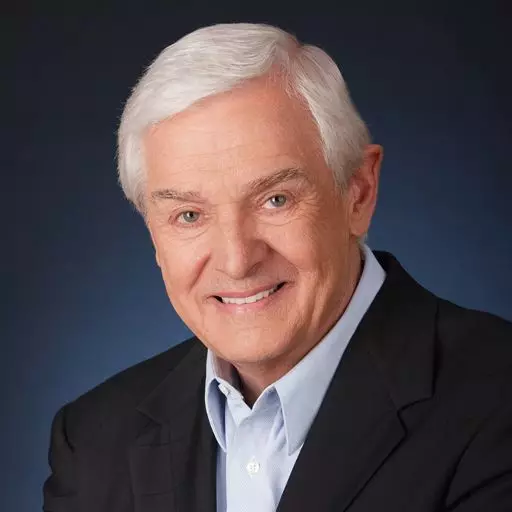
When the Holy Spirit Controls Your Life, Part 1
Dr. David Jeremiah explores the Holy Spirit’s help in the believer’s worship through Colossians 4:2–4, emphasizing prayer that is diligent, watchful, thankful, and evangelistic. These qualities reflect a Spirit-directed approach to communion with God.
Announcer: Consistency is crucial when trying to develop better habits. Even in your spiritual life, and especially in three key areas. Can you guess what they are? Today on Turning Point, Dr. David Jeremiah considers those areas and shares practical tools for achieving greater consistency in them. From his series on the Holy Spirit, here is David to introduce When the Holy Spirit Controls Your Life.
Dr. David Jeremiah: And thank you so much for being with us not only today but over these last weeks as we have taught the material on the Holy Spirit from the Word of God. For many of you, you have already ordered the book which we made available this month to go along with this series called *The Holy Spirit You May Not Know*. If you haven't done that already, you can order it right now. It's yours for a gift of any size to Turning Point. Just send your gift and say, "Please send me the book on the Holy Spirit." You say, "How much should I send?" Well, as much as you can, as much as God tells you to. I am not the one to tell you how much to send. You do what you believe you should do. Ask God to help you be generous and do the best you can to help us do what we do as we spread the Word of God around the world.
This is a very important time for us, this day especially, because tomorrow we arrive at a financial deadline. June the 10th marks the end of our fiscal year so that if God has blessed you through Turning Point, we want you to consider how you might be a blessing to us during this important time. Your gift today will be matched dollar for dollar thanks to some gracious friends who have given us a special matching gift. Thank you for standing with us during this critical time of the year and together we'll continue delivering the unchanging Word of God to an ever-changing world. Be sure and take note of that as you have opportunity. When the Holy Spirit controls your life, what happens? We're about to find out on this edition of Turning Point.
Somebody once asked comedian Jerry Seinfeld how to get better at telling jokes. His answer was pretty simple. The way to get better is to create better jokes, and the way to create better jokes is to write one every day. Then he explained how he does it. He buys a big wall calendar that has a whole year on one page. He hangs it on a wall that he sees every day and then he gets a big red magic marker for each day he does his task of writing and he writes a great big red X over that day.
After a few days, he said, you'll have a chain. So just keep at it and the chain will grow longer every day. You'll like seeing that chain, especially when you get a few weeks under your belt. Your only job next is to not break the chain. Now that's just a story on the power of consistency. Deep down in our hearts, all of us wish we could develop the habit of consistency. And do you know how popular it is? A book on habits is in the New York Times Bestsellers list and has been for a while called *Atomic Habits*.
Every time you look on that list, there's some kind of a book about habits because everybody's trying to figure out how can I have better habits? How can I live a more consistent life? And you don't have to be a Christian to feel that way. You just are a person and you have a few things in your life you'd like to do more consistently. And the same is true in the spiritual arena, in our walk with the Lord.
In his letter to the church at Colossae, Paul wrote what I believe is a powerful summary statement about what happens to us when the Holy Spirit takes control of our lives. It is the companion passage to Ephesians 5. Here's what it says. Listen to these words. "Continue earnestly in prayer, being vigilant in it with thanksgiving. Meanwhile, praying also for us that God would open to us a door for the word, to speak the mystery of Christ, for which I am also in chains, that I may make it manifest as I ought to speak. Walk in wisdom toward those who are outside, redeeming the time. Let your speech always be with grace, seasoned with salt, that you may know how you ought to answer each one."
You realize when you read this that it's an all-encompassing passage, for in these few verses, it's like Paul takes all we've been learning about the Holy Spirit, he wraps it up into three areas of life where most of us will admit we have the most difficulty living consistently for God. He talks about staying consistent in the way we pray, in the way we walk with unbelievers, and in the way we speak with grace. Let's take each one of them and follow what Paul said right from this passage of Scripture.
Holy Spirit help for our worship begins with Paul's instruction for us to pray diligently. Colossians 4:2, "Continue earnestly in prayer." Continue in prayer is a command, it is not a suggestion. It is not something he says you should do if you feel like it. It says don't let prayer be an afterthought, don't let it be a humdrum kind of thing you could take or leave. God wants us to pray diligently. He wants us to keep after it even when it's not easy. Jesus taught his disciples to pray always and never give up.
And if you read the New Testament carefully, you will see that this was the way they did it in the early church. These are verses from Acts and Ephesians, but listen carefully. "These all continued with one accord in prayer and supplication. And they continued steadfastly in the apostles' doctrine, fellowship, breaking of bread, and prayers. But we will give ourselves continually to prayer to the ministry of the word. Pray always with all prayer and supplication in the spirit, being watchful to this end with all perseverance and supplication for all the saints." And 1 Thessalonians 5:17, which we all know, "Pray without ceasing."
What does it mean to pray without ceasing? It doesn't mean to walk around muttering all day long like you were in some kind of a trance. It has nothing to do with that. It means to take your prayer life seriously. I remember reading a story by John Stonestreet, who is the president of the Colson Center. He told about a ninth-grade Bible class assignment that he dreaded. He said we had to go visit elderly shut-ins, and he and a friend went to see Mrs. Buechner, who was an 89-year-old widow on a country road in Virginia.
The visit started awkwardly and singing carols didn't help at all. As they prepared to leave, she said, "Can we pray together?" John and his friend agreed and Mrs. Buechner prayed with a warmth and confidence that made John realize she really knew God. Two years later, unable to forget her, John visited again. He said, "You probably don't remember me." "John," she smiled, "I prayed for you this morning."
And she kept praying for him every day until she died. That's what Paul meant when he wrote, "Continue earnestly in prayer." Do you have anybody that prays for you every day? I'm blessed to have probably more than I know, but three or four people that I know pray for me by name every single day. And they even send me emails to let me know what they prayed for. Can you imagine what that feels like to know you have that strength? And when we receive that, we want to do that for others.
The Bible says, first of all, pray diligently. Make prayer important. Sometimes it's not very important. We put it over here on the side. We go to church, we sing songs, we might even talk about Jesus, but prayer is a very difficult thing. And you know what? I read somewhere that if you want to empty a church, announce to the church that you're going to speak for 10 weeks on prayer. Nobody will come because everybody feels guilty about this particular subject. I don't want you to feel guilty, men and women, I want you to be encouraged to know prayer is a tremendous part of our life and the Bible says, first of all, pray diligently.
Then it says being vigilant in it. Now how in the world can you be vigilant in prayer? What does it mean to be watchful in prayer? First of all, it means to stay awake. I don't know about you, I have fallen asleep in a few prayers over the years. I've had a hard night, got up in the morning, tried to pray and all of a sudden I realized I was in a different zone. I don't know where I was. I'm sure God wasn't getting a lot out of my prayer. It means much more than that. It means to be watchful.
It means to have an attitude of being spiritually alert. It means to notice what's going on around us, to be on the lookout for spiritual danger in our own lives, in the lives of others. Peter used this same word vigilant in his writing. He said, "Be sober, be vigilant because your adversary the devil walks about like a roaring lion seeking whom he may devour." I'm not sure about you, but I've noticed that the discipline of prayer can easily slip away from you if you're not attentive to it.
One day without prayer, which can happen to anyone, becomes two days. Two days become three, three days become a week, and then you wake up and realize with a start that a whole month has gone by and you've hardly prayed at all. Can I tell you two strategic things the devil does to make this happen? I've observed this over the years watching people and even in my own life. First of all, when you stop praying, the devil makes you feel really bad that you don't pray and you realize you shouldn't be praying.
And then he says, "You've not prayed in such a long time, you can't start again." And so what happens is the enemy gets in and he imagines with you a life without prayer and before you know it, you have a life without prayer. Don't you let him do that to you. Here's what I know. Wherever you stopped in your prayer life, God will accept you to start right back again right now. It's never too much time that's gone by. If you realize and become convicted that you're not praying as you should, you don't have to go to class to figure that out, just start doing it.
Just start praying again and you'll discover that God will honor that. You've never slipped so far away from God that he won't accept you when you pray again. Don't let the devil tell you that, it's just not true. God loves you, his hands are reaching out to you, he longs for your fellowship. Don't deprive him of it anymore, just get back to praying. That's what the Scripture teaches us to do.
So we're to pray diligently and watchfully. Notice this: we're to pray thankfully. Paul says in Colossians 4:2, "Pray with thanksgiving." Have you ever found yourself rushing into prayer, get halfway through it and you realize you haven't breathed a single word of thanks to the Lord? All you've done is back your truck up and dump all your problems on his doorstep. We all get our "gimme" lists together, don't we?
Mine starts accumulating throughout the day, stored in some file in the back of my mind. I want this, I need that, I gotta have this and such and such. And sometimes, if I'm not careful, I can rush right into prayer with the list that is absent the thanking of God. The Bible tells us we're to begin our prayers with gratitude. Here's Psalm 100 and verse 4: "Enter into his gates with thanksgiving and into his courts with praise. Be thankful to him and bless his name."
Our very first words in prayer should be the words of gratitude. When you wake up in the morning, start by saying, "Lord, thank you for another day. Thank you for a night of rest and for the strength to face what's ahead. For my family, for the church you've placed in my life. Lord, so many things, thank you, thank you, thank you." I'm sure you remember me telling you about the Hollywood actor who tells everybody when you go to bed at night, take off your slippers and push them way under the bed so that when you get out of bed in the morning you have to get on your knees to get your slippers. While you're down there, be thankful to the Lord for all that he's done for you.
I don't know if you need that kind of a reminder, but all of us know that if we're not careful, we ask God for everything and we thank him for very little. How many of you could give a witness that God is a wonderful God and he's worthy of our praise? Can I get a witness today? So Paul says pray diligently, pray watchfully, pray thankfully, and then I love this one: pray evangelistically. "Meanwhile, praying also for us that God would open to us a door for the word, to speak the mystery of Christ, for which I am also in chains, that I may make it manifest as I ought to speak."
Now remember, Paul's writing this letter from prison. Colossians is one of the prison epistles. He's not asking for an open door so he can get out of jail. That's probably what I would have been praying for, but not Paul. No, that's not the principal thing on his heart. That open door phrase appears in Scripture several times and Paul is not saying, "Please open the door to my jail," he's saying, "Lord, I want you to open the door for opportunity for me." He's affirming that God is the one who opens doors, but he opens them when we ask him.
How do you know that? The Bible tells us that. Look with me at Revelation chapter 3: "These things says he who is holy and he who is true, he who has the key of David, he who opens and no one shuts, and shuts and no one opens. I know your works. See, I have set before you an open door and no one can shut it." When we ask for open doors, we're really asking for opportunities. And when God provides one, you won't have to force it open yourself. It will be clear, unmistakable, wide enough to walk through with confidence.
I've had some experience in that over my life. When we started the radio ministry years ago on one station here in San Diego, I didn't have anybody out there representing us trying to get us other stations. But one by one, God opened doors and we would hear from this station and that station. Somebody said, "Would you have liked to have started out with 2,000 radio stations?" No, I wouldn't have liked to have started out with those because the joy of seeing God make that happen along the way was so great.
And the realization that I didn't have anything to do with it, I wasn't making it happen, God was doing it. It was such a tremendous time in my life. You and I get ourselves in a lot of trouble sometimes when we try to make our own opportunities, don't we? I'd rather not tell you the stories about when I've done that, they won't be edifying to anybody here I'm sure. But I am the sort of person who will try to make things happen.
And if I'm not careful, I run around rattling this door and rattling that door and saying, "Lord, please open it for me." I know that we can pray for God to open doors, but then we have to let him open the door. You notice too that sometimes he shuts doors. I don't know how long you have to live to be thankful for doors that have been shut. It's something less than 84 years, I'll tell you that right now. Because I can look back and see places in my life where I almost went here or almost went there or almost did this or almost did that.
And God shut the door so that I couldn't do it. I wasn't happy about it when it happened, but looking back I realize he was protecting me. In other words, when we get to heaven, we will thank God for the prayers that he answered and maybe even for some of the prayers he didn't answer as we look back over our lives. Paul's purpose here was to have open doors so that he could teach the grace of God. That's what the Bible says.
He wanted the ability to explain to his people the hidden counsels of God. He wanted to help them understand how the Jews and the Gentiles had been brought together into one church and one body and one kingdom. He wanted to make them understand. He says, "I want to be clear in my teaching." We have some teachers here, I see some of you. I know that you pray for opportunities, but do you ever pray for clarity? That God will give you clarity when you speak.
If you've ever done any teaching, you understand very well what Paul was praying for. Sometimes you see something so clear in your studies and you're so excited about it and you can't wait to share it when you have your opportunity. And then you present it to a group of people and you watch a glaze form over their eyes. With a sinking feeling, you realize they don't have a clue what you've been talking about.
Paul was saying this is too important for me to muddle or obscure. I pray that I will be able to lay it out in a way that people can really and readily pick it up. I pray that a lot for what I do here. I don't want to just get up here and talk. Someone once told me a long time ago, "If they haven't learned, you haven't taught." And that's a really interesting thing, is it not? If you teach and they haven't learned, you haven't taught.
The Holy Spirit helps our worship. He helps us in these ways when we pray. Notice secondly, the Holy Spirit will help us in our walk, verse 5: "Walk in wisdom toward those who are outside, redeeming the time." When you walk, you just put one step in front of the other, you just take one step at a time. How many of you know the Christian life is just one step at a time? When you get ahead of that, you get in trouble, don't you?
I was thinking about the verse that says, "According to your days, so shall your strength be." How many of you are along with me when you say, "Lord, this is Monday, I'd like strength for the whole week." No, you don't get strength for the whole week, you get strength for Monday. And when will you get Tuesday's strength? On Tuesday. The Bible says we walk by faith. And then he says in this passage something very interesting. He says we walk toward those who are without.
What a wonderful picture that is. There are many Christians who think that once you become a Christian, you should shut off all relations with the people in the world and you stay a little bit each day in your holy huddle and you live there for the rest of your time. I don't see that in the Bible. The Lord Jesus associated with sinners, with prostitutes, societal rejects. How are we supposed to win a world if we don't know anybody in the world? How are we going to touch people who don't know Christ if we're never with them? As someone has said, there's no impact without contact.
So the Bible doesn't teach that you as a Christian should get over in your little group of other Christians and never talk to anybody who doesn't believe what you believe or live like you live. The Bible says, however, we're to live our lives toward them. In other words, live our lives in such a way that they will see the difference we make. If you're a Christian and you're working in a company where you're the only Christian, I promise you they know it. If you're living at all the Christian life, they watch you. You're to live your life with a difference and the Bible goes on to tell us a little bit more about how to do that as we move forward.
Paul says in this passage that when you walk with wisdom, you do it openly toward those who are outside of the faith. You do your best to be an example for what Christ means to you as you live your life. I can promise you this: the people you work with are watching your every move. Once it becomes apparent you are a Christian, you are on display, an object of curiosity, and they will monitor everything you say and everything you do. And you say, "Pastor, I don't like that. Doesn't seem fair. That sounds like living in a fishbowl. I don't want that." Well, that's your problem, it's tough, that's the way it is. When you're a Christian, that's just the way it is. And if you try to live consistently in your own strength, you will fall flat on your face.
But the Holy Spirit is here to empower you to live in such a way that environment around you, which is not Christian, causes a contrast to be seen in your life that is amazing. I remember one time when I was a student in Dallas Seminary, I was working for the Illinois California Express. That's a freight company. I don't know if it's still in existence or not, but it was back then. I did a lot of things during the time I was working there. I was a billing clerk for a while, that's where you can make the most money, so I tried to learn how to do that. But I worked a lot on the docks.
And you know, the docks were freight company—that's a good place to find out what the world is all about, I want you to know. I didn't know any Christians there. I knew a lot of union members who were upset with me. They thought I was working too hard, they'd let me know. If I wasn't taking enough time off for my lunch break, they'd let me know. But I'll never forget one day I was in the truck and a guy came up to me, walked in the truck and he looked at me and he said, "Jeremiah, why are you the way you are?"
Oh, what a question that is. "Why are you the way you are?" What an opportunity to say, "Well, because I live for somebody else beside myself. I live for Jesus." The Bible says be ready with an answer for everyone who asks you concerning your faith. You don't have to open that door to do that, God will open it. And then Paul says redeem your time, seize every opportunity like merchants who are buying up a commodity in the market.
This whole business of our walk before the world is so critical. And you say, "It isn't fair that my faith should be a determinant in the life of somebody else." It isn't fair, it's just the way it is. That's why our responsibility is so great. I remember reading a story about the Russian writer Maxim Gorky. Gorky was a child when his father died and he and his mother went to live with his grandparents. His granddad, Gorky recalled, was a religious man but stern, irritable, and sometimes very cruel.
His mother was very religious, but kind and gentle and understanding. Gorky wrote that when he saw his mother and his grandfather kneeling side by side in church, he could not believe that they were praying to the same God. He said there had to be two Gods, one cruel and vindictive and the other loving and forgiving. I think sometimes when people see us, they must wonder about our God. Because you see, the way we interact with those outside the faith paints a picture of the God we worship. The Christ they see in you and in me is the only Christ they have and they will evaluate him.
Dr. David Jeremiah: And that is true. That is why we need the Holy Spirit to sit on the throne in our hearts and help us to live the Christian life in such a way that we reflect who Jesus is. As I have just said, the only Jesus many people will ever see is the Jesus they see in you and in me. That is both a great opportunity and a great responsibility. Tomorrow we'll finish up this month with part two of "When the Holy Spirit Controls Your Life." And as I mentioned to you, after that we begin this new series which I think is going to be a blessing to you all as we talk about making sense of it all, seeing the world with a biblical perspective.
Don't forget again to get your copy of the book on the Holy Spirit. It's yours for the asking when you send your gift to Turning Point today. So we look forward to hearing from you and thank you so much for listening. I'm David Jeremiah.
Announcer: Today’s message originated from Shadow Mountain Community Church and senior pastor Dr. David Jeremiah. Drop us a note to let us know how God is using this ministry in your life. Write to Turning Point, PO Box 3838, San Diego, California 92163. Visit our website at DavidJeremiah.org/radio or call 800-947-1993. Ask for your copy of David’s new book, *The Holy Spirit You May Not Know*, a valuable resource that’s yours for a gift of any amount.
The prayerful support we receive from listeners like you makes this program possible. Thank you for partnering with us to deliver the unchanging Word of God to an ever-changing world. This is David Michael Jeremiah. Join us tomorrow as we conclude "When the Holy Spirit Controls Your Life" on Turning Point with Dr. David Jeremiah.
Featured Offer
Many believers affirm the Holy Spirit—but don’t always understand His role in a personal way.
In this powerful new book, Dr. David Jeremiah invites you to move beyond a general awareness of the Spirit into a deeper understanding of who He is and what He does. Discover how the Holy Spirit helps you know God more fully, understand His truth, and live with strength, clarity, and purpose.
This is more than learning about God—it’s an invitation to experience His presence and power in your daily life.
Past Episodes
Video from Dr. David Jeremiah
Featured Offer
Many believers affirm the Holy Spirit—but don’t always understand His role in a personal way.
In this powerful new book, Dr. David Jeremiah invites you to move beyond a general awareness of the Spirit into a deeper understanding of who He is and what He does. Discover how the Holy Spirit helps you know God more fully, understand His truth, and live with strength, clarity, and purpose.
This is more than learning about God—it’s an invitation to experience His presence and power in your daily life.
About Turning Point
Turning Point's Mission: Delivering the Unchanging Word of God to an Ever-Changing World
About Dr. David Jeremiah
Dr. David Jeremiah is the founder of Turning Point for God, an international broadcast ministry committed to providing Christians with sound Bible teaching through radio and television, the Internet, live events, and resource materials and books. He is the author of more than fifty books including The Book of Signs, Forward, and Where Do We Go From Here? David serves as senior pastor of Shadow Mountain Community Church in San Diego, California, where he resides with his wife, Donna. They have four grown children and twelve grandchildren.
Contact Turning Point with Dr. David Jeremiah
USA
Turning Point
PO Box 3838
San Diego, CA 92163
CANADA
PO Box 70509 RPO Oak St
Vancouver, BC V6M 0A3
UNITED KINGDOM
PO Box 1532
Hemel Hempstead
HP1 9QX
USA
1-877-998-0222
CANADA
800-946-4300
UNITED KINGDOM
0800-058-2856
