

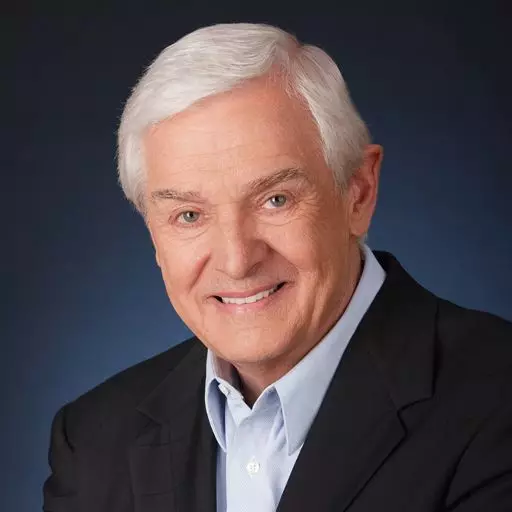
What Is My Self-Worth?, Part 2


From the largest galaxies to the smallest atoms, God is the Creator of the universe and the Author of life itself. Yet He loves and thinks about us non-stop! Dr. David Jeremiah looks at this marvelous truth and the priceless treasure we will see when we look at ourselves through God’s eyes.
Guest (Male): Do you ever stop and marvel at the fact that the creator of everything in the universe loves you personally and thinks about you at every moment? Today on Turning Point, Dr. David Jeremiah considers this incredible truth and the priceless treasure you are when you see yourself through His eyes. From "God, I Need Some Answers," here's David to conclude his message, "What Is My Self-Worth?"
Dr. David Jeremiah: People debate that question about self-worth in educational institutions, in the psychiatrist's office, sometimes at church, at small groups, and wherever they get together. "What is my worth? How do I know what I'm worth?" And of course, the world sends many false messages that really mess people up. The Bible tells us that your self-worth is based upon God, not upon you. And what God says you are, you are. And the Bible is very affirmative in that respect.
Today is part two of "What Is My Self-Worth?" and we'll get to it in just a moment. Let me remind you that Turning Point produces not only radio and television and internet messages, but we produce a monthly magazine that has been read by hundreds of thousands of people over the years. Today it is mailed out to over 300,000 families every month, and many other people download the biblical material for their daily devotions. We'd love for you to get this magazine if you're not already receiving it. Please ask for it when you get in touch with us, and we'll see that you get on the list for the next edition. I know it will add value to your walk with the Lord and be an encouragement to you every day.
Now here is part two of our discussion that we began yesterday, "What Is My Self-Worth?" Psalm 139.
Here is the way God knows you. Number one, God knows what you do. In verse two, he says, "Lord, you know my down-sittings and my uprisings." This is a reference to the activity of life. It is an Old Testament expression that talks about the routine of life, the going in and the coming out. God knows your activities. In essence, David is saying that God knew him in his active life and in his passive life. God knew what he did.
Secondly, God knows what you think. Notice verse two: "You understand my thoughts afar off." The psalmist says before you ever think your thoughts, God knows what they are. God knows your subconscious life, and that is why we read in the New Testament that your Father knoweth what things you have need of even before you ask. God knows what you think.
And thirdly, the psalmist says God knows where you go. He says in verse three, "You comprehend my path and my lying down, and are acquainted with all my ways." God knows all about your habits and what things you have need of, and God knows all that's going on in your life.
Number four, God knows what you say. Verse four says, "For there is not a word on my tongue, O Lord, but you know it altogether." And finally, God knows what you need. In verse five, it says, "You have hedged me behind and before and laid your hand upon me." This is an Old Testament idiom that is rich in imagery. He says, "You have hedged me in like a city that is under siege. You are providing for and caring for me even when you do not realize it."
He knows your past: "Thou hast hedged me in from behind." He knows your future: "Thou hast hedged me in before." And he knows your present: "You have your hand on me right now." So stop and think about it for a moment. How important are you? God knows you. He knows what you do, what you think, where you go, what you say, and what you need.
And when David thought about this, it was so overwhelming to him that we read in verse six he says, "Such knowledge is too wonderful for me. It is high, and I cannot attain it." David said there was only one thing left for me to do when I finally realized, God, that you knew me and out of all the billions of souls on this earth, you knew me better than I know myself, better than I am known by anybody else, that God, you know me. He said it is so wonderful I can do nothing but fall down and worship.
You know, sometimes truth about God is like that. There's no way to respond to it. There's no way to write a critique of it. When you just finally understand it, you just want to fall on your knees and say, "God, you are too wonderful. How can I comprehend it?" So the next time you're wondering about your own self-worth, if you're a believer in Jesus Christ, you can pull your shoulders back and say, "Hey, God knows me. He knows me."
But the second thing the psalmist wants us to understand is that God is near you. He not only knows you, he is near you. For in these next six verses, he asks the questions, "Where can I go from your spirit? Or where can I flee from your presence?" Quite often these verses have been used as an evangelistic thrust to help us understand that we can never get away from the Hound of Heaven, that he will chase us down the corridors of life until finally he catches us, and that like Jonah of old, we can never get on a ship that will take us away from God. He will always find us, and that's true.
But there's a wonderful, positive application of this portion of God's Word as well. For what David, I believe, is talking about is not so much the pursuing God, but the present God. He is saying to us that God is everywhere. He is not everything. That's pantheism. But God is everywhere. And in his poetic style, he researches the universe as if to go through a checklist and find out if there's any place that he could imagine where God might not be.
He says, "I've gone to the heavens and I've gone to Sheol, and God, you are there." Here are the two extremes: the heights of heaven and the depths of Sheol, the place of living in light and the abode of death and darkness. God, when I go there, you are there. And it surprises some of you, I know, to think of God in Sheol. But let me remind you, God will be with you wherever you go from now throughout eternity, either as the one around whom you have wrapped your worship and love, or as the thought in your mind throughout eternal days of the one you rejected all the time you had a chance to know him. God will be in your mind forever, in heaven or in Sheol, says the psalmist.
And then he adds, not only is God in the heights and in the depths, but he is in the east and in the west. There's a curious expression in this next verse. He says, "If I take the wings of the morning, you are there. And if I dwell in the uttermost parts of the sea, even your hand shall be there." And if you study that in the language of the Hebrew, what you'll find out is that the wings of the morning are reference to the east where the sun comes up. "And if I go to the furthest parts of the sea" is a reference to the Mediterranean Sea, which was further west than Palestine. And David is looking at the universe as he sees it, and he says, "God, you're in the east and you're in the west. I can't get away from you. You're everywhere. You're on the land and you're on the sea."
And then he says, "Well, maybe if God could somehow be isolated to darkness and light, there would be a way that he could not be near us." But he goes on to say, "If I say surely the darkness shall fall on me, even the night shall be light about me. Indeed, the darkness shall not hide from you, but the night shines as the day. The darkness and the light are both alike to you." God, you're in the light and you're in the darkness because with God there is no difference between light and darkness. And the point that the psalmist wants us to get is this: listen up now, God is near you wherever you go. You can't get away from him. You can't go to a place where God is not.
And I don't know what that does for you, but boy, I'll tell you what. If you get your worth from being near important people, you are near God, and he is near you. And what that means and the exciting truth is that he is immediately accessible to you wherever you go. When God designed to send his Son into this world as his picture to us of who God is, a name was given to him that we cherish, especially at Christmas time. He's called what? Emmanuel. And what is that? God with us. God is with us.
And the psalmist wants us to understand that you cannot hide from God, but he also wants us to understand that God is near us. So you get your self-esteem from the fact that God knows you and that God is near you.
Here's the third one, and basically this is the centerpiece of the whole Psalm. You get your self-esteem and your self-worth from this truth: God made you. He created you. You are the incredible creation of the infinite God. And I almost just took this section and pulled the rest of it aside and just dealt with it because what a wonderful truth it is. The psalmist says, "Oh God, you have formed me and my inward parts and covered me in my mother's womb."
Saint Augustine once wrote, he said, "Men go abroad to wonder at the height of the mountains and at the huge waves of the sea and the long courses of the rivers, at the vast compass of the ocean and at the circular motion of the stars, and they pass by themselves in their wonder." Isn't it interesting that in the first six verses, the psalmist is talking about God's omniscience, he knows everything. In the second section, he's talking about God's omnipresence, he is everywhere. And in this section, he's talking about God's omnipotence, he's all-powerful.
Now listen, when he wanted to use an illustration of his power, he didn't choose the vast universe with all of its stars and galaxies and planets, but he chose the crowning creation called man. And he says, "Let me show you how powerful is God. Let me show you man." And he says, "Man has been in the heart and thought of God from the very moment of his conception." God is involved with the conception of each of us. He says in verse 13, "For you have formed my inward parts and have covered me in my mother's womb."
These words describe reproduction in some of the most meaningful and tender verses in all of the Bible. If we read them honestly, we understand that they contain the secret for an incredible sense of self-worth. Listen to me: God knew you before you were born, and he knows the moment when you were conceived. He knows the very beginning of your life. God was involved in it all. In every phase of development from that moment on, he is there.
So I want to tell you something in case you haven't heard it recently from this pulpit, that the human embryo is not the result of a biological accident. God is aware of the union of the sperm and the egg and the attachment of the embryo to the uterine lining and the development of human life. And God formed the inward parts and arranged the genetic structure and possesses our reins, and God is in conception. And we believe that the Bible teaches that human life begins at that moment. And God knows about that human life, and God loves that human life from the very moment of that union. That's why Christian people struggle so much with the liberalized views of taking that human life indiscriminately and destroying it. God was involved at the very moment of conception.
There's a book written by Lewis Thomas called "The Medusa and the Snail". It's about why people made such a fuss over test-tube babies in England. And in this book, Thomas says the true miracle is the common union of the sperm and egg in a process that ultimately produces a human being. He said the mere existence of that cell should be one of the greatest astonishments in all of the earth. He said people ought to be walking around all day, all through their waking hours, calling to each other in endless wonderment, talking of nothing except that cell.
He said if anyone ever does succeed in explaining it within my lifetime, I will charter a skywriting airplane, maybe a whole fleet of them, and send them aloft to write one exclamation point after another around the sky until all my money runs out. He said so incredible is that cell. Over nine months, these cells divide up functions at exquisite ways. Billions of blood cells appear, millions of rods and cones, in all up to 100 million million cells from a single fertilized ovum.
And finally, a baby is born, glistening with liquid, already his cells cooperating, his muscles limber up in jerky, awkward moments and movements, and his face recoils at the harsh light and the dry air of his new environment. His lungs and vocal cords join in a first air-gulping yell, and within that clay-colored package of cells lies the miracle of human life. God was involved in the very beginning of it. God did it.
And God is involved with the development of it. He says, "I will praise you for I am fearfully and wonderfully made. Marvelous are your works, and that my soul knows very well." Do you know that the psalmist tells us that God protects even at birth our individuality? The word "wonderfully" in that little phrase "fearfully and wonderfully made", do you know what that word means? The word literally in the Hebrew language means you are fearfully and differently made.
And you know, we can look around and we can joke about this sometimes. We can say, "Boy, is she different," or "Boy, is he different." Let's face it, we're all different. There has never been two human beings created anything alike. God has made us fearfully and uniquely. We are all stamped with our own special genetic code that sets us apart from every other human being on the face of God's earth. And out of the billions of people, the billions of souls, God made certain that every one of us would be special, wonderfully, uniquely made.
My friend Don Wyrtzen, who is a pianist and a songwriter, wrote a little song about this verse. And I never even knew it was around until I was studying for this message, but I love the words of this. This is what he wrote: "Fearfully and wonderfully made, I'm unique, one of a kind. Fearfully and wonderfully made, my beginning was God's design. He was with me before my birth and formed my being with care. I'm a person of infinite worth, a masterpiece beyond compare. Fearfully and wonderfully made, I'm woven in His tapestry. Fearfully and wonderfully made, I'm created for eternity. His imprint is seen everywhere and He has plans for me. In secret He knew I was there, a mystery of God's decree. Fearfully and wonderfully made, I'm woven as His tapestry. Fearfully and wonderfully made, I'm created for eternity."
That's true. You wonder, do you have any worth? Well, let me tell you something. When God got done with you, He took the blueprint and tore it up and threw it away and He said, "I'll never make another one just like him, just like her again." If value is in scarcity, you are worth a ton because there isn't anyone like you anywhere. And as you age, you will become more and more valuable. Now, I don't know about that part, but the rest of it's true. You're uniquely God's protected creation.
And then not only does He protect your individuality, but He protects your identity in the whole process of life. In verse 15, He says this: "My substance was not hid from thee when I was made in secret and curiously wrought in the lower parts of the earth." The word "substance" here is a key word. It means "frame". It refers to the complete structure of the adult person. According to David, now listen up, according to David, the full-grown body had actually been planned, designed, and programmed when it was not even large enough to be visible in the unseen parts of the earth, says David.
Before you were born, the whole genetic plan of exactly what you would be as an adult was set by God. And scientists in molecular biology have not too long ago discovered this, and we call it DNA. And I've read so much about this. I mean, I feel like bowing down and worshipping God a whole new way. I discovered some incredible things. Do you know that in every cell of your body there is enough information to recreate your adult person as if there were no other cell necessary? And that every time that cell divided in the process of your growth, all of that information was contained in each cell that was a part of the division.
And there is so much information in each cell that if they just had the one, they could recreate your whole adult person. And someone has reasoned that if all of the instructions in one cell, in the genetic code, in the DNA of one cell, if all of those instructions were written out, it would take 1,600-page books to put all that information down in writing. And God put it in a cell that no one could see except with magnification. And it's in every cell in your body. It's incredible.
In fact, the DNA strands are so fine and so unique that if you put them all together from one human body, they would fit into a size of an ice cube. And yet, if you spread them out end to end, they would go from the earth to the sun and back 400 times. That's how much information is in one cell of the human body. God did it! And He did it so that you would have your identity. You are unique. You are individually precious to God.
And not only does He protect your individuality and protect your identity, in the very process He protects your importance. He says, "You are so important that all of your days were written in His book before one of them came to be." Isn't it incredible? God knew everything about you before you ever started out in life, and He has your whole life charted. He knows everything there is to know about you. You are so important to Him.
Well, there's one last thing I want to tell you about your self-esteem. Let's review for just a moment. How do I know I'm important? Hey, He knows me. He knows me. What I do, what I say, what I think, where I go, He knows it all. Number two, He's near me. Wherever I go, He's there. He makes sure never to let me get very far away. Number three, He made me. Whatever I am, I've got no reason to complain. I just have every option to take what God has given me and max it out for His glory, use my ability the best I can because God made me distinct from every other person, and He did the same for you.
But here's the most incredible thing, and I want you just to read verses 17 and 18 with me. You say, "Well, that's great theology, Pastor, and I'm glad to know that." But here's something for right now. "How precious also are your thoughts to me, O God! How great is the sum of them! If I should count them, they would be more in number than the sand. When I awake, I am still with you." Your self-esteem comes from the fact that God knows you, that God is near you, that God made you. But watch now, your self-esteem comes from the fact that God right now, at this very moment, listen to me, He is thinking of you.
In the great mind of God, He is thinking of you. Did you ever call someone you love who's a long way away? And what do you say to that person? "Just want you to know, thinking of you." If you can't be in somebody's presence all the time, it's good to be in their thoughts. But the psalmist says we're in God's presence and we're in His thoughts. And the psalmist says the way God thinks of us is so incredible that he can't comprehend it.
He said, "If I tried to number up the ways you think concerning me, I wouldn't be able to do it." But God, even when I'm not aware that you're thinking of me, you're thinking of me, because I go to sleep, but God, you never sleep. All during the time that I'm sleeping, you're thinking of me, and when I wake in the morning, there you are, and your thoughts are of me. I want to tell you something. You are so valuable and so incredibly important to God that He knows you and He stays near you and He made you and He's right now thinking of you. God has you in His mind and in His heart. You are only man in relation to God. And Psalm 139 is God's loving smile to you. You are okay. He knows you, He's near you, He made you, He's thinking of you. You're worthy because God is smiling on you today.
Amen. Well, thank you for being with us today as we finished up this study on the question, "What is my self-worth?" Tomorrow we're going to talk about another "how can I" question: "How can I be happy?" And Psalm 1 tells us what blessedness is and how to accept it. We'll talk about that tomorrow and Thursday. You know, in a world that can often feel barren and uncertain and lonely, we once again return to the Psalms and find a proven roadmap to step into biblical and true flourishing.
So the book that we're offering this month as our resource for the month of May will help you discover afresh the power, grace, and wisdom of Psalms 1, 23, 46, 91, and 103, and how the timeless truths found within these scriptures can lead you into a life that is connected to God, the one who can transform any wilderness experience. This book is yours for the asking during the month of May, and we thank you for asking for the book as you send your gift to help us out. We'll see you next time.
Guest (Male): The message you just heard came to you from Shadow Mountain Community Church and Dr. David Jeremiah, the senior pastor. Reach out and tell us how this ministry blesses you by writing to Turning Point, PO Box 3838, San Diego, California 92163. Visit our website at davidjeremiah.org/radio, or call 800-947-1993. Ask for your copy of David's new book, "Five Psalms for a Flourishing Life". It'll help you abide with God, and it's yours for a gift of any amount. You can also download the free Turning Point mobile app to instantly access our content. Search the App Store for the keywords "Turning Point Ministries". Visit davidjeremiah.org/radio for details. This is David Michael Jeremiah. Join us tomorrow as we continue "God, I Need Some Answers" on Turning Point with Dr. David Jeremiah.
Featured Offer

The book of Psalms provides strength, guidance, and encouragement for daily life. In this practical resource, Dr. David Jeremiah highlights five Psalms to help believers experience a flourishing, God-centered life in every circumstance.
Past Episodes


Video from Dr. David Jeremiah
Featured Offer
The book of Psalms provides strength, guidance, and encouragement for daily life. In this practical resource, Dr. David Jeremiah highlights five Psalms to help believers experience a flourishing, God-centered life in every circumstance.
About Turning Point
Turning Point's Mission: Delivering the Unchanging Word of God to an Ever-Changing World
About Dr. David Jeremiah
Dr. David Jeremiah is the founder of Turning Point for God, an international broadcast ministry committed to providing Christians with sound Bible teaching through radio and television, the Internet, live events, and resource materials and books. He is the author of more than fifty books including The Book of Signs, Forward, and Where Do We Go From Here? David serves as senior pastor of Shadow Mountain Community Church in San Diego, California, where he resides with his wife, Donna. They have four grown children and twelve grandchildren.
Contact Turning Point with Dr. David Jeremiah
USA
Turning Point
PO Box 3838
San Diego, CA 92163
CANADA
PO Box 70509 RPO Oak St
Vancouver, BC V6M 0A3
UNITED KINGDOM
PO Box 1532
Hemel Hempstead
HP1 9QX
USA
1-877-998-0222
CANADA
800-946-4300
UNITED KINGDOM
0800-058-2856