

What Can I Do When Trouble Overwhelms Me?


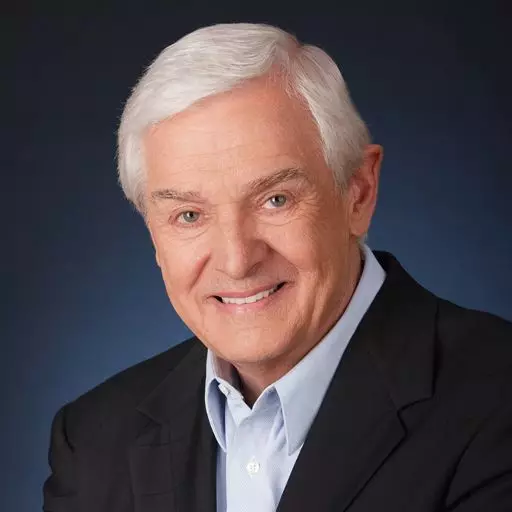
If we don’t deal with trouble in our life, it can quickly turn into fear. David understood that, and his thoughts about fear could fill a book. Dr. David Jeremiah opens Psalm 27, a psalm of David, for wisdom in troubled times.
Announcer: Choosing to ignore trouble rather than face it, only makes it grow into fear. David knew all about fear and wrote of it often in the Psalms. Today on Turning Point, Dr. David Jeremiah turns to one of those Psalms for tools to help you conquer trouble and keep fear at bay.
To conclude his series, God, I Need Some Answers, here's David with today's message: What can I do when trouble overwhelms me?
Dr. David Jeremiah: Do you know there are many Christians that you and I know who think that because they're Christians life is going to be a trouble-free experience? It is not a question of if we will experience trouble. It's when they come, what do we do? Instead of taking away trouble, God provides instructions for how to overcome it. And we're going to talk about that today in the 27th Psalm.
This is the last time I'll have a chance to tell you that this brief series, which we've called God, I Need Some Answers, is ending today. But the resources are still available through the end of the month. You can get the study guide, the CD album, and you can have your own personal Bible study or a group study based around these questions we have been answering every day.
We have a few more questions that are outside the series that we're going to share in the next couple of days, but this is the end of the actual series we have called it God, I Need Some Answers, life lessons from the Psalms. If you love the Psalms as I do, you'll love this series and you'll have a great time talking about it in your small group, your Sunday school class or wherever you meet together with others to study the Word of God.
This is all available from davidjeremiah.org. That's our website. And as you know the book, Five Psalms for a Flourishing Life, is available during this month. We still have a few days left for you to order that. Send a gift of any size during the remaining days in the month of May. And when you do, ask for a copy of the book on Psalms and it'll be on its way to you. You can add it to your library in just a few days. I hope you will do that. It will be encouraging to you as you read it.
Well, here we go with Friday edition of Turning Point. What can I do when trouble overwhelms me? Psalm 27.
Dr. David Jeremiah: I remember seeing a picture some years ago in a magazine. It's a rather popular picture and I know I've seen it in other places as well. It shows hundreds of people on a busy street corner going about their daily duties. You could see a mother with two children, her arms filled with packages, and worry is written all over her face.
And then there's a businessman rushing into a bank, evidently annoyed at missing the first section of the revolving door. And then there's a young person leaning against a building, apparently with no place to go, and his eyes betray a sense of boredom and discontent. And the caption under the picture says, Of what are these people afraid? It's a good question because trouble often makes us afraid.
Even those who have strong and aggressive personalities harbor some secret fears now and again. In fact, psychology has made a study of this and come up with a whole new set of terms. We call them phobias. Phobia is the Greek word for fear. Well, if you look in your modern dictionary for the list of phobias, last time I looked, there were over 75 different ones. 75 different phobias. In fact, they range all the way from erythrophobia, which is the fear of blushing, to phobophobia, which is the fear of fear. President Roosevelt had it right when he said, "We don't have anything to fear but fear itself."
I want to talk to you today about how we deal with these fears that are the result of our trouble. And I want to use as my subject the man David, and as my text, the famous 27th Psalm. We aren't sure when David wrote this. It's probable that he wrote it during the time when he was running from Saul in fear. Some have suggested that he may have written this Psalm when Absalom, his son, took away the throne of Israel from him and committed treason on his own dad.
Whenever it was written, we do know this: that the 27th Psalm is a personal testimony of a man who was in trouble. And despite the many moods that are reflected in this Psalm, it is quite evident that the Psalmist knew what to do when trouble visited his life. It is a very deeply spiritual Psalm that is easily divided into two sections. And it's important to understand the sections as we quickly move through the text.
Verses 1 through 6 give to us the Psalmist's testimony of how he dealt with his fear and his trouble. And then almost as an illustration for us, verses 7 through 14 is David's prayer that he prayed when he was in trouble. So at the beginning we have some principles of how to deal with trouble in our lives, and at the ending we have an actual prayer that was prayed by the Psalmist when trouble visited him.
Let's look first of all at the first six verses as we extract from this scripture some of the principles that we need to learn so that when we have trouble we know what to do. Principle number one in David's life: Express your faith. David said in verse one, "The Lord is my light and my salvation, whom shall I fear? The Lord is the strength of my life, of whom shall I be afraid?"
We know that David is in a time of trouble. We know that fear is knocking on his door. The rest of the Psalm speaks of his enemies. It speaks of his trouble. And yet here he is at the beginning of this Psalm expressing out loud and aggressively his faith. He is saying out loud what he knows to be true inwardly, even though his feelings don't match up with the words that he's expressing.
The Psalmist's testimony, you see, begins where religion must always begin, and that is with a personal declaration of faith. And in the very action of expressing your faith during the time of trouble, you take the first step toward healing and wholeness. I want you to notice that secondly, David moves from expressing his faith to extending his faith.
You know what a catastrophe report is? In the midst of your trouble, whatever it may be, you sit down with a yellow sheet of paper, yellow pad, and you try to imagine the very worst thing that can happen to you as a result of the trouble you're now experiencing. You write it out. You extend it clear out to its complete end. You write the worst scenario you can imagine. Then you read it out loud and recognizing that this problem you have could never be that bad, you start feeling better already. You see what I'm saying?
Well, David is sort of done that in this Psalm. He's extended his fear to its logical boundaries. He says, "Lord, I want you to know that I have my trust in you and you are my salvation and I won't fear you." He says, "When the wicked come against me to eat up my flesh, and my enemies and foes, they stumble and fell. Though an army may encamp against me, my heart shall not fear. Though war may rise against me, in this I will be confident."
David thinks of all the things that could happen to him, the very worst things that could happen to him. Either subterfuge, an enemy sneaking up on him, or siege, an enemy encamping against him over a long period of time, or war, or pestilence. And David says, "No matter what happens, as bad as it could ever get, I have this confidence." And what is his confidence? His confidence is what he's already said. His confidence is that the Lord is his light and his salvation.
Then in verses 4 and 5, he talks about experiencing his faith. He says, "One thing I have desired of the Lord, that will I seek, that I may dwell in the house of the Lord all the days of my life. To behold the beauty of the Lord and to inquire at His temple. For in the time of trouble, He shall hide me in His pavilion. In the secret place of His tabernacle, He shall hide me. He shall set me high upon a rock."
Now, this is a wonderful, rich verse. First of all, I need to point out to you that David has now reduced his life. He has whittled his life down to one thing. Do you see it? He said, "This one thing I will do." It reminds me of what Paul said when he wrote to the Philippians. And in his letter to the Philippians, Paul said, "This one thing I do: forgetting those things which are behind, reaching forth unto those things which are before, I press toward the mark for the prize of the high calling of God in Christ Jesus."
David said something very similar here, didn't he? He said, "This one thing I do when trouble comes: I center my thoughts on God, I get into the temple where God is, into the sanctuary where God is, I meditate on the beauty of God, and I spend time with God's people." You'll either let trouble push you back toward God or you'll let it push you away from God. David said, "I made sure when trouble came into my life that I spent time in the sanctuary, that I came to the tabernacle, that God became my pavilion."
The last thing I think is pretty exciting because not only do we need to experience our faith, but verse 6 says, we need to enjoy our faith. And you know, that's sort of an anomaly there. How can you enjoy trouble? I didn't say enjoy trouble. I said enjoy your faith. And listen to what verse 6 says as we read the Psalm. He says, "And now my head shall be lifted up above mine enemies all around me. Therefore I will offer sacrifices of joy in His tabernacle. I will sing. Yes, I will sing praises to the Lord." Wow.
And what David is saying is this, that when we come to God in worship and in prayer, when we are going through trouble and the time when we feel less like worshipping Him is the time when we need to worship Him the most. When we come to church on Sunday and we walk in and, notice, our heads are down? Did you ever watch somebody with so much trouble that their heads are down? And have you felt that in your life? You face a confrontation and it goes wrong, and you walk away from there with your head down.
Very graphic, isn't it? Well, let me tell you what the Bible says. The Bible says that when you face trouble and you put worship back in the center of your life, that worship becomes, watch this, the lifter of your head. Praise God. That you can come into church with your head down. You can walk into church with the burdens of the world on you, with trouble so overwhelming that you feel like you're going to drown in it. And you get caught up in the worship of the Lord, and it's almost like a visual thing. God just takes your head and He just lifts it right up.
You see, friends, there's something about worship that's really a dynamic truth, and that is that the thing worship does is worship makes God big in your heart. Is God big? Yes. He can't get any bigger than He is. I mean, God is God. He's the ultimate bigness. But worship magnifies God. Worship takes who God is and it puts it in your heart so that you begin to feel and sense and appreciate the greatness of Almighty God. And watch what happens.
When you see the greatness of Almighty God and you put your trouble in that picture, everything changes. Everything. When you measure your trouble against the trouble of others, you might be depressed. But when you measure your trouble against the greatness and magnificence of God, oh, what a thing that is. No wonder your head gets lifted.
Well, those are the principles that David tells us in Psalm 27. And then I told you in verses 7 through 14, he prays and I'm just going to have to skip over these quickly. But here's some things I observed in verses 7 through 12. First of all, when we study this prayer, we understand how to pray when trouble comes. He says in verse 7, "Hear, O Lord, when I cry with my voice! Have mercy also upon me and answer me! When You said, 'Seek My face,' my heart said to You, 'Your face, Lord, I will seek.'"
And I wrote down in my notes that true prayer in the time of trouble is really a responding on our part to God. Isn't it interesting that even though trouble overwhelms us, we're not prone even in the midst of our trouble to take the first step toward God? We're stubborn people. The Bible calls us stiff-necked. And so when trouble comes, we have this incredible urge to work it out ourselves. And sometimes God's the last option on a long list of options.
But if I understand the Psalm correctly, and if I understand what David is saying, what he's saying is this: that in the midst of my trouble, I heard God say to me, "Seek My face, David." And he said, "When I heard God say, 'Seek My face,' I sought the face of God." And I've tried to remember and reflect and, you know, I'm given to trouble, so I don't have to think back too far. I have to tell you that I think there's a nugget of truth here that we may have overlooked, and that is that in every one of our troubles, in every one of our situations, whether it's our marriage or with our children or finances or business or health or whatever, there's always a time in the midst of that when the voice of God speaks to us and says to us, "Seek My face."
And David said, "When God said to me, 'Seek My face,' I said, 'Lord, Your face I will seek.'" To put it in the vernacular of today, David heard God say, "David, David, I love you." And David said, "And I love You too." "David, I want fellowship with you." "Yeah, God, and I want fellowship with You too."
We have this little thing we do in our marriages, don't we? Maybe it's not that way in your marriage, but it is in most marriages that I know about. We do this little answer back and forth. We get ready to leave or we're away or we're calling home. And at the end of the conversation, I say, "I love you." And she says, "And I love you too." And I think that's what's going on with David and his God. In the midst of his trouble, God is saying, "David, I love you." And David is saying, "God, I love you too."
Let me just ask you this: when in the midst of your trouble you hear the voice of God, respond to it. For true prayer in the time of trouble is really a responding to God. Notice, secondly, that true prayer in the time of trouble relies upon God's provision. I can only read the verses, but you will see it. He says, "Do not hide Your face from me. Do not turn Your servant away in anger. You have been my help, God. Do not leave me or forsake me, O God of my salvation; for when my father and my mother forsake me, then the Lord will take care of me."
When David prays in his time of trouble, he realizes how dependent he is upon God. So dependent that he said, "God, even if it were true that my father and my mother could forsake me, I know that you will take me up, you will care for me." David's father and mother never forsook him. He was saying this sort of as an extension of what could possibly happen, and he's using it as an illustration in the greatest love relationship that David knew, his relationship with his parents. He said, "Even if that relationship should go sour, if my mom and dad should kick me out and disown me, God, I know that I would never be disowned by You."
You know, when David wrote this Psalm, he may not have known at the time about the breakup of the family in our day. I know some of you here today whose parents have thrown you out of the house because of your faith in God. And what a wonderful promise this is to you, that when your mother and father forsake you, God will be there to provide for you. He is your Father, your Heavenly Father.
True prayer in the time of trouble resigns to God's will. "Teach me Your way, O Lord, and lead me in a smooth path because of mine enemies." David's prayer is a prayer of humble submission to God's will. He's not trying to sort out his trouble himself. Isn't that what we try to do? Isn't that what we're prone to do? David isn't saying, "Lord, please, I've figured out my way, now you bless it." No, he's saying, "Lord, here's a blank sheet of paper, I have no idea how to get out of this trouble. You fill in the page, I'll sign the bottom of it."
"Lord, You teach me Your way." When you come to God in the time of trouble, you can't come with your own agenda, friend. You may think you know the way out. You may even have sorted it all out and have it all figured out. You may have a wonderful plan. But you need to set that plan aside and come to God and say, "God, teach me Your way. I don't know what You want me to learn from this. I don't know what You want me to understand from this, but God, my will is totally Your will. Teach me Your way. I'm resigned to do whatever You tell me to do." True prayer resigns to God's will.
I just about came out of my chair when I saw the next one. Because of some experiences that I've been having in my own life, maybe, but it's just incredible in verse 13. David says, "I would have lost my heart, I would have fainted, unless I had believed that I would see the goodness of the Lord in the land of the living." I've read this Psalm over and over again all my life, and I really never understood that verse until recently. David's not talking about seeing goodness of the Lord in the sky by and by.
He's talking about seeing the goodness of the Lord in the land of the living. Friends, what is the land of the living? It's the here and now. It's today. It's tomorrow. It's yesterday. David is saying, "I would have fainted. I would have given up. I would have lost my will to go on if I had not believed to see Your hand of goodness in the here and now." And you know what? I don't have to debate with all of you today the goodness of the Lord in the land of the living. We all accept that as God's people. We know that there is the evidence of God and His goodness in the here and now in the land of the living. But you know what the problem is? Here it is: we don't see it.
And the reason we don't see it is because we don't look for it. One of the most wonderful things you can ever do, my friend, is to begin to take note of the goodness of God in the land of your living. I've been keeping a little journal, keeping track of the goodness of God in the land of my living. And I've been writing down the things that God does, just keeping a little list. And I go back often and read that list. And sometimes I have dry days. You know, please don't be disappointed with me.
Sometimes I just have dry days, when I try to fellowship with God and it's real awkward and maybe I'm a little discouraged. Kind of happens to me on Monday. I don't know why, just sort of does. You know what's been a great encouragement to me? It's to read my list of the goodness of God in the land of my living. And it's growing. And every time I get in trouble and I'm wondering whether God knows what's going on in my life and whether He cares or whether He can do anything about it, my faith is kind of a flickering flame. I open up my journal and I read my list of the goodness of God in the land of my living.
Someone said a long time ago that an unexamined life is not worth living, and I believe that more than I ever have before. Friends, if you can walk through your life and never take note of what God is doing, if you're not keeping any notes, if you're not kind of writing down the good things that the Lord does, you're missing out on one of the great blessings you could have as a believer. What you need to do, you see, is to compile the experience. How do I know that God is going to help me in the trouble I have now? You know how I know that? Because I've kept a record of how He helped me in the trouble I had last month.
And I kept a record back then of the trouble I had before and how God carried me through it, how He answered my prayers. And I've got a whole list of things that begin, "Thank You, Lord, for," and then there's a phrase or a statement or a paragraph of what God has done. They're so personal I'd never dare read them to you. But you should have a list like that. Because if you don't recognize the goodness of God in your prayer, your prayer will be anemic.
Finally, verse 14. True prayer in the time of trouble remains calm when God delays. You see, God isn't on your time schedule, my friend. You're in a lot of trouble now. Your marriage is on the rocks, your kids are driving you crazy and doing things you never dreamed they even knew how to do. Your finances are topsy-turvy. Everything is inside out. And you're saying, "Lord, help." How many can give a witness that you've prayed that two-word prayer, "Lord, help"? Anybody beside me?
I was driving a car some years ago, going through an intersection, and I saw a car coming through the intersection the other way, right toward me. And I prayed, "Lord, help!" And it hit the back door. It didn't hit my door, it hit the back door. Nobody was sitting back there. I mean, I'm glad the Lord redirected to the back door. I don't know if He would have done that if I hadn't prayed, "Lord, help," but I didn't have time to pray anything but, "Lord, help." Right? You better learn how to pray that prayer. You may need it someday. Let's all try it. Let's try it out loud. "Lord, help!" Yeah, right. Keep that one on your list.
But you know sometimes we pray, "Lord, help," and He doesn't do it right away. And we have to wait. Oh, I hate to wait. Oh. I was built more for speed than comfort. How many of the rest of you like that? You know. I hate waiting. Seems like all of life is made up of waiting, and the hardest waiting that you ever have to wait is when you want God to do something about your trouble, and He doesn't seem to be doing it.
And the Psalmist ends up his Psalm on how you pray when you're in trouble, and he says, "Wait on the Lord. Be of good courage. He will strengthen your heart. Wait, I say, on the Lord." How do you know He will strengthen your heart? Would you go all the way back to the beginning of the Psalm? "The Lord is my light and my salvation, whom shall I fear? The Lord is the strength of my life." Wait on the Lord. Be of good courage. He will strengthen your heart. The one who is the strength of your life wants to be the strength of your heart.
All of these principles are available to you just like they were to David. You can write your own Psalm, and God will hear you.
Announcer: These principles from the Psalms, while they are ancient in terms of how they originated, they are timeless in terms of how they work. These principles are still vital today. The things we have shared today about trouble will help you with whatever trouble you have. We'll have a few more things next week to talk about and we'll talk about trouble again for a little bit next week, but I want you to know this series that we have been teaching during the last three weeks, called God, I Need Some Answers, that series ends today and the study guide and the CD album is available from Turning Point if you want to replicate this in your small group or wherever you study the Bible.
Hey, let me remind you that Turning Point publishes a magazine and it's available to you. It comes every month. It's beautifully designed to encourage and strengthen and add value to your life. Be sure you're getting it. Many people are. Hundreds of thousands of people are reading this magazine. We want you to have it. Ask for it when you call or write. We'll see you on Monday. Have a great weekend.
Announcer: The message you just heard came to you from Shadow Mountain Community Church and Dr. David Jeremiah, the Senior Pastor. Turning Point is also on radio and TV this weekend. To learn where you can find it, visit our website davidjeremiah.org/radio. That's davidjeremiah.org/radio. Or call 800-947-1993. Ask for your copy of David's new book, Five Psalms for a Flourishing Life. It'll help you abide with God, and it's yours for a gift of any amount. You can also purchase the Jeremiah Study Bible in the English Standard, New International and New King James versions, available in your choice of attractive cover options. Let us know how this ministry blesses you by writing to Turning Point, PO Box 3838, San Diego, California 92163. This is David Michael Jeremiah. Join us Monday for a special encouraging message from Dr. David Jeremiah, right here on Turning Point.
Featured Offer

The book of Psalms provides strength, guidance, and encouragement for daily life. In this practical resource, Dr. David Jeremiah highlights five Psalms to help believers experience a flourishing, God-centered life in every circumstance.
Past Episodes


Video from Dr. David Jeremiah
Featured Offer
The book of Psalms provides strength, guidance, and encouragement for daily life. In this practical resource, Dr. David Jeremiah highlights five Psalms to help believers experience a flourishing, God-centered life in every circumstance.
About Turning Point
Turning Point's Mission: Delivering the Unchanging Word of God to an Ever-Changing World
About Dr. David Jeremiah
Dr. David Jeremiah is the founder of Turning Point for God, an international broadcast ministry committed to providing Christians with sound Bible teaching through radio and television, the Internet, live events, and resource materials and books. He is the author of more than fifty books including The Book of Signs, Forward, and Where Do We Go From Here? David serves as senior pastor of Shadow Mountain Community Church in San Diego, California, where he resides with his wife, Donna. They have four grown children and twelve grandchildren.
Contact Turning Point with Dr. David Jeremiah
USA
Turning Point
PO Box 3838
San Diego, CA 92163
CANADA
PO Box 70509 RPO Oak St
Vancouver, BC V6M 0A3
UNITED KINGDOM
PO Box 1532
Hemel Hempstead
HP1 9QX
USA
1-877-998-0222
CANADA
800-946-4300
UNITED KINGDOM
0800-058-2856