

The Subject Nobody Talks About, Part 1


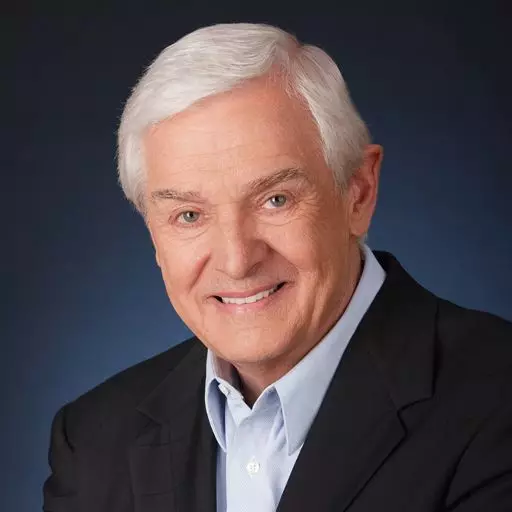
The Bible talks about it often, but most of us would rather not. Dr. David Jeremiah discusses death. What did King Solomon – the wisest man who ever lived – have to say about this uncomfortable topic?
Announcer: The Bible talks about it often. But most of us would rather not. Today on Turning Point, Dr. David Jeremiah discusses death, as he continues his series in Ecclesiastes, Searching for Heaven on Earth. What did King Solomon, the wisest man who ever lived, have to say about this uncomfortable topic? Listen as David introduces his thought-provoking message, "The Subject Nobody Talks About".
Dr. David Jeremiah: Well, you know, the book of Ecclesiastes could almost have that heading over the whole book because the book is filled with things people don't talk about. And yet, believe it or not, they're the things we think about, the things we wonder about, the things we ask ourselves about. And here in this book are some answers.
Today, we're going to have an honest discussion about death. And if you don't think you're a candidate, let me remind you the statistics for death are 100%. We're all in that category. And if Jesus Christ doesn't come back ahead of time, we're all going to face that. And the Bible tells us a lot of things we need to know about it. I hope you'll listen today and Monday. We're going to answer some of your questions in a positive, encouraging, and strengthening way. These will be two good days of information that will help you and make you stronger in your faith.
We'll get to that lesson in just a moment. But first, let me tell you that Turning Point is going to Alaska in July. And we want to invite you to come with us. It's a wonderful opportunity for us to be together with God's people, but really to see some of God's creation. I don't know if you've ever been to Alaska. First of all, if you've ever been there, you want to go back because it's so beautiful and it's just such a relaxing trip.
And there's so many good things to see and places to go. And if you've been there, you haven't been to all the shore excursions because there's so many of them. And we have such a wonderful time. Alaska is my favorite journey. And if you don't believe me, I'll tell you I've been there well over 30 times and never want to miss Alaska each year. We hope you'll come with us. The dates once again are July 12th through the 19th. You can find out more about it by going to our website, which is davidjeremiah.org.
Now, let's get started with our first edition of "The Subject Nobody Talks About" from Ecclesiastes chapter nine.
In Chicago, a gambler by the name of Willie Stokes Jr. died. His death attracted great attention when his family had an auto body shop outfit his coffin as a Cadillac Seville, complete with trunk and front grill, windshield and dashboard, silver spoke wheels, working headlights, taillights, and Stokes' vanity license plate.
Newspaper photos showed the embalmed gambler, like a display in a wax museum, sitting at the steering wheel of his coffin car in a hot pink suit with $500 bills stuffed between his left thumb and his forefinger. When one of his gangland friends walked by the car made into a casket, he reportedly said, "Man, that's living".
Flannery O'Connor wrote a short story with the title "You Can't Be Any Poorer Than Dead". And I imagine at some level even the Stokes family realized that as they lowered the well-appointed coffin into the ground, dress it up as you want, you can't change the reality of it. It's what it is.
Woody Allen once was reported to have said, "I'm not afraid to die, I just don't want to be there when it happens". John Betjeman, the late poet laureate of England, wrote these words in his poem Graveyards. He said, "Oh why do people waste their breath inventing dainty names for death?" And we do that, don't we?
Now, this is not the first time in the book of Ecclesiastes that the aged Solomon has mentioned this subject. In fact, you'll find it many times in the book. Remember, Solomon's writing this book as an old man. He's lived his life, he's looking back over his life, and he's reminding us of the dangers of living your life without God. Because there was a section in Solomon's life when he departed from his relationship with God and he lived life under the sun as if there were no God.
And we've learned in this book that when you do that, you end up with nothing but despair and a sense of meaninglessness, emptiness, grasping for the wind, vanity of vanities, no profit under the sun. But Solomon also says it's possible even when you know God and when you're walking with God, if you're not careful, to miss the meaning that life has for those who are God followers.
And in this passage of Scripture, he's going to talk very honestly about the subject nobody talks about. One of the things I know for sure, the statistics on death are 100%. Did you know that? So everyone's a candidate. Some of you young people, you say, man, don't tell me about that, that's not even in my thinking. Well, when we're finished, you'll understand how understanding that brings meaning to your life here and now.
Let's dive into this text and see what it says. The certainty of death in chapter nine, verses one through 10. And underneath that, the reality of it all, verses one and two. "For I considered all this in my heart, so that I could declare it all, that the righteous and the wise and their works are in the hand of God. People know neither love nor hatred by anything they see before them. All things come alike to all. One event happens to the righteous and the wicked, to the good and clean and the unclean, to him who sacrifices and him who does not sacrifice. As is the good, so is the sinner. He who takes an oath, as he who fears an oath."
Solomon has spent many hours searching out the meaning of life, and now he's going to take some moments and search out the meaning of death. And his first observation is that death is the great leveler. It matters not our station in life. We will all die someday, unless the Lord returns. What is it that First Corinthians 15:26 says? "The last enemy that will be destroyed is death."
Now, there's an old Italian proverb that goes like this: "When the chess game is over, the pawns, the rooks, the kings, the queens, all go back into the same box". Well, there are many differences between the righteous and the wicked. Solomon points out that they share one thing in common. And that one thing in common that they all share is they all die.
In his eloquent statement about death, Solomon is not saying that living a good and godly life does not matter. He is saying that one day we will all die. And that is certain. And whether we're good or bad, whether we sacrifice or don't sacrifice, whether we live godly or ungodly, the one thing we all share in common is that we exit this life in the same way.
Even though we do not share a common destiny in eternity, we do share a common destiny as far as Earth is concerned. Hebrews 9:27 says, "It is appointed unto men once to die, and after that the judgment". Now, this is surely a subject no one wants to talk about. But why should we not talk about it? When this is something that happens to everyone, why is it that people, especially people who do not know the Lord, get so nervous about this subject?
Why is it that we find all of these synonyms for the subject? They passed on. They went to be with the Lord. They're resting. Well, the bottom line is they died. And we don't want to say it. Because here's what my understanding about this is. Let me use a quotation I found in the writings of the late Ray Stedman.
He said this: "I have noticed that some people are very uncomfortable at funerals. They are nervous and edgy. They want to get it over quickly and get back to their local bar, their comfortable living room, or whatever. In observing that phenomenon, I have asked myself, what is it about funerals that makes them so nervous?"
And the answer I came to is that a funeral is one event where one can no longer escape ultimate reality. A funeral is proof that we are not in control of our own lives. This is what makes people uncomfortable and anxious to get back to the comfortable illusions of life.
Now, the fact that it's a reality brings us to the recognition that we all have a different response to this whole reality. And let's talk about some of the responses. First of all, let me tell you, based on verse three, don't deny it. Notice what it says: "This is an evil in all that is done under the sun, that one thing happens to all. Truly the hearts of the sons of men are full of evil. Madness is in their hearts while they live, and after that, they go to the dead."
Solomon is going to teach us here in this passage of Scripture there's several ways you can deal with this subject without skirting around the issue. And he tells us that one of the things that's problematic to us when we talk about this subject is that we all know that how we respond to this reveals our heart.
Whether we're facing our own death or the death of someone we love, how we respond to death tells a lot more about ourselves than we would like to know, perhaps. As a pastor, I have witnessed all kinds of responses to death. In fact, before I became a pastor, while I was a student at Dallas Seminary, I was a chaplain at the Baylor Hospital for two years.
And I dealt with it every day as a young man. I didn't even know what I was doing. But I saw everything you can imagine from people totally going into despair to the point where they were doing harm to themselves and to others who walked into the presence of death as children of God, and while they were sorrowing, they did not sorrow as others who had no hope.
Death tells a lot about us. And Solomon is telling us here that the hearts of men are full of evil. And he says that they have madness in their hearts while they live and then they die. In other words, he's saying one of the things you can do is you can just scoot on past this, act like it's not going to happen, work yourself into a frenzy so that you just deny it.
I'll never forget a funeral I had when I was a young pastor back in Fort Wayne, Indiana. I'd been asked to conduct the service of someone I'd never met, somebody I didn't know. And I had been assured that they had been godly. And they came to me and the family said, we'd like for you to do this service.
After the service at the mortuary, I was walking back to my car in the parking lot and a young woman came running across the parking lot toward me, screaming at the top of her lungs. I will say this advisedly. She cursed me out. She cursed me in words I had not heard in a long time.
I found out as she unleashed her anger toward me that I had mentioned her sister's name in the service without mentioning hers. So here was her dad lying in a casket and she was mad because her name had been omitted from the service. What was she doing, friends? She was denying the reality of what had happened.
She used the emotion of anger against me so that she didn't have to deal with the emotion of reality and grief concerning her own father. And there are many other stories I could tell of the madness and evil that occurs sometimes at the time of death. Now, let me just tell you, death is not your enemy, it's your friend. Don't deny it.
Number two, Solomon says, not only don't deny it, don't ignore it, verses four through six. "But for him who is joined to all the living there is hope, for a living dog is better than a dead lion. For the living know that they will die, but the dead know nothing, and they have no more reward, for the memory of them is forgotten. Also their love, their hatred, and their envy have now perished; nevermore will they have a share in anything done under the sun."
Here Solomon tells us about another approach to death. He says that we can hang our hope out there and say, well, we're just going to hope against hope. And basically what he is saying, where there's life, there's hope. That's where this whole phrase came from: where there's life, there's hope.
And he says that it's better to be a living dog, which was a despised animal in Solomon's day, than a dead lion, which was the king of the jungle. Solomon says, one of the ways you can deal with this is just go on ignoring it, living like, hey, as long as there's life, there's hope. You know what? Hope is great, but hope will only be hope if it's got reality mixed in with it.
And the hope we have isn't in this life, the hope we have is in the life to come. You can hope all you want to that you won't die, but you're going to die. Hope is not the answer in this life, hope is the answer in the next life. Hope in Christ who overcame the grave. Now, that's meaningful hope.
But hope that somehow you're going to just keep going when everybody knows you won't, that's not real. And that's not healthy. And that will not get you through life with any meaning that you can grab hold on. Notice Solomon's description of a person who has died is reflective of man's view of death without God.
He says they know nothing, they have no more reward, they are forgotten, they can't love, they can't hate, they can't envy, they have no more share in anything that's done under the sun. I rather think Solomon put that little liturgy in there so that he would remind us that while those things can't be done after we die, they certainly can be done while we're alive. Isn't that true?
He suggests that we reverse these statements and discover that while we can't do those things after we're gone, because we are alive, we can receive a reward, and we are not forgotten, and we can love, and we can hate, and we can have envy, and we do share in that which is done under the sun. This is a perfect introduction to Solomon's admonition to all of us concerning death. Now the morbid part's almost over.
In other words, take stock of your time and do what you can do because there's coming a time when you won't be able to do it. Solomon doesn't want us to face death so that we'll be morbid and discouraged and oppressed. He wants us to look it square in the face and then take a step backward and say, "Now what does this mean to me now?"
And that is our introduction to the third response, which is don't deny death, don't ignore death, but do embrace it. Now, read with me verses seven through 10 and see if you don't get excited as I did when I read this. "Go, eat your bread with joy, and drink your wine with a merry heart; for God has already accepted your works. Let your garments always be white, and let your head lack no oil. Live joyfully with the wife whom you love all the days of your vain life which He has given you under the sun, all your days of vanity; for that is your portion in life, and in the labor which you perform under the sun. Whatever your hand finds to do, do it with your might; for there is no work or device or knowledge or wisdom in the grave where you are going."
Now, what is Solomon saying to us, class? Saying, okay, we've faced death now. We've looked it right smack in the face. And here's what comes out of that: four things. Four things that Solomon is saying. He's not saying, okay, since you're going to die, go out, eat, drink, and be merry, hit the bars every night, stay in a drunken stupor so you won't have to deal with it. That's not what he's saying at all. In fact, look at the things he tells us to do.
He tells us first of all that we should stop moping around and get up and enjoy the life that God has given us under the sun. Amen? Don't let the days and months and years slip by without draining them of all the enjoyment God intended you to have. Now, I want to give you four things you should do because today we quit fooling around about all of the synonyms for death and we said one day we're all going to die. Now, based on that, four things.
Number one, eat every meal like you're at a banquet. Eat every meal like you're at a banquet. Verse seven, "Go, eat your bread with joy, and drink your wine with a merry heart, for God has already accepted your works." Proverbs says, "Better a dinner of herbs where love is than a fatted calf with hatred." Proverbs 15:17. There's a lot in the book of Proverbs about coming to your meal with gladness in your heart.
He says, you know what, you're going to die someday, but man, you're going to eat today. We're going to eat lunch today. Eat your lunch like it was a banquet. You say, well, Pastor Jeremiah, you have no idea what we're having for lunch. It's not the food that matters, it's what you think when you come to the table. And you know, to today's generation, these sound like really strange words, don't they?
In Solomon's day, and in the Jewish culture, the meal was a very important time. We hardly eat a meal together at all. We are often in such a hurry we can't enjoy the company of one another. We have invented fast food, and I'm not sure fast food's good for us health-wise or emotionally either. In Solomon's day, the evening meal after the long hard day of work in the fields was a joyous and happy occasion.
I think our fast food families could learn a lot from these Old Testament words. Get to the place where every meal's a banquet. What Solomon is saying is this: listen to me. He's not saying go and do a lot of things so you don't have to think about life and death. No, he's saying let the fact that you see the shortness of life motivate you to take advantage of the life God has given you. Are you with me on that?
How many of you know days and weeks and months can go by when you can't even remember who you ate with or if you did eat? And Solomon says make your meals like they were a banquet. That's the first thing. Eat every meal like you're at a banquet. Here's the second thing: celebrate every day like you're at a party. Celebrate every day like you're at a party. "Let your garments always be white," verse eight, "and let your head lack no oil."
Now, in the culture of Solomon, special occasions were the focus of every family. Weddings and reunions and birthdays were times of great celebration when people would put on their dress whites and splash perfume all over their bodies. But note what the quester is saying here. He is saying that we should be in a mood of celebration all the time. "Let your garments always be white, and let your head lack no oil."
In other words, don't celebrate just on special occasions, celebrate every day. You are alive. You have much to celebrate. So live joyfully and make every day a festival in life. You know, I think that's one of the benefits of this book we've been studying. Oh yes, it's philosophical and some people say it's a bit deep, but it causes us to wake up and smell the flowers and realize that life taunts us into becoming a part of its drudgery when God wants us to enjoy the life He has given us.
The Bible says in Philippians chapter four and verse four that we're to rejoice always in the Lord and always rejoice. Isn't that interesting? Because if you listen to some people today, if you have to deal with the issue of death, you can't be joyful. No, Solomon says it's exactly the opposite. Once you realize that you have a certain number of years on this Earth, and you understand as we've already learned that God wants these days to be enjoyable for you, take stock of where you are and quit moping around and go have a good meal with a friend and get up tomorrow and put on your best whites or whatever, scarves or whatever, and go out into the world with a spring in your step saying, "Thank God I'm alive". I'll tell you that's one lesson I've learned, to thank God every day for a good night's rest and for the joy of waking up on the top of the Earth. Amen?
All right, now here's the third one. This is going to be a stretch for some of you, but hang onto this. Eat every meal like you're at a banquet, celebrate every day like you're at a party, enjoy every day of marriage like you're on your honeymoon. Verse nine, "Live joyfully with the wife whom you love all the days of your vain life which He has given you under the sun, all your days of vanity; for that is your portion in life, and in the labor which you perform under the sun."
Solomon, you remember, had violated marriage in his life. He'd had a wife in his youth. And then he got caught up with the women of the world and he got sucked into polygamy by all of the strange gods that came into his life. And he now stands at the end of his life and he says, let me tell you what I wish I had done. I wish I had lavished all my love on the wife of my youth and enjoyed her all the days of my life.
Marriage was created to bring joy into the lives of husband and wife. And when there's mutual commitment and love, nothing can compare to the happiness in your home. Aren't these great thoughts? Eat every meal like you're at a banquet, celebrate every day like you're at a party, enjoy every day of marriage like you're on your honeymoon, and the last one is: go to work every day like it was your last day to work.
Verse 10, I want you to listen to me now, listen to what he says. Verse 10, "Whatever your hand finds to do, do it with your might; for there is no work or device or knowledge or wisdom in the grave where you are going." I read that by the time a person is age 50, if he has worked full-time since college, he will have put in 56,000 hours of work. What if all that time could be devoted to God?
Well, how could that be? By simply changing your attitude. You don't have to be a pastor or a missionary or a minister of music or anything else to devote your life to God. Just get up every day and say, "Lord, this is Your day. I devote this day to You. In all that I do I want to honor You." If it's cleaning floors or whatever it is you do, do your thing for God.
A word from prize-winning Irish poet Evangeline Patterson, she sums up her life like this. She said, "I was brought up in a Christian environment where, because God had to be given preeminence, nothing else was allowed to be important. I have broken through to the position that because God exists, everything is important." You know, that's a profound change, isn't it? And I think some of us have been on that journey.
I probably started out the same way, that since God is the most important thing, only the things that you can tie directly to Him like service and ministry, only those things are important. No, no. She said I finally grew up and realized that since God is everything, then everything is important. And it doesn't matter what you do, as long as it's honoring to the Lord, you can do it with a full heart.
Because life is short and unpredictable, Solomon urges us to approach our chosen work with passion and excitement. We are to live life wide open with enthusiasm for each opportunity we are given. That's the way God wants us to live. Colossians 3:23 says, "Whatever you do, do it heartily as unto the Lord and not to men".
Well, that's part one. There's some great insights from Solomon, and we'll pick up where we left off when we get together on Monday. Say, it's Friday and I like to give a little speech on Friday that many of you've heard many times. Here it is: go to church. Be sure you go to church this weekend. That's what God has designed for you and for me.
Leaving church out of our agenda because we think we can watch television or listen to the radio or read books or listen to CDs or whatever, that's not God's plan. God's plan is for us to gather together. Hebrews says that. And I hope you're doing that because the only way you're going to get blessed at the full limit of God's blessing for you is if you're involved in church. I hope you'll make that your priority for the weekend. And be sure to join us when we gather again here on Monday.
You probably can see us on television somewhere over the weekend, but don't let that get in the way of going to church. Church is the priority. See you on Monday.
Announcer: The message you just heard originated from Shadow Mountain Community Church and senior pastor Dr. David Jeremiah. Turning Point is also on radio and TV this weekend. To learn where to find it, visit our website davidjeremiah.org/radio. That's davidjeremiah.org/radio. Or call 800-947-1993. Ask for your copy of David's book, "31 Days to Happiness". It's filled with Solomon's wisdom and it's yours for a gift of any amount. You can also purchase the Jeremiah Study Bible in the English Standard, New International, and New King James versions, complete with notes and articles from Dr. Jeremiah's decades of study. Your notes of encouragement mean so much, so please write to Turning Point, PO Box 3838, San Diego, California 92163. This is David Michael Jeremiah. Join us Monday as we continue Searching for Heaven on Earth, on Turning Point with Dr. David Jeremiah.
Featured Offer

The World of the End unpacks Matthew 24:1-14 at a time when Bible prophecy is intersecting with our culture, technology, unhinged morality, and worldwide strife as never before.
Discover how the prophecies of Jesus can shape the way we live today and challenge us to prioritize our lives in light of His return.
Recommended for anyone who desires to make the voice of Jesus a priority when viewing the prophetic events happening around us.
Past Episodes


Video from Dr. David Jeremiah
Featured Offer
The World of the End unpacks Matthew 24:1-14 at a time when Bible prophecy is intersecting with our culture, technology, unhinged morality, and worldwide strife as never before.
Discover how the prophecies of Jesus can shape the way we live today and challenge us to prioritize our lives in light of His return.
Recommended for anyone who desires to make the voice of Jesus a priority when viewing the prophetic events happening around us.
About Turning Point
Turning Point's Mission: Delivering the Unchanging Word of God to an Ever-Changing World
About Dr. David Jeremiah
Dr. David Jeremiah is the founder of Turning Point for God, an international broadcast ministry committed to providing Christians with sound Bible teaching through radio and television, the Internet, live events, and resource materials and books. He is the author of more than fifty books including The Book of Signs, Forward, and Where Do We Go From Here? David serves as senior pastor of Shadow Mountain Community Church in San Diego, California, where he resides with his wife, Donna. They have four grown children and twelve grandchildren.
Contact Turning Point with Dr. David Jeremiah
USA
Turning Point
PO Box 3838
San Diego, CA 92163
CANADA
PO Box 70509 RPO Oak St
Vancouver, BC V6M 0A3
UNITED KINGDOM
PO Box 1532
Hemel Hempstead
HP1 9QX
USA
1-877-998-0222
CANADA
800-946-4300
UNITED KINGDOM
0800-058-2856