

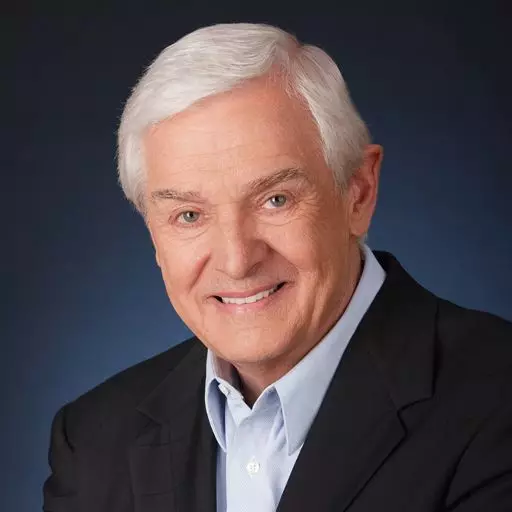
The Best is Yet to Come, Part 2


If you’re a Christian, you’ve certainly rejoiced in what God has done for you in the past. But have you ever rejoiced in what He’ll do in the future? Dr. David Jeremiah shares why King David did exactly that.
Guest (Male): As a Christian, it's natural to celebrate all that God has done for you. But have you ever praised Him for what He will do in the future? Today on Turning Point, Dr. David Jeremiah explains why King David did just that and why it's so beneficial for believers in this generation as well. With a forward-looking message to inspire and challenge, here is David with the conclusion of "The Best is Yet to Come."
Dr. David Jeremiah: How do we know that? Because the "yet to come" part of life is in the hands of God. And we've watched Him. We've watched Him. What He's done in the past and what He's doing in the present is simply a guarantee of what it will be in the future. Only, I think the psalmist is right—the best is yet to come. I hope you will stay with us as we complete this month of teaching on the Psalms and we talk about this particular Psalm together.
Let me let you know that this is the last time you will have an opportunity to get a copy of the book *Five Psalms for a Flourishing Life*. If you had this in front of you, you would be so happy to have it. And if you don't get it and you see it later, you're going to be sad because it's a beautiful book filled with incredible truth meant to help you in your walk with the Lord.
We'd love for you to have it. Here is how you can get your copy: send a gift of any size to Turning Point to help with the cost of radio airtime and production and simply say, "Please send me the book on Psalms." We have them all ready to be packaged up and they'll be sent to you right away. We want you to have this book to study, to review, to place on your bookshelf for when you need it in the future, or to share it with someone else. I know that God will use this book in a marvelous way to encourage you.
We are very excited about what God has done this month and excited because we know the book of Psalms is so visceral and it's so meaningful to people. One of the things I hope will happen because of this series is that you will be motivated to read the book of Psalms. You won't be disappointed, I promise you. You will find insights there that you never dreamed were in the Bible. If you do that, this will have been worthwhile.
Well, let's get back to what we started yesterday. We're talking about the future and the Bible teaches us that the best is yet to come, and that's what we learn from this wonderful Psalm. Here we go—part two.
How many of you know that one of the greatest tests as to whether or not you're truly in the family of God is your love for the other people who are in that family? In fact, the word of God so very directly makes that a test that if you have not read First John recently, you ought to go back and read it. Over and over again in First John, we are told that one of the tests of our relationship with God is our relationship with His people.
Listen to these words. First John chapter three and verse 14: "We know that we have passed from death to life because we love the brethren. He who does not love his brother abides in death." First John chapter four, verses seven and eight: "Beloved, let us love one another, for love is of God, and everyone who loves is born of God and knows God. He who does not love does not know God, for God is love."
First John 4:11: "Beloved, if God so loved us, we also ought to love one another." First John 4:20 and 21: "If someone says, 'I love God,' and hates his brother, he is a liar. For he who does not love his brother whom he has seen, how can he love God whom he has not seen? And this commandment we have from Him, that he who loves God must love his brother also." And John 13:35 puts it this way: "By this all men will know that you are my disciples, if you have love one for another."
So David reflects upon his relationships and the people of God. Have you ever stopped for a moment when you're in the midst of difficult times and counted up the true godly Christian friends that God has given you? One of the best things about going through difficulty, going through a little storm in your life, is that all of a sudden the true nature of God's people is evidenced to you, and you find out that you have some wonderful godly friends who God has given to you. So he rejoices in the presence of God, and then very quickly in the next verse, he talks about seeing God in His principles.
In verse four, he says, "Concerning the sorrows shall be multiplied who hasten after another god. Their drink offerings of blood I will not offer nor take up their names on my lips." David begins to think about the people that he loves, and then he begins to think about the people he doesn't think so much about. Now, I know we're supposed to love everyone, but David here is talking about those who offer themselves to idols and those whose lips breathe the names of idolatry.
David had seen the idols of Moab and the idols in Philistia, and he had heard about the idolatry that had gone on in the history of his own people. And he said, "As I sit here thinking about all of this and meditating on the goodness of God, I am so thankful for the principles of God's holiness that have kept me from being an idolater and from uttering the name of idols with my lips." And he just revels in the presence of Almighty God.
If God never did anything for us, if we couldn't enumerate on our hands the blessings that we feel, if we truly understand our Bibles, just to know God and just to know that He knows us is blessing enough to keep us occupied for the rest of our lives. But David doesn't stop there. He moves into the main part of the psalm to seeing God and what He is doing at the present time. He remembers who God is and then, in verses five through eight, he remembers what God is doing.
Notice how wonderfully they are listed for us. He rehearses what God is doing. First of all, in verse five, he sees that the Lord is his completeness. "O Lord, you are the portion of my inheritance and my cup." Old Testament language that puts these Hebrew words together simply saying that the Lord is the one who makes us complete, that provides for us what we need. It is the answer to the prayer in the Lord's Prayer: "Give us this day our daily bread." God has provided for us. Have you ever stopped to thank God just for the daily provisions that He provides?
And then he goes on to say that not only is God his completeness, but God is his certainty. "You maintain my lot," he says. That doesn't mean God takes care of the empty lot you own out in the country. The word "lot" here means your circumstances. He takes care of your circumstances. Isn't it an interesting thing that this one who writes these words in this parenthesis in his life is the one who has been hunted down by Saul? He's the one who has been thrown out of his home, the one who has lost his presence among the people, who can't worship with the people of God in his city. He's a fugitive to his own family.
And yet he's able to praise God in the midst of it all and say, "O Lord God, you maintain my lot. You take care of my circumstances." If anyone had to learn this lesson the hard way, it was David. And it was God who protected him through the long days of Saul's hatred toward him. And then he says in verse six, "The Lord is our contentment." This is a wonderful verse. I've actually seen this on a couple of Christian cards over the years. I never have quite understood what it meant, but I now understand what it means, and what a blessing it is.
The Lord is our contentment. He says in verse six, "The lines have fallen to me in pleasant places. Yes, I have a good inheritance." Lord, when I look back over my life, I've had a good life and I have a great deal to be thankful for. Can you say that? When I look back over my shoulder, I was born in a Christian family. I was reared on the Gospel, nurtured on the milk of the Word of God, given the privilege of going to Christian schools and Christian college, and blessed with godly friends who gave me good counsel when I needed it, and on and on.
I was protected from the things that could have and maybe should have happened to me when I was running wild as a young man. And I look back and say, "O God, I've had a good life. I'm more blessed than I should be. I should have lived at least 150 years to be this blessed." But God has blessed me. That's what David is saying. He's saying, "The lines have fallen to me in pleasant places, and I have a good inheritance." When you get yourself down in a self-pity party and everything gets out of perspective, you need to come back to realize what you have and how God has blessed you and be content with what you have.
The word of God says we can learn in whatever state we are to be content. Philippians 4:11. It is something you have to learn; it's not something that automatically happens. You don't just wake up. Some babies are born contented and some are not. All babies are born discontented. They have to learn to be contented. Oh, they may be more compliant than others, but you let them not have their bottle in a short period of time, they become discontented. Amen? You have to learn contentment. David, like Paul, learned to be content.
Hebrews 13:5 says, "Let your conduct be without covetousness; be content with such things as you have. For He Himself has said, 'I will never leave you nor forsake you.'" Contented. And then in verse seven, David continues to review the blessings of the Lord in his life presently as he takes inventory, counting his blessings one by one. And he realizes that the Lord is our counsel. He says, "I will bless the Lord who has given me counsel; my heart also instructs me in the night seasons."
How many of you know what a blessing it is to know Almighty God on a first-name basis and be able to come to Him as the word of God says, "If any of you lacks wisdom, let him ask of God"? It doesn't say go through all of these hierarchical people before you get to God. It says just go right to God and ask Him. And He will give you wisdom and He will never scold you for coming. And He is always available to you. And sometimes in the night seasons, when you're not even thinking about Him, He solves your problems in the night.
Do you know that experience when you go to bed at night thinking about something that's heavy on your heart and you give it to God in the night? When you wake up in the morning, somehow in the night, God has brought it all together in your mind and resolved it. You say, "I've never had that experience." Well, you ought to try counting your blessings before you go to sleep and telling God about the needs that you have and then leaving them with Him and watching what He does. David says, "My heart instructs me in the night seasons."
The Lord is our completeness and our certainty and our contentment and our counsel, and he ends this little section by saying the Lord is our confidence. He ends with this strong statement of affirmation as he reviews the blessing of the Lord in his life. He says, "I have set the Lord always before me; because He is at my right hand, I shall not be moved." What a rejoicing, powerful statement. The Lord is before him. "I have set Him before me and He's at my right hand and I'm not going to be moved."
Counts his blessings. You see what David has done? He's reviewed who God is and now he's rehearsed what God does. And finally, he brings this to a conclusion by rejoicing at what God is going to do. And this is one of the most amazing portions of scripture in the Old Testament because it demonstrates the supernatural quality of the Old Testament word of God. Here in the Old Testament, David looks out into the future and through the eyes of faith, he sees things he has no right to see.
He comprehends things that have never been communicated to him as far as we know from the scripture except through faith by the Holy Spirit. And he writes accurately, so much so that when New Testament writers set out to talk about the truth which he unfolds, they quote this Psalm as evidence. Now let's watch what happens. First of all, in rejoicing what God was going to do for him, David looks into the future and he says, "I'm just having this wonderful time of praise, rejoicing, and I see the resurrection."
Notice verse 10. He says, "For you will not leave my soul in Sheol"—or in the abode of the dead or in the grave—"nor will you allow your Holy One to see corruption." Notice in the text, the words "Holy One" are capitalized in the Bible because they're a reference to the Lord ultimately. But you see, before David even saw the resurrection of Christ, he saw his own resurrection. He has been reminded that while he doesn't understand completely what's going to happen, David has rehearsed for all of us all the good things God has done for him and is doing for him in his life.
It is incomprehensible to him that a God who would so care for him during his life would not care for him in his death and beyond. And so David sees that he will not be left in the grave nor will he be left to suffer corruption. He sees his own resurrection. For some reason, God allowed David to know things about the future and what He was going to do that you don't find in the other books of the Bible. For instance, periodically people will come to me after someone they know has lost a baby and they will say, "Pastor, what happens to a little one when it dies? If it's not old enough to have understood and accepted the Gospel? What if it's just three or four or five months old?"
What happens to that child? If you've ever had that question asked, you know that the answer to that is found in the story of David in the Old Testament when his little baby died, the baby born to him and Bathsheba. The Bible says that while the baby was sick unto death, David fasted and he wore sackcloth and he mourned. When the baby died, David got up and dressed, anointed his body, quit fasting, and went back to life. And nobody could understand it. It seemed like everything was upside down.
Someone came and asked him, "Why you act this is a strange way to act." And David responded in the words of Second Samuel chapter 12. Listen to what he said: "And he said, 'While the child was alive, I fasted and I wept, for I said, "Who can tell whether the Lord will be gracious to me that the child may live?" But now he is dead. Why should I fast? Can I bring him back again? I shall go to him, but he shall not return to me.'" What did David say? He knew that God had cared for that child and that someday he would see that child again.
How did David know that? Through the eyes of faith, God had given him that knowledge that there is life after death, that there is a place God has prepared for those who love Him, and that even though he did not have all the details that are written for us in the New Testament scriptures, he knew enough to believe in his own resurrection. But there's something even more amazing here. He believed not only in his own resurrection, but he saw enough to write about it—the resurrection of the Messiah.
You say, "Pastor Jeremiah, where is that here? How do I know that?" Listen to the words here in the 10th verse: "For you will not leave my soul in Sheol, nor will you allow your Holy One to see corruption." David could never have been the fulfillment of that phrase because he would not be considered the Holy One. "You will show me the path of life. In your presence is fullness of joy." I can only appeal to the New Testament commentary on this, and I want to tell you that on two occasions this passage is quoted in the New Testament.
When Peter was preaching on the Day of Pentecost in that great sermon that caused so many people to believe, he is preaching and in the words of Acts chapter two, we read: "Whom God raised up"—he's preaching on the resurrection. You can hear Peter's voice. "Whom God raised up, having loosed the pains of death, because it was not possible that he should be held by it. For David says concerning Him: 'I foresaw the Lord always before my face, for He is at my right hand, that I should not be shaken. Therefore my heart rejoiced, and my tongue was glad; moreover my flesh also shall rest in hope.'"
This is a direct quote from Psalm 16. "'For you will not leave my soul in Hades, nor will you allow your Holy One to see corruption. You have made known to me the ways of life. You will make me full of joy in your presence.'" Peter said that David said that Jesus Christ was coming out of the grave. I didn't say that, Peter said that. You say, "Well, did David understand all the nuances of that?" I don't know, but I know that he spoke the truth about the resurrection of the Messiah, the Holy One.
Paul was preaching later on, and he brought the same emphasis to this very passage. For in Acts chapter 13, we read: "Therefore He also says in another Psalm," speaking of David, "'You will not allow your Holy One to see corruption.' For David, after he had served his own generation by the will of God, fell asleep and was buried with his fathers and saw corruption." Paul said David said this, but it couldn't have been totally about himself because he fell asleep. He died. He said it about another, and that other was the Lord Jesus.
So now watch this. Here is David counting his blessings. He doesn't have the resurrection to look back upon; he can only look forward to it. And he's saying, "Oh, what a blessed man I am, for God is not going to leave my soul in the grave. He's provided a way out through the resurrection of the Lord Jesus Christ." How many of you know because He lives, we live also? Amen? And finally, he ends his little praise party by rejoicing in Christ's resurrection, and he rejoices finally in the rapture.
Notice verse 11. It says, "For you will show me the path of life, and in your presence is fullness of joy. At your right hand are pleasures forevermore." David looks out into the future and he sees a time when the Lord Jesus is going to come out of the grave, the final proof of His Messiahship. But he looks even beyond that and he sees a path. And he says, "This path leads from where I am now right out into the presence of Almighty God." One day, I'm going to walk down that path and walk down that road and I'm going to end up at the end of that path and I'm going to be in the presence of God with the fullness of joy and with pleasure.
I want to tell you something. We're so pleasure-mad in this world today, but we don't even have a good definition of it. There is no pleasure in this world that can even be compared to the pleasure of being in the presence of Almighty God for one moment, and we're going to live with Him for eternity. David looks beyond that. How does one get to the presence of the Lord? Well, right now, there's only two ways. You can die as a Christian, and Paul said, "For me to live is Christ, and to die is gain."
And in Second Corinthians, he said something like this: that when you die, what happens is you're absent from the body and present with the Lord. What happens when a Christian dies? The Bible says immediately, when they breathe their last, they're absent from this body and they're present with the Lord. And you're going to be there forever. But you know what I'm hoping for? I'm hoping to beat the rap of death. Aren't you? I'm looking forward to the rapture.
Paul says in First Thessalonians chapter four that the Lord Himself will descend from heaven with a shout, with the voice of an archangel, with the trumpet of God, and the dead in Christ will rise first. And we who are alive and remain—and I hope I'm among that group—shall be caught up together with them in the clouds to meet the Lord in the air. And thus, we shall always be with the Lord. That's how you get into the presence of the Lord. You either die into His presence or you fly into His presence. Amen?
David saw that. If all you knew about life was who God is and what He does, that'd be enough to keep you happy. But then you know not only who He is, but you find out how He ministers to you. He's your counselor. He's your friend. He's your provider. He's your satisfaction. He's your contentment. But then added to that is the fact that He's got this future prepared for us in His wonderful place where we are going to be with Him forever and know joy as it's meant to be known and pleasure as we've never known it. It says it's going to be the fullness of it all, out to the fullest extent.
Meditate on that for a while, then you stay in your little pitiful funk and you ask me what's wrong. I'll tell you. You just need to go back to the Bible and find out what God has done for you. There's not a one of us here that doesn't have an awful lot to rejoice about. Amen? A woman came to her pastor. She'd been in the church for years. She was very, very sick, and they didn't expect her to live for much more than a week or so. She called her pastor up—and I've had people do this—she said, "Pastor, I want you to come over. I want to plan my service."
So he went over to her house and she told him all the hymns that she wanted to have sung, all the scriptures she wanted to have read, who she wanted to sing the solos. But then she said, "Pastor, there's one thing I want you to do. I know you're going to think this is strange, but I want you to hear me now, and I want you to promise me today that you'll do this." And he said, "What's that?" She said, "Well, when they lay me out in the casket and they bury me, I want to be buried with a fork in my right hand."
He just could not believe anybody would ask for something so bizarre. She wasn't an overeater as far as he knew. He said, "I've never had anybody ask me that before. But if you'll try to help me understand why you're doing it, maybe it will help me feel better about doing it." She said, "Pastor, one of the things I've loved about this church—I've been coming here since I was a little girl. I don't think I've missed one potluck dinner since I've been coming. We used to have them all the time."
And she said, "I remember this. After the first course was served, one of the deacons or the elders would stand up and say, 'Save your fork; the best is yet to come.'" She said, "I want to be buried with a fork in my hand so when they walk by the casket and look at me, you'll be standing there and when they say, 'What's that fork?' you can tell them the best is yet to come." Amen? We have a lot to be thankful for. I don't know what kind of misery index you're living in, how difficult it is for you.
But I know this: in the midst of it all, you can take a little parenthesis out of the war, get someplace alone with Almighty God and remember who He is and what He's doing and what He's got planned. When you've summed it all up, you're going to have to say this: "This is pretty good, but the best is yet to come." Amen.
I've been thinking a lot lately about our souls and how important they are and how vital it is for us to care for our souls. The book of Psalms helps us to do that. I believe this radio program is geared to help you with your soul. Not just to go to heaven—your soul going to heaven. I'm talking about living every day. Your soul is what connects you to God, so you need to take care of your soul. Hebrews talks about those who watch for our souls. I'd like to think I'm one of those people. Not just for my own soul, but for the souls of those who hear us teach and preach. And I believe this series has been like that.
We're so thankful for your presence on this Friday edition of Turning Point. I want to remind you that one of the things that's good for your soul is to go to church. It will help you. It will keep you focused and give you the realization that you're not alone in the challenges you face. Be an encouragement to someone this weekend. We'll be back here on Monday with the next edition of Turning Point. I hope you'll join us then. I'm David Jeremiah. Have a good weekend.
Guest (Male): The message you just heard came to you from Shadow Mountain Community Church and Dr. David Jeremiah, the senior pastor. Turning Point is also on radio and TV this weekend. To learn where you can find it, visit our website, davidjeremiah.org/radio. That's davidjeremiah.org/radio. Or call 800-947-1993. Ask for your copy of David's new book, *Five Psalms for a Flourishing Life*. It'll help you abide with God, and it's yours for a gift of any amount.
You can also purchase the *Jeremiah Study Bible* in the English Standard, New International, and New King James versions, available in your choice of attractive cover options. Let us know how this ministry blesses you by writing to Turning Point, P.O. Box 3838, San Diego, California 92163. This is David Michael Jeremiah. Join us Monday as we begin "The Holy Spirit You May Not Know" on Turning Point with Dr. David Jeremiah.
Featured Offer

Many believers affirm the Holy Spirit—but don’t always understand His role in a personal way.
In this powerful new book, Dr. David Jeremiah invites you to move beyond a general awareness of the Spirit into a deeper understanding of who He is and what He does. Discover how the Holy Spirit helps you know God more fully, understand His truth, and live with strength, clarity, and purpose.
This is more than learning about God—it’s an invitation to experience His presence and power in your daily life.
Past Episodes


Video from Dr. David Jeremiah
Featured Offer
Many believers affirm the Holy Spirit—but don’t always understand His role in a personal way.
In this powerful new book, Dr. David Jeremiah invites you to move beyond a general awareness of the Spirit into a deeper understanding of who He is and what He does. Discover how the Holy Spirit helps you know God more fully, understand His truth, and live with strength, clarity, and purpose.
This is more than learning about God—it’s an invitation to experience His presence and power in your daily life.
About Turning Point
Turning Point's Mission: Delivering the Unchanging Word of God to an Ever-Changing World
About Dr. David Jeremiah
Dr. David Jeremiah is the founder of Turning Point for God, an international broadcast ministry committed to providing Christians with sound Bible teaching through radio and television, the Internet, live events, and resource materials and books. He is the author of more than fifty books including The Book of Signs, Forward, and Where Do We Go From Here? David serves as senior pastor of Shadow Mountain Community Church in San Diego, California, where he resides with his wife, Donna. They have four grown children and twelve grandchildren.
Contact Turning Point with Dr. David Jeremiah
USA
Turning Point
PO Box 3838
San Diego, CA 92163
CANADA
PO Box 70509 RPO Oak St
Vancouver, BC V6M 0A3
UNITED KINGDOM
PO Box 1532
Hemel Hempstead
HP1 9QX
USA
1-877-998-0222
CANADA
800-946-4300
UNITED KINGDOM
0800-058-2856