The Best is Yet to Come, Part 1
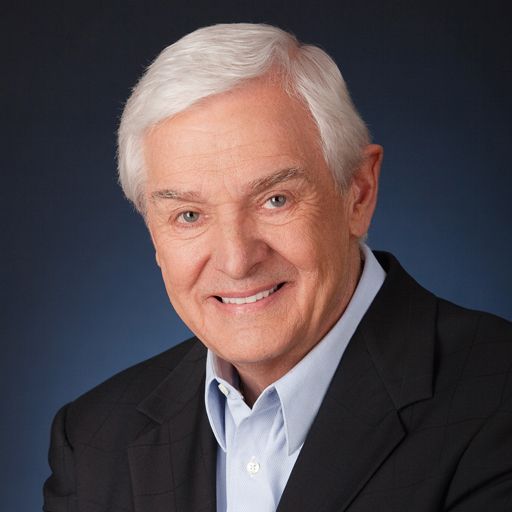
At times, problems seem to lurk around every bend. But we shouldn’t let them prevent us from embracing life’s blessings. Dr. David Jeremiah takes a closer look at King David's reflections on God’s goodness and faithfulness.
Announcer: It's simple to count your blessings when life is easy. When problems arise, do you stay focused on God's goodness, or does your attention wander? Today on Turning Point, Dr. David Jeremiah shares the example of King David, who endured a lifetime of troubles but always sought to keep his eyes on God's faithfulness. With a message of encouragement, here's David to introduce "The Best is Yet to Come."
Dr. David Jeremiah: Well, I'm not sure how you could rate the Psalms in the order of your appreciation for their truths. Obviously, Psalm 23 would be near the top. Psalm 1 would be on the list, and Psalm 119, the longest one on the list. But so many of these Psalms are so filled with practical truth. And you know, I'll be honest with you, I always knew the Psalms. I taught the Psalms and preached on the Psalms, but I really fell in love with the Psalms during my time with cancer years ago.
I found out that just about every emotion I felt, if I kept reading long enough, I'd run into it in the Psalms, along with some helpful suggestions as to how to deal with it. Many of these insights came late at night, early in the morning, when I couldn't sleep, and I just decided to read the Book of Psalms over and over. I recommend it to you. It will bless your life, and it'll keep you on a positive note. Psalms will help you in your relationship to God, and Proverbs, which is also included sometimes in the reading of Psalms, will help you in your relationship with people.
Psalms is upward, and Proverbs is kind of sideward. Read them together, and you will be blessed. Today, we talk about what's going to happen in the future. You'll be surprised to learn that the Psalms are not only about the past and about the present, but they take a look into the future as well. Here from Psalm 16 is part one of "The Best is Yet to Come."
The title of our lesson today is "The Best is Yet to Come." We have been able to locate the Psalm in some portion of David's life. It's so helpful to see what was going on in his life when he penned the words that are recorded for us in his journal. It brings to light the nuances of each word and paragraph and helps us to understand and appreciate what he was experiencing. Once again, this is a Psalm of David. In fact, it's a teaching Psalm of David.
It's a special Psalm of David, according to the words that are listed above the Psalm. It is thought by many to have been written during a temporary time of peace, during a parenthesis that David enjoyed in his life when Saul left off hunting him for a period of time. There are two such periods in the history of David. Both of them have to do with what happened after David had Saul in the palm of his hand and let him go.
You remember the first time. Saul was in the cave of En Gedi, and David was so close to him that he cut off the part of his skirt and carried it out with him to prove that he'd been close enough to take Saul's life. But I believe the Psalm we have opened to today was written after the second occasion when David held Saul in his hands. The story goes like this. Saul and his 3,000 chosen men were seeking David to kill him, and they had settled down for the night in the wilderness of Ziph.
After the king and his army had settled down, according to the record, David came to the place where the army of Saul was encamped, and he could see that they were all there and that they were settled in for the night. He asked if one of his men would go with him down into the camp, and a man by the name of Abishai decided to accompany David. Abishai was the brother of Joab, the general of the army. And in verse 7 of 1 Samuel 26, the story is continued.
"So David and Abishai came to the people by night; and there Saul lay sleeping within the camp, with his spear stuck in the ground by his head; and Abner and the people lay all around him." Now, Abishai, who was with David at that moment, thought, "This is it. This is our chance. We can take Saul out right now. We'll never have to bother with him again. This is the last day he's going to chase David." And Abishai said to David, "Why don't we just kill him now and get it over with, and the war and the running and the fugitive status will be finished?"
David responded in the words of verse 11. He said, "The Lord forbid that I should stretch out my hand against the Lord's anointed." And he wouldn't do it. I wonder what you would have done in that situation. But he did something very clever. The Bible says that he took the spear that belonged to Saul that was stuck in the ground by Saul's head as Saul was sleeping, and he took the bottle of water that was by his head, and he carried them out of the camp.
The Bible says in verse 12 that the reason nobody woke up was that God put the whole army and Saul in a deep sleep. They fell asleep, and when God puts you to sleep, you're asleep. So David and Abishai got out of the camp, and now David goes across the valley and he stands on the top of a hill, and he begins to holler across the valley at the encampment of Saul. You can't help but notice that David is a real man. He didn't take Saul's life, but he's going to toy with Abner, Saul's bodyguard, a little bit.
So he starts kind of making fun of Abner, saying, "You know what? You're not a very good bodyguard. I was standing right by your leader a few moments ago and could have taken him out. Why don't you get your act together?" And he kind of toys with Abner. And when he does this, Saul hears David's voice. Saul responds. He knows the voice of David. And he said, "David, is that your voice?" And David said, "It is my voice, my lord, O king."
And then David said, "Saul, why do you pursue me? What have I done? What evil is in my hand? Now therefore, please let my lord the king hear the words of his servant. If the Lord has stirred you up against me, let Him accept an offering. But if it is the children of men, may they be cursed before the Lord, for they have driven me out this day from sharing in the inheritance of the Lord, saying, 'Go, serve other gods.' So now, do not let my blood fall to the earth before the face of the Lord, for the king of Israel has come out to seek as a flea, as when one hunts a partridge in the mountains."
Then Saul said, "I have sinned. Return, my son David, for I will harm you no more because my life was precious in your eyes this day. Indeed, I have played the fool and erred exceedingly." It is thought that David wrote this Psalm sometime soon after this experience, when there was a brief lull in the storm and Saul's hatred and hunting of him was, at least for a moment, put aside. And the reason this is connected with Psalm 16 is that in verses 19 and 20 of 1 Samuel 26, we have almost exactly the same wording that we find in Psalm 16, in verses 4 through 6.
The Psalm written in a moment of history reaches out across history to us today to remind us that even though sometimes we feel like the world is coming to an end and there's so much junk in our lives we don't know what to do, we can still pause for a moment and reflect upon the goodness of God. It is the most wonderful thing to count your blessings one by one and to see what God has done. I've been reading a manuscript that someone sent to me for an endorsement.
It's a wonderful book and has some wonderful thoughts in it. But one of the thoughts has to do with what's gone wrong with our counseling in these days. I can't help but tell you about it because it's so appropriate to what we're talking about in the 16th Psalm. The writer says that when you go, especially in the secular arena, to counsel, quite often what happens is you sit in the room and they try to dredge up out of you all of the bad things that have happened to you in your life up to this point so they can then try to explain to you why you feel so bad.
Now, most people that I know tell me that after they review all the bad things in their life, they feel worse than when they went into the counseling session. But this author had a marvelous thought. He said, "Why do we do that? Why would we not rather, when someone comes who is troubled, sit them down on the couch and say, 'Let's take a few moments and review your life and let's see if we can begin by thinking of eight or 10 wonderful things that have happened to you during the course of your living on this earth. And let's reflect on them, and let's review them, and let's see if there isn't an awful lot in your life for which you could be thankful.'"
He said of course the reason they don't do that is because if they did, the people would get well and they would never come back again. Now, I don't know if that's true, but I do know this: there is value in remembering what God has done in our lives. And over and over again in the Word of God, we're told to remember the works of the Lord. Psalm 77:11 and 12 says it this way: "I will remember the works of the Lord; surely I will remember Your wonders of old. I will also meditate on all Your work, and talk of all Your deeds."
Psalm 103, verse 2 says, "Bless the Lord, O my soul, and forget not all His benefits." So easy for us to sail along with things in life as they are, so complicated and so busy. And sometimes, as we're in the midst of a terrible storm and the winds are blowing and the waves are high, we get our eyes off of the important things, and we forget that there's not one of us who, in measuring our life against the average life in the world, couldn't say, "We are blessed of God. We are blessed of God."
So that's what David does in Psalm 16. He pauses for a moment as a hunted man with a little peace of mind to help him collect his thoughts, and he begins to reflect upon all the good things he has in the Lord. Psalm 16 is a wonderful story. He begins, first of all, by remembering who God is. He says in verse 1, "Preserve me, O God, for in You I put my trust. O my soul, you have said to the Lord, 'You are my Lord, my goodness is nothing apart from You.'"
First of all, he begins to remember the Lord and he sees the Lord in the personal presence of God in his life. In that first verse, there are three different names for God. If I were to read it in the Hebrew, it would read something like this: "Preserve me, Elohim, for in You I put my trust, O my soul, you have said to Jehovah, 'You are my Adonai. My goodness is nothing apart from You.'" David sees in the personal presence of God in his life the covenant-giving God, the powerful Elohim, the personal Jehovah God.
He sees the presence of God as Adonai, and he cannot help but be overwhelmed that he lives his life in the presence of Almighty God. God is with you. He is present with you. Whatever else may be going on in your life, pause for a moment to think about this. You live your life in the presence of Elohim, Jehovah, Adonai. And David reflects upon that at the end of the verse by saying that there is no goodness in him apart from God.
Did you know that as a Christian, when you reflect upon your life—and some of you will not believe this—everything in your life that is good has a string connected to it that takes it all the way back to Almighty God? You say, "Well, Jeremiah, there's some good things in my life God doesn't have anything to do with." You just haven't followed the string back far enough. Behind the bread is the flour, and behind the flour is the grain, and behind the grain is the sun above and also the refreshing rain.
You say, "I make my own bread." Is that right? Where did the flour come from? You got the flour at the mill. Where did the mill get the flour? They got it from the grain. Where did the grain come from? It came from the ground. And how did it grow? Through God Almighty letting His sun shine and letting the rain come down upon it. In fact, James says it this way: "Every good gift and every perfect gift comes down from above." Not some of the good gifts, but every good gift comes down from above and it comes from the Father of lights.
Romans 8:32 says that when you get the Lord Jesus Christ into your heart as your Savior, you get everything that comes with Him. It says, "He who did not spare His own Son, but delivered Him up for us all, how shall He not with Him also freely give us all things?" If for some reason I, as a father, would be willing to give to someone my son as a gift, can you imagine him coming the next day and asking me if he could borrow a wrench and me saying, "No, I can't do that"?
Once you give the greatest gift, the rest of it is just elementary, isn't it? God Almighty gave us His Son, and with His Son we get all things. And that's what David says in the presence of Almighty God: "I am a rich man. Elohim, Jehovah, Adonai." And then he goes on to reflect as he thinks about who God is. He begins to think about how he sees God not only in His personal presence but he sees God in His people.
He says in verse 3, "As for the saints who are on the earth, 'they are the excellent ones, in whom is all my delight.'" David pauses, as we often ought to pause in the parentheses of our life, and reflects upon the fact that he had some good friends among the people of God. He says, "As for the saints who are on the earth, they're the excellent ones in whom is my delight." And I wonder if he wasn't thinking perhaps about Jonathan, maybe even Abishai who went down into the camp with him that night and risked his own life just to be David's friend.
But in every one of the extremities of David's life, there was always somebody that God provided. How many of you know that one of the great tests as to whether or not you're truly in the family of God is your love for the other people who are in that family? In fact, the Word of God so very directly makes that a test that if you have not read 1 John recently, you ought to go back and read it. Over and over again in 1 John, we are told that one of the tests of our relationship with God is our relationship with His people.
Listen to these words from the book of 1 John. 1 John chapter 3 and verse 14: "We know that we have passed from death to life, because we love the brethren. He who does not love his brother abides in death." 1 John chapter 4, verses 7 and 8: "Beloved, let us love one another, for love is of God; and everyone who loves is born of God and knows God. He who does not love does not know God, for God is love."
1 John 4:11: "Beloved, if God so loved us, we also ought to love one another." 1 John 4:20 and 21: "If someone says, 'I love God,' and hates his brother, he is a liar; for he who does not love his brother whom he has seen, how can he love God whom he has not seen? And this commandment we have from Him: that he who loves God must love his brother also." And John 13:35 puts it this way: "By this all will know that you are My disciples, if you have love for one another."
So David reflects upon his relationships and the people of God. Have you ever stopped for a moment when you're in the midst of difficult times and counted up the true, godly Christian friends that God has given you? One of the best things about going through difficulty, going through a little storm in your life, is that all of a sudden the true nature of God's people is evidenced to you and you find out that you have some wonderful godly friends who God has given to you.
So he rejoices in the presence of God. And then, very quickly, in the next verse, he talks about seeing God in His principles. In verse 4 he says, "The sorrows shall be multiplied who hasten after another god; their drink offerings of blood I will not offer, nor take up their names on my lips." David begins to think about the people that he loves, and then he begins to think about the people he doesn't think so much about.
Now, I know we're supposed to love everyone, but David here is talking about those who offer themselves to idols and those whose lips breathe the names of idolatry. David had seen the idols of Moab and the idols in Philistia, and he had heard about the idolatry that had gone on in the history of his own people. And he said, "As I sit here thinking about all of this and meditating on the goodness of God, I am so thankful for the principles of God's holiness that have kept me from being an idolater and from uttering the name of idols with my lips."
And he just revels in the presence of Almighty God. If God never did anything for us, if we couldn't enumerate on our hands the blessings that we feel, if we truly understand our Bibles, just to know God and just to know that He knows us is blessing enough to keep us occupied for the rest of our life. But David doesn't stop there. He moves in the main part of the Psalm to seeing God and what He is doing at the present time.
He remembers who God is, and then in verses 5 through 8, he remembers what God is doing. We'll go through these very quickly, but you will notice how wonderfully they are listed for us. He rehearses what God is doing. First of all, in verse 5, he sees that the Lord is his completeness. "O Lord, You are the portion of my inheritance and my cup." Old Testament language simply saying that the Lord is the one who makes us complete, that provides for us what we need.
It is the answer to the prayer in the Lord's Prayer, "Give us this day our daily bread." God has provided for us. Have you ever stopped to thank God just for the daily provisions that He provides? And then he goes on to say that not only is God his completeness, but God is his certainty. "You maintain my lot," he says. Now, that doesn't mean God takes care of the empty lot you own out in the country. The word "lot" here means your circumstances.
He takes care of your circumstances. Isn't it an interesting thing that this one who writes these words in this parenthesis in his life is the one who has been hunted down by Saul? He's the one who has been thrown out of his home, the one who has lost his presence among the people who can't worship with the people of God in his city. He's a fugitive to his own family. And yet he's able to praise God in the midst of it all and say, "O Lord God, You maintain my lot. You take care of my circumstances."
If anyone had to learn this lesson the hard way, it was David. And it was God who protected him through the long days of Saul's hatred toward him. And then he says in verse 6, "The Lord is our contentment." This is a wonderful verse. I've actually seen this on a couple of Christian cards over the years. I now understand what it means, and what a blessing it is. The Lord is our contentment. He says in verse 6, "The lines have fallen to me in pleasant places; yes, I have a good inheritance."
"Lord, when I look back over my life, I've had a good life, and I have a great deal to be thankful for." Can you say that? When I look back over my shoulder, I was born in a Christian family. I was reared on the Gospel, nurtured on the milk of the Word of God, given the privilege of going to Christian schools and Christian college, blessed with godly friends who gave me good counsel when I needed it.
Protected from the things that could have and maybe should have happened to me when I was running wild as a young man. And I look back and say, "Oh God, I've had a good life. I'm more blessed than I should be. I should have lived at least 150 years to be this blessed." But God has blessed me. That's what David is saying. He is saying, "The lines have fallen to me in pleasant places, and I have a good inheritance."
When you get yourself down in a self-pity party and everything gets out of perspective, you need to come back to realize what you have and how God has blessed you and be content with what you have. The Word of God says we can learn in whatever state we are to be content. Philippians 4:11. And did you know it's something you have to learn? It's not something that automatically happens. All babies are born discontented.
They have to learn to be content. They may be more compliant than others, but you let them not have their bottle in a short period of time, they become discontented. You have to learn contentment. David, like Paul, learned to be content. Hebrews 13:5 says, "Let your conduct be without covetousness; be content with such things as you have. For He Himself has said, 'I will never leave you nor forsake you.'" Contented.
Well, we'll finish this discussion tomorrow here on Turning Point. And today and tomorrow are the last two days that we have in this month that we can offer this book to you. The book says there are five beautiful Psalms for a flourishing life. In a world that can often feel barren and uncertain and lonely, Psalms usually provides a roadmap to step into biblical and true flourishing.
When you get this book, you will discover afresh the power and grace and wisdom of Psalm 1, Psalm 23, Psalm 46, Psalm 91, and Psalm 103, some of my favorite of the Psalms. And you will discover how the timeless truth found within these Scriptures can lead you into a life that's connected to God, the only one who can transform your wilderness experience. I recommend it. Ask for this book when you send your gift to Turning Point today or tomorrow, and we'll have it on its way to you before you know it. Thanks for listening. See you next time.
Featured Offer
The book of Psalms provides strength, guidance, and encouragement for daily life. In this practical resource, Dr. David Jeremiah highlights five Psalms to help believers experience a flourishing, God-centered life in every circumstance.
Past Episodes
Video from Dr. David Jeremiah
Featured Offer
The book of Psalms provides strength, guidance, and encouragement for daily life. In this practical resource, Dr. David Jeremiah highlights five Psalms to help believers experience a flourishing, God-centered life in every circumstance.
About Turning Point
Turning Point's Mission: Delivering the Unchanging Word of God to an Ever-Changing World
About Dr. David Jeremiah
Dr. David Jeremiah is the founder of Turning Point for God, an international broadcast ministry committed to providing Christians with sound Bible teaching through radio and television, the Internet, live events, and resource materials and books. He is the author of more than fifty books including The Book of Signs, Forward, and Where Do We Go From Here? David serves as senior pastor of Shadow Mountain Community Church in San Diego, California, where he resides with his wife, Donna. They have four grown children and twelve grandchildren.
Contact Turning Point with Dr. David Jeremiah
USA
Turning Point
PO Box 3838
San Diego, CA 92163
CANADA
PO Box 70509 RPO Oak St
Vancouver, BC V6M 0A3
UNITED KINGDOM
PO Box 1532
Hemel Hempstead
HP1 9QX
USA
1-877-998-0222
CANADA
800-946-4300
UNITED KINGDOM
0800-058-2856