

Interview: Where Do We Go From Here?


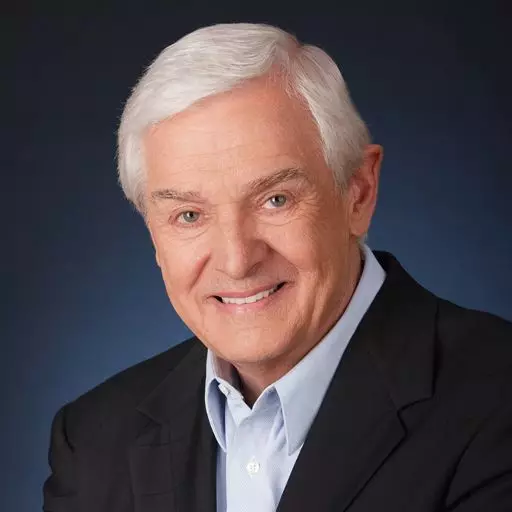
Although it comprises one-quarter of the Bible, many Christians don’t study it, and many churches don’t teach it. With prophecy as their focus, Sheila Walsh and Dr. David Jeremiah consider the important connection between prophecy and current events.
Guest (Male): Welcome to Turning Point. It can be challenging and intimidating at times, which may sadly be why so many Christians, even churches, don't study it. Prophecy is the focus as Dr. David Jeremiah considers the importance of biblical prophecy and his next series, "Where Do We Go From Here?" To interview Dr. Jeremiah on the connection between prophecy and current events, here's special guest Sheila Walsh.
Sheila Walsh: Thank you so much. Dr. David Jeremiah has been studying and teaching from God’s Word for more than 40 years. His practical manner of explaining what scripture says, what it means, and what it means for us has been life-transforming for millions, and I am one of those millions.
One particular feature of Dr. Jeremiah’s ministry is that through the years he’s dedicated a portion of his teaching to explain Bible prophecy, which for many people is often confusing and daunting to understand, but it doesn't have to be.
In Dr. Jeremiah’s new teaching series, "Where Do We Go From Here?", he points to the prophecies that reveal insight into the problems that you and I are currently experiencing. Won’t you help me welcome Dr. David Jeremiah?
Dr. David Jeremiah: This is fun that we get to do this again.
Sheila Walsh: Before we dive into your new teaching series—which by the way, I have to tell you, it is one of the best I have ever read. I’ve read all your books, and this one had a huge impact on my life. But before we dive into this, let me ask another question. What in the world is going on? Have you ever seen such a chaotic time as the one we're living in now?
Dr. David Jeremiah: No. It seems like something happens, and before you can totally respond to it, something else happens right on top of it. It’s just one thing after the other, and most of them are unprecedented. They're not things that happened before. This never happened before.
You almost don't want to turn on the television because of what's going to happen today that’s never happened before, especially in our schools and what's happening in culture. We are in unprecedented times. No question about it.
Sheila Walsh: You have always devoted some of your time in teaching and writing to biblical prophecy. Why is that so important for you?
Dr. David Jeremiah: First of all, it's a fourth of the Bible. A lot of guys don't do this, and so they just cut out a fourth of the scripture. There's a wonderful blessing that awaits those who will dig into what God has in store for us in the future.
There are so many promises. I think if all you do is live in the present and you don't see what God has in store for us in the future, it can get pretty bleak. If this is all there is, it isn't all that great. God has some great things ahead of us. To know that and to look forward to that, as the Bible says, "Set your affections on things above," that's a good thing to do.
Sheila Walsh: The title of your new book is "Where Do We Go From Here?" Why did you choose this title?
Dr. David Jeremiah: Everything that we hold dear is up for grabs. I wondered if there was some way to find out what was behind all of this. Was prophecy involved? I began to do some digging, and that's where we came up with the title.
I decided this wasn't going to be the normal prophecy book because most prophecy books are, "This is what's going to happen. Deal with it." There's no hope in that. We came up with this idea that we would write these chapters like this: where are we now, what does that mean, and where do we go from here?
The last part of every chapter is the takeaways. They are the action items. Is there something we can do based on what we have learned in this study? That's how that happened.
Sheila Walsh: I love the subtitle. It’s "How tomorrow's prophecies foreshadow today's problems." Is that what you mean, that we can look at what's happening now?
Dr. David Jeremiah: We think that what's going on right now is isolated and doesn't have any connection. But if you take all of these issues that we're dealing with—and we're going to talk about some of them—and you trace them, they have a hook in the future.
God says this is what's going to happen. There's an old adage when you study prophecy that says future events cast their shadows before them. In other words, if there's an event out there that's going to happen, it's not just going to pop on you one day. It's going to cast its shadow before us. We're living in those shadows right now.
Sheila Walsh: You address problems or phenomena happening in our world today that are directly tied to events that will transpire in the last days. Let's just begin with something we're all very familiar with: a pandemic. Is a pandemic part of biblical prophecy?
Dr. David Jeremiah: You all know when COVID-19 happened, everybody wanted to know if this is in prophecy or if we are at the end of the world. In the Bible, there are a lot of times in the tribulation period where pestilences happen. The Bible says that in the end times, there will be pestilences. In Matthew 24, when Jesus was setting the stage for the beginning of trouble, one of the six signs was pestilences.
I had a lot of people ask me. In fact, one of my favorite stories is my son Daniel works for the NFL and he knows a lot of NFL players. This guy came to Daniel and he said, "When you get a chance, ask your dad if COVID-19 is in prophecy." I got this call from Daniel and he told me who it was. I decided I'd better look into that, so I ended up preaching a whole message on it.
I think what we learned from that is a number of things. When I first started studying prophecy and I would read about worldwide plagues, I believed it only because it was in the Bible. I couldn't imagine that. I can imagine it now. This wasn't just the United States of America. This was the whole world, 114 different countries that were plagued by this terrible virus.
The question then is: was this a sign? I can't say that it was. It may not have been a sign for the future, but it was a sign for today. It showed us how vulnerable we all are. Nobody was exempt from it. I made a list of all of the important people who got COVID right up front: NFL players, politicians, and the President of the United States. You can't buy your way out of this. Everybody's vulnerable.
Sheila Walsh: Let's move on to the next issue you discuss, globalism, which you call an international prophecy. We're definitely way more in touch as a world now, and some people think that's a good thing. What does the Bible say about a global society?
Dr. David Jeremiah: The first globalist was a guy named Nimrod in the Old Testament who built the Tower of Babel. We found out in the very beginning that when all the people get together and try to build something to show God up, God doesn't put up with that. He confused the languages, and that project didn't do so well.
The problem with globalism is it's the one thing that has to happen for the end-of-the-world events to take place. The scripture tells us that at the end of the world, there will be a world leader who will galvanize people behind him. He will be a very evil man who will take the world down. But he has to have the following of the world.
Today we are seeing this world becoming more and more integrated. Even during the pandemic, they were talking about having not just a national czar but a world czar who would help know what to do. Galvanizing the power behind one person is just a setup for what's going to happen in the future.
Sheila Walsh: As believers, how do we deal with that kind of world when we see this? We all see it happening around us. How do we live in days like this?
Dr. David Jeremiah: One of the things I really believe I've learned from the study of this book is that we cannot live in lies. Let's be honest, sometimes even as Christians, we know what everybody's telling us isn't true, and we live in the midst of it like it's okay. We cannot do that. We have got to learn how to live in the truth.
Most of what we hear today, most of what we see, most of what's on television, is untrue. It's just not true. If you stop and think about it, you realize it's not true. But we allow it to affect our lives to the extent that it changes our daily behavior. We as Christians have got to ask God to help us be set free by the truth and follow the truth.
One particular thing about the Word of God that's really interesting is that God is not a globalist. God is a nationalist. God created the nations. It says in Acts that he created the nations so that they would know God. When it's big like that and under one person, that person becomes the god. Look at all the nations that are in the Bible. God created it that way.
Sheila Walsh: Let's move in and talk about the nation that God chose for his people. Whether it's in the news or political debate, Israel has a constant spotlight on it. You dedicate a whole chapter to this and you call it a geographical prophecy. Why is Jerusalem so important?
Dr. David Jeremiah: What got our attention about Jerusalem was when they moved the embassy back to Jerusalem. That was a big deal and created a lot of controversy. Most people don't realize how important it was because if Jerusalem isn't what it is now, if it isn't the main issue in Israel, Jesus can't come back.
Jesus comes back to the Mount of Olives in Jerusalem from whence he left. When he sets up his kingdom, he rules in Jerusalem. What happens after the old Jerusalem? You get a new Jerusalem. So Jerusalem is really important.
I had a really special moment when I was working on this chapter. I love the people of Israel and I love studying. I learned a lot about Jerusalem that I didn't know before. The Bible says numerous times that God chose Jerusalem to put his name on it. He chose Jerusalem as his own special city. That's not said about any other city in history.
Jerusalem is mentioned in the Bible way more than any other city. It's the most important city. Donna and I have talked about this when we go to Israel. When I am in Jerusalem, I have this sort of unreal feeling about everything. I thought maybe it's because that's where the Bible took place, where Jesus walked. All those things are true, but now I understand it more than ever before.
I have that feeling because this is God's city. It's a very special place. God has set his name upon it. In the book of Deuteronomy, there's a chapter where that is mentioned five times. This is God's city. When you go to Jerusalem the next time, just realize this isn't just like going from city to city. This is God's city.
Sheila Walsh: Next in your series, you discuss economic chaos. You call it a financial prophecy. Why does money play such a central role in end times?
Dr. David Jeremiah: It is a really big deal. Babylon, which is in the New Testament, is the financial headquarters in the future, and the Bible describes its dismantling. "Babylon is fallen, is fallen," it says. In that day when God gets control, the financial enterprise of this world will just be gone.
The chapter that I wrote on that has to do with what's happening in our world today to universalize monetary transfer. There's a country in Europe right now where they're actually embedding chips underneath the skin of people's hands. This chip is radio-controlled so you can do all your business from this chip. You can walk in a store and just run your chip by the scanner. It picks up all your information.
Everybody's lauding it, but all it's going to do is prepare the way for the Mark of the Beast. In the 13th chapter of Revelation, it talks about how when the Antichrist comes to rule, you will have to take the mark. If you don't take the mark, you won't be able to buy or sell. If you aren't loyal to the Antichrist, you will be starved out of existence.
That's the way the Antichrist will control his population. Some of the parts of that are happening now with crypto coins and all the electronic stuff. It's rapidly changing, and it's not hard to understand that. Read Revelation 13. Revelation 13 casts a shadow before it, and we're living in that shadow right now.
Sheila Walsh: What would you say to us who might be afraid that they might accidentally take the Mark of the Beast? Is that something that we as believers should be afraid of?
Dr. David Jeremiah: I don't think anybody will ever take that accidentally. You will either take it or you won't. First of all, I don't plan to be here when that happens. That's going to take place during the tribulation. There will be some people who become Christians during the tribulation, but I doubt very many of them will take the mark. It will be a tremendously challenging time on this earth when that happens.
Sheila Walsh: I think a lot of believers are concerned about finances and about money. How do we find the peace of Christ in the midst of things that are changing so rapidly in our culture?
Dr. David Jeremiah: I believe with all my heart that if you don't understand what money is, it will ruin your life. Money is nothing else but a tool. It's not to be hoarded; it's to be invested and used.
We have that money to use for the kingdom of God and to take care of our families. The Bible tells us to do that. But if money becomes your god—and interestingly enough in the Bible, there is this contest between God and mammon—you'd better get your mind right about money because it's the number one competitor to God in your life. If you don't get it right, you will become an idolater.
Sheila Walsh: You move on to talk then about spiritual famine, which you've identified as a spiritual prophecy. What do you mean by spiritual famine?
Dr. David Jeremiah: Amos was a really interesting prophet. In Amos chapter 8, he said there is coming a day when there's going to be a famine on this earth. Not a famine of bread and water, but a famine of the hearing of the word of God.
First of all, the devil tries to take you away from the Word of God. In the parable of the soils, it talks about how Satan can steal the word out of your heart. The word can be marginalized in your life because of the cares that you have for life: your busyness and your distractions. That is Satan taking you away from the Word of God.
Satan also takes the Word of God away from you. He gets you in situations where you think you're in a church, but nobody ever opens the Bible. I say to everybody, and I mean this sincerely, you need to be in a church where Christ is lifted up and where the Word of God is taught.
Sheila Walsh: Is spiritual famine an indicator of the last days?
Dr. David Jeremiah: Absolutely. Like Amos said, there's going to be a time when the word of God will be missing. It's happening now. There are some charts in this book on what's happened with church attendance. That's not the same as the word of God, but it's an indicator.
Church attendance and church membership in this country has been going down since 1950. When they first started keeping statistics, 73% of the people who were polled went to church. Today it's less than 50%. It's 47%. That's a symptom of the lack of influence of the churches.
Sheila Walsh: We've talked about a lot of things which technically are happening outside of the church. But this chapter, "The Falling Away," you call a theological prophecy. What is the falling away?
Dr. David Jeremiah: Thessalonians says that before Jesus can return, there must be the falling away. That word itself is the word apostasy. It's from two Greek words which mean to stand apart, to have stood in one place and then to stand apart. I use some illustrations in that chapter that are pretty sad.
Sheila Walsh: I love the way that you finish the series tying prophecy back to the gospel: "The Triumph of the Gospel." What does the gospel message mean for us today?
Dr. David Jeremiah: The gospel is what we must never forget about because the gospel is what really changes the world. I can't fix all the problems that we have in this book. I preach the gospel. The gospel changes people one person at a time, two people at a time.
The Bible says the gospel is the power of God unto salvation. It's the only other thing except for God that is described that way. Why wouldn't you want to make that your main thing? The gospel is at the core of your life. The gospel is what will change lives, culture, and everything. There's one thing that's above them all: it's the gospel of Jesus Christ.
Sheila Walsh: Some people might say when we talk about all these things, it's kind of doom and gloom. But I have to say personally, I found the past year really discouraging. When I got to the end of your book, I wanted to shout "Hallelujah" because it wasn't a book of doom and gloom. It was a book of hope. Was that your prayer?
Dr. David Jeremiah: I wanted this book to be not only "where are we now" and "what does that mean," but "what do we do?" There's always something to do. For instance, in the chapter on COVID, for a while when that first happened, we had to stay at home and we didn't do anything. We were so tired at the end of the day, we couldn't figure out what was wrong.
When you don't have a plan, you need to just do the next right thing. I had read this little book written by a young lady who had found this poem entitled "Do the Next Right Thing." The idea was when you don't know what to do, just do the next right thing.
We started to practice that and we still do today because even today there's so much confusion. If you don't learn how to do that, you will just be overwhelmed with the paralysis of analysis. Just do the next thing. When Jesus healed people, he would say to them, "Go home and tell your family." Every time he healed somebody, he gave them one thing to do.
I hear Jesus saying that to us. Get up in the morning and say, even if you don't know for sure what to do, do the next right thing. My father used to tell me the Holy Spirit can never steer a car that's stopped. If you're not moving, you're not going anywhere. Do the next right thing. God will show you what the next right thing is, and before you know it, you'll look back on a productive day.
Sheila Walsh: How do we approach the world we're living in now?
Dr. David Jeremiah: Realize we have so much to be positive about and so much to be thankful for. We have the message. Most of us have come to Christ, we're Christians.
Is life challenging? Yes, but we're not alone. God has not forgotten us and we are on our way to be with him forever. The journey can sometimes be challenging, but it's always exciting. I've been in this church for 40 years. I've been discouraged sometimes and triumphant sometimes, but one thing I've never been is bored.
Sheila Walsh: Dr. Jeremiah, I just want to thank you for putting hope in these days, hope in end times prophecy, and for giving us encouragement one more time. Would you help me thank Dr. David Jeremiah?
Dr. David Jeremiah: Let me thank Sheila for her incredible job of interviewing. She studies the material, she reads the book, she comes prepared, and we have great discussions. Please join us throughout this month as we talk about "Where Do We Go From Here? Tomorrow's Prophecies, Today's Problems."
During the month of March, we will make available to you a very special project that we have just finished called "Understanding Biblical Prophecy," a 30-day Bible study on how to understand prophecy in the Bible. We think this will be valuable to you and help you in this series and in the future study of the Bible going forward.
This series is called "Where Do We Go From Here?" There's a study guide, a DVD, and CD messages available from Turning Point at davidjeremiah.com. Don't forget when you send your gift to the ministry during the month of March, we'll send you this book, "Understanding Biblical Prophecy." Ask for it when you send your gift to Turning Point today. Have a great day, we'll see you tomorrow.
Guest (Male): For more information on Dr. Jeremiah’s series "Where Do We Go From Here?", please visit our website where we also offer two free ways to help you stay connected: our monthly Turning Points magazine and our daily email devotional. Sign up today at davidjeremiah.org/radio or call us at 800-947-1993.
Ask for your copy of David's new book, "Understanding Biblical Prophecy," a 30-day Bible study. It’s a powerful resource and it’s yours for a gift of any amount. You can also purchase the Jeremiah Study Bible in the English Standard, New International, and New King James Versions, available in a variety of handsome covers. Get all the details when you visit davidjeremiah.org/radio.
David Michael Jeremiah: This is David Michael Jeremiah. Join us tomorrow as we begin "Where Do We Go From Here?" on Turning Point with Dr. David Jeremiah.
Featured Offer

The World of the End unpacks Matthew 24:1-14 at a time when Bible prophecy is intersecting with our culture, technology, unhinged morality, and worldwide strife as never before.
Discover how the prophecies of Jesus can shape the way we live today and challenge us to prioritize our lives in light of His return.
Recommended for anyone who desires to make the voice of Jesus a priority when viewing the prophetic events happening around us.
Past Episodes


Video from Dr. David Jeremiah
Featured Offer
The World of the End unpacks Matthew 24:1-14 at a time when Bible prophecy is intersecting with our culture, technology, unhinged morality, and worldwide strife as never before.
Discover how the prophecies of Jesus can shape the way we live today and challenge us to prioritize our lives in light of His return.
Recommended for anyone who desires to make the voice of Jesus a priority when viewing the prophetic events happening around us.
About Turning Point
Turning Point's Mission: Delivering the Unchanging Word of God to an Ever-Changing World
About Dr. David Jeremiah
Dr. David Jeremiah is the founder of Turning Point for God, an international broadcast ministry committed to providing Christians with sound Bible teaching through radio and television, the Internet, live events, and resource materials and books. He is the author of more than fifty books including The Book of Signs, Forward, and Where Do We Go From Here? David serves as senior pastor of Shadow Mountain Community Church in San Diego, California, where he resides with his wife, Donna. They have four grown children and twelve grandchildren.
Contact Turning Point with Dr. David Jeremiah
USA
Turning Point
PO Box 3838
San Diego, CA 92163
CANADA
PO Box 70509 RPO Oak St
Vancouver, BC V6M 0A3
UNITED KINGDOM
PO Box 1532
Hemel Hempstead
HP1 9QX
USA
1-877-998-0222
CANADA
800-946-4300
UNITED KINGDOM
0800-058-2856