

Facing Life with Humility, Part 2


When you start to think too highly of yourself, what usually happens? Life has a way of humbling you. Often publicly. Always painfully. Dr. David Jeremiah points out these are teachable moments, as God wants us to learn to trust only Him for our future and fulfillment.
Guest (Male): When you start to think too highly of yourself, what usually happens? Life has a way of humbling you, often publicly, always painfully. Today on Turning Point, Dr. David Jeremiah points out these are teachable moments as God wants us to learn to trust only Him for our future and fulfillment. From his series in Ecclesiastes, here's David with the conclusion of Facing Life with Humility.
Dr. David Jeremiah: Well, thank you for joining us today. This daily program comes to you with the love and support of so many people around the world. And for our wonderful friends in Canada, so thankful to have you aboard in the many stations that we air our program on in Canada.
I've been saying this recently to the benefit of our Canadian listeners, that we want you to know that Canada supports Canada, which means when you give a gift in Canada, it goes to the support of the Canadian ministry. It doesn't come across the border into the United States. Canada is a self-supporting Turning Point ministry, which means when you give to Canada's radio and television ministry from Turning Point, you're supporting your own nation, your own listeners, your Canadian brothers and sisters, and it's so wonderful to see the strength that brings as we move across the world with the word of God. Thank you, Canadians, for being a part of what we do here.
And we want you to know that the Bible is so practical. It doesn't avoid the hard issues. I mean, if you would ask most pastors when was the last time you preached on humility, most of them would say they can't remember because we're all kind of intimidated by that subject. The old adage is if you tell people how to be humble, you obviously are not. And there's a lot of jokes about that out there. I mean, I heard a story about a man who wrote a book called *The 10 Most Humble People I've Ever Known and How I Chose the Other Nine*. Well, that's just not humility. Humility is what the Bible says it is and what we're learning it is from Solomon.
So let's get started with that. Let's get back to where we left off yesterday and finish up our discussion of facing life with humility. The Bible teaches us that knowledge, while it is important for us to acquire it, is a never-ending pursuit. Let me give you an illustration. When I started preaching here, the statistics at that time said that the total knowledge of the world changed every 38 years. Now listen to this: today, the knowledge of the world changes every single year.
And it will keep shrinking down until the information curve can almost be as destructive as a tornado. What are you going to think about these kids we're raising who are going to have to deal with the change of knowledge every single year for the rest of their life on an accelerated basis? The fact of the matter is, wise is the man who knows what he doesn't know.
Humility is coming to grips with the fact that what we know is such a small, infinitesimal part of the total knowledge available to mankind that if anyone ever thinks they're educated and that makes them a candidate for pride, they just need to go back and think about the statistics I just shared. Solomon tells us that when we have true wisdom, it comes from God, and we don't have a stern face worried about all that we don't know; we have a shining face because we know the God we do know.
Secondly, humility is living with what you don't like. All of us are caught in a universe that is controlled by others than ourselves. And every day we have to get up to the realization that today we are going to have to do some stuff we don't want to do, live in a way we don't want to live, and experience experiences we'd rather not have.
Solomon uses this illustration in verses 2 through 7. Let me read the scripture. He says, "I say, 'Keep the king's commandment for the sake of your oath to God. Do not be hasty to go from his presence. Do not take your stand for an evil thing, for he does whatever he pleases.' Where the word of a king is, there is power; and who may say to him, 'What are you doing?' He who keeps his command will experience nothing harmful; a wise man's heart discerns both time and judgment because for every matter there is a time and a judgment, though the misery of man increases greatly; for he does not know what will happen, so who can tell him when it will occur?"
Now, that's a long and wordy paragraph, but let me just wrap it up for you in a few words. Nothing can be more humbling than to be in a situation over which you feel no control. Solomon here uses the illustration of a king or a magistrate who is in power, and as a citizen under his power, you don't want to obey his authority. Listen to Solomon's word: "Keep the king's commandment for the sake of your oath to God," not because you like the king.
In other words, even when you don't understand what in the world the king is doing, and you're not even sure you agree with it, humble yourself before his authority for the sake of your allegiance to Almighty God. This reminds us of what Paul wrote to the Romans over in the 13th chapter. Remember that? He said, "Let every soul be subject to the governing authorities, for there is no authority except from God, and the authorities that exist are appointed by God. Therefore, whoever resists the authority resists the ordinance of God, and those who resist will bring judgment on themselves."
Now, of course, Paul and Solomon are not telling us that we should do things that violate God's standard. The book of Acts teaches us that it is better to obey God than to obey man. If the authorities put us in opposition to God's direct will, we should disobey the authorities to obey God. But most of our problems are not like that. Most of our problems with authority is we think the speed limit should be higher.
Living with what you don't like. Anybody else have to deal with that? Every day you get up and you go out into this world and you do not have control of what's going to happen, and there's a whole bunch of stuff you have to deal with that you don't like and you have to live with it. You know what happens when you do that? It humbles you. It teaches you humility. It causes you to realize that you are not in control, that you're not even sure what the questions are, let alone what the answers are. And you recognize your dependence upon Almighty God. Humility is knowing what you don't know and living with what you don't like.
Now, thirdly, humility is accepting what you can't change. It is frustrating to get in a situation where you have been in control and all of a sudden you're not in control, and so much of life as we understand it and as we learn about it and as we experience it is uncontrollable. We just think we have a handle on it and then it goes south.
Notice that Solomon gives us some illustrations of that in these next verses, verses 8 through 14. The first illustration he gives us is death. Verse 8, he says, "No one has the power over the spirit to retain the spirit, and no one has the power in the day of death. There is no release from that war, and wickedness will not deliver those who are given to it." Solomon says there's something about life that you can't control. You know what it is? It's death. You don't know when it's going to come or what the circumstances will be.
The Searcher reminds us that there are some things over which we have no control. Death is certainly one of those things. There's an old legend that I like about a merchant in Baghdad who one day sent his servant to the market. Before very long, the servant came back. He was white and trembling. And in great agitation, he said to his master, "Down at the marketplace today, I was jostled by a woman in the crowd, and when I turned around, I saw it was Death that jostled me. She looked at me and made a threatening gesture. Master, please lend me your horse, for I must hasten away to avoid her. I will ride to Samarra, and there I will hide and Death will not find me."
And the merchant lent him his horse and the servant galloped away in great haste. Later, the merchant went down to the marketplace and saw Death standing in the crowd. He went over to her and asked, "Why did you frighten my servant this morning? Why did you make a threatening gesture toward him?" "That was not a threatening gesture," Death said, "it was only a start of surprise. I was surprised and astonished to see him in Baghdad, for I have an appointment with him tonight in Samarra."
You cannot program the end of your life. You do not run from death. It is out of your control. And I'm not trying to be morbid about this; it's just the way it is. And you know, the wealthier a person gets and the more stuff they have and the more toys they have and the more control they have over life, the more they sometimes believe there's something they can do to ultimately defeat the last enemy, but there is nothing. Death is out of our control. Have to accept it. You can't do anything about it.
Some of you have lost loved ones, but there comes a time after a period of mourning, after a time of weeping, that you have to recognize that this time is over and you have to go on with your life or you become controlled by that over which you have no control: death. And then he gives us another illustration in verse 9. He says not only does death illustrate this, but distress does as well. He said, "All this I have seen and applied my heart to every work that is done under the sun. There is a time in which one man rules over another to his own hurt."
Don't be surprised when you're mistreated by those who may be in authority over you. Don't be surprised when you are hurt by someone you once trusted. According to Solomon, that's life. That's just the way it is. Life is filled with distress and wise is the man who understands and accepts that. We need to learn how to change what we can change and live with that over which we have no power.
Change the things you can change, but ask yourself when you think about all the things that distress you: how many of these things do I have control over? Which of these things can I change? If you can change them, work at changing them, but if you can't, just accept them and don't let it ruin your life because that's what happens to so many people. And I could give you so many illustrations, but I haven't time. You know where I'm talking about. There are just some things in life you can't change. You got to learn to accept them.
Here's the third illustration: deception. Verse 10, he says, "Then I saw the wicked buried who had come and gone from the place of holiness and they were forgotten in the city where they had so done. This also is vanity." Warren Wiersbe has a comment here in his book on Ecclesiastes. He says, "In verse 10, Solomon reports on a funeral he had attended. The deceased was a man who had frequented the temple, the place of the holy, and had received much praise from the people, but he had not lived a godly life. Yet he was given a magnificent funeral and an eloquent eulogy while the truly godly people of the city were ignored and forgotten."
Doesn't that happen sometimes today? You turn on the TV and you see some gangster, some Mafia guy, and he's got this humongous funeral with flowers and limousines and all the dignitaries and they talk about him like he's just came down here on a pass from heaven, and he's an evil guy and they bury him and everybody knows he's not what he should be.
I remember the story about two brothers and they were very wealthy. One of them died. The brother who still lived wanted the pastor to say something nice about his brother. He said, "I will give your building program $100,000 if you will tell the people at my brother's funeral that he was a saint." Pastor took the $100,000, gave it to the treasurer, and they deposited it in the church account.
The day came for the brother's funeral and the living brother was sitting there in the front row waiting for the pastor to eulogize his brother. And the pastor got up and as he was talking about the man who died, he said, "The man whose remains are in that coffin was a crook. He was an evil man. He stole from people. He robbed people. He did so much he never got caught for. He was a wicked, evil man, but next to his brother he was a saint."
Isn't that the way it is? Solomon says sometimes you see this stuff going on, you can't control it, and you just have to accept it. Don't get all bent out of shape over it; you can't do anything about it. That's the way life is. Life sometimes is very deceptive in the way it plays out.
And then he adds one other thing and he takes a couple of verses to prove this and that's defiance. Here's another thing you can't control. Watch this. This is so contemporary. This could be written right off of the paper today. He talks about defiance and he says, "Because the sentence against an evil work is not executed speedily, therefore the heart of the sons of men is fully set in them to do evil. Though a sinner does evil a hundred times and his days are prolonged, yet I surely know that it will be well with those who fear God, who fear before Him. But it will not be well with the wicked, nor will he prolong his days, which are as a shadow, because he does not fear before God."
Solomon says sometimes when we look out at life, we see people shaking their fist in the face of God and they're saying, "I've lived like this all my life. Nothing's happened to me yet, and nothing's going to happen to me. I'm the master of my soul, the captain of my life." We see that. We see that often. We see wicked people antagonistic toward God, and it looks like they're getting away with it. The Bible says, "Because the sentence against an evil work is not executed speedily, therefore the sons of men believe they can continue to do evil."
How foolish of us to think that God is confined to our own clock. He works on a different timetable and He hasn't paid all His debts yet. Did you know that? One of these days, there will be a reckoning. Don't be fooled by the apparent success of wicked evil men. Well, we've learned from this passage of scripture that humility is knowing what you don't know, living with what you don't like, accepting what you can't change.
Here's the fourth one. This is kind of a positive one. Humility is enjoying what you can't explain. Notice verse 15. "So I commended enjoyment because a man has nothing better under the sun than to eat, drink, and be merry, for this will remain with him in his labor all the days of his life, which God gives him under the sun." I'm sure you remember if you've been following along, this is the fourth time Solomon has said this. This is the biggest surprise I have had in studying the book of Ecclesiastes: how many times Solomon says enjoy life.
You say, "Pastor, you're talking about death, distress, defiance. Now you're telling us to enjoy life?" That's the whole deal. Solomon says you can't change any of that. It's going to happen. So don't get caught up pursuing all of these unanswerable issues. Just accept the fact that some of those things are the way life is and enjoy the life Almighty God has given you. Can I get a witness?
He's given us so much good between the time we are born and the time we die, and sometimes if we're not careful, we get so energized over these issues we don't get our arms around that we don't enjoy the thing God has given us. Oh, I hope you hear this. God has not called us to a morbid existence because of the issues of life we don't comprehend. God has called us to enjoy the things we have. He tells us that we're to enjoy life and delight in the fruit of our labor.
That means if you have money and you are a good steward, enjoy what you have left. This is not eat, drink, and be merry like the world, but this is the positive faith outlook of the children of God who understand that life is a special gift from the Almighty, and He gives us richly all things to enjoy. So as believers, we don't sit around and mope over the things we can't explain. We rejoice in what we have from a gracious and loving God. I hope you understand that. Don't sit around and mope. Get out and enjoy life.
God has given you this life. And I tell you what, I say this again and I hope you don't misunderstand me—I'm not trying to return to a period of time in my life when I had to learn this—but if you've ever had your life threatened, when you come back from that experience, every day becomes special. It is a gift from God.
Finally, the last thing Solomon teaches us is that humility is discovering what you can't discover. It's discovering what you can't discover. Did you know there's some things you cannot find out? He said, "When I applied my heart to know wisdom," verse 16, "and to see the business that is done on earth, even though one sees no sleep day or night, then I saw all the work of God that a man cannot find out the work that is done under the sun. For though a man labors to discover it, yet he will not find it. Moreover, though a wise man attempts to know it, he will not be able to find it."
And you say, "Pastor Jeremiah, why is there so much in this world we can't discover? We're turning over knowledge now every year, and yet the Bible says there's so much we'll never discover." Oh, we'll keep trying and some of the things we thought we would never discover before we're discovering now, but there will always be much that we can't discover.
The French philosopher Blaise Pascal wrote in his famous *Pensées* this statement. Listen carefully to what he said. "If there were no obscurity in God, man would not feel his own corruption. If there were no light, man could not hope for a cure. Thus, it is not only right but useful for us that God should be partly concealed and partly revealed, since it is equally dangerous for man to know God without knowing his own wretchedness as to know his own wretchedness without knowing God."
You say, "Boy, that's heavy." That's heavy. Let me say it again so you don't miss it. "If there were no obscurity, man would not feel his corruption." If we could understand all about God, we wouldn't see how sinful we are. "If there were no light, man could not hope for a cure." So it is only right and useful for us that God should be partly concealed and partly revealed, since it is equally dangerous for man to know God without knowing his own wretchedness as to know his own wretchedness and not know God.
Pascal has told us that God didn't just accidentally forget to tell us something. God has concealed things from us. He knows the secrets. We can be discoverers, but we will never make the ultimate discovery because God is undiscoverable in His ultimate nature. He is infinite and we are finite. And that's why we bow before Him and worship.
There is no hope or help for us if we live in a closed world, but thank God He intervened and came into this world. And I want to remind you of how special that is. We're talking about humility, and we've talked about all of the things in this world that we can't comprehend, all of the question marks. And then I want you to think for a moment that Almighty God, wanting to redeem us and bring us to heaven, went to His son Jesus and said, "Want you to go down to that world full of questions, that vale of tears, and become one of them."
And Paul, writing to the Philippians, said, "Let this mind be in you which was also in Christ Jesus, who being in the form of God thought it not robbery to be equal with God, but made Himself of no reputation and took upon Himself the form of a servant and was made in the form of a man." And it goes on to say, listen: "He humbled Himself even to the death on the cross." Almighty God's son Jesus Christ became the ultimate illustration of humility. He left heaven for this place.
Your worst day in heaven, if there is such a thing, will be a hundred times better than your best day on earth. Almighty God sent His son down here to walk among us so that He could help us understand: this isn't all there is. There's something better. There's something more. There's something beyond this. There is a place where all the questions are answered and where all the issues are resolved, where all the sicknesses are made whole, and where all the tears are dried away. That place is called heaven, and God sent Jesus down here to help us know how we can get there.
One of the reasons why we're so caught up in materialism in our world today is we've forgotten this isn't the end. If I thought this was all there was, I'd be out buying every gadget I could find, doing everything I could to just milk life for everything it was worth in a selfish, centered way. But I know there's something beyond this life. God sent His son here to tell me about it.
And He's the one who said, "Let not your heart be troubled. You believe in God, believe also in me. In my Father's house are many mansions. If it were not so, I would have told you. I go to prepare a place for you, and if I go to prepare a place for you, I will come again and receive you unto myself that where I am," said Jesus, "there you may be also."
Have you come to know Him? My friend, you don't want to just look at this life and say, "Is that all there is?" No, that's not all there is. There's something much better. Almighty God has prepared a place for you, and He's waiting for you to make your reservation. You do that by putting your trust in Jesus Christ. And Jesus Christ was humble. The Bible says He was meek and He was humble, but He was not weak; He was strong. And He's the example to us of how we should live our lives.
Hey friends, we're going to Alaska in July, and we'd like to tell you about it. The 12th through the 19th, we'll be visiting the Inside Passage, Icy Strait Point. We'll be in front of the Hubbard Glacier. We'll visit Juneau, Ketchikan, and Victoria. And it will be a wonderful experience. I hope all of you who've never been there and can come with us will choose to do so. We're beginning to see a growth in the registrations for that event, and I'm sure it will be a wonderful time. We hope you'll come with us and you can find out about it at davidjeremiah.org. And now let me say goodbye to you and thank you for being a part of this program today.
Guest (Male): The message you just heard originated from Shadow Mountain Community Church and senior pastor Dr. David Jeremiah. Your notes of encouragement mean so much. We invite you to write to us at Turning Point, PO Box 3838, San Diego, California 92163. Visit our website at davidjeremiah.org/radio or call 800-947-1993.
Ask for your copy of David's book, *31 Days to Happiness*. It's filled with Solomon's wisdom, and it's yours for a gift of any amount. You can also download the free Turning Point mobile app for your smartphone or tablet or search in your app store for Turning Point Ministries to access our content. Visit davidjeremiah.org/radio for details. This is David Michael Jeremiah. Join us tomorrow as we continue searching for heaven on earth on Turning Point with Dr. David Jeremiah.
Featured Offer

The World of the End unpacks Matthew 24:1-14 at a time when Bible prophecy is intersecting with our culture, technology, unhinged morality, and worldwide strife as never before.
Discover how the prophecies of Jesus can shape the way we live today and challenge us to prioritize our lives in light of His return.
Recommended for anyone who desires to make the voice of Jesus a priority when viewing the prophetic events happening around us.
Past Episodes


Video from Dr. David Jeremiah
Featured Offer
The World of the End unpacks Matthew 24:1-14 at a time when Bible prophecy is intersecting with our culture, technology, unhinged morality, and worldwide strife as never before.
Discover how the prophecies of Jesus can shape the way we live today and challenge us to prioritize our lives in light of His return.
Recommended for anyone who desires to make the voice of Jesus a priority when viewing the prophetic events happening around us.
About Turning Point
Turning Point's Mission: Delivering the Unchanging Word of God to an Ever-Changing World
About Dr. David Jeremiah
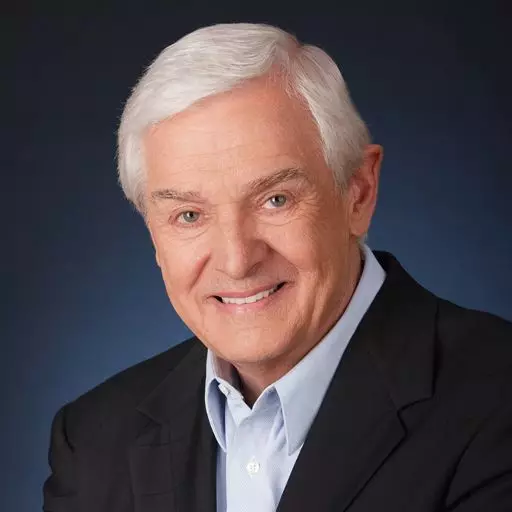
Dr. David Jeremiah is the founder of Turning Point for God, an international broadcast ministry committed to providing Christians with sound Bible teaching through radio and television, the Internet, live events, and resource materials and books. He is the author of more than fifty books including The Book of Signs, Forward, and Where Do We Go From Here? David serves as senior pastor of Shadow Mountain Community Church in San Diego, California, where he resides with his wife, Donna. They have four grown children and twelve grandchildren.
Contact Turning Point with Dr. David Jeremiah
USA
Turning Point
PO Box 3838
San Diego, CA 92163
CANADA
PO Box 70509 RPO Oak St
Vancouver, BC V6M 0A3
UNITED KINGDOM
PO Box 1532
Hemel Hempstead
HP1 9QX
USA
1-877-998-0222
CANADA
800-946-4300
UNITED KINGDOM
0800-058-2856