Oneplace.com

A Political Prophecy: Cancel Culture, Part 2

March 19, 2026
00:00

Disagreement was once accepted as part of political discourse. Now it can get you removed from public life. How can Christians live in this “cancel culture”? Dr. David Jeremiah shares insights from God’s Word to help believers stay strong.

References: Matthew 24:10-12

Guest (Male): Disagreement was once accepted as part of political discourse. Now it can get you removed from public life. How can Christians live in this cancel culture? Today on Turning Point, Dr. David Jeremiah shares insights from God's word to help believers stand strong. From the series Where Do We Go From Here, David now introduces the conclusion of his message, Cancel Culture: A Political Prophecy.

Dr. David Jeremiah: Well, the Bible doesn't really mention cancel culture like that, but cancel culture is just an evil that has its roots way back for as long as we can remember and as long as we can read and discuss history, and especially as we read the Bible. The selfishness and self-centeredness that's wrapped up in that whole idea is not new. It's from Satan himself and the Bible speaks of it very plainly.

So yes, the Bible doesn't say cancel culture, but the Bible teaches you what to do because it explains what it is long before it ever was named in our current culture. And we're right in the middle of a discussion of that from Matthew chapter 24. It brings me to tell you that during this month, we are making available a very special resource to those of you who will send a gift to Turning Point.

It's a brand new publication that we just got off the press. It's a 30-day biblical prophecy understanding book. It's a workbook, really, to help you understand how prophecy shows up in the Bible and what to do about it, how you go about understanding it for your own benefit. This is a great little handbook. I'd love for you to have it.

It's 176 pages and it will answer critical questions about prophecy in the Bible and it will help you learn how to interpret prophecy and understand it for yourself. We want you to have this and we promise to send it to you when you make a gift to Turning Point during the month of March of any size. Do your best to help us as we extend the word of God, but whatever you send, just ask for the book, Understanding Biblical Prophecy. Well, let's get started with this lesson today as we open our Bibles together.

You see, today cancel culture is defined by disdain, a culture of disdain. In his great sermon on the end times, Jesus warned of the rise of many false prophets who would deceive multitudes. That's never been easier than today. Today, we are living in a culture not only of disdain but of deception.

And most of the people who are at risk in this day of deception are senior citizens, senior people. I was shocked to find out that in 2020, senior citizens lost over a billion dollars in cyber scams. A total of 105,301 people over the age of 65 were taken to the cleaners. The average person lost more than $9,000. Almost 2,000 senior citizens lost more than $100,000.

Fake news, fake people, fake products, fake friends—all of this has come to us via the world of Big Tech and all of this is contributing to a growing culture of deception. And then finally, it's a culture of disconnection. The next logical step in cancel culture is disconnection. In a culture marked by disdain and deception, people want to withdraw from society.

They don't always get pushed out of society, but when you find out people are after you and they're trying to hurt you, what do you do? You go into the castle and you shut it down and don't let anybody near you. You don't talk to anybody. You don't send any messages to anybody. Listen to what Jesus said in Matthew 24:12, "And because lawlessness will abound, the love of many will grow cold."

In other words, relationships will go south. Apologist Abdu Murray had this to say about the relationally frightening nature of today's society: "In cancel culture, a single mistake is perpetually unforgivable because it's not simply a guilty act. Rather, the mistake is led to define the individual's identity, turning them into a shameful person, someone who can be canceled."

The culture that leads up to the tribulation and the end of history will be characterized by coldness in our feelings for one another and in our dealings with one another. Shockingly, a recent study revealed that nearly half of Americans have not made a new friend in the last five years. As hatred and deception have increased, love in our world has decreased and our relationships have grown cold.

Once again, a little parenthesis. During this day and this time when I have been studying all these issues, one of the things I have been overwhelmingly impressed with is the absolute necessity of small groups. In almost all the literature that I have read, people are saying, even non-religious people, that small groups are going to be the way in which cultures like ours survive the onslaught of all this socialism and stuff that's coming at us.

Small groups are not just for you to have affinity with others, to be friendly with others, to have fellowship with others, even to study the Bible, but small groups will be the whole defense against what is happening. I mean, there could be a time when they say we can't meet in our church anymore, but they can't keep us from meeting in our homes. There's too many of us and there's too many homes.

And there's a way in which what is happening now with this friendless society is Christians need to run right into the face of that and say, "Not us! We're in a small group with eight other couples and we know a bunch of people and we pray for one another, and we serve one another, and we rejoice with one another, and we mourn with one another. We have friends. We're a part of the body of Christ. We come to church, but we have small groups."

And if you're not in a small group, I guess you probably get the idea I think you should be. What we need is to be in a really strong small group. Well, coming to the end of this talk, let me ask this important question: where do we go from here? Now that we understand more about cancel culture and the dangers that it poses, where do we go from here?

What does it take to live in a world like the world we live in? Well, I'll tell you, it takes a lot. What does it take to create a different kind of culture in your home, at work, at church? The short answer is it's not easy to live as members of God's kingdom in a world that is increasingly hostile to the values of that kingdom.

This is the shared experience of every generation of Christians since the very first one. So we've had 2,000 years to prepare for these days. One thing we know for sure: following Jesus is worth it. So let's explore four uncancelable concepts as we close. Number one: to live in a world like we live in today, it takes wisdom.

Jesus told us, "Behold, I send you out as sheep in the midst of wolves. Therefore be wise as serpents and harmless as doves." Wisdom is a word that confuses people today. Many think wisdom is the cute things that you say in a retort to someone, or maybe it's kind of the stuff you see in a fortune cookie. Others believe wisdom means speaking and acting in accordance with larger groups like the wisdom of the crowd.

On a practical and biblical level, wisdom looks much different than either one of these things. True wisdom is the ability to discern what is right, what is good, what is just, and what is proper. And I've written down in my notebook a little definition of wisdom that's the best one I've ever seen. It's not mine; I found it somewhere. Here's what it is: wisdom is doing the right thing without a precedent.

In other words, doing the right thing when you can't look back over your shoulder and see, "Oh, this happened to so-and-so and it's written about in this book and they did this and this, so I will do that." No. Wisdom today is so imperative because we live in an unprecedented time. Most of the stuff that's happening to us now has never happened to us before.

So what do we do? We ask God for wisdom and he's promised to give it to us. And he will give us wisdom to do the right thing even though there are no precedents for that in anything that we know about or have experienced. We need to ask God for wisdom because in this day and age, we need wisdom. The Bible says we're to have a certain combination of characteristics in this day.

I don't know about you, when I see all the stuff that's happening and things like happened to my fellow pastor Chris Hodges, it makes me angry. I want to respond. I play games in my mind about how I would get even with somebody who would do something like that. Don't look at me like you don't know what I'm talking about. You all know what I'm talking about. And I think to myself, "Boy, if that ever came to me, I'd—" No, wait a minute.

Listen to what the Bible says. Colossians 4:6, "Let your speech always be with grace, seasoned with salt, that you may know how you ought to answer each one." Now, that's a really important verse. Some Christians have reversed it. Their speech is always with salt seasoned with a little grace. No, no, no, that's not the way it's supposed to be. The Bible says we're to be gracious people, but we're to have a little saltiness to us.

What does that mean? Don't let people run over you. Don't give up your convictions. But whatever you do, be gracious. You know, one of my bucket list things is I want to be a gracious old man. I don't want to be a grouchy old man. I know some grouchy old men, do you? I don't want to be that. I want to be a gracious old man. I don't really want to be an old man, but whenever I get there, I want to be gracious.

So the Bible says when we're in the midst of this culture where people are just killing each other with their words, there should be something different about us. We stand aside from that. We're gracious people. We don't respond with tit for tat. They don't say something mean to us and we come up with something meaner to say to them.

We don't pick fights with those who disagree with us. On the other hand, we don't need to stay silent when our faith is being challenged. There are moments when wisdom would suggest we listen and learn rather than speak and stumble. Somebody once said it's better off to keep your mouth shut and let people think you're stupid than open it and remove all doubt.

Proverbs 17:28 says it this way: "Even a fool is counted wise when he holds his peace; when he shuts his lips, he is considered perceptive." There are also moments when followers of Jesus need to stand firmly for the truth. This includes you and me, and when those moments come, I hope we will speak and write and teach and create with the same boldness that Stephen demonstrated before his accusers in the Sanhedrin.

May it be said of us as it was of him, that those who hear our words will be cut to the heart. When we're gracious and we speak the right words, that's a combination people don't know what to do with. So knowing what to say, when to say it, how to say it—that's wisdom. Then it takes courage to live in this day and age, in the cancel culture.

The Bible says, "Be strong and of good courage, do not fear nor be afraid of them; for the Lord your God, He is the One who goes with you, He will not leave you nor forsake you." You and I need to heed those commands as we live meaningfully as followers of Jesus in a world influenced by cancel culture. In the book of Acts, there's a word that occurs often. It's the word "bold."

Acts 4:31 is a great verse. Here's what it says: "And when they had prayed, the place where they were assembled together was shaken; and they were all filled with the Holy Spirit, and they spoke the word of God with boldness." Oh, how I pray that I will always be able to speak the word of God with boldness, never to be ashamed of my Lord or what He has done for me or for you or for this church.

Courage is a God-given personality trait that is crucial in critical times. This quality is seen in the life of an Old Testament man who had the wonderful name of Jeremiah. He remained committed to God and to his prophetic work even when he was under extreme criticism. Do you know that the book of Jeremiah is followed with a book called Lamentations?

Those are the laments of Jeremiah, his crying out, his tears, his sadness. He's called the weeping prophet and he had a lot to weep about because he lived a terrible existence for much of his life. He was faithful to his ministry even when those attacks came at him from his own people. He declared the words of the Lord during a particularly difficult period in Israel's history, and he didn't falter as new things came at him and as things grew worse around him.

His hearers tried to cancel him, believe it or not. In the Old Testament, there was this bit of cancel culture. Jeremiah 18:18, these are supposedly Jeremiah's friends. Here's what they said: "Come and let us devise plans against Jeremiah; for the law shall not perish from the priest, nor counsel from the wise, nor the word from the prophet. Come and let us attack him with the tongue, and let us not give heed to any of his words."

But Jeremiah persisted in his ministry. He continued to speak the truth as a representative of Almighty God. You and I need a streak of Jeremiah's sanctified stubbornness in troubled times. The mob will mock and malign us. Society will shame and slander us. And there's all kinds of associations out there that want to assault and attack us.

The crowds may even want to kill us. I can't imagine it, but it could happen. Through it all, we must have courage. We must choose to be courageous. Thankfully, that is a choice we do not have to make alone. Psalm 27:14 says, "Wait on the Lord; be of good courage, and He shall strengthen your heart." Hallelujah. It takes wisdom and courage. It takes forgiveness.

In a world where the mistakes of the past are fair game for the present, there's no room for forgiveness on the part of the cancel culturists. But the Bible offers us a different way. Listen to the Bible. The Bible says, "Be kind to one another, tenderhearted, forgiving one another, even as God in Christ forgave you." And, "Therefore, as the elect of God, holy and beloved, put on tender mercies, kindness, humility, meekness, longsuffering; bearing with one another, and forgiving one another, if anyone has a complaint against another; even as Christ forgave you, so you also must do."

When we forgive someone who has wronged us, we set them free. But that isn't even the best news. We set ourselves free because if you walk around with bitterness towards someone, you're not hurting them. They probably don't even know you're doing it, but you're doing it to yourself. So you forgive somebody, two great things happen: they get forgiven and you get released from your bitterness.

Paul Meyer was a millionaire in his 20s because he was a great entrepreneur. Most business people have read some of Paul Meyer's works, even had an industry named after him. But Paul Meyer grew up in an interesting home. You see, his father never forgave anybody, not a single soul. If he was ever crossed or offended, he carried the offense all of his life, all the way to the grave.

He simply didn't forgive anyone, not even family members. His life was full of broken relationships. But Paul said his mother, on the other hand, forgave everybody, absolutely everybody. Paul said she based her forgiving spirit on God's word, for she preferred to live with forgiveness than to live with unforgiveness. As a result, she had peace and joy and it bubbled out of her life.

He said, "There I was, a young man stuck between two polar opposites. I love both of my parents and I'm still indebted to them for what they taught me, but in this area, I knew I had to choose forgiveness or reject it. Which was the better offer?" So when I was 16 years old, I made a conscious decision to start forgiving people and to live a life of forgiveness.

I had watched my parents and I knew which of the two had more peace and joy. The difference was not hard to see. I suggest to you that in this area, in this day, in this culture, when forgiveness is not in existence with cancel cultural people, we become even more men and women of forgiveness. We forgive one another. We look for ways to resolve conflict, not extend it.

It takes wisdom and courage and forgiveness, and finally, it takes love. Do you remember the passage in the gospel where Jesus canceled a young woman? He had been teaching in the temple courts when a group of Pharisees forcibly dragged a girl in front of him. They had caught her in the act of adultery. "Stone her, Jesus," they said. "That is the punishment prescribed by law. She's guilty of sin and she must be permanently removed. She is canceled."

Wait a minute, you say. Pastor, that's not in the Bible. And it isn't. Jesus never said any such thing, and neither do I. Instead of canceling that young woman, Jesus told her accusers, "He who is without sin among you, let him throw a stone at her first." You're going to stone this woman? Let the person in this group who doesn't have any sin be the first person to throw a stone at her.

And the scripture says that when that happened, they walked away one by one and left Jesus alone with the woman. Wouldn't you love to have been there during that experience? One by one they walk away. And Jesus spoke to that young girl when they had all left and said to her, "Neither do I condemn you; go and sin no more."

As we've seen, cancel culture is laser-focused on judgment and accusation and punishment. The goal of those who cancel others is to broadcast their sins from pillar to post and never allow them to be removed or forgotten. But Christ's goal, on the other hand, is love and mercy and grace. In the words of scripture, "Above all things have fervent love for one another, for love will cover a multitude of sins."

I used to think that verse meant that if you love somebody, it would cover your sins. But that's not what it means. It means when you love somebody, you cover their sins. You don't expose their sins. You try to cover them. Now, you don't deceitfully do it, but you don't get on a campaign to reveal their sins. If you love somebody, you don't want other people saying bad things about them, isn't that true?

But in our culture today, that's not the way it works. If a person's in a relationship and they find out something evil, it'll be on the internet and it'll be all over the world within just a matter of minutes. The Bible says as Christians, when we love someone, someone makes a mistake, you go and you pray with them, you put your arm around them, you forgive them, you help them get on.

But you don't broadcast their sin. That's the world's way. That's the devil's way. That's not God's way. The Bible says that when we love someone, we cover their sins. I don't know about you, sometimes I'd just like to cancel culture itself. Cancel the whole thing. I mean, I'd like to cancel all the hatred and division, all the crimes and the lawlessness, the smugness and the snobbery of the pundits and the pencil pushers, the so-called journalists who aren't really journalists.

I'd like to cancel the violence and the vitriol. And I can't do that, but you know that one day Jesus is going to do that? For now, there's one cancel culture I want to recommend, and it's the only one I'm going to recommend today. Here's a cancel culture you need to take seriously. The Bible says in Colossians 2:13 and 14, "When you were dead in your sins, God made you alive with Christ. He forgave us our sins, having canceled the charge of our legal indebtedness, which stood against us and condemned us; and He has taken it away, nailing it to the cross."

Jesus has canceled our sin. He canceled it! Now, that's a cancel culture I can get into. One day I asked Jesus Christ to forgive me of my sin and I found out that when He had gone to the cross, He had paid the penalty for my sin and He canceled it all. He forgave it all. My past sin, my present sin, my future sin—all forgiven by God.

No, no, no, Pastor Jeremiah. He forgives your past sin, but you gotta deal— Wait a minute. When Jesus died on the cross, all my sin was in the future. He canceled it all. Canceled all my sin! He canceled it! He forgave it! And what He did for me, He'll do for you if you'll ask Him. When we come to Jesus Christ, He cancels our sins and He welcomes us into His family.

And instead of disdain and deception and disconnection, He gives us love and truth and a place by His side. He fills us with wisdom and courage and compassion, and He commissions us to counter the cancel culture with the power of the cross, which can never be canceled, revoked, or annulled either in time or all of eternity. We can go to bed tonight knowing with all of our hearts that nothing or no one can ever cancel the one who has canceled our sins.

He will always be there for us. Ladies and gentlemen, in the midst of all that's going on around us, we must never forget the triumph of the gospel. The gospel is what changes everything. You want to get involved in the cancel culture? Get involved in the Christian cancel culture where Jesus Christ cancels our sin. And then go out and live like a Christian in this crazy mixed-up world and you will discover that people will be drawn to you because of your graciousness, because of your forgiveness, because of your willingness to put your arm around those who have made a mistake and help them get better.

Let's don't let what is happening in the world make us bitter and cynical—easy for that to happen. Let's become even more men and women of love and grace. Amen. Amen. Don't get involved in cancel culture. It's not God's way. We're not to be canceling people; we're to be winning people and helping them come to know Jesus Christ.

Tomorrow I'm going to talk about spiritual famine. Did you know that in the Old Testament, in the book of Amos, the prophet says that in the end times there'll be a time of spiritual famine? When the word of God will not be as available as it has been and people will no longer have an appetite for the scripture. One of the things that will happen as we move toward end times is a spiritual time of famine. We'll spend two days on that beginning tomorrow in the Friday edition of Turning Point.

Guest (Male): And I hope you'll be sure to join us right here. We thank God for the many people who work so hard behind the scenes, not only here at Turning Point but in all the stations where this program is aired. We thank you guys for being so faithful and getting us on the air on time each week and each day, and for your comments often when we see you or hear from you. You're a blessing and part of the team.

Today's message came to you from Shadow Mountain Community Church and Dr. David Jeremiah, the senior pastor. How is this ministry drawing you closer to God? Let us know by writing to Turning Point, P.O. Box 3838, San Diego, California, 92163. Visiting our website at davidjeremiah.org/radio or call 800-947-1993. Ask for your copy of David's new book, Understanding Biblical Prophecy: A 30-Day Bible Study. It's yours for a gift of any amount.

You can also view over 1,200 of Dr. Jeremiah's sermons on any screen, anytime you like, on our Turning Point+ streaming service for a monthly gift of any amount. Visit turningpointplus.org for details. That's turningpointplus.org. This is David Michael Jeremiah. Join us tomorrow as we continue Where Do We Go From Here, on Turning Point with Dr. David Jeremiah.

This transcript is provided as a written companion to the original message and may contain inaccuracies or transcription errors. For complete context and clarity, please refer to the original audio recording. Time-sensitive references or promotional details may be outdated. This material is intended for personal use and informational purposes only.

Featured Offer

Understanding Biblical Prophecy

Don't Just Wonder About Your Future. Understand It.


Understanding Biblical Prophecy


In a world filled with uncertainty, the timeless truths of biblical prophecy offer profound comfort and divine perspective. Yet, for many, these sacred texts can seem complex and intimidating. How can we decipher God's plan for the future and apply its wisdom to our lives today?

Video from Dr. David Jeremiah

About Turning Point

Turning Point's Mission: Delivering the Unchanging Word of God to an Ever-Changing World


About Dr. David Jeremiah

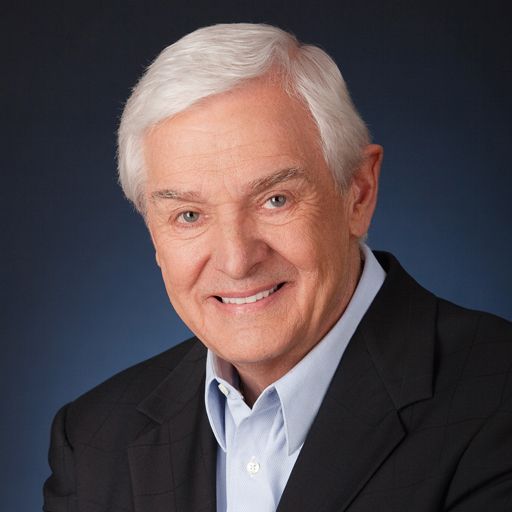
Dr. David Jeremiah is the founder of Turning Point for God, an international broadcast ministry committed to providing Christians with sound Bible teaching through radio and television, the Internet, live events, and resource materials and books. He is the author of more than fifty books including The Book of Signs, Forward, and Where Do We Go From Here?  David serves as senior pastor of Shadow Mountain Community Church in San Diego, California, where he resides with his wife, Donna. They have four grown children and twelve grandchildren.


Contact Turning Point with Dr. David Jeremiah

Mailing Address
USA
Turning Point
PO Box 3838
San Diego, CA 92163

CANADA
PO Box 70509 RPO Oak St
Vancouver, BC V6M 0A3

UNITED KINGDOM
PO Box 1532
Hemel Hempstead
HP1 9QX
Phone Number
USA
1-877-998-0222

CANADA
800-946-4300

UNITED KINGDOM
0800-058-2856