
The New Church Hymnal


Great songs are played, including "Amazing Grace."
Carol Jones Saint: With the ringing of the chimes, the happy chimes, it is time to welcome you to the Organ Loft. My name is Carol Jones Saint, and I was sister to the late Reverend Bert Jones, whose organ music you enjoy so much.
And we want you to just sit back and listen, or if you know some of the songs that Bert will be playing, just sing right along with him. In this edition of Through the Hymnbook, Bert will be playing from The New Church Hymnal large book that was printed in 1976 and the editor was the famous Ralph Carmichael, conductor and composer.
Reverend Bert Jones: I begin by playing the great hymn of the church. There's a wideness in God's mercy like the wideness of the sea. There's a kindness in His justice which is more than liberty. If our love were but more simple, we should take Him at His word. And our lives would be all sunshine in the sweetness of our Lord.
And there sings Singspiration. The canary finally got into the mood of the music and decided to sing. Sometimes people say to me in church services, "Well, sometimes the canary sings and sometimes he doesn't." Well, you see, that's the thing I have to leave up to him. If he's in the mood, he'll sing, and if he isn't, there's not much I can do about it. But he really does pretty well. And he is real, too. So many of you ask, is the canary real? Yes, he's real.
Here's a delightful gospel song from the year 1910. It's called A New Name in Glory. I was once a sinner, but I came pardon to receive from my Lord, and there's a new name written down in glory, and it's mine, oh yes, it's mine.
The interesting thing about this song is that it is written by the same man who wrote the favorite gospel song In the Garden, C. Austin Miles. He wrote In the Garden, which is just constantly a favorite. People request it all the time. It has the message of walking in the garden of life with our living Christ. That was written in the year 1912. This gospel song, A New Name Written Down in Glory, was written in the year 1910, two years before his more famous song In the Garden. We'll ask the clarinet to take the happy melody line, and then we'll have some glockenspiel bells play the chorus that says there's a new name written down in glory, and it's mine.
Next we come to the great hymn by John Oxenham. In Christ there is no East or West, in Him no South or North, but one great fellowship of love to show His glories for us.
And here for all the boys and girls listening is a cheerful little song that I suppose any boy or any girl who ever went to Sunday school knows this song. It was written way back in 1860. And this song is called the Alma Mater of the Sunday school. The largest school in the world is the Sunday school, and this is the Alma Mater. Your school has an Alma Mater, doesn't it? Your high school, your college? Well, this is the Alma Mater of the Sunday school.
Maybe I don't even need to tell you what it is: Jesus Loves Me, This I Know, for the Bible Tells Me So. And we'll hear it first on the little electric piano. I wonder what that would sound like on a music box. And I'm always glad to hear that so many boys and girls do get to listen to Through the Hymnbook.
I was over in Manheim, Pennsylvania in services, and two young people ages eight and ten came up to me and they said, "Uncle Bert, we're allowed to stay up late on Saturday night to hear you play the organ on Through the Hymnbook." Well, this will be just for them on a little tinkling music box. Now imagine that we wind up the music box and Singspiration is going to sing and we'll lift the lid.
Oh, the music box ran down before I got to finish the song. But the message never ends. The message is, no matter who you are and no matter how young you are and no matter how old you are, Jesus loves you. For God so loved the world that He gave His only begotten Son that nobody needs to perish, but all could have everlasting life.
From the year 1958 is the beautiful song by John W. Peterson. It's based on the 23rd Psalm. He starts out giving a testimony and saying, "A pilgrim was I and a stranger, in the cold night of sin did I roam. When Jesus the kind shepherd found me, and now I'm on my way home." And here from the 23rd Psalm, surely goodness and mercy shall follow me all the days of my life and I shall dwell in the house of the Lord forever. It's one of the newest of the settings of the 23rd Psalm from 1958 by John W. Peterson.
Even though that is quite a new setting of the 23rd Psalm, I can go into almost any church and start to play that and then say to the people, "Why don't you sing along with me?" And everybody knows the song. It's a great setting.
Here's a beautiful song from the year 1943 by Norman Clayton. It's a song in which I will use some of the beautiful strings of the organ. The violin especially. We'll imagine a violin playing this solo with a soft flute accompaniment, and then the harp will join in. It's a song that talks about that day when we shall meet Jesus face to face.
We shall see His lovely face some bright golden morning when the clouds have rifted and the shades have flown. Sorrow will be turned to joy, heartaches gone forever. No more night, only light, when we see His face. For those of you who are musical, please notice the beautiful chord progressions in this song by Norman Clayton.
I was privileged to hear Norman Clayton sing and play this song the very first year he wrote it in the year 1943. I remember he came and did a chapel program at our college. And it's nice to look back all those years and remember when this song was first written. Now using the beautiful organ violin.
I never had the privilege of learning to play the violin, so I guess you could say I'm a frustrated violinist. Isn't it nice that here on the organ there is a violin I can play? And it is a good one, isn't it?
Here's a great hymn. It's the hymn that is somewhat of a theme song in the Church of the Nazarene. It's called 'Tis a Glorious Church Without Spot or Wrinkle, Washed in the Blood of the Lamb. 'Tis a Glorious Church Without Spot or Wrinkle, Washed in the Blood of the Lamb. And certainly based on the words of scripture.
It's Through the Hymnbook heard every week at this time on this fine station. A time when I play the hymns and I actually go through a real hymnbook. And this time I'm going through the book The New Church Hymnal. I'm finding this in many, many churches where I travel in services. Published first in the year 1976, edited by Ralph Carmichael and published by Lexicon.
Now Ralph Carmichael is a composer of gospel songs and hymns. He is also a very well-known conductor. Frequently if you watch the titles when you hear a musical program, you will see his name given as the orchestra conductor, even on secular programs. You notice, and there will be the name of Ralph Carmichael. He's written a lot of very interesting songs. His gospel music is delightful, too.
Carol Jones Saint: Just pausing to let you know that you're enjoying Through the Hymnbook, a special time of music when Reverend Bert Jones goes through various hymnbooks and plays some of your favorites. And remember, it's always a special joy to receive your letter letting us know that Through the Hymnbook is a special blessing to you. Post Office Box 575, Erie, Pennsylvania 16512.
Reverend Bert Jones: One of the Ralph Carmichael songs, this was written by the editor of the book, the famous conductor. This is sort of in the style of a Negro spiritual and a little on the sound of popular music as he wrote "One of these days, one of these days, one of these days I'm going home. One of these days trouble will soon be past. There will be peace at last, and one of these days I'm going home."
You wouldn't sing this on Sunday morning, no, but it's maybe for youth time or a revival meeting. One of these days. And listen to my nice piano here on the organ. Sounds like a real piano, but it's not. It's right on the organ.
Nice little song, isn't it? I hope I can find something else by the composer of this book that I could play for you. Ralph Carmichael by name. Well, here's one he wrote that is a very lovely song: The Savior is Waiting. This may well be the song that will live the longest of all the songs that Ralph Carmichael wrote. The Savior is waiting to enter your heart.
Now the beautiful celeste on the organ says "time after time He has waited before, time after time He has waited." Based on the words of scripture: "Behold, I stand at the door and knock. If any man will hear My voice, let him open the door, and I will come in and sup with him and he with Me."
By a very good friend of mine, Audrey Mieir, a song she wrote in the year 1959. His Name is Wonderful. His Name is Wonderful, and it's the name of Jesus my Lord. People love this song and wherever I go, again, this is one of those songs that people can sing very, very easily.
It has traveled and become known very, very widely. His Name is Wonderful. Audrey Mieir is a delightful lady. She's written many, many gospel songs, but I guess this is probably her best-known song. Bow down before Him, worship and adore Him. His name is wonderful.
And the beautiful old favorite, Amazing Grace, how sweet the sound that saved a wretch like me. I once was lost, now I'm found, was blind, but now I can see. Written by one who had been a slave boat captain, but he met Jesus Christ and all of life was changed, and he could only say "Amazing Grace that saved me."
Well, the time has gone much too quickly and we've got to close the hymnbook for another time. But until that next time, remember thank God for His amazing grace. And meanwhile, you keep singing. Bye.
Featured Offer
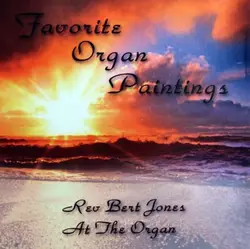
For FURTHER DETAILS: WRITE: A Visit with the Joneses, Inc. P. O. Box 575 ERIE, PA 16512


Featured Offer
For FURTHER DETAILS: WRITE: A Visit with the Joneses, Inc. P. O. Box 575 ERIE, PA 16512
About Through The Hymnbook
About Reverend Bert Jones
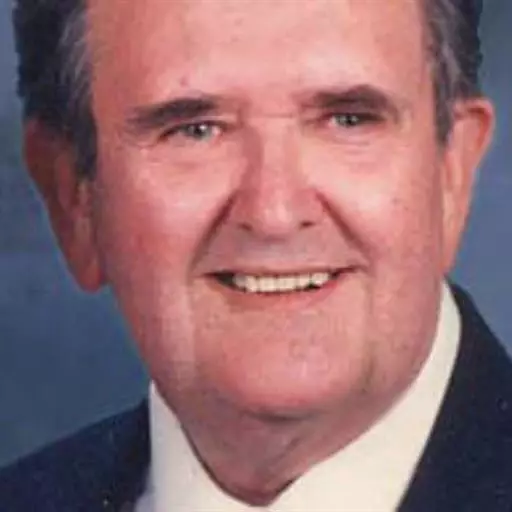
Reverend Bert Jones was an incredibly talented man. He was an accomplished organist and pianist, as well as an artist in water color and oil, but his primary calling was as an ordained minister and evangelist. He began playing the piano at age six, and by age 13, was playing a three-manual pipe organ. He had only two years of formal music lessons, and usually played without music. Bert ministered in thousands of churches over a 50 year period, and was well known for his radio ministry, "A Visit with the Joneses." Eight long-play albums were released by Singspiration, and Bert wrote many of his own compositions.
Bert went to be with the Lord in April 1995, and he left a legacy of beautiful music.
Contact Through The Hymnbook with Reverend Bert Jones
visitjoneses@aol.com
Through the Hymnbook
P. O. Box 575
Erie, PA 16512-0575