
Songs for Men


You will hear some interesting songs suitable for men's gatherings.
Guest (Male): The chimes have been playing song number one in the book that Bert will be using in this edition of Through the Hymn Book. And the song, of course, We Gather Together. Now, the name of the hymn book is entitled Songs for Men. It has 125 songs. It was published back in 1955 by the Bethany Press. And there are going to be some beautiful songs and you will want to sing right along.
Reverend Bert Jones: opening song, isn't it? We think of it so often in relation to Thanksgiving in Canada or in the United States. But, it really is a very appropriate song to sing almost anytime as something of an invocation. And so, this book, according to the preface, was prepared especially for use in men's fellowship groups and in men's retreats. Thinking of a man's retreat, when men would come from many, many different churches and many different places to assemble together, maybe they hadn't seen each other for years and years, or at least since 1 year ago. How nice to have everybody join in singing.
We gather together to ask the Lord's blessing. And of course, I would expect this song to be here. And a song book called Songs for Men. Rise up, oh men of God. Have done with lesser things. Give heart and mind and soul and strength to serve the King of Kings. Rise up, oh men of God. Lift high the cross of Christ. Tread where his feet have trod. As brothers of the Son of Man, rise up, oh men of God. Great words and a great tune. And it's great to hear men sing that great song for men.
Rise up, oh men of God. Here is a song for men based on the words which Jesus Christ gave to his disciples when he asked them a question one day. They were asking for the chief places in the kingdom. And Jesus said, are ye able? Are ye able set the master to be crucified from with me? Are ye able to have a place in the kingdom? It's a beautiful song, a great song for men to sing, a great song for everybody to sing. Are ye able set the master? Here the master asks the question. And here the disciples reply in the words of the chorus.
Yea, Lord, we are able. We are indeed able. It's a good song to be in a hymn book called Songs for Men because I've discovered men love to sing that. And it's thrilling to hear a group of men sing that. Yes, Lord, we are able. Our spirits are thine. Dedicating this edition of Through the Hymn Book to the Reverend Arthur JK of Victoria, Ontario, Canada, who has donated this very interesting book of 100 and well, 25 songs or so to the Through the Hymn Book Library. The hymn book is called Songs for Men. And I'm thankful to Arthur K for sending it along.
Reverend Arthur K writes his testimony. He did not start out to be a minister. He was in several other careers and then a bit later in life was called to the ministry and is now serving churches in the area of Victoria, Ontario, Canada. Here's a song men love. They enjoy singing it. And I think possibly men enjoy this song because it sounds a good bit like a football song. We have a story to tell to the nations. We have a story to tell to the world. And who better to tell that story than men who love the Lord?
Well, these songs I rather expected to find in a song book called Songs for Men. Prepared especially for men's retreats and men's fellowship groups in response to the request of many requests to the Bethany Press of St. Louis. The book was published back in 1955. I don't know if it's still in publication or not. But then I came to a song that I had never heard of before. It was a song for men, if you please. And I looked again. Not only was it a hymn for men, which I did not know, called Men of God, Awake, Arise.
Oh, that's great. But then I noticed it was written by Virgil Brock and his wife Blanche Kerbrock. The same two people who wrote way back in 1936 the song Beyond the Sunset. This does not sound like Beyond the Sunset, a totally different mood. But I'm glad that the Brocks wrote it. It was copyrighted in 1950 and it says Men of God, Awake, Arise. Lift your banners to the breeze. Men of God, Awake, Arise. Let your courage never cease. Shout aloud the battle song. Right must triumph over wrong. Men of God, Awake, Arise. Men of God, Arise.
Men of God, Awake, Arise. Great words. Aren't you anxious to hear this song, brother Brocks? Well, I'll just play it for you now because it's brand new to me. I would love to hear a choir of men sing that, a whole Glee Club. And I bet it would be great. I'm sure it would. Men of God, Awake, Arise. Right must triumph over wrong. Men of God, Awake. Men of God, Arise. Men of God, Awake, Arise. All the more special because it was written by the same two people who wrote the beautiful quiet song Beyond the Sunset.
But Beyond the Sunset isn't here in as much as this little hymn book is called Songs for Men. And so, these are songs calculated to be sung by men. Here's an interesting choice in the book. The old spiritual is here. Appropriate for men to sing. Not my brother nor my sister, but it's me, oh Lord. Standing in the need of prayer. Thanks to Arthur JK of Victoria, Ontario, Canada for sending this very interesting book My Way.
Guest (Male): We are just pausing to let you know that you are enjoying Through the Hymn Book. And I'm sure you've been enjoying this interesting compilation of Songs for Men. If you are finding the music helpful and interesting to you, it would mean so much if you would take time and write. The mailing address is Through the Hymn Book, Post Office Box 575, Erie, Pennsylvania 16512. And the email address is oregonhymns at aol .com. Well, Bert has some more beautiful songs for you.
Reverend Bert Jones: And here I came to an interesting inclusion in this book. It's a poem written and called The Fellowship Song and to be sung to the tune of Home on the Range. Well, let's see what the fellowship song is here in this men's hymnal. And it's supposed to be sung to the tune Home on the Range. I guess I'll play a little bit of Home on the Range in the background and give you the words of the first stanza of this little poem. Oh, give me a church where you never need search. For a man to do this or that.
Where seldom is heard a discouraging word. And the elders all know where they're at. Sing, sing all the church. Where the man in the pew does his part. Where seldom is heard a discouraging word. And the service all comes from the heart. Well, it would be my guess that at a men's retreat, the men would just love that song because men love to sing Home on the Range. And I'm sure they would enjoy those very interesting words written to that tune. Now, in this little hymn book called Songs for Men, I expected, of course, to find this song.
And I certainly expected to find this song Stand Up, Stand Up for Jesus because it was inspired by an evangelist who spent his whole career preaching to men. So, I was pretty sure those songs would be there. But then I'm interested in noticing some of the other fine choices that are here to be sung by men. For instance, this great song written by Frank Mason North, who was head of the Board of Missions for many years of the old Methodist Church. Looking out upon the crowds of the cities, he wrote these words. We're cross the crowded ways of life.
We're sound the cries of race and clan. Above the noise of selfish strife, we hear thy voice, oh Son of Man. In haunts of wretchedness and need, on shadowed thresholds dark with fears, from paths where hide the lures of greed, we catch the vision of thy tears. The cup of water given for thee still holds the freshness of thy grace. Yet long these multitudes to see the sweet compassion of thy face. And then in the midst of a busy city street where cross the crowded ways of life, where the race of men pass by, suddenly a bell begins to ring in a steeple over that crowded city street.
And people look instinctively upward. It's a great, great song. Next, we come to a song called God Send us Men. Now, some of you may know this, perhaps in your men's fellowships or your men's brotherhood or men's retreats, you have sung this. Or perhaps on Layman's Sunday, you sometimes sing this. Well, let me see. God Send us Men. I want you to to hear these great words. God Send us Men whose aim will be not to defend some ancient creed, but to live out the laws of Christ in every thought and word indeed. God Send us Men alert and quick his lofty precepts to translate until the laws of Christ become the laws and habits of the state.
God Send us Men of steadfast will patient, courageous, strong and true with vision clear and mind equipped his will to learn and his work to do. Isn't that a great song? And here is the music for it. I Would Be True is here because I Would Be True is written by a young man who was overseas and determined to be true to the good news of the gospel that he had heard as a youth, true to his family and to his church. And he wrote back in a letter and sent these words I Would Be True for there are those who trust me.
And then I expected to find this song here. Faith of our fathers living still, we would be true to thee till death. There's real hope for the future when men realize that they have received a great treasure passed on to them through suffering and pain and nobility. And determine we will be true to give that good news of the gospel Jesus Christ. But then here is a song that really surprised me to be here. Yet I'm glad it's here because as I think of it being here, I think of the many men who die so suddenly in today's world.
Maybe at work. Maybe early in the morning, late at night. Doing the task of love for their families or for their church. And so, it's here perhaps with all of that in mind. When he calls me, I will answer. When he calls me, I will answer. When he calls me, I will answer. I'll be somewhere listening for my name. Realizing that not one of us, man or woman, boy or girl, knows when he will call, then we must be listening in readiness for our name. And so, with this great song, we close the book called Songs for Men with thanks to the Reverend Arthur JK of Victoria, Ontario, Canada for sending it our way.
Hope even you women have enjoyed Songs for Men. Bye. Keep listening.
Featured Offer
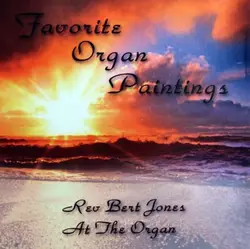
For FURTHER DETAILS: WRITE: A Visit with the Joneses, Inc. P. O. Box 575 ERIE, PA 16512


Featured Offer
For FURTHER DETAILS: WRITE: A Visit with the Joneses, Inc. P. O. Box 575 ERIE, PA 16512
About Through The Hymnbook
About Reverend Bert Jones
Reverend Bert Jones was an incredibly talented man. He was an accomplished organist and pianist, as well as an artist in water color and oil, but his primary calling was as an ordained minister and evangelist. He began playing the piano at age six, and by age 13, was playing a three-manual pipe organ. He had only two years of formal music lessons, and usually played without music. Bert ministered in thousands of churches over a 50 year period, and was well known for his radio ministry, "A Visit with the Joneses." Eight long-play albums were released by Singspiration, and Bert wrote many of his own compositions.
Bert went to be with the Lord in April 1995, and he left a legacy of beautiful music.
Contact Through The Hymnbook with Reverend Bert Jones
visitjoneses@aol.com
Through the Hymnbook
P. O. Box 575
Erie, PA 16512-0575