
Songs of Zion


You will hear Gospel songs like "In Times Like These," as well as "Spirituals."
Guest (Female): Welcome, welcome to Through The Hymnbook. We're glad to have you in the organ loft for this special time of music. This time, the title of the book is called Songs of Zion. It's really a relatively new book as books go because it was just published in 1981 by the Methodist Church, and you will love some of the songs Bert has chosen to use.
Bert Jones: I was playing my mother's own song, "In Times Like These." How thrilled we have been to find her song here in the book. Now, as I've told you before, the opening notes of music in mother's song, "In Times Like These," incorporate the best-known symbol of time in the world. No matter where one would go in the world, that says "In Times Like These," indeed.
It also says time, time, time, time, time, time, time. The Westminster Chime. The opening notes have it. So how appropriate then for me to play it using the great carillon on the organ as if we have climbed up into a huge belfry, perhaps the belfry of Westminster itself, as the carillon sings out and says "In Times Like These," everybody needs the Savior Jesus Christ.
This book, Songs of Zion, is an amazing compilation of familiar gospel songs. It says in the preface that Songs of Zion are songs of the soul. And so this has been an attempt to draw together songs of the soul, songs the people love to sing, songs which have been a blessing to people across the years and across the centuries.
The preface also points out that even as the gospel song originated primarily in the north of the United States, the Negro spiritual originated in the southern part of the United States. And here, both are brought together as songs of the soul and songs of Zion.
For instance, here in this publication from 1981, is a 1937 copyright that's entitled "Farther Along." Tempted and tried, we're oft made to wonder why it should be thus all the day long, while there are others living about us, never molested though in the wrong. Farther along, we'll all know about it. Farther along, we'll understand why. Cheer up, my brother, live in the sunshine, for we'll understand it all by and by.
Turning over the page to a gospel song from the year 1950, written by Ira Stanphill, who says, "I don't know about tomorrow. I just live from day to day. I don't borrow from its sunshine, for its skies may turn to gray. I don't worry o'er the future, for I know what Jesus said. And today I'll walk beside him, for I know he knows what is ahead."
"Many things about tomorrow I don't seem to understand, but I know who holds tomorrow, and I know he holds my hand."
Guest (Female): Just pausing to let you know that you are enjoying that special time of music that we call Through The Hymnbook. And it's such a joy to hear these great hymns of the church and some of these spirituals that you'll be enjoying.
Just would like to let you know that the mailing address is Post Office Box 575, Erie, Pennsylvania 16512. And also the email address is organhymns as one word at aol.com. If you would like information about CDs or tapes, just write and we'll be glad to get that information to you right away.
Bert Jones: All right, you ought to have a collection of spirituals. They're hard to find written down. Say, this has dozens and dozens of them. And I begin with this beautiful one. "Go Tell It," "Go Tell It," "Go Tell It on the Mountain" that Jesus Christ is born.
Songs of Zion, that's the title of the book, and the preface reminds us that Songs of Zion are songs of the soul. And here's a song of the soul that begins with a prayer almost a lament, and yet a prayer of supplication and a prayer of sincerity as it says, "Lord, I want to be a Christian in my heart, in my heart."
Leafing through the portion of the book where we have the gospel songs in Songs of Zion, published in the year 1981, and let me see. Here is a beautiful Song of Zion written by Elisha A. Hoffman, who was born in 1839 and lived until 1929. My, what a fine long life lived by Elisha Hoffman.
It's the song "Is Your All On The Altar Of Sacrifice Laid?" You've longed for sweet peace and for faith to increase. Is your all on the altar of sacrifice laid? Your heart, does the spirit control? You can only be blessed and have peace and sweet rest as you yield him your body and soul. What a secret. Lots of people who would gladly wish for his rest but who fail to yield him the body and soul. I'm glad it's here in this new book from the year 1981.
Leafing across the pages, I come to a song that says, "I've got a robe, you've got a robe, all of God's children got a robe. And when I get to heaven, I'm going to put on my robe and I'm going to walk all over God's heaven." One hymnologist envisions that the background of this is that for a slave out on a farm, where he never got to leave, the greatest thing would be to have the privilege of going to town by himself or going to the city and putting on the best clothes he owned.
And so, realizing that that was never likely to happen in this world, he said, "I've got a robe of salvation. And when I get to heaven, I'm going to put on my robe and I'm going to walk all over God's heaven." Then he says, "I've got shoes and I'm going to walk all over God's heaven. I've got wings and I'm going to fly all over God's heaven. I've got a crown. I'm going to shout all over God's heaven."
And then it says, "I've got a harp. And when I get to heaven, I'm going to play my harp all over God's heaven."
Something of a lament comes now, the sadness of life as it says in the minor key. "Sometimes I feel like a motherless child. Sometimes I feel like a motherless child, a long way from home." And the beautiful violin tones on the organ say it well. Then it says, "Sometimes I feel like a motherless child, and then I get down on my knees and pray."
And here's another beautiful spiritual. "Ezekiel Saw The Wheel" way in the middle of the road. A song telling the story of the vision of Ezekiel. One wheel was run by faith and the little wheel run by the grace of God. A wheel in a wheel, way in the middle of the road.
I hope you've enjoyed going through Songs of Zion as much as I have. And if you forget everything else I've played, will you remember? He's got you and me, brother, in his hands. And that makes all the difference in the world. Until next time, bye and you keep singing.
Featured Offer
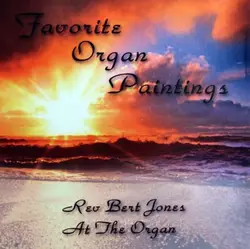
For FURTHER DETAILS: WRITE: A Visit with the Joneses, Inc. P. O. Box 575 ERIE, PA 16512


Featured Offer
For FURTHER DETAILS: WRITE: A Visit with the Joneses, Inc. P. O. Box 575 ERIE, PA 16512
About Through The Hymnbook
About Reverend Bert Jones
Reverend Bert Jones was an incredibly talented man. He was an accomplished organist and pianist, as well as an artist in water color and oil, but his primary calling was as an ordained minister and evangelist. He began playing the piano at age six, and by age 13, was playing a three-manual pipe organ. He had only two years of formal music lessons, and usually played without music. Bert ministered in thousands of churches over a 50 year period, and was well known for his radio ministry, "A Visit with the Joneses." Eight long-play albums were released by Singspiration, and Bert wrote many of his own compositions.
Bert went to be with the Lord in April 1995, and he left a legacy of beautiful music.
Contact Through The Hymnbook with Reverend Bert Jones
visitjoneses@aol.com
Through the Hymnbook
P. O. Box 575
Erie, PA 16512-0575