

Titus, An Introduction, part 2 of 3


An introduction to Titus
Guest (Male): Shalom. Holy Scriptures and Israel is a ministry designed to share with the Jewish people the good news of the Lord Jesus Yeshua the Messiah and to instruct Christians on the Jewish roots of their faith. And now teaching God's word from a Hebrew Messianic perspective. Here is Gideon Levytam.
Gideon Levytam: Jesus Yeshua the Messiah who came from heaven, who was born to the virgin Miriam, who lived a perfect life, who died a substitutionary death, who was buried and rose again on the third day and he's ascended to glory and he's seated at God's right hand. And whosoever would believe on him, he is part of the common faith, the same faith that the Apostle Paul had. Titus having joyed to be part of this faith. So he was called in scripture by the Apostle Paul, my own son. And what a pleasure this Titus, young man by the name of Titus gave to the Apostle Paul as Paul led him to the Lord and he could see how he was ready to serve wherever Paul will send him.
He sent him to Corinth. He went there to serve and now as we look at this map one more time, he's going to be the one that he will remain in this island of Crete there as we going to continue in our study to minister the word of God among the believers that were in that area in this island called the island of Crete. Now I want you to notice that he is not on the Bible. He is not only called my son as it says here or my own son in verse four. If you bear with me, I like you to turn with me to a second Corinthians chapter eight for a moment.
And there there's another very precious verse and statement that the Apostle Paul is saying about Titus. Notice in second Corinthians chapter eight, we read two more things that the Apostle Paul could say about Titus. This verse is found in verse 23. Second Corinthians chapter eight and verse 23, two more expressions. Whether any do inquire of Titus, Paul is saying to the Corinthians, number one he says he is my partner and number two is calling him and he is my fellow helper. Now I can tell you beloved brothers and sisters for the Apostle Paul to have a partner in a ministry was precious.
To have a fellow worker and fellow helper in a ministry was precious because in the latter days of the life of the Apostle Paul, he says all seek their own, not the things of Jesus the Messiah. All many have all forsook him. And he really remained alone when he died, this man by the name of Shaul Paul. And so to have a man like Titus and a man like Timothy that will be really willing to serve with him in the gospel was Apostle Paul was so precious. It is encouraging to his heart to have such a man as Titus.
So three things we find out about Titus. He was my own son, Paul said of him. Secondly, he was my partner. He was part in the ministry. And thirdly, he was my fellow helper. In Hebrew we call it You know we read today from the book of Joshua Yehoshua. Joshua was a servant, a helper, Moses, the servant of the Lord. What a blessing Joshua must have been to a Moshe, the leader and the law giver of our own people, the people of Israel. So just as much as Joshua was a helper to Moshe, Moses, a Titus according to second Corinthians eight and verse 23, he was my partner, Paul is saying, but he was my fellow helper.
Imagine all the opposition that Paul have experienced in his life. How must how must he have been so joyful and rejoicing when a person like Titus was willing to be his partner in a ministry and his fellow worker concerning the people of God. And I can tell you beloved brothers and sisters, if you and I will develop the heart that Titus had and Timothy had, we can also be part in serving the Lord among his own people in a ministry of encouragement, a ministry of teaching, the ministry of instruction, a ministry of the gospel. The people of God need to participate and to become, you might say in some small measure like Titus who was a partner and a fellow worker with the Apostle Paul.
Now just this two points here before I'm going to go further down. We want to know the time in which the Shaul Paul wrote that letter to Titus. Now it had been suggested that he wrote this sometimes around 65 AD or so. Around 65 AD. Now let me just remind you because we don't read of Titus in the book of Acts and we don't know exactly when he became a believer in Yeshua Jesus the Messiah. And we know very well that somehow in the island of Crete the Apostle Paul had some time of ministry with Titus in the island of Crete.
And since we don't read of the ministry of the Apostle in the island of Crete, we assume and some assume that the ministry of the Apostle Paul in Crete was done after he came out of prison from the city of Rome. To remind you in Acts chapter 23 the Apostle Paul Shaul was captured in Jerusalem in the temple. Then he was taken by the Romans, the Roman leaders there with soldiers. He was moved from the city of Jerusalem all the way to Caesarea on the seashore. And he was there for two years in the city of Caesarea.
And after two years he began his voyage as a prisoner all the way to the city of Rome. But the time he finished his voyage by ship, also the shipwreck that happened and all this happened to him on the way to Rome, he finally arrived to the city of Rome. And according to the book of Acts, the Apostle Paul was in prison there in house arrest in the city of Rome for two additional years. We read in Acts chapter 28 and verse 30 that Paul dwelt two whole years in his own hired house and he received all that came in unto him preaching the kingdom of God.
This is Acts chapter 28 verse 30 in part of verse 31. Paul was in a house arrest there in the city of Rome. The Jewish community came to him to ask him about the Messiah. Many people came to him. And apparently from what we understand from history, Paul was released after two years because no one eventually came to accuse him. So after he finished his second two years in prison after the long trip from Caesarea to Rome, then the Apostle Paul was released and had been suggested that the ministry that we again see in the island of Crete was done after he was released from the second imprisonment from the city of Rome and he took Titus and apparently they have this ministry there in the island of Crete where Titus was left to continue on to serve among the believers there, the island that is called Crete.
So if the Apostle Paul was released from Rome at about 62 63 AD and then later on he was captured again and if you remember he was actually captured and he was beheaded in the city of Rome eventually. So somewhere between 63 to 65 66 AD the Apostle Paul ahead his ministry in Crete with Titus and then later on he wrote this letter perhaps from Corinth or Macedonia to Titus to give him a word of encouragement to continue on in a ministry there in the island of Crete. Now there are a few things that I want to suggest that in this letter the Apostle Paul is encouraging Titus.
In chapter one verses one to four the Apostle Paul encouraged Titus to preach the word of God. Then later on in the very same chapter in verse five to nine the Apostle Paul continue and he instruct Titus as to the necessity of appointing spiritual leaders, elders that will lead in the local assemblies in the island on the island of Crete. Then still in chapter one verses 10 to 16 he give Titus a warning as to false teachers who come in to teach false teaching. And he give him a warning because after all Titus needed encouragement.
There was already in the early days of the church age already then and there false teachings have crept in. And there was a danger that the newborn believers in these area called Crete will be influenced by false teachings and then the Apostle Paul help him to see that and he warning him against it. In chapter two in the first 10 verses he's encouraging Titus to instruct the believers in Crete to live a holy life, a godly life. After all they were saved by grace. They came from a pagan world. Now they became part of the body of Christ, the body of Messiah.
Well what kind of a life they are going to live? Are they going to live like the life they used to live before they became believers? Or are they going to live now in newness of life to have a life that is pleasing to the Lord? Then in chapter two and verse 11 to 15 he continue to exhort Titus to have what you call sound doctrine, sound teaching. Beloved brothers and sisters, if we don't have sound teaching, we will never be able to understand clearly the word of God. Sound teaching, teaching that are coming from the word based upon the present day era in which we live in.
Jew and Gentile united together in the body of Messiah, the Apostle Paul is instructing Titus and exalting him to have sound doctrine in the midst of the local assembly. And then finally is speaking in the third chapter of the book of Titus. He also expecting Titus and the brothers and sisters in the local assemblies in the island of Crete that they will have, you might say, a godly behavior towards those that are without. You see what is the assembly, the ecclesia. These are people that were saved from among Israel and from among the Gentile world.
And these people are now a company called called out ones. Our hopes are in heaven. The Messiah is going to come very very soon. And if we are going to be a testimony to the world around us, our behavior and conduct must be different than the way that the world that we live in. And that's why in chapter three he said to them be subject to every principalities and powers, obey magistrate and to be ready to every good work, be a good testimony to the world that is around us in order that God will use you to be a blessing to the people that are still without the Messiah.
So the timing was written about 65 66 AD. The purpose of the writing is simply to give a testimony here and to know how to conduct yourself in the local assembly. But I want to add one more thing. If you notice there in the verses that we read, in fact I want to read verse five even though it's not part of our reading today. You notice what he said in verse five. For this cause I left you in Crete. Here's the name Crete mentioned here in the book of Titus. What is the reason? Look at this.
That thou should set in order the things that are lacking or wanting and ordain elders in every city. In other words, set things in order. Apparently there were things that were lacking. There were things that were wanting. There were things that were simply not right in these local assemblies there on the island that is called the island of Crete. So Paul sent him there. Paul left him there and he asked him to set things in order. And you know brothers and sisters, this is not only needful for 2,000 years ago to set things in order.
Oh yes, you set things in order in Crete but keep on having disorder in another place. No, this is applied to every local assembly, every local church or local congregation, everywhere in the world, whether it is in the island of Crete, in the city of Jerusalem, in Europe, in North America, in where we live in today. In every situation there must be set in order if the people of God are going to enjoy a fellowship with the Lord and be a good testimony to the Lord himself. Now this is just by way of introduction and to tell us a little bit about the timing of the writing, the purpose of the writing.
And now I just want to highlight one more thing before we going to go to these verses. What is the theme that we find again and again and again mentioned in the book of Titus? Just look with me down in your Bibles for a moment. Notice in Titus chapter one and verse 16. Look what it says. They profess that they know God but in works they deny him being abominable and disobedience. And listen to the less expression and unto every good work reprobate. Oh yeah, they profess that they belong to God, that they know God, but in practice they don't perform the good works that should come out of the life of the believer.
You see we are saved by grace but we are saved by grace in order to live a life that produce good works, honoring God, living for God, being a good testimony to God here in this world. Look at chapter two and verse seven. It says there in all things showing thyself a pattern of good works, in doctrine showing uncorruptness, a gravity and sincerity. Notice again he says Paul is saying to Titus, Titus listen, and you you yourself Titus, show yourself as a pattern. In Hebrew we say a pattern of good works. How many a times when somebody look at us and speak to us and see how we conduct ourselves, they say and you say that you belong to this Yeshua, this Jesus?
Look at the way you conducting yourself. Look at the way you behave. Titus Shaul saying to him, Paul saying to him, you be sure that you show yourself as a pattern of good works, of good works. It's beautiful to see how encouraging this younger brother to be an example to the local assembly in the island of Crete. Look at the at verse 14 of the very same second chapter. He says he's speaking about the Messiah. And he says who gave himself for us. You see Yeshua gave himself for us. That he might redeem us from all iniquity and purify unto himself a peculiar people zealous of good works.
The reason that your Lord Jesus died and gave himself for us who were sinners by nature, who were lost in trespasses and sins in order that he will have a redeemed people, saved and forgiven. But not only that, he could take us to heaven, brothers and sisters. At the moment that we have accepted him, we are suitable for heaven positionally right there and then. But somehow he didn't. Some of us are left for 10 years, 20 years, 50 years, 100 years. But how is our life here? When we going to leave this scene, we going to go to heaven.
We going to be with the Lord. He will never ask from us anymore to do that which he is expecting from us to do here and now. So Paul is saying to Titus, remember Yeshua Ha Mashiach, Jesus the Messiah. He gave himself. He gave for himself for us that he might redeem us from all iniquity. We were dead in trespasses and sins but he wanted to purify to himself a peculiar people. You know when he chose when God chose our people Israel, he wanted his own people to be a nation that will be a peculiar nation, a nation that will be a testimony to the world that there is a living God of Abraham, Isaac and Jacob while all the nations of the world worship idols.
But when the Messiah came, our people Israel did not accept him as a nation. And now he's used these early Hebrew Christians to go and give a testimony to the world and he used them to preach the gospel including the Apostle Paul that people will be redeemed out of every people, tongues and nation. And in this present day age in which we live in, we are called to be a peculiar people. Unique, a people that are zealous of every good works. So we will be a good testimony here in this world. Notice in chapter three of the book of Titus.
You see the main theme is the necessity to live a godly life and to produce good works for the Lord. And notice now chapter three and verse one. Put them in mind to be subject to principalities and powers, to obey magistrate, to be ready to every good work. Once again the Apostle Paul is emphasizing the importance of having good works in the life of the believers. A little bit further down, just look at this. In the next verse eight of Titus chapter three it says this is a faithful saying and these things I will that thou affirm constantly that they which have believed in God might be careful to maintain good works.
These things are good and profitable unto men. The word good works in Hebrew good deeds, good action, not false salvation but because of salvation. It is a result of salvation is that the people of God who who have realized that that the Messiah Yeshua gave himself for us. We are exhorted to now seek to live a life that is pleasing to the Lord. Notice the final time that he's mentioned the word good works is found in verse 14 of Titus chapter three. Let ours also learn to maintain good works for necessary use that they be not unfruitful.
You know fruit for God in the midst of a world that is against the things of God. The necessity to have good works in the life of the people of God is that which the Apostle Paul Shaul Paul is encouraging the believers in Yeshua the Messiah to do. So you notice that many times chapter one verse 16, chapter two verse seven, chapter two verse 14, chapter three verse one, chapter three verse eight, chapter three verse 14. Again and again the theme of these letter by Shaul Paul to Titus is doing good works which is a blessing to the people of God and it a testimony to the unbelieving world in which we live in today.
Now I just want you to look at the outline for a moment as we have here in those three chapters. Titus is a very short letter that Shaul Paul wrote and in the first chapter he's desiring him to appoint godly leaders in a local assembly, in a local congregation. In a second chapter is the teaching God's people specifically in relationship to maintaining good works. And number three in chapter three to remind them of God's grace and the necessity to be a good testimony in a world in which we live in. So this is basically the general information about the, you might say, introduction to the book of Titus.
So let's just go over quickly with the Lord's help over the first four verses of Titus chapter one. And so notice the first thing we said that in chapter one and verse one Paul is now writing this letter to Titus. Titus is now in Crete in this island and Paul is writing to him and notice how wonderful the manner whereby Shaul Paul present himself. The first thing he's calling himself the servant of God. In Hebrew we call it One man that was called the the servant of the Lord and the servant of Jehovah, is Moses.
In fact some suggest that Moses and Paul Shaul were two towering personalities. One of them was before the Messiah came. Another one was the after the Messiah came. Both of them called themselves the servant of God. In English we call servant but really in Hebrew the word slave is really a correct word. Paul Shaul devoted his whole life to the person of the Lord but to the God and father of our Lord Yeshua the Messiah. He call himself the servant of God. This is actually, if I'm correct, the only time in the New Testament that the Apostle Paul call himself the servant of God.
In other passages he call himself a servant of Yeshua Jesus the Messiah.
Guest (Male): You have been listening to the Holy Scriptures and Israel with Gideon Levytam. Gideon teaches God's word from a Hebrew Messianic perspective. For more information about this ministry, write to Holy Scriptures and Israel, box 1411 Niagara on the Lake, Ontario L0S 1J0 or visit our website at holyscripturesandisrael.com. You are also invited to Gideon's weekly Bible teaching on Fridays at 11:00 a.m. and 7:00 p.m. and Saturdays at 1:00 p.m. at Willowdale Christian Assembly Hall, 28 Martin Ross Avenue in Toronto. Holy Scriptures and Israel is made possible by your prayers and financial support. If you would like to support the program, visit holyscripturesandisrael.com.
God bless you. Shalom Shalom.
Featured Offer
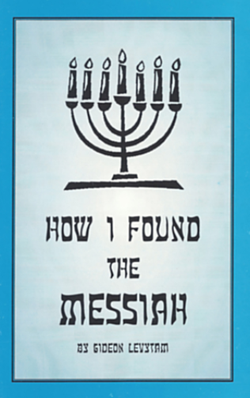
Follow Gideon Levytam's journey and discover how he was led by God, through a series of exciting circumstances, to find the One his people are still waiting for.
Past Episodes

Featured Offer
Follow Gideon Levytam's journey and discover how he was led by God, through a series of exciting circumstances, to find the One his people are still waiting for.
About Holy Scriptures and Israel
As time passed by, the Lord Yeshua took dear brother John Van Stormbroek to himself. The ministry of Holy Scriptures and Israel continued with additional development. In the early 1990’s, a weekly morning Bible class began which brother Gideon Levytam led regularly in the City of Toronto. This weekly open Bible class was held in the Willowdale assembly meeting hall. Eventually, a second mid-week evening Bible class was added. In April 2002, the need for an additional outreach Bible teaching meeting arose. We begun a Saturday (Shabbat) ministry meeting in which a systematic teaching of God’s word is presented to all who attend. Together we learn God’s Word, pray for each need and the salvation of Israel, and sing songs of worship unto our God, praising Him and our Lord Yeshua the Messiah.
In Mid 2004 we started to air on Joy 1250 Radio station a 15 minute Bible teaching program called "The Holy Scriptures and Israel" with Gideon Levytam. The broadcast teaches God’s word from a Hebrew Messianic perspective and has proved to be a blessing to many. It's now aired seven days a week. Our prayer is that many more of our Israeli people will have a clear understanding of who Yeshua is, why we all need him, and come to know him as their Lord and Messiah.
About Gideon Levytam
Contact Holy Scriptures and Israel with Gideon Levytam
426 Simcoe Street
Niagara-on-The-Lake
Ontario L0S 1J0
Canada
(905) 325-1234