
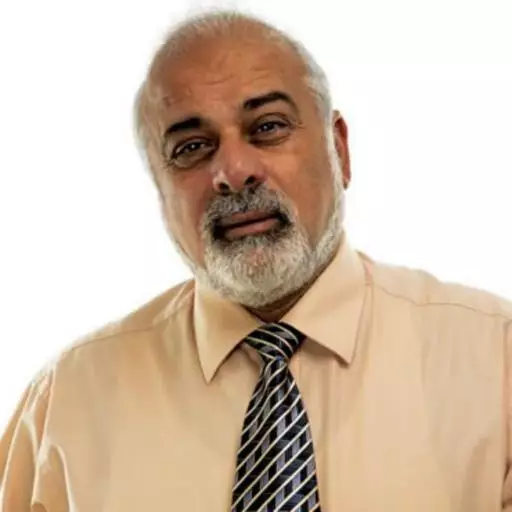
Nehemiah 9:38 to 10:39, Part 2 of 3


Israel’s Covenant to Walk with God, Part 2
Announcer: Shalom. Holy Scriptures and Israel is a ministry designed to share with the Jewish people the good news of the Lord Jesus, Yeshua the Messiah, and to instruct Christians on the Jewish roots of their faith. And now, teaching God's word from a Hebrew Messianic perspective, here is Gideon Levytam.
Gideon Levytam: The study of Nehemiah, chapter nine and ten. They were idol worshipers. They have ended up leading many of our Jewish people who have intermarried with them away from the God of Israel. They end up ultimately living a life that is away from the Lord like, for example, look what happened to the king of Israel, Shlomo, Solomon. He married 700 wives, he had 300 concubines, and the vast majority of them were women from the nations around him. And you remember what Shlomo had done. He built altars to their gods. He ended up offering sacrifices to his wives' gods.
And he lost the kingdom because of this condition in his life. He started well, and he ended up in a very poor condition, though he was a man that was chosen by God. And you see what we learn from that? That there is a reason that God warned the people of Israel to be a separated nation. I want you to read with me for a moment Deuteronomy chapter seven and verses one, two, and three there. It says there, and I'm reading, "When the Lord thy God shall bring thee into the land whither thou goest to possess it, and has cast out many nations before thee, the Hittites, and the Girgashites, and the Amorites, and the Canaanites, and the Perizzites, and the Hivites, and the Jebusites, seven nations greater and mightier than thou; and when the Lord thy God shall deliver them before thee; thou shalt smite them, and utterly destroy them; thou shalt make no covenant with them, nor show them mercy."
And notice what it says in verse three, "Neither shalt thou make marriage with them; thy daughters thou shalt not give unto his son, nor his daughter shalt thou take unto thy son." And here is the reason, verse four, "For they will turn away thy son from following Me, that they may serve other gods, Elohim Acherim, so will the anger of the Lord kindle against you and destroy you suddenly." See, God gave this instruction to our forefathers for a reason. And that's why, brothers and sisters, you often find that in our Jewish community, many times, they would not marry with a non-Jew. And biblically speaking, it's correct.
But there is another issue, of course: they did not accept the Messiah. They have another problem. It's not sufficient enough to say, "Well, I was taught this way and therefore I do so," but at the same time, you reject the word of the Lord for every other area in life. They needed to accept the Messiah. They need to turn their heart to the God of Israel, and they needed to commit themselves to the word of God. And so, you can see these people made a decision and they say, "Wait a minute, wait a minute, we are going to separate ourselves."
This is verse 30: "Not give our daughters to the people of the land, not take our sons to their daughters." And again, I would like to say, and I mentioned it already in our previous ministry meeting, second Corinthians chapter six, we read this passage already last time, where the apostle Paul made a reference to the importance of separating from what a believer has to do with an unbeliever. You remember what he said in second Corinthians chapter six and verse 14? "Be ye not unequally yoked with unbelievers: why? Because what fellowship have a righteousness with unrighteousness? And then he says, and what communion have the light with darkness? And what concord has the Messiah with Belial? And what part has he that believeth with an unbeliever? And what agreement has the temple of God with idols? For ye are the temple of the living God."
The believer in Yeshua the Messiah is a child of God, and he or she ought to live a separated life, not a sectarian life, not a legal kind of a life, but a separated unto the Lord. And how many headaches we all have when we didn't follow those instructions. We know that in our own personal life, we know that very well. And it is only the mercy of the Lord who bear with us and help us to continue on, and He restores us and He rebuilds us back because we have gone astray.
So the first one is separation from the people of the land, verse 30. Verse 31a is the second commitment that they have made. The second one was that they were going to keep the Shabbat day and the holidays. Notice that. It said, "And if the people of the land bring ware or any victuals on the Shabbat day to sell, we would not buy it of them on the Shabbat or on the holy day." Now, this is interesting. Now again, remember, brothers and sisters, the Shabbat day was given to our nation Israel. It's a sign of the covenant that God made with the nation of Israel. And every time when Israel failed to keep Shabbat day, Israel was disciplined by the Lord.
And it is so interesting is that you see they were not to buy and sell on the Shabbat day as well. And you see the commitment. It says if any of the people of the land will bring any ware, anything, Nechachot in Hebrew, or victual, or Shever, anything, anything they buy and selling, he says we would not buy it of them on a Shabbat day or a holy day. Why? Because in a sense, you learn from this that the Lord did not want Israel to do business on a Shabbat day, but to devote it to the Lord, to devote it to the God of Israel. And therefore, they were called in this verse to separate in such a way that Shabbat will be a special, unique day that Israel as a nation is to keep unto the Lord.
Let me read to you a verse in Jeremiah chapter 17, please, and verse 27. There we read, listen to that, "But if ye will not hearken unto Me and hallow the Shabbat day, and not to bear a burden, even entering in at the gates of Jerusalem on a Shabbat day; then will I kindle a fire in the gates thereof, and it shall devour the palaces of Jerusalem, and it shall not be quenched." Israel, you had to keep the Shabbat, God has said to our forefathers, because by doing so, you set apart this day to the Lord. It is part and parcel with the law that God had given to the nation of Israel as it's clearly defined in Exodus chapter 20. God have commanded Israel to celebrate or to keep the Shabbat day.
You notice in Leviticus chapter 23, before you even read all the seven feasts of the Lord, the first thing that is mentioned is thou shalt keep the Shabbat day holy unto the Lord. Now of course, again, brothers and sisters, we can go around and we can discuss this issue, and there are many conviction that people have about the Shabbat with respect to our present day dispensation, and that's fine. It's an individual conscience as far as I understand from scripture. But there is a great lesson for us. There is a principle that we learn here in this passage because it shows us the importance that Shabbat is spoke of.
The word "lashavat" speaks of "to sit down." The word "lishbot" mean to "strike down," not to do anything, and it speaks of rest. And you know how wonderful it is for us who are believers in Yeshua the Messiah, we have a rest that is embedded in the finished work of our Lord Yeshua HaMashiach. We have a rest because of what He have done for us in order to provide for us salvation. And as Hebrews four says, "there remaineth yet a rest for the people of God." There is still a future rest that remaining for all believers in Yeshua the Messiah in a future day. You can read of it in Hebrews chapter four and verses one to verse nine.
But they made a commitment that now, not only they're going to separate from the people of the land, number one, verse 30; verse 31a, they will keep the Shabbat day holy unto the Lord and the holy days, the feasts of Yehovah, the feasts of the Lord. Now, the third thing that they made commitment to do, these Jewish remnant that returned to Israel, is found in verse 31b of Nehemiah chapter ten. They committed themselves to observe not only the Shabbat day but also the seventh-year Shabbat rest for the land itself.
Now notice verse 31b. It said, "And that we would leave the seventh year, and cancel every or all the debts." Now what does that mean, that we will leave the seventh year? You see, brothers and sisters, God gave to Israel not only to keep a daily Shabbat in relationship to the person, to the individual Israeli, but also God gave to Israel the Shabbat rest of the land. You see, everything, the law and the commandments of God, is linked with the land that God had given to our forefathers. Well, what they are to do? They are to work the ground for six years. You have a property, for example. Every tribe have its own property and the lands that they possess. Families will possess a piece of land.
They will work the ground one year, they will sow and they will reap. The second year, they will sow and reap. The third year, they will sow and reap. The fourth year, they will sow and reap. The fifth year, they will sow and reap. The sixth year, they will sow and reap. But God said the seventh year, you don't touch the ground. You leave the ground as it is and let the ground, not only you, Hebrew, Israeli, Jewish individual, but your property, your land, you will not work on that seventh year. And I want to just show you this. This is important in connection with the land.
Turn to Exodus chapter 23 and verse 10 and 11. Again, the instruction is from the Lord through Moshe. It says, "And six years you shall sow thy land, and shall gather in the fruits thereof: but, listen to verse 11, the seventh year thou shalt let it rest and lie still; that, notice that, that the poor of the people may eat: and what they leave the beast of the field shall eat. In like manner thou shalt deal with thy vineyard and with thy oliveyards." In other words, Israel, God says, you don't work the ground on the seventh year.
You let it rest and the only people who will be able to glean from whatever is found there is your poor and the beast of the field and the people that have a need, but you don't touch it. Not your vineyard, not your oliveyard, nothing. You will let the land rest. Naturally speaking, you and I would think about, "Well, how they're going to eat if they are not going to glean on a seventh year nothing, well, how they're going to eat?" Well, God gave them an answer. Go to Leviticus 25, verse 20, 21, and 22, and notice how God helps His people.
And God says to Israel, "And if ye shall say, 'What shall we eat the seventh year?' God says, 'Behold, we shall not sow nor gather in our increase.' So here is the answer: 'Then I will command My blessing upon you in the sixth year, and it shall bring forth fruit for three years.'" Notice verse 22: "And ye shall sow the eighth year, and shall eat yet of the old fruit until the ninth year." You see what God is saying? It's so precious. He says, listen, if you are not going to work the ground on a seventh year and you are worried what you're going to eat on the seventh year, don't worry, He says.
I'm going to give you so much food, so much gleaning, so much crop on the sixth year that it's going to be sufficient for the sixth year, for the seventh year, for the eighth year. On the ninth year, you will eat from the eighth year. In other words, you will be eating three years with the amount of crop that you are growing to have when you sow. And you know, it tells us a lot, isn't it? We oftentimes don't trust the Lord to provide for us, isn't it true? We know it very well. There was one brother that said this like this: he says we trust God for our soul, but we don't trust Him for a piece of bread.
We trust God for our eternal soul, where we will spend eternity, but we don't trust Him for a piece of bread. It show the lack of faith that we often have. The man said to Yeshua, "Yeshua, I believe, but help my unbelief." Go back to Nehemiah chapter ten. We have three more thoughts that I want to present before you. Verse 32 and 33, we have the fourth commitment that the people of Israel in the days of Nehemiah have made to the Lord. And the fourth commitment was to provide funds for the work of the Lord, for the work of the temple.
You see what he said, "And we made ordinances for us, to charge ourselves yearly with the third part of a shekel for the service of the house of our God. Verse 33: and for the showbread, and for the continual meal offering, and for the continual burnt offering, and for the Shabbat and of the new moons, and for the set feasts, and for the holy things, and for the sin offerings to make an atonement for Israel, and for all the work of the house of our God." Now you see, beloved brothers and sisters, in those days, there was a temple in Jerusalem.
And a temple where you have sacrifice going. And in order to have sacrifices and to run the ministry and the service in the temple, the Levites, the priests and so on, well, how will they maintain and run it? How will they be able to provide bread on the table of the showbread? How they will be able to offer meal offering and the Shabbat day to be kept and the new moons and the feasts and the holy thing and the sin offering? How will they be able to sustain and to maintain if the Levites have no land, no portion among the people of Israel?
Well, the people of Israel saw the responsibility to take care of the work of the Lord. It is a natural responsibility that God have taught His people Israel. And this is so important, I mean really, even in present day dispensation. Do you know, brothers and sisters, that no minister of the gospel will be able to function and to carry on in preaching the gospel and serving the Lord if he has not the maintenance to be able to continue to do so? Paul said in first Corinthians chapter nine, "those that preach the gospel are to live of the gospel." It is natural, it's common sense.
See, apparently, they had to learn this responsibility themselves and they made a decision: "We are going to provide for," and you notice it use twice the word "the house of our God." It says at the end of verse 33, "and for all the work of the house of our God." To maintain it. Well, even the sacrifices had to be brought to the altar. How do you think the sin offering had to be offered? Well, we had to have an animal to place him on the altar. What about the burnt offering, continual burnt offering? That was ongoing, continual burnt offering, that had to be going on. Well, if they couldn't provide for themselves for this, they will never be able to do so.
And so there was a responsibility of the people of Israel that they took upon themselves. They realized this is nothing new. If you go back to Old Testament, Exodus chapter 30, God have already told them that they are to provide for the maintenance of the priests and the Levites in order for them to continue on the service of the Lord. That's common sense. Number five. Number five is found in verse 34. The fifth thing that they made a commitment to do is they were committed to provide wood for the altar of the burnt offering.
And it said, "And we cast the lots among the priests, the Levites, and the people for the wood offering, to bring it into the house of our God after the house of our fathers at times appointed year by year to burn upon the altar of the Lord our God as it is written in the law." Now, you might say, "Well, here we go, now, in order for them to run the burnt offering," remember there was a huge brazen altar. Well, the fire has to be there running all the time.
You notice it's used as expression here in this verse 34, it says there that it was an ongoing. You notice that? It said, "the wood to bring it to the house of our God after the house of our fathers at a time appointed year by year to burn on the altar of the Lord our God as it is written in the law of Moses." Now the fire was continuing on. It is interesting, I was looking at the Hebrew here, and the Hebrew word here for wood, and in connection with the wood, it was in Hebrew, Esh Tamid. It's an eternal fire.
The fire had to be constantly there. Why? Because the fire had to burn the sacrifice. And the sacrifice had to deal with the sin of the people. The blood had to be shed. The sacrifice had to be laid on the altar. So in order to have the said the wood has to be always running underneath so there would be constantly a burning of the sacrifice. And you know, brothers and sisters, I was thinking about that. This is so beautiful to see that as far as God's concerned, it reminds Him constantly of the sacrifice of His Son, the Messiah, who died as a substitute upon the altar.
When Yeshua the Messiah died for us on the tree, God is see the value of the blood of the Messiah. It's ever before Him. It's like it says, Esh Tamid, it always remind Him of the value of the work of Yeshua the Messiah before Him. So you and I could have forgiveness of sins. In other words, when we stand now before the Lord, should the Lord take us, we know that our sins are forgiven because of the value of the sacrifice. Wood had to be there, so the sacrifice will be there, and the blood will be shed, and Israel will receive forgiveness of sins.
But you see, they had to offer again and again and again and again and again and again animal after animal under animal all the time, continually. But you see, Yeshua have done it once. He never need to die again. "For by one offering He sanctified forever them that are sanctified." He does not need to repeat His work, but the animals on the altar that our forefathers had to offer had to have continual animals every time again and again. And by the way, if you will read in Exodus 27, verse 20 and 21, we have the eternal light.
When Aaron went into the holy place, the Menorah had to be always there. We call it in Hebrew, Ner Tamid. If you would go to a synagogue today and you would look above the ark, you will see that there is a light always representing the light that will be always the eternal light representing the light for us in our understanding represent the Messiah who is the light of the world, who is eternally in the presence of God accepted. His work had been accepted. His life, His death, His resurrection is accepted by God and it is eternally in the presence of God.
So His sacrifice represent His death on the altar and the Menorah represent His perfection. Notice the seven-fold lamps which we read today in Isaiah chapter 11, if you remember, we read of the seven-fold Spirit of God that rested upon Yeshua the Messiah, the Spirit of the Lord, the Spirit of wisdom, the Spirit of understanding, the Spirit of counsel, the Spirit of might, the Spirit of knowledge, and the Spirit of the fear of the Lord, the seven-fold Spirit that rested upon the person of Yeshua the Messiah because of who He is and because of what He had done for us, the eternal light.
His light is ever shining before the Lord. His sacrifice is ever remain before the Lord. It is an eternal fire and an eternal light, Ner Tamid and Esh Tamid. And so, brothers and sisters, bear with me for the final commitment that our Jewish people of old have made before the Lord in Nehemiah chapter ten. And I'm just reading just to highlight the last commitment, verse 35 to 39. This is commitment number six. And notice what we read. They committed to bring to the Lord the firstfruits of all that they have.
And now notice that, and I'm reading, look how many times the firstfruits is mentioned. In verse 35, it says, "And to bring the firstfruits of our ground and the firstfruits of all the fruit of the all trees year by year unto the house of the Lord." Verse 36: "Also the firstborn of our sons and of our cattle, as it is written in the law, and the firstborn of our herds and of our flocks, to bring it to the house of our God." Notice verse 37: "And that we should bring the firstfruits of our dough and of our offerings." And also in verse 37b: "and our tithing."
Verse 38: "And that the priest, and the son of Aaron, shall be with the Levites when the Levites take the tithe, and the Levites shall bring up the tithe of the tithes unto the house of our God to the chambers into the treasure house." In other words, they have committed to themselves to give these tithing for the house of the Lord in order that the ministry and the service of the Lord will continue on. And as they said that, and I'm going to conclude with that, notice verse 39, what we read. I found that extremely interesting. It said in verse 39b, "Where are the vessels of the sanctuary and the priests that minister and the porters and the singers; and we will not forsake the house of our God."
Reading this verse remind me of the encouragement that the apostle who wrote to the Hebrews, what he said to them in Hebrews chapter ten and verse 25. He encouraged the believers, the early Hebrew believers. He is saying to them, "not forsaking the assembling of yourselves together, as the manner of some is; but exhorting one another: and so much the more, as ye see the day is approaching." Those early believers already in the church age began to go through some challenges and they forsook the meeting, the gathering together as an assemblies in the earlier days and the apostle who wrote to the Hebrew believers said, "Nah, nah, brothers and sisters, let me encourage you."
And I would seek to do so for you and for myself. Not forsaking the assembling of ourselves together. It is so important not to neglect the house of the Lord. And of course, we know that the house of the Lord is not merely a building today. It's not the temple because we don't have the temple in Jerusalem, but the house of the Lord is every one of us that is a true child of God, a believer in Yeshua the Messiah. We are part of the house of God and we are to encourage each other to meet together, to study the word, to sing praises to the Lord, to learn from the word of God and to exalt the person of Yeshua our Messiah. Well, may the Lord just help us to do so.
Announcer: You have been listening to Holy Scriptures and Israel with Gideon Levytam. Gideon teaches God's word from a Hebrew Messianic perspective. For more information about this ministry, write to Holy Scriptures and Israel, box 1411, Niagara-on-the-Lake, Ontario, L0S 1J0, or visit our website at holyscripturesandisrael.com. You are also invited to Gideon's weekly Bible teaching on Fridays at 11:00 AM and 7:00 PM and Saturdays at 1:00 PM at Willowdale Christian Assembly Hall, 28 Martin Ross Avenue in Toronto. Holy Scriptures and Israel is made possible by your prayers and financial support. If you would like to support the program, visit holyscripturesandisrael.com. God bless you, shalom shalom.
Featured Offer
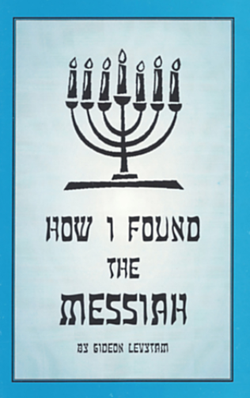
Follow Gideon Levytam's journey and discover how he was led by God, through a series of exciting circumstances, to find the One his people are still waiting for.
Past Episodes

Featured Offer
Follow Gideon Levytam's journey and discover how he was led by God, through a series of exciting circumstances, to find the One his people are still waiting for.
About Holy Scriptures and Israel
As time passed by, the Lord Yeshua took dear brother John Van Stormbroek to himself. The ministry of Holy Scriptures and Israel continued with additional development. In the early 1990’s, a weekly morning Bible class began which brother Gideon Levytam led regularly in the City of Toronto. This weekly open Bible class was held in the Willowdale assembly meeting hall. Eventually, a second mid-week evening Bible class was added. In April 2002, the need for an additional outreach Bible teaching meeting arose. We begun a Saturday (Shabbat) ministry meeting in which a systematic teaching of God’s word is presented to all who attend. Together we learn God’s Word, pray for each need and the salvation of Israel, and sing songs of worship unto our God, praising Him and our Lord Yeshua the Messiah.
In Mid 2004 we started to air on Joy 1250 Radio station a 15 minute Bible teaching program called "The Holy Scriptures and Israel" with Gideon Levytam. The broadcast teaches God’s word from a Hebrew Messianic perspective and has proved to be a blessing to many. It's now aired seven days a week. Our prayer is that many more of our Israeli people will have a clear understanding of who Yeshua is, why we all need him, and come to know him as their Lord and Messiah.
About Gideon Levytam
Contact Holy Scriptures and Israel with Gideon Levytam
426 Simcoe Street
Niagara-on-The-Lake
Ontario L0S 1J0
Canada
(905) 325-1234