

Nehemiah 9:1-37, Part 3 of 3


Israel’s Prayer of Confession, Part 3
Guest (Male): Shalom! Holy Scriptures and Israel is a ministry designed to share with the Jewish people the good news of the Lord Jesus, Yeshua the Messiah, and to instruct Christians on the Jewish roots of their faith. And now, teaching God's word from a Hebrew Messianic perspective, here is Gideon Levytam.
Gideon Levytam: The study of Nehemiah Chapter 9. I just want to recite before you the verses of the song that they were singing in the synagogue when I was a little boy those days that I found in Exodus Chapter 34. I think it is so precious. Yes, it says the Lord, the Lord God is merciful and gracious, longsuffering, and abundance in goodness and in truth, keeping mercy unto thousand, and forgiving iniquities and transgressions and sins.
And you know, they were singing these songs as praises unto the God of our fathers, and it is such a wonderful thing for us to realize that and practice this as we gather together around our Lord Yeshua the Messiah. And so, here are the Levites instructing the people of Israel to bless the Lord, to praise the Lord, to worship the Lord, because He is exalted above all blessing and praise. And I trust that you and I can also praise the Lord today, think about who He is and what He had done for you in your life, how the Lord had been so gracious towards you and I and how you and I ought to praise Him and to bless His holy name at all times and never to forget His faithfulness and grace towards each and every one of us in our lives.
And so, as we move along, I didn't read verses 6 to verse 31. But in verses 6 to verse 31, these remnant of Israel, these Jewish people who are now back in the land, they are now rehearsing God's gracious ways with them. And secondly, they also rehearse and confess their very own failure and sins at the same time. And I want you just to highlight certain things, beloved brothers and sisters, in those verses 6 to 31.
First of all, I want you to notice that in verse 6, they acknowledge God as a creator. "Thou, even thou, art Lord alone. Thou hast made heaven, the heaven of heavens, with all their hosts." They recognized that God is a creator. You know today, people cause us to doubt who made the heaven and earth. There was some sort of evolution and, you know, they teach in school little children that there is no real God who made heaven and earth, you see, there was an evolution. There was an explosion somewhere and everything came to pass. But these Jewish people knew their Bible. In the beginning, God created the heavens and the earth. He's the creator, beloved brothers and sisters, and they acknowledge that He is the creator.
Notice what it says in verse 7. Not only that He is the creator, He is the one who chose the people of Israel to be His people. Notice it says in verse 7, "Thou art the Lord the God, who had did choose Abraham, and brought him forth out of Ur of the Chaldees." You know brothers and sisters, Israel is a chosen nation. Israel is not better, but Israel is a chosen nation. They were not chosen because Israel were better, but they were chosen because God is sovereign and He chooses whomsoever He will.
Do you know brothers and sisters, the Bible teaches us election. Ephesians Chapter 1 teaches us that we were chosen in the Messiah before the foundation of the world. Now if you have a problem with that, you go tell it to God. But God is the one who is sovereign. He chooses whom He will. And He chose Israel above all other nations. And this is not because Israel is better, and you and I are chosen in the Messiah not because you and I are better than the unbelievers in the world or anybody else, it is by grace through faith. And this is not of yourself, it is the gift of God.
Thirdly, I want you to notice what it says in verse 8. He gave the land. He is a land giver to the people of Israel. Notice it says in verse 8, "And you foundest his heart faithful before thee," this is Abraham, "and you madest a covenant with him to give him the land of the Canaanite, the Hittite, the Amorite, the Perizzite, the Jebusite, and the Girgashite." God is the one who gave the land. Look at this, what's going on today. Whose land it is? Many people ask the question, well, whose land is the land of Canaan? You see, the land of Canaan belonged to Abraham and Abraham's descendants because God gave it, not because they deserve it.
You see, the Lord Yeshua the Messiah said to the disciples in John 14, "In my Father's house there are many mansions and I go to prepare this place for you." Now do you think we deserve to go to heaven? Do you think you and I deserve to go to the Father's house? No. But it is God who is sovereign, who not only have chosen us but have also promised us to be in the Father's house. He is not only a creator, He also a chooser, but He is also give us the promises. To Israel, He promised the land; to believers in Yeshua the Messiah, He promised to be with Him in the Father's house.
Fourthly, in verses 9 and 10, we find out that they remember that God is a redeemer. Notice it says, "And you did see the affliction of our fathers in Egypt, and you heard their cry by the Red Sea, and you showed signs and wonders unto Pharaoh." And you notice it says at the end here, "and on all his servant, and on all the people of the land, for thou knewest that they dealt proudly against them, so didst thou get thee a name as it is this day." You see, God redeemed Israel out of the land of Egypt. What is redeemer? Redeemer is to buy back. He took them out of the land of Egypt. Remember what Peter said to the early believers? He said to them, "You were not redeemed with corruptible things as silver and gold, you have been redeemed by the precious blood of the Messiah." You and I also have been redeemed like Israel have been redeemed.
Notice along, as we continue, verse 12. He is also a leader. "You leadest them with the cloudy pillar and with the pillar of fire." You see, God led our forefathers Israel through the wilderness for 40 years. How did He lead them? Pillar of cloud by day, pillar of fire by night, and He was right there leading them.
Notice the next verses. Not only that He is a leader, He is the law giver. Verses 13 and 14: "You camest also upon Mount Sinai," verse 13, "and you spakest with them from heaven, and you gavest them right judgment and true laws, good statutes and commandments." And notice even the Shabbat was so important for the nation of Israel because it says in verse 14, "You have made known unto them thy holy Shabbat, and commanded them to accept statutes and laws by the hand of Moses thy servant."
You see brothers and sisters, many time people tell us that God gave all the nations of the world the Shabbat since the book of Genesis after creation. But you don't find this in the scripture. The Shabbat was given to them, to the nation of Israel. It is specifically connected with the nation of Israel. Notice how clearly it is in this verse. "You have made known unto," not unto all the people of the world, but "unto them thy holy Shabbat." It is linked with the nation of Israel. It is specifically linked with the nation of Israel. Shabbat kodshecha hodata lahem, to the nation of Israel specifically. That's why Exodus 31, it is the sign of the covenant that God have made with the nation of Israel and that was the Shabbat that Israel is to keep that day holy unto the Lord.
He continues here in verse 15. He is also a provider. "You gave them bread." Then it immediately says, "You brought forth water for them out of the rock." Notice that, when Israel were traveling for 40 years during the wilderness, where would they eat food from? Where would they get water from? God is a provider. Think about it brothers and sisters, how many things God have provided for you and I today. Everything that you and I have today is a provision of the Lord. James said in James Chapter 1 and verse 17, "Every good and every perfect things come from above from the Father of light with whom there is no variableness nor shadow of turning." Everything we have came to us from the Lord. He is our provider.
He continues now. Notice that there is a little pause here now. As they continue in reminding themselves and rehearsing before the Lord their history, all of a sudden they take a pause. And in verse 16, 17, and 18, now they look at themselves and their forefathers and they repent of their sins. Notice the word "but." "But they, our fathers, they dealt proudly and they hardened their necks, and they hearkened not unto thy commandments. They refused to obey, neither were mindful of thy wonders and thou didst among them, but they hardened their necks and in their rebellion," listen, "they appointed captains to turn back to bondage."
You see what Israel did? When they did not want to follow the Lord during the wilderness journey, they raised some leaders to take them back to Egypt. What a sad thing it must have been. It remind us really as if we today will have somebody who will lead us and we say, you know what, let's not follow after the Lord instruction towards the promised land, let's turn back to Egypt, or let's turn back to the world and its system. You see the Bible teaches us, "Love not the world nor the things that are in the world for all that is in the world the lust of the flesh the lust of the eye and the pride of life it is not of the Father."
But you see what happened, at time we think that the world is better, and they thought that Egypt was better. They remembered the leeks and the onion and all the thing that they have eaten there, but they forgot what God is going to bring them into. They forgot that they were slaves in the land of Mitzraim, the land of Egypt. And so they raised up leaders.
But you notice that it says how God is so merciful. In verse 17b it says, "But thou art a God ready to pardon. You are gracious, you are merciful, you are slow to anger, you are of a great kindness, and you did not forsake them." See the kind of a God that the God of our fathers is. He's a God that is a pardoning God. He's a forgiving God. You know, again, I would like to remind you, it is so sad when people tell us the God of the Old Testament is a God of anger and the God of the New Testament is a God of love and grace. Beloved brothers and sisters, the God of Israel is the very same God we believe in today. And Yeshua the Messiah is God the Son who in love for us came to this world and became a man of sorrows and died for us on the tree in order to save us and to forgive our sins. He is a gracious God.
In verse 18, He says, "Yea, when they had made them the molten calf and they said, 'This is thy god.'" Can you imagine making yourself a golden calf and saying, "This is the God that brought me out of the land of Egypt"? How it must have grieved the heart of God who loved them so much. And yet the Lord have forgave them and though He disciplined them, He forgave them. And so they pause and reflect over their failure and their forefathers' failure.
Now in verse 19 on to verse 25, they continue to present before the Lord and to say what God is. Notice again: verse 19, God is a leader; verse 20, God is a provider; verse 21, God is a sustainer; verse 22 to 25, God gave to the people of Israel all the nations there in the land of Canaan to be the ones that will be the head and not the tail. And so we read there in verse 19, "Yet thou in your manifold mercies forsook them not in the wilderness in the pillar of cloud with the pillar of fire."
Notice verse 20 the provision, again, the reminder of the manna and the water in verse 20. Notice again verse 21 how God sustained them. Notice, "Yet forty years you have sustained them in the wilderness. Forty years." And they remember that they lacked nothing. Their clothes waxed not old, their feet swelled not. Now I don't know about that, I telling you my feet many time are so swelling when I just take a little walk. And for 40 years God sustain. And you know we get the best shoes so we'll have a good support and not walking in a sand. Imagine for 40 years how the Lord sustain them. They didn't lack anything and yet the provision of the Lord, they rehearse their history.
Now notice that in verse 22 to 25, God gave Israel all the nations there. Notice that, "Moreover thou gavest them kingdoms and nations and its divide them into corners and they possessed the land of Sihon, the land of the King of Heshbon, the land of Og the King of Bashan," and so on. You see verse 23, they possessed it at the end and then it tell you in verse 24 the Canaanite and so on. And you can see God have given to Israel the promised land and Israel should have inherited all the land had they been faithful.
But look, beloved brothers and sisters, in the next verses, again they pause and reflect on the behavior of Israel. And you notice again, verse 26 and 27, they confess again the second time their disobedience. Let me read those two verses, 26 and 27. "Nevertheless, they were disobedient and they rebelled against him." And notice how sad: "They cast thy law behind their backs." Now in other word they said, I don't need the word of the Lord, I don't need the law, Torat Adonai. It just like believers today would say, well, I don't need the word of God, while I have the promises of God but I don't need the word of God, I'll set it aside, it is not important what God is saying, I'm going to listen to everybody else but I will not listen to the word of the Lord. How sad it is, beloved brothers and sisters. And so they are pausing here and they are reflecting upon that.
Notice verse 27. They say, "Therefore you deliveredst them into the hand of their enemies, who waxed them. And in the time of their trouble, when they cried unto thee," notice, it's so beautiful to see how even these rebellious people, just like you and I, when we rebel against the Lord and we violate His word, but when we cry for help and for mercy, He is always ready to restore us. He says, "When you heard them from heaven and according to thy manifold mercies, you gave them saviors." And those saviors speaks of the judges. In the time of the judges, the Shoftim. The word for savior is in the Hebrew word moshi'im, those leaders who will save them for a season until they again violate the word of God and again God handed them over to the nations around.
You see brothers and sisters, they rehearsed their history: Abraham, Isaac, and Jacob; Moses in the time of Egypt; Moses in the time of the wilderness; Joshua in conquering the land; the judges, the Shoftim, the time when they became saviors, they were helping and saving, delivering the people of Israel out of the hands of their enemies. As it says here, "You have given them saviors who saved them out of the hand of their enemies," in verse 27b.
And again, brothers and sisters, they're going back to their own rebellion and they said in verse 28, "But after they had rest, they did evil again before thee." Again they went and they rebelled against the Lord. Look at a vicious cycle. Don't you see yourself here in this? We see ourselves, you know, one day we are walking with the Lord, the next day we find ourselves in a valley going away from the Lord. We are like hot and cold. One day we seek to obey Him, the next day we says, who cares, I'll do my own thing. You see all these things were not written to condemn Israel, all these things were written to teach you and I today how we ought not to behave and how it is a picture of ourselves.
Now in verse 29, again they are repeating what God is. He is a discipliner. In verse 30, He is a forebearer. In verse 31, He is merciful and gracious. Those verses, in a sense, conclude all the history of the nation of Israel from Abraham until as they mention here in verse 31. "Nevertheless for thy great mercies' sake thou didst not utterly consume them nor forsake them for thou art a gracious and a merciful God." Now brothers and sisters, listen to that. If our relationship with the Lord depends upon our performance, none of us will ever be able to be right with God. If Israel's relationship with God will be dependent upon Israel's performance, God long time ago would have done away with the nation of Israel. But because our relationship with God is not dependent upon our performance, our relationship with God dependent upon His grace and His mercy. We are linked with Him and we will never separate with Him because He had saved us but He is expecting from us to submit to His authority. And when we don't, as a Father He will discipline us but He will never cast us away. Just the same like He will never utterly destroy and consume the nation of Israel.
Now let me make final remarks here on the last verses. Verse 32 to verse 38. Now Israel bring it to their present day, 445 BC. Those are the Jewish people who came back from Persia, from Bavel, and now they are in the land, and they look around. And even though they are in Jerusalem, notice how they bring it to the present day. Notice verse 32, "Now therefore our God," right now, "the great and mighty and a terrible God who have keepest the covenant and mercy, let not all the trouble seem little before thee that hath come upon us, upon our kings and our princes and our priests and our prophets and our fathers and on all the people since the time of the kings of Assyria even unto this day."
Now they are looking back to about 721 BC when the Assyrian came and took the northern kingdom away. And then 605 BC the Babylonian came and took Judah away. And now they are about 445 BC and they said, look at it, God, please since these times up till this day look at the condition that we find ourselves today. Even though we are in Jerusalem, the vast majority of the people of Israel are scattered and dispersed and they are not in the land together with us.
In the next verses, 33 and on, Israel confess God that He is just, but they are wrong. He says, "However, you are just in all that you have done and brought upon us. And you has done in a right way whatever you had done, but we have done wickedly." It's not God's fault. You know brothers and sisters, never blame the Lord for the problems that you and I might have in our life. People are blaming God, "Why doesn't He care for me, doesn't He love me, doesn't He know what I go through?" and often time unfortunately we can blame Him and accuse Him. But you know whatever He does it's always right. And whenever we have wrong in our life it is our own fault or some time the fault of sin in the community but it's never the Lord's fault.
And so in the next verses, 34 and 35, Israel confesses their disobedience to God. "Neither have our kings and our princes and our priests and our fathers kept thy law. They didn't hearken to your commandment and to your testimonies." Verse 35: "They have not served thee in their kingdom and in thy great goodness that thou gavest unto them and in the large and fat land which thou gavest unto them," and so on.
And now verse 36 and verse 37, they are confessing their condition there. He says, "Behold, we are slaves this day." At the end of verse 36, "We are slave in the very land that you have promised to give us." If you read verse 36 together, the very land that you promised to our fathers, we are now, even here, we are slave, we are servant. In Hebrew the word is not servant but avadim, slaves. And they conclude in verse 37: "Why is it?" he said, "It yieldeth much increase," the land had a lot of fruit. But who takes it? "The kings whom you have set over us and here is the reason: because of our sins they have dominion over our bodies and over our cattle at their pleasure."
You see God have handed over the land in the time of the Gentiles to the Babylonian, later on to the Medo-Persian, later on to the Grecian, and ultimately, to the Romans. And that's why the Jewish people, even in the time of Yeshua the Messiah, though they were in the land, but they were never free to do what they want. They were under the Roman occupation. And by the way, even today, there are seven and a half million of our own Jewish people in the land of Israel and every day there is constant conflict and friction and wars and bombs and terrorisms and shooting and killing almost every day. And the only way for this to end is when the Mashiach will come and when Israel will say, Baruch haba beshem Adonai, when all Israel will repent and acknowledge that Yeshua is the Messiah and they need to turn their hearts to Him. They concluded this repentance with these words: "We are in great distress." Be-tzarah gedolah anachnu. And they really confessed their sins before the Lord. Brothers and sisters, may we learn from that and may the Lord help us to follow Him and to submit to the authority of our Lord Yeshua the Messiah.
Guest (Male): You have been listening to Holy Scriptures and Israel with Gideon Levytam. Gideon teaches God's word from a Hebrew Messianic perspective. For more information about this ministry, write to Holy Scriptures and Israel, Box 1411, Niagara-on-the-Lake, Ontario, L0S 1J0, or visit our website at holyscripturesandisrael.com. You are also invited to Gideon's weekly Bible teaching on Fridays at 11:00 AM and 7:00 PM and Saturdays at 1:00 PM at Willowdale Christian Assembly Hall, 28 Martin Ross Avenue in Toronto. Holy Scriptures and Israel is made possible by your prayers and financial support. If you would like to support the program, visit holyscripturesandisrael.com. God bless you, Shalom Shalom.
Featured Offer
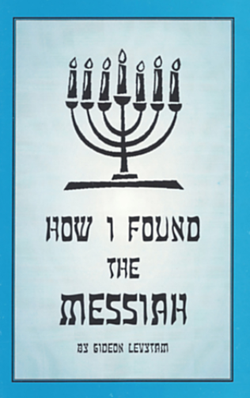
Follow Gideon Levytam's journey and discover how he was led by God, through a series of exciting circumstances, to find the One his people are still waiting for.
Past Episodes

Featured Offer
Follow Gideon Levytam's journey and discover how he was led by God, through a series of exciting circumstances, to find the One his people are still waiting for.
About Holy Scriptures and Israel
As time passed by, the Lord Yeshua took dear brother John Van Stormbroek to himself. The ministry of Holy Scriptures and Israel continued with additional development. In the early 1990’s, a weekly morning Bible class began which brother Gideon Levytam led regularly in the City of Toronto. This weekly open Bible class was held in the Willowdale assembly meeting hall. Eventually, a second mid-week evening Bible class was added. In April 2002, the need for an additional outreach Bible teaching meeting arose. We begun a Saturday (Shabbat) ministry meeting in which a systematic teaching of God’s word is presented to all who attend. Together we learn God’s Word, pray for each need and the salvation of Israel, and sing songs of worship unto our God, praising Him and our Lord Yeshua the Messiah.
In Mid 2004 we started to air on Joy 1250 Radio station a 15 minute Bible teaching program called "The Holy Scriptures and Israel" with Gideon Levytam. The broadcast teaches God’s word from a Hebrew Messianic perspective and has proved to be a blessing to many. It's now aired seven days a week. Our prayer is that many more of our Israeli people will have a clear understanding of who Yeshua is, why we all need him, and come to know him as their Lord and Messiah.
About Gideon Levytam
Contact Holy Scriptures and Israel with Gideon Levytam
426 Simcoe Street
Niagara-on-The-Lake
Ontario L0S 1J0
Canada
(905) 325-1234