

Nehemiah 9:1-37, Part 2 of 3


Israel’s Prayer of Confession, Part 2
Guest (Male): Shalom. Holy Scriptures and Israel is a ministry designed to share with the Jewish people the good news of the Lord Jesus Yeshua the Messiah and to instruct Christians on the Jewish roots of their faith. And now, teaching God's word from a Hebrew Messianic perspective, here is Gideon Levytam.
Gideon Levytam: This study of Nehemiah Chapter 9. But I want you to notice that these Jewish men, women, children, they were really searching their hearts. And they rehearsed before themselves and before the Lord the whole history of our nation of Israel, the reason why sometimes God had to discipline the people of Israel, the reason why sometimes they were not in a right spiritual condition. So let’s look over a little bit those passages together and I want you to notice how it begins. It begins in verses 1, 2, and 3 where Israel gathered themselves together for a special time of confession and repentance and worship.
It was a special time. Notice it says in verse 1 the time is just after they finished to celebrate the Feast of Tabernacles, the Feast of Sukkot. It says now in the 24th day of this month, the children of Israel were assembled together, notice number one with fasting, number two with sackcloth, number three with earth upon them. The date was the 24th of the month. This is the month of Tishrei. This is the seventh month. This is where the celebration of Rosh Hashanah, or the Feast of Trumpets, on the first day of the month of Tishrei. On the tenth day is the Day of Atonement, Yom Kippur. And on the 15th day is the Feast of Sukkot, Tabernacles, for seven days plus one.
So the Feast of Sukkot, if it's starting on the 15th day of the month, it will end on the 22nd after eight days altogether. So when they finished all the celebration and they went back, you might say, to their own homes, they realized, wait a minute, even though I've celebrated the Feast of Sukkot, things were not bad, I'm back in the land, but they were thinking about all the nation of Israel. And immediately, notice two days after it didn't take any more, two days after the hype of the celebration of the Feast of Tabernacles, they went down back to earth.
And now notice that it says they assembled themselves together and they fasted. Now remember in the previous chapter, Ezra and Nehemiah and the others said to them, no, it's not a day of mourning, it's a day of celebration. He says for the joy of the Lord is your strength. Celebrate, give gifts, and celebrate with one another. But now, beloved brothers and sisters, things change. They finished the celebration and they went back down to earth and they realized, yes, we are back in the land, we are back in the city of Jerusalem, the temple is built, we can continue on with the sacrificial system, but where is the rest of our brethren, of our people?
The rest of the Jewish people, remember in the time of Esther many of them were left in Persia. Remember and the northern kingdom were scattered by the Assyrians and they were dispersed among the nations of the world. And here they are there now, a minority of Jewish people, at least 50,000 if not more, maybe 100,000, I'm not sure. They were there now, they began to rehearse their history. And look at this, brothers and sisters, they come number one with fasting, deny themselves from necessary food. Number two, they put sackcloth. In Hebrew we call it sakim, you know, bags that you carry perhaps potatoes or something.
They were not wearing nice clothes with suit and tie, but they put upon themselves sackcloth. They were mourning. And thirdly, they put upon themselves earth. The Hebrew word is adama. They took earth from the ground, adama, and they put it upon them. They were in a condition of mourning and weeping because they really wanted to be repentant before the Lord. They wanted to be right with God. And they began really to rehearse before the Lord the history of the nation of Israel. Look at the second thing that they have done. In verse 2 it says and the seed of Israel, in verse 1 it says the children of Israel, but in verse 2 it says the seed of Israel, in Hebrew zera Yisrael.
In other words, they separated themselves from the strangers. You see what happened. God said to the people of Israel to separate themselves from the nations of the world. And why? Not because Israel were a better nation or better people, but Israel were the chosen people and they would believe in the only true and living God. And the moment they will mingle themselves with other people of the nations of the world who did not believe in the true and living God, they will be drawn away from the things of the Lord and they will be taken away and ultimately they will not follow the God of Israel.
But they made a decision here and they separated from the strangers. The word for separated means vayibadelu. They really separated themselves from the nations that were around. And thirdly, God gave Israel this warning that if they are going to follow Him, they are not to marry with other nations. But apparently, you'll see we're going to get to it later on, they already began intermarried with the people of the nations of the world. It is not because they couldn't marry someone who would believe in the God of Israel, but God was concerned that they will end up to become idol worshippers.
You see, God have allowed Rechab to come among the people of Israel. God have allowed Ruth the Moabitish woman to become part of the nation of Israel because they have adopted the God of Israel. But when the Jewish people would get married with people from other nations, they will end up to become worshippers of idols from other nations. And this is exactly what happened in the history of our own nation Israel. And it is exactly what happened with a believer in Yeshua the Messiah who allow himself or herself to adopt other people's view and not drawing others to the true and living God, the Father of our Lord Yeshua the Messiah.
This is exactly what happened. That's why the Apostle Paul said to believers in 2 Corinthians Chapter 6 in verse 14, be ye not unequally yoked together with unbelievers. And he gives them the reason why. He says for what fellowship have righteousness with unrighteousness? And what communion hath light with darkness? And what concord hath the Messiah with Belial? And what part hath he that believeth with him that believeth not? And what agreement hath the temple of God with idols? For ye are the temple of the living God. As God hath said, I will dwell in them, and I will walk in them; and I will be their God, and they shall be my people.
See, the Apostle Paul was quoting what God said to Israel the nation and applied this now to the believers in the present day dispensation of the church age. And we know this, brothers and sisters, we know this very well unless the Lord graciously have pulled us out of our own way and our own will. We would be just like Israel of old and just like many from among the people of God who suffered the consequences of disobedience to the Lord. And this is exactly what they were repenting of in the ninth chapter of the Book of Nehemiah. And so notice now after the seed of Israel separated themselves from all the strangers, notice that they were not now going to talk with anybody else.
They were now searching their own hearts. They were not trying to blame anybody else, but they were now applying that to themselves as the seed of Israel, as the children of Israel. They were coming collectively for a time of prayer, of confession, and repentance before the Lord. And notice what he says in verse 2b, and they stood and they confessed their sins, number one, and their iniquities of their fathers. Notice that, it's interesting. They confessed first of all their own sins. You know, we are very easily capable to blame someone else. But they first of all applied this to themselves and said, Lord, you know, it is me, it is me, it is I who failed you. It is I who sinned against you.
And then they confessed their sins of their fathers. You know how sad it is, in every generation we live to the next generation certain things, some good, but unfortunately there are some things that we live that are not so good. Our sins and disobedience and rebelliousness and waywardness and stiffneckedness that we leave and we handed over to the next generation. And you would look at that from history, whether it is history of the people of Israel, our own nation, or the history of the body of Messiah, you can see how from generation to generation we pass, we hand the baton you might say to the next generation and many times to our own shame and to our own failure that we have handing out some certain things that were not right.
And then they have to take it and they have to make something with it. They have to make a decision in their own life. And you know, brothers and sisters, how many times we have inherited things that our forefathers have left and we have handed over things to our younger generation of our own failure and our own sins that we have committed. So you see what they do here in verses 1 and 2, the time was two days after the end of the Feast of Tabernacles. They were separating themselves and now they began to present themselves and confess before the Lord their sins and their forefathers' sins, the children of Israel.
And I want you to read now verse 3. Look how they have done this in what manner they have done this. It says and they stood up in their place and they read in the book of the law of the Lord their God one fourth part of the day and another fourth part of the day they confessed and they worshipped the Lord their God. In other words, if you would say there are 12 hours in a day, and about three hours they were reading from the Torah, the law of the Lord. And they were learning as they were reading. And then the second three hours they were repenting and confessing and turning to worship the Lord their God.
Amazing to see. And notice the order. First the Word, then the Word speaks to our heart, and then we turn into a confession, repentance, prayer, and worship. First the Word, then prayer. It's so important. That's why we need to read the Word constantly. We need always to be occupied with reading and listening to the Word. Some of us are probably easier for us to listen to the Word being read to us. They didn't have many Bibles. I trust every one of us open the book, the Bible that we have in our hand. How many copies you think they have had of the Scripture? They didn't have many copies.
So most of the time they must have been hearing public reading. But they took it to heart. And then they turned into a time of confession and worship. Three hours they were hearing, three hours they were repenting. And they were doing it perhaps more than one day, and again and again, but they were listening to the Word of God. And I would like to encourage you and I, beloved brothers and sisters, if we want the Lord will speak to us we have to hear and to read the Word of God. You remember what the apostle said even for salvation, Romans 10:17 faith cometh by hearing and hearing by the Word of God.
We need to hear the Word, we need to read the Word, and the Lord by the Spirit of God can convict us and show the wrong things or the things that we need to be corrected in our own life. So in order to do so, we will turn to Him in confession and in worship. Notice both things are mentioned. They confess and they worship. Not only confession and not only worship. The word for confession, think about the first John Chapter 1 and verse 9, if we confess our sin, He is faithful and just to forgive us and to cleanse us from all unrighteousness. This is very important.
Then we have the worship. Hebrews Chapter 13 says that let us the fruit of our lips giving praise and worship unto the name of our Lord Yeshua the Messiah. We are also exhorted to read the Word, to hear the Word, to appropriate it to our heart, to repent and confess before the Lord and also to worship Him and to praise Him for who He is and for what He have done for us. And so in the first three verses Israel gathered themselves together in this special time for the reading of the Word and for repentance and confession and ultimately the worship of the God of our fathers.
And now in the next verses 4 and 5 we find out that the Levi’im, the Levites, took leadership. You know the Levi’im, these are the servants, the tribe of Levi. They took the responsibility in leadership. And they set the tone. They set the example. And you know we need it today that the leadership among the people of God will set the tone. Sometimes unfortunately we are not always a good example, but it is so important for the Levi’im, for the Levites, for the leadership to set up the tone and be an example. And so in verse 4 they stood upon the stairs and they cried. It says then stood up upon the stairs of the Levites.
Now it is interesting I was wondering what are those stairs for? You remember in the previous chapter we already read earlier in verse 4 that they made a tower, notice that if you go back to Chapter 8 and verse 4 and Ezra the scribe stood upon a pulpit of wood. In Hebrew it’s Migdal Eitz. It is a tower that was made out of wood. And in order to get up on that tower you needed to have some steps to climb up. So it's very interesting, and maybe, I'm not sure, that there was on the side of the tower some steps and the Levites stood upon those steps and they began to cry publicly to set up an example before the people of Israel and to lead Israel in a time of repentance and confession.
Notice it gives you the name of these Levites. You have Jeshua, you have Bani in verse 4, Kadmiel, Shebaniah, you have Bunni, you have Sherebiah, you have Bani again, and you have Chenani. And they cried. Look at this, they cried with a loud voice unto the Lord their God. You see, brothers and sisters, the Hebrew word cried is liz'ok. Liz'ok means to cry aloud. They were raising their voices so everybody will hear them from among the people of Israel who perhaps there if it was at the same area as the Water Gate. They were crying with a loud voice to the Lord their God.
This was a sincere brokenness of heart, a heart who affected because they were so moved by the condition of the nation of Israel. They cried with a loud voice to the Lord their God. And look what it says in the next verse, not only that they stood upon the stairs and cried the Levites, but in verse 5 they invited all the nation of Israel to stand and to bless the Lord. Notice I'm reading verse 5. And the Levites, the Levi’im, Jeshua, and Kadmiel, Bani, Hashabneiah, and Sherebiah, and Hodijah, and Shebaniah, and Pethahiah, said, stand up, amdu, stand up and bless the Lord your God for ever and ever; and blessed be thy glorious name, which is exalted above all blessing and praise.
See what they have done beloved, these Levi’im from the tribe of Levi, these servants of the Lord, they have led the people of Israel who came back from Persia now and from Bavel to begin to lift up their voices and praise and bless the Lord the God. And notice what a beautiful thing. Bless the Lord your God forever and ever. Blessed be thy glorious name which is exalted above all blessing and praise. You see they wanted to restore the people of Israel and of course to be restored themselves into a recognition that there is no other God beside the God of Abraham, Isaac, and Jacob. There is no other God who is as great and elevated and supreme as the God of Israel.
There is none like Him. He is the one that they wanted that Israel will bless. This is the God that Israel the Levites wanted Israel to worship and adore. And you know I remembered vividly in my own time when I was a little boy and I think I mentioned it many times when I was in the synagogue in Jerusalem with my grandfather and I remember so well I can just kind of visualize it in my own mind today when these Jewish elderly Jewish men, bearded men, whether it is the rabbi, whether it is my grandfather, or whether it is all the elderly men, the women were in the other room looking behind because there was a segregation between the men and the women and all the women were looking down to these men and they were praising God and they were singing of the grace of God.
You see the thing that people make a mistake, they think that the God of the Old Testament was an angry God and the God of the New Testament is a gracious God and they don't realize that we believe in the same God. And God always was gracious. God always was loving. Sometimes He had to discipline His own people, but God was always a blessed God and He is the one that ought to be exalted above all other gods. I just want to recite before you the verses of the song that they were singing in the synagogue when I was a little boy those days that I found in Exodus Chapter 34. I think it's so precious.
Yes, it says the Lord, the Lord God is merciful and gracious, longsuffering, and abundance in goodness and in truth, keeping mercy unto thousand, and forgiving iniquity and transgressions and sins. And you know they were singing these songs as praises unto the God of our fathers and it is such a wonderful thing for us to realize that and practice this as we gather together around our Lord Yeshua the Messiah. And so here is the Levi’im instructing the people of Israel to bless the Lord, to praise the Lord, to worship the Lord, because He is exalted above all blessing and praise.
And I trust that you and I can also praise the Lord today. Think about who He is and what He had done for you in your life, how the Lord had been so gracious towards you and I and how you and I ought to praise Him and to bless His holy name at all times and never to forget His faithfulness and grace towards each and every one of us in our lives. And so as we move along, I didn't read verses 6 to verse 31, but in verses 6 to verse 31 these remnant of Israel, these Jewish people who are now back in the land, they are now rehearsing God's gracious ways with them. And secondly, they also rehearse and confess their very own failure and sins at the same time.
And I want you just to highlight certain things beloved brothers and sisters in those verses 6 to 31. First of all, I want you to notice that in verse 6 they acknowledge God as a Creator. Thou, even thou, art Lord alone, thou hast made heaven, the heavens of heavens with all their hosts. They recognize that God is a Creator. You know today people caused us to doubt who made the heaven and earth. There was some sort evolution and you know they teach in school little children that there is no real God who made heaven and earth, you see there was an evolution. There was an explosion somewhere and everything came to pass.
But you see these Jewish people knew their Bible. In the beginning God created the heavens and the earth. He's the creator beloved brother and sister. And they acknowledge that He is the creator. Notice what it says in verse 7, not only that He is the creator, He is the one who choose the people of Israel to be His people. Notice it says in verse 7 thou art the Lord the God who did choose Abraham and brought him forth out of Ur of the Chaldees. You know brothers and sisters Israel is a chosen nation. Israel is not better, but Israel is a chosen nation.
They were not chosen because Israel were better, but they were chosen because God is sovereign and He chooses whomsoever He will. Do you know brothers and sisters the Bible teaches election? Ephesians Chapter 1 teaches us that we were chosen in the Messiah before the foundation of the world. Now if you have a problem with that you go tell it to God. But God is the one who is sovereign. He chooses whom He will. He chose Israel above all other nations. And this is not because Israel is better and you and I are chosen in the Messiah not because you and I are better than the unbelievers in the world or anybody else. It is by grace through faith, and this is not of yourself, it is the gift of God.
Thirdly, I want you to notice what it says in verse 8, He gave the land. He's a land-giver to the people of Israel. Notice it says in verse 8 and you foundest his heart faithful before thee, this is Avraham, and you madest a covenant with him to give him the land of the Canaanite, the Hittite, the Amorite, the Perizzite, the Jebusite, and the Girgashite. God is the one who gave the land. Look at this what's going on today. Whose land it is? Many people ask the question, well, whose land is the land of Canaan? You see the land of Canaan belonged to Abraham and Abraham's descendants because God gave it, not because they deserved it. You see the Lord Yeshua the Messiah said to the disciples in John 14, in my Father's house there are many mansions and I go to prepare this place for you. Now do you think we deserve to go to heaven?
Guest (Male): Thank you for listening to this week’s Holy Scriptures and Israel with Gideon Levytam. Gideon Levytam can be found on our website at holyscripturesandisrael.com. For more information or for a list of Gideon’s other programs and books, write to Holy Scriptures and Israel, P.O. Box 1411 Niagara-on-the-Lake, Ontario, LOS 1JO or visit our website at holyscripturesandisrael.com. You are also invited to join Gideon Levytam for an in-person Bible study every Friday at 11 a.m. and 7 p.m., or Saturdays at 1 p.m. at Willowdale Christian Assembly, 28 Martin Ross Avenue in Toronto. Please join us next week for another episode of Holy Scriptures and Israel. Shalom. Shalom.
Featured Offer
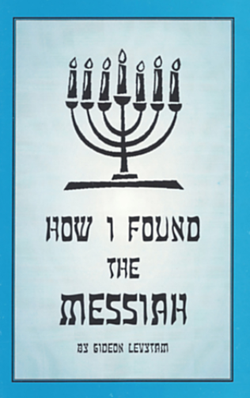
Follow Gideon Levytam's journey and discover how he was led by God, through a series of exciting circumstances, to find the One his people are still waiting for.
Past Episodes

Featured Offer
Follow Gideon Levytam's journey and discover how he was led by God, through a series of exciting circumstances, to find the One his people are still waiting for.
About Holy Scriptures and Israel
As time passed by, the Lord Yeshua took dear brother John Van Stormbroek to himself. The ministry of Holy Scriptures and Israel continued with additional development. In the early 1990’s, a weekly morning Bible class began which brother Gideon Levytam led regularly in the City of Toronto. This weekly open Bible class was held in the Willowdale assembly meeting hall. Eventually, a second mid-week evening Bible class was added. In April 2002, the need for an additional outreach Bible teaching meeting arose. We begun a Saturday (Shabbat) ministry meeting in which a systematic teaching of God’s word is presented to all who attend. Together we learn God’s Word, pray for each need and the salvation of Israel, and sing songs of worship unto our God, praising Him and our Lord Yeshua the Messiah.
In Mid 2004 we started to air on Joy 1250 Radio station a 15 minute Bible teaching program called "The Holy Scriptures and Israel" with Gideon Levytam. The broadcast teaches God’s word from a Hebrew Messianic perspective and has proved to be a blessing to many. It's now aired seven days a week. Our prayer is that many more of our Israeli people will have a clear understanding of who Yeshua is, why we all need him, and come to know him as their Lord and Messiah.
About Gideon Levytam
Contact Holy Scriptures and Israel with Gideon Levytam
426 Simcoe Street
Niagara-on-The-Lake
Ontario L0S 1J0
Canada
(905) 325-1234