

Nehemiah 8:1-18, Part 3 of 3


The Public Reading of God’s Law Before All Israel, Part 3
Guest (Female): Shalom. Holy Scriptures and Israel is a ministry designed to share with the Jewish people the good news of the Lord Jesus, Yeshua the Messiah, and to instruct Christians on the Jewish roots of their faith. And now, teaching God's word from a Hebrew Messianic perspective, here is Gideon Levytam.
Gideon Levytam: The study of Nehemiah Chapter 8. And the people stood in their place. Now, this is also, beloved brothers and sisters, very important. See, one of the reasons why we have Bible studies and Bible classes and discussions is because we need to understand the Word of God.
Of course, certain things are more difficult to understand than others, and there are certain things that the Lord needs to work in our hearts and to help us to understand. But this is an important thing for every one of us to understand what God said in His Word.
For example, to understand that salvation is by grace through faith alone. To understand that God entered humanity in the person of the Son, and He took the form of a man. To understand the necessity of the shed blood on the altar. All these things have to be understood. If we don't understand them, how can we continue on in our walk with the Lord? They were very clear, seeking to teach the people and to make them understand what they read unto them.
Let me just read some verses. Turn with me to Mark Chapter 7, in verse 14. And when He had called all the people, this is Yeshua, when He had called all the people unto Him, He said unto them, "Hearken unto me, every one of you, and understand." I want you to listen to me, Yeshua said to the people, and I want you to understand what I'm telling you. I want to make it clear before you, Yeshua said to the people who gathered around Him.
Notice another verse in Luke Chapter 24. Again, Yeshua is now ministering to the two who went to Emmaus. And it says in verse 45, notice that, then He opened their understanding, that they might understand the scripture. See, Yeshua was the greatest teacher on earth, and He caused people to understand the Word. When you and I don't understand something, we cannot continue on and build upon it. We have to understand the Word of the Lord.
Turn to Acts Chapter 8 and verse 30. You remember the Ethiopian eunuch who went to Jerusalem and after he was so disappointed, he left the city of Yerushalayim and he was on a way back home. And as he was reading on his chariot one of the prophets, he needed somebody to help him to understand. So God, Yeshua, the Spirit of God sent this man unto him.
We find out that as Philip came to him and he went up on that chariot, he said to him in verse 30 of Acts Chapter 8: Philip ran thither to him and he heard him read the Prophet Isaiah and he said to him, notice that, he said, "Do you understand what you read?" And he said, "How can I except some man should guide me?" And he desired Philip that he would come up and sit with him, and the place of the scripture which he read was this. He was reading Isaiah 53.
"He was led as a sheep to the slaughter, and like a lamb dumb before his shearer, he opened not his mouth. In his humiliation, his judgment was taken away, and who shall declare his generation? For his life is taken from the earth." So the eunuch answered Philip and he said unto him, "Of whom does the prophet speak this? Does he speak it of himself or of someone else?"
Philip gave him the answer in verse 35. Philip opened his mouth and he began at the same scripture and he preached unto him Yeshua. You see, the suffering servant of Isaiah 53 is Yeshua the Messiah, but someone had to explain this, beloved brothers and sisters. That's what was done for our Jewish people of old there in the land of Israel in a time of Nehemiah, where they needed not only to hear the Word of the Lord, but they needed someone to explain to them.
How they explained to them, notice in verse 7, it says at the end, and they caused the people to understand the law and the people stood in their place. They were listening. Notice what it says in verse 8. Israel read in the book of the law distinctly and clearly. Notice it says, "and they read in the book of the law of God distinctly, and they gave sense and caused them to understand the reading."
It is so important to read the word distinctly. The Hebrew word here for distinctly is meforash, barur, clear, no doubt about anything. They had to understand it in their mind and to clearly have it in their hearts, but it had to be explained to them distinctly. That's why when we study the Bible, when we learn here together on a regular basis, we read the text and then we make some application about the text.
We, by the grace of God, trusting that the Spirit of God will help us, explain that. When you, dear brothers and sisters, leave the meeting hall, you don't say, "Well, I really quite didn't understand what was said when the Bible was read and taught." It's got to be taught clearly. We know we are failure many times. Speaking for myself, we don't always know how to say things and in what manner. But we believe that the Holy Spirit of God is able to take the words and to appropriate to our mind and to our understanding.
Let me just read one more verse in Psalm 119 and verse 130. It says, "The entrance of Thy words give light. It giveth understanding to the simple." If we have a simple heart to desire to understand, if the word is entering into one's heart, it gives us light. It gives us understanding. But we must be simple. We must be simply willing to learn from the Word of God in a simple way as God had given to us in His Word.
The people gathered together, verses 1 to 3. Israel responded to the public reading, verses 4, 5, and 6. The book of the law was read and explained by the leaders of Israel, verses 7 and 8. And now in verses 9, 10, 11, and 12, Israel's reaction to the words of the Lord. Earlier, they responded by saying, "Amen, Amen." But now, look at what happened to them. There was something that gripped their conscience that really grabbed them.
In verse 9, it says, "And Nehemiah, which is the Tirshatha, and Ezra, the priest, the scribe, and the Levite that taught the people, said unto the people, 'This day is a holy day unto the Lord your God. Mourn not nor weep,' for all the people wept when they heard the words of the law." Why did they weep? Why did they cry when they heard the Word of the Lord? Because the Word of God convicted them. Because God's Word spoke to their hearts and their conscience.
They understood that they were many times not right with God. When we go wrong sometimes in our own lives as believers, when sin comes into our life, and then later on, we realize when the Lord speaks to us. We say, "Really, Lord, I messed up. I should have submitted to your word." It speaks to our hearts. The love of God and the grace of God and the goodness of God encourage us and restore us.
Remember what we read? "He restores my soul." David said it in the Psalm, the 23rd Psalm. The Lord is my Shepherd, and the Lord as a Shepherd of His people, He sometimes has to spank us and to discipline us when we go astray. But it's always in view of restoration. Sometimes He allows us to weep. He allows us to experience the consequences of our disobedience. Like the prodigal son who had gone astray from the father and then he found himself in the pig pen and he found himself in destitution.
He said, "What am I going to do here? I can't stay here. I will get up and I will go back to my father." When the father saw him, he received him and restored him. What a blessing, there was such a joy. There's a time that the Word of God speaks to us and it convicts us and it shows us our wrong and it shows us that we have messed up our life in the direction that we have gone.
The book of Nehemiah is about rebuilding broken lives, rebuilding a broken nation, rebuilding a broken assembly, broken churches that have gone astray from the Lord. That's the purpose of the book of Nehemiah: building it again, restoration to the Word of God. We need it in our own personal life, in our own family lives, in a local assembly, local congregation, and in the whole body of Messiah.
Israel, our people, will need it as well, as they needed it here in Nehemiah's time and they will need it in the future day. You remember what we read in Zechariah Chapter 12: "They shall look upon me whom they have pierced and they shall mourn." Israel in the future day, recognizing that they rejected the Messiahship of Yeshua, they will turn up and they will repent and they will turn back to Him. They will mourn, realizing the wrong direction that they have gone.
Like you and I in our own personal life, when we go astray from the Lord, we realize what a mess I made. I should have listened to the Word of the Lord. The Lord convicted them and they began to weep. The word for mourn is the word lehit'abel. It's like you are mourning for a dead person. That was sincerely out of the hearts of the nation who realized that they had gone astray. The reason that they were 70 years in Bavel is because they had gone astray.
Now that they are back, they need to be restored again after years passed by and the Word of the Lord restoring the people of Israel. How precious it is, beloved brothers and sisters, it convicted them. Turn with me to 2nd Corinthians Chapter 7 and verse 10. The Apostle Paul, Sha'ul Paul, said to the Corinthians: "Godly sorrow worketh repentance even unto salvation, not to be repented of." In other words, Paul is saying, listen, a godly sorrow working about true restoration and repentance to the Lord.
That is exactly what God was doing with our people of old Israel. He was reading, He was speaking to them through the Word of God in the power of the Spirit of God, restoring the people of Israel back to Himself. A time you and I will experience this in our own life when we go astray and go away. The only way of true restoration is back to the Word of God. One more verse I want to read in Psalm 19.
I want to make a connection here because this is important. Psalm 19 and verses 7 to 10. Look at the power that the Word of God has over the lives of those who really read it. Listen, this is the Word of the Lord, this is the Word of God, this is the Torah, the Nevi'im, the Ketuvim, the Bible, the Brit Chadashah. It says in Psalm 19: "The law of the Lord is perfect, it is converting the soul. The testimony of the Lord are sure making wise the simple."
The statues of the Lord are right, rejoicing the heart. The commandments of the Lord is pure, enlightening the eyes. The fear of the Lord is clean and endureth forever. The judgments of the Lord are true and they are righteous altogether. More to be desired are they than gold, yea, than much fine gold. They are sweeter than honey, even the honeycomb. You see the Word of the Lord is converting and restoring the soul.
That's why, beloved brothers and sisters, we believe that it's not by any ingenuity, not by any human tricks and plans and anything that we do that we can work in lives of individuals. No, it is only on the basis of the Word of God and it is in the power of Ruach HaKodesh, the Holy Spirit of God, that God is able to work in any one of our lives. We can trust Him for that. And here the people of Israel is weeping there and crying.
So Nehemiah and Ezra and the Levites had to tell them, by the way, you notice it said Nehemiah is the Tirshatha. The word Tirshatha is a Persian name for the governor. Nehemiah was considered to be the governor at that time. So he and Ezra and the rest of them, they said to Israel, "Israel, don't mourn. It's okay, you have been turning back to the Lord, you repented and you are now coming back to the Lord." He says, "Weep not because today is a holy day unto the Lord. Mourn not, nor weep," for all the people wept when they had heard the words of the law.
He says to them, "Now that you have turned back and you have recognized the Word of the Lord," he says, "right now recognize this is a holy day. This is a special day of restoration." In verse 10, Nehemiah encouraged Israel to have the joy of the Lord. This is precious. He said unto them, "Go your way, eat the fat, drink the sweet, send portions unto them for whom nothing is prepared, for this day is holy unto the Lord, neither be you sorry."
Here is this expression that we often use in our teaching and in encouraging each other. It says, "for the joy of the Lord is your strength." Joy of the Lord in Hebrew, the word joy means chemdat. Chemdat Adonai. The strength that we have as believers in God, as believers in the Messiah, is when we truly have the joy of the Lord in our hearts. A person can be a believer in Yeshua but joyless. Why joyless? Because one is not in fellowship with the Lord.
When we are not in fellowship, we don't enjoy the things of the Lord. We are one foot in the Lord, another foot with the world. No wonder we have no power, no joy, no strength to continue on in our walk with the Lord. Well, the Lord wants us to have this joy that is found in Him. Paul said in Philippians Chapter 4, "Rejoice in the Lord always, again I say rejoice." We have to find joy in our Lord Yeshua the Messiah.
So Nehemiah said to Israel, "The joy of the Lord, Chemdat Adonai, is your strength." That's how you're going to be strong if you have the joy that is found in the Lord. The reason we are joyless is because we think that God is just saved us so we can barely carry on another day. But God saved us so we will have joy in our hearts and in our life and that the Lord can use us to lead others to Yeshua the Messiah so they also will have hope and joy in their own hearts and their own lives.
We are not called to be people that just sitting all the time with a low face and mourning. We are called to be a joyful people. Of course, at time we need to weep when we go astray, when we sin against the Lord, when we harm the people of God, when we are not walking with or—no wonder we need to weep at time. But the ultimate desire of the Lord that we will have joy in our hearts to live here and to be a testimony for Him here in this world.
Notice in verse 11, the ministry of the Levites. They were the ones that caused the people to calm and they encouraged them. Verse 11, the Levites, they stilled all the people saying, "Hold your peace, hold your shalom, for the day is this day is holy, neither be you grieved." Now that you have repented and you turned back to the Lord, now you don't need to grieve. It's a time to be thankful and to celebrate.
Verse 12, look at the doing of the nation of Israel. What did they do? Verse 12, all the people went their way, they ate, they drank, they sent portions unto them, and they made great mirth. They celebrated because they understood. They understood the words that were declared unto them. They went ahead and they now were rejoicing. They were actually celebrating because they understood what the Lord have done for them.
Brothers and sisters, in the last verses, let me just conclude with those final verses here from verse 13 to verse 18 with couple of points. I just want us to understand it does say in verse 13 that Israel re-celebrating the feast of Tabernacle once again. You notice that? It says in verse 13, on the second day, where they gather together all the chief of the fathers and the people and the priest and all the Levites and Ezra the scribe, even to understand the words of the law.
What do they find out? In verse 14, they found out written in the law which the Lord had commanded by Moses that the children of Israel should dwell in booths, in Sukkot, in the feast of the seventh month. The seventh month is the month of Tishrei. The month of Tishrei, the seventh month, is a month in which the people of Israel celebrate those three feasts: Rosh Hashanah, the Feast of Trumpet; Yom Kippur, the Day of Atonement; and Sukkot, the Feast of Tabernacle.
Now they discovers as they read the scripture that God gave clear instruction to the nation of Israel to celebrate this feast and to dwell in Sukkot. A Sukkah, a booth, is a flimsy structure in which the children of Israel were to sit there and it will remind them of the faithfulness of God to our people when He took our forefathers out of Egypt. But it's also to remind us of the future day in which God is going to restore the people of Israel and establish the Messianic Kingdom. They did not sit in booth, in Sukkot, for quite a while.
They found out that the Lord commanded by Moses says the children of Israel should dwell in Sukkot, in Tabernacle, in the feast on that seven month. In verse 15, they proclaim this publicly and they made this celebration of the feast of Sukkot. It says here: and that they should publish and proclaim in all the cities and Jerusalem saying, "Go forth unto the mount, fetch olive branches, pine branches, myrtle branches, palm branches, and branches of thick trees and make Sukkot, make booths."
So the people went forth and they brought them and they made themselves Sukkot, booths, everyone upon the roof of his house and in their courts and in their courts of the House of God and in the street of the Water Gate and in the street of the gate of Ephraim. By the way, you notice another gate is mentioned here that was not mentioned in Nehemiah Chapter 3 in the ten gates around the city. Apparently, there's a spiritual reason why Nehemiah didn't mention that gate in the early chapters. Perhaps it was built later on, we do not know. But there is an additional gate called the gate of Ephraim.
Then we find out in the last verses, all the congregation of them that were come again of the captivity made booths and they sat in the booth in the Sukkot. Notice this clause here in verse 17: for since the day of Joshua, Yehoshua, the son of Nun, bin Nun, unto that day had not the children of Israel done so. In other words, what we learn here most likely is that even when after Israel came out of Egypt and enter with a new generation into the land of Israel in the days of Joshua, they celebrated somewhat the feast of Sukkot then, but there was a break of a long time in which they didn't celebrate the feast of Sukkot.
Some Bible teachers believe that that was the case. Others emphasize the word "so" here in verse 17. For since the day of Joshua, the son of Nun, unto that day they had children of Israel did not done so. They emphasize the word "so" meaning that they haven't done it in this manner, in such a maybe spiritual condition that was healthy in the time of Nehemiah which was not in the time of Joshua because Israel were not conquering the land.
So there's two ways to look at that. But whichever way we look at it, they find now came and they began to celebrate the feast of Sukkot which speaks to us about the future kingdom where the Messiah will reign and Israel dwell everyone in the land and Yeshua the Messiah will be the one who will reign as King of Kings and Lord of Lords. Here they have done so with gladness, with a great gladness, beloved brothers and sisters.
The last verse tell us in verse 18: and day by day from the first day unto the last day, he read in the book of the law of God and they kept the feast for seven days and on the eighth day it was a solemn assembly according unto the manner. So they faithfully have celebrated the feast of Sukkot for seven days. They sat in Sukkot, in booth, in Tabernacle, and they remember, they rehearsed the faithfulness of God and the future that is ahead of them. They have done so every day. They read in the book, read the Word of God and sat in booths until the end of the feast of Tabernacles.
Here we can see, brothers and sisters, that the lesson that we learn is the importance of the Word of God. May the Lord help us to learn from the Word of God, to explain clearly the Word of God, to understand the Word of God, and ultimately to live in the way that God will be pleased with us in our life.
Guest (Female): You have been listening to the Holy Scriptures and Israel with Gideon Levytam. Gideon teaches God's word from a Hebrew Messianic perspective. For more information about this ministry, write to Holy Scriptures and Israel, Box 1411, Niagara-on-the-Lake, Ontario, L0S 1J0, or visit our website at holyscripturesandisrael.com.
You are also invited to Gideon's weekly Bible teaching on Fridays at 11:00 AM and 7:00 PM and Saturdays at 1:00 PM at Willowdale Christian Assembly Hall, 28 Martin Ross Avenue in Toronto. Holy Scriptures and Israel is made possible by your prayers and financial support. If you would like to support the program, visit holyscripturesandisrael.com. God bless you, shalom shalom.
Featured Offer
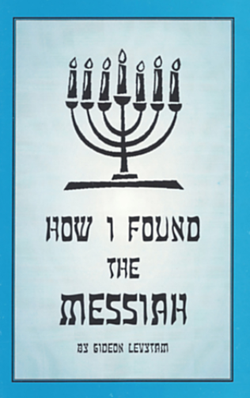
Follow Gideon Levytam's journey and discover how he was led by God, through a series of exciting circumstances, to find the One his people are still waiting for.
Past Episodes

Featured Offer
Follow Gideon Levytam's journey and discover how he was led by God, through a series of exciting circumstances, to find the One his people are still waiting for.
About Holy Scriptures and Israel
As time passed by, the Lord Yeshua took dear brother John Van Stormbroek to himself. The ministry of Holy Scriptures and Israel continued with additional development. In the early 1990’s, a weekly morning Bible class began which brother Gideon Levytam led regularly in the City of Toronto. This weekly open Bible class was held in the Willowdale assembly meeting hall. Eventually, a second mid-week evening Bible class was added. In April 2002, the need for an additional outreach Bible teaching meeting arose. We begun a Saturday (Shabbat) ministry meeting in which a systematic teaching of God’s word is presented to all who attend. Together we learn God’s Word, pray for each need and the salvation of Israel, and sing songs of worship unto our God, praising Him and our Lord Yeshua the Messiah.
In Mid 2004 we started to air on Joy 1250 Radio station a 15 minute Bible teaching program called "The Holy Scriptures and Israel" with Gideon Levytam. The broadcast teaches God’s word from a Hebrew Messianic perspective and has proved to be a blessing to many. It's now aired seven days a week. Our prayer is that many more of our Israeli people will have a clear understanding of who Yeshua is, why we all need him, and come to know him as their Lord and Messiah.
About Gideon Levytam
Contact Holy Scriptures and Israel with Gideon Levytam
426 Simcoe Street
Niagara-on-The-Lake
Ontario L0S 1J0
Canada
(905) 325-1234