
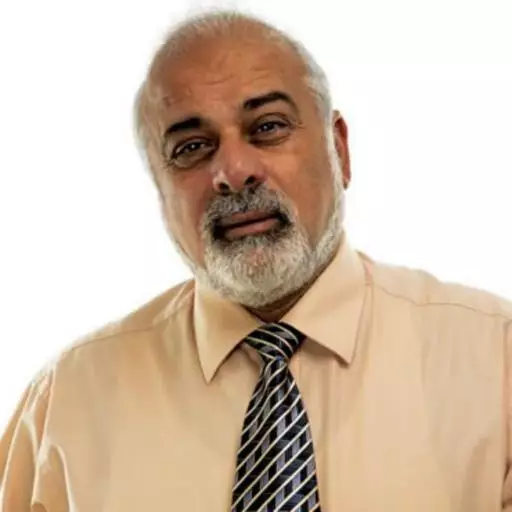
Nehemiah 8:1-18, Part 2 of 3


The Public Reading of God’s Law Before All Israel, Part 2
Guest (Female): Shalom. Holy Scriptures and Israel is a ministry designed to share with the Jewish people the good news of the Lord Jesus, Yeshua the Messiah, and to instruct Christians on the Jewish roots of their faith. And now, teaching God's word from a Hebrew Messianic perspective, here is Gideon Levytam.
Gideon Levytam: The study of Nehemiah Chapter 8. He's a scribe, he's a priest, and he's a Levite from the tribe of Levi. Notice what he does in verse 2: "And Ezra the priest brought the law before the congregation both of men and women, and all that could hear with understanding, upon the first day of the seventh month." Now, you notice that he was not limited to men, it was not limited to women, but it was all-inclusive and including all that could hear.
Perhaps they gathered together all the boys and the girls, the young men, the young women as well, all that is able, according to verse 2b, with understanding. Perhaps these little babies that couldn't understand were kept by some in another location, but he wanted the people of Israel to understand the word of the Lord. Beloved brothers and sisters, it is essential for us to understand what we read. That's why when we come together as brothers and sisters to the meeting, we always have a public reading of the text of the word of God.
Even if there will be no explanation whatsoever, at least we heard the word of the Lord. And so Ezra brings the book out, and you notice it says in verse 3 that Ezra read the word of the Lord publicly there: "And he read therein before the street, which was before the water gate, from the morning until midday, before the men and the women, and those that could understand; and the ears of all the people were attentive unto the book of the law."
It is so precious. It's so refreshing. You see, the people of Israel in those days were in a great decline. They were 70 years in Babel because of God's discipline upon Israel, the Jewish community. Then they came back, and they rebuilt the temple, but yet there was still not sufficient, you might say, a revival among the people of Judah, the people of Israel. After Ezra came, then Nehemiah came. When Nehemiah came, you remember he was so sad because the people were in a sad condition, the walls were non-existent, they were broken, and no gates.
Nehemiah came to rebuild everything, to restore the people of Israel to the Lord, and to give them safety, security, and blessing. So now that Ezra brought the book, he was reading to them publicly. You notice there is no coincidence because it says it was before the Water Gate. Remember when we studied Nehemiah Chapter 3, there were ten gates. It began with the Sheep Gate and ended with the Sheep Gate, the ten gates around the city of Jerusalem. But the Water Gate always represents the word of God.
Faith comes by hearing, and hearing by the word of God. Yeshua tells us, "Husband, love your wife as the Messiah loved the assembly and gave himself that he might wash her, cleanse her by the washing of the water by the word." The word of God is symbolically a symbol of cleansing. Every time when we gather together and we read the word of God, it has an effect upon our hearts. It cleanses us. It washes us. Yeshua said to the disciples in the upper room, "You are all clean through the word."
If we have accepted the word of God and accepted Yeshua as our Messiah, we are cleansed by the word of God positionally. But now he is talking about practical cleansing. Those Jewish people already back from Babel, from Persia, and they are now ready to hear the word of God. Notice this, brothers and sisters, how they were so attentive. It says here in verse 3: "The ears of all the people were attentive unto the book of the law." They were eager to listen. They were eager to hear the word of the Lord.
Sometimes we hear of people who are desiring so much where they could hear the word of the Lord, and they don't have these privileges that you and I have today. They long to have a place where they can gather together and the Bible will be taught, the word of God will be preached, and the person of Yeshua will be proclaimed. These people wanted to hear the word of the Lord. Again, I would like to remind you that when Ezra read, he read from the morning until the middle of the day.
It was perhaps from 6:00 to noon, maybe six hours. Can you imagine he's reading and he's reading, and everybody is attentive to listen to that? Of course, I know that they were in a difficult days in Israel's history, and they really long for that. But you and I today have to admit, if we're going to come to a meeting and we're going to sit for one hour to listen to the word of God, we already say it is too long, cut it short. I'm speaking for myself. But for about four, five, six hours, Ezra was publicly reading the word of the Lord.
Israel, the Jewish people, were so attentive. "We really want to hear what Ezra is saying as he is presenting the word of the Lord." This is precious, brothers and sisters. Public reading was always required from the people of Israel whenever the Bible is being read on Shabbat, for example, there is always a public reading by the one who would stand in the front and will read it for all the congregation to listen to the word of the Lord.
Just go back in your Bibles to Deuteronomy Chapter 31. God through Moses said to Israel in those days in verse 11: "When all Israel is come to appear before the Lord thy God in the place which he shall choose, thou shalt read this law before all Israel in their hearing." Moses, Israel, when you are going into the Promised Land and you are gathering here around the Lord, I want my word to be read publicly. Notice: "in all their hearing before all Israel."
Deuteronomy 31, verse 11. Why? Verse 12: "Gather the people together, men, and women, and children, and thy stranger that is within thy gates, that they may hear, and that they may learn, and fear the Lord your God, and observe to do all the words of this law." Notice: hear, learn, fear, and do. The reason that the Bible, the word of God, is being read publicly is so God's people will hear it, then they will learn from it, then they will have reverence, a fear of the Lord, which is the beginning of wisdom, and then ultimately will do it and live it out in their lives.
That's why the word of God is so important, beloved brothers and sisters. We cannot neglect the word of God, specifically in our gathering together as a believer in Yeshua the Messiah. So the people of Israel gather themselves together. Bring the book, "Havi et ha'sefer" in Hebrew. As far as Israel is concerned, the book, "Ha'sefer," it's the word of God. So wherever we are, beloved brothers and sisters, let us not be ashamed to bring the book, to open the word, to read the scripture, and to study it, to learn from the word of God.
Look in verses 4, 5, and 6 of Nehemiah Chapter 8, Israel's respond to the public reading of God's law. Very interesting how they responded. It says in verse 4: "And Ezra the scribe stood upon a pulpit of wood, which they had made for the purpose." Beside him stood other individuals. I want to mention, you and I would look at this thing; for us, this is called a pulpit. But the Hebrew word is not pulpit, it is really "migdal," "migdal ma'atz," a wooden tower.
It must have been a very high tower, it could be who knows five, six feet high, because remember, they are by the Water Gate, by the street there. Many of these Israeli Hebrew Jewish people there, young people, older people, male, female, and so on, they all gather by the Water Gate. They could not see from afar Ezra. They probably had a hard time to even hear what he had to say, so they had to prepare for him an elevated tower, like a little "migdal." Here it's called in Hebrew "migdal ma'atz," made out of wood. It's a high tower, and he was on a plateau standing there and reading so it was easier for everyone to hear.
I remember a few years ago, I had an opportunity to be in Moscow in Russia, and I remember I was invited to preach in one of these big fancy buildings. It was an older building. There were room for over a thousand seats. I was told that Nixon was in that building sitting there. I was told that one of these great preachers was preaching there. I was very humbled that they invited me to minister the word of God. When I went with the pastor, the spiritual leader, to speak, I went from the top there and we came up in this tower, and I'm looking down. I see so many people below and so many people on the side.
I was like on a big tower there. I felt so humble to be able to stand up there and to speak to the people. Think about Ezra standing on a big high tower, and high enough so the people could see him and the people could hear what he is saying. Even when Yeshua was in the Galilee, when he stood by the shore, and the people were sitting on the mountain, and he was presenting to everybody, he became like a special speaker that everybody would be able to hear the word of the Lord.
So they made for Ezra a pulpit or a tower made out of wood for the purpose. Beside him stood other of the leadership of Israel. Here we have another list of people. It seems to be six or seven on each side. It says: "Mattithiah, and Shema, and Anaiah, and Urijah, and Hilkiah, and Maaseiah, on his right hand; and on his left hand was Pedaiah, and Mishael, and Malchiah, and Hashum, and Hashbadana, Zechariah, and Meshullam." They were some on the right, some on the left.
Ezra was there to present and to read publicly the word of the Lord before our forefathers, the people of Israel. Verse 5: "And Ezra opened the book." Again, the word "the book," "ha'sefer." He opened the book in the sight of all the people. That's why we believe that it was a very high plateau, and when he opened the scroll, everybody saw it. Notice what it says: "And when everybody saw that he opened the book in the sight of all the people (for he was above all the people), and when he opened the book, all the people stood up."
There was a reverence to the word of the Lord, to the word of God. The people there were sitting, and then when he began to open the book, everybody's standing up out of respect. This is the word of the Lord. Beloved brothers and sisters, this is God's word. That's why we've got to respect the word of God. We've got to take it seriously. God is speaking to his people through his word, though it is written, but he is the one that by divine inspiration gave this word of the law to his people Israel.
So everyone is standing. Then it says in verse 6: "And Ezra blessed the Lord, the great God. And all the people answered, Amen, Amen, with lifting up their hands: and they bowed their heads, and worshipped the Lord with their faces to the ground." Again, I would like to say certain things about that. From youth, it's almost become natural to us who are Jewish, who grew up with a conservative family, that when we go to the synagogue and we pray, you will notice many times we bow in such a way.
You go to the Wailing Wall today and you'll see our conservative people, they would bow like that all the time. You'll see them bowing as they are praying, as they are reading the text. They will always bow their heads. Why is it? Where is it come from? It is something that have evolved over the generation by the people of Israel because of things that have happened in history. To bow to the Lord, to recognize that he is divine and we are human being, he is holy and we are not, we are unholy, he is just and we are unjust, he's the creator and we are the creatures.
He deserve to be worshipped and adored and praised. Notice how beautiful to see they say "Amen, Amen." It says here just when he opened the book. The Hebrew word "Amen." Every time when we say "Amen," oftentimes we translate it to mean "may it be so," and it is true, "may it be so." When somebody pray and another one say "Amen," we say "may it be so. I'm in agreement with it." But the root word also come from the word "l'ha'amin," to believe.
I believe what the Lord says in his word by saying "Amen, Amen," I'm saying "I believe, I believe, may it be so." So the people of Israel said "Amen, Amen." Verse 6b: "They lifted up their hands." It's an expression of worship to God. Then they bowed their heads and they worshiped. The word "worship," "vayishtachu," or "vayishtachavu." It's bowing down to the ground. When Abraham receive those three men who came to his tent in Genesis Chapter 18, he ran towards them. One of them was the Lord himself and he bowed to the ground, "vayishtachave." He bowed in worship, recognizing that this is the Lord.
"I'm before him. I am to bow before him. I am to recognize him." So how beautiful the expression that we have here in verse 6. This expression "Amen and Amen," and lifting up the hands and bowing before the Lord is an expression of saying, "Lord, we need you." They have had many problems in their life, many needs they had in their life, and they knew there is no one else that can fix my problem. Sometimes people think that they can fix their own problems in life, and instead of turning to God, instead of turning to the word of God, they are turning everywhere else and they find out that their problem haven't been settled.
The only one who can help his own people to deal with issues and problem is none else but God himself. For us as believers, it is our Lord Yeshua the Messiah through his word. The word of God is powerful. It speaks to us and helping us, give us wisdom, give us guidance in our life. When we submit to the word of God, there is a promise of blessing. So here are those people of Israel, finally we see them now beginning with spiritual restoration. Spiritual restoration always began with the word of God. You cannot become spiritually restored and set the Bible, set the book, away. It must be based on the basis of the word of God.
Notice that as we move along in this eighth chapter, you find out now in verses 7 and 8 that the book of the law of God was read and explained to the people of Israel. It's so important to give people an understanding of the truths that are found in the word of God. So we read in verse 7 again a list of individuals: "Jeshua, and Bani, and Sherebiah, Jamin, Akkub, Shabbethai, Hodijah, Maaseiah, Kelita, Azariah, Jozabad, Hanan, Pelaiah, and the Levites, caused the people to understand the law: and the people stood in their place."
This is also, beloved brothers and sisters, very important. One of the reasons why we have Bible studies and Bible classes and discussions is because we need to understand the word of God. Of course, certain things are more difficult to understand than others, and there are certain things that the Lord need to work in our hearts and to help us to understand, but this is an important thing for every one of us to understand what God said in his word.
For example, to understand that salvation is by grace through faith alone. To understand that God entered humanity in the person of the son and he took a form of a man. To understand the necessity of the shed blood on the altar. All these things had to be understood. If we don't understand them, how can we continue on in our walk with the Lord? They were very clear, seeking to teach the people and to make them understand what they read unto them.
Let me just read some verses. Turn with me to Mark Chapter 7 in verse 14: "And when he had called all the people (this is Yeshua), and when he had called all the people unto him, he said unto them, Hearken unto me every one of you and understand." "I want you to listen to me," Yeshua said to the people, "and I want you to understand what I'm telling you. I want to make it clear before you," Yeshua said to the people who gathered around him.
Notice another verse in Luke Chapter 24. Again, Yeshua is now ministering to the two who went to Emmaus. It says in verse 45, notice that: "Then opened he their understanding, that they might understand the scripture." Yeshua was the greatest teacher on earth, and he caused people to understand the word. When you and I don't understand something, we cannot continue on and build upon it. We have to understand the word of the Lord.
Turn to Acts Chapter 8 and verse 30. You remember the Ethiopian eunuch who went to Jerusalem, and after he was so disappointed, he left the city of Yerushalayim and he was on a way back home. As he was reading on his chariot one of the prophet, he needed somebody to help him to understand. So God, Yeshua, the spirit of God, sent this man unto him. We find out that as Philip came to him and he went up on the chariot, he said to him in verse 30 of Acts Chapter 8: "Philip ran thither to him, and heard him read the prophet Isaiah, and said unto him, Understandest thou what thou readest?"
He said, "How can I, except some man should guide me?" He desire Philip that he would come up and sit with him. The place of the scripture which he read was this: he was reading Isaiah 53. "He was led as a sheep to the slaughter; and like a lamb dumb before his shearer, so opened he not his mouth. In his humiliation his judgment was taken away: and who shall declare his generation? for his life is taken from the earth."
So the eunuch answered Philip and he said unto him, "Of whom does the prophet speak this? Does he speak it of himself or of someone else?" So here Philip gave him the answer in verse 35: "And Philip opened his mouth, and began at the same scripture, and preached unto him Yeshua." The suffering servant of Isaiah 53 is Yeshua the Messiah, but someone have to explain this, beloved brothers and sisters.
That's what was done for our Jewish people of old there in the land of Israel in a time of Nehemiah, where they needed not only to hear the word of the Lord, but they needed someone to explain to them. How they explained to them, notice in verse 7, it says at the end: "And they caused the people to understand the law: and the people stood in their place." They were listening. Notice what it says in verse 8: Israel read in the book of the law distinctly and clearly.
Notice it says: "So they read in the book in the law of God distinctly, and gave the sense, and caused them to understand the reading." It is so important to read the word distinctly. The Hebrew word here for distinctly is "meforash," "barur," clear. No doubt about anything. So they had to understand it in their mind and to clearly have it in their hearts, but it had to be explained to them distinctly.
That's why when we study the Bible, when we learn here together on a regular basis, we read the text and then we make some application about the text. We, by the grace of God, trusting that the spirit of God will help us to explain that when you, dear brothers and sisters, leave the meeting hall, you don't say, "Well, I really quite did not understand what was said when the Bible was read and taught." It's got to be taught clearly.
Now, we know we are failure many times, speaking for myself. We don't always know how to say things and in what manner, but we believe that the Holy Spirit of God is able to take the word and to appropriate to our mind and to our understanding. Let me just read one more verse in Psalm 119 and verse 130: "The entrance of thy words giveth light; it giveth understanding unto the simple."
If we have a simple heart to desire to understand, if the word is entering into one's heart, it gives us light. It gives us understanding. But we must be simple. We must be simply willing to learn from the word of God in a simple way as God had given to us in his word. So the people gather together, verses 1 to 3. Israel responded to the public reading, verses 4, 5, and 6. The book of the law was read and explained by the leaders of Israel, verses 7 and 8.
Now in verses 9, 10, 11, and 12, Israel's reaction to the words of the law. Earlier they responded by saying, "Amen, Amen," but now look at what happened to them. There was something that gripped their conscience, that really grabbed them. In verse 9, it says: "And Nehemiah, which is the Tirshatha, and Ezra the priest the scribe, and the Levites that taught the people, said unto all the people, This day is a holy day unto the Lord your God."
Guest (Female): You have been listening to Holy Scriptures and Israel with Gideon Levytam. Gideon teaches God's word from a Hebrew Messianic perspective. For more information about this ministry, write to Holy Scriptures and Israel, Box 411, Niagara on the Lake, Ontario, L0S 1J0 or visit our website at holyscripturesandisrael.com.
You are also invited to Gideon's weekly Bible teaching on Fridays at 11:00 AM and 7:00 PM and Saturdays at 1:00 PM at Willowdale Christian Assembly Hall, 28 Martin Ross Avenue in Toronto. Holy Scriptures and Israel is made possible by your prayers and financial support. If you would like to support the program, visit holyscripturesandisrael.com. God bless you. Shalom, Shalom.
Featured Offer
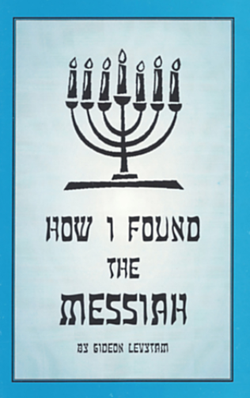
Follow Gideon Levytam's journey and discover how he was led by God, through a series of exciting circumstances, to find the One his people are still waiting for.
Past Episodes

Featured Offer
Follow Gideon Levytam's journey and discover how he was led by God, through a series of exciting circumstances, to find the One his people are still waiting for.
About Holy Scriptures and Israel
As time passed by, the Lord Yeshua took dear brother John Van Stormbroek to himself. The ministry of Holy Scriptures and Israel continued with additional development. In the early 1990’s, a weekly morning Bible class began which brother Gideon Levytam led regularly in the City of Toronto. This weekly open Bible class was held in the Willowdale assembly meeting hall. Eventually, a second mid-week evening Bible class was added. In April 2002, the need for an additional outreach Bible teaching meeting arose. We begun a Saturday (Shabbat) ministry meeting in which a systematic teaching of God’s word is presented to all who attend. Together we learn God’s Word, pray for each need and the salvation of Israel, and sing songs of worship unto our God, praising Him and our Lord Yeshua the Messiah.
In Mid 2004 we started to air on Joy 1250 Radio station a 15 minute Bible teaching program called "The Holy Scriptures and Israel" with Gideon Levytam. The broadcast teaches God’s word from a Hebrew Messianic perspective and has proved to be a blessing to many. It's now aired seven days a week. Our prayer is that many more of our Israeli people will have a clear understanding of who Yeshua is, why we all need him, and come to know him as their Lord and Messiah.
About Gideon Levytam
Contact Holy Scriptures and Israel with Gideon Levytam
426 Simcoe Street
Niagara-on-The-Lake
Ontario L0S 1J0
Canada
(905) 325-1234