

Nehemiah 4:1-9, Part 2 of 3


The Enemies Mock and Discourage Israel, part 2
Narrator: Shalom. Holy Scriptures and Israel is a ministry designed to share with the Jewish people the good news of the Lord Jesus, Yeshua the Messiah, and to instruct Christians on the Jewish roots of their faith. And now, teaching God's Word from a Hebrew Messianic perspective, here is Gideon Levytam.
Gideon Levytam: The study of Nehemiah Chapter 4. You see, that’s how it began. When you see God’s people walking with the Lord and starting to build and carrying on in the things of the Lord, they began to mock and to laugh at the people of God.
And they said, “What is this thing that they do? Will they rebel against the king?” he said in Chapter 2 and verse 19. Now we find out in Chapter 4 and verse 1, Sanballat was angry. He was wroth, and he did not want to see the people of Israel progressing in building the wall and setting up the gates of Jerusalem.
And isn’t it so, brothers and sisters? It is said that when we become believers in Yeshua the Messiah and we enter into the body of Messiah, I can assure you that there are those who are not happy to see you growing spiritually, to see that you want to build the body of Messiah, you want to take your effort, your time, your energy, your means, and you want to build the things of God. There will always be those that are the enemies of the people of God who will not be happy with anything that is done for Yeshua the Messiah.
By the way, we know it very well that behind the scene there is that old enemy of God, Satan himself, who influences men to oppose anything that is done for the Lord Jesus the Messiah. Anything that is done for God, the enemy is constantly opposing it. Now, if you will notice in continuing in the first three verses, the anger and the mockery of the enemies of Israel, you notice that in verse 2, we have the additional individuals that were opposing the Jewish community.
We find out, in fact, in verse 2, and you can see that these are really the mixture, the Samaritan. It says that he spoke before his brethren and the armies of Samaria. In Hebrew, the word is *Tsva Shomrom*. He has spoken to his brethren. Apparently, he must have been a man of influence. And he said, beloved brothers and sisters, notice how he is mocking the people of Israel, the Jewish people.
He says, “What do these feeble Jews?” And indeed, brothers and sisters, these Jewish people who came from Bavel—first of all, some of them came with Zerubbabel, then more people came with Ezra, and now the third group coming with Nehemiah—they were really feeble. They were not that great nation with power like in the day of Solomon, the king of Israel. They were in a feeble situation because earlier, some 70, 80, 90 years before, they have gone astray from the God of Israel.
They disobeyed the Lord, and the Lord sent them captive to Bavel. And now finally, He is restoring them, and He restored a feeble remnant—a small group of Jewish people. 50,000 with Zerubbabel, another few thousand with Ezra, and now about a thousand with Nehemiah. They were a feeble group of people.
God's people were feeble, but they wanted to come back to the things of the Lord and to rebuild Jerusalem and to worship God in a right way. And I tell you, this is so true with all the conditions that exist in Christendom today. Those who really want to stand for the truth of God and the truth of His Word are but a few, and they are really feeble in many ways, just the same like our forefathers, the Jewish people here in Nehemiah Chapter 4.
They are feeble, but God is with them. And God is going to show through them His strength on behalf of His people. And that’s why we learn here a great lesson. Maybe the world looks at you and looks at us and says, “What do you tell me about this Jesus the Messiah? And why do you want so much to follow after Him and to read His Bible and to learn from Him and to meet with other believers together? Look at the multitude of people who go elsewhere and do other things.”
And yet, the people of God are feeble. I think of the verse that we read in Matthew 18 and verse 20: “Where two or three are gathered together unto My name,” Yeshua said, “I promise to be in the midst.” Why didn’t He say 200,000 or 300,000? Why did He go as low as possible? Because He is satisfied with those who desire to be under the sound of His Word and allow Him to have authority over their lives.
Even if they are two or three, He is pleased to be in the midst of them. And you see, brothers and sisters, in Nehemiah's days, it was a day of small things. And I can suggest to you today, in the days of the Laodicean in which you and I live in, in the end of the church age, we also live in a day of small things. Even though we’d love to have revival and we’d love to see thousands of people get saved and many come to church meetings and everybody enjoy to come under the sound of the Word, we would love to see that and God would love to see that, but the truth of the matter is that we live in a day of small things.
Feeble, but God is in the midst of His own, and He promised a blessing to His own people. I'm sometimes fascinated when I watch some programs about people who come to see a movie star. Thousands of people, young people, looking at that movie star and they are getting crazy over that movie star or a singer. But I say to myself, I wish there would be so many people who follow the Lord and they will go crazy for Yeshua the Messiah.
But the truth of the matter is that it’s not so. The Lord is working in individuals’ hearts one by one and drawing us to Himself. And you and I are really brought even in the very fact that we are coming to a ministry meeting and we are coming to a Bible class and we hear the Word of God; it's nothing but the grace of God. Because there are hundreds of thousands that reject the message of the gospel today, while a few here and there are drawn by Him.
And so it is nothing but the grace of God who worked in our lives. And you can see Sanballat is going to his Samaritan brethren, and he’s saying now to them, “What are they doing?” And notice the four times the word “will they.” Notice it says in verse 2b, “Will they fortify themselves?” Number one. Number two, “Will they sacrifice?” Number three, “Will they make an end in a day?” Number four, “Will they revive the stones out of the heaps of the rubbish which are burned?”
And humanly speaking, you might say, “How can they do it? How are they going to be able to do it?” Enemies all surrounding them, and they are really feeble. Sanballat recognized that, and he asking, and actually, it is in mockery he said, “How? Will they do these things? Will they be able to fortify the city of Jerusalem and continue in the sacrificial system?” In other words, he was laughing at them.
And you know, many who wanted to serve the Lord, and people say, “Heh, you think you are going to be able to do it? This is too big of a work for you ever to be able to be successful in doing that.” Well, of course, without the Lord, we can’t do anything. Remember Yeshua said, “Without Me ye can do nothing.” But with the Lord’s help, we are able to continue on and to build for the Lord and for the Lord’s house. And that’s why we can see here that the enemy opposes, while God is able to help His people to build the house of the Lord.
And here you can see the mockery of the people of God. I want you to turn for a moment to 1 Corinthians Chapter 16. The Apostle Paul said these already in the first early days of the church age. He said in verse 9, “For a great door and effectual is opened unto me, but there are many adversaries.” The Lord preparing blessing for mankind, but there are so many enemies.
Can you imagine the Apostle Paul, this Jewish servant who was called to serve among the Goyim, the Gentile world? Can you imagine the suffering that he had experienced when he was going from city to city to Asia Minor presenting the gospel of Yeshua the Messiah? Can you imagine how much opposition he had experienced in his life? We have no idea what the Apostle Paul had experienced in his life—the sufferings that he had experienced because he wanted to build the body of Messiah. He wanted to share the gospel with the world.
I don’t have to give you the list, but there are lists of the sufferings that the Apostle Paul had experienced in his life. Just to read to you a couple of verses in 2 Corinthians Chapter 6, it says in verse 4, “But in all things approving ourselves as the servants of God, the ministers of God, in much patience, in afflictions, in necessities, in distresses, in stripes, in imprisonments, in tumults, in labors, in watchings, in fastings; by pureness, by knowledge, by longsuffering, by kindness, by the Holy Spirit, by love unfeigned, by the word of the truth, by the power of God, by the armor of righteousness on the right hand and on the left, by honor and dishonor, by evil report and good report; as deceivers, and yet true; as unknown, and yet well known; as dying, and, behold, we live; as chastened, and not killed; as sorrowful, yet alway rejoicing; as poor, yet making many rich; as having nothing, and yet possessing all things.”
Sha'ul Paul said it to the Corinthian when he told them about the fact that he was presenting the Lord’s Word and yet so much opposition he experienced in his life. So the Jewish people in Nehemiah also have experienced already enemies that have sought to destroy the work of the Lord. And so you notice that it is the Samaritan in verse 2—those are not only a mixture of physical relationship between some of them were from the ten tribes of Israel and some of them were from the nations of the world, but was a mixture of believing in the true and living God, but also believing in false gods, in idols, and other things that were contrary to the Word of God.
They became enemies of the people of Judah when Israel were building the walls around the city of Jerusalem. Notice that we find out about Tobiah also in verse 3 of Nehemiah Chapter 4. Now Tobiah the Ammonite was by him, and he said, “Even that which they build, if a fox will go up, he shall even break down their stone wall.” You see, he was laughing at these Jewish people. He says, “You know what? Even if a fox will just sit on it, he will cause it to crumble.”
They will not be able to have these stones pile up so the wall will be finished. It will not stand. Again, another way of mockery. Telling Israel, “You are not going to be successful. Everything that you will try to do, it will crumble to pieces.” And so we know very well that anything that we do with the strength of the Lord He is able to help us to carry on in His ministry, in the work. But everything that we do with the energy of the flesh, it will crumble. It will not be successful.
But thank God that the Lord was with them. Thank God that the Lord had sent them. You see, Nehemiah didn’t go on his own. The Jewish people didn’t go on their own. They were returning now to rebuild what God have intended for them to build. Let me remind you that when Yeshua promised that He is going to build the assembly in Matthew Chapter 16, He said to Simon Peter, Simon Petros, He says, “You are Peter, and upon your confession, upon this rock, I will build My assembly, My ekklesia.” And then He continued and said, “And the gates of Hades shall not prevail against it.”
And I can tell you, I can assure you because it is the plan of God for the church, for the assembly, it is the plan of God for Israel, eventually God is going to bring about His promises that He has made to His own people. And so even though there are enemies, nevertheless God’s promises will come to pass. He will give the necessary strength for the people of God. Now, what would you do in a case like that? You can get very discouraged.
You know, when there are so many enemies—I was told by a godly brother years ago that many men who call themselves pastor or spiritual leaders have given up. They said, “What's the use? I have no energy to carry on, to work, and to carry on because they’ve given up. There have been so many enemies against them, so much opposition, they have given up.” And sometimes you and I can say, because we are so discouraged because there are so many enemies coming on every hand, that we can also say, “Well, what’s the use to spend my time and my energy and to participate in building the things of the Lord? What’s the use? The world is against us. The flesh is against us. Satan is against us. So what’s the use?”
And many indeed are discouraged, even today among the body of Messiah. There are many believers who stop to go to meetings, who stop to read the Bible, who stop to carry on with the things of the Lord. They are just more in the world and no longer attending church meetings, congregational meetings, assembly meetings. They are away from the things of the Lord because they are so discouraged.
That’s why, as I mentioned before, we need men and women, brothers and sisters, who are like Nehemiah who says, “Lord, strengthen me. Strengthen my brothers and my sisters. Help me to be a vessel of honor in the midst of such a decline.” And so look, Nehemiah is giving us an example. Look at his response to the anger and mockery of Israel’s enemies. In verses 4, 5, and 6 of Nehemiah Chapter 4, we see the response of Nehemiah.
He began by praying. He is taking his problems to the Lord, to the God of Israel. He turned his heart to God and asked for the Lord to help him. And you notice he says those words, “Hear, O our God.” You know, when I read this passage, this statement, *Shma Eloheinu*. You see, in Deuteronomy Chapter 6 and verse 4, it says, *Shma Yisrael*—Hear, O Israel. He wanted the Lord, the God of Israel, to hear him.
Now, of course, God knows everything, but Nehemiah did something that is so wonderful. He called on God. Nehemiah turned to God in prayer and he called on God to turn the enemies' reproach back to themselves. And so he says in verse 4, “Hear, O our God; for we are despised: and turn their reproach upon their own head, and give them for a prey in the land of captivity.” Verse 5, he continued and he said, “And cover not their iniquity, and let not their sin be blotted out from before Thee: for they have provoked Thee to anger before the builders.”
Now, I want you to notice that he was praying the kind of a prayer that many Bible teachers call the imprecatory prayer. It is a prayer of actually curse and judgment upon the enemies of God. Now, it is very important for us to just distinguish the prayer that Nehemiah prayed when Israel as a nation were under the Law because the Messiah hasn't come as of yet, and the prayer that we, you and I as believers are exhorted to pray after the Messiah came and finished the work on the tree in the present day dispensation.
He prayed a prayer that is called by many Bible teachers—it's a very difficult name—it's called imprecatory prayer. It's actually a prayer of curse upon those that oppose the ways of the Lord. Now look at this again, and I want you to notice this. He says in verse 4, “For we are despised; turn their reproach upon their head; give them for a prey in the land of captivity,” in other words, send them to captivity like You have sent us in the past. Then verse 5, “Cover not their sins or iniquity, and let not their sin be blotted out from before Thee.”
Notice, it’s a very strong prayer. But we have to understand here that Nehemiah understood that what they were doing was not only against the Jewish people. It’s not only even against Nehemiah himself. But Sanballat and Tobiah and the Samaritan, they were actually going against the plan of God. What they were doing, they are trying to go against God. And this is exactly what Nehemiah said, “They have provoked Thee to anger.” It was against God that Sanballat and Tobiah were going against.
And you know, brothers and sisters, people don’t understand when they are causing persecution of the people of God, they’re actually going against God. When Sha'ul was persecuting his Jewish brethren who believed that Yeshua was the Messiah, Yeshua said, “Sha'ul, Sha'ul, *lama tirdfeni*? Saul, Saul, why do you persecute not them, but Me?” The Head in heaven and the body here on earth are linked with each other.
You see, Israel the nation is linked with the living God. And by hating the Jewish people, and opposing the Jewish people, and mocking the Jewish people, and hindering the Jewish people, and persecuting the Jewish people, it’s actually going against God. And that’s why, beloved brothers and sisters, he prayed such a prayer. There are many Psalms in the Hebrew Scriptures that are called imprecatory Psalms. It's a Psalm that is actually the writer—mostly of them were David—a Psalm of prayer of judgment upon the enemies of God.
Let me read Psalm 137. This is the famous Psalms that one of the *Leviyyim*, the Levites, wrote at the time when the Jewish people were in Bavel. Sometimes God had to discipline His own people, and here is a Psalm of restoration. And you remember this Psalm 137, where we read there, “By the rivers of Babylon,” verse 1, “there we sat down, yea, we wept, when we remembered Zion. We hanged our harps upon the willows in the midst thereof. And there they that carried us away captive, they required of us a song; and they that wasted us required of us mirth, saying, 'Sing unto us one of the songs of Zion.'”
And the Jewish people who are there in Bavel, they said, “How shall we sing the Lord's song in a strange land?” They couldn’t sing because they were away from the Lord. Now they are in the land. Now they can sing in the land, and yet now they have enemies in the land, around them. And so they said when they were in Bavel, in verse 5, “If I forget thee, O Jerusalem, let my right hand forget her cunning.” In Hebrew, *Im eshkakhek Yerushalayim tishkakh yemini*. Beautiful statement. We have it on many, many places in Israel today.
“If I forget thee, O Jerusalem, let my right hand forget her cunning. If I do not remember,” verse 6, “let my tongue cleave to the roof of my mouth; if I prefer not Jerusalem above my chief joy.” But now look at the rest of the Psalm is imprecatory prayer. Seems to be very strong prayer. Look what they are saying. It says in verse 7, “Remember, O Lord, the children of Edom in the day of Jerusalem; who said, 'Raze it, raze it, even to the foundation thereof.'”
And look at that prayer, beloved brothers and sisters, a prayer of vengeance against God’s enemy. He said, “O daughter of Babylon, who art to be destroyed; happy shall he be, that rewardeth thee as thou hast served us. Happy shall he be, that taketh and dasheth thy little ones against the stones.” You and I might say, “What kind of a prayer it is?” It is a prayer of revenge, a prayer of curse upon the enemies of God.
See, those Jewish people who were in Babylon understood that God has a plan to restore Israel back to Himself. And the people of Edom and the nations of Babylon, they are the ones that reject God. You see, Babylon from Genesis 11, Bavel, to Revelation 18, 17 and 18, Babylon the Great, you might say throughout the history of humanity, Bavel always represents the world who rejected God. And so they are praying in light of their understanding of the mind and the plan of God, and they are praying this imprecatory prayer, which is a prayer of curse upon the enemies of God and the enemies of God’s people.
And here we find again Nehemiah. He is praying in a very similar way. But we also know that in the present day for you and I as believers, we are to pray somewhat differently. Now turn to Matthew Chapter 5. Yeshua has taught the disciples how to pray and to distinguish between the two. The one is a prayer that the people of Israel were praying prior to the coming of the Messiah under the age in which they lived. The Messiah haven’t come as of yet.
The Messiah was going now to die, and everything pointed to His death and resurrection. And so in Matthew Chapter 5, when Yeshua came, He taught the disciples in verse 43, 44, and 45 to pray in this manner: “Ye have heard that it had been said, 'Thou shalt love thy neighbor, and hate thine enemy.' But I say unto you, 'Love your enemies, bless them that curse you, do good to them that hate you, and pray for them which despitefully use you, and persecute you; that ye may be the children of your Father which is in heaven: for He maketh the sun to rise on the evil and the good, and sendeth rain on the just and the unjust.'”
You notice what it says in verse 43, “It had been said,” the Law. “But I say unto you,” I'm coming right now to teach you something that you have to learn for this present day dispensation or era of the days in which the Messiah have finished the work on the cross and He is building a body of believers. “I say unto you,” and notice what He says, “to pray for them that despitefully use you and persecute you” in Matthew Chapter 5 and verse 44. Now mind you, brothers and sisters, to be honest, if somebody persecutes you, you probably want to pray the prayer that Nehemiah prayed.
Narrator: You have been listening to Holy Scriptures and Israel with Gideon Levytam. Gideon teaches God’s Word from a Hebrew Messianic perspective. For more information about this ministry, write to Holy Scriptures and Israel, Box 1411, Niagara-on-the-Lake, Ontario, L0S 1J0, or visit our website at holyscripturesandisrael.com. You are also invited to Gideon’s weekly Bible teaching on Fridays at 11:00 AM and 7:00 PM and Saturdays at 1:00 PM at Willowdale Christian Assembly Hall, 28 Martin Ross Avenue in Toronto. Holy Scriptures and Israel is made possible by your prayers and financial support. If you would like to support the program, visit holyscripturesandisrael.com. God bless you. Shalom, shalom.
Featured Offer
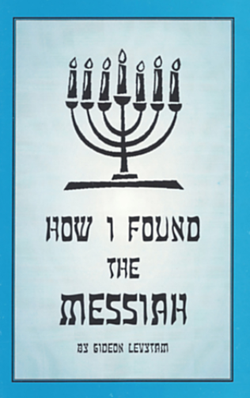
Follow Gideon Levytam's journey and discover how he was led by God, through a series of exciting circumstances, to find the One his people are still waiting for.
Past Episodes

Featured Offer
Follow Gideon Levytam's journey and discover how he was led by God, through a series of exciting circumstances, to find the One his people are still waiting for.
About Holy Scriptures and Israel
As time passed by, the Lord Yeshua took dear brother John Van Stormbroek to himself. The ministry of Holy Scriptures and Israel continued with additional development. In the early 1990’s, a weekly morning Bible class began which brother Gideon Levytam led regularly in the City of Toronto. This weekly open Bible class was held in the Willowdale assembly meeting hall. Eventually, a second mid-week evening Bible class was added. In April 2002, the need for an additional outreach Bible teaching meeting arose. We begun a Saturday (Shabbat) ministry meeting in which a systematic teaching of God’s word is presented to all who attend. Together we learn God’s Word, pray for each need and the salvation of Israel, and sing songs of worship unto our God, praising Him and our Lord Yeshua the Messiah.
In Mid 2004 we started to air on Joy 1250 Radio station a 15 minute Bible teaching program called "The Holy Scriptures and Israel" with Gideon Levytam. The broadcast teaches God’s word from a Hebrew Messianic perspective and has proved to be a blessing to many. It's now aired seven days a week. Our prayer is that many more of our Israeli people will have a clear understanding of who Yeshua is, why we all need him, and come to know him as their Lord and Messiah.
About Gideon Levytam
Contact Holy Scriptures and Israel with Gideon Levytam
426 Simcoe Street
Niagara-on-The-Lake
Ontario L0S 1J0
Canada
(905) 325-1234