
Nehemiah 3:1:14, Part 2 of 3


The Building of the Walls of Jerusalem, Part 2
Announcer (Female): Shalom. Holy Scriptures and Israel is a ministry designed to share with the Jewish people the good news of the Lord Jesus Yeshua the Messiah and to instruct Christians on the Jewish roots of their faith.
Announcer (Male): And now, teaching God's Word from a Hebrew Messianic perspective, here is Gideon Levytam.
Gideon Levytam: The study of Nehemiah chapter 3. And I would like to suggest by ministry today that in these 10 gates, we have the experience of God's people in their day-by-day living. Those 10 names given to us in Nehemiah chapter 3 will teach us spiritual lessons concerning the life of the people of God.
The walls are built on a one hand to protect and to keep the people of God secure, and on the other hand, to keep all that is not from the Lord outside from among the people of God. So these 10 gates really represent before us the life of the people of God and the experiences that you and I—Israel in the past, believers today in the present day of the assembly of the church age—the experiences that we have in our relationship to God and in our relationship to our Lord Yeshua the Messiah.
Everything begins with the person of our Lord Yeshua the Messiah. You notice that the first gate is called here in chapter 3 and in verse 1 is called the Sheep Gate. It says here, “And Eliashiv the high priest rose up with his brethren, and they builded the Sheep Gate. They sanctified it, they set up the door of it, even unto the tower of Meah, they sanctified it, unto the tower of Hananeel. And next unto him build the men of Jericho and next unto him builded Zaccur the son of Imri.”
In verses 1 and 2, we have the beginning of the building of the gates. The first gate, of course, is mentioned here. In Hebrew, we call it Sha'ar HaTzon. It's the Sheep Gate. The Sheep Gate was builded, why? Because through this gate, the sheep were going in in order to be slaughtered and placed upon the altar in the Temple in the city of Yerushalayim.
If you would bring all the flock in order for them to be killed and placed upon the altar so the people, our own people, will receive atonement for their sins, for their souls, they had to come through the Sheep Gate. And the Sheep Gate, I would like to suggest, beloved brothers and sisters, represents before us the person of Yeshua the Messiah.
He's the one, beloved brothers and sisters, who became the Lamb of God who took upon himself the sin of this world. He is actually in his life, when he first enter into the city of Yerushalayim, he entered by the Sheep Gate. He went up from Mount Olives up through the Kidron Valley and all the way up to Mount Moriah. He entered into the city of Yerushalayim through the Sheep Gate. He actually, beloved brothers and sisters, became the one that was going to take away the sin of this world.
Everything began with Yeshua the Messiah. Turn with me to Isaiah 53. Earlier, we talked about the prophet Isaiah and how often time we discover that it is not read in the synagogue, in Beit HaKnesset. Why? Because it speaks so much about this man from Natzeret, HaIsh miNatzeret, the man whose name is Yeshua. Jesus in Greek and in Hebrew, we call him Yeshua.
And you notice in chapter 53, the prophet of Israel said many years ago—750 years before Yeshua the Messiah came—the prophet of Israel Isaiah said in chapter 53 and verse 7, “He was oppressed, and he was afflicted, yet he opened not his mouth. He is brought as a lamb to the slaughter, as a sheep before her shearer is dumb, so he opened not his mouth.”
The Sheep Gate represents before us the person of our Lord Yeshua the Messiah who became that Lamb of God. John 1:29, Yochanan the Baptizer says, “Behold the Lamb of God which taketh away the sin of this world.” There is no beginning of building a life, there is no beginning of building a relationship with the living God if we set aside the blood that must be shed upon an altar by a lamb.
And the Sheep Gate represents before us the beginning of our life as believers in Yeshua the Messiah. We have come in, we have accepted him, the blood of our Lord Yeshua the Messiah cleanses us from all sin. The Sheep Gate had to be erected first if Israel was going to continue to build all the walls and the gates around the city of Yerushalayim.
You see, 1 Peter chapter 3 and verse 18, Peter said to the brothers and sisters in verse 18, he said, “For the Messiah has once suffered for sins, the just for the unjust, that he might bring us to God, being put to death in the flesh, but quickened by the spirit, made alive by the spirit.” If someone is going to be saved and forgiven, he or she must accept the Lamb of God that paid for the price of our sin.
He is the one that is represented by the Sheep Gate. In history past, our own Jewish people used to bring the flock and all the sheep and the goats that will come into the Temple and be slain and the blood shed upon the altar had to come through the Sheep Gate. And you and I have entered into our relationship with God through the Sheep Gate.
The Lord Yeshua said, “I am the door. By me if any man enter in, he shall be saved.” There is no other salvation in any other. It was Peter who said, “There is no other name given among men whereby we must be saved.” Acts chapter 4 and verse 12. Yeshua himself said in John chapter 14, “I am the way, the truth, and the life. No one come to the Father but by me.”
So everything began with Sha'ar HaTzon, the Sheep Gate. Then you notice, beloved brothers and sisters, who are the ones building the Sheep Gate? It began by the priests. You notice that? It said in verse 1, Eliashiv the high priest. He rose up first with his brethren, the priest, and they builded the Sheep Gate.
It's so beautiful. It reminds us again, the only one who could offer a lamb to be slaughtered on the altar must be the priest, not an ordinary individual. And here we see the priests doing their responsibility. You and I might apply this to us in our lives as believers. If we are going to be an influence upon others, we ourselves have to make things real to our own life, to our own soul, to appropriate the person of Yeshua the Messiah to our own life, to our own self.
And so the Sheep Gate was builded, and it's really a representation of the cross, of the tree upon which Yeshua the Messiah laid down his life for the sin of this world. And so, how beautiful to see this, that everything began with the Sheep Gate. Now let's move on. In verses 3 to 5, we have the second gate that is being builded and put together as the wall is continued to be built around the city of Yerushalayim.
Let me read verses 3, 4, and 5. It says, “But the Fish Gate did the sons of Hassenaah build, who also laid the beams thereof, set up the doors thereof, the locks thereof, and the bars thereof. And next unto them repaired Meremoth the son of Urijah, the son of Koz. And next unto them repaired Meshullam the son of Berechiah, the son of Meshezabeel. And next unto them repaired Zadok the son of Baana. And next unto them the Tekoites repaired; but their nobles put not their necks to the work of their Lord.”
Let's pause here for a second. Here we learn a second lesson, and that second lesson is extremely important because when we became believers in Yeshua the Messiah, what is the natural thing for a believer to do when he or she have just accepted the Lord and embraced Yeshua as our Lord and our Savior?
The natural thing that happened in our life is that all of a sudden we became those who want to go out fishing for men. The Lord Yeshua the Messiah said, “Follow me, and I will make you fishers,” no longer fishers of fish, but fishers of men. You notice that the Fish Gate, apparently, there was a fish market in Jerusalem just outside of this gate.
And people were bringing fish from the Mediterranean. They were bringing it in order to have it in the city of Jerusalem for the people of Yerushalayim to enjoy, to feed on fish. Well, apparently next to the fish market, there was a Fish Gate. And this Fish Gate really represents before us the importance of telling others of what God have done for us, sharing the Gospel, telling people of who God is and what he had done for his people, for you, for me.
Go to Psalm 96 for a moment, please. The psalmist of Israel is encouraging the people of Israel in Psalm 96 to speak forth and to present before the whole world who God is. Psalm 96, in verse 1, “O sing unto the Lord a new song. Sing unto the Lord, all the earth. Sing unto the Lord, bless his name, show forth his salvation from day to day. Declare his glory among the heathen and his wonders among all people.”
There is a natural response after we have accepted Yeshua the Messiah, you might say, after we have entered through the Sheep Gate. Immediately, we have a desire in our heart to go and share the Gospel and let people know that we belong to him, and that we want to tell you what the Lord have done for me. And so we find out very quickly here that the Fish Gate represents before us the importance of telling others.
Again, I mentioned it already, but in Matthew chapter 4, verses 17 to 20, Yeshua saw Peter and James and John. You remember they were fishers of fish in the Sea of Galilee. And he said to them, “Follow me and I will make you fishers of men.” And you know what they did? They left their nets, they left their boat, and they followed after Yeshua.
They became fishers of men. They were used by the Lord. Today, the writings that we have in our own hands were given to us by those early Hebrew believers in Yeshua the Messiah, who have put down for us by divine inspiration. And you and I have been fished, you might say, by the Lord, and we have been brought in to be part of the family of God.
You and I also, beloved brothers and sisters, are responsible to share the message of the love of God with many around us. Follow me, and I will make you a fisher of men. But I want you to notice in this text here that they were working together. You see how many times it says that they were working side by side?
You see, they were putting everything together. The gates were placed there together, and then it said next unto them, verse 4, repaired another person. Verse 4b, next unto them repaired and so on. And then you can see in verse 4c, next unto them repaired Zadok the son of Baana. You see, side by side working together, sharing, you might say, building the walls of the city of Yerushalayim and then the gates thereof.
They are building, they’re putting together the doors, the locks, the bars. The locks and the bars are for protection from the enemy who might come in. And then they are working together in the things of the Lord. But you notice it said in verse 5, there was some people who didn't want to participate.
They thought that it is above them. You see, it says here in verse 5b, “Their nobles put not their necks to the work of their Lord.” You see, there were some people who were in a high position. They did not want to serve the Lord. They perhaps thought that, “This is above me. I will leave the dirty work for those other guys to do and other men and women to do, but I'm not going to take any part in it.”
Listen, remember that I told you this, that there is a book of remembrance that God wrote in Malachi 3:16. And God knows everything that the people of God are doing. And he wants us to work together. He wants us to labor together. But if somebody is not wanting to serve the Lord, who do you think going to lose?
Of course, the people of God, in a sense, lose if somebody doesn't participate in the work of the Lord. But there's a note. It’s so interesting in the whole chapter. Those nobles individuals are mentioned here, that they didn't want to put their neck for their work of their Lord. They perhaps too much was for them, and they let the others do the job.
They did not participate in this work. This is really a representation of believers who are called to take part in building the body of Messiah, and they don't take part in it. And that is rather sad. And you remember we read in 1 Corinthians chapter 3 that we must all appear before the judgment seat of the Messiah.
God is going to ask us. He’s going to ask these nobles. “You had an opportunity to take part with your brethren in building the walls of Jerusalem to protect the people of God who were despised and rejected by their neighbors, and you didn't take part. It was maybe too much for you.”
Well, you know, brothers and sisters, there is reward for serving the Lord in a Messianic kingdom. The Lord is going to reward his own who served him. And you notice that it says here that the Tekoites did work. And you know what happened now, and I took a note of it actually in my preparation for that, that the Tekoites are mentioned twice.
They are also mentioned in verse 27. Notice, let me read verse 27, “After them the Tekoites repaired another piece, over against the great tower that lieth out, even unto the wall of Ophel.” Now why do you think the Tekoites' name is mentioned twice? Well, it is interesting because they had to do twice the work because the nobles, they put not their necks into the work of the Lord.
They were not willing to take part in the work of the Lord. In other words, the responsibility is falling upon someone else to do twice the job because another doesn't take his or her responsibility in the building of the body of Messiah. We all have responsibilities. We all have privilege, but we also have a responsibility to build.
And so they build the Sheep Gate represent the cross of our Lord Yeshua the Messiah, whereby we were saved. They also build the Fish Gate, which represent the need of sharing the Gospel, of telling others what God have done for us through our Lord Yeshua the Messiah. Now let's go down in those gates, and let's go now to the next gate in verses 6 to verse 12.
We have the third gate, and it is called the Old Gate. Sha'ar HaYeshanah, or HaSha'ar HaYashan, the Old Gate. And so we read in verse 6, “Moreover the Old Gate repaired Jehoiada the son of Paseah, and Meshullam the son of Besodeiah; they laid the beams thereof, and they set up the doors thereof, and the locks thereof, and the bars thereof. And next unto them repaired Melatiah the Gibeonite, and Jadon the Meronothite, the men of Gibeon, and of Mizpah, unto the throne of the governor on this side of the river. Next unto them repaired Uzziel the son of Harhaiah, of the goldsmiths. Next unto them also repaired Hananiah the son of one of the apothecaries, and they fortified Jerusalem unto the broad wall,” or the wide wall.
Let me read verse 9, he said, “And next unto him repaired Rephaiah the son of Hur, the ruler of the half part of Jerusalem. Verse 10, “And next unto them repaired Jedaiah the son of Harumaph, over against his house. And next unto him repaired Hattush the son of Hashabneiah. And Malchijah the son of Harim, and Hashub the son of Pahath-moab, repaired the other piece, and the tower of the furnaces.” And finally verse 12, “And next unto him repaired Shallum the son of Halohesh, the ruler of the half part of Jerusalem, he and his daughters.”
So now we have the third gate. And the third gate is called the Old Gate. In Hebrew, we call it Sha'ar HaYeshanah or HaSha'ar HaYashan. The old, old gate. And there is something also that is very important for us to learn from this third gate. I would like to suggest that this gate represent before us that all the people of God are responsible to follow the Lord in the ancient path.
You know, we live in a time where there are so many new views about so many new things. Every time you open the TV or you open the radio or you read some magazine or even new books that people are writing. From generation to generation, everybody come up with a new thing, a new teaching. And there are new views.
And we are so quickly adrifted to a new thing that someone teaches us. And how important, beloved brothers and sisters, for us as believers to learn to stick to the ancient truth of the Word of God, the teaching that our forefathers had given us, whether it is the people of Israel, the prophets of Israel, or whether it is the early disciples that had given to us the truth of the present-day dispensation.
Let me read you a verse in Acts chapter 2 and verse 42. The early believers stuck to the apostles' doctrine. They didn't run around after every new form of doctrine, but they continued steadfastly in the apostles' teaching. Notice that in verse 42, “And they continued steadfastly in the apostles' doctrine, fellowship, and the breaking of the bread, and of prayers. And fear came upon every soul; many wonders were signs were done by the apostles, and all that believed were together and had one thing in common.”
That's how the church began. Of course, today, you and I live on the other side of the church age. The things are no longer the same. Here you notice, it says they all were together in one accord in verse 44, and they had all things in common. Everything began very well. But look at the condition today in the body of Messiah.
In a history of our people, everything began very well in the beginning. The men of old, the men of Israel and women of Israel came out of Egypt, and everything began well, but time passes by. There are new things have been introduced. By the way, these people who came back from Babylon, why they were in Babylon?
Because a few years earlier, instead of worshipping the true and living God, they have allowed themselves to worship idols and all the things that the nations around introduced among our people Israel. That's why they were taken to Babylon for 70 years. That's why the walls of Jerusalem were broken down. That's why the gates were burned with fire. They should have been in Jerusalem all along, but they thought that the new thing will be the great thing for them.
So they end up taking the new things and they have been drifted away and ended up to be further and further and further until God had to come in judgment and scatter them and bring Nebuchadnezzar to take them away to Babylon. So the appeal was: remain in the old path in a simple ways that God have established in his Word.
Let me show you what Jeremiah appealed to Israel. See, Jeremiah was one of those that was carried captive also, and he suffered because the nation did not submit to the Word of God. Look what he said to his own brethren in Jeremiah chapter 6 and verse 16. “Thus says the Lord, stand ye in the ways and see and ask for the old path, where is the good way, and walk therein, and ye shall find rest for your souls.”
But look at the answer. “But they said, we will not walk therein.” You see, Jeremiah was warning our people of old, the people of Israel. “Israel,” he said, “Judah,” he said, “you stand in the way, look for the old path.” Now you see, we always seem to want to have something new as if we are going to renovate the Bible, as if God's Word is going to change because you come or I come with a new idea.
Beloved brothers and sisters, let me tell you, if this is the Word of the Lord, it is the Word of the Lord. We can't add anything to it. We can't subtract anything from it. It will never change. You and I will try—the enemy will try—to change thing. We cannot change God. God want to change us to be conformed to his image.
We are not going to change God nor God's Word, nor religion can ever change the Word of God. He is the Creator of the universe. He is the sustainer of the universe. He is the redeemer of mankind. He is the Word of God and remain true to itself. So Jeremiah said to our people of old, and look how sad it is, he said, “Israel, ask for the old path, where it is a good way, walk in this good way, Israel, you're going to find rest to your souls. Just do it!” But the answer was, “We will not walk therein.”
Announcer (Female): You have been listening to Holy Scriptures and Israel with Gideon Levytam. Gideon teaches God's Word from a Hebrew Messianic perspective. For more information about this ministry, write to Holy Scriptures and Israel, Box 1411, Niagara-on-the-Lake, Ontario, L0S 1J0, or visit our website at holyscripturesandisrael.com.
You are also invited to Gideon's weekly Bible teaching on Fridays at 11:00 AM and 7:00 PM and Saturdays at 1:00 PM at Willowdale Christian Assembly Hall, 28 Martin Ross Avenue in Toronto. Holy Scriptures and Israel is made possible by your prayers and financial support. If you would like to support the program, visit holyscripturesandisrael.com. God bless you. Shalom, shalom.
Featured Offer
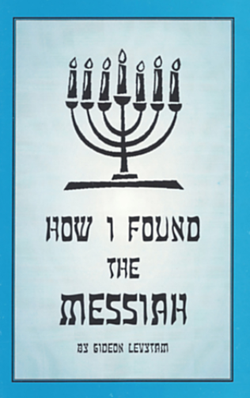
Follow Gideon Levytam's journey and discover how he was led by God, through a series of exciting circumstances, to find the One his people are still waiting for.
Past Episodes

Featured Offer
Follow Gideon Levytam's journey and discover how he was led by God, through a series of exciting circumstances, to find the One his people are still waiting for.
About Holy Scriptures and Israel
As time passed by, the Lord Yeshua took dear brother John Van Stormbroek to himself. The ministry of Holy Scriptures and Israel continued with additional development. In the early 1990’s, a weekly morning Bible class began which brother Gideon Levytam led regularly in the City of Toronto. This weekly open Bible class was held in the Willowdale assembly meeting hall. Eventually, a second mid-week evening Bible class was added. In April 2002, the need for an additional outreach Bible teaching meeting arose. We begun a Saturday (Shabbat) ministry meeting in which a systematic teaching of God’s word is presented to all who attend. Together we learn God’s Word, pray for each need and the salvation of Israel, and sing songs of worship unto our God, praising Him and our Lord Yeshua the Messiah.
In Mid 2004 we started to air on Joy 1250 Radio station a 15 minute Bible teaching program called "The Holy Scriptures and Israel" with Gideon Levytam. The broadcast teaches God’s word from a Hebrew Messianic perspective and has proved to be a blessing to many. It's now aired seven days a week. Our prayer is that many more of our Israeli people will have a clear understanding of who Yeshua is, why we all need him, and come to know him as their Lord and Messiah.
About Gideon Levytam
Contact Holy Scriptures and Israel with Gideon Levytam
426 Simcoe Street
Niagara-on-The-Lake
Ontario L0S 1J0
Canada
(905) 325-1234