
Nehemiah 3:1-14, Part 1 of 3


The Building of the Walls of Jerusalem, Part 1
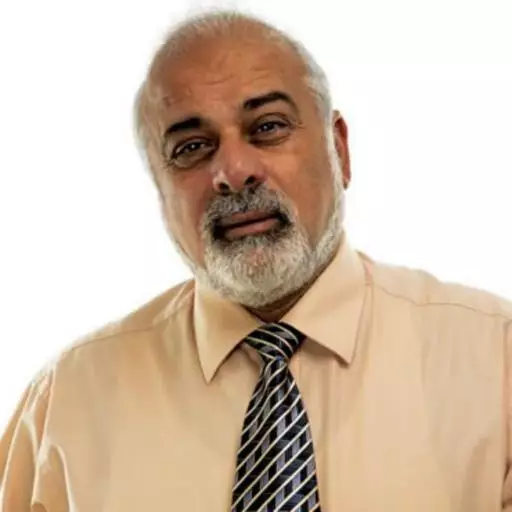
Guest (Female): Shalom. Holy Scriptures and Israel is a ministry designed to share with the Jewish people the good news of the Lord Jesus, Yeshua the Messiah, and to instruct Christians on the Jewish roots of their faith. And now, teaching God's Word from a Hebrew Messianic perspective, here is Gideon Levytam.
Gideon Levytam: Shabbat Shalom. Please open your Bibles. We are going to turn today to the book of Nehemiah, Nehemiah chapter 3. And I would like today to read with you verses 1 to 14. And I begin with the reading.
Then Eliashib, the high priest, rose up with his brethren, the priests, and they builded the sheep gate. They sanctified it, and set up the doors of it, even unto the tower of Meah, they sanctified it, unto the tower of Hananeel. And next unto him builded the men of Jericho. And next to them builded Zaccur, the son of Imri.
But the fish gate did the sons of Hassenaah build, who also laid the beams thereof, and set up the doors thereof, the locks thereof, and the bars thereof. And next unto them repaired Meremoth, the son of Urijah, the son of Koz. And next unto them repaired Meshullam, the son of Berechiah, the son of Meshezabeel. And next unto them repaired Zadok, the son of Baana.
And next unto them the Tekoites repaired, but their nobles put not their necks to the work of the Lord. Moreover the old gate repaired Jehoiada, the son of Paseah, and Meshullam, the son of Besodeiah. They laid the beams thereof, and set up the doors thereof, and the locks thereof, and the bars thereof.
And next unto them repaired Melatiah, the Gibeonite, and Jadon, the Meronothite, the men of Gibeon, and of Mizpah, unto the throne of the governor on this side the river. Next unto him repaired Uzziel, the son of Harhaiah, of the goldsmiths. Next unto him also repaired Hananiah, the son of one of the pharmacists, and they fortified Jerusalem unto the broad wall.
And next unto them repaired Rephaiah, the son of Hur, the ruler of the half part of Jerusalem. And next unto them repaired Jedaiah, the son of Harumaph, even over against his house. And next unto him repaired Hattush, the son of Hashabneiah.
Malchijah, the son of Harim, and Hashub, the son of Pahath-Moab, repaired the other piece, and the tower of the furnaces. And next unto him repaired Shallum, the son of Hallohesh, the ruler of half part of Jerusalem, he and his daughters.
The valley gate repaired Hanun, and the inhabitants of Zanoah, they built it, and set up the doors thereof, the locks thereof, the bars thereof, and a thousand cubits on the wall unto the dung gate. But the dung gate repaired Malchiah, the son of Rechab, the ruler of part of Beth-Haccerem. He built it, and set up the doors thereof, the locks thereof, and the bars thereof. And I'm going to stop with this verse 14.
Brothers and sisters, you saw in my reading of this text, how difficult it is to even read the names of so many Jewish individuals that came back from Bavel and began now the buildings of the walls of the city of Jerusalem and the gates thereof. Now, I would like specifically just to mention today that the third chapter of the book of Nehemiah is an extremely interesting chapter.
Now, if you and I would have been reading the whole book of Nehemiah, we would probably read chapter 1, chapter 2, and then jump to chapter 4. We would probably not read much of the names that are found in the third chapter of the book of Nehemiah. And why it is? Because you simply have a list of names of Jewish men and women, and you have a list of names of gates that had been built. And you and I will kind of skim over it and we say, "Okay, this is just a list of name. Let's move on to chapter 4."
But again, let me remind you that the Bible does say in Romans 15 and verse 4 and 1 Corinthians 10 and verse 11, it says whatsoever things were written aforetime were written for our learning. All these things happened unto them in order to become an example for you and I today in this present day of the assembly where believers are gathered together and belong to Yeshua the Messiah.
So, whatever happened to our people of old, the people of Israel, served to be a lesson for you and I today. Well, what is the lesson that you and I can learn from Nehemiah chapter 3? I would like to suggest to you beloved brothers and sisters a few things before we're going to go through those verses that I have read today, the first 14 verses of Nehemiah chapter 3.
The first thing that I would like to suggest to you today that God has a book, or perhaps we might say many books, and in these many books God records the way in which His people served Him and builded among the people of God as they served our Lord Yeshua the Messiah. God has a record.
In fact, I would like you to turn to the book of Malachi for a moment with me. He was the last prophet and he was actually speaking to these men and women who came back from Bavel to rebuild the wall of the city of Jerusalem. Malachi wrote in chapter 3 and verse 16, where it says then they that feared the Lord spake often one to another, and the Lord hearkened, and He heard it. And notice what it says in verse 16b, and a book of remembrance was written before him for them that feared the Lord and that thought upon His name.
God has a record. God had a book in which He writes all the record of the way whereby the people of God, whether it is Israel historically, or whether it is you and I in the church age, in the assembly age, He writes it down and He has a record of the way in which the people of God conducted themselves. Why? Because He want to bless His people and He wants His people to serve Him and nothing is hidden from the one from with whom we have to do.
He knows everything about you and I. And here we can see in Nehemiah chapter 3 a list of Jewish individuals that were recorded in a whole chapter, the third chapter of the book of Nehemiah. And so you and I can be sure that God is recording everything that we have done for the Lord, everything, every service, every little thing that we have done for the Lord in building of the household of faith, of the people of God.
So you and I never to be discouraged in building, in serving the Lord, in doing things for Yeshua Jesus the Messiah. He will reward His people, He will bless His people who serve Him. Secondly, I would like to suggest beloved brothers and sisters, that as these Jewish people here who returned from Bavel under the leadership of Nehemiah, we can see that God used these people and you can see that He loved to see them working together.
When we don't work together, when we don't help each other and support each other and build together, things are going to break into pieces. But when we work together, there is a blessing for the people of God because when we work together, it helps to build the things of the Lord and you can see what a strength it is working together. Things can happen. The Lord uses His people who serve together.
I want you to turn now to 1 Corinthians chapter 12 and verse 7, and to apply this to believers today in the body of Messiah. Paul wrote, "But the manifestation of the Spirit is given to every man," we can add every woman, every brother, and every sister, "in order to profit with all." In other words, the gifts were given so the people of God will profit. There will be a blessing among the people of God.
Now, notice in verse 11, Paul says, "But all these worketh the one and the selfsame Spirit, dividing to every man severally as he will." In other words, God gave us gifts and He also gave us the natural ability so we will use it among the people of God. Notice according to several ability, He didn't give all of us the same gift, but He has given us various gifts to use for the Lord.
Now, here is the next thing. From verse 12 to verse 21, the apostle Paul in 1 Corinthians chapter 12 and verse 12, emphasized the importance of working together. He says, "For the body is one, and has many members, and all the members of that one body, being many, are one body. For by one Spirit we all have been baptized into that one body, whether we are Jewish or Gentile, whether we are bond or free, and we have been all made to drink into the same Spirit. For the body is not one member, but many."
You see brothers and sisters, we are many members in this one body, we call it in Hebrew Guf HaMashiach, and every one of us is important in the body of Messiah. And you notice what he says a little bit further down, he said in verse 21, "The eye cannot say unto the hand, 'I have no need of thee.' Nor again the head to the feet, 'I have no need of you.'"
What he's really saying is that we really need one another in order to build the body of Mashiach, the body of Messiah in the gospel, in shepherding, in teaching, in serving. No one of us can say, "I am exempt from taking part in the Lord's work." The Lord's work had been given to all believers and all believers are to put their shoulders and to put their time, to put their energy in serving Yeshua the Messiah until He's going to come to take us to be with Him in heaven.
Now, turn the page to 1 Corinthians chapter 15. Sha'ul Paul said to the brothers and sisters in verse 58, he said, "Therefore, my beloved brethren, be ye steadfast, unmoveable, always abounding in the work of the Lord, forasmuch as ye know that your labor is not in vain in the Lord."
Brothers and sisters, this is the encouragement that Paul gave to the Corinthian believers and this is the encouragement that Nehemiah gave to our Jewish people of old when he called them to build the walls and the gates of the city of Jerusalem. So now back to our chapter.
Nehemiah chapter 3, a complete chapter that is devoted to a list of names of Jewish men and women, basically men and their family, and a list of 10 gates that are mentioned here in this third chapter of Nehemiah chapter 3. Now, I would like to talk today about the first 14 verses and make an application of the first five gates that were build in the city of Jerusalem.
Now, I have a chart that I want to show you about the walls of Jerusalem that Nehemiah have built and the gates. In fact, some gates that were built on the north, some gates to the west, there was one gate that was build on the south and there were five gates that were placed on the east side of the walls of Jerusalem. 10 gates all together.
Here in this third chapter of the book of Nehemiah, we have the names of all the 10 gates. In fact, let me read them to you. In chapter 3 and verse 1, we have the sheep gate. In Hebrew we call it Sha'ar HaTzon. Then next to it in verse 3, we have the second gate and it is called the fish gate. In Hebrew we call it Sha'ar HaDagim.
A little bit further down in verse 6, we have the third gate and this called the old gate. In Hebrew we call it Sha'ar HaYeshanah. Then further down in verse 13, we have the fourth gate and it is called the valley gate. In Hebrew we call it Sha'ar HaGai. Then further down in verse 14, we have the dung gate. In Hebrew we call it Sha'ar HaAshpot.
A little bit further down in verse 15, we have the fountain gate. In Hebrew we call it Sha'ar HaAyin. Then further down in verse 26, we have the water gate. In Hebrew we call it Sha'ar HaMayim. Then in verse 28 we have the horse gate and in Hebrew we call it Sha'ar HaSusim. And then we have in verse 29 the east gate and in Hebrew we call it Sha'ar HaMizrach. And finally we have in verse 31 the Miphkad gate and in Hebrew we call it of course Sha'ar HaMifkad.
And you notice in verse 32, which is the last verse, we are going back to the sheep gate, Sha'ar HaTzon. So what we have here, beloved brothers and sisters, the 10 gates of the city of Jerusalem presented before us. It began from the north, went to the west, down to the south, and then eventually to the east and going all the way back to the Sha'ar HaTzon, to the sheep gate.
There is another two gates that are mentioned in Nehemiah 8:16 and it's called there the gate of Ephraim. And in Nehemiah 12 and verse 38, we have there the prison gate which is called Sha'ar HaMatarah. Those gates are not mentioned here in this third chapter where we have only 10 gates mentioned in Nehemiah chapter 3.
And I would like to suggest by ministry today that in these 10 gates we have the experience of God's people in their day-by-day living. Those 10 names giving to us in Nehemiah chapter 3 will teach us spiritual lessons concerning the life of the people of God.
The walls are built on a one hand to protect and to keep the people of God secure, and on the other hand to keep all that is not from the Lord outside from among the people of God. So these 10 gates really represent before us the life of the people of God and the experiences that you and I, Israel in the past, believers today in the present day of the assembly of the church age, the experiences that we have in our relationship to God and in our relationship to our Lord Yeshua the Messiah.
And everything begins with the person of our Lord Yeshua the Messiah. You notice that the first gate, it's called here in chapter 3 and verse 1, is called the sheep gate. It says here and Eliashib, the high priest, rose up with his brethren, and they builded the sheep gate. They sanctified it, they set up the door of it, even unto the tower of Meah, they sanctified it, unto the tower of Hananeel.
And next unto him build the men of Jericho, and next unto him builded Zaccur, the son of Imri. Let's just pause here for a moment. In verses 1 and 2, we have the beginning of the building of the gates. The first gate of course is mentioned here in Hebrew, we call it Sha'ar HaTzon. It's the sheep gate.
The sheep gate was builded why? Because through this gate the sheep were going in in order to be slaughtered and placed upon the altar in the temple in the city of Jerusalem. So if you would bring all the flock in order for them to be killed and placed upon the altar so the people, our own people will receive atonement for their sins, for their souls, they had to come through the sheep gate.
And the sheep gate, I would like to suggest beloved brothers and sisters, represent before us the person of Yeshua the Messiah. He's the one beloved brothers and sisters, who became the Lamb of God who took upon Himself the sin of this world. He is actually in His life when He first enter into the city of Jerusalem, He enter by the sheep gate. When He went up from Mount Olives, up through the Kidron valley and all the way up to Mount Moriah, He enter into the city of Jerusalem through the sheep gate.
He actually, beloved brothers and sisters, became the one that was going to take away the sin of this world. Everything began with Yeshua the Messiah. Turn with me to Isaiah 53. Earlier we talked about the prophet Isaiah and how often time we discover that it is not read in the synagogue, in Beit HaKnesset.
Why? Because it speaks so much about this man from Natzeret, HaIsh Min HaNatzeret, the man whose name is Yeshua, Jesus in Greek and in Hebrew we call him Yeshua. And you notice in chapter 53, the prophet of Israel of old said many years ago, 750 years before Yeshua the Messiah came, the prophet of Israel, Isaiah, said in chapter 53 and verse 7, "He was oppressed, and he was afflicted, yet he opened not his mouth. He is brought as a lamb to the slaughter, as a sheep before her shearer is dumb, so he opened not his mouth."
The sheep gate represent before us the person of our Lord Yeshua the Messiah, who became that Lamb of God. John 1:29, Yochanan the Baptist says, "Behold the Lamb of God, which taketh away the sin of this world." There is no beginning of building a life, there is no beginning of building a relationship with a living God if we set aside the blood that must be shed upon an altar by a lamb.
And the sheep gate represent before us the beginning of our life as believers in Yeshua the Messiah. We have come in, we have accepted Him, the blood of our Lord Yeshua the Messiah cleanses us from all sin. The sheep gate had to be erected first if Israel was going to continue to build all the walls and the gates around the city of Jerusalem.
You see 1 Peter chapter 3 and verse 18, Peter said to the brothers and sisters in verse 18, he said, "For the Messiah has once suffered for sins, the just for the unjust, that he might bring us to God, being put to death in the flesh, but quickened by the Spirit," made alive by the Spirit. If someone is going to be saved and forgiven, he or she must accept the Lamb of God that paid for the price of our sins.
He is the one that is represented by the sheep gate. In history past, our own Jewish people used to bring the flock and all the sheep and the goats that will come into the temple and be slain and the blood shed upon the altar, had to come through the sheep gate. And you and I have enter into our relationship with God through the sheep gate.
The Lord Yeshua said, "I am the door. By me if any man enter in, he shall be saved." There is no other salvation in any other. It was Peter who said, "There is no other name given among men whereby we must be saved," Acts chapter 4 and verse 12. Yeshua Himself said in John chapter 14, "I am the way, the truth, and the life. No one come to the Father but by me."
So everything began with Sha'ar HaTzon, the sheep gate. And you notice, beloved brothers and sisters, who are the ones that building the sheep gate? It began by the priests. You notice that? It says in verse 1 Eliashib, the high priest. He rose up first with his brethren, the priests, and they builded the sheep gate.
It's so beautiful. It reminds us again the only one who could offer a lamb to be slaughtered on the altar must be the priest, not an ordinary individual. And here we see the priests doing their responsibility. You and I might apply this to us in our lives as believers. If we are going to be an influence upon others, we ourselves has to make things real to our own life, to our own soul, to appropriate the person of Yeshua the Messiah to our own life, to our own self.
And so the sheep gate was builded and it's really a representation of the cross, of the tree upon which Yeshua the Messiah laid down His life for the sin of this world. And so how beautiful to see that, that everything began with the sheep gate. Now, let's move on. In verses 3 to 5, we have the second gate that is being builded and put together as the wall is continue to be build around the city of Jerusalem. Let me read verses 3, 4, and 5. It says, "But the fish gate did the sons of Hassenaah build."
Guest (Female): You've been listening to Holy Scriptures and Israel with Gideon Levytam. Gideon teaches God's Word from a Hebrew Messianic perspective. For more information about this ministry, write to Holy Scriptures and Israel, Box 1411, Niagara on the Lake, Ontario, L0S 1J0, or visit our website at holyscripturesandisrael.com.
You are also invited to Gideon's weekly Bible teaching on Fridays at 11:00 AM and 7:00 PM, and Saturdays at 1:00 PM at Willowdale Christian Assembly Hall, 28 Martin Ross Avenue in Toronto. Holy Scriptures and Israel is made possible by your prayers and financial support. If you would like to support the program, visit holyscripturesandisrael.com. God bless you. Shalom, shalom.
Featured Offer
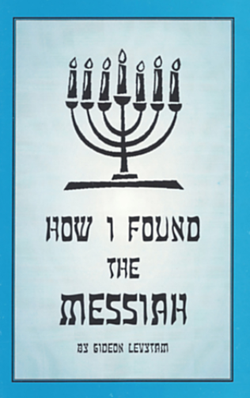
Follow Gideon Levytam's journey and discover how he was led by God, through a series of exciting circumstances, to find the One his people are still waiting for.
Past Episodes

Featured Offer
Follow Gideon Levytam's journey and discover how he was led by God, through a series of exciting circumstances, to find the One his people are still waiting for.
About Holy Scriptures and Israel
As time passed by, the Lord Yeshua took dear brother John Van Stormbroek to himself. The ministry of Holy Scriptures and Israel continued with additional development. In the early 1990’s, a weekly morning Bible class began which brother Gideon Levytam led regularly in the City of Toronto. This weekly open Bible class was held in the Willowdale assembly meeting hall. Eventually, a second mid-week evening Bible class was added. In April 2002, the need for an additional outreach Bible teaching meeting arose. We begun a Saturday (Shabbat) ministry meeting in which a systematic teaching of God’s word is presented to all who attend. Together we learn God’s Word, pray for each need and the salvation of Israel, and sing songs of worship unto our God, praising Him and our Lord Yeshua the Messiah.
In Mid 2004 we started to air on Joy 1250 Radio station a 15 minute Bible teaching program called "The Holy Scriptures and Israel" with Gideon Levytam. The broadcast teaches God’s word from a Hebrew Messianic perspective and has proved to be a blessing to many. It's now aired seven days a week. Our prayer is that many more of our Israeli people will have a clear understanding of who Yeshua is, why we all need him, and come to know him as their Lord and Messiah.
About Gideon Levytam
Contact Holy Scriptures and Israel with Gideon Levytam
426 Simcoe Street
Niagara-on-The-Lake
Ontario L0S 1J0
Canada
(905) 325-1234