
Nehemiah 2:11-20, Part 2 of 3


Nehemiah’s Invitation-Come, Let Us Build Up the Walls of Jerusalem, Part 2
Guest (Male): Shalom. Holy Scriptures and Israel is a ministry designed to share with the Jewish people the good news of the Lord Jesus, Yeshua the Messiah, and to instruct Christians on the Jewish roots of their faith. And now, teaching God's Word from a Hebrew-Messianic perspective, here is Gideon Levytam.
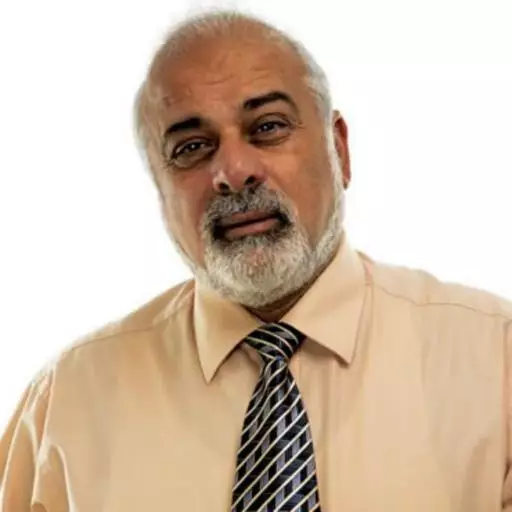
Gideon Levytam: The study of Nehemiah chapter 2. Nehemiah in chapter 1 heard about it, but now in chapter 2 he sees it with his own eyes. We can hear about conditions that exist somewhere, but it is altogether another story to actually arrive at this place and to see it for ourselves and to recognize it. It was not only stories that were told me when I was in Bavel. I now see it with my own eyes, and it must have grieved him. It have hurt him. He's walking around the walls of the city, enters into one gate, comes out from another gate, goes through the Dung Port, and so on, and watches the walls. He sees broken walls and burned gates. All that was written and what I was told about in Bavel, now I see it for myself.
Just to make an application again, brothers and sisters, sometimes we hear about a congregation or an assembly that are broken down. The people are divided. They're fighting among themselves, and you hear it from afar off. You know what? I heard about this church, this assembly. They used to be on fire for the Lord. Look at them where they are today. Things are broken to pieces. Well, you hear it, that is one thing, but to visit and to actually speak to the people and see what's going on, and you find and you say, "Boy, what I was told is a real thing. God's people are broken and divided and scattered." It becomes very real, and if one is really convicted before the Lord, you pray and you ask, "Lord, how can healing begin? How can a restoration begin?"
You see, the lesson here, it's not only a lesson of Israel's history and a lesson of the body of Messiah today, but we can apply it to broken lives, broken marriages, broken families, broken friendships. Why? Because the enemy constantly sows seeds of discord and causes problems for the people of God. Nehemiah cared, and he wanted to be a builder, a uniter, a person that is bringing the people of God together.
Notice what it says in verse 14. "Then I went to the gate of the fountain." This is called Sha'ar Ha'ayin. This is another one of the gates in Jerusalem. And then notice what happened. "And to the king's pool: but there was no place for the beast that was under me to pass." The rubble was so terrible of broken walls and stones one upon the other that there was no room for the animal to the other side. You see, he went by the Gate of the Fountain and by the King's Pool. That King's Pool is what we would know today as the Pool of Shiloach. That pool was very near to the king's palace there in Jerusalem.
In chapter 3 and verse 15, notice what it says there. "But the gates of the fountain repaired Shallun," and he gives you the name of the people. Then it says, "and the wall of the pool of Shiloach." The Pool of Shiloach is the pool where the blind man of John 9 received his healing when Yeshua sent him. You remember he told him, "Go and wash your eyes and you will see." The word Shiloach comes from the Hebrew word lishloach, "to send." Indeed, we may say it's applied to us of the Messiah, the King of the Jewish people, who was sent by God to this world to heal the brokenhearted, to give sight unto the blind, and to provide salvation to all of us who needed redemption and salvation.
Turn with me to Isaiah chapter 8. Just another remark on the King's Pool. Isaiah chapter 8, we read of the reason that the people of Israel were taken captivity to Bavel was because Israel was not appreciating, and they refused what God had for them. God had to discipline His very own people. Isaiah chapter 8 and verse 5: "The Lord spake unto me again... Forasmuch as this people," this is our Jewish people, "refuse the waters of Shiloach that go softly, and rejoice in Rezin and Remaliah's son; Now therefore, behold, the Lord bringeth up upon them the waters of the river, strong and many, even the king of Assyria, and all his glory: and he shall come up over all his channels, and go over all his banks: And he shall pass through Judah; he shall overflow and go over, he shall reach even to the neck; and the stretching out of his wings shall fill the breadth of thy land, O Immanuel."
What we read in Isaiah 8 happened long before what we read in Nehemiah chapter 2. Because our nation, the people of Israel, refused the waters of Shiloach, they ended up to be in captivity by the Babylonians and the northern kingdom by the Assyrians. But now Nehemiah comes back, and what does he see when he's looking at the walls and we're looking at the gates? He sees everything is broken down. He's going from one place to another, and by the pool or the King's Pool, there was no place for even his beast to pass through because the rubbish, the rubble was so great there. Nehemiah was not pleased with that.
So we read now in verse 15, Nehemiah eventually goes back to the same place where he started. In verse 15, we read, "Then went I up in the night by the brook, and viewed the wall, and turned back, and entered by the gate of the valley." This is Sha'ar Ha'gay, the Valley Gate. "And so I returned." In a sense, you can see that he may have gone around the ancient city of Yerushalayim, observing all the walls and making a plan how he's going to rebuild the walls of the city of Yerushalayim. That tells us also something very important because if we are going to be builders, we got to know all the things that are going on among the people of God so we can be helpful.
We often take one side with one person and another side with another person. We often are very unfair in our judgment and our deliberation. We are not always having the grace of God in our dealing with God's people. But Nehemiah knew everything that was going on. We are talking about the physical wall in Nehemiah's time, but we apply this to the spiritual life of the people of God. Nehemiah definitely was an example in the way that he planned, he observed, he had been a very gracious man, he understood what was going on, and he ultimately now is ready to build the walls of the city of Yerushalayim.
The third point that we learn here in this passage is Nehemiah now encourages the Jewish people to rise up and build. Again, his name is Nechemya. He's a man that represents comfort, the comfort that comes from the Lord. He is now an encourager to build and to raise up again the walls that were broken down. To remind you, beloved brothers and sisters, that walls are raised for two reasons: number one, to separate, and number two, to protect. God's people, you and I, also need walls in our life: biblical walls, not human walls, not walls of pride and walls of sectarianism, but we need biblically sound walls of protection and separation: protection from the enemies, separation from that which is contrary to the word of God.
So you find out in verses 16, 17, and 18 that he is encouraging our Jewish people of old to rise up and build. In verse 16, the Jewish people there were really in a condition, in a state of sleep. Perhaps you and I can speak of ourselves. How many times? "Oh yes, we are believers. We belong to the Lord. We're going to heaven. Our sins have been forgiven." But we are not really exercising our own hearts to live for the Lord. Yes, we go to a meeting and we do some so-called Bible things a little bit, but we are in a state of sleep.
Look at the condition. Look at what we find out in verse 16. He says, "The officials did not know where I went or what I did; I had not yet told it to the Jews," this is the whole Jewish community there, "to the priests, the kohanim, to the nobles, to the officials, or to the rest that did the work." He didn't tell them anything, and it's kind of sad. Everything is falling apart, nobody does anything. You have to wait for one man to come from overseas, you might say, to do the work. Everybody is still kind of staying around and in a state of sleep.
That tells us, brothers and sisters, of a time how we can be in such a condition. We are not exercised or stirred up in our heart to serve the Lord Yeshua the Messiah. Well, nobody knew. He have already went around, everybody was still there in a state of sleeping. Here a man comes from over the rivers by the name of Nechemya. God had laid upon his heart to come and to start to stir up the people to build. We see them all in a state of sleep.
It reminds me of some verses from the Bible that, for example, the Apostle Paul, Sha'ul, said to the Ephesians or to the Thessalonians. In Ephesians chapter 5, Paul is saying to believers, he doesn't talk to unbelievers, he's saying to believers in Yeshua the Messiah, "But all things that are reproved are made manifest by the light: for whatsoever doth make manifest is light. Wherefore he saith, Awake thou that sleepest, and arise from the dead, and the Messiah shall give thee light. See then that ye walk circumspectly, not as fools, but as wise, redeeming the time, because the days are evil. Wherefore be ye not unwise, but understanding what the will of the Lord is."
He's not speaking to unbelievers, the Apostle Paul in Ephesians 5. He is speaking to the local believers at Ephesus. He says, "Look at the condition. Look at everything that is a mess among the people of God. What are you going to do about that? Are you going to stay in a sleeping condition?" Paul says, "Wake up." You know he's quoting what the Lord said to our own people Israel through the prophets years earlier. "Awake thou that sleepest, arise from the dead, and the Messiah, Christ will give you light."
You and I need to be at times awakened. You cannot do it. It's got to be the Spirit of God has to do this work in our hearts, and we need to pray that the Lord will help us in this. Look at 1 Thessalonians chapter 5. Here he is writing to another group of believers in another different area, and he's saying to them, "You are the children of light," verse 5, "and the children of the day: we are not of the night, nor of darkness. Therefore let us not sleep, as do others; but let us watch and be sober. For they that sleep sleep in the night; and they that be drunken are drunken in the night. But let us, who are of the day, be sober, putting on the breastplate of faith and love; and for an helmet, the hope of salvation. For God hath not appointed us unto wrath, but to obtain salvation by our Lord Yeshua the Messiah. Let us not sleep," he's saying.
Don't you think, brothers and sisters, you and I need that today in these last days? We also need to be awakened in our hearts to serve the Lord and do something for Him here in this world. Well, those unfortunate Jewish people in the time of Nechemya, they were in the land already. They perhaps were going to the temple already because the temple was already built. But notice, as we read, not the whole Jewish community, not the priests, not the nobles, not the rulers, not the rest of the people, none of them knew anything that was going on. They were in a state that was rather sad.
In a future day, when God is going to restore our people Israel, you know the prophets of old saying to Israel very similar. In the prophet Isaiah and the prophet Jeremiah and the prophet Zechariah is awakening the people of Israel. Israel ultimately will have to be awakened as a nation to be restored back to the Messiah. Isaiah 51:17: "Awake, awake, stand up, O Jerusalem." Isaiah 52:1: "Awake, awake; put on thy strength, O Zion." Yerushalayim, Tzion, the same place. The Hebrew word: Uri, uri livshi uzech Tzion. Get up, Yerushalayim. Don't stay where you are in a state of sleep. The Messiah is coming. He is going to restore you. He is going to establish the Messianic kingdom in a future day. Wake up, he's saying to them.
In chapter 60 and verse 1 of the prophet Isaiah: "Arise, shine; for thy light is come, and the glory of the Lord is risen upon thee." Zion, Yerushalayim, Israel. That's in a future day just when the Messianic kingdom is going to be established. But they do not know that when Nehemiah came. Nehemiah came and he is now stirring them up to wake up. So he's telling them, in Nehemiah chapter 2 and verse 17, Nehemiah points the Jewish people to the condition of the city of Yerushalayim.
Look at what he says to them in verse 17. "Then said I unto them," you see, they were not with him. They were sleeping at that time when he went out at night. Spiritually speaking, they did not do anything about the building of the wall before Nechemya came. So we read, "Then said I unto them, Ye see the distress that we are in, how Jerusalem lieth waste, and the gates thereof are burned with fire: come, and let us build up the wall of Jerusalem, that we be no more a reproach."
Now, one thing I love about him again, one thing there are many things I love about Nehemiah, but notice he identified himself with the people. He doesn't come and say, "Oh, you bad Jewish people, you do not get up to build the city of Jerusalem. I am the good one who is going to come to fix all your problems." No, he says to them, "Ye see the distress that we are in." And then he says, "that we be no more a reproach." He affiliated himself with the brothers and sisters of his own people, the Jewish people.
He says, "Look, brothers and sisters. Look what's going on. Don't you see the distress that we are in and how Jerusalem is lying in waste and the gates thereof are burned with fire? Don't you see this?" You know, again, I think it is kind of sad when we don't respond to the call of the Lord. Don't we see what's going on among the body of believers? I'm not saying that we're going to fix every problem. But why don't we be used to be a blessing to God's people? Maybe we need to make a visit. Maybe we need to give a phone call. Maybe we can go and help somebody who have a need somewhere.
"Don't you see?" Nehemiah is saying to them. Sometimes, making for myself as well, we are so selfish. Our hearts are hardened. We are just occupied with our own problems and we don't realize the needs that exist among the people of God. It's me, mine, and I, never mind anybody else. That's not right. Nehemiah had the right attitude. When Israel was in her failure, he identified with them. But he also encouraged them to be a blessing and to serve among the people of God. He's saying to them, "Don't you see? Look around. Many people are sick in our midst. Many people are discouraged in our midst. Sometimes they're at the meeting, sometimes they're not at the meeting. Sometimes they read the Bible. You don't know, and we need to help each other. We are part of the body of Messiah. We have to have this kind of attitude in our lives. We can't fix everything, but we got to be used by the Lord."
"Don't you see what's going on?" he's saying to them. "Look at the condition that is existing. Jerusalem is lying waste. The gates are burned with fire. What you gonna do about it? Okay here, brothers and sisters, come, let us begin to build the walls of Jerusalem." He reminds me of certain other verses that we have in the New Testament. You know we all have gifts. We are part of one body, not only us here but all believers. Every one of God gave us a gift. We are members of one body: the hands, the fingers, the head, the feet, the toes. We are members of one body.
Now, you know very well when, let's say, you have a certain pain in your hand and you can't use your left hand, you have to do everything with the right hand. You can't do the same thing with one hand that you can do with two hands. You cannot do with one foot. You have two feet, you got to use both of your feet in order to be able to walk around and to do things for the Lord. You and I are members of a body of Messiah, and every one of us is responsible to function, to do our part.
It is so beautiful to see Nechemya how he's encouraging them. He says, "Look at the condition, try to do something about it. Come," he said, "let us build up the wall of Jerusalem, that we will be no more a reproach." The Hebrew word reproach is cherpah. Busha ve cherpah. What a shame when the world looks at the condition of the body of the Messiah, and they look at us and they say, "Ha, you're the people of God? Yeah, your Jesus? Yeah, your Yeshua? Don't tell me about your Yeshua. Look at the condition that is existing in your midst. You can't even handle each other. You don't even have patience with each other. Don't you tell me about the love of God. You first of all practice this in yourself. Don't tell me what I need to do," they would tell us.
And you remember our people of Israel who were in Babylon. "By the rivers of Babylon, there we sat down, and we wept when we remembered Zion. Then they that took us captive said unto us, Sing unto us one of Zion's songs." They were mocking the Jewish people who were supposed to be in Jerusalem, but they found themselves in Bavel by the rivers of Babylon. So here we see, this can apply to us today. But there was a man that came to seek to help them. "Come, let us," not I alone, he's saying about himself. "Let us build it." It's not a one-man show, Nehemiah and everybody else. No, it's "let us," he says. All us Jewish people who are in Jerusalem and the surrounding land, let us together build the walls.
So in verse 18, Nehemiah shared of God's hand and the king's words with the Jewish people. He says, "Listen, what I'm telling you, it's not something that came only from my head." He says, "The hand of my God was good upon me." He told them of the hand of my God. You see, he was so much dependent upon the help of the Lord, the God of heavens, the God of Israel. He says, "Really, it's not me alone. It is the hand of my God." And even further he's saying to them in verse 18, "and also the king's words that he had spoken unto me." In other words, it's not only God in heaven that His hands was upon me, but the king Artaxerxes. He agreed with it. He approved it. He sent me to come to Jerusalem to do this work.
And then he continues. Look at the response. It's so nice to see when he motivated the Jewish community of those days to begin the rebuilding of the walls of Yerushalayim, because it says in verse 18, "And they said, Let us rise up and build. So they strengthened their hands for this good work." So they responded. You see, they were not just leaving that for him alone. They responded. Sometime we hear of the expression "the movers and the shakers." You know we need those brethren that are moving us, shaking us, awakening us, not causing us trouble, but building us, encouraging us to be builders. That's what we need. Trouble we have plenty. We don't need that.
You'll see it in the next two verses. Trouble will come. But we need the movers and the shakers, the godly men and women, brothers and sisters who are saying, "I'm going to serve the Lord." You see one day we are going to stand before the Lord, and the Lord's gonna ask you and me, "What have you done for Yeshua the Messiah?" The Lord has to awaken each and every one of us to do the work of the Lord. Well, listen, when you're going to begin to do the work of the Lord, it's not going to be smooth sailing. It would be nice if it would be smooth sailing because right there and then, the enemy is going to try to discourage us. Just like he did here. You notice the last two verses of chapter 2. The enemies of the Jewish people opposing the work of the Lord.
It says, "But," notice the change here, "but. But when Sanballat the Horonite, and Tobiah the Ammonite, and Geshem the Arabian heard it, they laughed us to scorn and despised us and said, 'What is this thing that ye do? Will ye rebel against the king?' Then answered I them, and said unto them, The God of heaven, He will prosper us; therefore we His servants will arise and build it: but ye have no portion, nor right, nor memorial, in Jerusalem." Shalom, shalom.
Guest (Male): You've been listening to Holy Scriptures and Israel with Gideon Levytam. Gideon teaches God's word from a Hebrew Messianic perspective. For more information about this ministry, write to Holy Scriptures and Israel, Box 1411, Niagara-on-the-Lake, Ontario, L0S 1J0, or visit our website at holyscripturesandisrael.com. You are also invited to Gideon's weekly Bible teaching on Fridays at 11:00 AM and 7:00 PM and Saturdays at 1:00 PM at Willowdale Christian Assembly Hall, 28 Martin Ross Avenue in Toronto. Holy Scriptures and Israel is made possible by your prayers and financial support. If you would like to support the program, visit holyscripturesandisrael.com. God bless you. Shalom, shalom.
Featured Offer
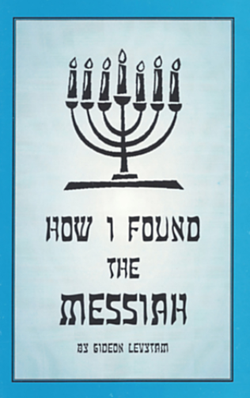
Follow Gideon Levytam's journey and discover how he was led by God, through a series of exciting circumstances, to find the One his people are still waiting for.
Past Episodes

Featured Offer
Follow Gideon Levytam's journey and discover how he was led by God, through a series of exciting circumstances, to find the One his people are still waiting for.
About Holy Scriptures and Israel
As time passed by, the Lord Yeshua took dear brother John Van Stormbroek to himself. The ministry of Holy Scriptures and Israel continued with additional development. In the early 1990’s, a weekly morning Bible class began which brother Gideon Levytam led regularly in the City of Toronto. This weekly open Bible class was held in the Willowdale assembly meeting hall. Eventually, a second mid-week evening Bible class was added. In April 2002, the need for an additional outreach Bible teaching meeting arose. We begun a Saturday (Shabbat) ministry meeting in which a systematic teaching of God’s word is presented to all who attend. Together we learn God’s Word, pray for each need and the salvation of Israel, and sing songs of worship unto our God, praising Him and our Lord Yeshua the Messiah.
In Mid 2004 we started to air on Joy 1250 Radio station a 15 minute Bible teaching program called "The Holy Scriptures and Israel" with Gideon Levytam. The broadcast teaches God’s word from a Hebrew Messianic perspective and has proved to be a blessing to many. It's now aired seven days a week. Our prayer is that many more of our Israeli people will have a clear understanding of who Yeshua is, why we all need him, and come to know him as their Lord and Messiah.
About Gideon Levytam
Contact Holy Scriptures and Israel with Gideon Levytam
426 Simcoe Street
Niagara-on-The-Lake
Ontario L0S 1J0
Canada
(905) 325-1234