
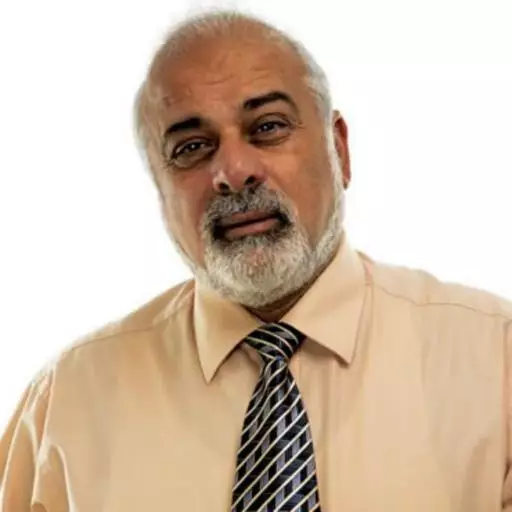
Nehemiah 13:15-31, Part 3 of 3


Israel’s Violation of God’s Commandments, Part 3
Guest (Male): Shalom. Holy Scriptures and Israel is a ministry designed to share with the Jewish people the good news of the Lord Jesus, Yeshua, the Messiah, and to instruct Christians on the Jewish roots of their faith. And now teaching God's Word from a Hebrew-Messianic perspective, here is Gideon Levytam.
Gideon Levytam: The study of Nehemiah Chapter 13. He must have been such a strong man. He says, "Listen, if you're going to come to try to sell to our own people here, standing by the gate, if you're going to come, I'm going to do something about it." He scared them. And apparently, it says here that from that time on, they came no more on the Shabbat day.
Well, they could come on Yom Rishon, Sunday, on Yom Sheni, Monday, Yom Shlishi, Tuesday, Yom Revi'i, Wednesday, Yom Hamishi, Thursday, Yom Shishi, Friday. Until the sun is down, they can make some business and buy and sell, but not on a Shabbat day. And he warned them, as he said here in verse 21, he warned these offenders, and apparently they got a hold of it. They had to take a stand.
And then finally we read in verse 22 that Nehemiah commanded the Levites and the priests to be cleansed and begin to serve. And so we read in verse 22, "I commanded the Levites that they should clean themselves and that they should come and keep the gates to sanctify the Shabbat day." See, the Levites themselves were not sanctified and ready for their service.
And by doing so, they themselves allowed the rest of the nation to practice this. And now he commanded them, the Levites and so on. They cleansed themselves. That means they set themselves apart, they sanctified themselves. You see, their responsibility was to open the gate, to close the gate, and to maintain order among the people of Jerusalem.
And so this time they cleansed themselves and they would keep and sanctify the Shabbat day by going to the gate, doing their business, their responsibility, and the work that the Lord has called them to and maintain order among the people of Israel. And so you notice, brothers and sisters, verses 15 to verse 22, how many times the word Shabbat is mentioned in those verses.
Verse 15, twice the word Shabbat is mentioned. Verse 16, Shabbat. Verse 17, Shabbat. Verse 18, Shabbat. Verse 19, three times the word Shabbat. Verse 21, Shabbat, and verse 22, Shabbat. You could see that in these verses, verses 15 to 22, there was a violation of keeping the Shabbat day that was given to our people of old, the people of Israel, and Nehemiah set things in order.
And so in our present time in which we're living, we also need these men and women of God who will help us to set things in order, everyone in their sphere. We need men of God that will rise up and help us all and encourage us and take us back to the Word of God, so we also in these days seek to submit to the instruction that we have in the Word of God in the Brith Hadashah that apply to us today.
Well, now notice that not only the Shabbat was a problem. There was a second problem that was very major among the people of Judah at that time. And in a sense, it's kind of sad because this is the conclusion of the book of Nehemiah. You see what we read in verse 23 and 24, the Jewish people married wives of other nations.
It says here, "In those days," again, you remember how we began in verse 15, "In those days," verse 23, "In those days, ba-yamim ha-hem, also saw I Jews that had married wives of Ashdod and Ammon and Moab." Now again, I would like you to understand, this is the days in which Israel were commanded by God not to marry outside of the nation.
And therefore, they had a responsibility to marry within the nation of Israel. And why is it? Not because of the Jewish people were better than the Goyim, the Gentiles. No, because the Jewish people, the people of Israel had the living and the true God. And because they have the living and the true God, they are to marry within the people that believe in the living God, and the God of Abraham, Isaac, and Jacob.
Because had they not married within the nation among those that are from the same nation and the same belief in the true and living God, they will be led astray. And so the warning of God is so much for the benefit of God's people, but God's people think that they know better than God. And that's why they had so many problems. We know that from experience in our own life, isn't it?
When we submit to the Lord and listen to His counsel, it is always for our blessing. But when we don't, we end up to pay the consequences. So look at this. In these verses, 23 and 24, it says very clearly, it says in those days I saw the Jews that had married wives and notice, of Ashdod and of Ammon and Moab.
And then it says in verse 24, "And their children spoke half in the speech of Ashdod, and they could not speak in the Jew's language, but according to the language of each people." Now imagine. The Jewish people were supposed to speak the Hebrew language. And the Tanakh was given to us in the Hebrew language so we can worship the God of Abraham, Isaac, and Jacob.
But when they married wives from Ashdod, from Ammon, and from Moab, eventually they even didn't speak any longer the language that they should have been speaking. The word here, the Jew's language, come from the Hebrew word Yehudit, the Safah, the language of the Yehudim. They did not speak this anymore. They spoke in the language of the Ashdodite and the Ammonite and the Moabites.
And it is so interesting how Satan often does that. He's successfully influenced us in adopting all sort of things. You remember when Daniel, Hananiah, Azariah, and Mishael were carried to Bavel? What do you think King Nebuchadnezzar wanted to do with them? He wanted them to be influenced by his religious system to worship his idols.
And he changed their names. Hananiah, Azariah, Mishael, you remember he changed their names. Shadrach, Meshach, and Abed-Nego. These are all god idols. So even when somebody's going to call one of these boys, he will not call them in the Hebrew name, he will call them in a name of the pagan gods. And that's why he was very strong about that.
The Hebrew boys maintained their name: Daniel, Hananiah, Azariah, Mishael. They are Hebrew names that speak of the God of Israel. Daniel, God is my judge. Hananiah, Jehovah had mercy on me. Mishael, who is like unto God? Azariah, Jehovah is my assistant, is my helper. But no, here we find out that those Jewish boys could no longer speak the Hebrew language, the Jewish language.
Satan is so crafty. Very quickly he is successful in leading the people of God astray. And that's why we read in 2 Corinthians Chapter 6 to be not unequally yoked with unbelievers. 2 Corinthians, why? Again, I mentioned it many times, not because we are better than the unbelieving world, it's simply because of our own benefit because later on in life when we have a family and so on and all of a sudden the husband or the wife end up to say, "No, I don't want your God anymore. I don't want anything to do with your Bible and your Yeshua. I want to have my way. I know my way and I don't want to have anything to do with you," and then what happened?
Then you pay the consequence and then later on you say, "I played the fool. I should have listened." And here we find out what happened. They ended up not even able to speak the Hebrew language, the Jewish language, which the Bible, the Hebrew Scripture were given to them by the God of Abraham, Isaac, and Jacob. They probably not only could read that, they could not even speak it.
And when you think about it, brothers and sisters, in our case in this present day because believers we have from every people, tongues, and nation, but when we end up marrying those that are not believers and don't want to follow the truth of the Gospel, we end up not being able to speak the things of God. In your own home, you can't pray. You can't read the Bible. You cannot mention the name of Yeshua in your own home.
You cannot devote yourself to God. Why? Because my husband or my wife don't want me here about it. And you end up not speaking anymore. And then you look back and you say, "I wish I had listened to the Lord's word." See, this is so real. It is so practical in our life as well. And you remember what God said to Israel, our people, in Amos Chapter 3 and verse 3, "How can two walk together, except they agree?"
We cannot walk together with God or even walk together with others if we don't have an agreement upon the things of God. And it's so serious. God gave instruction to Israel in Exodus Chapter 34, in Deuteronomy Chapter 7, not to marry any of the other nations. But by doing so, they bore the consequences of their disobedience. And so we read, notice, verse 25.
Nehemiah contended with them, and he cursed them. Notice that. You might say, "How can you do so, Nehemiah? You cursed them?" Verse 25-b, he smote certain of them, and he plucked off their hair, and he made them swear by God, saying, "Ye shall not give your daughters unto their sons, nor take of their daughters unto your own son, or for yourselves."
We use the word he cursed them. Now, it's not like you and I today when we hear on the street somebody swearing and cursing somebody else. Not at all. The word for cursing, lekallel, here, he simply said to them, "This is exactly what's going to happen to you. When you will violate the word of God, there will be judgment from the Lord."
Just read Deuteronomy Chapter 28 how God said to Israel, "If you will not submit to my word, cursed you're going to be in the land. Cursed will be in your home," and so on. There will be this curse, this judgment that will fall upon you as a consequence of disobedience. And so here we find Nehemiah submitting to the Lord and he says, "The judgment will come upon you. God ultimately will judge you."
And notice he smote them, and it sounds like he is very rugged and he plucking up, plucking up their hair from their beard. It must be very painful for him to do so. But he was so zealous for God. He didn't do it because of pride. He didn't do it because of selfishness. He do it for their benefit. He so cared for the people of Israel.
And then notice he said to them, "Ye shall not give your daughters unto their sons, nor take your daughters to your sons, or for yourselves." And you see, he's really acting upon the command of God, the God of Abraham, Isaac, and Jacob to the nation of Israel that Israel as a nation is to be a separated nation unto the Lord their God.
And by the way, when there was someone who was not Jewish, who was not Israeli, who was not Hebrew, believed in the God of Israel, like Ruth the Moabitess, like Rahab, Rachab, they have entered into the congregation of Israel because they believed in the God of Abraham, Isaac, and Jacob. But when they're not, they will end up pulling the people of Israel away and they're going to end up going astray and not anymore worshipping the true and living God. And we saying it for all of our benefits here. Think about that.
It's better to think first and pray first before one make a decision because later on, we will find out and we will realize that we did not benefit from the blessing that God had for us because we violated His word knowingly. And the Lord is gracious. He is always in a business of restoration. But it's still whatsoever man shall sow, that shall he also reap.
This is a principle that we need to take to heart. And so, beloved brothers and sisters, he reminded them on one of the greatest kings of Israel by the name of Shlomo, Solomon. He says in verse 26, "Look at the history of even one of the greatest men from among our people." He says, "Did not Shlomo, Solomon, King of Israel, sin by these things? Yet among many nations was not a king like him, who was beloved of his God, and God made him king over all Israel? Nevertheless even him did outlandish women cause to sin."
He took them back to the beloved chosen King of Israel, Shlomo. There was no one that was greater in wisdom. There was no one that was richer than Solomon. No one that was wiser than he. He began so well. You remember he prayed, and he says, "God, help me, that I will not know how to go in and out among my people, this people, this so great people, the people of Israel."
And God said to Solomon, "Shlomo, because you didn't ask for wealth and for riches and your enemies and so on, I'm going to give you wealth and I'm going to give you riches and I will give you wisdom and I will give you everything that you need." But even Solomon failed. Seven hundred wives, 300 concubines. In fact, beloved brothers and sisters, turn with me to 1 Kings Chapter 11. I want to read that verse here.
Look, it says here in verse 1, "But King Solomon loved many strange women, together with the daughter of Pharaoh, women of the Moabites and the Ammonites and the Edomites and the Sidonians and the Hittites; of the nations concerning which the Lord said unto the children of Israel, 'Ye shall not go in to them, neither shall they come in unto you: for surely they will turn away your heart after their gods.' Solomon clave unto these in love."
Verse 3 tells us of 1 Kings Chapter 11, "And he had seven hundred wives, princesses, and three hundred concubines: and his wife turned away his heart." "For it came to pass, when Solomon was old, that his wife turned away his heart after other gods: and his heart was not perfect with the Lord his God, as was the heart of David his father. For Solomon went after Ashtoreth, the goddess of the Sidonians, and after Milcom, the abomination of the Ammonites. And Solomon did evil in the sight of the Lord, and went not fully after the Lord, as did David his father."
"Then did Solomon build high places for Chemosh, the abomination of Moab, in the hill that is before Jerusalem, and for Molech, the abomination of the children of Ammon. And likewise did he for all his strange wives, which burnt incense and sacrificed unto their gods." You see, his wives didn't lead him back to the God of Israel, but his wives led him away from the God of Israel, and Solomon ended up to play the fool.
Are we better than him? Are we stronger than him? We find out very quickly that God shows us that we are not different. The only way is to set our affection on the things of the Lord. That's the only thing that can help us if we are to be successful in spiritual growth and submissiveness to the Lord. Now let's go on and just conclude here with those verses. Notice that.
It says here in the next verse, and I'm back to Nehemiah Chapter 13. In verse 27, Nehemiah said to the people who have done so, he says, "Listen, are we going to listen to this evil that you are doing?" He's saying to them in verse 27, "Shall we then hearken unto you to do all this evil, to transgress against God in marrying strange wife?" He says, "We are not going to do so." The answer is no. We're not going to follow your direction. We're going to follow the ways of the Lord.
Here is a man that is helping to restore and to build. He did not only build walls. He did not only build gates. But he was building the hearts of the nation. He was building their brokenness in their life. He was building them spiritually. You see, today we don't have a physical wall to build around, but we need brothers and sisters to be builders of the spiritual life, the broken lives of so many people in the world in which we live in.
You know, there are many believers, many Christians, who have broken lives, who are so discouraged in their life in the walk with the Lord and given up on the things on the truth of the Word of God. We're not to look down at them. Why is it? There are so many discouragement that came across their life, and they need like you and I need encouragement and to be builders and not a destroyer.
It is such a blessing from the Lord to be a builder these days in which we live, in the days of the Laodiceans of the church age. In fact, in verse 28, look what happened. We find out that the high priest's grandson was now married to Sanballat the Horonite who was the enemies of the people of Israel to his daughter. Can you imagine? The priests now, by him violating the Word of the Lord, his granddaughter now end up to marry the son of Sanballat. He was his son-in-law.
So you know what happened, Sanballat who was the enemies of the Jews of whom we read in Chapter 2, in Chapter 4, in Chapter 6, who was the enemy of the people of Israel. Now all of a sudden there is a link. You see now there is a marriage. We are all family. Sanballat was an enemy who crept in, and Eliashib was the high priest of the people of Israel.
Now all of a sudden you have the world comes in among the people of God. Sanballat was successful to enter in among the people of God and to sow influence among the people of Israel. It's amazing. And that's why the Apostle John says, "Love not the world, nor the things that are in the world, for all that is the world is the lust of the flesh, the lust of the eyes, and the pride of life, which is not of the Father."
But again, when the people of God are not careful, all of a sudden, verse 28, "One of the sons of Joiada, the son of Eliashib, he was a grandson of Eliashib the high priest, he was son-in-law to Sanballat the Horonite: therefore I chased him from me." He chased him. He made a decision and end up to bring in among the people of Israel the enemies of God.
You remember earlier in our Chapter 13, it's not only that Sanballat, but Tobiah had a room in the temple. So the God's things are mixed with the enemies of God, and they end up no growth and ultimately putting things in disorder, and that's why the people of God are often so confused. That's why sometime when we look at the brother or sister who want to maintain a separation unto the Lord, sometime we accuse them of being legal, but if their heart is right with the Lord, they don't mean to be legal, but they just mean that they want to submit to the Word of God.
And we are to be thankful for those who want to maintain that which is right among the people of God. And so the final, the conclusion, listen to this, brothers and sisters, in the last verses, verse 29 to verse 31, Nehemiah is praying to God. And that's what we need to do is to pray to God. You and I can pray for each other.
We can pray for those who are discouraged. We can pray for those who have problems in homes and in lives to encourage them. And Nehemiah does so. Now, he does so in two things. The first thing in verse 29, he is asking from God to remember them. He says, "Remember them, O my God, because they have defiled the priesthood and the covenant of the priesthood and of the Levites."
In other words, he was praying not so much against them, but he was praying, "Lord God, look what these were doing." They defiled the priesthood. They defiled the Levites. And now look what's happening. The Levites, the priests are not functioning. They have allowed these things to happen, and he was really praying that the Lord kind of connecting himself with the Lord and he prayed for them.
And so here we are back to the prayer of Nehemiah. He says, "Remember them, O God," he said, "because they have defiled the priesthood and the covenant of the priesthood and of the Levites." And then secondly, he cleansed, he took an action. He says, "Then cleansed I them from all strangers and appointed the word of the priest and the Levites, everyone in his business."
So what did he do? He cleansed the priests, the Levites to prepare themselves for doing the service of the Lord, to set things in order. And finally, beloved brothers and sisters, Nehemiah is praying, "Lord, remember me." And so we read in verse 31, "And the wood offering at times appointed, and for the firstfruits," he says, "Remember me, O my God, for good."
The Hebrew word is zochrah. Lord, remember me because of what I have done. And you know, brothers and sisters, we do know that there's a day coming that we are all going to stand before the judgment seat of the Messiah, for we must all appear before the judgment seat of the Messiah. And the Lord will evaluate the life of the people of God.
And He will remember, He will show us the things that we have done for Him and the things that were not done for Him. And the things that were not done for Him, He will have to burn, set it completely aside. And only that which was done for the Messiah will remain, and that's where the Lord will bless us when He will remove everything that was not in accordance with His will.
So what is the lesson in conclusion, and we're going to close our Bibles in a moment? What do we learn from this book that Nehemiah wrote? We learned a few things. Number one, we learned that when the people of God are away from the Lord, the Lord is always desiring to restore them back to Himself. Secondly, we learned that He is able to raise anyone, any brother and any sister in their sphere.
He is able to raise them and to use them to be a blessing to the people of God. He is able to use you, He is able to use me if we are burdened in our hearts for the welfare of the people of God. Thirdly, we learned that even though we've been restored to the principle that we have been taught in the past, like the Jewish people of old, our own people to the land and city of Jerusalem, there is always a danger in falling back to the old routine.
We are not better than Israel. We are just the same. And fourthly, even though we fall, we go astray, there is always room for restoration. We always are able to come back to the Lord. If we confess our sins, He's faithful and just to forgive us and to cleanse us from all unrighteousness. The Lord is in a business of restoration. And He want us to be participating in being restored and restoring the work of the Lord among the people of God. Will you and I be part of this great work that the Lord has? May the Lord help us to be participators in the things that the Lord has for us.
Guest (Male): You have been listening to the Holy Scriptures and Israel with Gideon Levytam. Gideon teaches God's Word from a Hebrew-Messianic perspective. For more information about this ministry, write to Holy Scriptures and Israel, Box 1411, Niagara on the Lake, Ontario, L0S 1J0, or visit our website at holyscripturesandisrael.com.
You are also invited to Gideon's weekly Bible teaching on Fridays at 11:00 a.m. and 7:00 p.m., and Saturdays at 1:00 p.m. at Willowdale Christian Assembly Hall, 28 Martin Ross Avenue in Toronto. Holy Scriptures and Israel is made possible by your prayers and financial support. If you would like to support the program, visit holyscripturesandisrael.com. God bless you. Shalom, shalom.
Featured Offer
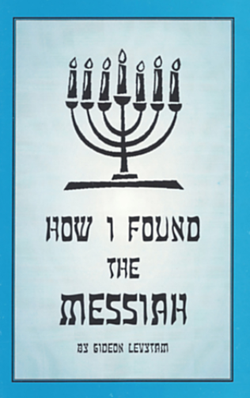
Follow Gideon Levytam's journey and discover how he was led by God, through a series of exciting circumstances, to find the One his people are still waiting for.
Past Episodes

Featured Offer
Follow Gideon Levytam's journey and discover how he was led by God, through a series of exciting circumstances, to find the One his people are still waiting for.
About Holy Scriptures and Israel
As time passed by, the Lord Yeshua took dear brother John Van Stormbroek to himself. The ministry of Holy Scriptures and Israel continued with additional development. In the early 1990’s, a weekly morning Bible class began which brother Gideon Levytam led regularly in the City of Toronto. This weekly open Bible class was held in the Willowdale assembly meeting hall. Eventually, a second mid-week evening Bible class was added. In April 2002, the need for an additional outreach Bible teaching meeting arose. We begun a Saturday (Shabbat) ministry meeting in which a systematic teaching of God’s word is presented to all who attend. Together we learn God’s Word, pray for each need and the salvation of Israel, and sing songs of worship unto our God, praising Him and our Lord Yeshua the Messiah.
In Mid 2004 we started to air on Joy 1250 Radio station a 15 minute Bible teaching program called "The Holy Scriptures and Israel" with Gideon Levytam. The broadcast teaches God’s word from a Hebrew Messianic perspective and has proved to be a blessing to many. It's now aired seven days a week. Our prayer is that many more of our Israeli people will have a clear understanding of who Yeshua is, why we all need him, and come to know him as their Lord and Messiah.
About Gideon Levytam
Contact Holy Scriptures and Israel with Gideon Levytam
426 Simcoe Street
Niagara-on-The-Lake
Ontario L0S 1J0
Canada
(905) 325-1234