

Nehemiah 13:1-14, Part 3


Israel’s Lack of Separation from Evil, Part 3
Guest (Female): Shalom. Holy Scriptures and Israel is a ministry designed to share with the Jewish people the good news of the Lord Jesus, Yeshua the Messiah, and to instruct Christians on the Jewish roots of their faith. And now, teaching God's word from a Hebrew Messianic perspective, here is Gideon Levytam.
Gideon Levytam: The study of Nehemiah 13. His name was Eliashib. Two Hebrew words: "El" means God, and "Yashiv" means will return us back. What a beautiful name. His name was "God will turn us back to himself" or "He will restore us." Even he, because he was not submissive to the word of the Lord, look what he did here. As it says, he was allied with Tobiah. And who was Tobiah? We have read this many times in our study of this book of Nehemiah. Tobiah was an enemy of Israel. Go back to Nehemiah chapter 2 with me.
In verse 10 and 19, we read. In verse 10, it says, "When Sanballat the Horonite and Tobiah the servant—notice he was an Ammonite—when they heard it, it grieved them exceedingly that there was come a man to seek the welfare of the children of Israel." When Nehemiah came to rebuild the walls of the city of Jerusalem, this man by the name of Tobiah, who was an Ammonite, it grieved him. He was not happy that the Jewish people came to rebuild the wall and to set up the gates in Jerusalem.
Like many who are opposing the gospel, they are not happy to see when the body of Messiah is growing and people come in to become part of the family of God. They are not happy. Notice a little bit further in chapter 2 and verse 19. We read, "But when Sanballat the Horonite and Tobiah the servant of the Ammonites and Geshem the Arabian heard it, they laughed us to scorn and they despised us and they said, 'What is this thing that you do? Will you rebel against the king?'"
When Israel was coming to rebuild the wall of Jerusalem, they were mocking those Jewish people. Tobiah was not a friend of Israel. Sometimes when we are not careful, we allow ourselves to have others who oppose the gospel, oppose Yeshua HaMashiach, and oppose the word of God. We make alliances with them and we end up, instead of drawing them to the Lord, they end up drawing the people of God away from the Lord.
This is exactly what happened here and how this Tobiah managed to be a friend with the High Priest and draw him away. The High Priest should have been the one who would give instruction to the people of Israel. But instead of doing so, the opposite happened. Tobiah is mentioned many times in the book of Nehemiah. In chapter 4, chapter 6, chapter 7, and here in this 13th chapter, he is mentioned again and again as the enemy of the people of God.
Therefore, it was wrong for the High Priest to make an agreement with him. He put him right in the house of God and he prepared for him a chamber, a room where all the things that belonged to the work of the Lord used to be. It says here the meal offering, the frankincense, the vessels, the tithes, the corn, the wine, the oil, and therefore what belonged to the Levites, he set aside. He placed Tobiah right in the midst of the people of Israel in the temple in the city of Jerusalem.
No wonder the condition in Israel had been so bad because Tobiah was successful in influencing the people of Israel against the ways of the Lord. Verse 4 in the book of Jude says, "For there are certain men crept in unawares, who were before of old ordained unto this condemnation, ungodly men, turning the grace of God into lasciviousness and denying the holy Lord God and our Lord Yeshua the Messiah." It is exactly the same, and we know very well that in church history, in the assembly history, it happened the very same way.
Many times when we fail, it is our own fault. When we are not on guard, when we are not submitting to the word of God, we allow this to happen in the midst of the assembly. We find in verses 1 to 3 the separation from the Moabites and the Ammonites. We find in verses 4 and 5 the wrong alliance that happened between the High Priest of Israel and Tobiah, the enemy of the people of God.
What do you think Nehemiah is going to do? Nehemiah could say, "What's the use? I'm doing my own thing, they have gone wrong. I've been away for a while, I did my best," and he could have washed his hands. He could say, "I don't care, let them have their own consequences. I was trying my best, I did the work, and therefore I'll just leave them alone." He could have gone back to Persia and left these Jewish people with their wrongdoing to carry on in their own merry way.
Nehemiah was not so. Nehemiah was a man that was raised by God. That is why his name means the comfort of Jehovah. He was a man that said, "I have decided I'm going to use my life here for the God of Israel, for the people of Israel. I want to be a blessing to the people of God." So he acted upon it and took a decision. In verses 6 through 9, Nehemiah began to cleanse the temple.
Notice in verse 6, Nehemiah was away from Jerusalem for a while, but now he returned. It is very clear here in verse 6. He said, "But in all this time was not I at Jerusalem." In other words, all these things occurred then and there when Nehemiah was not there. It is always like that. That is why God raised men among the people of Israel—godly men and women—to assist our own people.
That's why God raised brothers and sisters in the church age to care for the flock of God. When the shepherd is not there, the sheep go astray. It is always like that. Isaiah said in chapter 53 about Israel, "All we like sheep have gone astray. We have turned every one to his own way." That's the way we are. We are like sheep. That is why we need someone to lead.
By the way, I didn't point to that, but you notice here, Jerusalem and Israel, the land of Israel, and you notice the kingdom of Moab and the kingdom of Ammon. When Israel came from Egypt to enter into the promised land, they entered somewhere here, and they didn't let them enter in. They had to pass through the land of Moab and Ammon, but they didn't let them cross in an easy way, and they had those issues. They gave them problems.
It's interesting to see that. Beloved brothers and sisters, when Nehemiah left the land and the city of Jerusalem, he went back for a little while to the king of Persia because he gave him some time. All the time when he was not there, trouble occurred. That is why I thank God for godly men that I sat under over the years. You can see how they watch over their flock, how they care for sound teaching in the midst of the congregation, how they care for the welfare of the brothers and sisters.
When they are away, they are concerned about how the brethren are doing. Thank God for these people that the Lord put into our life to help us because we are all like sheep that are inclined to go astray from the Lord. Nehemiah began by dealing with the problems. In verse 6, we find out that he was not there because in the two and thirtieth year of Artaxerxes, king of Babylon, he came unto the king.
He left Jerusalem and returned to Babylon after twelve years. Then he asked for a leave of absence again. He came back and what does he see? The Ammonites and Moabites have crept in. Tobiah is now living in the temple. The High Priest made an alliance with him. The people of Israel are in disarray. The Lord's law and commandments are not obeyed, and the people of Israel are in a bad state. He said, "I'm going to do something about that."
In verse 7, upon his return, Nehemiah understood all that evil. The Bible calls it evil. It says in verse 7, "And I came to Jerusalem and understood of the evil"—in Hebrew *raah*—"that Eliashib did for Tobiah in preparing for him a chamber in the courts of the house of God." He's asking, "What is going on, Eliashib? You allowed Tobiah, who was our enemy all along—he didn't want us to build the walls—you allow him now to be right in the house of God."
"You give him a chamber, a room right there, when the tithing and so on doesn't even have a place, but Tobiah has a place to be there." He was not happy whatsoever. Notice what he did in verses 8 and 9. He cleansed the temple in the city of Jerusalem. We read, "It grieved me sore." He acted in a very aggressive way. He said, "I cast forth all the household stuff of Tobiah out of the chamber."
"And I commanded that they cleanse the chambers and thither brought I again the vessels of the house of God with the meal offering and the frankincense." It grieved him in his heart. He was a spiritual man who wanted to honor the Lord. It hurt him when he saw that God was not honored and the people were not living for the Lord. He said, "I left you for a while, and look what is going on."
This is righteous indignation. Sometimes we get angry because someone hurt us or treated us badly, but that anger is not righteous; it's selfish. But Nehemiah had righteous indignation. He was very sad because of what went on in the temple in Jerusalem. So he cast off the household stuff of Tobiah, he commanded that they would cleanse the chambers, and he brought back the vessels.
Can you imagine what Israel did? They took the vessels that are supposed to serve God and put them outside the temple to give Tobiah a nice chamber in the city of Jerusalem. What a condition existed among the people of Israel. Turn with me to John chapter 2 and verses 13 through 16. I want you to see what Yeshua the Messiah himself did when he came to the very same temple years later.
"The Jewish Passover was at hand, and Yeshua, that is Jesus, he went up to Jerusalem and he found in the temple those that sold oxen and sheep and doves and the changers of money sitting." Verse 15 says, "And when he had made a scourge of small cords, he drove them all out of the temple, and the sheep and the oxen, and he poured out the changers of money and overthrew the tables and he said unto them that sold the doves, 'Take these things hence; make not my Father's house a house of merchandise.'"
Yeshua himself saw what they were doing at the temple in Jerusalem 2,000 years ago and he immediately chased everyone out. He was angry, but it was righteous indignation. It was an anger for the glory of the Lord. He didn't want those things to happen in the house of the Lord. Here it is the same thing. Nehemiah was very grieved and he commanded them to cleanse the chamber of the house of God.
He acted upon the condition that existed there. Sometimes I wonder about you and I. We are not always so tender and sensitive to realize that when we gather together, we gather around the Lord Yeshua the Messiah. He is the center, and we ought to honor him. We ought to seek to be a blessing to our brothers and sisters. Therefore, we also need to seek to maintain order in the house of the Lord.
The Lord will bless us when we honor him. In verses 10 through 14, Nehemiah restored the portion that belonged to the servants of the Lord. In verse 10, he noticed what happened. When Tobiah came in and Eliashib allowed him to have a room, those who used to serve there left. They couldn't continue. Verse 10 says, "I perceived that the portions of the Levites had not been given to them, for the Levites and the singers that did the work, they fled every one unto his own field."
Can you imagine the Levites, instead of serving in the temple, they left? It says they fled away, probably because Tobiah chased them. They were not taken care of by the tithing of the people of Israel, so they left to work in the field. But they were called to be the servants of God among the people of God. I heard how many pastors in professing churches today leave the ministry because they are not being supported.
They are oftentimes discouraged and cannot sustain themselves because of the opposition of the people of God. They say, "I don't need that. I'm going to go back to a secular job and continue living my life." They are not coming back to ministry. How many spiritual leaders in the body of Messiah today are so discouraged because they are not able to continue in the ministry?
The Levites and the singers had to run away to work in the field because they couldn't keep doing their ministry. In verse 11, Nehemiah asked the leaders, "Why is the house of God forsaken?" He contended with the rulers and he gathered them together and set them in their place. Nehemiah was acting upon it. He saw the bad shape the people were in, with spiritual leaders away from their work while the house of God suffered.
In verses 12 and 13, the people of Judah responded. They were pricked in their hearts and the Lord spoke to them. All the people of Judah responded to that. They did not say carelessly, "We don't care anymore." Verses 12 and 13 say, "Then brought all Judah the tithe of the corn and the new wine and the oil unto the treasuries."
"And I made treasurers over the treasuries, Shelemiah the priest and Zadok the scribe, and of the Levites, Pedaiah, and next to them was Hanan the son of Zaccur, the son of Mattaniah, for they were counted faithful, and their office was to distribute unto their brethren." They were faithful men. We need people today who are faithful to serve the Lord in many areas.
If some of the brothers and sisters would not participate in preparing for this meeting every Friday and every Shabbat, we would never have what we have today. It's because there are faithful brothers and sisters that say, "The Lord has privileged me to take responsibility and I want to do it as unto the Lord." I'm going to carry on and do so because I've decided to serve my Lord, my Messiah Yeshua.
We have had those regular ongoing meetings for years. It's not because of one man but because of many who participated and have been faithful. They believe that the word of the Lord is taught, and they want to honor the Lord and learn from the things of the Lord. Many have responded to that, and we are so grateful for these brothers and sisters. They are like the Levites here who came back to do what the Lord called them to do.
They brought it to the chamber so the servants of the Lord could be sustained. How precious it is. Listen to the last verse. Nehemiah was asking the God of Israel to remember what he did. In verse 14, Nehemiah says, "Remember me, O my God"—in Hebrew Zochrah li—"concerning this, and wipe not out my good deeds that I have done for the house of my God and for the offices thereof."
Nehemiah turned to a moment of prayer. You and I might say, "Nehemiah, don't be so selfish and ask the Lord to remember what he has done for you." But Nehemiah did so because he wanted to please the Lord, and he knew that by asking the Lord to remember, he would remind God—not that God needed to be reminded, but to show that he is really a blessing to the people of God.
He wanted the Lord to be honored as he served him among the people of Israel. It is beautiful to see because the phrase "remember me" is mentioned three times in this chapter. Verse 22 says, "Remember me, O my God, concerning this also." Verse 31 says, "Remember me, O my God, for good." The Hebrew word is Zochrah li or Zechor. Remember.
The lesson we can learn today is that the Lord does know how we live our lives as believers. One day we are all going to stand at the judgment seat of the Messiah. This is only for believers. "For we must all appear before the judgment seat of the Messiah," 2 Corinthians chapter 5 and verse 10. The Lord is going to check with us and show us what we have done for him.
Many times we lose out on the blessings that the Lord intends to give us because we do not live our life for the Lord. But at the judgment seat of the Messiah, only what was done for the Lord will last. Whatever is not done for the Lord will be burned with fire and completely erased because God is not pleased with it.
I was reading this morning one verse of a poem that was written many years ago. The poem writer wrote, "Only one life, 'twill soon be past. Only what's done for Christ will last." And when I am dying, how happy I will be if the lamp of my life has been burnt for thee. We only live one life. Soon every one of us will pass out of this scene. Some of our brothers and sisters who used to sit in this room are no longer with us.
We're going to have to meet the Lord one day. The Lord wants to appeal to our heart. He says, "How do you live your life? Is Yeshua precious to you? Do you realize the price that he paid in order to save you? Do you realize that he died on a cruel tree, on a cross, for every sin that you have sinned?" How do you respond to that?
Do you take Yeshua only as your savior that gives you a ticket to go to heaven, or do you also take him as your master and Lord and your best friend? The Lord wants us to have Yeshua the Messiah in our life, not only for a season. He wants us to enjoy him because only one life, and it will soon be past. Only what's done for the Messiah will last.
When you or I am dying, will you be happy to know that the lamp of your life had been burnt for him? That's the question that we all have to ask ourselves. That's why Nehemiah says to the Lord, "Remember me, O my God, for good." The Lord will remember everything that we have done for him. He will bless us when we serve him, not only in eternity but even here and now as we bless the people of God.
We seek to be like this man Nehemiah, the comfort of Jehovah. May the Lord help us to serve him until his soon return.
Guest (Female): Shalom. Holy Scriptures and Israel is a ministry designed to share with the Jewish people the good news of the Lord Jesus, Yeshua the Messiah, and to instruct Christians on the Jewish roots of their faith. And now, teaching God's word from a Hebrew Messianic perspective, here is Gideon Levytam. You have been listening to Holy Scriptures and Israel with Gideon Levytam.
Gideon teaches God's word from a Hebrew Messianic perspective. For more information about this ministry, write to Holy Scriptures and Israel, Box 1411, Niagara-on-the-Lake, Ontario, L0S 1J0, or visit our website at holyscripturesandisrael.com. You are also invited to Gideon's weekly Bible teaching on Fridays at 11:00 AM and 7:00 PM and Saturdays at 1:00 PM at Willowdale Christian Assembly Hall, 28 Martin Ross Avenue in Toronto. Holy Scriptures and Israel is made possible by your prayers and financial support. If you would like to support the program, visit holyscripturesandisrael.com. God bless you. Shalom, shalom.
Featured Offer
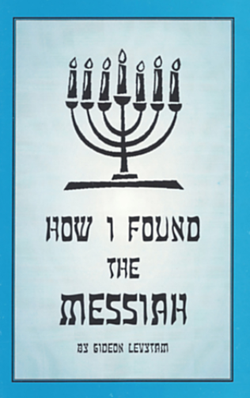
Follow Gideon Levytam's journey and discover how he was led by God, through a series of exciting circumstances, to find the One his people are still waiting for.
Past Episodes

Featured Offer
Follow Gideon Levytam's journey and discover how he was led by God, through a series of exciting circumstances, to find the One his people are still waiting for.
About Holy Scriptures and Israel
As time passed by, the Lord Yeshua took dear brother John Van Stormbroek to himself. The ministry of Holy Scriptures and Israel continued with additional development. In the early 1990’s, a weekly morning Bible class began which brother Gideon Levytam led regularly in the City of Toronto. This weekly open Bible class was held in the Willowdale assembly meeting hall. Eventually, a second mid-week evening Bible class was added. In April 2002, the need for an additional outreach Bible teaching meeting arose. We begun a Saturday (Shabbat) ministry meeting in which a systematic teaching of God’s word is presented to all who attend. Together we learn God’s Word, pray for each need and the salvation of Israel, and sing songs of worship unto our God, praising Him and our Lord Yeshua the Messiah.
In Mid 2004 we started to air on Joy 1250 Radio station a 15 minute Bible teaching program called "The Holy Scriptures and Israel" with Gideon Levytam. The broadcast teaches God’s word from a Hebrew Messianic perspective and has proved to be a blessing to many. It's now aired seven days a week. Our prayer is that many more of our Israeli people will have a clear understanding of who Yeshua is, why we all need him, and come to know him as their Lord and Messiah.
About Gideon Levytam
Contact Holy Scriptures and Israel with Gideon Levytam
426 Simcoe Street
Niagara-on-The-Lake
Ontario L0S 1J0
Canada
(905) 325-1234