
Nehemiah 11:1-36, Part 3 of 3


The Faithful People in Israel, Part 3
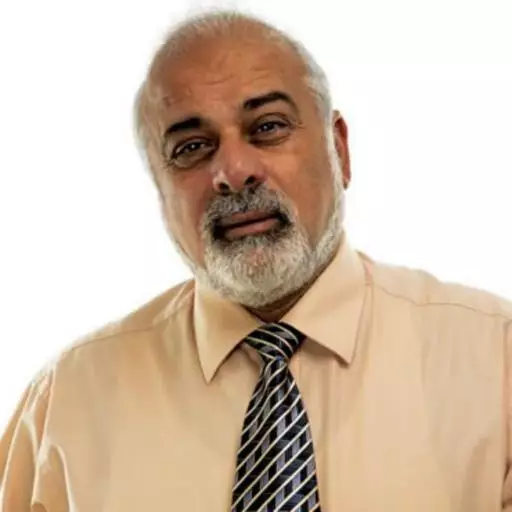
Guest (Male): Shalom. Holy Scriptures and Israel is a ministry designed to share with the Jewish people the good news of the Lord Jesus, Yeshua the Messiah, and to instruct Christians on the Jewish roots of their faith. And now, teaching God's word from a Hebrew Messianic perspective, here is Gideon Levytam.
Gideon Levytam: The study of Nehemiah chapter 11 says in verse 6, "All the sons of Perez that dwelt at Jerusalem were 468." Notice what it calls them: valiant men. In Hebrew, it says anshei chayil, virtuous men. It reminds me of Proverbs, where it says, "Who can find a virtuous woman?" Eshet chayil in Hebrew. Here we have anshei chayil, valiant men, men that were devoting themselves to the Lord, coming to the city of Jerusalem. When you are going to ask them who is your great-great-great-grandparent, they would say, "My great-great-great-great-grandfather is Perez."
I have not much to say about my history, but I know one thing: that God loved me, and he wanted me to be in the city of Yerushalayim, and he wants me to worship him and live for him. Never mind my history. I want now to follow the Lord. I want now to be restored to the Lord. God honored them. His name in the list is mentioned here in this 11th chapter of the book of Nehemiah. Let me add something here. Notice that he is from the tribe of Judah. What about the tribe of Benjamin? Notice in verses 7, 8, and 9. Look at the descendants of Benjamin.
You and I know very well the story of Benjamin. In verse 7, I'm reading, it says there, "These are the sons of Benjamin." You have a list of the names of the children of Benjamin. In fact, it says 928 descendants of Benjamin in verse 8. The names continue in verse 9. Now, what about Benjamin? First of all, he was the youngest of all the tribes of Israel. Nobody can tell us, "Listen, you are the youngest son in your own home. You have no hope, no future. Don't worry about it. Let the elder brother lead, and you just don't do anything."
God teaches us that it doesn't matter what position you have in your family, you still have the opportunity to draw near to the Lord and to serve him and to live for him here in this world. Turn to 1 Samuel chapter 9. We read about the first king of Israel. Though he failed later on and God had to judge him, notice what he says in 1 Samuel chapter 9 when Samuel came to him to ask him to become the king of Israel. Look at the answer that Saul gave in verse 21 of 1 Samuel chapter 9.
Shaul answered and said, he was talking to Shmuel, "Am not I a Benjamite, of the smallest of the tribes of Israel? And my family the least of all the families of the tribe of Benjamin? Wherefore then speakest thou even to me?" He was a humble man at the beginning of his life. He says, "I am the least of my family, and I am in a tribe that is the least of the people of Israel. Why do you even dare or speak with me, Samuel?" And yet God called him to become his servant, the first king of Israel.
Shaul failed terribly by disobeying the Lord, and the Lord actually took away the kingdom from the Benjamite. He gave it unto the tribe of Judah, to one that was a man after God's own heart by the name of David from the tribe of Judah. But the lesson is, beloved brothers and sisters, that God wants us to desire to draw willingly to his presence, to be used by him in the midst of his people. Let me remind you of another man by the name Shaul who is not only in Old Testament time, in biblical times before the Messiah came, also from our point of view, he was part of the church, of the assembly.
Another Jewish man from the tribe of Benjamin was the Apostle Paul, Shaul. According to Romans 11, he was from the tribe of Benjamin, an Israelite from the tribe of Benjamin. How God used this man that you and I have books after books in the Brit Hadashah, in the New Testament, that were given to us by divine inspiration. That is so encouraging to you and I, brothers and sisters, that we should never say, "If I fail and if I sinned against the Lord, I have no hope anymore." No, the Lord says no. Confess, repent, turn around, and continue on to follow after me.
I want you to move into the city of Yerushalayim, to the center where I'm there in the midst, and I would like you to enjoy my presence and to serve me in the midst of the people of God. Well, let's continue on now. From verse 10 to verse 14, we have the priests of Israel. Here is also something for us very important. Notice verse 10, "And the priests: Jedaiah the son of Joiarib, and Jachin." You have a list of the people from the priesthood, the Kohanim. Two things we find about them in verse 11 and 12. First of all, they did the work of the house of God.
It says at the end of verse 11, he says, "Was the ruler of the house of God." Verse 12 says, "And their brethren that did the work of the house." This is the house of God, Beit HaElohim. Now, who do you think is going to do the work in the house of God? There was a temple in Yerushalayim. There were sacrificial systems to be functioning. There were animals to be killed. Blood had to be shed. Who is going to do all this work? The lampstand to be lit. The bread to be placed upon the table of showbread. The service to the people of God to continue on. Who was going to do that?
The priests did the work inside the house of God. The lesson it is for us, beloved brothers and sisters, you and I are called to do service for the Lord. This is so real. Oftentimes it's said when people go to church meetings or the congregation meetings, sit in the pew on Saturday or Sunday just sitting in the pew, from Monday all the way to next week, "I don't need to serve the Lord. I do what I want as I please. I don't need to serve the Lord." Next Sunday comes, or next Shabbat comes, sit in the pew until next week, "Shalom, Shalom, I'll see you next time." Is that the relationship that one has with the Lord?
Are we only to meet the Lord and to be with the Lord only to come to spend some time in so-called going to the city of Yerushalayim, sitting there for a while, and then leaving? Notice what it says here very clearly: they did the work of the house. They did service. I want to say this, this is not to point the finger at anybody. We are all to learn from that. You know that God gave you gifts. He didn't give you a gift to keep it and to say later on, "Lord, I might use it, but right now I just don't want to." He gave you a gift. He gave me a gift.
Every one of us is so important. We are as priests together to serve the Lord in the midst of the congregation, in the midst of the assembly. Some of us can set up chairs. Another one can light the menorah. Another one can prepare the kitchen. Another one is to do all the service that has to be done in order to continue on to function. Some clean, some organize, some prepare. Every one of us has a gift that we need to use the gifts that the Lord had given unto us. Otherwise, imagine if you have a body and you have members of the body, right hand, left hand, right leg, left leg, you have eyes, ears, nose, and mouth.
Imagine if you all of a sudden cannot use one of the members of the body. All of a sudden, if the right hand cannot move anymore, well, the left hand has to do twice the work. If there's a problem with our eyes, if we don't see with the left eyes, the right eye all of a sudden had to work overtime to make up for that which the other eye had lacked. Turn with me to Ephesians chapter 4, please, verse 11. Shaul, Paul, wrote those words to the brothers and sisters at Ephesus, saying, "And he gave some apostles, and some prophets, and some evangelists, and some pastors and teachers."
Why did he give those gifted men and the gift that he had given? He gives you the reason. The reason is verse 12, "For the perfecting of the saints, for the work of the ministry, for the edifying of the body of Messiah, the body of Messiah." Until when? "Until we all come into the unity of the faith and of the knowledge of the Son of God unto a mature man, unto the measure of the stature of the fullness of Christ, the fullness of the Messiah." That's the reason why God gave the gifts to the body of Messiah, the body of Messiah. He wants us to be used.
He wants us to be like those priests who are serving within the house of God, who are doing the work of the Lord. You know, they say that those that pray together and work together, stay together. It has to do with our families. It has to do with our local fellowship. It has to do with any area of anything we do. If we do working together and everyone give a shoulder to the labor, there is a building, there is a growth that can come out of it. One person cannot do it alone. Nehemiah could not do it alone. Ezra before him could not do it alone. Zerubbabel before him could not do it alone. It's not a one-man show. It is a company of believers working together.
Every member is important, valuable, and is usable for the benefit of the people of God. Go back to Nehemiah. Now we read in verses 15 to verse 18 the list of the Levi'im who dwelt in the city of Yerushalayim. Notice that it says in verse 15, "Also of the Levites," and then they give you the name Shemaiah, the son of Hasshub, the son of Azrikam, and so on. Notice what it says about them. According to verse 16, the Levites took the oversight on the outside and the business of the house of God. You see, not all of us have an area that need to be done in the spiritual area, let's put it this way.
Some of us have other practical things that can be done. The Levi'im had to work outside of the house of the Lord. Notice two names are mentioned here as well from the tribe of Levi. One name is the name Asaph in verse 17, and the other name is the name Jeduthun at the end of verse 17. Do you know, brothers and sisters, that these two men by the name of Asaph and Jeduthun from the tribe of Levi, who were not from the family of the priesthood, do you know what their responsibility was? It says here in the middle of verse 17 that they, notice, Asaph was the principal to begin the thanksgiving in prayer.
He led, Asaph and Jeduthun led the worship in the assembly, in the congregation of the people of Israel. If you will carefully notice, and I mark this down, how many Psalms that you and I read were attributed to this man by the name of Asaph: Psalm 50, Psalm 73, 74, 75, 76, 77, 78, 79, 80, 81, 82, 83. All these Psalms were written by this man by the name of Asaph. David in the book of Chronicles, 1 Chronicles 16, gave him this responsibility. And now his descendants continue on to lead Israel in the song of worship to the Lord.
His name is mentioned here. God never forgets. He knows his own people by name and those that serve him, he knows them by name, and he mentioned their names. Again, notice in that verse 15 and 16, we have the Levites who oversee the house of the Lord, and verse 17 and 18, those Levites led the people of Israel with thanksgiving, with song and pray. We are called to sing to the Lord. I'll read Ephesians 5:19, "Speaking to yourself in psalms and hymns and spiritual songs, making melodies in your heart to the Lord, giving thanks always for all things unto God and the Father in the name of our Lord Yeshua the Messiah, Jesus the Messiah."
They were leading the song of the Lord when the congregation of Israel would gather together, they would be the leaders of the song. You know, sometimes the Lord gives us gifted brothers and sisters who have the ability to lead in song and helping us all to lift us up in singing. We can sing along with those gifted brothers and sisters. They don't want to get the attention to themselves. They are to give their attention to the person of Yeshua the Messiah. They were song leaders, and these people that are mentioned here, Asaph and Jeduthun, are the song leaders, Psalm writers, and song leaders.
Sometimes there are so many challenges in our lives that we maybe can't sing because we are discouraged and so on, but the Lord always encourages and says, "Singing unto the Lord a new song." Sing to him. Don't get discouraged. Singing about Yeshua the Messiah is the most wonderful thing that one can do. Now, let's quickly draw down towards the end here. In verses 19, 20, and 21, we see the gatekeepers. Now, again, you and I might say, "Why God place their names there?" Notice verse 19, "Moreover the porters: Akkub, Talmon, and their brethren that kept the gates, were 172."
Why do we need gatekeepers? Of course, they were living in Jerusalem. They had to watch the gates because people go in and people come out. Why do we need the gatekeepers? Well, the gatekeepers represent protection. They are watching over the flock. They are the ones who are caregivers. You know, brothers and sisters, we need to be ourselves careful how we help our brothers and sisters, because we are all like sheep going astray. Every voice and every sound, everybody come with all kind of wind of doctrine, and we can be swayed to the right or to the left. That's how we are.
And we need those porters, those gatekeepers, those ones that we read of them in verse 19 of Nehemiah chapter 11. What do they do? They watch the gate. Who is coming in? What he or she teach? Who is going out? Where do they learn what they learn? Are they going to be learning the things of the Lord, or are they going to bring the things of the Lord into our midst? The gatekeepers, they were so important in the midst of the people of Israel. You know, Peter wrote in 1 Peter chapter 5 to the shepherds of the early believers. He says to them that they are to feed the flock of God.
Taking oversight in a godly way, not by force, not for gain, but to do it out of love for the people of God. The gatekeepers, the leaders in our midst, those that care for the flock are to feed and to oversee the care that people of God need: so many issues, so many needs. And we need those caregivers and those porters that protect the people of God. He continues in verse 22 and 23, we see the singers in Jerusalem and others. Verse 24, we see even the king's helper moved to live in the city of Jerusalem. This is the king of Persia's helper according to verse 24.
Notice that it says, "And Pethahiah the son of Meshezabel, of the children of Zerah." It says here in verse 24, "and the sons of Judah, and at the king's hand and in all matters concerning the people." Notice that he was at the king's hand in all matters concerning the people. In other words, he was representing the requirement from the king of Persia for whatever was going on in Jerusalem. In a sense, he was like a liaison between the king of Persia and what's going on among the people of Israel. He reported to him. But notice who he was. He was a descendant of a man by the name of Zerah in verse 24.
And who was Zerah? You know that Zerah is Zerah, the one who was the brother of the one of whom we read earlier by the name of Perez. He was his twin brother. Now the descendant of Zerah is now serving in Jerusalem as a liaison, as a connecting person between what's going on in Jerusalem and Israel and the king of Persia, reporting to him how things have been. After all, he sent Nehemiah from Persia, allowed him to come to rebuild the wall of Jerusalem and the gates of Jerusalem. Again, I'm saying, brothers and sisters, if you and I read this chapter just like that, we say, "Lord, why you give us all these names and list of names? And what benefit is there?"
As we read in 2 Timothy chapter 3, all scripture was given by divine inspiration, and they are profitable for the benefit of us all. And then finally, beloved brothers and sisters, is the final list of the people who lived outside of the city of Jerusalem. Not everyone could live there, so the rest of them lived outside. And so from verses 25 to the end of this chapter, we have this final list of the people of Israel who lived outside of the city of Jerusalem. First of all, notice, some of them were from the tribe of Judah, verses 25 to 30.
You notice it says, "And for the villages with their fields, some of the children of Judah dwelt," and it gives you certain names. The first name called Kiriath Arba, that is really what is known today as the city of Hebron. Then you have also the villages. You notice how many times the word villages, villages, villages is mentioned here between verses 25 to verse 30. These were people from the tribe of Judah. Then we have again from the tribe of Benjamin from verse 31 to verse 35, just towards the end of this chapter. You notice it says in verse 31, "And the children also of Benjamin," and so on from Geba, and then they give you the list of the people from Benjamin who lived outside of the city of Jerusalem in those villages around the city of Jerusalem.
And so here we have the list of these people who dwelt outside. But the conclusion is found in verse 36, "And of the Levites were divisions in Judah and in Benjamin." That's why the tribe of Levi always served among Judah and among Benjamin, but they continue on to serve even if they were outside. Some were inside, and some were outside. What is the lesson for us in just by way of conclusion, beloved brothers and sisters? The lesson for us is to recognize that if we are going to enjoy the Lord, if the Lord is going to be the center in our lives, we have to do this to serve him willingly, not to be forced by someone to do so, not to feel guilty about serving the Lord.
But to do it because we love the Lord, and we love the Lord's people, and we desire to minister to him here when there are so many needs, because soon we are going to be taken to heaven. The Lord is going to ask us this question: "What have you done with the time that I have given you here upon the face of this world? You had an opportunity to serve me. Did you serve me? Did you encourage the saints? Do you build up the people of God? Did you minister in one form or another among the people of God?"
I can tell you, brothers and sisters, at that time, we're going to look back and we're going to realize how many opportunities I had to serve the Lord, and I didn't take them. I should have served him better. When we're going to stand in his presence, we're going to realize how important we should have spent more time in serving the Lord, because it is only here and now that we can do what we can do. When we're going to get to heaven, we no longer have this old nature and the failing people and sins in our life. In heaven, that's it. We're going to be with him and like him forever.
But it is here and now where we are exhorted to serve him and to live for him among the people of God. I want to conclude with one verse from 1 Corinthians chapter 15, and with this, we have concluded the 11th chapter of the book of Nehemiah. 1 Corinthians chapter 15 and verse 58. We know this verse by heart perhaps, but the Apostle Paul said to the Corinthians, "Therefore, my beloved brethren," Achim Yekarim, he says, "be ye steadfast, unmoveable, always abounding in the work of the Lord." Why, Paul? Look what he said: "Forasmuch as ye know that your labor is not in vain in the Lord." Always, not sometimes, but always, do something for Yeshua the Messiah.
Why is it? Because everything that we do for the Lord, your labor is never in vain. King Solomon said to our own people Israel, he says, "Vanity of vanities, all is vanity here in this world." Everything under the sun is really in vain at the end when it's not done for the Lord. But everything that is done for Yeshua the Messiah is not in vain. The Lord will bless us. The Lord will reward us, and the Lord will be glorified. People will be encouraged. That is what the Lord is calling us to do. And the lesson from Nehemiah 11 is, let's continue on willingly. Let us continue to serve our Lord Yeshua the Messiah.
Guest (Male): You have been listening to Holy Scriptures and Israel with Gideon Levytam. Gideon teaches God's word from a Hebrew Messianic perspective. For more information about this ministry, write to Holy Scriptures and Israel, Box 1411, Niagara on the Lake, Ontario L0S 1J0. Or visit our website at holyscripturesandisrael.com. You are also invited to Gideon's weekly Bible teaching on Fridays at 11:00 AM and 7:00 PM and Saturdays at 1:00 PM at Willowdale Christian Assembly Hall, 28 Martin Ross Avenue in Toronto. Holy Scriptures and Israel is made possible by your prayers and financial support. If you would like to support the program, visit holyscripturesandisrael.com. God bless you, Shalom, Shalom.
Featured Offer
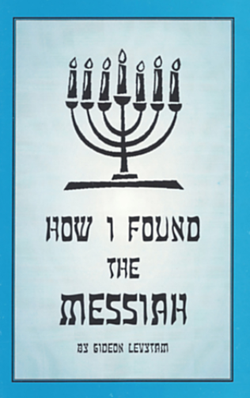
Follow Gideon Levytam's journey and discover how he was led by God, through a series of exciting circumstances, to find the One his people are still waiting for.
Past Episodes

Featured Offer
Follow Gideon Levytam's journey and discover how he was led by God, through a series of exciting circumstances, to find the One his people are still waiting for.
About Holy Scriptures and Israel
As time passed by, the Lord Yeshua took dear brother John Van Stormbroek to himself. The ministry of Holy Scriptures and Israel continued with additional development. In the early 1990’s, a weekly morning Bible class began which brother Gideon Levytam led regularly in the City of Toronto. This weekly open Bible class was held in the Willowdale assembly meeting hall. Eventually, a second mid-week evening Bible class was added. In April 2002, the need for an additional outreach Bible teaching meeting arose. We begun a Saturday (Shabbat) ministry meeting in which a systematic teaching of God’s word is presented to all who attend. Together we learn God’s Word, pray for each need and the salvation of Israel, and sing songs of worship unto our God, praising Him and our Lord Yeshua the Messiah.
In Mid 2004 we started to air on Joy 1250 Radio station a 15 minute Bible teaching program called "The Holy Scriptures and Israel" with Gideon Levytam. The broadcast teaches God’s word from a Hebrew Messianic perspective and has proved to be a blessing to many. It's now aired seven days a week. Our prayer is that many more of our Israeli people will have a clear understanding of who Yeshua is, why we all need him, and come to know him as their Lord and Messiah.
About Gideon Levytam
Contact Holy Scriptures and Israel with Gideon Levytam
426 Simcoe Street
Niagara-on-The-Lake
Ontario L0S 1J0
Canada
(905) 325-1234