
Nehemiah 11:1-36, Part 1 of 3


The Faithful People in Israel, Part 1
Guest (Male): Shalom. Holy Scriptures and Israel is a ministry designed to share with the Jewish people the good news of the Lord Jesus, Yeshua the Messiah, and to instruct Christians on the Jewish roots of their faith. And now, teaching God's word from a Hebrew Messianic perspective, here is Gideon Levytam.
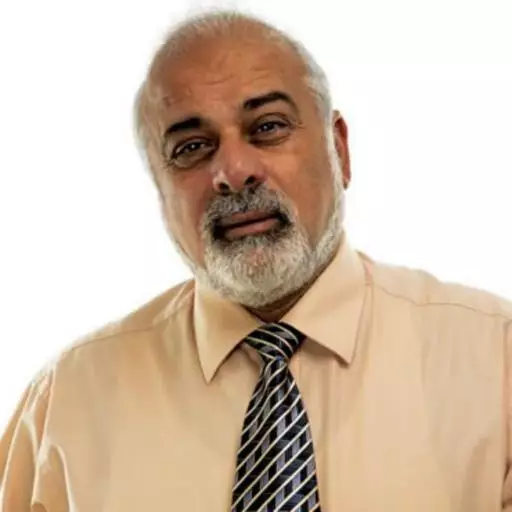
Gideon Levytam: The study of Nehemiah Chapter 11. Shabbat Shalom, everyone. I thank the Lord for the privilege of studying the word of God together. We are studying, of course, in the book of Nehemiah, and today we are in Nehemiah Chapter 11. We are just drawing closer and closer to the end of this amazing, beautiful book that was given by divine inspiration. The purpose, of course, of this book that was written for our people Israel and for the benefit of believers today as well is the thought of building broken situations in the lives of God's people.
Here we learn from this book of Nehemiah how God is so longing that his people's lives will be rebuilt just the same like the life of our people of old. The people of Israel needed to be rebuilt when they had to rebuild the walls of Jerusalem, set up again the gates of the city of Jerusalem, and make things in order in the midst of the life of our people Israel in about 445 BC, the beginning when Nehemiah was returning to Jerusalem.
Well, today we are finding ourselves in Chapter 11, and really the theme of the 11th chapter of the book of Nehemiah is a willing people. A willing people of Israel historically and a willing people of God presently, a people that are willing to live for the Lord and serve the God who brought them to himself. And so I'm going to read selective verses because when you read this chapter, this 11th chapter, you find out rather quickly that this 11th chapter has many names. I will not read all the names; I will read some of the names that we have in Nehemiah Chapter 11. But please follow with me as much as I am reading.
We begin with verse 1, Nehemiah Chapter 11, verse 1: "And the rulers of the people dwelt at Jerusalem. The rest of the people also cast lots to bring one of ten to dwell in Jerusalem, the holy city, and nine parts to dwell in other cities. And the people blessed all the men that willingly offered themselves to dwell at Jerusalem. Now these are the chief of the province that dwelt in Jerusalem, but in the cities of Judah dwelt everyone in his possession in their cities, to wit, Israel, the priests, and the Levites, and the Nethinim, and the children of Solomon's servants."
"And at Jerusalem dwelt certain of the children of Judah and of the children of Benjamin. Of the children of Judah we have a list here from verse 4b all the way down to verse 6, including notice what it says in verse 6: 'And the sons of Perez that dwelt at Jerusalem were 468 men.' Then verse 7 on, it says: 'These are the sons of Benjamin,' and then you have a list up till verse 8 of 928 descendants of the tribe of Benjamin. Then we have in verse 9: 'Joel and the son of Zichri was the overseer,' and you can see that there is a list of names. Verse 10, 'Of the priests,' verse 11 it says, 'Seraiah and the son of Hilkiah and so on,' at the end of verse 11 it says: 'those that ruled over the house of God.'"
"Verse 12: 'and their brethren that did the work of the house.' Then we have the numbers of them. Verse 13: '242' as well. Verse 14: '128' together, 822 in verse 12, 242 in verse 13, and 128 in verse 14. I'm continuing to read. Verse 15: 'and of the Levites,' and then we have again a list of names. And if you continue to go down, it says in verse 18: 'and all the Levites in the holy city were 284 individuals.' Verse 19: 'moreover the porters,' those are the one who kept the doors of the entrance into the temple. I'm continuing with verse 20 now: 'and the residue of Israel and of the priests and the Levites were in all the cities of Judah everyone in his inheritance.' But the Nethinim, notice verse 21, those are the one that were the Nethinim, the servants, and then it says they dwelt in Ophel and Ziha and Gishpa were over the Nethinim."
We continue on in verses 22 and 23 we have the singers. In verse 24 we have the king's helper. In verse 25 to verse 36 we have the people who lived outside of the city of Jerusalem. I didn't read all the verses here because there are many, many Hebrew names that are mentioned here in this 11th chapter. Now please pay your attention for a few moments for me. When you read such a chapter, it makes you wonder: why would God mention so many names there of these Jewish men in this chapter? There are plenty of names. Those from this tribe of Levi, those from this tribe of Judah, those from this tribe of Benjamin, and he is giving us a list of these names of these Jewish Hebrew Israeli men.
There is a reason, beloved brothers and sisters, and we believe from the bottom of our hearts that everything that God has given us in his word is given to us because of the fact that God wants to mention the names of individuals that were very dear to the heart of God. We were just singing this song earlier that God wants us to be a sanctuary for him. God wants the people of God who belong to him so that he will be able to dwell in their midst and that he will find joy in the midst of the people of God. It happened historically among our people Israel, the Jewish people, and it is as well today in this present-day dispensation where God delights to be in the midst of his people.
Yeshua said in Matthew 18:20, "For where two or three are gathered together unto my name, there am I in the midst of them." But those people that he is in the midst of are people who desire to follow him. They want to have a relationship with him. They don't want him away from their lives. They want him in their homes; they want him in their lives on the job; they want him where they go to school; and they want him where they are visiting everywhere in this world, including in the midst of the gathered saints in such a meeting as you and I are together today. You notice what it says in 1 Timothy Chapter 3 and verse 16. Timothy was told by the Apostle Paul, "Without controversy great is the mystery of godliness: God was manifest in the flesh, justified in the spirit, seen of angels, preached unto the Gentiles, believed on in the world, and received up into glory."
In other words, speaking about the Lord who came from heaven and went back to heaven in order that he may be there as a great high priest on behalf of his people, the people of Israel. But Paul not only said this in 1 Timothy Chapter 3; notice what it says in 2 Timothy Chapter 3 and verse 16. He says, "All scripture is given by the inspiration of God and it is profitable for doctrine, for reproof, for correction, for instruction in righteousness that the man of God may be perfect, thoroughly furnished unto all good works." Not only that the Messiah came from heaven and went back to heaven after he finished the work on the tree for us, but he has given us his word and all scripture is given by inspiration of God, including Nehemiah Chapter 11 with the list of these men that are mentioned here in this chapter.
Perhaps if you and I would have been there in about 445 BC and so on, perhaps our names would be mentioned there if we were committed to follow the Lord. The Lord will remember. A book of remembrance was written before him for them that spoke of him and thought upon his name, as Malachi is saying this in Chapter 3 and in the last chapter. Now I would like to just highlight a few things that I think will be extremely beneficial for us. First of all, you notice that in verses 1 and 2, there was a requirement for people to live in the city of Yerushalayim, the city of Jerusalem. Notice it says here: "and the rulers of the people dwelt at Jerusalem. The rest of the people also cast lots to bring one of ten to dwell in Jerusalem, the holy city, and nine parts to dwell in other cities."
Well, apparently they needed to have people who would be willing to move from the outskirts of Jerusalem into the city of Yerushalayim. And why is it? Well, the walls now were built, the gates have been set up, the temple was there, and the sacrificial system was going on. But Israel still had many enemies around and the city needed to be populated. The people needed to develop the city of Yerushalayim. So you notice that they made a decision that one out of every ten individuals will now move out from the outskirts of Jerusalem into the city of Yerushalayim to live there and to populate it. But you notice what we read here, that they cast lots, and secondly we read that the name of the city is Yerushalayim and it is called here Jerusalem the holy city. In Hebrew we call it Yerushalayim Ir HaKodesh.
Now of course, if the city was called a city that was holy or Kdosha, what does it mean to be holy? It means to be set apart for God. This is the city where God placed his name, and this is the city in which he wanted the nation of Israel to make a place where he will dwell in the midst of the nation, in the midst of the people of God. It is the chosen city by the Lord himself. And he wanted people voluntarily to come to dwell in that city and represent him there right in that city. Notice it says in verse 2: "and the people blessed all the men that willingly offered themselves to dwell at Jerusalem." There is an amazing lesson here, brothers and sisters. Listen, all the people that lived now in the land of Israel were part of the nation of Israel.
All of them were what we call Jewish people, belonging to the nation of Israel, but not everyone went into the city of Jerusalem sacrificially to live there, to dwell there, to fight for the city of Jerusalem, and to maintain godly order in the midst of the city of Yerushalayim. And to do so, God never wanted to force anyone. I'll tell you something. You and I are all believers, I trust, here today. You know, God will not force you or me to live a life of fellowship with him. He's never going to force us. Of course, sometimes as a father he will discipline us, but he wants us, his own, out of the abundance of our hearts that we say to him: "Lord, I love you so much because of what you have done for me. I'm a sinner by nature; I was far away from you; I was dead in trespasses and sins."
But in love for me, you saved me. You sent the Mashiach, the Messiah Yeshua, Jesus, and he died for my sins and he paid the price that I could have never paid. And Lord, because of this, I want to respond to you. You know, the Bible teaches us in 1 John, we love because he first loved us. The Lord Yeshua says, come unto me, we just sang that song, "Come unto me all ye that labor and are heavy laden and I will give you rest. Take my yoke upon you, learn of me for I am meek and lowly in heart and ye shall find rest to your souls." Many times we think we find rest and peace and shalom in the world and we find out that the world cannot provide this for us. The only person that can give us shalom and peace in our own hearts is none else but Yeshua our Messiah, the one who died for us and paid for our own sins.
And he's right in the midst of his own. And you notice that Nehemiah was very wise. He says, listen brethren, 1/10th, one person out of every ten has to move into the city of Jerusalem. But you notice he never forced anyone because in verse 2 it says: "the people blessed all the men that willingly offered themselves to dwell at Jerusalem." It's got to come out of our hearts. You cannot follow the Lord with rules and regulations and by force. That is not a love relationship. You remember when you first met your wife or your husband and we fell in love with that individual. And we wanted to be with that person wherever he or wherever she is. We just wrote letters and we made phone calls, and it's amazing when you wanted so much to be with that person because he or she was the lover of your soul. You really wanted to be with them.
Nobody had to force you. Nobody had to ask you to do so. It was a willing desire of the heart to be where this person is. Well, that's what Yeshua wants. Yeshua the Messiah wants exactly this thing from us. He wants from us to willingly be those who are following after him and living for him and spending time with him because of who he is and because of what he has done for us. That's why when we read such a chapter you say: what can I learn from this 11th chapter? There are so many Hebrew names I cannot even pronounce some of them. Those of us who speak Hebrew and it is our mother's tongue, for us it's not a problem to read it from the Hebrew text and every name has a meaning in the Hebrew text. But nevertheless, beloved brothers and sisters, God is seeking a people that will be willing to follow after him.
Turn to Isaiah for a moment, Chapter 52. Isaiah also was speaking about the future of our people Israel when they will desire to return unto the Lord and accept the Messiah. Isaiah Chapter 52, it says in verse 1: "Awake, awake, put on thy strength O Tzion, Zion. Put on thy beautiful garment O Yerushalayim, the holy city, for henceforth shall no more come unto thee any of uncircumcised and any of unclean. Shake thyself from the dust, arise and sit down O Jerusalem. Loose thyself from the bands of thy neck O captive daughter of Zion." God is awakening Israel to be returning unto him when he is speaking about Yerushalayim, that holy city who will one day be restored in the future day.
Well, here we find out in Nehemiah's time that there were those whom God awakened and they willingly desired to be returning to the Lord. Now let me show you one more verse in the New Testament, in the Brit Hadashah, in 2 Corinthians Chapter 8. The Apostle Paul said to the Corinthian believers in 2 Corinthians Chapter 8 in the first few verses. He says to them, moreover verse 1: "brethren we do you to wit of the grace of God bestowed on the churches of Macedonia. How that in a great trial of affliction, the abundance of their joy and their deep poverty abounded unto the riches of their liberality." Listen to verse 3: "For to their power I bear record, yea and beyond their power they were willing of themselves."
The Corinthians were told about the churches of Macedonia that they were willing of themselves to serve the Lord, to support the work of the Lord, and to give a hand to the services of God. No one had to push them or to force them. That's what God wants. You see, a relationship with the Lord has never been done by force, but is always on the basis of the grace of God that draws our hearts to follow after Yeshua the Messiah. And so we read that in verses 1 and 2 there was a requirement for people to live in the city of Yerushalayim and here were those people who were willing to come to dwell in that city. That means self-sacrifice, that means that they had to protect the city, they had to develop the city, and they had to serve in the city so Yerushalayim could prosper and develop. God is in the midst of his own people in the city of Yerushalayim. "The people blessed all the men that willingly offered themselves to dwell at Jerusalem." This is the first two verses.
Now verses 3 to verse 6 we see the leadership that set an example. They are the ones who took responsibility to dwell in that city and to cause it to thrive and to serve in the midst of the nation of Israel. So notice what we read about this leadership. I find this extremely interesting. First of all, we have those three tribes mentioned. Verse 3 and verse 4a: "Now these are the chief of the province that dwelt in Jerusalem, but in the cities of Judah dwelt everyone in his possession in their cities, in Israel." Then it tells you who, verse 3: "the priests, the Levites, the Nethinim, and the children of Solomon's servants." Verse 4: "And at Jerusalem dwelt certain of the children, number one of Judah, number two of Benjamin, and number three, of course, as we already read in verse 3, the Levites, the Levi'im."
You notice the three tribes that are mentioned here in verses 3 to 6: the tribe of Levi, the tribe of Judah, and the tribe of Benjamin. Now if you remember from the biblical history of our own people, the tribe of Levi was the chosen tribe to be servants. From the tribe of Levi we have Aharon HaKohen, Aaron the High Priest. Then we have his children. From the tribe of Levi the Levites or the Levi'im were the servants among the people of Israel. Then, of course, we have Judah. Judah was the very important tribe, the promise that the Messiah will come out of the tribe of Judah, Shiloh, Sheloh shall come, we read in Genesis 49. The Messiah was going to come out of the tribe of Judah. And Binyamin or Benjamin, the son of my right hand, Benjamin, if you remember, he was the youngest son of Ya'akov, who was the one that Ya'akov also loved so much and he didn't want to send him to Egypt when Joseph was in Egypt and the rest of the brothers went down to the land of Egypt.
So you have those three tribes. Let me remind you that when Israel was sent to Babylon, the tribe of Judah and the tribe of Benjamin were linked together and part of the tribe of Levi joined to them. So when Nebuchadnezzar came in 605, 597, and 583, when he took the Jewish people to Bavel, there were specifically those two and a half tribes: Judah, Benjamin, and Levi. They went down to Bavel. Now they returned, some of them. And now they are in the city of Yerushalayim, in the land of Israel. We find out here that some of them, the leaders, made a decision: we are going to live in the city of Yerushalayim. The priests, the Nethinim, the children of Solomon's servants in verse 3, and those that came others from the tribe of Judah.
But in verse 4b to verse 6 we find one name that is mentioned twice and here we learn also a very important lesson. You notice it says in verse 4b, after it gives us the names: "Athaiah and Uzziah the son of Zechariah and Amariah the son of Shephatiah and Mahalalel of the children," and it mentions the name of Perez. His name is mentioned once again in verse 6 after a list of names. It says: "all the sons of Perez that dwelt at Jerusalem were 468 valiant men, Anshei Chayil in Hebrew." Now I can tell you about the story of Perez. One of the darkest times in the history of our nation Israel was found in Genesis Chapter 38. This man by the name of Perez began in a very bad condition in his life. You notice what happened. Judah, who was actually the father of Perez, went down from Judea. In fact, I would like you to turn to Genesis 38 with me.
I want to read a few verses there. This man by the name of Judah was the head of the tribe of Judah. What did he do? He left Judea and he went down and he met a certain woman who was a Canaanitish woman. And what did he do? Judah according to verse 2 saw there was a daughter of a certain Canaanite person whose name was Shua. He took her and he went in unto her. In other words, what did he do? Judah married a Canaanitish woman. You remember again, brothers and sisters, that God said to our people of old that they are not to mingle with the Canaanites. Not because the Jewish people were better than the Kna'anim or the Canaanites, but the people of Israel believe in the living and true God and the people of Canaan believe in all kinds of idols and their lifestyle was totally different than the people of Israel. And therefore God, for protecting the nation of Israel, did not want them to mingle with the nations of the world. But lo and behold, Judah knew better. So what does he do? He goes and he marries this individual. Then he had three sons from her.
Guest (Male): You have been listening to Holy Scriptures and Israel with Gideon Levytam. Gideon teaches God's word from a Hebrew Messianic perspective. For more information about this ministry, write the Holy Scriptures and Israel, Box 1411, Niagara on the Lake, Ontario, L0S 1J0, or visit our website at holyscripturesandisrael.com. You are also invited to Gideon's weekly Bible teaching on Fridays at 11 AM and 7 PM and Saturdays at 1 PM at Willowdale Christian Assembly Hall, 28 Martin Ross Avenue in Toronto. Holy Scriptures and Israel is made possible by your prayers and financial support. If you would like to support the program, visit holyscripturesandisrael.com. God bless you, Shalom, Shalom.
Featured Offer
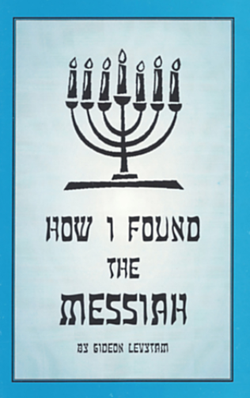
Follow Gideon Levytam's journey and discover how he was led by God, through a series of exciting circumstances, to find the One his people are still waiting for.
Past Episodes

Featured Offer
Follow Gideon Levytam's journey and discover how he was led by God, through a series of exciting circumstances, to find the One his people are still waiting for.
About Holy Scriptures and Israel
As time passed by, the Lord Yeshua took dear brother John Van Stormbroek to himself. The ministry of Holy Scriptures and Israel continued with additional development. In the early 1990’s, a weekly morning Bible class began which brother Gideon Levytam led regularly in the City of Toronto. This weekly open Bible class was held in the Willowdale assembly meeting hall. Eventually, a second mid-week evening Bible class was added. In April 2002, the need for an additional outreach Bible teaching meeting arose. We begun a Saturday (Shabbat) ministry meeting in which a systematic teaching of God’s word is presented to all who attend. Together we learn God’s Word, pray for each need and the salvation of Israel, and sing songs of worship unto our God, praising Him and our Lord Yeshua the Messiah.
In Mid 2004 we started to air on Joy 1250 Radio station a 15 minute Bible teaching program called "The Holy Scriptures and Israel" with Gideon Levytam. The broadcast teaches God’s word from a Hebrew Messianic perspective and has proved to be a blessing to many. It's now aired seven days a week. Our prayer is that many more of our Israeli people will have a clear understanding of who Yeshua is, why we all need him, and come to know him as their Lord and Messiah.
About Gideon Levytam
Contact Holy Scriptures and Israel with Gideon Levytam
426 Simcoe Street
Niagara-on-The-Lake
Ontario L0S 1J0
Canada
(905) 325-1234