
Nehemiah 1:1-3, Part 3 of 3


Introduction, part 3
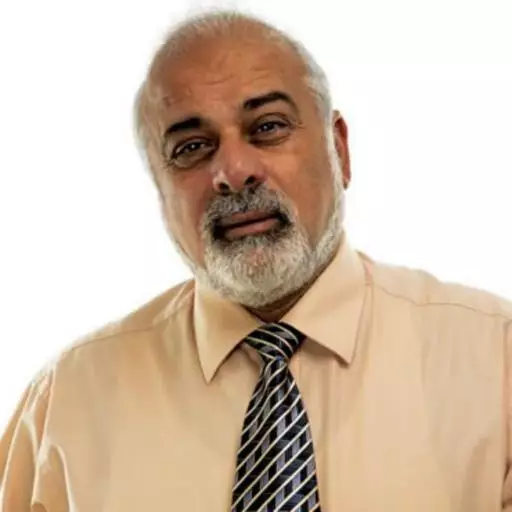
Gideon Levytam: The study of Nehemiah, chapter one, introduction. In the future, God will rebuild the promised temple, and the Messiah Yeshua will sit and reign and rule over the universe. But today, two thousand years pass by since the time when the Messiah came and died, was buried and resurrected, and ascended.
God is gathering believers throughout the world who truly, sincerely confess their sins and turn to Yeshua the Messiah, and He is saying, "I'm going to be the gathering center for you." Would you like, He says, to meet around Me? Would you have a burden in your heart to see that the people of God are encouraged and blessed? Would you be like Nehemiah, who desired to build the wall of protection for the people of God?
That's the thought that we have from the book of Nehemiah. This is so important, beloved brothers and sisters, to grasp it and to understand it if we are going to appreciate the book of Nehemiah. Let me read you a verse in the book of Ezekiel, chapter 22. Look at the reason why the people of Israel found themselves in Babylon, scattered.
God said to our nation, who were already scattered in Babylon because Ezekiel was taken captive as well, and God says, "Listen to this in chapter 22, verse 29." It says, "The people of the land have used oppression and exercised robbery, and have vexed the poor and the needy. Yea, they have oppressed the stranger wrongfully." That was the condition of our own people when they were taken captive.
Then look what He's saying in verse 30. I thought it was an amazing verse. He said, "I sought for a man among them that should make up the hedge, the wall, the fence, to stand in the gap before Me for the land, that I should not destroy the land." And look what He said at the end: "But I found none."
Can you imagine? God says, "I was looking for someone that he will stand in a gap, that he will pray on behalf of the people of God, that he will become between Me and the people of God, a link." And He said, "I found none." You know why? Because the spiritual condition of our people at that time was so low that God said, "I couldn't find anyone."
He says here, "I sought for a man among them that should make up the hedge." Should make, in Hebrew, "gader," it's like a fence. "To stand in the gap before Me and the land, that I should not destroy the land." And the land connect with the people. "But I found none." Can you imagine how it grieved the heart of God?
You know, sometimes I wonder today, in your life and in mine, are we a people who want to be a blessing to the people of God? Are we builders or destroyers? Sometimes people say, "Why are you being so legal? Why are you so much standing for this and standing for that and principles? God is love, you see. All you need is just love."
We find out very quickly how the sheep are scattered, the people of God are divided, the truth of the word of God is at time let go. And we are guilty in that. We don't point our finger at anybody else, and we find out why it is so important to have those godly men and women who teach us the word and keep us focused on the written word of God and not on human experience and human opinion.
It was in the time of Moses, it was in the time of Joshua, it was in the time of Ezra and Nehemiah, it was in the time of Daniel. In every generation, in the church age, it was at the time of Matthew, Mark, Luke, and John. It was in the time of Simon Peter and Paul. In every generation, God raised up godly men and women to serve Him and to seek to minister to the people of God.
So now, it's about 444 BC. Nehemiah was one of these people who stayed in Babylon. He didn't come with Zerubbabel, he didn't come with Ezra. He remained in Babylon. And what do you think he was doing in Babylon? He had a burden for the people of Israel, but he remained away from the land. And so in those first three verses, beloved brothers and sisters, we learn the concern of this man by the name of Nehemiah.
In fact, we learn that the theme of the book of Nehemiah is simply the return of the third group to the promised land from the land of Babylon. He's the author. We can see in verse one, his name, by the way, Nehemiah, is a beautiful name. The son, as it says here, Nehemiah, the son of Hakaliah. Nehemiah simply means "the comfort of Jehovah," of the Lord.
You know, in a time of trouble, what do we need? What is more comforting to our hearts when someone is giving us some comfort and care for our welfare, for the people of God? This is what Nehemiah is really representing. "Nacham Yah," the comfort that comes from Jehovah, from the Lord.
In Isaiah chapter 40, we read, "Comfort ye, comfort ye My people. Nachamu, nachamu ami." In 2 Corinthians chapter 1, the apostle Paul says, "The God of all comfort will give you comfort." We need comfort in a time of discouragement and a time of trouble. Nehemiah is a representation of the Lord in this book.
He is the author, and he's the one that really representing the comfort of the Lord. The people of God had so much discouragement around, so many people are so sad and unhappy and their spiritual walk with the Lord is so broken. And the people of God need to be comforted and encouraged. And that's what Nehemiah represent.
Notice that it says that he was the son of Hakaliah. Hakaliah simply means "the enlightenment of the Lord." So he was the comfort of the Lord, who is the son of the enlightenment of the Lord. And you know, the best thing for us in a time of sadness and sorrows and trials and problems is to lean hard on our blessed Lord Yeshua the Messiah, to lean hard and to seek to get enlightenment from Him.
Not to look around and to try to find something that will fix our problems in the world. Today, you will find out very quickly that you will be very much disappointed by the best of men. But there is one that will never disappoint us, and His name is Yeshua. He is the one that came from heaven. He is the one that represented before us even here in the study of the book of Nehemiah.
So the theme is the return of the third group back to the promised land. The author is none else but Nehemiah himself, the comfort of Jehovah. And you notice in the time when Nehemiah went back, there was one prophet that specifically preached to the people of Israel during the time when Nehemiah brought the third group to the promised land, and his name is Malachi.
In fact, if you know very well that Malachi is the last prophet of the Old Testament. He's the last prophet of our people Israel. In fact, beloved brothers and sisters, the book of Nehemiah and the prophet Malachi are closing the Old Testament age. Between the New Testament, the Brit Hadashah, when the Messiah came, introduced by John the Baptist, in between the end of the Old Testament, the Tanakh period, to the beginning of the Brit Hadashah, you have about 400 or 450 years in between where God was silent.
He didn't speak until the powerful messenger by the name of Yochanan Ha'Matbil began to preach. And he says, "Behold the Lamb of God, which taketh away the sin of this world," John 1:29. So there was 400 to 450 years where there was silence. So what we find out is that they returned in about 444 or 445. And a few years after, notice 433 or so, from there on is really the end of what is known the Tanakh history. That's it.
And from here on, 400 years later, 450 years, the Messiah Yeshua appeared on the scene. He was born in Bethlehem. He grew up in Nazareth. He ministered in Jerusalem and Galilee. And he was proclaimed by a man by the name of John the Baptist: "Behold, the Messiah has come." And so when we read and we study the book of Nehemiah, we see the last return and the condition that prevailed there when the nation of Israel returned back to the land.
Again, I would like to make a parallel for us in the present day. You see, when you read the book of Revelation, you'll notice that the Lord wrote to the seven churches of Asia Minor, Revelation chapter 2, Revelation chapter 3. And the last church, ekklesia, kehillah, was the church of the Laodiceans. You know what He wrote to them? Let me read it to you, please. Turn to Revelation chapter 3, verse 14.
We read, "And unto the angel of the church of the Laodiceans write: These things saith the Amen, the faithful and true witness, the beginning of the creation of God: I know thy works, that thou art neither cold nor hot. I would that thou wert cold or hot. So then because thou art lukewarm, and neither cold nor hot, I will spew thee out of My mouth."
"Because thou sayest, 'I am rich, and increased with goods, and have need of nothing,' and you do not know that thou art wretched and miserable, and poor, and blind, and naked. I counsel thee, buy of Me gold tried in the fire, that thou mayest be rich, and white raiment, that thou mayest be clothed, and that the shame of thy nakedness do not appear. And anoint thine eyes with eye salve, that thou mayest see."
"As many as I love, I rebuke and I chasten. Be zealous therefore, and repent. Behold, I stand at the door and knock." And notice, if any man, not any church, any man, an individual, or any woman, if any individual will hear My voice and open the door, I will come in unto him, and I will sup with him and he with Me.
To him that overcometh will I grant to sit with Me in My throne, even as I also overcame and am set down with My Father in His throne. He that hath an ear, let him hear what the Spirit saith unto the assemblies, unto the churches, the called-out one. He is speaking at the last days, in the days of Laodicean, just the same like God is speaking in the days of Ezra, Nehemiah, Zerubbabel.
He's speaking to His people to stir them up and to bring them close to Himself so they may live a life that is pleasing to Him and be used to be as a fence for the people of God. And how many time we have to say to our own shame that we haven't been what we should have been in order to be a blessing to the people of God.
So now, brothers and sisters, just the setting that I really wanted you to understand from 1040 BC until 443 BC, we have all this history that happened to the people of Israel. And here we find ourselves starting the book of Nehemiah, and we learning from this, how does that apply to you and I today?
In verse one, we find out the time and the place when Nehemiah hears of Israel's condition. Notice it says here in Nehemiah 1:1, "The words of Nehemiah, the son of Hakaliah. And it came to pass in the month of Kislev, in the twentieth year, that I was in Shushan the palace." Notice, number one, it was in a month of Kislev. If you know the Hebrew months, there are 12 months: Tishrei, Cheshvan, Kislev, Tevet, Shevat, Adar, Nisan, Iyar, Sivan, Tammuz, Av, Elul.
If you'll ask the rabbis today, which is the beginning of the year for the Jewish people, they will say it is the month of Tishrei. In a month of Tishrei, you have what you call the fall feasts of the Lord. If you remember, it will be the three feasts, specifically those three feasts, or moadim, as we call them in Hebrew, what is called Rosh Hashanah, the feast of trumpets; secondly, Yom Kippur, the day of atonement; and finally, what you call Sukkot, the feast of booths. Those three feasts.
But of course, biblically speaking, the beginning of the year for the nation of Israel, biblically, not traditionally, is really the month of Nisan, which is the time when Israel came out of the land of Egypt. It's really March/April, when the beginning of their redeeming of the nation, redemption began. That's why God said in Exodus chapter 12, "This month shall be unto you the beginning of months."
But of course, over the years, the rabbis have kind of shifted towards the month of Tishrei and they say that Tishrei God created the universe and Tishrei happened certain things and they made that the head of the year. That's why in Hebrew it's called Rosh Hashanah. But it's not a biblical name, it is rabbinic name. In Hebrew, it's called the Feast of Trumpets, Yom Teruah. That is the biblical name in the month of Tishrei.
But you notice that it was Kislev. And Kislev comes about the end of November, the beginning of December. It's a wintry season. And at that time, it says, and I'm reading again, "And it came to pass in the month of Kislev," the end of November, beginning of December as far as we're concerned, "in the twentieth year," this is the twentieth year if you find it later on of the King Artaxerxes, you will find out then when he reigned, then Nehemiah was in Shushan the palace, verse one.
Shushan is actually the name of the city, and it says here "the palace" is the capital city of the Persian in the time that Nehemiah and the people of Israel were there in the land of Babylon, later on the Persian took over and they defeated the Babylonian and they became the kingdom at that time. And so notice in the English it says "Shushan the palace," but in Hebrew it says "Shushan Ha'Birah." "Ha'Birah" means the capital city.
Today, the capital city of Israel is in Jerusalem. The capital city of any other country, the name of the city is their capital city. Here Shushan was the capital city of Persia in the days when Nehemiah was there. By the way, in Shushan the capital city, the book of Esther began there. If you remember, Esther herself was in Shushan the palace. She became the queen of Shushan, the capital city of Persia. She became the wife of the king when he chose her from among all the beautiful women of Persia. She was the one that was chosen to become the queen of that king in those days. It was in Shushan the capital city.
Now secondly, I want you to notice in verse two now, that Hanani, one of my brethren, came, and a certain man from Judah. And I asked them concerning the Jews that had escaped, which were left of the captivity, and concerning Jerusalem. Now we learn from this, beloved brothers and sisters, the concern that Nehemiah had. You see, apparently there were some of the Jewish people who have already left in the time of Ezra, or in the time of Zerubbabel.
And they now came back to visit Shushan, the capital city. And lo and behold, Nehemiah see them and he says, "Hey brethren, I would like to ask you a question." And he asked them. He says, "Listen, what about the Jewish people, my own brethren that are in the land? What about my city, the city of Jerusalem? How are they doing? Are things well there?"
You know, it's just like you and I might visit another country and be moved away to another place and we will ask back some of our friends. Listen, how are the brothers and sisters at the Holy Scriptures and Israel Bible Fellowship doing? Are they doing well? How things are going on with them? Are they walking with the Lord? Do they have problems in their lives? How they are doing?
You see, this is built in the heart of the believer. In fact, for us who are Jewish people, it's built in our heart. We still have a concern for our nation Israel. Our hearts are yearning to see what's going to happen with our Jewish people. But also our hearts are yearning for the body of Messiah. How are the believers among the people of God? How their life is? What's going on with them?
And you see, Nehemiah had this burden in his heart. And I wish that the Lord will stir up our hearts also, that we will not only come to attend meeting and we forget about the people of God. That we will be burdened for the people of God and see how they are doing. And if we can, to help them, to minister to them, to pray for them.
See, Nehemiah was not the kind of a person that says, "You know what, I'm Jewish, I'm part of the nation of Israel, I really don't care how they're doing." He had been a person that was, what we call it in New Testament language, an exercised brother or exercised sister. It's not a physical exercise, it's a spiritual exercise. He had a burden in his heart. He had a concern for the people of God.
And so he asked the people that came, he said, he asked them concerning the Jews, Ha'Yehudim, that had escaped. They have escaped already from a previous time. They have left under Zerubbabel, they have left under Ezra. 538, 457. They have already left Babylon. They are now in the promised land, but they're coming to visit. How they doing? How are things in the city of Jerusalem?
Notice he care for two things. Number one, the Jews, the people. Number two, the city of Jerusalem, the place where God's people would gather together. How is the city of Jerusalem? You know, until today, there is not a day that somehow I feel the inclination to listen to the news about how things are going among my people in the land of Israel today.
Of course, some of us have family there as well, but it's not only our own family, it's the Jewish people. The constant animosity against them. The constant wars and the constant friction and the constant terrorism and the constant hatred from all around. But it's not only for our Jewish people, it's also for believers. Brothers and sisters in Yeshua the Messiah, we ought to develop a care in our hearts for them just like Nehemiah had a care for his own people.
And so, beloved brothers and sisters, look at the answer that he gave. Very sad. He said unto him, notice three things: The remnant that are left of the captivity there in the province are in great affliction and reproach. The walls of Jerusalem also is broken down, and thirdly, the gates thereof are burned with fire. That must have left him with a heavy heart to hear such a testimony.
You know, that must have been like a knife in his own heart, to see and to hear such a testimony from those that have already gone there and lived there and have experienced the time of return to the promised land. The second temple of Jerusalem was still in existence and he heard this report from the people that came back from Jerusalem.
As much as well, you and I hear this report from many, many believers. When we often time hear the report, "Well, how are things going on?" And we find out, you know what, this local assembly, local church that used to exist there on that street in that place, it is no more. The brothers and sisters are all scattered.
"Oh, you know what, those people who used to teach the Bible and minister the word of God and they protected the truth of the Lord through the teaching of the word, they used to teach those kind of things. Things are changed. We are more modern, you see. We don't believe that the word of God is the only authority. We have our own ideas, you see. We know better than God."
And when it's come to the gate, everything is going on, you know? Everybody can come in, can go out, do what he want, teach what he want, say what he want and so on. Everything is fine, it's free, you see. We are modern, you see. We have moved forward. We are not like those old religious people who only held to the Bible. We are modern, you see. We know better.
And you see, this is exactly what we experience today too. We think that we know better than God. And no wonder the people of God, the remnant, is in affliction and in reproach. The wall is broken down. The gates are burned with fire. And it really hurt him so much, beloved brothers and sisters.
And it hurt him so much that the rest of the book, we see that he decided to take a stand. He decided that he is going to do something about it. He's not going to be careless. He's not going to say, "Well, I don't care, as long that I'm fine, you see." He says, "No, I'm going to make a decision in my life. I'm going to be used by God, if you will use me. I will take time and effort and energy and I will do something for my people. I might not fix all the problem, but I'm going to seek to be a blessing for the people of God."
And here is where the challenge is to you and I today, brothers and sisters. I'm challenging you, are you and I ready to take part in building? We have to question our hearts and searching our souls, am I a help or am I a hindrance? Am I want to be used by the Lord sincerely for the blessing of the people of God, or am I going to have my own way and I'm going to do my own thing?
And I don't listen to anybody, I'm the captain of my ship. I'm the pilot who move my own plane, I'm going to drive of my own car, I'm not going to let anybody teach me anything. I know better than anybody else. That's the question that you and I have to ask ourselves today as we study the book of Nehemiah. May the Lord help us to be like Nehemiah, to be the comfort to our brothers and sisters, to be a blessing to the people of God so we will be used by the Lord and the Lord can say as well to us, "Well done, good and faithful servant."
Featured Offer
Follow Gideon Levytam's journey and discover how he was led by God, through a series of exciting circumstances, to find the One his people are still waiting for.
Past Episodes

Featured Offer
Follow Gideon Levytam's journey and discover how he was led by God, through a series of exciting circumstances, to find the One his people are still waiting for.
About Holy Scriptures and Israel
As time passed by, the Lord Yeshua took dear brother John Van Stormbroek to himself. The ministry of Holy Scriptures and Israel continued with additional development. In the early 1990’s, a weekly morning Bible class began which brother Gideon Levytam led regularly in the City of Toronto. This weekly open Bible class was held in the Willowdale assembly meeting hall. Eventually, a second mid-week evening Bible class was added. In April 2002, the need for an additional outreach Bible teaching meeting arose. We begun a Saturday (Shabbat) ministry meeting in which a systematic teaching of God’s word is presented to all who attend. Together we learn God’s Word, pray for each need and the salvation of Israel, and sing songs of worship unto our God, praising Him and our Lord Yeshua the Messiah.
In Mid 2004 we started to air on Joy 1250 Radio station a 15 minute Bible teaching program called "The Holy Scriptures and Israel" with Gideon Levytam. The broadcast teaches God’s word from a Hebrew Messianic perspective and has proved to be a blessing to many. It's now aired seven days a week. Our prayer is that many more of our Israeli people will have a clear understanding of who Yeshua is, why we all need him, and come to know him as their Lord and Messiah.
About Gideon Levytam
Contact Holy Scriptures and Israel with Gideon Levytam
426 Simcoe Street
Niagara-on-The-Lake
Ontario L0S 1J0
Canada
(905) 325-1234