
Nehemiah 1:1-3, Part 2 of 3


Introduction, part 2
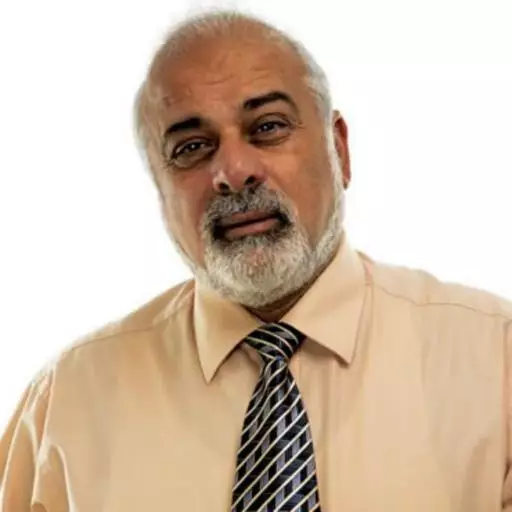
Voiceover: Shalom. Holy Scriptures and Israel is a ministry designed to share with the Jewish people the good news of the Lord Jesus, Yeshua the Messiah, and to instruct Christians on the Jewish roots of their faith. And now, teaching God's word from a Hebrew Messianic perspective, here is Gideon Levytam.
Gideon Levytam: The study of Nehemiah Chapter 1, introduction. Our Jewish people who had the land, enjoyed the land, and the many blessings that God had intended for them, now find themselves for 70 years by the rivers of Babylon. We find the reason for that is because Israel, the southern kingdom, also, like the northern kingdom, did not submit themselves to the word of the Lord. And so they were now for 70 years in the land of Bavel. The Jewish people who once enjoyed the things of the Lord find themselves away from the city of Yerushalayim for 70 years.
In our own personal experience in our own life, not only as Jewish people who are somehow connected with the nation of Israel, but in the body of Messiah, because we did not submit to the Lord, we didn't humble ourselves before him. Because pride rose in our own hearts and self-will came into our life, and we thought that we could do very well without the Lord, we will be fine. How many times we find local churches broken into pieces, and we could only say, "I remember when things were so nice some years ago." Instead of standing for the Lord and for his own purpose and will in our life, we allow things to creep into our life, and we ended up really suffering the consequences of our own sins and our own self-will.
Now turn with me to Daniel Chapter 9. When Israel had been in Bavel for 70 years, God gave a promise that he would restore them according to Jeremiah Chapter 25. Daniel, who was now in Bavel, understood that the 70 years were going to get over, and now was the time to be restored to the land. So Daniel prayed. When he prayed, beloved brothers and sisters, God responded to him. Actually, the whole ninth chapter is the prayer of Daniel and the response of the Lord to Daniel.
In Chapter 9 and verse 21, it says, "Yea, while I was speaking in prayer, even the man Gabriel," this is the angel Gabriel, "whom I had seen in a vision at the beginning, being caused to fly swiftly, he touched me about the time of the evening oblation. And he informed me, and he talked with me, and said," and Gabriel began to give instruction to Daniel. He gave him a prophetic message that not only speaks about the restoration of the people of Judah back to the land of Israel, but concerning the coming of the Messiah.
Notice that, beloved brothers and sisters, in Daniel Chapter 9 and verse 24, he said, "70 weeks are determined upon thy people, and upon thy holy city, to finish the transgression, to make an end of sins, to make reconciliation for iniquity, and to bring in everlasting righteousness, and to seal up the vision and prophecy, and to anoint the most holy. Know therefore," this is verse 25 now, "and understand that from the going forth of the commandment to restore and to build Jerusalem unto the Messiah the Prince shall be seven weeks, and threescore and two weeks. The street shall be built again, the wall even in troublous time. And after threescore and two weeks shall Messiah be cut off, but not for himself. And the people of the prince that shall come shall destroy the city and the sanctuary, and the end thereof shall be with a flood, and unto the end of the war desolations are determined."
Here he said to him, "Listen, 70 weeks are determined upon thy people," this is the people of Israel, "and upon thy holy city," this is the city of Yerushalayim. I want you to notice here that there are the 70 years of our people Israel that were in exile in Bavel, in Babylon. When the 70 years are over, Daniel is praying. He is asking the Lord, the God of heaven, the God of our nation Israel. He says, "Listen, God, you've promised to restore our people to the land. You've promised to bring us back to the land. Are you going to do so? We confess our sins and our failure, God. We want the restoration of the nation of Israel."
Lo and behold, God gave him this prophetic word from verses 24 on. But you see, he gave him additional information. Not only 70 years are going to pass by and the Jewish people will be restored, but he gave him a prophetic message about the time when the Messiah himself is going to come, and when the Messiah will be cut off, and he will die on behalf of the nation of Israel and the nations of the world. Ultimately there will be a restoration and a blessing. But certain things had to happen before all this is going to transpire.
He mainly said to him that the Messiah is going to come and to accomplish an amazing work. Number one, to finish transgression. Number two, to make an end of sins. Number three, for a reconciliation for iniquity. Number four, to bring in an everlasting righteousness. Number five, to seal up the vision and the prophecy. And number six, to anoint the most holy. That is yet awaiting a future day. But 70 years have passed by. The time to restore the people of Israel back to the land is now going to start when Daniel prayed for the Lord's restoration of the Jewish people to Israel.
Just like there were three deportations or three times when the people of Israel were in exile, there were also three returns back to the land. Here is where we are right here in this last portion of the chart. In about 538 BC, the first return of the Jewish remnant from Babylon began. Zerubbabel led about 50,000 Jewish people to return back to rebuild the temple in the city of Jerusalem. You read that in the first six chapters of the book of Ezra.
Then in 457 BC, Ezra came to beautify the temple in Jerusalem. Not only was it built already, but it needed to be beautified. They brought all sort of material and all sort of things with them to beautify the temple in the city of Jerusalem. He came, if I'm correct, with about 1,500 Jewish people. The vast majority of the Jewish people still remained in Bavel. That's where the story of Esther happened. It happened to the Jewish people who did not return to the land of Israel, neither under Zerubbabel nor under Ezra. They were still left in Babylon, in the land of Bavel.
Now, when we arrive at the book of Nehemiah, we are at about 444 or 445 BC. When Nehemiah himself was going to go to the land of Israel, to the city of Jerusalem, Ezra and Zerubbabel had built the temple and had beautified the temple. But there was still a problem there. The gates were still burnt. The walls of the city were still torn into pieces and broken down. It was Nehemiah's exercise of heart and soul that he wanted so badly. He was so concerned with his Jewish brethren and with the city of Yerushalayim, that he wanted not only to build a temple, which was already in existence, but he wanted to build a wall around the city of Yerushalayim and to fix the gates in order that the people will be in two ways preserved.
The reason that you have a wall is because of protection from the nations around. The reason that you have a wall is for separation from those that will try to come in and influence God's people. This is an amazing truth for us to understand, beloved brothers and sisters. You and I are to have an exercise like Nehemiah, to have those two things in mind when we are building the walls around the body of Messiah, you and I might say. Why? Because there's so many things that are happening to the people of God, things that are hindering them from spiritual growth and breaking down and hurting the lives of the people of God.
On a personal level, how many people have broken lives? How many people of God have lives that are broken to pieces? They have turned away from the Lord. They are not attending meetings anymore. They don't read the Bible anymore. They don't worship Yeshua the Messiah anymore. What happened? Well, disobedience, like in the lives of our forefathers, happened at times in the lives of God's people. Therefore the book of Nehemiah, all these things which have happened unto them, serve for our learning that you and I will recognize this and learn from this and ask the Lord, "Lord, what do you teach me personally in my life today? How can I be like Nehemiah?"
Now I want to read one more verse if you don't mind. If you turn with me to the book of Psalm 137. This is the famous Psalm that we read when our people of old were in the land of Babylon. I want you to notice the words of this Psalm. "By the rivers of Babylon," these are the Jewish people, the people of God, "there we sat down, yea, we wept, when we remembered Zion, Tziyon. We hung our harps upon a willow in the midst thereof. For there," in Bavel, in Babylon, "they that carried us away," this is the Babylonian people, "they required of us a song; and they that wasted us required of us mirth, simcha. They said, 'Sing unto us one of the songs of Zion.'"
Look at the answer of this Jewish remnant of people of God who were in Babylon. They said, "How shall we sing the Lord's song in a strange land?" They couldn't sing. Why couldn't they sing? Because they were away from the Lord. Because they were not in the city of Yerushalayim. Because they were away from the will of God. They were under discipline. They couldn't sing.
Look, they said, "How shall we sing the Lord's song in a strange land?" And then the Lord pricked their hearts and he touched their hearts and he showed them the realization that they were wrong and they needed to be corrected. Look at the change in that Psalm. They began now to say statements, such as verse 5. "If I forget thee, O Yerushalayim, let my right hand forget her cunning. If I do not remember thee, let my tongue cleave to the roof of my mouth; if I prefer not Yerushalayim, Jerusalem, above my chief joy."
They began to change because they realized that they were wrong. You know, God loves to see repentance. God loves to see his people confess and repent and turn around. Not only an unbeliever needs to confess, but a believer needs to change his or her life and repent before the Lord, and to say, "Lord, I've messed up. I was wrong in my attitude and in my behavior."
Notice now, they devote themselves for the city of Yerushalayim, and they say, "If I forget thee, O Jerusalem, let my right hand forget her cunning." In Hebrew we say, "Im eshkakhek Yerushalayim, tishkakh yemini." May my right hand forget the ability to be used if I forget the city of Jerusalem. Beloved brothers and sisters, Yerushalayim is a place where God set his name. Yerushalayim is where the temple was built. Yerushalayim is where the priest functioned. Yerushalayim is where the sacrifice was offered on the altar. Yerushalayim is where ultimately the Messiah came to, and he gave his life a ransom for many.
It is a literal place, but there is also a spiritual application for the believers in their lives. You see, Yerushalayim for us today who are not in Jerusalem physically, for us, Jerusalem is the gathering center where the people of God gather together around our Lord Yeshua the Messiah. For us today, who are not in the physical literal city of Jerusalem, we are here. And there are millions and a million in this world who are in many places around the world. For the believer in the present day age, the place Yerushalayim is the gathering center, where Yeshua said in Matthew 18:20, "For where two or three are gathered together unto my name, there am I in the midst of them."
He promised to be in the midst of his saints. That's why, brothers and sisters, and I'm saying this not as a criticism, I'm just saying it in reality, when we miss a meeting and we say, "You know what, today I just don't feel like going to a meeting where the saints are gathered together." You know what happened really here? You lost, I lost. Because God promised to be in the center of his gathered saints. He promised to be a blessing to the people of God, if they will only come with a desire in their hearts to have him as the object, to learn from him, to glorify him, to worship him, because he's the one who is the gathering center.
You know very well that today in the city of Jerusalem no one even can get up to Temple Mount. There is nothing there. In fact, what you have there is a mosque, the Dome of the Rock. In the future, God will restore the nation of Israel. In the future, God will rebuild the promised temple, and the Messiah Yeshua will sit and reign and rule over the universe. Today, 2,000 years have passed by since the time when the Messiah came and died, was buried and resurrected and ascended. God is gathering believers throughout the world who truly sincerely confess their sins and turn to Yeshua the Messiah, and he's saying, "I'm going to be the gathering center for you."
"Would you like," he says, "to meet around me? Would you have a burden in your heart to see that the people of God are encouraged and blessed? Would you be like Nehemiah, who desires to build the wall of protection for the people of God?" That's the thought that we have from the book of Nehemiah. This is so important, beloved brothers and sisters, to grasp it and to understand it if we are going to appreciate the book of Nehemiah.
Let me read you a verse in the book of Ezekiel Chapter 22. Look at the reason why the people of Israel find themselves in Babylon, scattered. God said to our nation who were already scattered in Babylon because Ezekiel was taken captive as well. God says, "Listen to this," in Chapter 22, verse 29. It says, "The people of the land have used oppression, and exercised robbery, and have vexed the poor and the needy: yea, they have oppressed the stranger wrongfully." That was the condition of our own people when they were taken captive.
Then look what he's saying in verse 30. I thought it was an amazing verse. He said, "I sought for a man among them, that should make up the hedge," the wall, the gadere, the fence, "to stand in the gap before me for the land, that I should not destroy the land." And look what he said at the end: "But I found none." Can you imagine? God said, "I was looking for someone that he will stand in a gap, that he will pray on behalf of the people of God, that he will become between me and the people of God a link."
And he said, "I found none." You know why? Because the spiritual condition of our people at that time was so low that God said, "I couldn't find anyone." He says here, "I sought for a man among them, that should make up the hedge," should make in Hebrew "gadere," it's like a fence, "to stand in the gap before me and the land, that I should not destroy the land." And the land connect with the people. "But I found none."
Can you imagine how it grieves the heart of God? Sometimes I wonder today, in your life and in mine, are we a people who want to be a blessing to the people of God? Are we builders or destroyers? Sometimes people say, "Why are you being so legal? Why are you so much standing for this and standing for that and principles? You know, God is love, you see, all you need is just love." We find that very quickly how the sheep are scattered, the people of God are divided, the truth of the word of God is at time let go.
We are guilty in that. We don't point our finger at anybody else. We find out why it is so important to have those godly men and women who teach us the word and keep us focused on the written word of God and not on human experience and human opinion. It was in the time of Moses, it was in the time of Joshua, it was in the time of Ezra and Nehemiah, it was in the time of Daniel, in every generation. In the church age, it was in the time of Matthew, Mark, Luke, and John. It was in the time of Shimon Kephas, Peter, and Shaul, Paul. In every generation, God raises up godly men and women to serve him and to seek to minister to the people of God.
So now it's about 444 BC. Nehemiah was one of these people who stayed in Bavel. He didn't come with Zerubbabel. He didn't come with Ezra. He remained in Bavel. What do you think he was doing in Bavel? He had a burden for the people of Israel, but he remained away from the land. In those first three verses, beloved brothers and sisters, we'll learn the concern of this man by the name of Nehemiah.
The theme of the book of Nehemiah is simply the return of the third group to the promised land from the land of Bavel. He's the author, we can see in verse 1. His name, by the way, Nehemiah, is a beautiful name. Nehemiah the son of Hachaliah. Nehemiah simply means the comfort of Yehovah, of the Lord. In a time of trouble, what do we need? What is more comforting to our hearts when someone is giving us some comfort and care for our welfare, for the people of God? This is what Nehemiah is really representing. Nacham-Ya, the comfort that comes from Yehovah, from the Lord.
In Isaiah Chapter 40 we read, "Comfort ye, comfort ye my people," Nachamu Nachamu Ami. In 2 Corinthians Chapter 1, the apostle Paul says, "The God of all comfort will give you comfort." We need comfort in a time of discouragement and a time of trouble. Nehemiah is a representative of the Lord in this book. He's the author, and he's the one that really representing the comfort of the Lord.
The people of God had so much discouragement around. So many people are so sad and unhappy and their spiritual walk with the Lord is so broken. The people of God need to be comforted and encouraged. That's what Nehemiah represents. Notice that it says that he was the son of Hachaliah. Hachaliah simply means the enlightenment of the Lord. So he was the comfort of the Lord who is the son of the enlightenment of the Lord.
The best thing for us in a time of sadness and sorrows and trials and problems is to lean hard on our blessed Lord Yeshua the Messiah, to lean hard and to seek to get enlightenment from him. Not to look around and to try to find someone who will fix our problems in the world today. You will find out very quickly that you will be very much disappointed by the best of men. But there is one that will never disappoint us, and his name is Yeshua. He is the one that came from heaven. He is the one that represented before us even here in this study of the book of Nehemiah.
The theme is the return of the third group back to the promised land. The author is none other but Nehemiah himself, the comfort of Jehovah. You notice in the time when Nehemiah went back, there was one prophet that specifically preached to the people of Israel during the time when Nehemiah brought the third group to the promised land, and his name is Malachi. As you know very well, Malachi is the last prophet of the Old Testament. He is the last prophet of our people Israel.
Beloved brothers and sisters, the book of Nehemiah and the prophet Malachi closing the Old Testament age. Between the New Testament, the Brit Hadashah, when the Messiah came introduced by John the Baptist, in between the end of the Old Testament, the Tanakh period, to the beginning of the Brit Hadashah, you have about 400 or 430 years, 450 years in between, where God was silent.
He didn't speak until the powerful messenger by the name of Yochanan Hamatbil began to preach and he says, "Behold the lamb of God, which taketh away the sin of this world," John 1:29. There were 400 to 450 years where there was silence. So what we find out that the return in about 444 or 445 and a few years after, notice 433 or so, from there on is really the end of what is known as the Tanakh history. That's it.
From here on, 400 years later, 450 years, the Messiah Yeshua appears on the scene. He was born in Bethlehem. He grew up in Nazareth, Natzeret. He ministered in Yerushalayim and Galilee, and he was proclaimed by a man by the name of John the Baptist: "Behold, the Messiah has come." So when we read and we study the book of Nehemiah, we see the last return and the condition that prevailed there when the nation of Israel returned back to the land.
Again I would like to make a parallel for us in the present day. You see, when you read the book of Revelation, you'll notice that the Lord wrote to the seven churches of Asia Minor, Revelation Chapter 2, Revelation Chapter 3. And the last church, Ecclesia, Kehila, was the church of the Laodiceans.
Voiceover: You have been listening to Holy Scriptures and Israel with Gideon Levytam. Gideon teaches God's word from a Hebrew Messianic perspective. For more information about this ministry, write to Holy Scriptures and Israel, Box 1411 Niagara on the Lake Ontario L0S 1J0, or visit our website at HolyScripturesandIsrael.com.
You are also invited to Gideon's weekly Bible teaching on Fridays at 11 AM and 7 PM, and Saturdays at 1 PM, at Willowdale Christian Assembly Hall, 28 Martin Ross Avenue in Toronto. Holy Scriptures and Israel is made possible by your prayers and financial support. If you would like to support the program, visit HolyScripturesandIsrael.com. God bless you. Shalom, shalom.
Featured Offer
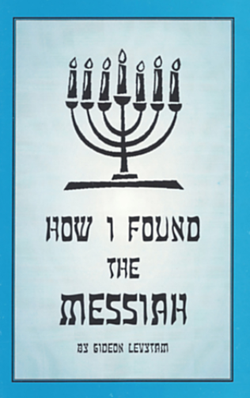
Follow Gideon Levytam's journey and discover how he was led by God, through a series of exciting circumstances, to find the One his people are still waiting for.
Past Episodes

Featured Offer
Follow Gideon Levytam's journey and discover how he was led by God, through a series of exciting circumstances, to find the One his people are still waiting for.
About Holy Scriptures and Israel
As time passed by, the Lord Yeshua took dear brother John Van Stormbroek to himself. The ministry of Holy Scriptures and Israel continued with additional development. In the early 1990’s, a weekly morning Bible class began which brother Gideon Levytam led regularly in the City of Toronto. This weekly open Bible class was held in the Willowdale assembly meeting hall. Eventually, a second mid-week evening Bible class was added. In April 2002, the need for an additional outreach Bible teaching meeting arose. We begun a Saturday (Shabbat) ministry meeting in which a systematic teaching of God’s word is presented to all who attend. Together we learn God’s Word, pray for each need and the salvation of Israel, and sing songs of worship unto our God, praising Him and our Lord Yeshua the Messiah.
In Mid 2004 we started to air on Joy 1250 Radio station a 15 minute Bible teaching program called "The Holy Scriptures and Israel" with Gideon Levytam. The broadcast teaches God’s word from a Hebrew Messianic perspective and has proved to be a blessing to many. It's now aired seven days a week. Our prayer is that many more of our Israeli people will have a clear understanding of who Yeshua is, why we all need him, and come to know him as their Lord and Messiah.
About Gideon Levytam
Contact Holy Scriptures and Israel with Gideon Levytam
426 Simcoe Street
Niagara-on-The-Lake
Ontario L0S 1J0
Canada
(905) 325-1234