

Malachi 3:7-15 Part 2 of 3


Will a man rob God yet ye have robbed me, part 2
Guest (Male): Shalom. Holy Scriptures and Israel is a ministry designed to share with the Jewish people the good news of the Lord Jesus Yeshua the Messiah and to instruct Christians on the Jewish roots of their faith. And now, teaching God's word from a Hebrew Messianic perspective, here is Gideon Levytam.
Gideon Levytam: The study of the book of Malachi, chapter three. How often we think that our ways are better than God's way, that we know better than the Lord, and we don't obey him. When we have children that we brought into this world, we never need to teach them to disobey. They were born in sin and they disobey again and again. You remember how this book of Malachi also began: "A son honoureth his father and a servant his master. If then I be a father, where is mine honour? And if I be a master, where is my fear? saith the Lord of hosts unto you, O priests, that despise my name."
God is opening his heart to his people that he loves so much. When we look at history, sometimes it boggles my mind when I think, "Why does God bother with us? Why does he even want to have anything to do with the rebels?" And yet God said, "Jacob have I loved." When we think of New Testament teaching: "For God so loved the world that he gave his only begotten Son, that whosoever believeth on him shall not perish but have everlasting life." You think about Ephesians 5: "The Messiah loved the church, the assembly, and gave himself for it." And yet the assembly, the church, just the same like Israel of old, have rebelled against the Lord and dishonoured him.
So he's looking at history and he says from the days of your fathers, you have not obeyed me, as he says here in verse seven. But notice that he's appealing, and notice in verse 7b he's asking Israel to repent. Will they repent? Will they change their manner? Notice he is saying to them so beautifully in this verse seven: "Return unto me and I will return unto you, saith the Lord of hosts." The word return in the Hebrew is "Shuvu." It comes from the word "Teshuva," to repent and turn around and come back towards the Lord. "Where are you going?" he is saying to them. "Come back. Turn around. Don't carry on in your own way because you will be punished. I will judge you. You're eventually going to bring upon yourself damnation. Turn around."
Who of us as a father will not say to our own children, "Turn around"? There is a danger there. Don't go in that direction. You're going to fall, you're going to stumble. Please turn around. "Shuvu," he is saying. And then he promised them: "If you will return unto me, I will return unto you." Can you imagine? God is bargaining with them. "If you will return, I will return. If you will come back to me, I will come back to you." "Shuvu elai ve’ashuva alechem" in the Hebrew text. What a wonderful offer.
Yeshua said in Matthew 11: "Come unto me, all ye that labour and are heavy laden, and I will give you rest." He loves mankind. He loves his people if they only will listen unto his word and return back to him. So he's appealing to Israel: "Israel, return unto me and I will return unto you." If you just imagine the heart of God, the love of God for his own people is so deep. His people here, this was the group that were really not intending to repent. This is the arrogant, the proud. They have their own way. They know better than God. As far as they were concerned, God is as they said in chapter two and verse 17: "Where is the God of judgment? Everyone that is doing evil is good in his sight. The Lord delighteth in them that do evil. Where is that God of judgment?"
They were not wise because judgment had come and judgment will come. God is holy and he will judge even the people that he had chosen for himself. If he's going to judge the world, imagine what's going to happen with respect to his very own people. So continuing on in Malachi, chapter three and verse seven, the third portion of verse seven, notice what Israel's response was. You would think these ones would say, "Oh yeah, God, what a deal. We were not right with you. we disobeyed you and you are willing to return to us if we only return unto you." They would say, "Wow, I need to return back to the Lord because God offered me a restoration, a relationship with me."
But notice what they said, very sadly, in chapter three and verse seven: "But ye said, 'Wherein shall we return?'" In other words, in what way should we return? We are close by. We go to keep the Shabbat. We go to the temple in Jerusalem. We offer the sacrifices. We keep the feasts and the holiday. What do we need to return? You see what happened? Ritualism came in, but the hearts were far away from the Lord. Like we read earlier in the book of Isaiah, "These people come to me with their lips, but with their hearts they are far away from me." So they continue with the motion. As we have in Second Timothy, there is a form of godliness denying the power thereof.
Look at the setting. By the way, that word here, "Wherein shall we return?" "Bameh nashuv" in Hebrew, it's the thing that they have said again and again in the whole book of Malachi. In what way should we do that or the other? They are responding to God in pride, in arrogance, in self-will, saying, "Why do we need to do this?" because they assume the manner of their behavior was correct. Notice by the way, if you just turn back to chapter one and verse two: "Ye say, 'Wherein hast thou loved us?'" They doubted his love for them. "In what way did you say that you really loved us?" they said to him in chapter one and in verse two.
Notice in verse six of chapter one: they say at the end of verse six, "Wherein have we despised thy name? We didn't despise thy name. In what way you say that we have despised thy name?" Notice in chapter two and verse 14 now: "But ye say, 'Wherefore?' Why? In what way we have done one thing or another?" And if you just continue on in the same chapter two in verse 17, it says: "And ye say, 'Wherein have we wearied him?' In what way did we weary God? We haven't done so." It's a self-righteous attitude that they have had in their heart. And now in chapter three where we are in verse seven, once again they say, "Wherein shall we return?"
So now the Lord is giving them the answer. God charges his people now in verse eight by telling them how they have behaved in a wrong way towards him. Notice what he says to them in verse eight: "Will a man rob God? Yet ye have robbed me." Now when he uses the word "will a man rob God," he is God, the Creator, and man, humanity. How can the Creator be robbed by his own creature? Imagine when I think of a robbery, you think of somebody with a mask on his face, with a gun in his hand, and he is somehow sneaking in and tells everybody be careful, it's a robbery, and he's robbing a bank or robbing any place that he or she may want to rob.
But God is not talking in this way. God is very practical because he's speaking to us, he's speaking to his people, he's speaking to their hearts and he's saying to them, "You robbed me." The expression in Hebrew in verse eight is very interesting because the people of Israel who were supposed to come to the Lord and to give him what he had provided for them, yet what he is saying to them, he said to them, "You have robbed God. You have robbed me," he's saying to the people of Israel. And of course they ask and say, "Well, how did we rob you, God?" God gives them an answer.
The answer is in verse eight. It is filled with information to speak to the heart of the people of God. God answered them, "In tithe and in offering." The Hebrew words are "be-ma'aser ve-bi-terumah." The word "ma'aser" means one-tenth of all that which God had allowed them to possess and to earn in their life. He says, "You robbed me because you did not provide for me and for the service of the Lord that you were called to provide. And not only in tithing, but also in offerings. You did not have voluntary offerings which is expected from the people of God for the Lord's work."
Let me just remind you for a moment. Of course, we live today in the church age. It's a different era or economy. The word "oikonomia" in the Greek, mentioned four times in the Bible, simply means a dispensation, a period of time. But in the days of past, when God called our people Israel and he brought them into the promised land, he provided for them a whole tribe, the tribe called Levi, to be the one that will serve the Lord among the people of Israel. This tribe did not have any possession here on earth, but their ministry was totally to present the Lord before Israel and Israel before the Lord, to do the service of the Lord.
He instructed the rest of the tribes that because they received possession, they received land, he said, "Listen, I have blessed you, I've given you the land. They did not, and they will take their time to serve you, Israel—the Levi'im, the Kohanim. Therefore, in return, which is justified, you will take care of the people that serve you." I want you to turn with me to some verses in Leviticus for a moment. Leviticus chapter 27, we see in verse 30, this is the end of the whole book of Leviticus. He just finished to instruct Israel with the offering and the sacrifice, how the Israeli will come in to receive sins' forgiveness. You remember Leviticus 16, you have the Day of Atonement and on and on, the whole Levitical orders, how to receive forgiveness of sin, how to approach the Lord in the tabernacle in the wilderness.
Then he said to them in chapter 27 and verse 30: "And all the tithe of the land, whether of the seed of the land or of the fruit of the tree, is the Lord's. It is holy unto the Lord. And if a man will at all redeem ought of his tithe, he shall add thereto the fifth part thereof. And concerning the tithe of the herd or of the flock, even of whatsoever passeth under the rod, the tenth shall be holy unto the Lord." The Hebrew word for tenth is "ma'aser" and is known to be called as tithing, as to give one-tenth of their earning for the work of the Lord in the tabernacle in the wilderness. Look if you turn away to chapter 18 of the book of Numbers.
Notice another verse, very interesting, that the Lord instructed Israel to remember that they are to support the work of the ministry in the tabernacle; later on, it would be in the temple as well. In Numbers chapter 18, verse 26, it says: "Thus speak unto the Levites and say unto them, 'When ye take of the children of Israel the tithe, the ma'aser, which I have given you from them for your inheritance, then ye shall offer up an heave offering of it for the Lord, even a tenth part of the tithe.'" Notice that the Levites will receive the tithing and they in return will offer of that to the Lord himself because they are the ones that have been receiving this from the people of Israel in order to be able to function among the people of Israel.
Look at Deuteronomy chapter 14, verse 22. Notice almost in every book in the Torah the instructions are very clear. Verse 22: "Thou shalt truly tithe all the increase of thy seed, that the field bringeth forth year by year. And thou shalt eat before the Lord thy God, in the place which he shall choose to place his name there, the tithe of thy corn, of thy wine, and of thine oil, and the firstlings of thy herds and of thy flocks; that thou mayest learn to fear the Lord thy God always."
"And if the way be too long for thee, so that thou art not able to carry it, or if the place be too far from thee, which the Lord thy God shall choose to set his name there, when the Lord thy God hath blessed thee, then shalt thou turn it into money, and bind up the money in thine hand, and shalt go unto the place which the Lord thy God shall choose. And thou shalt bestow that money for whatsoever thy soul lusteth after, for oxen, or for sheep, or for wine, or for strong drink, or for whatsoever thy soul desireth: and thou shalt eat there before the Lord thy God, and thou shalt rejoice, thou and thine household."
Then notice verse 27: "And the Levite that is within thy gates; thou shalt not forsake him; for he hath no part nor inheritance with thee. At the end of three years thou shalt bring forth all the tithe of thine increase the same year, and shalt lay it up within thy gates. And the Levite, because he hath no part nor inheritance with thee, and the stranger, and the fatherless, and the widow, which are within thy gates, shall come, and shall eat and be satisfied; that the Lord thy God may bless thee in all the work of thine hand which thou doest."
It is so interesting that both in Leviticus and in Numbers and in Deuteronomy, the Lord instructed the people of Israel to obey his laws and to provide for the ministry of the temple and the Levites. Imagine what would happen if the Levites will not be supported and the temple of the Lord will not be supported and there will be no sacrifices at the temple, and things will just carry on without any provision from the people of God. To where will Israel go on the feasts? What are they going to be doing during the time they're supposed to worship the Lord? Can they continue on to come to the temple or to come to the tabernacle and enjoy the liberty and worship of the Lord if there is no provision there? No Levites there, no priests there, nobody to continue on with the ministry of the things of the Lord?
Even before the law came, when Abraham met Melchizedek, and Melchizedek blessed Abraham, Abraham himself gave to Melchizedek "ma'aser," a tithe. It was a principle that was taught throughout the Hebrew Scripture, throughout the days of old. So God is saying to his own people: "Will a man rob God? Yet ye have robbed me." And Israel is saying, "In what way we have robbed you?" And God says in a very simple way, number one, with tithing; number two, with offering. In other words, you have not supported the work of the Lord in order that the Lord's work will continue on among the people of Israel.
How is that for us today? We don't live in the days of old. We are not under the law, per se. God's law is always holy and righteous, but we live in a day in which we are today. We live in the assembly age, in the church age. Jew and Gentile are united together in the body of Messiah. Believers are in everywhere of the world, from Jerusalem to China, to India, to Africa, to Europe, to the North America. All over the world there are believers. And God's work continues on.
Now how will God's work continue on unless God's people will support God's work? How is it possible even to have a building or to have a room or to have servants to serve the Lord if they will not serve the Lord and not be supported by God's people? It's not possible to continue in the work of the Lord unless God's people support it. It is amazing. I always move my heart. I remember years ago, I was riding on a train and reading my Bible on the way to a meeting. A stranger came to the train and he saw me reading my Bible. He never heard my ministry. He never heard me preaching one word. He saw me reading my Bible.
He asked me, "What are you reading?" I said, "I'm just preparing. I have a Bible class to go to." And it really moved my heart. The man got up and he left. I looked in my Bible case when I put my Bible case back, and I saw an envelope with a gift from a man who never heard of me. He loved the Jewish people. He knew that I was a Jewish believer that was going to prepare for Bible class. Without anybody expecting from him anything, the Lord had laid on his heart to give something for the service of the Lord. He didn't have to. Nobody expected this from him. Nobody demanded this from him. I never knew him.
It reminds me of the ravens that provided for Elijah many years ago without Elijah even asking for anything. The Lord used the ravens to provide support for Elijah that was serving the Lord but away from the things of the Lord at that time. He thought that he was the only one that was left among the people of Israel. How do we apply this to us today? You see, brothers and sisters, we don't have to give a tenth because it's not commanded in this present day. But there are guidelines that God gives us in Scripture to help us to be part of the Lord's work. It depends on God's people praying and supporting the Lord's work. There are missionaries who are going to the mission field, who are going to Africa, who are going to India, who are going to Israel, who are going to all over the world. How will they be able to continue to serve the Lord if they are not going to be provided by God's people?
Look at a couple of verses I want to read for you in First Corinthians chapter 16: "Now concerning the collection for the saints, as I have given order to the churches of Galatia, even so do ye. Upon the first day of the week let every one of you lay by him in store, as God hath prospered him, that there be no gatherings when I come." Notice the principle that he gives them. Here's the principle: upon the first day of the week, let every one of you lay by him in store. And look at the beautiful expression: as God had prospered him. It doesn't set any rule and say you have to tithe, you have to give 10%, or 20%, or 5% or 1%, but he says, "As God has prospered him."
If God blessed you and if God blessed the people of God, use this blessing as well to enhance the work of the Lord. In this case, it's for the benefit of the Jewish saints in the city of Jerusalem, which needed the help of the people of God. Look at one more verse in Second Corinthians, chapter nine this time. These are also good principles for us to adhere to because it will help us in being part in the work of the Lord. Second Corinthians chapter nine, verse six: "But this I say, He which soweth sparingly shall reap also sparingly; and he which soweth bountifully shall reap also bountifully."
"Every man according as he purposeth in his heart, so let him give; not grudgingly, or of necessity: for God loveth a cheerful giver. And God is able to make all grace abound toward you; that ye, always having all sufficiency in all things, may abound to every good work." In other words, it's such a beautiful principle.
Guest (Male): You have been listening to Holy Scriptures and Israel with Gideon Levytam. Gideon teaches God's word from a Hebrew Messianic perspective. For more information about this ministry, write to Holy Scriptures and Israel, Box 1411, Niagara-on-the-Lake, Ontario, L0S 1J0. Or visit our website at holyscripturesandisrael.com. You are also invited to Gideon's weekly Bible teaching on Fridays at 11:00 AM and 7:00 PM, and Saturdays at 1:00 PM at Willowdale Christian Assembly Hall, 280-8 Martin Ross Avenue in Toronto. Holy Scriptures and Israel is made possible by your prayers and financial support. If you would like to support the program, visit holyscripturesandisrael.com. God bless you. Shalom, shalom.
Featured Offer
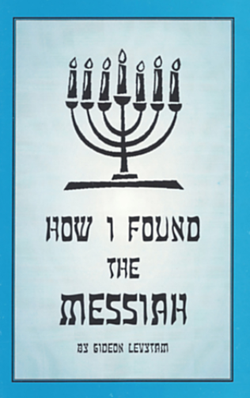
Follow Gideon Levytam's journey and discover how he was led by God, through a series of exciting circumstances, to find the One his people are still waiting for.
Past Episodes

Featured Offer
Follow Gideon Levytam's journey and discover how he was led by God, through a series of exciting circumstances, to find the One his people are still waiting for.
About Holy Scriptures and Israel
As time passed by, the Lord Yeshua took dear brother John Van Stormbroek to himself. The ministry of Holy Scriptures and Israel continued with additional development. In the early 1990’s, a weekly morning Bible class began which brother Gideon Levytam led regularly in the City of Toronto. This weekly open Bible class was held in the Willowdale assembly meeting hall. Eventually, a second mid-week evening Bible class was added. In April 2002, the need for an additional outreach Bible teaching meeting arose. We begun a Saturday (Shabbat) ministry meeting in which a systematic teaching of God’s word is presented to all who attend. Together we learn God’s Word, pray for each need and the salvation of Israel, and sing songs of worship unto our God, praising Him and our Lord Yeshua the Messiah.
In Mid 2004 we started to air on Joy 1250 Radio station a 15 minute Bible teaching program called "The Holy Scriptures and Israel" with Gideon Levytam. The broadcast teaches God’s word from a Hebrew Messianic perspective and has proved to be a blessing to many. It's now aired seven days a week. Our prayer is that many more of our Israeli people will have a clear understanding of who Yeshua is, why we all need him, and come to know him as their Lord and Messiah.
About Gideon Levytam
Contact Holy Scriptures and Israel with Gideon Levytam
426 Simcoe Street
Niagara-on-The-Lake
Ontario L0S 1J0
Canada
(905) 325-1234