

Malachi 3:16 - 4:1-6 Part 2 of 3


The Godly in Israel who feared the Lord, part 2
Gideon Levytam: Shalom. This is a study of the book of Malachi, chapter three and chapter four. The Bible tells us here in Malachi chapter 3, verse 16, "And the Lord hearkened and he heard. He listened to what was said."
You remember that in earlier verses, we read in verse 13 how those from among the people of Israel who spoke against Him. He said in verse 13, "Your words have been stout against Me." This is verse 13. "Stout" means chazakim, strong against Me. But now He is listening to the others who were speaking, and He was so pleased when they spoke about Him. They thought about His Word, and they wanted to honor Him.
I would like to encourage you to speak about God, to speak about Yeshua the Messiah with each other. We are living in a time where the whole world is desiring us for not to read the Bible, not to pray, not to go to meeting, not to speak to each other. "Don't be religious," so-called. The world is telling us, "You don't need God in your life." That's what the world is telling us today.
And yet God delights in His people to speak about Him, to think about Him, to mention His name. He hears that, and He finds pleasure in that. And when He finds pleasure in it, He will not forget that. Not that He is inclined to forget. God will never forget. You notice what it says here in this very same Malachi chapter 3 and verse 16, at the last portion. It says there, "And a book of remembrance was written before Him for them that fear the Lord and that thought upon His name."
A book, in Hebrew we call it sefer. A book of remembrance, Sefer Hazikaron or Sefer Zichronot. You and I have our own books at home. When our children were young, we were writing the first time he says, "Abba." We wrote again the first time he or she crawled. We put in the book the first time that our children have done one thing or another, or the first time they went to school. And we love to open those books and look back. And we remember those records. I remember those days when our children have done that, or this, or the other.
God is just the same, delighting to have a record of that which reminds Him of the manner whereby His people lived. And so you and I might say, well, does God not remember? Does He need someone to put things in a record, in a book? A book of remembrance was, as it says here, a book of remembrance was written before Him. Does He need to be reminded?
Let me tell you that the whole book that we have in our hands today is a book that was written by men of God. Holy men of God spoke as they were moved by the Holy Spirit of God. And you and I are reading today the words of holy men of God who spoke the Word of the Lord, including Malachi.
We read a book of remembrance was written before Him, a book that will remind God, you might say. Not that He needed to be reminded, but it's a record of how did these people who belong to Him live their lives. And He is intending to reward them in a future day at the Messianic Kingdom when Yeshua is going to come again and will establish the Messianic Kingdom.
And God will bless those that live for Him, and He will reward them, and He will bless them in a future day. Not only that He provided salvation for them, but He is also provided rewards for those who are faithful in living their lives for Him here upon the face of this earth.
There are various books that the Bible presents before us that shows us that God still has a record that He Himself has put together in order that He eventually will bless His people. In fact, if you remember what Moses said in the book of Exodus, in Exodus chapter 32, and in verse 31 and 32. Moses, who wanted so badly to bring his own people Israel into the promised land, and he asked God to lead Israel. But Israel failed the Lord, Israel sinned.
And Moses, in verse 31, "Moses returned unto the Lord and he said, 'Oh, this people have sinned a great sin and have made them gods of gold. Yet now, if thou wilt forgive their sin, and if not, blot me, I pray thee, out of thy book which thou hast written.'" Moses loved Israel, his people, so much that he said to God, "God, if You're not going to forgive Israel's sin and bring them into the promised land, blot my name out of the book that You have written."
And of course, Moses was a child of God. That Book of Life or the Book of the Living, Moses' name will ever retain there because he was a man of God. He lived for God. He was a believer. So you notice that Moses understood. He's not talking about the book that we hold today in our hand, but he spoke about the record of all those that live and belong to the Lord, the Book of Life. Those that were enter into this world and accepted the will of the Lord for them.
There is a book that is written for believers, and there is also a book that is written for the manner of their behavior. How did they live their life here on earth? But let me remind you that there is also books that are written of the behavior and the conduct of the unbelievers. Even though their names are erased from the Book of Life, but there is a record of the manner whereby they behaved in their lives.
In Revelation chapter 20, let me read you that verse as well. Revelation chapter 20, the Great White Throne Judgment. In Revelation chapter 20 and verse 11, we read, "And I saw a great white throne and Him that sat on it, from whose face the earth and the heaven fled away, and there was found no place for them." And listen to this, verse 12, "And I saw the dead, small and great, stand before God. And the books were opened, and another book was opened, which is the Book of Life. And the dead, these are the unbelievers, were judged out of those things which were written in the books, the plural, the books according to their works."
So what we really learn is that there is not only that there is the Book of Life or the Lamb's Book of Life, but we have books and records that God is keeping in relationship to the manner of life that His people lived and also the unbelievers lived. And there is a greater reward for God's people and a greater or lesser condemnation for those that do not belong to Him.
Amazing to think about this. This is ought to motivate us. Speak about the Lord, because a book of remembrance was written before Him, and it says, "for them that fear Jehovah and that thought upon His name." This is extremely practical for the life of the people of God.
And you and I, just like Israel of old, living in the days of, you might say, of decline in a time of Malachi, we also live in those kind of days, the days of decline in the church age. Two thousand years passed by. Yeshua is coming very soon. And we also are exhorted to make decisions for the Lord in our lives. Maybe at hard times, there is no doubt. We are not always going to be popular if we ever going to make any decision for Yeshua the Messiah, especially in the world in which we live in.
The apostle Paul said to a younger man by the name of Timothy in 2 Timothy chapter 2, he said to him, "Study to show yourself approved unto God, a workman that needeth not to be ashamed, rightly dividing the word of truth." And then he said in verse 16, "But shun profane and vain babblings, for they will increase unto more ungodliness. And their word will eat as doth a canker, of whom is Hymenaeus and Philetus, who concerning the truth have erred, saying that the resurrection is passed already and overthrow the faith of some."
In other words, Paul is warning Timothy to shun that which is contrary to the Word of God during the days of the assembly, the church age. And he continued and listen what he says in verse 19. He says, "Nevertheless, Timothy, nevertheless, the foundation of God standeth sure, having this seal, the Lord knoweth them that are His. Let every one that nameth the name of the Messiah depart from iniquity."
And he continued and he said, "But in a great house, there are not only vessels of gold and of silver, but also of wood and of earth, and some to honor and some to dishonor. If a man therefore purge himself from these, he shall be a vessel unto honor, sanctified and meet for the Master's use and prepared unto every good work."
You know what he's really saying to Timothy? That the house of God, this is the church, the assembly, become like a great house in the last days. And inside that great house, you have all kind of mixture. As it says here in this verse, "In a great house there are not only vessels of gold and of silver, but also of wood and of earth, some to honor and some to dishonor." In Christendom, in a professing church today, you have all sort of mixture. Some to honor and some to dishonor. Some are vessels of gold and silver, but some are vessels of wood and earth. Some are to honor and some are to dishonor.
Well, Timothy, what you're going to do? You are part of Christendom. You are part of the assembly of the church of the Ecclesia. What you're going to do? Well, notice he says, "Flee, Timothy, shun and flee from that which dishonor the Lord, because you're going to be able to be a testimony in a time such as this."
And what he's saying to the people of Judah in the time of Malachi is very much the same. While the others spoke against God, they were stout against Me, Malachi chapter 3 and verse 13, yet there were they that feared the Lord and spake often one to another. And the Lord hearkened and heard it, and a book of remembrance was written before Him for them that fear the Lord and thought upon His name.
Whenever we do anything for the Lord, even though it's weak and feeble, the Lord will always honor that which is done for Him. Even though with weakness, even though with much failure and shortcoming, the Lord will bless His own people. So now notice as we move along in Malachi chapter 3 and verse 17 now, we have the wonderful promise that God give to the godly people among Israel. He's encouraging them and He's saying to them in verse 17, "They shall be mine, says the Lord of hosts, in that day when I make up my jewels, and I will spare them as a man spares his own son that serveth him."
Look at the precious words of the Lord. He said, "You know what? They shall be mine. These ones that think about me, this one who take the time to glorify me, they are mine." But now He takes us, it's good to understand this, because since Malachi was the last prophet who spoke to our forefathers Israel, he didn't understand church truth that you and I learn now in this 2,000 years of church history.
As far as the Hebrew prophets were concerned, they were thinking of two mountains, you might say. Mountain number one, the first coming of the Messiah to suffer and die. Mountain number two, the second coming of the Messiah to come and reign. They didn't see anything that is in the valley in between the two coming of the Messiah.
So here Malachi, he doesn't know. He doesn't know, wow, you know what? Wait, wait, wait. It's not going to be only 400 years to Yeshua the Messiah going to come, but there will be another 2,000 years because that's the length of the church age that at least going to be as far as we know it today. Malachi didn't know that.
As far as he was concerned, soon God is going to come in judgment. The tribulation period is going to come. He will refine His people Israel. He's going to judge the world in righteousness, and He will establish the Messianic Kingdom. He didn't see what you and I see today, 2,500 years later. So notice what he says in this verse 17, "They shall be mine, says the Lord of hosts," and notice, "in that day." What is that day?
That day when I make up my jewels and I will spare them as a man spares his own son that serveth him. That day is the tribulation period. It's called in the scripture the Day of the Lord, Yom Jehovah. It's a day of judgment. It's a day that will come upon the face of this world that rejected the Son of God, the Messiah and the Messiah's teaching and God's Word.
This is a terrible day that will arise. It's called the day of judgment. I want to read to you what we read in the prophet Zephaniah. Zephaniah chapter 1 and verse 14. Listen to what Zephaniah said 200 years before Malachi spoke. Look what Zephaniah said: "The great day of the Lord is near. It is near and hasteth greatly, even the voice of the day of the Lord, Yom Jehovah in Hebrew. The mighty men shall cry there bitterly."
And then in verse 15, he give us a description of that day. It's called "That day is a day of wrath, a day of trouble and distress, a day of wasteness and desolation, a day of darkness and gloominess, a day of clouds and thick darkness. A day of the trumpet and alarm against," listen, "against the fenced cities and against the high towers. And I will bring distress, trouble, tribulation. I will bring distress upon men and they shall walk like blind men because they have sinned against the Lord, and their blood shall be poured out as dust and their flesh as the dung. Neither their silver nor their gold shall be able to deliver them in the day of the Lord's wrath. But the whole land shall be devoured by the fire of His jealousy, for He shall make even a speedy riddance of all them that dwell in the land."
You know, sometimes we sing for the Day of the Lord has come, but we have to realize that the Day of the Lord is a day of wrath. It's a day of judgment. It's a day that God is going to discipline humanity. He's going to refine the people of Israel. He's going to restore Israel back to Himself. That's the day that He's coming.
And that's why He's saying in Malachi chapter 3 and verse 17, He said, "And they shall be mine, says the Lord of hosts, in that day when I make up my jewels and I will spare them." Spare them from what? "I will spare them from the judgment of Jacob's trouble of the tribulation that's going to come upon the face of the whole world."
Those who trusted in God and the remnant of our own people Israel and also many from among the Gentile world who will believe in the God of Abraham, Isaac, and Jacob, they will be spared in order to enter into the Messianic Kingdom. But those who don't, who reject the Lord, they will suffer the consequence of their sin.
God is holy and He will come in judgment, but the believers, they that fear the Lord and spoke often one to another, they will be spared. And they will become, as it says here in verse 17, "I will make up my jewels." Actually the word jewels is not necessarily a correct word in English. It come from the Hebrew word segullah. The Hebrew word sgulah or segullah simply mean mine own possession.
God in Exodus chapter 19 and verse 5, He says to Israel, "And you will be a nation for my possession from all the nations of the world." In Deuteronomy 7 and verse 6, He called them Am Sgulah, a nation that is my possession. If you and I belong to Yeshua the Messiah today, who are part of the assembly, the Ecclesia, we have been chosen by the Lord before the foundation of the world to be a chosen generation in this present day of the assembly of the church age.
Yeshua said, "I will build my assembly and the gates of Hades shall not prevail against it," in Matthew chapter 16. And so what a promise He give them. He continue and He said to them now in these verses, He's emphasizing Israel's future restoration that will happen in a future day. That remind me and ought to remind us of what we read in Romans chapter 11, when God through the apostle Sha'ul Paul reminded the Roman believers in the local assembly at Rome.
He said to them, "I would not, brethren, that ye should be ignorant of this mystery, lest ye should be wise in your own conceit, that blindness in part happened to Israel until." Israel is partially blinded until. What until? "Until the fullness of the Gentiles become in, and so all Israel shall be saved."
That Israel that shall be saved are those that will survive the tribulation period. Those are the one that He said of them in Malachi chapter 3, "I will make up my jewels and I will spare them as a man spares his own son that serveth him." One day Israel, our nation, who today are partially blinded to the Messiahship of Yeshua, in the future day Israel will recognize that Yeshua, Jesus, is really the Lord and their Messiah and they will eventually be saved.
As it is written, "There shall come out of Zion the Deliverer and shall turn away ungodliness from Jacob." This is Romans 11, verses 25 and 26. So wonderful to see the connection between Malachi and the future days that are going to come. But the tribulation period is that which will come. That day is the day that God will refine the nation, will restore the nation, but not without tribulation. Tsarot, as we say this in the Hebrew language.
Now He continue, notice that in verse 18 of Malachi chapter 3. He's now speaking to those from among Israel who were then in the days of Malachi not really in tune with the Lord. They belong to the nation of Israel, but they were really, you might say, spiritually blind or spiritually they backslid. They didn't think like the others who fear the Lord and thought of His name. They thought, "You know what? It's enough for me to be a little bit religious. I'll be religious a little bit, but I don't really need my heart to be right with the Lord. I'm part of the nation of Israel."
And they really, they were backsliding, they were going backwards, they were not enjoying that which the Lord has intended for them. And you notice what God is saying to them through Malachi in verse 18. He says, "Then later on, shall ye return and discern between the righteous and the wicked, between him that serveth God and him that serveth him not."
Now, you know who He's speaking here in verse 18? He's speaking about the ones who turn away from the Lord from among the people of Israel. They were part of the nation. You might say they were called people of God. Like us many times. "Oh yes, we are saved, hallelujah, what a Savior. We have the ticket, Jesus paid it." But, Lord, don't bother me. When I die, I go to heaven, but here and now, please don't bother me. I don't want to talk about You, I don't want to read about You, I don't want to pray to You, I don't want to talk to You, I don't want to have anything to do with You. But thank You for paying the ticket for me to go to heaven.
And you see they were like that. He says, "No, no, then when the tribulation period will come, then ye shall return." The Hebrew word shuvu, ve-shavu. "You will return and then you will discern and you're going to say, 'I have played the fool. I thought I knew better than God.'"
Featured Offer
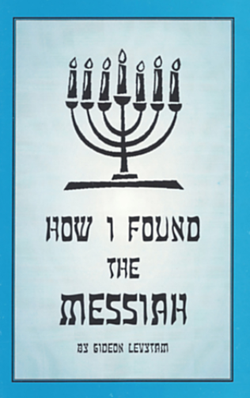
Follow Gideon Levytam's journey and discover how he was led by God, through a series of exciting circumstances, to find the One his people are still waiting for.
Past Episodes

Featured Offer
Follow Gideon Levytam's journey and discover how he was led by God, through a series of exciting circumstances, to find the One his people are still waiting for.
About Holy Scriptures and Israel
As time passed by, the Lord Yeshua took dear brother John Van Stormbroek to himself. The ministry of Holy Scriptures and Israel continued with additional development. In the early 1990’s, a weekly morning Bible class began which brother Gideon Levytam led regularly in the City of Toronto. This weekly open Bible class was held in the Willowdale assembly meeting hall. Eventually, a second mid-week evening Bible class was added. In April 2002, the need for an additional outreach Bible teaching meeting arose. We begun a Saturday (Shabbat) ministry meeting in which a systematic teaching of God’s word is presented to all who attend. Together we learn God’s Word, pray for each need and the salvation of Israel, and sing songs of worship unto our God, praising Him and our Lord Yeshua the Messiah.
In Mid 2004 we started to air on Joy 1250 Radio station a 15 minute Bible teaching program called "The Holy Scriptures and Israel" with Gideon Levytam. The broadcast teaches God’s word from a Hebrew Messianic perspective and has proved to be a blessing to many. It's now aired seven days a week. Our prayer is that many more of our Israeli people will have a clear understanding of who Yeshua is, why we all need him, and come to know him as their Lord and Messiah.
About Gideon Levytam
Contact Holy Scriptures and Israel with Gideon Levytam
426 Simcoe Street
Niagara-on-The-Lake
Ontario L0S 1J0
Canada
(905) 325-1234