
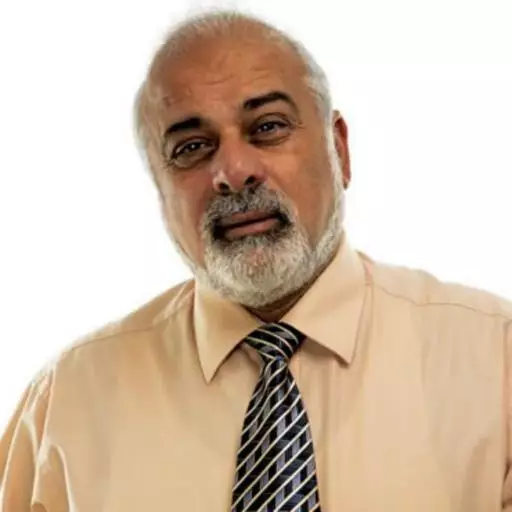
Malachi 3:16 - 4:1-6 Part 1 of 3


The Godly in Israel who feared the Lord, part 1
Guest (Female): Shalom. Holy Scriptures and Israel is a ministry designed to share with the Jewish people the good news of the Lord Jesus, Yeshua the Messiah, and to instruct Christians on the Jewish roots of their faith. And now, teaching God's word from a Hebrew Messianic perspective, here is Gideon Levytam.
Gideon Levytam: Shabbat shalom, everyone. We are very glad that we can come together for the ministry of the word. I'd like you all to open your Bibles. Today, I would like to conclude, with the Lord's help, with the ministry of the book of Malachi. Malakhi was the last prophet of Israel, of Yehuda, of Judah, who presented the final message to our forefathers, that is the people of Israel, for quite a while before John the Baptizer introduced Yeshua the Messiah as the promised one of Israel, and who said, "Behold the Lamb of God, which taketh away the sin of the world."
The verses for this ministry are found in chapter 3 and chapter 4 of the book of Malakhi. And we are reading from Malakhi chapter 3 and verse 16 into Malachi chapter 4 and verse 6. To remind you, beloved brothers and sisters, before I'm going to read these verses, that in actuality, in the Hebrew Tanakh, in the Masoretic text, we don't have the fourth chapter. So actually, the verses in chapter 4 are part of chapter 3.
In a sense, Malakhi is divided only into three chapters in the Masoretic Hebrew text, but in the English, we have this fourth chapter. So, I'm reading Malachi chapter 3, verse 16: "Then they that feared the Lord spake often one to another: and the Lord hearkened, and heard it, and a book of remembrance was written before him for them that feared the Lord, and that thought upon his name.
And they shall be mine, saith the Lord of hosts, in that day when I make up my jewels; and I will spare them, as a man spareth his own son that serveth him. Then shall ye return, and discern between the righteous and the wicked, between him that serveth God and him that serveth him not."
Malachi chapter 4, verse 1: "For, behold, the day cometh, that shall burn as an oven; and all the proud, yea, and all that do wickedly, shall be stubble: and the day that cometh shall burn them up, saith the Lord of hosts, that it shall leave them neither root nor branch. But unto you that fear my name shall the Sun of righteousness arise with healing in his wings; and ye shall go forth, and grow up as calves of the stall.
And ye shall tread down the wicked; for they shall be ashes under the soles of your feet in the day that I shall do this, saith the Lord of hosts. Remember ye the law of Moses my servant, which I commanded unto him in Horeb for all Israel, with the statutes and judgments.
Behold, I will send you Elijah the prophet before the coming of the great and dreadful day of the Lord: And he shall turn the heart of the fathers to the children, and the heart of the children to their fathers, lest I come and smite the earth with a curse." And that is the final verse in the ministry of the prophet Malakhi to our forefathers, 450 years before Yeshua the Messiah was born and presented himself to Israel the nation.
Malakhi is a fascinating prophecy that was given to the people of Israel, to the people of Judah. Just imagine, beloved brothers and sisters, how Malakhi was raised by God. His name, Malakhi, means "my messenger". He was raised by God to speak to our forefathers, the Jewish people, who were now back in the promised land. They were back already enjoying, you might say, to be in Canaan, in the land of Israel, in the city of Jerusalem.
But beloved brothers and sisters, like it is from generation to generation, things came in, things crept in, and there was a departure in heart from the presence of the Lord. Oh yes, they went to the temple. Oh yes, they went through the motion. They offered sacrifices, they kept the Shabbat, they went to the feasts. They offered all the things that they were obliged to offer, but their heart was far away from God.
Like us today, in the present day of the church age, we go through the motion, we go to the meeting, we go to the church building, but in reality, many times we have to confess that our hearts are many times not where they should be. And God was not pleased with this because God wanted his people to enjoy him, and he wanted himself to enjoy his people. So he gave them this final message.
Knowing they did not know, but he knew very well that between now, 400-450 BC, to the time of the Gospel of Matthew, the Messiah will present himself before Israel, there will be so many years where there will be no message, no messenger, no one to instruct the people. Even though you notice that we read in chapter 4 and verse 4: "Remember the law of Moses my servant.
Remember, don't forget because the law was given to you in order to drive you to recognize that you need God in your life and that the law was given in order to point us to the coming of the Messiah. Remember the word of God. Remember the law of Moses. Remember the things of the law." But as it is with us as human, we come to a point that we can easily forget what the Lord has done for us.
So now, here we are in a really final words of the final message of the final messenger that was presenting before our people of old, the people of Israel. Remember that in the previous meetings when we met together and we studied the word of God, we have pointed in this prophecy of Malakhi that Malakhi in his days, he was appealing, you might say, there were two groups among the people of Israel.
There were the godly, the spiritual ones, the spiritual men and women from among the people of Israel, but there were also the carnal. They were believers, they were part of the people of Israel, but they didn't walk the way they should have been living for the Lord. If you remember that in the previous chapters, in chapter 2 and verse 17, they said, these carnal Jewish people, they say in verse 17: "Everyone that doeth evil is good in the sight of the Lord, and he delighteth in them."
And then they continue and say, "Where is the God of justice? The God of judgment?" God really doesn't seem to be caring. "Everyone that is doing evil seems to be good in the sight of the Lord, so we will carry on to do our own ways." You remember God has accused them because they were divorcing their wives. Others were taking the wives from among the Gentile world who did not believe in the God of Israel.
And then others, as in chapter 3, he said to them, "Will a man rob God?" They robbed God. They didn't provide for the Lord's work at the temple. They were failing to serve the Lord and they robbed God with that which belongs unto him. So, God is challenging them. He is speaking to the hearts and the conscience. And now, in the final verses, he is now speaking to the godly remnant from among the people who returned from Babel.
And to them, he gave an assurance and an encouraging word. He's really speaking to the godly from among his own people to give them a sense of comfort in the midst of discouragement. Yesterday, we have studied Isaiah chapter 57. And in Isaiah chapter 57, we read that the righteous and the godly ones suffered even death, and no one cared. And they may have very well said, "What's the use of continuing on to follow God? What's the point? I mean, nobody cares anyway. Life is passing on, and why should we really care for our spiritual welfare?"
God is speaking to the heart of those individuals to encourage them to go on, to move along. God never changed. Remember what we read? He says, "I am the Lord, I change not; therefore ye sons of Jacob are not consumed." Chapter 3 and verse 6. In other words, you have changed, I don't change. Whenever, beloved brothers and sisters, whenever we are not in a healthy spiritual state, we can't blame God. It is always me. It is always us. Who moved? Not God. I moved. My heart turned to be cold toward him.
And that's why God says to Jacob, "Jacob, you know what, Jacob? I didn't change. It's you who have changed. But because of my sovereign grace, I do not consume you. I will sustain you, and I will bring you eventually to the future day where you will be rejoicing in my presence at the Messianic Kingdom when Israel as a nation will be restored."
So now, beloved brothers and sisters, we are in the third chapter in the last verses, verses 16 to 18, and in the fourth chapter and the six verses of the prophet Malakhi. And you notice that this portion begins very precious. And I think it should be an encouragement to us. You notice that in verses 16, 17, and 18, we read of the Lord's blessing for the godly of Israel who will have the fear of God in their lives.
Notice what he says in verse 16: "Then they that feared the Lord spake often one to another: and the Lord hearkened, and heard it, and a book of remembrance was written before him for them that feared the Lord, and that thought upon his name." Pause with me for a moment. This is a fascinating verse. In the midst of chaos, in the midst of disorder, in the midst of coldness and routine among the people of Israel during the days of Malakhi, when some of them said, "God does not come in judgment. Where is the God of justice and of judgment?" there was always a remnant, a small group of people in the midst of the nation of Israel who maintained and sustained the nation by their godly conduct and behavior.
The Bible call them Yirei Yehovah, the God-fearers. It says, "They that feared Jehovah spake often one to another." While the others, who are also part of the nation of Israel, did not enjoy a relationship with the Lord, their hearts were callous and cold, but there were others that really had their heart desire to please God. In other words, they saw the condition around. They discerned the situation that is going on.
Did God change? Is he less important today than yesterday? Does he love me less today than when the time that I thought I need him more? Does he want me to be in relationship with him today more than what it was yesterday? No. They understood that God is always available for his own people, and they have the fear of the Lord. In Hebrew, we call it Yirat Adonai. It's not fear that you're scared from God. Oh no.
While we should be scared from God because the time he's going to come in discipline upon his people, but that was yira, that was reverence. That was in that passage Yirat Adonai. It's speaking about reverence to the things of God. They didn't want to forget him. When they were in Babylon, they realized that they were there by the rivers of Babylon and they wept when they remembered Zion. Now that they're back, they are back in the land, and their fathers already passed away and they're the new generation, they said, "No, no. If all the rest of the nation will go in a wrong direction, I'm going to continue to follow the Lord."
Reminds me of the song sometimes that we sing: that I follow Jesus wherever he will take me. Though none go with me, still I will follow. In other words, the remnant, the little group, continue to follow the Lord. Oh yeah, they were misunderstood, I'm sure. They were probably persecuted by their own brethren. They were probably were not appreciated. But the Lord have appreciated these ones that fear him.
And that's why we read very preciously here, "They that fear the Lord." Notice, they spake often one to another. The others spoke against God: "Where is the God of justice and the God of judgment?" But they gathered themselves together and they were spending the time to speak to one another, to encourage one another, to remind themselves of days and years of old how God have blessed the nation of Israel and how God had provided for their own people. They didn't want to forget the Lord and what he have done for them.
We read in Psalm 105: "O give thanks to the Lord, call upon his name, make known his deeds among the people." Psalm 105, verse 1. "Sing unto him, sing psalms unto him, and talk ye of all his wondrous works. Glory ye in his holy name; let the heart of them rejoice that seek the Lord. Seek the Lord and his strength, seek his face evermore. Remember his marvelous works that he hath done, his wonders and the judgments of his mouth. O ye seed of Abraham, his servant, ye children of Jacob, his chosen." Psalm 105, verses 1 to 6.
It's amazing, beloved brothers and sisters, wonderful to see that their mind and their hearts were thinking about God. They didn't want to forget him. They wanted to give him the glory and the honor that he deserve from among his people. And remember what Shaul said to younger Timothy? He says, "Remember Yeshua the Messiah of the seed of David. Don't forget him." Why? Why I shouldn't forget Yeshua the Messiah? It is because Yeshua, Jesus the Messiah, he died for our sins.
He paid a price for our sin and sins. He suffered so you and I will never need to suffer anymore. He was judged by a holy God so you and I will never need to be judged. That's why. And the Lord found delight in that. And he, we read here in Malakhi, "They that fear the Lord, Yirei Yehovah, they spake often one to another and the Lord hearkened and he heard it." And I love this expression, beloved brothers and sisters, we don't really realize.
Remember that the Lord hears everything that we say. In fact, David says, "From whence I can get out from you or go away from you?" in Psalm 139. We read in that Psalm 139 that God is omnipresence, is everywhere. God is omniscience, he knows everything. And we also read that he's all-knowing and all-powerful, omnipotent. He's all-powerful. We can't run away from him. We can't hide from the presence of the Lord. He's everywhere.
And he wants our hearts to be delighted in him. So, you notice this verse 16 still continues and it says in that verse 16, "And Jehovah, the Lord hearkened and he heard it." What a delight it must have been for the Lord in the midst of the time of darkness, you might say, difficult times in the history of his people, that he can find a few individuals, minority, a few who are godly Jewish people in the days of Malakhi, who spoke about the Lord, who thought upon his name.
He delighted to hear them speaking. It's like going to a home for a visit and spending the time speaking about the things of God. There are many things to speak about. We can speak about the weather, we can speak about the situation, the grass that grow, the trees and so on, many blessings that God had given to us. But to also, as it says here, they spake often one to another, but they were speaking about him. They were acknowledging God in their lives as the creator, as the sustainer, as the redeemer, as the savior.
Amazing when you really think about it. So, the Lord hearkened and heard it. You know, sometimes we think God has gone to sleep and he doesn't see things, he doesn't hear things. We don't realize that God delight to hear the people of God speak of him, sharing with each other the things of God. Now I know that we live in a time that when you go out on the street and you want to tell people about Yeshua the Messiah, people say, "Don't give me this." And sometimes when you want to talk with believers about the Lord, some say, "Don't be too religious. I don't want to hear too much about the things of God."
But God want his people to speak about him, to think of him, to remember the things that the Lord have done for us and not to forget Yeshua, especially for us as believers today, not to forget Yeshua our Mashiach. And so the Bible tells us here in Malakhi chapter 3, verse 16: "And the Lord hearkened and he heard." He listened to what was said.
You remember that in earlier verses, we read in verse 13 how those from among the people of Israel who spoke against him, he said in verse 13: "Your words have been stout against me." This is verse 13. Stout means chazakim, strong against me. But now, he is listening to the others who were speaking and he was so pleased when they spoke about him. They thought about his word. They wanted to honor him.
And I would like to encourage you, beloved brothers and sisters, to speak about God, to speak about Yeshua the Messiah with each other. We are living in a time where the whole world is desiring us for not to read the Bible, not to pray, not to go to meeting, not to speak to each other. "Don't be religious," so-called. The world is telling us, "You don't need God in your life." That's what the world is telling us today. And yet God delight his people to speak about him, to think about him, to mention his name.
He hears that and he find pleasure in that. And when he find pleasure in it, he will not forget that. Not that he is like you and I who are inclined to forget, God will never forget. And you notice what it says here in this very same Malakhi chapter 3 and verse 16 at the last portion: "And a book of remembrance was written before him for them that feared the Lord and that thought upon his name."
A book. In Hebrew we call it Sefer. A book of remembrance, Sefer Hazikaron or Sefer Zichronot. You know, you and I have our own books at home. When our children were young, we are writing the first time he says, "Abba". We wrote again the first time he or she crawled. We put in the book the first time that our children have done one thing or another, the first time they went to school. And we love to open those books and look back and we remember those records. "Oh, I remember those days when our children, when we have done that or this or the other."
You see, God is just the same, delight to have a record of that which remind him of the manner whereby his people lived their lives. And so notice that you and I might say, "Well, does God, does he not remember? Does he need someone to put things in a record in a book?" A book of remembrance was written before him. Does he need to be reminded?
Well, let me tell you that the whole book that we have in our hands today is a book that was written by men of God. As we have just read our dear brother read: holy men of God spoke as they were moved by the Holy Spirit of God. And you and I reading today the words of holy men of God who spoke the word of the Lord, including Malakhi.
We read a book of remembrance was written before him. A book that will remind God, you might say, not that he needed to be reminded, but it's a record of how did these people who belong to me live their lives.
Guest (Female): You have been listening to Holy Scriptures and Israel with Gideon Levytam. Gideon teaches God's word from a Hebrew Messianic perspective. For more information about this ministry, write to Holy Scriptures and Israel, Box 1411, Niagara-on-the-Lake, Ontario, L0S 1J0, or visit our website at holyscripturesandisrael.com.
You are also invited to Gideon's weekly Bible teaching on Fridays at 11 AM and 7 PM, and Saturdays at 1 PM at Willowdale Christian Assembly Hall, 28 Martin Ross Avenue in Toronto. Holy Scriptures and Israel is made possible by your prayers and financial support. If you would like to support the program, visit holyscripturesandisrael.com. God bless you. Shalom, shalom.
Featured Offer
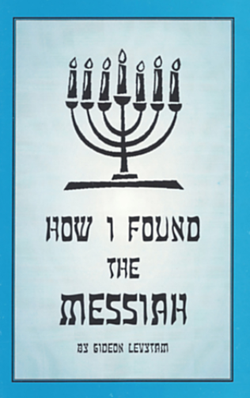
Follow Gideon Levytam's journey and discover how he was led by God, through a series of exciting circumstances, to find the One his people are still waiting for.
Past Episodes

Featured Offer
Follow Gideon Levytam's journey and discover how he was led by God, through a series of exciting circumstances, to find the One his people are still waiting for.
About Holy Scriptures and Israel
As time passed by, the Lord Yeshua took dear brother John Van Stormbroek to himself. The ministry of Holy Scriptures and Israel continued with additional development. In the early 1990’s, a weekly morning Bible class began which brother Gideon Levytam led regularly in the City of Toronto. This weekly open Bible class was held in the Willowdale assembly meeting hall. Eventually, a second mid-week evening Bible class was added. In April 2002, the need for an additional outreach Bible teaching meeting arose. We begun a Saturday (Shabbat) ministry meeting in which a systematic teaching of God’s word is presented to all who attend. Together we learn God’s Word, pray for each need and the salvation of Israel, and sing songs of worship unto our God, praising Him and our Lord Yeshua the Messiah.
In Mid 2004 we started to air on Joy 1250 Radio station a 15 minute Bible teaching program called "The Holy Scriptures and Israel" with Gideon Levytam. The broadcast teaches God’s word from a Hebrew Messianic perspective and has proved to be a blessing to many. It's now aired seven days a week. Our prayer is that many more of our Israeli people will have a clear understanding of who Yeshua is, why we all need him, and come to know him as their Lord and Messiah.
About Gideon Levytam
Contact Holy Scriptures and Israel with Gideon Levytam
426 Simcoe Street
Niagara-on-The-Lake
Ontario L0S 1J0
Canada
(905) 325-1234