
Malachi 2:17 - 3:6 Part 2 of 3


The coming of the messenger of the covenant, part 2
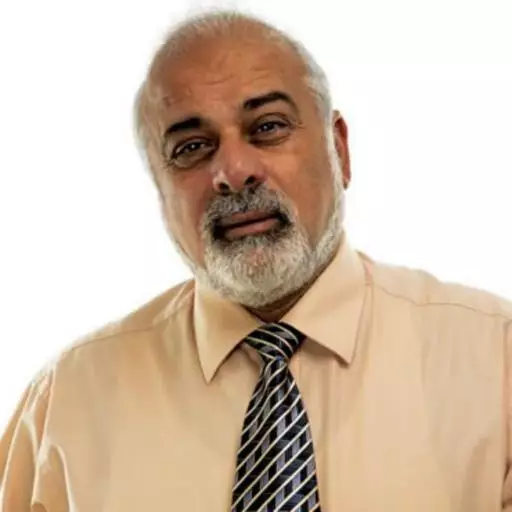
Gideon Levytam: The study of the book of Malachi, chapter 2 and chapter 3.
But now in chapter 3 and verse 1, we have additional two times in which the word messenger is mentioned in the book of Malachi. The first messenger is in verse 1A, and the second messenger is in verse 1 at the end, B. Those are two separate messengers, or Malachim, or Malach Adonai, that the prophet Malachi is presenting before us. Now notice how beautiful, because I've been fascinated with this verse of Malachi chapter 3 and verse 1.
It says God is now the one who speaks. You see, in chapter 2 and verse 17, it was Malachi who spoke, and he said, "You are wearying the Lord." Now in chapter 3 and verse 1, the Lord himself is speaking. And he is saying to Israel, "Behold, you complain about me not being the God of judgment, the God of justice? Behold, I will send my messenger, and he shall prepare the way before me." Notice God is speaking.
And he says, "I will send my messenger." And that messenger that I will send, he will prepare the way before me, that is, God. Now that messenger is very clearly presented in the New Testament, in the Brit Chadashah, as none other but Yochanan, John the Baptist. John the Baptist, Yochanan HaMatbil, was the one who was sent by God, and he was the one that prepared the way for God's appearance before the people of Israel.
Now for one minute, please turn with me to the prophet Isaiah. In Isaiah chapter 40, Isaiah spoke about the same messenger that Malachi is speaking about right now, 450 years before Yeshua the Messiah came. Isaiah in chapter 40 spoke about the coming messenger at about 750 BC, 300 years earlier, while Malachi is speaking about the very same messenger 300 years later, about 300 years later.
And look what Isaiah said in chapter 40 and verse 3: "The voice of him that crieth in the wilderness, prepare ye the way of the Lord, make straight in a desert a highway for our God. Every valley shall be exalted, every mountain and hill shall be made low, and the crooked shall be made straight and the rough places plain. Verse 5: And the glory of the Lord shall be revealed, and all flesh shall see it together, for the mouth of the Lord hath spoken it."
See, Isaiah is just like Malachi. The only difference between Isaiah, who spoke to the people of Judah, and Malachi, who spoke to the people of Judah, is about 300 years in between them. 750 BC, 450 BC, something like that. Both of them were men of God. Both of them were Nevi'im, prophets of Israel. Both of them presented the Lord's servant, the Lord's messenger who is going to come. Both of them spoke about Yochanan HaMatbil, John the Baptist.
"I will send my messenger, my Malach, Malachi, and he shall prepare the way before me," God is saying to the people of Judah. "I'm going to send someone, and that someone that will come, he will prepare the way before me," God is saying to the people of Judah.
Now we read from Isaiah chapter 40, verses 3, 4, and 5. But you will notice that every one of the four Gospels, Matthew, Mark, Luke, and John, in the New Covenant, the New Testament, present the very same person, John the Baptist, as the one that is recorded both in Isaiah 40 and in Malachi chapter 3. He was the one that will introduce the Messiah that was going to come to deal with the nation, to deal with the nations of the world, and to come to provide redemption for mankind.
And so in chapter 3 of the Gospel of Matthew we read, listen to this beloved brothers and sisters. Verse 1 says, "In those days came John the Baptist, preaching in the wilderness of Judea and saying, 'Repent ye, for the kingdom of heaven is at hand.' For this is he that was spoken of by the prophet Isaiah saying," and we just read Isaiah chapter 40, "the voice of one crying in the wilderness, 'Prepare ye the way of the Lord, make his path straight.'"
You see, Isaiah, like Malachi, was promising that God one day is going to send the Messiah. But before the Messiah is going to come, he's going to send someone to introduce him, to prepare the way of Jehovah, the way of the Lord. And so in this third chapter of the Gospel of Matthew, Matthew is writing about John, Yochanan HaMatbil in Hebrew, John the Baptist, who came with a thundering message to the people of Judah. Again, I'm reminding you that 400, 450 years passed by since Malachi is speaking.
Now comes John the Baptist and he's presenting the Messiah and he says, "Listen, prepare ye the way of the Lord, make his path straight." And notice what he told them in these very same verses, a little bit further down. He said unto them, "I indeed baptize you with water unto repentance. But he that cometh after me is mightier than I, whose shoes I'm not worthy to bear. He shall baptize you with the Holy Spirit and with fire. Whose fan in his hand, he will thoroughly purge his floor and gather his wheat into the garner, but he will burn up the chaff with unquenchable fire."
See, John, Yochanan, came to introduce the Mashiach, Yeshua, at his first coming. And he was preparing the way for Yeshua the Messiah to appear himself before the nation of Israel. Will Israel accept him? Will Israel embrace the Mashiach, the Messiah, Yeshua, as their own savior and Lord and the promised one of Israel? The messenger came by the name of Yochanan HaMatbil.
I didn't read in the remaining Gospels, in Mark chapter 1 verses 1 to 3, Luke chapter 3 verses 2 to 5, John chapter 1 verse 15, verse 22 and 23. All the four Gospels present the person of Yeshua, of the messenger who will introduce Yeshua the Messiah of whom we read in Isaiah chapter 40 verse 3 to 5 and in Malachi chapter 3 verse 1A. "Behold, I will send my messenger, my Malach, and he shall prepare the way before me," God is speaking. This is amazing.
Now what happened, beloved brothers and sisters? In the very same verse 1, there is a little change now from the fact that God is speaking about himself as divine person, we all of a sudden are introduced to a second messenger. And you can see that the second messenger is called here in verse 1 "the messenger of the covenant," Malach HaBrit. You will notice now that it changes to a person who is now not so much emphasizing his divine nature but emphasizing his humanity.
In other words, you can really see that we learn from this passage of the fact that God was going to present himself to the people of Israel in the person of the Messiah, of his son. How is he going to do that? Well, notice that in chapter 3, verse 1B. Because it says immediately, "And the Lord whom ye seek shall suddenly come to his temple, even the messenger of the covenant whom ye delight in. Behold, he shall come," saith Jehovah of hosts, the Lord of hosts.
In other words, God first of all is saying about himself that he will send a messenger who will come to prepare the way before God. But now that divine person, namely God himself, Jehovah himself, is now presenting himself as the messenger of the covenant who will come in, you might say, in human form. That's why he is calling himself here with the word Lord, capital L, small o-r-d. The Hebrew word is HaAdon, the master. He's now presenting himself in his humanity.
And he's going to be the one who is going to suddenly come, as it says here in verse 3B. And where is he going to come to? He's suddenly going to come to his temple, and he's calling himself the messenger of the covenant, in Hebrew he is called Malach HaBrit. This is the messenger of the New Covenant. When God have promised to Israel that he will make a New Covenant, Brit Chadashah, with the people of Israel, in order for him to do so, how can he make a New Covenant in contrast to the covenant that he made with Israel through when he brought Israel out of the land of Egypt, brought them to Mount Sinai, gave them the law?
Israel broke the law. And any nation would have broken the law because the law became like a mirror for us to show us I fail in every requirement. From the law, I have failed. So God has introduced the New Covenant, Jeremiah 31 and verse 31. And the New Covenant could only be accomplished where God himself would come down to this earth in the person of the Messiah and present himself as the messenger of the covenant.
And you know very well what we read in scripture, for example Isaiah chapter 7 and verse 14. Isaiah said, "A virgin shall conceive and bear a son and shall call his name Immanuel, God with us." Isaiah 7 verse 14: "Therefore the Lord himself shall give you a sign; Behold, a virgin shall conceive, and bear a son, and shall call his name Immanuel, God with us."
Isaiah chapter 9 and verse 6: "For unto us a child is born, unto us a son is given, and the government shall be upon his shoulder, and his name shall be called Wonderful Counselor, the Mighty God, the Everlasting Father, the Prince of Peace, Sar Shalom."
Well, you see what we learn, beloved brothers and sisters, that God promised that he is going to come in a future day and he's going to come and to be called the messenger of the covenant. And how is he going to establish this New Covenant? God had to enter humanity in the person of God the Son. That's why John 1 said in the beginning was the Word, and the Word was with God, and the Word was God. Then verse 14, and the Word became flesh and it dwelt among us, and we beheld his glory, the glory as of the only begotten of the Father, full of grace and truth. God had to enter humanity.
All have sinned, Israel has sinned, the world has sinned, all come short of the glory of God. How can God provide a way of redemption for mankind? How can sin be dealt with? So he's going to send the messenger, Yochanan HaMatbil, and that messenger, Yochanan HaMatbil, will prepare the way of the Lord. And when the Messiah, God the Son, will come, he is called the Adon, and he will suddenly come to his temple, and he's called the messenger of the covenant, Malach HaBrit.
It is fascinating. You know, if you don't realize this, men by nature do not realize that if sin is going to be dealt with, if God is going to deal with the judgment that the world deserves, he must do something in order to provide a way of escape to those who will trust in him. So he had to enter humanity. He came through the Virgin Miriam. He was born in the city of Bethlehem. He lived a perfect life in the land of Israel, and he introduced himself to our own people some 2,000 years ago where he introduced himself right there and then, as it says here, he will come suddenly to his temple.
Now turn with me for a moment to John chapter 2. In John chapter 2, we see how the Lord came into his temple at his first coming. You notice that we don't hear so much in verse 1 of any judgment as yet, because at the first coming of the Messiah, he didn't come to judge as yet, but he came to take judgment upon himself. So he will deal with the question of sin and will provide a way of redemption for mankind.
That's why in John chapter 2 we read about the first coming of Yeshua the Messiah, who suddenly came to his temple in John chapter 2. And notice some of the verses I'm going to read here in John chapter 2. It says there in verse 13, John 2:13, "And the Jewish Passover was at hand, and Yeshua went up to Jerusalem, and he found in the temple those who sold oxen and sheep and doves and changers of money sitting. And when he had made a scourge of small cords, he drove them all out of the temple and the sheep and the oxen, and he poured out the changers of money and overthrew the tables."
And notice what he said in verse 16. And he said unto them that sold doves, he says, "Take these things hence; make not my Father's house a house of merchandise." Notice, "my Father's house." Malachi chapter 3 and verse 1, he will suddenly come to his temple.
Now, which temple was it? To remind you that at the time of Malachi, when Malachi was speaking, the temple was rebuilt. It was rebuilt by Zerubbabel. It was beautified by Ezra. The walls around Jerusalem were built by Nehemiah. And that very same temple remained until the time where Yeshua the Messiah came. Except that when he came, Herod had enlarged the very same second temple.
In other words, brothers and sisters, you know what happened, is that since 400, 450 BC up until about 30 AD, the religious activity continued, and yet they didn't recognize that he was the Messiah. And if you notice, most of the conflict that Yeshua had at his first coming was not with the ordinary Israeli or Jewish or Hebrew, but it was with the religious leaders: the Pharisees, the Kohanim, the priests, the Levites, the Levi'im, the Tzadokim, the Perushim.
In other words, things continue on, but God promises, he says, "Listen, he will come, my messenger, the messenger of the covenant will come. He will suddenly come into his own temple. You are waiting for the Messiah, you delight in the coming of the Messiah, but you don't realize that he was the Messiah." And then it says in verse 1 at the end, "Behold, he shall come," saith the Lord of hosts.
And surely enough, beloved brothers and sisters, he came. In the fullness of time, Galatians chapter 4 and verse 4, God sent forth his Son, made of a woman namely Miriam, made under the law, he was a Jewish man among our own people Israel, he was part of the nation of Israel. He came, surely came in the fullness of time. But he did not come to judge as yet because he came to pay for the penalty of sin.
He came to die as a substitute. He came to fulfill all which was promised by the law, by God, that the Messiah will come, he will be the supreme sacrifice who will die the just for the unjust in order to bring us to God. That's why in verse 1 of chapter 3 of the prophet Malachi, you don't find any judgment as yet because it speaks about the first coming of the Mashiach, the Messiah. And he came and he died. Oh, he surely died.
All we like sheep have gone astray, Isaiah said, we have turned every one to his own way, but the Lord laid upon him the iniquities of us all. Oh, he came and he died, and he was penalized for the sins of Israel and the sins of all the world. And after he died, he was buried, and he rose, and he went back to heaven. And now for the last 2,000 years about, Yeshua the Messiah is at God's right hand, waiting for the day when he is going to come again at his second coming.
But beloved, the second coming he's not going to come anymore as a lamb, but he's going to come as the lion of the tribe of Judah to execute judgment upon a world that rejected him and that did not accept his sacrificial work for them when he died for them on the tree. And so it is so interesting the first verse of Malachi chapter 3 is filled with information.
Now as you read the verses here, Malachi chapter 3 verses 1 and then you flow down to verse 2, 3 and 4, you do not see quite clearly that there are two comings here of the Messiah. First coming and second coming. You don't see it because when you read the text, it flows very nicely and it seems like he's talking about the same timing. But while verse 1 speaks about the first coming of the Messiah, from verse 2 to verse 6 it speaks about the second coming of the Messiah.
Now let me show you something, and I hope you will bear with me. Go to the prophet Zechariah, just one book back, Zechariah. This is extremely interesting, and I think it helps us to understand the Word of God better. In Zechariah chapter 9, I want you to notice what we read there in those verses, Zechariah chapter 9 verses 9 and 10. I want you to notice that verses 9 and 10 speak about two comings of the Messiah, and it flows one after another, and unless you understand the scripture, you will never be able to grasp it.
It says, "Rejoice greatly, O daughter of Zion; shout, O daughter of Yerushalayim; behold, thy King cometh unto thee; he is just, and having salvation; lowly, and riding upon an ass, and upon a colt the foal of an ass." This is the first coming of the Messiah who came riding on a donkey, presenting himself before people of Israel, coming presenting salvation, coming in humility, lowly and riding upon a donkey. This is Zechariah chapter 9 and verse 9.
But then immediately, if you read the next verse, you find out that it now does not speak about the first coming in humility, but in the next verse it speaks about his second coming in judgment. Notice verse 10: "I will cut off the chariot from Ephraim, and the horse from Yerushalayim, and the battle bow shall be cut off; and he," this is the same one, the King of verse 9, "now he, the same King, he shall speak peace unto the heathen; and his dominion shall be from sea even to sea, and from the river even to the ends of the earth."
When do we see the dominion of the Lord from sea to sea? Where do we have Shalom here in this world? Where do we have the Gentiles, the nations of the world, accepting him? When do you have Jerusalem and Israel finally accepting him? We don't have it today. It's already 2,000 years passed by. Oh, yeah, but we look back in Zechariah 9:9, he once came and he rode upon a donkey. He humbled himself, he became obedient unto death, even the death of the cross. He died, he was buried, he rose again, and the last 2,000 years we are still waiting for Zechariah chapter 9 and verse 10 to be fulfilled.
In the meanwhile, the assembly is born. Jew and Gentile are united in Messiah, and the Gospel is being preached all over the nations of the world, including the people from Bhutan who accepted the Messiah. Jewish and Gentiles who have accepted the Messiah become part of this company that is called in scripture Ecclesia. But he's going to come again. Go back to Isaiah for a moment, I want to show you one more verse just to clarify and then we're going to move along. In Isaiah chapter 9, look at this, very interesting. It helps in understanding the scripture better. Isaiah chapter 9 verse 6: "Unto us a child is born, unto us a son is given."
Guest (Male): You have been listening to the Holy Scriptures and Israel with Gideon Levytam. Gideon teaches God's word from a Hebrew Messianic perspective. For more information about this ministry, write to Holy Scriptures and Israel, Box 1411, Niagara-on-the-Lake, Ontario, L0S 1J0, or visit our website at holyscripturesandisrael.com.
You are also invited to Gideon's weekly Bible teaching on Fridays at 11 a.m. and 7 p.m. and Saturdays at 1 p.m. at Willowdale Christian Assembly Hall, 28 Martin Ross Avenue in Toronto. Holy Scriptures and Israel is made possible by your prayers and financial support. If you would like to support the program, visit holyscripturesandisrael.com. God bless you. Shalom, shalom.
Featured Offer
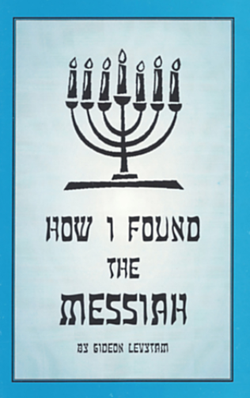
Follow Gideon Levytam's journey and discover how he was led by God, through a series of exciting circumstances, to find the One his people are still waiting for.
Past Episodes

Featured Offer
Follow Gideon Levytam's journey and discover how he was led by God, through a series of exciting circumstances, to find the One his people are still waiting for.
About Holy Scriptures and Israel
As time passed by, the Lord Yeshua took dear brother John Van Stormbroek to himself. The ministry of Holy Scriptures and Israel continued with additional development. In the early 1990’s, a weekly morning Bible class began which brother Gideon Levytam led regularly in the City of Toronto. This weekly open Bible class was held in the Willowdale assembly meeting hall. Eventually, a second mid-week evening Bible class was added. In April 2002, the need for an additional outreach Bible teaching meeting arose. We begun a Saturday (Shabbat) ministry meeting in which a systematic teaching of God’s word is presented to all who attend. Together we learn God’s Word, pray for each need and the salvation of Israel, and sing songs of worship unto our God, praising Him and our Lord Yeshua the Messiah.
In Mid 2004 we started to air on Joy 1250 Radio station a 15 minute Bible teaching program called "The Holy Scriptures and Israel" with Gideon Levytam. The broadcast teaches God’s word from a Hebrew Messianic perspective and has proved to be a blessing to many. It's now aired seven days a week. Our prayer is that many more of our Israeli people will have a clear understanding of who Yeshua is, why we all need him, and come to know him as their Lord and Messiah.
About Gideon Levytam
Contact Holy Scriptures and Israel with Gideon Levytam
426 Simcoe Street
Niagara-on-The-Lake
Ontario L0S 1J0
Canada
(905) 325-1234