

Malachi 2:10-16 Part 1 or 3


The Unfaithfulness of the people of Judah, part 1
Gideon Levytam: Shalom. Holy Scriptures and Israel is a ministry designed to share with the Jewish people the good news of the Lord Jesus, Yeshua the Messiah, and to instruct Christians on the Jewish roots of their faith. And now, teaching God's word from a Hebrew Messianic perspective, here is Gideon Levytam.
Shabbat shalom, everyone. The prophet Malachi is the prophet which we are studying now in our ministry meeting, and I'd like you please to turn in your Bibles to Malachi. Malachi in English, Malachi in Hebrew. The chapter is, of course, the second chapter for the ministry today, and the verses that we're going to be looking into in this ministry meeting have to do with the second chapter and then the verses will be from verse 10 to verse 16. I'd like you to turn to Malachi 2:10-16.
So, I'm reading Malachi 2:10. "Have we not all one father? Has not one God created us? Why do we deal treacherously every man against his brother by profaning the covenant of our fathers?"
"Judah has dealt treacherously, and an abomination is committed in Israel and in Jerusalem. For Judah has profaned the holiness of the Lord which he loved, and has married the daughter of a strange god. The Lord will cut off the man that doeth this, the master and the scholar out of the tabernacles of Jacob, and him that offereth an offering unto the Lord of hosts."
"And this have ye done again, covering the altar of the Lord with tears, with weepings, and with crying out, insomuch that he regardeth not the offering anymore, or receiveth it with good will at your hand. Yet ye say, 'Wherefore?' Because the Lord has been witness between thee and the wife of thy youth, against whom thou hast dealt treacherously. Yet is she thy companion and the wife of thy covenant."
"And did not he make one? Yet had he the residue of the spirit. And wherefore one? That he might seek a godly seed. Therefore take heed to your spirit, and let none deal treacherously against the wife of his youth. For the Lord, the God of Israel, saith that he hateth putting away. For one covereth violence with his garment, sayeth the Lord of hosts. Therefore take heed to your spirit that ye deal not treacherously."
And I will stop here in verse 16 because verse 17 links with the following chapter, the third chapter of the book of Malachi. Again, we always remember the words that Apostle Paul, Sha'ul, said in both Romans 15 and 1 Corinthians 10. The wise words of Apostle Paul, who said in Romans 15:4, "For whatsoever things were written aforetime were written for our learning, that we through patience and comfort of the scriptures might have hope."
And if you remember what he said in 1 Corinthians 10:11, "Now all these things happened unto them, namely our people of all the people of Israel, for an example, and they are written for our admonition, upon whom the ends of the age are come."
So whatever we are studying, beloved brothers and sisters, in relationship to our forefathers, the people of Israel, always have to lead us or direct us, not merely to criticize Israel, not merely to say they are bad and we are good. But no, we are to learn from Israel's history, whether it is positive or negative, in order to apply this to our own lives as believers today. The positive for positive, and the negative to learn from and to depart from that which is contrary to the word of the Lord.
So, Malachi, in the last message to our forefathers Israel after the return from the dispersion, they returned to the land of Israel. They rebuilt the temple in Jerusalem. They have established the sacrificial system, and they were continuing on in the worship of the God of Israel in a time of Malachi about 450 years before the Lord Jesus, Lord Yeshua the Messiah, came, and John proclaimed him as the Messiah of Israel, the Lamb of God, and the Savior of the world who taketh away the sin of this world.
So this is the final message to the nation of Israel prior to the 400 or 450 years of silence, when God will not use any prophet, when there will be no message direct from the Lord until all of a sudden the prophet by the name of Yochanan Hamatbil came, and he proclaimed that the Messiah has come, that the Messiah has come. So God's giving these final words to the people of Israel at about 450 BC.
But what was the condition then? The condition was so sad, beloved brothers and sisters, that God gave Israel this warning, similar to what Apostle Paul, Sha'ul, gave to the assembly, to the church, when he said, as we just read today, in 2 Timothy 4, "For the time will come when they shall not endure sound doctrine, but after their own lusts they shall heap to themselves teachers having itching ears. And they shall turn away their ears from the truth and shall be turned unto fables. But watch," he is saying to Timothy.
"Watch thou in all things, endure affliction, do the work of an evangelist, make full proof of thy ministry. For I am now ready to be offered and the time of my departure is at hand." You might say like Malachi was giving the message to the remnant of Israel at the end of those days when Israel returned after the time spending in Babylon, Sha'ul Paul giving the message to the believers in the latter days. Of course, he gave it in the beginning, but it was spoken about the latter days, when the church, the assembly, the congregation will depart from that which the Lord have given unto them.
And don't we feel like we are living in the days and the last days of the assembly, like Malachi lived in the last days of Israel's history before the proclamation that the Messiah has come? Notice this. We just finished to learn from the previous verses in chapter 1 and also chapter 2, how he directed his message to the priests, to the Kohanim. Remember chapter 1 and verse 6 he said, "A son honoreth his father and a servant his master. If then I be a father, where is my honor? And if I be a master, where is my fear? sayeth the Lord of hosts," notice, "unto the priests, unto the Kohanim, that despise my name."
The priests of Israel who were responsible to lead our forefathers in a godly manner ended up despising, despising the name of Jehovah, the name of the Lord. And you remember from verse 6 on into the chapter 2 up til verse 9, we have learned how he directed a message to the spiritual leaders of Israel who violated the covenant that God made with their forefathers, the tribe of Levi, or Levi in Hebrew.
Levi was the tribe that was chosen by God to lead our forefathers in a manner that would be pleasing to him, but unfortunately the priests, the Levites, in the day of Malachi have despised the name of the Lord. And you remember in chapter 2 we read in verse 1, "And now, O ye priests, this commandment is for you," and he gave a message to the Levi'im, to the Kohanim, to the priests of Israel.
And he eventually said to them in verse 9, "Therefore, because you behaved in such a way, I made you contemptible and base," as it says, "before all the people, according as ye have not kept my ways but have been partial in the law." They violated the command of the Lord, and therefore the Lord said, "I will make you contemptible and base, despised and humiliated before the people of Israel."
So now you see what he does now, beloved brothers and sisters. Malachi is speaking on behalf of the Lord. And so in verse 10 of Malachi chapter 2 to verse 16, he is now directing his message not only to the priests now, but to the whole nation of Israel. He is speaking now to the whole nation, to the people of Judah who lived, many of them, in the city of Jerusalem, but in the land of Israel. And you will notice from verse 11 he said, "Judah has dealt treacherously, and abomination is committed in Israel and in Jerusalem."
So he is really speaking now to all the people of Israel, to the Jewish community who now you might say have been influenced by the priests, by the Kohanim, and now they in turn became or lived their life in the same way as their spiritual leaders lived their life. It's like for us today. The spiritual leaders of the people of God ought to set an example. The pastors, the spiritual leaders, the teachers, they're supposed to be an example. They're not always an example. They fail, like anyone might fail, but nevertheless they are called to seek to be an example and exalt the name of the Lord.
But when they don't, the people follow their ways. And if they are not good examples, the people who are listening to them follow their way. It reminds me of a verse that is mentioned in Hosea, Hoshea in Hebrew, that God said this of the people of Israel in connection with the priests in Hosea chapter 4. It says in verse 9, "And there shall be like people, like priest, like people, like priest." In other words, as the people are behaving, they behave because they have learned this from the Kohanim, from the priest.
We might say in these days of ours today, like the spiritual leaders that you and I will have, that's how we will learn. If we will learn from them, that's how we will behave if we have learned anything in a positive way from those who teach us the word of God today. So he is speaking now and he is now charging, this is Malachi, he is charging the whole nation. And you notice how he began in verse 10 and 11. The people of Judah, what did they do? They profaned the covenant of their forefathers by marrying the daughters of a foreign god.
In other words, what did they do, the people of Judah? They ended up to marry, to enter into marriage relationship with women who came from other gods, from other nations who rejected the God of Israel. So what happened is by marrying an unbelieving woman from another nation, they had, they established a home that was two gods in this home, the God of Israel on the one hand and the god with a small g, the idol of the Gentile world.
Now I want you to understand. It's not an issue that the Jewish people were better than the nations of the world. Not at all. But because the true and living God have chosen the nation of Israel and he had brought them unto himself to have a relationship with him, he didn't want that his own people now will begin to identify with other idols. After all, if you remember in Exodus chapter 12 and verse 12, when he took Israel out of the land of Egypt, remember what he said to Israel in Exodus 12:12?
"For I will pass through the land of Egypt this night and I will smite all the firstborn in the land of Egypt, both man and beast, and against all the gods of Egypt I will execute judgment, I am Jehovah." In other words, God is saying, "When I brought you out from bondage into freedom, I brought you out of a nation that had all sort of idols in their life, so you will be a separated nation that belong to the true and living God, the God of Abraham, Isaac, and Jacob."
So notice what Malachi is now speaking to our forefathers, the people of Israel in verse 10. And notice what he said to them. He asked them three questions in verse 10. He said, "Have we not all one father?" This is question number one in verse 10. Secondly, "Has not one God created us, namely Israel?" This is question number two. And question number three, he said, "Why do we deal treacherously or why do we betray every man against his brother by profaning the covenants of our fathers?"
Three questions he asked the people of Judah when he was there during those days that Malachi was speaking to the people of Israel. Number one, "Have we not all one father? Abba echad," in Hebrew. "Has not one God created us? El echad, one God. And thirdly, why do we deal treacherously every man against his brother by profaning the covenant of our fathers?" In other words, he was speaking to the nation. He was appealing to them. He says, "I don't understand. I'm really puzzled, you might say, and I'm charging you," he is saying to our forefathers the people of Israel.
He says, "Listen, don't we have one father, Abba echad?" And I want you to remind you, beloved brothers and sisters, that God called our forefathers Israel, the nation of Israel, nationally, as a whole nation together. Israel as a nation is called the son of God nationally. As a nation, that's why you see here in that challenge in verse 10a, this is link us immediately to Exodus chapter 4, when Moses was going to bring the people of Israel out of Egypt in Exodus chapter 4 and verse 22 and 23 we read, "And thou shalt say unto Pharaoh, 'Thus sayeth the Lord, Israel is my son, even my firstborn. And I say unto you, Let my son go that he may serve me, and if you will refuse to let him go, behold I will slay thy son, even thy firstborn.'"
God said of Israel that Israel is Haben Sheli, my son, B'ni. Israel nationally as a nation is called the son of God, the son of the Father. Now again, it is to be distinguished from the believers today because we are called individually a son or a daughter of the Father. Israel now nationally called, or God called Israel, "my son." In the book of Exodus chapter 11, God said, "Let my son go," he's referring to the time that he brought Israel out of the land of Egypt.
In Isaiah chapter 64 and verse 8 we read, "But now, O Lord, thou art our father," Israel is speaking to God. "We are the clay but thou art the potter and we are all the work of thine hand." In other words, Israel as a nation is the son of the Father, the son of God. God is looked upon as the father of the nation of Israel. And now Malachi is asking the people of Israel, "Wait a minute. Why do you deal with each other in such a way? Don't we all have one father? We belong to one Abba, to one Father."
Many times we hear in prayer, even Yeshua said, taught the disciples, the Jewish disciples, before the church, before the assembly was born, "If you will pray, pray unto your father which is in heaven. Avinu shebashamayim, our Father who art in heaven, hallowed be thy name, thy kingdom come," and so on. And "this is thy will be done on earth as it is in heaven." This is the prayer that the people of Israel as a nation prayed, "Our Father, Avinu shebashamayim."
But not only this, beloved brothers and sisters, Malachi's challenging there, the people of Judah. The second thing that he said to them in Malachi chapter 2 and verse 10, he said, "Has not one God created us?" Now this is fascinating. Israel the nation was, you see all humanity have been created by God. Genesis 1:1 says, "In the beginning God created the heavens and the earth," and later on he created, in Hebrew the word bara, he created Adam out of the dust of the ground and then he put him to sleep and then out of his rib he built a woman, ishah, and he performed this, you might say, the marriage union, but he created the whole universe. All humanity have been created by God.
But there is another aspect of creation in which God created a nation for himself. Out of all the population of the world, God have created Jacob, Israel, as a nation to be unique that belong to him upon the face of this earth, that they will serve as a testimony to a world that need to hear about the true and living God. So we read in Isaiah 43, "But now thus sayeth the Lord that created thee, O Jacob, and that formed thee, O Israel, Fear not for I have redeemed thee, I have called thee by thy name, thou art mine."
God created a nation called Yisra'el, called Ya'akov who became Yisra'el, Israel, and he created this nation for himself. Now it's not that he didn't create all humanity and all mankind, but specifically he created this nation Israel for himself to be his servants in the world in which we live in. In Isaiah chapter 43 and verse 7 we also read, "Every one that is called by my name, for I have created him for my glory." God created Israel to be his glory, his honor as a nation that will give him honor.
"I have formed him, yea I have made him," God said in Isaiah 43 and verse 7. And further on in verse 21 of the same 43rd chapter of Isaiah, God declared a declaration to the world about Israel his people. He said, "This people have I formed for myself, they shall show forth my praise." But now look at that. If Israel is called to show forth his praise, and if Israel is a nation whom God created for his own pleasure, and if Israel is a nation that he, God, is their father, why, Malachi is asking in verse 10 of Malachi chapter 2.
He says, "Why do we deal treacherously every man against his brother?" Listen to this. "By profaning the covenant of our fathers." See, God made a covenant with the fathers of the nation, and the covenant was unconditional covenant of blessing with the forefathers of the people of Israel. But do you think he expected them to behave in the way that they behave right now Malachi is saying to the people of Israel? Look at the way you're conducting yourself.
Your leaders is dishonored the name of the Lord. Your leaders is violating the covenant that I made with Levi. They have allowed all kind of things to happen, and now, beloved brothers and sisters, he's showing to them the wrongdoing that happened in their midst during those days, about 450 years before the coming of the Messiah. Notice what he said to them in verse 11 of our very same second chapter of Malachi. Malachi points to Judah's doing, "They married daughters of a pagan gods."
In other words, you know when you just imagine if you believe in the true and living God and you tell him, "Wait a minute, I don't want to obey you, but I want to do things my way, and now I'm going to embrace the daughters of a pagan god who do not want to believe in you." And now can you imagine how God is feeling when something like that have happened? Now again, to mention to you that it's not because Israel is better. If a Gentile woman would have said, "I embrace the God of Israel," there would not be any problem.
I give you an example, Rahab the prostitute. When the people of Israel, the spies came to Yericho, she said, "I've heard about your God." And she believed that the God of the Hebrews, of the people of Israel, and she hid the spies. And when Joshua have entered to possess the land in Joshua chapter 6, guess who he maintained alive and kept alive, her and her family? According to Joshua chapter 6, Joshua kept alive Rahab and her family. And we find out later on that Rahab, Rachav, became part of the genealogy of Yeshua, Jesus the Messiah.
You have been listening to the Holy Scriptures and Israel with Gideon Levytam. Gideon teaches God's word from a Hebrew Messianic perspective. For more information about this ministry, write to Holy Scriptures and Israel, Box 1411, Niagara-on-the-Lake, Ontario, L0S 1J0. Or visit our website at holyscripturesandisrael.com. You are also invited to Gideon's weekly Bible teaching on Fridays at 11:00 AM and 7:00 PM and Saturdays at 1:00 PM at Willowdale Christian Assembly Hall, 28 Martin Ross Avenue in Toronto. Holy Scriptures and Israel is made possible by your prayers and financial support. If you would like to support the program, visit holyscripturesandisrael.com. God bless you. Shalom, shalom.
Featured Offer
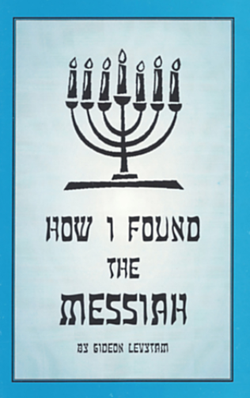
Follow Gideon Levytam's journey and discover how he was led by God, through a series of exciting circumstances, to find the One his people are still waiting for.
Past Episodes

Featured Offer
Follow Gideon Levytam's journey and discover how he was led by God, through a series of exciting circumstances, to find the One his people are still waiting for.
About Holy Scriptures and Israel
As time passed by, the Lord Yeshua took dear brother John Van Stormbroek to himself. The ministry of Holy Scriptures and Israel continued with additional development. In the early 1990’s, a weekly morning Bible class began which brother Gideon Levytam led regularly in the City of Toronto. This weekly open Bible class was held in the Willowdale assembly meeting hall. Eventually, a second mid-week evening Bible class was added. In April 2002, the need for an additional outreach Bible teaching meeting arose. We begun a Saturday (Shabbat) ministry meeting in which a systematic teaching of God’s word is presented to all who attend. Together we learn God’s Word, pray for each need and the salvation of Israel, and sing songs of worship unto our God, praising Him and our Lord Yeshua the Messiah.
In Mid 2004 we started to air on Joy 1250 Radio station a 15 minute Bible teaching program called "The Holy Scriptures and Israel" with Gideon Levytam. The broadcast teaches God’s word from a Hebrew Messianic perspective and has proved to be a blessing to many. It's now aired seven days a week. Our prayer is that many more of our Israeli people will have a clear understanding of who Yeshua is, why we all need him, and come to know him as their Lord and Messiah.
About Gideon Levytam
Contact Holy Scriptures and Israel with Gideon Levytam
426 Simcoe Street
Niagara-on-The-Lake
Ontario L0S 1J0
Canada
(905) 325-1234