

Malachi 1:6-14 Part 2 of 3


The Priests dishonor the name of the Lord, part 2
Guest (Male): Shalom. Holy Scriptures and Israel is a ministry designed to share with the Jewish people the good news of the Lord Jesus Yeshua the Messiah and to instruct Christians on the Jewish roots of their faith. And now, teaching God's word from a Hebrew Messianic perspective, here is Gideon Levytam.
Gideon Levytam: The study of the book of Malachi, chapter one. How can you say that we despise your name? They continue on in the way that they continue. He will present it before them in a moment in the next verses, but they said to the Lord, the one who is their father and their master, "How can you say that we despise your name? How did we do so? How can you say that we despise your name?"
From here on, beloved brothers and sisters, notice how many times the expression "My Name" is spoken about in these verses. He said to them in verse 6, "The priests that despise My Name." They in response said to him, "Wherein have we despised thy name?" Notice in verse 11, he continues in speaking about this: "From the rising of the sun even unto the going down of the same, My Name shall be great among the Gentiles. And in every place, incense shall be offered unto My Name, and a pure offering, for My Name shall be great among the heathen." Look at the end of verse 14: "For I am a great King," says the Lord of hosts, "And My Name is dreadful among the heathen."
I want to mention that here he used this expression so many times: My Name, My Name, *ha-shem she-li*, the name of God. Just to think with me for a moment, why does God mention this expression here, "You have despised My Name"? "My Name is dreadful among all the Gentile world." Why does he use this expression "My Name"? Because in a name of the Lord, it represents His character. The name of the Lord, *Jehovah* or *Yahweh*, represents His character, who He is. In biblical days, whenever they gave a name to any one of our own people, Israel, the name reflected the person. Parents would give a name to their children to reflect what kind of a person they would be or what they were meant to be.
In a name, there is much, and especially in the name of the Lord. The word *Jehovah* in Hebrew speaks of the character of God. He is the self-existing one. *Haya*, *Hoveh*, *Yi-he-yeh*: He was, He is, and He will ever be. He's the eternal one and the self-existing one. He's the one that will provide for Israel all what they needed. He's the one that created the heavens and the earth and created humanity. He's the one that formed Adam out of the dust of the earth. It represents who God is.
I want to read another verse in Exodus, chapter three. Moses was going to meet Pharaoh and the people of Israel. Moses asked the Lord in Exodus chapter three, verse 13, "Behold, when I come unto the children of Israel and I will say unto them, 'The God of your fathers has sent me unto you,' and they shall say to me, 'What is his name?'" Here Moses asked, "What shall I say unto them? The people of Israel are in bondage, and I'm going to tell them that God sent me to you and they're going to ask me, 'What is his name?' What should I tell the people of Israel?"
In verse 14, God said unto him, "I AM THAT I AM." In Hebrew is the word *Ehyeh asher Ehyeh*. "I will be that which I will be to you," God is saying to the people of Israel. "Thus shalt thou say unto the children of Israel, 'I AM has sent me unto you.'" In verse 15: "And God said moreover unto Moses, 'Thus shalt thou say unto the children of Israel, "Jehovah, the God of your fathers, the God of Abraham, the God of Isaac, and the God of Jacob has sent me unto you. This is my name forever, and this is my memorial unto all generations,"'" God is saying to Moses to say unto the people of Israel.
When Israel asked Moshe, "Who is the God that has sent you to us? What is his name?" Moses answered, "His name is Yahweh or Jehovah." That is a representation of the character of God, who He is. He is the self-sufficient God. Past, present, and future, this is the name of the Lord that the Lord said to Moses to say unto the people of Israel. Time passes by now and Moses brought Israel out of the land of Egypt and he climbs to Mount Sinai to speak to the Lord.
Then in Exodus chapter 34, Moses went up to the mountain to receive the tables of stone, the Ten Commandments, *Aseret ha-Dibrot*. As he's there on the mountain, the Lord descended in a cloud and stood with him there and proclaimed the name of the Lord, the name of Jehovah. Look at the proclamation, beloved brothers and sisters. He proclaimed, "The Lord, the Lord is merciful. He is gracious, long-suffering, abundance in goodness and in truth, keeping mercy unto thousands, forgiving iniquity and transgression and sin, and that will by no means clear the guilty, visiting the iniquity of the fathers upon the children, and upon the children's children unto the third and unto the fourth generation." Moses made haste and bowed his head towards the earth and worshipped the Lord.
In the name of the Lord is the character of God. God is merciful, God is gracious, and God is long-suffering. Jehovah, our God, is abundance in goodness and in truth, keeping mercy for thousands, forgiving iniquity and transgression and sin. God is a gracious God. But he's not only a gracious God, he's also a holy God. He says he's visiting the iniquity of the fathers upon the children and upon the children's children unto the third and the fourth generation. He will visit the sins of those who do not repent and turn back to himself.
That same God, the God of Abraham, Isaac, and Jacob, who was supposed to receive the honor and the reverence from his people Israel, is now appealing to them in Malachi chapter one. He is saying to them, "If then I be a father, where is my honor? And if I be a master, where is my reverence and fear, O priests of Israel, who despise my name?" He's challenging our forefathers as he challenges us today. He challenges us and says, "Don't you realize that God's honor is at stake and that the people of God are to give reverence unto him?"
In the New Testament, Matthew 1:21 says, "And you shall call his name Yeshua for he will save his people from their sins." Yeshua, God the Son who became a man, his name was called Jehovah the Savior. He will save his people from their sins. When Yeshua died and was buried, God gave him a name which is above every name, that at the name of Yeshua every knee should bow and every tongue shall confess that Jesus the Messiah is Lord to the glory of God the Father. That is what is in the name. The name of God ought to be honored because it's the person and the character of God that need to be honored by the people of God.
To our own shame and to the shame of the priest of Israel in those days, they didn't honor him. As he says, "You despised my name." They're asking in verse 6, "Where or how have we despised your name? In what way we despised your name? How can you say that we despise your name?" He gives them a list. Follow with me to see how God points to the two ways from verse seven to the end of the chapter. He presents two ways whereby the priests despised the Lord's name.
We can see how it is applicable to those of us who are believers in Yeshua the Messiah today and how it is definitely applied to the church, to the assembly today in its sad condition in the latter days of the age in which we live. The first way is found in verses seven to ten. The priests offer unacceptable sacrifices upon the altar in the temple in the city of Jerusalem. They offered animal sacrifices that were unacceptable by God.
He is pointing this out to them in verses seven to ten. First of all, verse seven: "Ye have offered polluted bread" or polluted food we might call it. In Hebrew it's called *lehem*, bread, but it's really applied to the sacrificial system. "Ye have offered polluted bread upon mine altar; and ye say, 'Wherein have we polluted thee?' In that ye say, 'The table of the Lord is contemptible' or despised," he's saying to the priest of Israel. "Ye have offered polluted bread."
He doesn't mean ordinary bread that is made out of flour that you bake and put on the altar. Of course not. The sacrificial system, the animals that were offered upon the brazen altar there in the city of Jerusalem, when the priests would bring the animals, they would slay them and shed their blood and put them upon the altar. These animals became the bread of God, the food to satisfy the holy requirement of a righteous God.
What do you think was the reason that God initiated the necessity to kill an animal in order to forgive a sinner? It already began in Genesis chapter three when Adam and Eve sinned against God. The animal that God had killed in order to cover the nakedness of Adam and Eve really represented the ability of a holy God to forgive a sinful man, but God's righteous requirement had to be satisfied. The sacrificial system becomes in scripture like where God would feed and be satisfied with this work of redemption.
Every time an animal died, the animal itself did not satisfy God, but it pointed to and represented the coming of the Messiah who would finally satisfy God completely. He's saying to the priests, to the spiritual leaders of our nation Israel, "You offer polluted bread. You've offered polluted sacrifices upon my altar. And you say, 'Wherein have we polluted thee?' You're asking me, 'Where did you pollute me?' 'The table of the Lord is contemptible.' You really despise," and notice he used the expression "the table of the Lord."
The altar, the brazen altar, become like a table where God is feasting. He's feasting on that which spoke to him about the Messiah of Israel and the Savior of the world that gave him joy like no man ever gave him in this world. It satisfied and fed God and his righteousness because of who the Messiah was. What happened when they offered upon the altar polluted sacrifices, what they really said to God was, "Here is what we're going to give you, we're going to give you the worst that we have."
God says, "Wait a minute. Don't you understand that the sacrificial animals are really representing for me my Messiah, my Son, who would come in the fullness of time and would satisfy the righteousness requirement of a holy God?" This is interesting because he used the word "bread" and he used the word "table." You and I every day get up in the morning and maybe cut a slice of bread and sit at a table with a cup of coffee and enjoy the natural food that God had provided for us. "Man shall not live by bread alone." Food for our physical nourishment.
Even more, when our forefathers Israel came out of Egypt, in Exodus chapter 12, when they killed the lamb, they had to eat the lamb inside their homes while the blood was placed upon the doorpost and the lintel. They were feeding upon the meat of the animal that really represented the Messiah. The bread of God set on the table of the Lord is the sacrifices which pointed to the loveliest person upon the face of this earth by the name of Yeshua, Jesus the Messiah, who has satisfied the needs of the Father, the needs of a holy and a righteous God.
Is there any other reference to the table of the Lord in connection with the sacrifices that is called the bread of God? Go with me to Leviticus chapter three. Leviticus chapter three, verses nine, ten, and 11. God gave instruction to Israel as to the sacrificial system. In verse nine he says, "And he shall offer the sacrifice of the peace offering, an offering made by fire unto the Lord; the fat thereof, the whole rump, it shall he take off hard by the backbone; and the fat that covers the inwards, and all the fat that is upon the inwards, and the two kidneys, and the fat that is upon them, which is by the flanks, and the caul above the liver, with the kidneys, it shall be taken away." And verse 11 says, "And the priest shall burn it upon the altar: it is the food of the offering made by fire unto the Lord."
The animal itself became a picture and a type of the Messiah and how he satisfied the desires of a righteous and a holy God. It became food offered unto the Lord. Go to chapter 21 of the book of Leviticus. In verse one, he is speaking to the priests who are offering those sacrifices: "The Lord said unto Moses, 'Speak unto the priests, the sons of Aaron, and say unto them, "There shall none be defiled for the dead among his people."'"
In other words, if the priest is going to be serving me, he should not be defiled. Then notice in verse six: "They shall be holy unto their God, and not profane the name of their God. For the offerings of the Lord made by fire, and the bread of their God, they do offer: therefore they shall be holy." The priests are going to offer the sacrifice which becomes the bread of their God. The food that God is satisfied with. In verse eight it says, "Thou shalt sanctify him therefore; for he offereth the bread of thy God."
The priests of Israel were offering sacrifices which became the bread or the food that God is feeding upon. What made God so sad was when the priests turned so much away from him and they offered that which was not honoring unto him whatsoever. You remember Yeshua the Messiah said in John chapter six, verse 33, "For the bread of God is he which cometh down from heaven, and giveth life unto the world." The Lord Yeshua the Messiah himself is the food, the bread of God. He's the one that satisfies a holy and a righteous God in a world that all gone astray. From Adam till you and I, all have sinned and come short of the glory of God. But there was a man by the name of Yeshua, Jesus the Messiah, who was born to the virgin Miriam, who gave God joy and he is called the bread, the food that God is nourishing himself upon, find satisfaction with.
The priests despised and polluted the altar. They polluted the altar when they put a sacrifice on it. As he says here, those sacrifices were becoming that which the table of the Lord became despised and contemptible. In Malachi chapter one, verse seven, the priest offers polluted bread which represents polluted sacrifices. Now notice in verse eight, he gives them the description of what they offered upon the altar.
In Malachi chapter one, verse eight, he's saying to them they offered that which was blind, lame, and sick. "And if ye offer the blind for a sacrifice." The bread in verse seven becomes the sacrifice in verse eight. He obviously doesn't speak about bread, but he speaks of the animal sacrifices which were types of the Lord Yeshua Jesus the Messiah. What did they offer him? The blind, the lame, and the sick.
Can you imagine how it must have hurt the heart of God? Since those sacrifices represent the coming Messiah in the fullness of time, when the priest came to the altar, they said, "We're not going to give the best animal. We're going to offer to God that which we don't need and don't want. We're going to give him the blind because anyway we can't use him. We're going to give him the lame because it anyway has a broken leg or broken neck or whatever he had, we don't need that animal. And we're going to give him the sick because the sick anyway is not helpful for us, we cannot use it for ourselves."
God is saying in verse eight that the priests have offered that which was unacceptable to God. He had already instructed them earlier in the book of Leviticus that any animal that has any defect in it is unacceptable to him. Just a few weeks ago we celebrated Pesach, Passover. You remember the instruction in Exodus chapter 12: "Your lamb shall be without blemish." Why? Because it speaks of the Messiah Yeshua who was the sinless one, the undefiled one, separate from sinners. To give God the blind, the lame, and the sick, what is unacceptable, is that not polluting the name of the Lord and his altar? Is it not so, beloved brothers and sisters? The heart of God is grieved as he has to say this to his own people. They really despised the table of the Lord from which he feeds, and it is actually the altar of the Lord where the animals were slain and placed. That became the table of the Lord, but he cannot feed on animals which did not typify his anointed one, the *Mashiach*, the Messiah of Israel, the Savior of this world.
Guest (Male): You have been listening to Holy Scriptures and Israel with Gideon Levytam. Gideon teaches God's Word from a Hebrew Messianic perspective. For more information about this ministry, write to Holy Scriptures and Israel, Box 1411, Niagara-on-the-Lake, Ontario, L0S 1J0, or visit our website at holyscripturesandisrael.com. You are also invited to Gideon's weekly Bible teaching on Fridays at 11:00 AM and 7:00 PM and Saturdays at 1:00 PM at Willowdale Christian Assembly Hall, 28 Martin Ross Avenue in Toronto. Holy Scriptures and Israel is made possible by your prayers and financial support. If you would like to support the program, visit holyscripturesandisrael.com. God bless you. Shalom, shalom.
Featured Offer
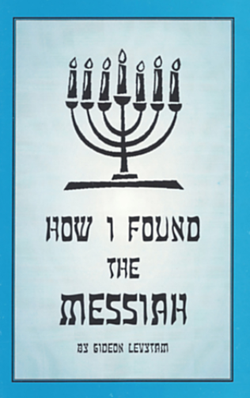
Follow Gideon Levytam's journey and discover how he was led by God, through a series of exciting circumstances, to find the One his people are still waiting for.
Past Episodes

Featured Offer
Follow Gideon Levytam's journey and discover how he was led by God, through a series of exciting circumstances, to find the One his people are still waiting for.
About Holy Scriptures and Israel
As time passed by, the Lord Yeshua took dear brother John Van Stormbroek to himself. The ministry of Holy Scriptures and Israel continued with additional development. In the early 1990’s, a weekly morning Bible class began which brother Gideon Levytam led regularly in the City of Toronto. This weekly open Bible class was held in the Willowdale assembly meeting hall. Eventually, a second mid-week evening Bible class was added. In April 2002, the need for an additional outreach Bible teaching meeting arose. We begun a Saturday (Shabbat) ministry meeting in which a systematic teaching of God’s word is presented to all who attend. Together we learn God’s Word, pray for each need and the salvation of Israel, and sing songs of worship unto our God, praising Him and our Lord Yeshua the Messiah.
In Mid 2004 we started to air on Joy 1250 Radio station a 15 minute Bible teaching program called "The Holy Scriptures and Israel" with Gideon Levytam. The broadcast teaches God’s word from a Hebrew Messianic perspective and has proved to be a blessing to many. It's now aired seven days a week. Our prayer is that many more of our Israeli people will have a clear understanding of who Yeshua is, why we all need him, and come to know him as their Lord and Messiah.
About Gideon Levytam
Contact Holy Scriptures and Israel with Gideon Levytam
426 Simcoe Street
Niagara-on-The-Lake
Ontario L0S 1J0
Canada
(905) 325-1234