

Lamentation 4:1-22 Part 2 of 2


Jeremiah laments of the siege of Jerusalem part 2
Gideon Levytam: Shalom. Holy Scriptures and Israel is a ministry designed to share with the Jewish people the good news of the Lord Jesus, Yeshua the Messiah, and to instruct Christians on the Jewish roots of their faith. And now, teaching God's Word from a Hebrew Messianic perspective. Here is Gideon Levytam.
Gideon Levytam: The study of Lamentations chapter 4. So, sad description of the condition that existed in the land of Israel during the time of the siege of the Babylonian and the destruction of the city. This is the first 10 verses of Lamentations chapter 4.
So again, one letter after another is mentioned here in the first 10 verses. Every one of these letters is going in order here as we study Lamentations chapter 4. Now for verse 11 to verse 16, I want you to notice that Jeremiah now confessing the reason that Jerusalem have experienced this suffering. He was honest enough to say, "God, I know the reason why we are in this situation."
He could have blamed the Babylonian, he could have blamed everybody else, but Jeremiah is sincerely broken before the Lord and he's confessing the reason for this condition that happened to Jerusalem. The suffering that came upon the people of Judah, the people of Israel, came because of their own fault.
When they disobeyed the Lord, and the Lord had warned them all along, he eventually sent the Babylonian to bring upon them the judgment that he had in mind for them. So, verses 11 and 12, Jeremiah is mentioning the fact that God was angry. His righteous indignation brought about the judgment. Notice verse 11:
"The Lord has accomplished his fury. He has poured out his fierce anger and has kindled a fire in Zion, and it has devoured the foundations thereof." Verse 12, "The kings of the earth and all the inhabitants of the world would not have believed that the adversary and the enemy should have entered into the gates of Jerusalem." God was angry with his people Israel.
This anger is righteous. He is the God of the nation. He is expecting from his people to worship him. He is expecting from his people to obey him. And when they don't obey him, he sent the prophets. He sent Jeremiah, he sent other prophets to speak to the nation, "Shuvu, shuvu, Yerushalayim," turn back, turn back in Jerusalem.
But Zion had failed to repent and turn to the Lord. So Jeremiah is honest and he says, "The Lord have accomplished his fury." The Lord had poured out his fierce anger. And because God is righteous, he has authority over his own people. So when he disciplined his own people, his fury, his anger is righteous.
Is righteous indignation against sin. What do you think was the reason that the Lord Jesus, Yeshua the Messiah, had to die on the cross? He didn't die for his own sins. He didn't die for anything that he have done wrong, but he have died for our sins. He have died for our guilt.
He became one that received the fury of God against sin, but instead of God punishing us, the believers, he punished him. He became a substitute. Now can you imagine what's going to happen to a person who reject God, reject the gospel, reject the Messiah? He or she who reject the Messiah, God cannot help them.
Because God is holy, the judgment eventually going to have to come upon that person who reject the gospel. Well, here it came upon the people of God because they have disobeyed him and violated his word. And therefore, we read here in verse 11 that the Lord had accomplished his fury. He has poured out his fierce anger and he has kindled, notice, a fire in Zion.
You and I might say as we observe, we could say, "Well, it was the Babylonian who made the fire going on there in Jerusalem." It was the Babylonian who burned the temple in the city of Jerusalem. But what we learn from here, according to Jeremiah the prophet, he said, "God has kindled a fire in Zion."
It was actually the judgment of God. The Babylonian were like a vessel in the hand of a holy and a righteous God. The Babylonian could not do anything to the people of Israel had God protected the people of Israel. But he brought his hand back, as it were. And he allowed the Babylonian to come and destroy the city to the extent, listen to this, brothers and sisters, that in verse 12, Jeremiah is saying, "The king of the earth and all the inhabitants of the world, they would have not believed."
"That the adversary and the enemy would have entered into the gates of Jerusalem." They were probably saying one to another, "How is it possible?" Jerusalem was a city that was always protected by the God of Israel. And now look what happened. How is it possible?
They were wondering in verse 12, all of them saying, "They would have not believed that the adversary was able to enter into the city of Jerusalem." You know, the protection of God for his people is always there as long that they are in submissiveness to him. But when they are not, God will say, "Okay."
"You think that you can go ahead without me, I will lift up my hand. I will allow you to see how you can handle your own way." And eventually you will see the consequence of the wrongdoing. What a sad experience Jerusalem have experienced in those days of old. Jeremiah in chapter 21, in his own book, not in Lamentation.
In chapter 21 verse 12 and 13, we read, "Oh, House of David, Thus says the Lord, execute judgment in the morning, and deliver him that is spoiled out of the hand of the oppressor lest my fury go out like a fire. And burn that none can quench it because of the evil of your doings.
Behold, I am against thee, oh inhabitants of the valley, and the rock of the plain, says the Lord, which say, 'Who shall come down against us? Or who shall enter into our habitation?'" So Israel trusted in themselves. They said, "No, no, no, we can do it on our own, God. We're going to carry on in our own way. We don't need your protection." And God said to them, "Okay, let's see."
You want to have your own way and eventually allowed the Babylonian to come in. And everybody was marvel, "How is it possible that this will happen to the city of Jerusalem?" But it did happen because God is the one that have invited and called the Babylonian to come to judge his very own people.
So Jeremiah is being honest. He's confessing the reason that his own brethren, his own nation have been in such a situation. And now notice that, verses 13, 14, 15, 16. He is mentioning the sins and the iniquities of the prophets and the priests and the leaders and the people of Israel.
And he is mentioning this as he says here in verse 13, "For the sins of her prophets and the iniquities of her priests that have shed the blood of a just in the midst of her, in the midst of Jerusalem. They have wandered as blind men in the streets. They have polluted themselves with blood, so that men could not touch their garments."
See, the spiritual leaders of the city of Jerusalem and the people of Israel have deviated from leadership. They themselves turned away from following God. So what happened? Their iniquities and their sins brought about this condition. They were responsible over the people of Israel.
And what happened now? They wandered as blind men in the streets. They polluted themselves. They have no longer become those people that can be an example and a blessing. And they are no longer could be effective. Even no one could even touch their garments because they have polluted themselves.
The Apostle Paul, Apostle Peter, John, in the New Testament, in the Brit Hadasha are always speaks to the leadership of God's people in order to give them guidelines and warnings that they ought to be an example to the flock. If you remember, Peter was saying in First Peter chapter 5, as an elder he was speaking to the leadership of the people to whom he was writing.
And he says, "Hey, listen. You know, do what you do. Feed the flock of God. They belong to the Lord, they belong to God. Feed them, minister to them. Be an example to them, be a blessing to them. And in their turn they will also them be an example and live a life for the Lord." He is speaking to the leadership.
And here we find out the prophets have sinned and gone astray. The priests have their iniquity. They shed the blood of the just in the midst of the city of Jerusalem. And then they were no longer benefit for the people of God. And that's why Jeremiah is confessing the condition. Notice he continued in verse 15 and verse 16.
He said, "They cried unto them, depart. It is unclean, depart, depart." They became almost like what the lepers, metzora'im in Hebrew, the metzora used to say. You know, in the book of Leviticus, when anyone had leprosy, he could no longer be in the midst of the people. So he had to be outside the camp, he had to put his hand over the his lips, his upper lip and say, "Unclean, unclean, don't come close to me, I am unclean."
And here we see that they cried unto them. They say, "Depart, depart, I'm unclean, I'm unclean, touch not." When they fled away and they wandered, they said among the heathen, "They shall no more sojourn there." In other words, even the heathen, the neighboring countries, could see that they are no longer effective among the people of God.
And here Jeremiah said again in verse 16, "The anger of the Lord has divided them. He will no more regard them. They respected not the persons of the priests and they favored not the elders." The people are no longer had any respect for the elders, and any respect for their priests, for the Kohanim, for the leadership of Israel.
And no wonder, when the leadership are not seeking to be an example, they lose their respect. And here we could see that the people respected not the persons of the priests, and they favored not anymore their elders. They couldn't have any counsel from them anymore because they were not an example to them. And you and I know very well that if we want a godly example, we're going to go to a brother or we're going to go to a sister that can be a help to us spiritually.
If we want to have some spiritual guidance in decision-making in our lives, to whom shall we go? We're going to go to the one that's going to be an example for us. To the elder. It could be a brother, could be a sister who is living for the Lord and we can ask them some counsel, some spiritual help to know how to handle situation in our lives.
But when the elders and when the priests are no longer walking with the Lord, how can we ask for spiritual guidance when they fail themselves to obey the Lord? That's why it is so important, and may the Lord raise in the midst of God's people, godly brothers and sisters who take the things of the Lord seriously, and who become an example.
It doesn't mean that they are not failing. It doesn't mean that they don't have weaknesses in their life, but at least they seek to please the Lord, to be an example among the people of God. And here in the days 586 BC was the climax. Years earlier, God gave the warning. Jeremiah preached again and again and again and they did not listen.
Paul said in Second Timothy 3 that in the last days, in the professing church of today, perilous times shall come. Days will come where there will be such a condition. The Apostle Paul already prepared younger Timothy and he said to him, "There will be days you will see, Timothy, that things will not be as they were in the beginning."
He said in Second Timothy chapter 3, "Know this, that in the last day perilous times shall come. For men shall be lovers of their own selves, covetous, boasters, proud, blasphemous, disobedient to parents, unthankful, unholy, without natural affection, truth-breakers, false accusers, incontinent, fierce, despisers of those that are good, traitors, heady, high-minded, lovers of pleasure more than lovers of God."
"Having a form of godliness, but denying the power thereof." Religious, but denying the power thereof. He says, "For this sort are they which creep into houses, lead captive silly women, laden with sins, led away with divers lusts, ever learning and never come to the knowledge of the truth."
And then he's saying to them, "You better make your change, your life should be different." And that's what's the last days that are yet before us, as we live, you can say, in the church age. In the city of Jerusalem, some years earlier in 586 BC, that was a consequence of departure from the Lord.
And now then, what's going to happen? The city is destroyed. Now we all are scattered. The judgment of God fell. Jeremiah was honest. He shared his own failure and the failure of his people with God. And he says, "God, I realize that the reason is because you were righteously angry against your people, and it was you who sent the Babylonian to bring this about among your very own chosen people."
And so in verses 17 to 22, Jeremiah is now describe the helplessness of Jerusalem. When these things happened, and when God have disciplined the city of Jerusalem, the Jewish people, then you could see how helpless they were. They are no longer self-confident.
They are trying to get help from one place and from another. And they find out no one could help them, only the living God of Israel. And so in these last verses, Jerusalem did not even receive a help from any nation. Verse 17, it says here, "As for us, our eyes fail for our vain help."
"In our watching we have watched for a nation that could not save." They were looking to Egypt because Egypt in those days, when the Babylonian came, was a place to escape and to get some help from. But even Egypt could not help them anymore. Because they were taken also by their own enemies.
They're looking for help. Help doesn't come from any places, only from the Lord. In verse 18, the Babylonian hunted them. The Hebrew word `sayadim`, they were hunters. They were hunting after the Jewish people who already lost their homes, lost their city, lost the temple in verse 18.
"They hunted our steps that we cannot go in our streets. Our end is near, our days are fulfilled for our end is come." That word for hunting is the Babylonian now, hunting the remaining Jewish people who were not yet carried to Babylon. Wherever they have fled to, they were hunting them.
Maybe they were hiding behind some places, they found them. They were helpless. No nation could help them. They were hunted by the Babylonian. Verse 19, notice, not only that they hunted them, but they persecuted them. "Our persecutors are swifter than the eagles of the heaven."
"They pursued us upon the mountains, they laid wait for us in the wilderness." You run to the mountain to hide, they found you there. You go to the wilderness, to the desert to hide, they found you there. And they persecuted the Jews, they persecuted them as much as they could.
And they continued on to hunt them and to persecute them, and many of them have lost their lives and died. And notice in verse 20 now, Jeremiah said, "Our breath of our nostrils, the anointed of the Lord was taken in their pits, of whom we said under his shadow we shall live among the heathen."
This is the king Zedekiah of whom we just observed to see what they have done to him. The anointed is the melech, the king. He's not speaking here about the Messiah but about the king of Israel who should have led the nation into victory. Now look what happened to him, according to verse 20.
We should have depended upon him, but he was taken in their pits. And we thought that we are going to be under the shadow. And then we find out that we are now have been scattered, and then we lived among the heathen. So Zedekiah, the king, was himself taken and he could not help them.
And so Jeremiah is after he mentioned, first of all, he's musing over the condition that existed because of the siege in Jerusalem. He confessed the sins of the nation and the reason that Israel have experienced that. And now he's showing, "My help is not coming from anybody, not the king, not Egypt, no one could help me."
The only one that can help us is God himself. And so he's finalizing this fourth lamentation of his by now looking at Edom and pronouncing judgment on Edom. And Edom is present-day Jordan today. The Edomites come from the word Adom, red, are descendants of Esau, Esav.
And the descendant of Esau were happy when the descendants of Jacob, the Jews were taken captive by the Babylonian. And the descendants of Esau will receive consequence of their evil doing to the people of Jacob, to the Jewish people. And here we see he's saying now in verse 21, "Rejoice and be glad, oh daughter of Edom."
What is he saying? You are rejoicing now to see what happened to the Jewish people? He said, "You that dwell in the land of Uz." And then in verse 21 B says, "But the cup also shall pass through unto thee." "Thou shall be drunken and shall make thyself naked." In other words, he's saying to Edom, "Okay."
"You are happy with what happened to our people, the Jewish people, the descendants of Jacob," these two brothers who came from the very same mother. And the descendants of Esau, which is Edom, have have gone against the descendants of Jacob. And here he's pronouncing judgment upon them.
He says, "One day what happened to us will happen unto you." The same cup of God's righteous indignation against us, one day will be poured upon you. And he says, "You will see, it will pass through unto you when you are happy to their fall, to the harm of the nation of Israel."
And so he's concluding here and he said, "The punishment of thine iniquity," this is Edom, "is accomplished." And he's now saying, "Oh, daughter of Zion, he will no more carry thee away into captivity." Now he's speaking about Jerusalem in the middle of verse 22. And he says, "Listen, there will come a day when you are no longer going to be taken unto captivity."
And now he takes us really to the end of the tribulation, the time of Jacob's trouble, when Israel will no longer suffer anymore as they have suffered in past days. Days coming when the captivity will no longer be, and Israel as a nation will be restored back to the Lord. And I just want to read these verses in Jeremiah chapter 33.
Just to close these to see how beautiful the promises of God to the people of Israel. In chapter 33 of the prophet Jeremiah he said, "And I will cause the captivity of Judah and the captivity of Israel to return. And I will build them as at the first. I will cleanse them from all their iniquity whereby they have sinned against me."
"And I will pardon all their iniquity, whereby they have sinned and whereby they have transgressed against me." He's speaking about a future day when the voice of joy and the voice of gladness, the voice of the bridegroom and the voice of the bride will happen and will exist in the future day when Israel eventually will be restored to the Lord.
And here he doesn't speak of days of today yet. He's waiting for the day of the end of the tribulation when Israel finally will be restored and no more be carried away into captivity. But when it's come to Edom, the end of verse 22, "He will visit your iniquity, oh daughter of Edom. He will discover thy sins."
God eventually will punish the daughter of Edom for the fact that the Edomites were happy when the people of Judah were carried captive to the land of Babylon. So here, beloved brothers and sisters, we finish today Lamentation chapter 4. Jeremiah lamenting and weeping over Jerusalem.
And he's expressing that which he had in his heart. He's yearning for his people, confessing their sins, admitting that the punishment of God came because of their own sins. And he's turning to the Lord to be the help for the nation who eventually going to restore Israel and bring Israel back to himself.
So with these thoughts, we can perhaps apply this to ourselves and ask ourselves, "Lord, how does that speak to me about the condition among the people of God today? Am I carelessly neglecting what's happening among the people of God? Or am I being used by thee, Lord, to be a blessing to God's people, even though God's people are under a time of discipline from the Lord."
So may the Lord help us and encourage us. And when you have a chance, go to the YouTube. Search there for this seven and a half minutes video that we showed. The name of the video is The Babylonian Conquest and the Destruction of the First Temple. This informative video was prepared by Megalim, The City of David Institute for Jerusalem Studies.
Look and see what happened to our people Israel in those days during the time that Nebuchadnezzar burnt the city of Jerusalem and took our Jewish people to Babylon. We pray that the Lord will hasten the day and will restore Israel back to himself.
Gideon Levytam: You have been listening to the Holy Scriptures and Israel with Gideon Levytam. Gideon teaches God's Word from a Hebrew Messianic perspective. For more information about this ministry, write to Holy Scriptures and Israel, Box 1411, Niagara on the Lake, Ontario, L0S 1J0. Or visit our website at holyscripturesandisrael.com. You are also invited to Gideon's weekly Bible teaching on Fridays at 11:00 AM and 7:00 PM and Saturdays at 1:00 PM at Willowdale Christian Assembly Hall, 28 Martin Ross Avenue in Toronto. Holy Scriptures and Israel is made possible by your prayers and financial support. If you would like to support the program, visit holyscripturesandisrael.com. God bless you. Shalom, shalom.
Featured Offer
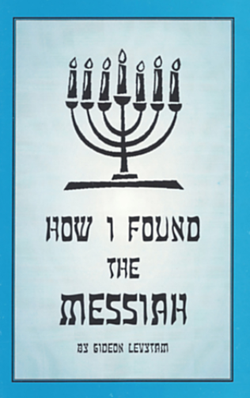
Follow Gideon Levytam's journey and discover how he was led by God, through a series of exciting circumstances, to find the One his people are still waiting for.
Past Episodes

Featured Offer
Follow Gideon Levytam's journey and discover how he was led by God, through a series of exciting circumstances, to find the One his people are still waiting for.
About Holy Scriptures and Israel
As time passed by, the Lord Yeshua took dear brother John Van Stormbroek to himself. The ministry of Holy Scriptures and Israel continued with additional development. In the early 1990’s, a weekly morning Bible class began which brother Gideon Levytam led regularly in the City of Toronto. This weekly open Bible class was held in the Willowdale assembly meeting hall. Eventually, a second mid-week evening Bible class was added. In April 2002, the need for an additional outreach Bible teaching meeting arose. We begun a Saturday (Shabbat) ministry meeting in which a systematic teaching of God’s word is presented to all who attend. Together we learn God’s Word, pray for each need and the salvation of Israel, and sing songs of worship unto our God, praising Him and our Lord Yeshua the Messiah.
In Mid 2004 we started to air on Joy 1250 Radio station a 15 minute Bible teaching program called "The Holy Scriptures and Israel" with Gideon Levytam. The broadcast teaches God’s word from a Hebrew Messianic perspective and has proved to be a blessing to many. It's now aired seven days a week. Our prayer is that many more of our Israeli people will have a clear understanding of who Yeshua is, why we all need him, and come to know him as their Lord and Messiah.
About Gideon Levytam
Contact Holy Scriptures and Israel with Gideon Levytam
426 Simcoe Street
Niagara-on-The-Lake
Ontario L0S 1J0
Canada
(905) 325-1234