

Joel 1:8-14, Part 2


Israel’s Past Experience of Locust Invasion Part 2
Unidentified Speaker: Shalom. Holy Scriptures and Israel is a ministry designed to share with the Jewish people the good news of the Lord Jesus Yeshua the Messiah, and to instruct Christians on the Jewish roots of their faith. And now, teaching God's word from a Hebrew messianic perspective, here is Gideon Levytam.
Guest (Male): The study of Joel chapter 1.
Gideon Levytam: And Israel at that time, a country that depended upon the growth from the ground, find itself in such a sad state. And God is speaking through the prophet Yoel, Land, mourn, for the corn is wasted, the new wine is dried up, the oil languishes. There is nothing to grow there. And of course, in verse 11, he is now speaking to the farmers, to the husbandmen. This is the farmer. Be ye ashamed, O ye husbandmen. Howl, O farmer. Howl, O ye vine dressers, for the wheat and for the barley, because the harvest of the field is perished. Anybody who is a farmer today will tell you that he's waiting to see when the rain is coming and there will be some fruit that he can go and pick up from the trees and take it to the market to sell it.
But you know, it's sad when you work the ground all the year long and at the end of the season there is no fruit, there is no growth. And so the husbandmen howl, he said, vine dressers, he's speaking about the wheat, for the wheat and for the barley, because the harvest of the field is perished. And so in verse 12, he gives us a conclusion here, and he tells us that everything, and he named to us tree after tree after tree that bore no fruit in the field. Verse 12, all the trees of the field are withered. The vine is dried up. The fig tree languishes. The pomegranate tree, the palm tree also, and the apple tree, even all the trees of the field are withered, because joy is withered away from the sons of men.
Is there any surprise why joy is withered away from the sons of men, and in this case, it's from the sons of men, the people of Israel, the people of Judah. Is there any surprise? Well, there is no surprise because when you looked around, you look at a vine, it dried up. You look at a fig tree, it languishes. You look at a pomegranate tree, you look at a palm tree, it vanished. You look at the apple tree, every tree of the field did not bring any fruit whatsoever, and automatically, beloved, joy have departed. But you see what Yoel is saying here, he wanted to lead the nation of Israel to repentance.
He wanted to lead the people of Judah to come before God to the point where they're recognizing that they have departed from him, and the reason that the locusts, a swarm of locusts came and destroyed everything is because they simply violated the will of God. They disobeyed the God of Abraham, Isaac, and Jacob. And let me just make here some, for a moment, some spiritual application. I don't know about you, but you and I have to admit that sometimes, as believers, because we are not connected to the Lord, we are disobeying the Lord. Sometimes we find that there is no fruit in our life for God.
We wonder why we are dry spiritually. We wonder why we are dry, we have nothing to give. We wonder why there is no possibility to offer neither to the Lord nor to the people of God, and we wonder why. Well, we have to check ourselves and to ask ourselves this question. Have I moved from my relationship with the Lord Jesus the Messiah? Have I gone astray from him? Have I gone away? Have I departed from his path that he called me to walk as a believer? It is not possible to bring fruit for God away from the presence of the Lord. Let me remind you what Yeshua said in John 15. He says, I am the vine, ye are the branches.
He said in John 15, without me you cannot do anything. We are the branches that coming out of the vine, and as the vine, as we stay, as the branches stay close to the vine, there will be fruit for God, fruit for God in our lives. Well, there was no fruit in the land, the land of Israel, and there was nothing to offer for God because Israel at that time have departed from the will of the Lord. But I want to show you a man that in spite of this have turned his heart to the Lord and worshiped the Lord even in those difficult days such as this. Turn to the prophet Habakkuk for a moment. just quickly in Chabakuk, just a couple of pages to your right.
Chabakuk said at the last portion of his book, Chabakuk chapter 3, he said something that I think is very precious, something that really shows us that even in the midst of a dry, dry spiritual state of the people of God, there is a possibility to rejoice in the Lord and to have our hearts and our eyes focused on Him. Look what Habakkuk said in chapter 3. He says this, verse 17, Habakkuk 3:17, although the fig tree shall not blossom, neither shall the fruit be in the vines. The labor of the olive shall fail, and the field shall yield no meat. The flock shall be cut off from the fold, and there shall be no herd in the stalls.
Yet I will rejoice in the Lord, and I will joy in the God of my salvation. Notice that? Habakkuk got a hold of the truth that joy is really connected and associated with God. And he says, listen, if God has to discipline us and to judge us, to punish us because we have departed from him. Let it be so. He's always right when he disciplines his people. But I'm going not to set my eyes upon the problem. I'm going to set my eyes upon the Lord. And that's why Chabaku could say, even though the fig tree shall not blossom, there will not be fruit in the vine, the olive will fail and not going to bring any food, the fields shall yield no food.
He says, I am yet going to rejoice in the Lord, and I will joy in the God of my salvation. Do you know, beloved brothers and sisters, it's very easy for me to read these verses right here for you and I. Very easy. And perhaps you can read it to me also, but when the rubber meet the road, when a problem come across our life, how oftentimes we have to admit that we do not rejoice in the Lord, but we are occupied with the problems. Instead of setting our eyes, and God wants us to set our eyes on him, on Yeshua the Messiah, who have gone before us. And yet, oftentimes we have to confess that we are not like Habakkuk.
We are not rejoicing in the Lord. And I encourage you today, if you are going through some trials and difficult times, and I encourage myself as well, may our eyes be focused on the Lord Jesus the Messiah, who loved us and gave himself for us, and he can encourage us and given us the strength to move on and to be a testimony for him in this world. We'll go back now to Yoel in chapter 1, and notice now in connection with these verses, after he was in verse 5 and 6 and 7 speaking about the fact that the drunkards are to weep because of the condition that prevailed there, and then the people, the priests, the land, the farmers, and everyone else, even though this have existed now, now he's moving on in verses 13 and 14, and he shows us now about the weeping of the priests and the leading of the nation to a national repentance.
You know, God wants his people to repent and to come before him and to confess that they have been wrong. Look what he says in verse 13. The priests are going to lament. Look, it says, gird yourselves, Lament, ye priests, verse 13. Howl, ye servants of the altar. Come, lie all night in sackcloth, ye ministers of my God, for the meal offering and the drink offering is withholden from the house of your God. You see, now he's going now to the priests, and he's speaking to the priests, and you notice he called them twice in this verse, ye ministers of the altar, ye ministers of my God. You see, the priests in Hebrew were Meshartei Mizbayach, which is the servants of the altar.
And you know what? When those priests used to come to the altar, they used to bring all the offerings to the altar, and they used to present it before God. Don't ever forget that when we speak about the altar in the Bible, in the Old Testament, in the Tanakh, it's always a picture of that which rise up to God and satisfy the holy and a righteous God. And every time those servants are coming to the altar, and they used to lay upon the altar, if it is an animal for a sacrifice, for blood sacrifice, or also what it calls here the meal offering. It is the only offerings, beloved, that is bloodless offering in the five offerings that God had given to Israel to offer.
You know, we have the burnt offering, we have the sin offering, we have the trespass offering, and we have the peace offering. And number 5, it's actually not number 5, it's the second one, is the meal offering. It's the only offering that has no blood in it. It speaks of the perfection of the Messiah in his life. In his life, Yeshua the Messiah have been the one that pleased God from the moment that he was born to the moment that he died. His walk was a perfect walk, and the meal offering came from the ground. The flour that came out of the wheat from the ground that made the flour, and the flour is the one that was the even flour, speaks of the evenness of the life of the Messiah.
But they didn't have any meal offering to offer, and they used to come before the Lord, and they used to offer those meal offering, and now they cannot offer the meat or the meal offering. In Hebrew, the word is mincha. When you see meat in the King James, it doesn't mean meat as you and I would say meat, basar, like a meat of an animal. It's a meal offering. It's that which has to do with the flower that represented before us the perfect life of the Messiah. Well, they couldn't offer that anymore because they didn't have any meal to offer. And so he's saying to them in verse 13, lie all night in sackcloth, ye servants of my God.
Why? Because meal offering and drink offering is withholden from the house of your God. You can't approach God in the house of God because it had been withholden from the house of God because of what the judgment that came because of the locusts who have completely destroyed all the crop in the land. And you know, beloved, again, what a beautiful type, what a beautiful picture is of the life of the Messiah with the meal offering. And you know, if you'll ever have an opportunity to study the five offerings, and you will see that every offering that my people of old Israel have offered on the altar is a picture of the Messiah who have died and who have lived a perfect life and died a death, an atoning death for the sin of the nation of Israel, the sin of this world.
And now they could not offer this offering in the presence of God. And you know what? Why they are to weep? We don't even realize the importance of this sometimes, because to come into the presence of the Lord without to offer him something, something to offer him, to elevate him. You know, I often wonder if there is any reason for you and I to come to any Saturday meeting or Thursday meeting or Sunday meeting or Monday meeting, if we come without something to bring to God. And I mean it, and I don't mean necessarily tangibly, I mean with your heart, a desire to give something for the Lord. There's no reason for us to be here if we come just to sit around without to have a desire to give something for God.
The only way that is a worthwhile meeting is when we come with a desire to offer something to God, to worship him, to adore him, to exalt and extol the name of Yeshua the Messiah. That is the reason why the believers are to gather together. If they are gathering together just to be a church, a churchianity or congregation for the sake of meeting together like a club, there is no reason for us ever to be here whatsoever if we do not come with the motive and the desire to have an offering of worship to the Lord. Well, here he's saying to them, you better mourn, he said, because you have nothing to offer to God.
It had been withholding from the temple, from the house of God, because of the judgment that God have judged the land and the people because of disobedience. And you know what, beloved, this is so true today in the present day of the church age, very similar. Sometime God will have to deal with us in discipline and in judgment in order to turn us about, to turn us around, so we can confess our failure and come back before him and afresh have a desire to live for him and to please him. And you see how he lead them into repentance. Notice now in verse 14, he wants that the priest will call about for a national repentance of the whole nation.
Look at verse 14, he says, Sanctify ye a fast. Call a solemn assembly. Gather the elders and all the inhabitants of the land into the house of the Lord your God, and cry unto the Lord. You see what he's saying? The responsibility of the priests was to call the nation, to call the people to come to the house of the Lord and to cry for repentance, to cry for forgiveness before Jehovah, before the Lord. And he's really describing, he says, you set apart a time of fasting and a solemn assembly. Do you know, if we will realize how God take the things of God, the things that belong to him serious, you and I will behave very much different in every word we say, in every action we take, if we took seriously the things of God, it would have made a change in our lives.
God demanded from the people at the time of Yoel to gather together in a serious way to confess their failure and their sin. And you know, surely when the people of God confessing their sins, they sure enough, the forgiveness and the repentance will lead into a proper relationship with the God of Israel. And so they were to call a fast. They were to call a solemn assembly. They were to gather the elders and all the inhabitants of the land into the house of the Lord and to cry unto the Lord. To cry, to confess, to weep before him and to say, Lord, we have failed thee. And God will always forgive and restore when there is a true, genuine repentance that have been done by the people of God.
Let me show you this in two ways. It done in one time in Old Testament verses and another time in the New Testament verses, how God demand a change in the life of his people. Look at Isaiah. Go back to Isaiah for a moment in chapter 1, the first chapter of Isaiah, Isaiah 1, and I'm going to read from verse 16. Isaiah chapter 1 and verse 16 says this, Wash you, make you clean, put away the evil of your doings from before mine eyes. Cease to do evil. Learn to do well. Seek judgment. Relieve the oppressed. Judge the fatherless. Plead for the widow. Come now, let us reason together, says the Lord.
Though your sins be as scarlet, they shall be as white as snow. Though they be red like crimson, they shall be as wool. If ye be willing and obedient, ye shall eat of the good of the land. But if ye refuse and rebel, ye shall be devoured with the sword, for the mouth of the Lord has spoken it. You see, God said in the time of Isaiah to the people of Israel, he says, listen, there got to be a change in your behavior. It cannot be just talking about it and without a change in your conduct. He says, wash you, make you clean, put away your evil of your doing, set it aside, don't continue in that way.
Cease to do evil, he says, and learn to do well. And he said to them, come, let us reason together. Can you imagine God is saying to the people, let us reason together. Let's talk about it. Let us reason. I want to challenge you. Do you think the way you behave, God is speaking, of course, to Israel, and you behave, speaking to us. He says, do you think your conduct is honoring to me? Let's reason together. Though, he says, though your sins be as scarlet, they shall be white as snow. You notice, beloved, he's speaking to his people, Israel. He doesn't speak about the unbelieving world now in Isaiah chapter 1.
How do we know that he's speaking about the people of Israel? You can read it right in the first few verses. Hear, O heaven, verse 2, give ear, O earth, the Lord has spoken, I have nourished and brought up children, and they have rebelled against me. That's what God wants from us. He want to speak to our hearts and to ask us, is it the right way, the way you behave? Is it the right way to walk such? You are my child, you are my son. I saved you, Israel. I brought you to myself. Is that the way to behave? Come, he says, let us reason together. In verse 19 of our chapter, he says, if you will be willing and obedient, ye shall eat of the good of the land.
Well, Joel showed us that they did not eat of the good of the land because they were not obedient. And beloved, spiritually for you and I, it is the same thing. We can eat of the goodness of the food, the spiritual food that the Lord Jesus the Messiah has for us, if we are seeking to obey him and seeking to live a life which is pleasing to him. Turn to Romans chapter 12. We talked about Israel as a nation. Now we, Paul is writing to the church of Rome. This is totally different company. Totally Israel, the nation, the church, the body of Messiah, and he's speaking to them in the same way. Notice what he's telling them in Romans chapter 12.
They were saved, they were believers, and he's telling them, notice in Romans chapter 12, he's saying this to these believers. He said that in verse 9, Romans chapter 12 and verse 9, he says this, Let love be without dissimulation. Abhor that which is evil. Cleave to that which is good. Be kindly affectionate one towards another with brotherly love, in honor preferring one another, not slothful in business, fervent in spirit, serving the Lord, rejoicing in hope, patient in tribulation, continuing instant in prayer, distributing to the necessities of the same, given to hospitality, bless them which persecute you, bless and curse not, rejoice with them that do rejoice and weep with them that weep.
Be of the same mind, one towards another. Mind not high thing, but condescend to men of lower state. Be not wise in your own conceit, and recompense to no man evil for evil. Provide things honest in the sight of all men. If it be possible, as much as it within you, live peaceably with all men. You notice? He doesn't speak to unbelievers. He's speaking to the brethren at Rome. He's speaking to the akim, to the brother, to those who are believers, as we read already in Romans chapter 1, where he said to them, Paul, a servant of Jesus the Messiah, called to be an apostle, separate unto the gospel of God, and then he's writing to them, unto whom he was writing.
He is to all that be at Rome, beloved of God, called saints. He's speaking to the believers. And you know, just like Israel of old, the church of Rome had its own problem. When people depart from the will of the Lord, the Lord bring about judgment and discipline. Make no mistake about that. God will have to discipline the people whom he loves so dearly, whom he saved through the precious blood of Yeshua the Messiah. And so, beloved, now go quickly back to the book Yoel, and in those first 14 verses in which we just covered right now. The topic is the existence of an invasion of the locusts at the time when Yoel have lived.
And what's happened here is Yoel taking this experience that have happened, and he takes this situation that have existed, and he's now going to speak about future invasion that is going to happen in the tribulation period. He's taking this particular case of the time of trouble that have existed historically in his time, and he's moving forward, and he's speaking about the future day when there will also be an invasion, when there will also be judgment, but judgment that will be greater than the judgment that have happened at the time when Yoel the prophet was writing. And we're going to go through it.
I'm not going to go through it today anymore because my time is up. But in the will of the Lord, we are going to continue to go into chapter 2 and chapter 3, the whole book, and you will see that Yoel is speaking about latter days, when the day of the Lord, the tribulation period will come, where judgment will fall in a future day. And you and I are to be so thankful that we belong to the Messiah in this present age. The grace of God that brought us to be part of a family that are redeemed by the precious blood of the Messiah. Can we say amen to that?
Announcer: You have been listening to the Holy Scriptures and Israel with Gideon Levytam. Gideon teaches God's word from a Hebrew messianic perspective. For more information about this ministry, write to Holy Scriptures and Israel, Box 1411, Niagara-on-the-Lake, Ontario, L0S1J0, or visit our website at holyscripturesandisrael.com. You are also invited to Gideon's weekly Bible teaching on Fridays at 11 a.m. and 7 p.m. and Saturdays at 1 p.m. at Willowdale Christian Assembly Hall, 28 Martin Ross Avenue in Toronto. Holy Scriptures and Israel is made possible by your prayers and financial support. If you would like to support the program, visit holyscripturesandisrael.com.
God bless you. Shalom, shalom.
Featured Offer
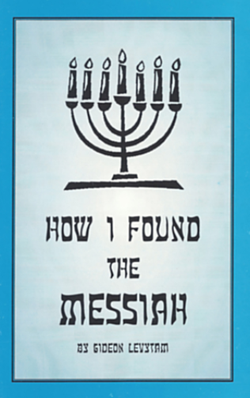
Follow Gideon Levytam's journey and discover how he was led by God, through a series of exciting circumstances, to find the One his people are still waiting for.
Past Episodes

Featured Offer
Follow Gideon Levytam's journey and discover how he was led by God, through a series of exciting circumstances, to find the One his people are still waiting for.
About Holy Scriptures and Israel
As time passed by, the Lord Yeshua took dear brother John Van Stormbroek to himself. The ministry of Holy Scriptures and Israel continued with additional development. In the early 1990’s, a weekly morning Bible class began which brother Gideon Levytam led regularly in the City of Toronto. This weekly open Bible class was held in the Willowdale assembly meeting hall. Eventually, a second mid-week evening Bible class was added. In April 2002, the need for an additional outreach Bible teaching meeting arose. We begun a Saturday (Shabbat) ministry meeting in which a systematic teaching of God’s word is presented to all who attend. Together we learn God’s Word, pray for each need and the salvation of Israel, and sing songs of worship unto our God, praising Him and our Lord Yeshua the Messiah.
In Mid 2004 we started to air on Joy 1250 Radio station a 15 minute Bible teaching program called "The Holy Scriptures and Israel" with Gideon Levytam. The broadcast teaches God’s word from a Hebrew Messianic perspective and has proved to be a blessing to many. It's now aired seven days a week. Our prayer is that many more of our Israeli people will have a clear understanding of who Yeshua is, why we all need him, and come to know him as their Lord and Messiah.
About Gideon Levytam
Contact Holy Scriptures and Israel with Gideon Levytam
426 Simcoe Street
Niagara-on-The-Lake
Ontario L0S 1J0
Canada
(905) 325-1234