

Hebrews 3:1-2, Part 1


Yeshua Is Greater than Moses, Part 1
Unidentified Speaker: Shalom. Holy Scriptures and Israel is a ministry designed to share with the Jewish people the good news of the Lord Jesus Yeshua the Messiah, and to instruct Christians on the Jewish roots of their faith. And now, teaching God's word from a Hebrew messianic perspective, here is Gideon Levytam.
Gideon Levytam: Okay, shalom everyone. While we turn once again to the book of Hebrews this meeting, today we are going to open to the third chapter of Hebrews. We have already covered the first two chapters of the book of Hebrews, and we are going to continue actually today in the third chapter. I enjoy so much to speak about the letter to the Hebrews because it is so practical, so real, so needful for us who are Hebrews to realize that when the writer wrote to those Hebrews 2000 years ago, it's applied to us as well today, and of course to all believers in Yeshua the Messiah. And you can see how important this letter for us all to understand the greatness of the person of our Lord Jesus, our Lord Yeshua the Messiah.
Now, I'm only going to read today the first six verses of the third chapter. The reason for that, you can see there is a natural break here, and yet after these six verses, he began to give a second time, a second warning to believers in the Lord Yeshua the Messiah. Let me read those verses first of all. Hebrews 3, verse 1. Wherefore, holy brethren, partakers of the heavenly calling, consider the apostle and high priest of our confession, Messiah Yeshua, who was faithful to him that appointed him, as also Moses was faithful in all his house. And I stop here. Hebrews chapter 3. Remember that when we give the chapters and the verses, when the writer wrote to the Hebrews 2000 years ago or 1900 years ago, he didn't give them those breaks that you and I are having today, chapter 1, chapter 2, verse 1 to verse 6, and so on.
He wrote a letter which flows very nicely, one step after another. The writer, a Hebrew believer, writing to early century Hebrew Christians, Messianic Jews, you may call them today, Jewish people who have come to faith in the Messiahship of Yeshua, of the Lord Jesus, have embraced him as their Lord and Savior, but were always in the danger of going back into the sacrificial system, to be under the Mosaic law, to bind themselves into that which God have given to the nation. But now when the Messiah have come, the nation as a nation haven't accepted him, those first century Hebrew believers must move on into maturity and growing in appreciation of the person of the Messiah.
Well, we have the same problem today. A person might come to faith in the Messiah and accept him, recognize that he's complete in the Messiah, yet there is an inclination always to go back to that which was already fulfilled by the person of Yeshua the Messiah. Those of us that are Jewish know that by experience, because we have it every time in our life, in connection with our family, with connection with our nation, in connection with our people that are very dear to us, we know that by experience. But there is a difference between us today and those early Hebrew believers because they had the temple still in existence.
They had the sacrifices still on the altar. They had the priesthood. They had everything that was still intact, if you will. But when Yeshua came, he was rejected by the leadership of Israel, set aside, as we read, the stone which the builders rejected become the head of the corner. Israel as a nation did not accept him yet, and yet those Hebrew people have loved him, sought to follow after him, but always with the danger of going back into that which was done in the person of the Messiah. For them to go to offer a sacrifice on the altar in the temple was a clear violation of what happened when they came to the Lord Jesus, the Messiah.
He was the supreme sacrifice. The animals will no longer have any value whatsoever being upon the altar. And so he's leading them forward, and you remember in the first two chapters, he dealt with them to show them that Yeshua, that Jesus, that the Lord Yeshua, the Son of God, is greater, superior, higher than the angels. As God, chapter 1, as man, chapter 2. He's greater than the angels, and angels were very important for our people because angels have been part to the nation throughout the history of Israel as a nation. They served them, they ministered to them, they gave the law to the nation of Israel according to Galatians and according to the book of Acts chapter 7.
So angels were very important, but Yeshua is greater than the angels. By the time we get now to chapter 3, in verses 1 all the way to chapter 4 and verse 13, he is telling them the second important things about the superiority of Yeshua. He is not only greater than the angels, but he is also greater than Moshe Rabenu, Moses the lawgiver. Now, you know, if you would sit today in any place in Israel, and you will find and have a few conservative Jewish people, and you will sit and discuss with them some passages from the Bible. You know, there are three individuals that are very dear to our people.
Number one is Father Abraham. He is the one that God have called the first Hebrew. Ivri, we call him in Hebrew, Ivri, who avar, he is the crosser over. He came over Mesopotamia, crossed over, and he came to the promised land. Abraham the Hebrew, the father of us Hebrews. That's so number one. Number two is, of course, is the man Moses that we're going to talk about a little bit today, who was the lawgiver. God have given to our people of all, to Israel as a nation, the law through angels, but to this man Moses, everyone in Israel, everyone you will talk about, every person you will talk about when you talk about Moses, the Torah, Bereshit, Shmot, Vayikra, Bamidbar, Dvarim, Genesis, Exodus, Leviticus, Numbers, Deuteronomy is that which will attribute to Moses, the lawgiver.
He had given Israel instruction. He had given Israel commandments and laws and precepts, and he was a man that was so important to the nation of Israel, and indeed he was. He was a man of God. The Bible tells us no one rose like the servant Moses. And then, of course, the third one that is very important, it's the king of Israel, David. Sometimes we sing that song, David, the king of Israel, is alive, alive and in existence. Why? Because David is through him came the promised Messiah would come. David, the king of Israel, the man after God's own heart. That's the man that God said, I found a man for myself, a man after mine own heart.
Abraham, Moshe, and David, the three great men that God raised from among the people of Israel. Very important, by the way, here come the writer, and you notice that he doesn't knock down Moses. He doesn't tell of his faults and his failure. He had failure, like all men. But what he does, he shows us that even though Moses was a great man, there is one that is always greater than all. And that's what he does, beloved brothers and sisters. He set before them in a very affectionate way the greatness of the person of our Lord Yeshua the Messiah. And so you notice the text began in chapter 3 and verse 1 with the word wherefore.
What is the word wherefore is here for, is to tell us that what I have already told you in previous verses or in the previous part of the letter, in light of this, I want you to see that the Lord Yeshua the Messiah is now greater not only than the angels, but also the man by the name of Moshe. So he's telling them, wherefore, wherefore, in light of what you have already heard from me, wherefore he's saying to them, holy brethren, partakers of the heavenly calling, consider, consider the apostle, apostolos in Greek, apostle and high priest of our confession, Yeshua. Now he's telling them, you see what he does?
He's now leading them to consider Yeshua, and now in view of what's coming after Moses, the man Moses, but he called them two things that I think we need to take under consideration when we study the book of Hebrews. The first thing he does, he's calling them holy brethren. Now, let me tell you, a lot of people have a problem with the book of Hebrews because there are some verses, and we're going to get there in due time, if we'll ever get to those chapters. There are certain passages in the book of Hebrews would cause some people to doubt their salvation. Some people do doubt their salvation.
Am I saved? Am I lost? Am I in? Am I out? Am I going to heaven or I'm going to hell? Am I a believer or am I an unbeliever? What's happening with my life because somehow I gotta produce something in my own life to prove my redemption, my being saved. But beloved brothers and sisters, this is a principle that everybody must recognize. We are never saved on the basis of how we perform, because you and I never perform enough to be 100% holy. What is it, 50%? Maybe some of us, great, do 60% in their life. Maybe you think that you have done 70% or even 80%. But God does not demand neither 50, nor 60, nor 70, nor 80, nor 90.
God demand 100% perfection, otherwise you are lost, you are sinful individual and need redemption. And that's why we have to see when he called them this expression, notice he called them holy brethren. The Hebrew word is, of course, it's a Greek in the New Testament. It was written in Greek, so the word, of course, is in the Greek, but the Hebrew word is achim, brethren. They have been his brethren or his achim in the flesh. He's Hebrew, they are Hebrews, but they also were his brethren in the Messiah, in Yeshua, in the Lord. And so he called them holy brethren. What does that mean to be holy?
To be holy means to be set apart. To be brought into a condition or in a position in which your relationship with God is unique. You have been set apart by God for himself. That's what means to be holy. The Hebrew word kadosh, we know we sometimes sing holy, holy, holy. You remember when Isaiah saw that vision of the temple shaking and he cried kadosh, kadosh, kadosh. You know, God will not have one little sin without being judged. And that's how he could call them holy brethren. He could call them holy brethren because they have been set apart through the work of the Messiah. Their sins have been dealt with.
They have been forgiven company because they have accepted our blessed Lord Yeshua, the Messiah. They are set apart. Let me show you, if you turn with me to the book of Corinthians, 1 Corinthians chapter 1. Just turn there for a second. The Corinthians, you know, were in a very sad condition. If there is any letter in the Bible that is full of problems, was in the Corinthian, the Corinthian. The whole First Corinthians has to do with problems and issues that the Corinthian has. And yet, what we read the Apostle Paul when he wrote to them, Shaul, in First Corinthians chapter one, look what he called them, verses 1 and 2.
Paul called to be an apostle of Yeshua the Messiah through the will of God and Suthaniz our brother, and then verse 2 he says, unto the church or the assembly or the congregation of God which is at Corinth, to them that are sanctified in the Messiah Yeshua, in Christ Jesus, called saints. Now, wait a minute, how can you call the people at Corinth saints? You just read about them in the whole book of Corinthians, the whole letter. In chapter 3, they have an issue. In chapter 5, they had an issue. In chapter 6, they had an issue. Every chapter, there's an issue that these Corinthians had, and yet the Apostle Paul called them saints.
Now, beloved, any one of us who is a believer in Yeshua the Messiah is definitely saint. We might not behave as saints many times, but positionally we are called saints in the word of God, set apart, holy unto God, set apart for God. That, by the way, make us very much responsible to the Lord to say, Lord, if you have set me apart and call me holy, if you call me as he called his brethren in chapter 3, the Hebrew called them brethren, if you call me holy, what does that demand from me in a practical way? Should I live a careless life without to think of the things of the Lord, without to think of my accountability and my responsibility for the Lord?
No. In fact, because he's calling them holy, because they are holy, they are having a responsibility to live a life that is pleasing to the Lord. Romans chapter 1, one more verse, 7, he's also writing to the believers at Rome. And again, I want you to see he calling them saints. Verse 7 of Romans chapter 1, to all that be in Rome, beloved of God, called saints. You see, he's calling believers in Yeshua the Messiah saints. And that's exactly what happened with those Hebrews. They were holy brethren. They were set apart for God. They were sanctified through the work of Yeshua the Messiah. But not only this.
You notice in the same verse, verse 1, the Messiah here is presented before them, but the writer is telling them that those people were changed people. There's something happened to them. They became sanctified, set apart. But the second thing in Hebrews chapter 3 and verse 1, he called them partakers of the heavenly calling. Partakers of the heavenly calling. You know that when you and I, when those Hebrews became believers in the Lord Yeshua the Messiah, they were partakers of the heavenly calling. Partakers of that which is the calling of God, the heavenly company that belonged to our blessed Lord Yeshua the Messiah.
But we must understand they were Hebrews. They were Jewish people who lived in the land in view of what was going on in the temple, and they had promises that God had given to our people Israel as a nation, and earthly blessings, an earthly calling. Now, when it's earthly, it doesn't mean it's bad. When it's earthly, it doesn't mean it's something wrong with it. No, but the earthly blessing that they were supposed to receive together with the rest of the nation had been postponed because of the rejection of the Messiah. So now they are partakers, as he called them, of a heavenly calling, of a heavenly calling.
You know what? You know, beloved brothers and sisters, every believer in the Lord Yeshua the Messiah today, our calling is a heavenly calling. We are not to improve the world here, even though by example in our life we should be an impact, but our job, our ministry is to pluck people outside of this world because this world is heading for judgment. God called the believers a heavenly calling, people that are heading towards heaven where the Messiah is presently today. He called them partakers or sharers of the heavenly calling. That's what he called them. They are to understand their calling in this present time.
Now they probably were sitting there and thinking, wow, God, you have given us so many promises to our nation Israel, and we are part of this nation. You see, he didn't call them to stop to be Jews. He didn't call them to stop to be Israelis. He didn't call them to stop to be Hebrews. He only called them to understand that in this present time, after the Messiah been rejected, God is now calling a people for himself, which the view, with a view of going to be with our blessed Lord in heaven. They call it a heavenly calling, and they were sharers of this heavenly calling. Now that is important because now, even though they seem to think that they have lost so much, but actually he tells them, you haven't lost a thing.
You haven't lost a thing because actually what these people are going to benefit, they are in a sense going to benefit in two ways. Number one, they are belonging to the heavenly company. They are going to be with Yeshua the Messiah and all the body of Messiah, which is composed Jew of Gentile together in the heavenly realm, in a heavenly calling, and yet at the same time, they will enjoy to see the nation in a future day, Israel, restored and receiving all the promised inheritance that God has for this nation. But now, he said to them, you are sharers of this heavenly calling. Actually, heaven is our home.
Really, in my Father's house, Yeshua said in John 14, there are many mansions. I go to prepare a place for you, he said, by the way, to the early disciples in the upper room in John 14. And if I go and prepare a place for you, he said to them, I will come again and I will receive you unto myself, that where I am, there ye may be also. You know, the shout might be at any moment. I might not finish the meeting today where the rapture of the saints can happen. We do not know when, we only know that the next thing on God's calendar is the snatching out from this world that is heading for judgment of everyone that have trusted in the Lord Yeshua the Messiah.
So he's calling them two things, holy brethren and sharers of the heavenly calling. That tells me much. That tells me that those people were not ifis. They were not half in and half out. They were not 99% almost made it. They were not might get it and might go out of it. No, he tell me that they are in, they're saved, they're believers, they are holy brethren, they are partakers, sharers of the heavenly calling. And by the way, they could not even go out by themselves, even if they wanted, because the Bible teaches us no one is able to pluck them out of my hands. Now, he established the fact here, and for me, I know there are various teaching that going on, and it's fine.
If somebody believes that he can get saved and get lost, it's fine. It's up to you. But what I understand from my Bible, that our salvation is totally dependent upon the work of the Messiah, and not one thing that I can do will ever bring me to receive redemption. The only thing that I brought to the table is nothing but my sin and sins, and the Lord Jesus the Messiah brought to the table his precious, precious blood. He paid the price for our sin and sins. And so, as he continue in this first part, he's showing that these Hebrews had a change. They have a change. They have been transferred from the kingdom of this dark world to the kingdom of God's dear Son.
They are holy brethren, and they are partakers of the heavenly calling. And now he's continuing the second half of this verse, and you notice what he does there. There he asks them to consider this Yeshua, to consider him. You see, it says here in verse 1b, consider the apostle and high priest of our confession, Messiah Yeshua or Christ Jesus. Some said that the word Christ or Mashiach in this verse is not in the best manuscripts. It's simply saying consider Jesus. Consider Yeshua. That's what he say. But who is he? Who is this Yeshua? Because they're telling them two things about Yeshua. Consider the apostle, number one, and the high priest of our confession.
Two things he's telling them to consider. He's calling Yeshua, by the way, this is one of the only places, as far as I know, that the Lord Yeshua is called an apostle. What is the meaning of the word apostle? Apostle means a sent one, one that had been sent. You see, when Yeshua left this world and returned to heaven, he sent those apostles for mission, for ministry, to proclaim the message of the gospel to the world. And here we have him being called by the writer an apostle, apostolos in the Greek, in Hebrew, shaliyach or nishlach, a person that had been sent by God. Now that is very interesting.
Some suggest that perhaps the book of Hebrews was written by Shaul, Paul, but the reason that Paul did not put his name into this letter is because the name apostle is applied to Yeshua, and Paul, who usually write a letter, says, I am the apostle of Yeshua the Messiah, sent of Yeshua the Messiah, and he removed his name from this letter because he's not worthy compared to this one wonderful person, the true apostle, the true messenger, the true sent one. You see, he's saying to them, he says, consider this apostle. Consider him. Now I'm going to show you, he's going to lead them in to compare him to Moses, and I want you to see that he's greater than him, but consider him, he's saying to them, as a sent one.
Announcer: You have been listening to the Holy Scriptures and Israel with Gideon Levytam. Gideon teaches God's word from a Hebrew messianic perspective. For more information about this ministry, write to Holy Scriptures and Israel, Box 1411, Niagara-on-the-Lake, Ontario, L0S1J0, or visit our website at holyscripturesandisrael.com. You are also invited to Gideon's weekly Bible teaching on Fridays at 11 a.m. and 7 p.m. and Saturdays at 1 p.m. at Willowdale Christian Assembly Hall, 28 Martin Ross Avenue in Toronto. Holy Scriptures and Israel is made possible by your prayers and financial support. If you would like to support the program, visit holyscripturesandisrael.com.
God bless you. Shalom, shalom.
Featured Offer
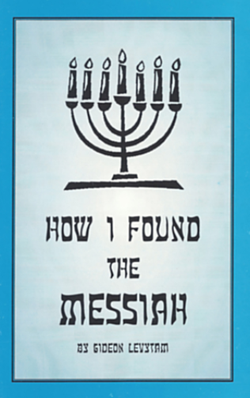
Follow Gideon Levytam's journey and discover how he was led by God, through a series of exciting circumstances, to find the One his people are still waiting for.
Past Episodes

Featured Offer
Follow Gideon Levytam's journey and discover how he was led by God, through a series of exciting circumstances, to find the One his people are still waiting for.
About Holy Scriptures and Israel
As time passed by, the Lord Yeshua took dear brother John Van Stormbroek to himself. The ministry of Holy Scriptures and Israel continued with additional development. In the early 1990’s, a weekly morning Bible class began which brother Gideon Levytam led regularly in the City of Toronto. This weekly open Bible class was held in the Willowdale assembly meeting hall. Eventually, a second mid-week evening Bible class was added. In April 2002, the need for an additional outreach Bible teaching meeting arose. We begun a Saturday (Shabbat) ministry meeting in which a systematic teaching of God’s word is presented to all who attend. Together we learn God’s Word, pray for each need and the salvation of Israel, and sing songs of worship unto our God, praising Him and our Lord Yeshua the Messiah.
In Mid 2004 we started to air on Joy 1250 Radio station a 15 minute Bible teaching program called "The Holy Scriptures and Israel" with Gideon Levytam. The broadcast teaches God’s word from a Hebrew Messianic perspective and has proved to be a blessing to many. It's now aired seven days a week. Our prayer is that many more of our Israeli people will have a clear understanding of who Yeshua is, why we all need him, and come to know him as their Lord and Messiah.
About Gideon Levytam
Contact Holy Scriptures and Israel with Gideon Levytam
426 Simcoe Street
Niagara-on-The-Lake
Ontario L0S 1J0
Canada
(905) 325-1234