

Hebrews 11:23-29, Part 2


By Faith – Moses, Part 2
Guest (Male): Holy Scriptures and Israel is a ministry designed to share with the Jewish people the good news of the Lord Jesus Yeshua the Messiah and to instruct Christians on the Jewish roots of their faith. And now teaching God's word from a Hebrew Messianic perspective here is Gideon Levittan.
Guest (Male): The study of
Gideon Levytam: Hebrews chapter 11. You see Moses by faith chose I have not going to take the scholarship that the world give me and deny my savior. I'm as it says here he desired the things of God and all the glory of Egypt had to be set aside. Even if he had all these already taught for 40 years. And you know, brothers and sisters, Moses' life is actually divided into three sections. And you can understand it very clearly in the book of Acts chapter seven. 1/3 40 years in Egypt. 1/3 40 years in the desert alone with God.
And 1/3 40 years leading our own people in the circles in the wilderness until the shore of the promised land. And every area of his life we can see what a man Moses have been, Moshe have been. And if you notice that in the book of Acts three times the word 40 years are mentioned. In Acts chapter seven and verse 23 when he was full 40 years old he came to his heart to visit his brethren. In Acts chapter seven verse 30 when 40 years were expired they appeared to him in the wilderness in Mount Sinai the angel of the Lord.
And finally in Acts chapter seven verse 36 he brought them out after he had showed wondrous and sign in the land of Egypt and in the Red Sea and in the wilderness for 40 years. Three times you find the word 40 years in Acts chapter seven the divisions of the life of the men of God by the name of Moses. And so the first thing we find him he refused to be called the son of Pharaoh's daughter. It's a decision that he have made. And you and I have to make those decisions. We have made a decision of course where we accepted the Messiah, where we have acknowledged him as our Lord and our savior.
But we have to make those decisions every day of our lives when we face the world around us that tell us you don't need Jesus, you don't need God, you don't need the Bible, you don't need to pray, you don't need to come to the meetings. Why do we need to come to a prayer meeting or to a Bible study or to a worship meeting? You don't need to. You don't need God in your life. That's what the world is telling us. And the decision that he made what a lesson. If we will learn a little bit from Moses he decided he refused to say no.
I refused this thing. I'm not going to be called the son of Pharaoh's daughter. All the glory that it provides for me I refuse to accept this title and disposition. Because if I accept it and I deny God I am ultimately going against God and I lose the blessing that God intends for me. Sometime we say I have decided to follow Jesus, no turning back, no turning back. Now notice not only this that we learn about the decisions of Moses, look at the second decision we find now in verse 25. Not only that he refused to be called the son of Pharaoh's daughter.
Now listen to the second statement that is so interesting. Verse 25 choosing here's the second thing. He chose rather to suffer affliction with the people of God than to enjoy the pleasure of sin for a season. Look what we read about him here. He refused, not only refused, but he chose. Not only did he say no to something, but he said yes to something else. And what did he say yes to? Choosing rather to suffer affliction with the people of God than to enjoy the pleasure of sin for a season. Here's the real type of the Messiah.
Here's the person that is choosing to suffer with God's people. And remember who were God's people? The Hebrews. What were they were doing in Egypt? They were slaves. They were building the cities Pithom and Rameses and they were in bondage to the Egyptians. What was Moses? He was declared to be the son of Pharaoh's daughter. He's in the palace. He has everything he wanted. Who cares about these Hebrews there who suffer there? But he had a different attitude. That's why God could use him. Not only that he refused the glory of Egypt, but he chose to identify with God's people who were suffering, who were rejected.
Look it says here choosing rather to suffer affliction with God's people. We not going to emphasize as much of the affliction as much as we going to emphasize the people of God, God's people. You know that it's interesting that when persecution come when trouble come their nature seems to identify not with the people of God who going through this problem, it weighs the easy way. But Moses did not choose the easy way. He chose to suffer with the people of God, the Hebrews who were suffering and being the taskmasters of the Egyptians were beating them and telling them you go and you build the cities.
And they didn't give them any brush to provide for the bricks that they were making. And they were suffering. The nation were there in suffering and affliction. And here is a man that have been choosing to suffer affliction rather than to enjoy the pleasure of sin for a season. Now you notice that the Bible say that there is pleasure in sin. Why do we sin? Because there's pleasure in it. There is pleasure in it. That's why the inclination of the flesh is to sin because there is pleasure. But it is only for a season. And that's why we learn about Moses choosing to identify with the people of God.
That gives us a real challenge for us the two expression refusing and choosing. You know when we are at work and I know some of us are working in various offices and various places, maybe factories or something, and and I can just imagine if you want to be one of the guys or one of the girls you got to identify with everybody. You got to fit in, you see. You got to be like everybody else. And if you don't fit in watch it. You going to be marked, you not going to be liked, you going to be rejected.
And we don't like that. We like to be accepted, embraced and loved. And yet the lesson that we learn by faith Moses refused to be called the son of Pharaoh's daughter, chose to suffer affliction with the people of God rather than to enjoy the pleasure of sin for a season. But that's not all. We continue to learn about the decision that Moses have made in his life. And the third decision is something that is very interesting because it says here now in verse 26 the third word not only refusing, not only choosing, but also esteeming.
What he esteemed? In verse 26 esteeming the reproached of the Messiah greater riches than the pleasures of Egypt. For he had respect unto the one that was going to give him a reward. Now here's this thing beloved, listen. He esteemed the reproaches of the Messiah. Now you and I say well how did Moses know about the Messiah? Did he know about the Messiah? Well the Bible teaches us that he esteemed the reproaches of Christ, Christos, Mashiach, Messiah. He esteemed that the sufferings of the Messiah is far greater than the treasures that are found in Egypt.
Well what does that mean? You know what it means? That Moses wanted to identify with the Lord Yeshua the Messiah. He knew prophetically that the Messiah will come. He prophesied about the Messiah. He spoke about the Messiah. Later on he spoke to Israel he says a prophet like unto me God will raise from among you. Hear him. He also understood that when the Messiah will come he will suffer. Yesterday in our Bible study somebody asked us the question when the Jewish people anticipate the coming of the Messiah what do they see? What do they anticipate?
Well if I as a Jewish person can tell you what my people speak today about the Messiah when he going to come, when the Messiah will come he going to make peace in the land, Israel going to be restored, the kingdom will be established, our enemies going to be defeated and everything going to be Shalom and blessing here in this world. Well that's true. But that's not true about the first coming of the Messiah. It's true about the second coming of the Messiah. Moses understood the reproaches of the Messiah. That before there will be a kingdom before there will be glory they suffer.
Before there will be a utopia, Shalom in this world they first of all you have to deal with the problem that caused the wars in this world. And that's sin. We all have sinned. The nation has sinned. The world has sinned. And when a Messiah would come he will have to be rejected of men, despised and rejected of men, Isaiah 53, a man of sorrow which have been acquainted with grief. And so before the Messiah will come and have glory and power and authority he will first of all have to suffer. And Moses wanted to identify with the sufferings of the Messiah.
And brothers and sisters, there is nobody that suffered like our blessed Lord Jesus the Messiah here in this world. If you just meditate a little bit of the sufferings of the Messiah and think about the man that he have been a man of sorrows, Isaiah call him, acquainted with grief. We read in Isaiah 49 that he himself prophetically said I have labored in vain. My works all what I've done it seems to be not bringing fruit. He turned to God and he says though Israel will not gather yes he says I will turn to God.
God will do his work in due time. And he trusted in God the Messiah. And so he had to suffer before he is going to receive glory and authority he had to suffer. And that 's why Moses chose esteeming the sufferings of the Messiah greater than the riches of Egypt. I know it's not normal. It's divine. It's not human. It's divine. God worked in his soul. And you and I the same thing. If there will be a possibility for us to choose we obviously not going to choose to suffer. That's the natural man. But Moses by the grace of God he esteemed that the suffering of Christ, of the Messiah, was greater than the riches of Egypt.
Why? Because the riches of Egypt at the end are going to fade away. It's temporary. Even if we like it by nature it's still eventually going to end. But the sufferings of Christ of the Messiah brought redemption to sinners, brought forgiveness to us, brought peace in our heart, gave us hope that is beyond this world, gave us right relationship with the Lord. That's what the Messiah have done. And it's why he appeals to us, appeals to people today come unto me all you that labor and I have been laden and I will give you rest he says.
Take my yoke upon you. Learn of me he says I'm meek and lowly in heart. He want us to learn from him. And Moses he esteemed the reproach of the Messiah. You know the Hebrew word for reproach is is shame. You know we sometimes sing a song a shameful death he died. Can you imagine when he died they lifted him up. They crucified him between two malefactors. And then they put him down and put him in a tomb. What a shameful death he died. When you think about the shame of the Lord sometime, and I speak for myself, we ashamed to identify with him because it 's not popular.
It's more popular to identify with a rock star, with a movie star than to identify with Yeshua. But Moses made a choice. And God want us as well to learn from him to esteem the reproach, the shame of the Messiah greater than riches of this world. A verse come to my mind quickly. Could you turn to first Peter please, the first epistle of Peter? There is a verse that is very interesting there chapter one. And look what Peter is telling to the Hebrew believers of first century. Look what he said in verse seven. The trial of your faith being much more precious than of gold that perish.
Though it be tried with fire might be found unto the praise and the honor and the glory at the appearing of Yeshua the Messiah. When you and I go through trials especially when there are trials for the name of Yeshua when we been despised and rejected because simply we believe in Yeshua the Messiah the trial of our faith is much more precious than of gold that perish, the riches of Egypt. And when we are going through those trials it brings us only closer to the Lord and the Lord will reward us as he says is going to bring it going to be found to the praise and the honor and the glory when at their appearing of Yeshua the Messiah when he is going to come.
And he is going to be pleased with our identification with him at the time of his rejection. That was Moses did. Moses esteeming the reproach of the Messiah being far greater than the riches of Egypt. Why? Because he had respect to the one that was going to give him a reward in a future day. He understood. He understood that he is going to honor God by identifying with the reproaches of the Messiah. Now thirdly we talked about his godly parents. Thank God for godly parents. We talked about his decisions that he have made in his life.
He refused to be called the son of Pharaoh's daughter. He chose rather to suffer affliction with the people of God and to enjoy the pleasure of sin for a season. And he esteemed the reproach of the Messiah far greater than the glory of Egypt, a decision that he have made. Now finally and quickly we see the works of Moses is found in verse 27, 28 and 29. Look at the works that Moses have done in his life when he was on earth and how God had blessed him. Look notice this verse 27 three things we learn about his works.
It says by faith Moses or he forsook Egypt not fearing the wrath of the king for he endured as seeing him who is invisible. The first thing we learn about Moses when he's come to his works now we saw his parents. We saw his decision that he have made. But now notice that the works that he have done, the things that he have done. See you and I thank God for godly parents. And if we hadn't godly parents thank God for our father which is in heaven. He also want us to make a decision. And you and I will have to make decision just like Moses have made a decision by the grace of God as he helped us.
But then God want to use us here in this world. And look at the three things that God used Moses to do. He forsook Egypt not fearing the wrath of the king for he endured seeing him who is invisible. He lived in the desert and he turned to be close to God not fearing the king of Egypt who sought to kill him. And can you imagine living home, living the nation where you grew up, going into the wilderness and in spite of the fact that he was born and wanted by the king he did not fear the king.
And he endured as the one that is seeing the invisible one. In other words he endured, he have continued and went on and on for the 40 years now that he was in the desert. He trusted God for the future. And you know you and I too we are also living here in this world. We are going in a wilderness here in this world, the world that is against the things of God. And you and I in the same way should trust God, see him by faith and trust him to provide, to take care of us, to watch over us, to deal and help us to deal with every issue that we are facing in our life.
That's the thing that we learn here about Moses. He lived in the wilderness for 40 years trusting God to provide him in the wilderness when he was there alone away from the nation and away from his home. Secondly in verse 28 after he came back from the wilderness to Egypt look what it says here in verse 28 through faith he kept the Passover. And the sprinkling of the blood lest he that destroyed the first born should touch the people of Israel. He kept the Passover. You know you read here by faith you and I might think well what was it by faith there?
He was told to take the lamb, he was told to kill the lamb, to sprinkle the blood on the door posts and the lintel. Very simple the instruction that we received. But you know what? In a world such as Egypt to trust what God says in his word notice he believed in the fact that it is through the blood that Israel can have redemption. The whole story of Pesach is a story of redemption. And he kept the Passover in Egypt. He taught the people of Israel. He says listen Israel if you want your families to be preserved from the wrath of God, from the judgment of God that is coming you listen to the word of God and let's trust God and by faith let's keep the feast of Passover.
And they kept it. And what happened when they have kept it? They have been preserved from the judgment that was falling on the Egyptian. And when the angel of wrath and the angel of God came every time he saw the blood on the door posts and the lintel of the Hebrews he passed over that house. It took faith to believe it and to act upon it. It took faith and it says here through faith he kept the Passover. And somebody might say Moses why do we need the blood if God is for us and if we are the Hebrews, the people of Israel, why do we need the blood?
Moses. Moses understood the necessity of the blood. He put the blood. He says here sprinkling of the blood lest he that destroyed the first born should touch them. If there will be no blood there will be judgment. If there will be no blood there is no redemption. Without the shedding of the blood there is no forgiveness of sins. And so Moses succeeded by the grace of God to preserve the first born of the Hebrew homes by teaching them to keep the Passover and to sprinkle the blood. And thirdly and finally when it's come to the works of Moses not only that he forsook Egypt trusted God in the desert.
He instructed Israel and kept the Passover for the time when Israel was going to go out of Egypt. But look at the third thing that we find out about him in verse 29 by faith they passed through the Red Sea. As by dry land which the Egyptians trying or saying to do that they were drowned. The third thing that we learn about the great works of Moses he had faith to say to the people of Israel stand still and see the salvation of the Lord. When they were the shore of the Red Sea in Exodus chapter 14 Moses was saying to the people of Israel stand still verse 13 of Exodus chapter 14 and see the salvation of the Lord which he will show you this day.
For the Egyptian whom ye have seen today ye shall see them again no more forever. The Lord will fight for you and ye should hold your peace. What a man he was Moses, Moshe. A man that had a godly parents. And may God help us to be a godly parents. And not only godly parents, godly brothers and sisters, godly people. After all we belong to the Lord. And it's not enough to be belong to the Lord when it's come to our life here. We also should seek to live a godly life. Not only that he had a godly parents, he made a decision for God.
He refused, he chose, and he esteemed. Refused the glory of the world. He chose to identify with God's people. And he esteemed the reproached of the Messiah greater riches than what Egypt could offer. When it's come to his works Moses forsook Egypt by faith. Moses kept the Passover by faith. And Moses passed through the Red Sea with the people of Israel by faith. Now put it in perspective. He is writing to Hebrew believers of first century. And he's writing to you and I today as well. The Hebrews of first century had suffered and felt so much set aside, didn't know how to conduct themselves.
Should we go back to the temple service? Should we leave it and follow the Messiah? Our own people still following the rituals. And yet we are exhorted to follow Yeshua as the Messiah. They been facing this. The writer tell them look at Moses. Look what he did. Godly parents, godly choices and godly trust and faith in the God and father who had given us and provided for us everything. And so the lesson for Moses applied to them. And you and I also made the Lord help us also today to make decisions for the Lord, to seek to be a godly people and also to seek to work and serve the Lord, to do some things for Jesus, for Yeshua the Messiah here in this world.
Can you say amen to that? Amen.
Guest (Male): You have been listening to the Holy Scriptures and Israel with Gideon Levittan. Gideon teaches God's word from a Hebrew Messianic perspective. For more information about this ministry write to Holy Scriptures and Israel box 1411 Niagara on the Lake Ontario L0S 1J0 or visit our website at holyscripturesandisrael.com. You are also invited to Gideon's weekly Bible teaching on Fridays at 11:00 a.m. and 7:00 p.m. and Saturdays at 1:00 p.m. at Willowdale Christian Assembly Hall 28 Martin Ross Avenue in Toronto. Holy Scriptures and Israel is made possible by your prayers and financial support. If you would like to support the program visit holyscripturesandisrael.com.
God bless you. Shalom Shalom.
Featured Offer
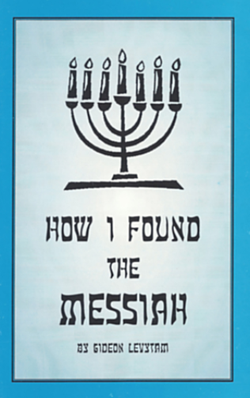
Follow Gideon Levytam's journey and discover how he was led by God, through a series of exciting circumstances, to find the One his people are still waiting for.
Past Episodes

Featured Offer
Follow Gideon Levytam's journey and discover how he was led by God, through a series of exciting circumstances, to find the One his people are still waiting for.
About Holy Scriptures and Israel
As time passed by, the Lord Yeshua took dear brother John Van Stormbroek to himself. The ministry of Holy Scriptures and Israel continued with additional development. In the early 1990’s, a weekly morning Bible class began which brother Gideon Levytam led regularly in the City of Toronto. This weekly open Bible class was held in the Willowdale assembly meeting hall. Eventually, a second mid-week evening Bible class was added. In April 2002, the need for an additional outreach Bible teaching meeting arose. We begun a Saturday (Shabbat) ministry meeting in which a systematic teaching of God’s word is presented to all who attend. Together we learn God’s Word, pray for each need and the salvation of Israel, and sing songs of worship unto our God, praising Him and our Lord Yeshua the Messiah.
In Mid 2004 we started to air on Joy 1250 Radio station a 15 minute Bible teaching program called "The Holy Scriptures and Israel" with Gideon Levytam. The broadcast teaches God’s word from a Hebrew Messianic perspective and has proved to be a blessing to many. It's now aired seven days a week. Our prayer is that many more of our Israeli people will have a clear understanding of who Yeshua is, why we all need him, and come to know him as their Lord and Messiah.
About Gideon Levytam
Contact Holy Scriptures and Israel with Gideon Levytam
426 Simcoe Street
Niagara-on-The-Lake
Ontario L0S 1J0
Canada
(905) 325-1234