

Hebrews 10:19-39, Part 2


Yeshua Is A Greater Sacrifice, Part 2
Guest (Male): Holy Scriptures and Israel is a ministry designed to share with the Jewish people the good news of the Lord Jesus Yeshua the Messiah and to instruct Christians on the Jewish roots of their faith. And now teaching God's word from a Hebrew Messianic perspective here is Gideon Levitan.
Guest (Male): The study of Hebrews chapter 10
Gideon Levytam: And to draw near because what's happened in the presence of God, he have dealt already with the question of sin. He have dealt already with the problems that we have and we have to draw near. We can draw near and notice it says here with a true heart. You know, what does that mean a true heart? An honest heart before the Lord. No pretension, no all kind of things that break fellowship. He knows our problem. He knows our self. Yesterday we just read John 2. We just finished the second chapter of John 2 and you know what?
Many people believe on his name, but Yeshua did not commit himself unto them because he knew all men. And he knew what was in man. He knew what was in the heart of man. And you know what? He knows what is in our hearts also as believers. We do not surprise him with the things that we do. We do not surprise him. He doesn't think and he says, oh boy, if I know that this person would be like that, I wouldn't have saved him. I wouldn't have saved him. He knows about us, but he wants us to draw near with a true heart telling him, Lord, you know everything about me.
You know my struggle with sin. You know the problems that I have, Lord. I'm telling you honestly, Lord, I want to get closer to you. I'm coming to your presence, Lord. I want to draw near with a true heart. And you know what? If we have sinned, if they sinned in our life, let's confess it. 1 John 1 verse 9, he give us a provision. If we confess our sins, he is faithful and just to forgive us and to cleanse us from all unrighteousness. If there is sin in my life, in your life, what we need to do is to tell it to the Lord, to confess it before him, but not to stay back.
Not to stay away from him, to draw near. That's the encouragement here. He says, let us. He doesn't talk about the unbelievers. We are talking about believers in Yeshua, believers in the Lord Jesus the Messiah. Let us draw near. And you notice when he says us, it's include himself. The reader and the writer. He's speaking about himself. Let us draw near with a true heart with a full assurance of faith. What is faith? In what? In a person to have assurance of faith in the Lord himself. And to have our heart sprinkled whether we sprinkling the blood, whether we sprinkling the water we have here.
It's not it doesn't talk about baptism here. It doesn't talk about that. It has nothing to do with baptism. It simply has to do with our hearts that are sprinkled by the blood of the Messiah from an evil conscience. And our bodies washed with pure water. And you know the Bible often is called as the water of the word. You remember in Ephesians 5 we have husbands love your wives as the Messiah loved the church and gave himself for her that he might sanctify her. And let me just read it properly where it says here that he might sanctify and cleanse it with the washing of the water by the word.
You know how we get cleanse? We judicially we are cleansed by the blood of the Messiah, but morally we are cleansed by the washing of the water by the word. You know we get very dirty very quickly. We live in this world. We watch television, we go places, we say things, we hear things, we do things, we getting dirty all the time. How can we get cleansed by the washing of the water by the word? The Lord Jesus you remember when he was in the upper room with his disciples, he washed the feet of the disciples and he took the basin with the water and he washed it with water and he cleansed it and it's speaking about a foot washing of the life of the believer being cleansed as he and she reading the word, speaking of the word, meditating about the word, encouraging each other with the word of God.
And that's why he says, let us draw near. Don't stay back. Come near. Get closer to the Lord. Don't stay far. And let me tell you you and I are either an encouragement to each other or you are discouragement. We are either a hindrance or help. When we come to the meeting, we have to ask ourselves the question, how did I spend the week before that? Have I been in the word? Have I read the my Bible? When I'm coming to the midst, am I coming to be an encouragement to the people of God? Am I an asset among the people of God whether it is here in the meeting or in everywhere wherever I am?
Am I a blessing to the people of God? That's the question. And that's what he's saying. He's encouraging them. He says, let us draw near. Don't stay back. Don't stay away, but draw near with a true heart. God knows it. Tell him everything. Tell him your issues and come closer. You're not going to surprise God. We are not going to surprise him. He knows that when you stay away and he knows that when we come close to him, it's far better to come closer to him, tell him our issue, but let us do that. The second thing that he tells us in verse 23, he tells us another let us.
The second let us is to hold fast to our confession of hope. I know it's used the word faith here in verse 23. Look what he says. Let us hold fast not the profession, but the confession of our faith which is actually our hope without wavering for he is faithful that promise. Here is the second thing that he is telling them not only let us draw near, but let us stand fast. Let us hold fast to our confession. What is our confession? You know our confession is that we belong to the Lord. That he we confess if thou shalt confess with thy mouth that Yeshua is Lord and believe in thine heart that God had raised him from the dead, thou shalt be saved.
Romans 10. Well, that is our confession. We confess that we belong to Yeshua. Let us stand fast on that. Let's not waver. I believe, I don't believe, he is yes. You know, let us hold for that. I mean, we know from scripture that he is the only answer for sin. We know that he saved us and forgave our sins. Let's hold fast to that. Now, I'm not saying that there may not come a time that we will be in weakness and lack of trust in God and self-confidence that we will not stumble. He going to help us.
We should not trust ourselves. We should have confidence in him. And that's why he says, let us hold fast the confession of our hope, the confession of our faith religious to hope in him without wavering for he is faithful. You notice what it says here. It doesn't say because you are faithful. It says for he is faithful because we are not always faithful. You know that. We are not always faithful the way we should be. But he is faithful. He is faithful and he promised I will never leave you nor forsake you. I will be with you up to the end of the age.
He is faithful in spite our unfaithfulness. Look at the history. You remember he's writing to Jewish believers and they always take them back to history of our people Israel. And you know Israel have not been faithful all alone in the journey of the wilderness journey, these 40 years of wilderness journey, but God was faithful to Israel. God took care of the nation. God's purposes came to pass even if Israel did not do the will of God, but God was faithful. These are verse in 1 Corinthians chapter 10 and verse 13 there is no temptation that is taking you such as is common unto men, but God is faithful who will not allow it, will not suffer you to be tested above what you are able to bear, but will with that temptation, with the testing also make a way to escape that you may be able to bear it.
God is faithful even if we have failed him and haven't been faithful to him. This is an amazing thought for us to get a hold of beloved brothers and sisters. And so he is inviting them. Let us draw near with a true heart. Verse 22 let us hold fast the confession of our hope in verse 23 without wavering. And then he continue in verse 24 and he gave them the third invitation. Look at this. And that is also very important, beloved. Let us consider one another to provoke unto love and unto good works. You see, brothers and sisters, apparently we have a problem.
Many times we provoke each other instead of to love to anger. Instead of stimulating each other to love one another, what we do? We provoking each other to anger or to wrath. You see, apparently it is not only a Jewish Hebrew Israeli problem. We see it throughout the age of history of the church of the Lord Jesus the Messiah. It started then and we see it today. We see it throughout the 2,000 years of church history that we often time provoking others instead of to love to anger. Instead of to grace and to good works to bad works and not to love and you remember what God told the Romans.
Romans where we read in the book of Romans the responsibility of believers towards even the nation of Israel. The church is responsible to provoke the Jewish people to jealousy. You remember what we read? It's found in Romans chapter 11. The responsibility that the church has is to provoke the nation of Israel into jealousy. This is important for the Christians to do then towards the nation of Israel. I say then have they stumbled that they should fall? Romans 11:11 God forbid. But rather that through their false salvation came unto you the Gentiles for to provoke them the Jewish people to jealousy.
You see Christians supposed to provoke Jewish people, the people of Israel to be jealous because of what they believe and who they believe upon. But also you and I as believers are responsible to provoke each other to love and to good works, not to provoke each other to anger, not to provoke each other to be upset, but to provoke each other to love. And you see that what he's saying in the third thing here in our chapter, the apostle is saying, let us consider one another, to consider each other, to be sensitive towards each other, to consider and not to impose upon others our self and our ways and our will, but to consider the other, to bring about out in our brothers and our sisters the love for each other, the love for the Lord, good works towards each other.
See good works do not save, but good works is coming out of a believer who love the Lord and love the people of God. Good works coming after a person is saved. And here he says, let us consider one another to provoke each other to love and unto good works. Three things he is inviting them to do. Draw near number one, hold fast confession of our hope number two, and let us consider one another in fellowship of love, love for the Lord, love for each other and unto good works. By the way, you notice that there are three words here that are very interesting, faith, hope, and love.
You see that? Verse 22 assurance of faith. Verse 23 confession of hope. Verse 24 provoking to love. You know, if you read in 1 Corinthians chapter 13, it's the love chapter. And you know what it says at the end verse 13 of 1 Corinthians 13 13 now abideth faith, hope, and love, these three. And the greatest of this is love. You see, there's only three things that we have really here in time now, faith, hope, and love. But you see what's going to happen? When we going to see the Lord, hope will vanish. We going to see him.
We don't hope to see him anymore. We going to see him. Faith when we are going to be with him, faith will become reality. We don't need to have faith anymore, but we going to see him and we going to be with him. But there was one thing that will always remain and this is love. Love in the presence of God throughout eternity, love in heaven, love in the eternal order. The love of God will be shed abroad in our hearts forever and ever as it is shed abroad in our hearts today as well. And so beloved, here is the invitation.
Now notice what he continued to do and he's pressing upon them in verse 25 when he inviting, when he gives us invitation, he says, listen, not forsaking the assembling of yourselves together as the manner of some is, but exhorting one another and so much the more as you see the day is approaching. You see what he's telling them? Don't forsake the assembling of yourselves together as it was then and it is now the manner of some. Some think that they don't need to come to a meeting where the people of God are gathered. They think that they can do with God on their own in the four doors and the four walls in their own home and they don't need to come to the meeting.
Now listen, I'm not going to condemn or judge anybody because sometimes I feel like staying at home. Don't feel like going to meeting for one reason or another. Discourage me may be coming through, maybe think of brother so and so, sister so and so, and the ritual here and this thing here and they feel like I rather stay at home and I'd be the best place for me. And you know what? Sometime it may be necessary to stay at home and to be quiet before the Lord. But you and I know very well some reasons that cause us not to come to the meetings.
You see, by the way, it's not a new story. It started then. He says, listen, not forsaking the assembling of yourselves together as the manner of some is. He was writing to them. There was some apparently from the Hebrew believers who did not come to the assembly meetings. You know, brothers and sisters, we cannot say I don't need the collective assemblies of the saints to be there. We cannot say that because biblically speaking God gave us various types of gathering of the people of God. And he gave us the responsibility of gathering together at the meeting place with other believers.
And you know it's not new because when Israel before the church began, God wanted his people to be around him. And what happened? He set up holidays and feasts and Sabbaths and all these things where he gathered the people around him. Make me a sanctuary, he said, that I may dwell in the midst of my people. He wants to be in the midst of the people. He delighted to be in the meeting where the people are. You remember we read in Luke when the hour was come, he sat down with his disciples. By the way, when he was at the meeting, it was on time.
The hour was come. He sat down. There's a time we need to come and just have a sense of the presence of the Lord. Even if we said very little next to nothing and we left the meeting and we knew we sang one song about Yeshua and we left the meeting and we sensed the presence of the Lord when they gathered saints together. You know what you going to do in heaven by the way? In heaven we are not going to sit everyone of us in his quarter and we say, wow, praise the Lord. I'm going to praise.
You know, we are going to be together surrounding him like we have in the book of Revelation, the 24 elders surrounding the throne and the Lord Jesus the Messiah going to be in the center. And we going to worship him. We going to praise him. We going to adore his name. We going to exalt him before God. We going to give him his rightful place in the midst of the saints. And that's what he want us to practice now, to begin with it now. It says, let us draw near, let us hold fast, let us consider one another, don't forsake the assembling of yourselves together as the manner of some is.
But notice now he said, but exhorting one another. And so much the more as you see that the day is approaching. Now I want you to also notice here in this verse, Hebrews 10:25. It doesn't say let us come to the meeting so you can only take, but it says let us come to the meeting so you can give, exhort the others, encourage the others, give something in a sense of a encouragement to our brothers and sisters instead of taking give. And I'm not talking about money here. I'm talking about give from your what you say with your attitude, with your behavior, with your conduct.
Give, encourage, exhort, instruct, be a blessing to the other. It does not say here that we are to come and to ask, what can I get? But what can I give? What can I put into the whole community of believers? How can I be a blessing to my brothers and sisters? You see, we are members of the body and everyone of us have a responsibility and a privilege. We have to put our shoulders into the work in any meeting. You know, you don't realize and I don't think anyone of us realize how important every part that each one of us does in our little fellowship here.
If one member is not there all of a sudden doesn't do his or her part all of a sudden the other has to take the load. And you know what they say usually in a local church, local congregation, it is 10 20% who does the work and the rest don't. Everywhere I go and you hear it is the 10 20% who put their shoulder into the ministry and the rest don't. And you know what we learn from that? It is a loss of everybody, not only the loss of those who don't do and don't encourage and don't as it says here not provoking the others and exhorting the others to bless them, the loss of everybody losing out of it.
When one member of the body doesn't function, the rest of the body had to depend the load come upon other members of the body. And it's it's in a family setting, it's in an assembly setting, it is in a job setting, it is everywhere. And you remember what if I'm correct, it is John Kennedy who asked in the United States, don't ask what America can do for you, but ask what you can do for America. The Lord Jesus says, don't ask what others can do for you, but ask what you can do for the body of the Messiah.
And that's how you built thing. That's how you have satisfaction in the soul when you have been a blessing to your brothers and sisters to the family of God. And so beloved now that I've spoken about this encouragement now, he gives us in the next verses 26 to 31. In fact, it's almost to the end of the chapter, but specifically in verses 26 to 31 he gives now in the book of Hebrews the fourth warning to the believers there. And you remember the first warning was in Hebrews 2 verses 1 to 4, do not neglect the word of God.
And then in the second warning was do not doubt the word of God. And then we talked about the third warning in Hebrews chapter 5 verse 11 to 6:20 and it was the necessity of grow up in the word of God. Now he's talking about do not despise the word of God. You know, there is like order of the way things are progressing. If you neglect the word of God, you will begin to doubt the word of God. And if you doubt the word of God, you will stop to grow up in the word of God.
And what's happened is the next step in this did you begin to despise the word of God. That's the way it's going to progress. You neglecting, then you doubting, then you not growing, you shrinking, and then you start to despise the word of God. And notice that I'm reading verse 26 to 31 after he says, having therefore boldness in verse 19 all the way to 25, now he says in verse 26, for if we sin willfully after that we have received the knowledge of the truth, there remaineth no more sacrifice for sins. But a certain fearful looking for of judgment and fiery indignation which shall devour the adversaries.
He that despised Moses's law died without mercy under two or three witnesses of how much sorer punishment suppose ye shall he be thought worthy who has trodden under foot the Son of God and has counted the the blood of the covenant where with he was sanctified an unholy thing and has done despite unto the Spirit of grace. For we know him that has said, vengeance belongeth unto me. I will recompense, saith the Lord. And again, the Lord shall judge his people. It is a fearful thing to fall into the hand of the living God. In those verses what we really see in other exhortation that the apostle exhorting the first century Hebrew believers and look what he does here.
Notice that he says that the believer cannot go on sinning without facing God's judgment. You know, you and I cannot go on live in sin willfully and not thinking that we will not face the judgment of God. And when we are talking about the judgment of God for a believer, we are not talking about eternal judgment. We are talking about judgment with respect to here and now. When it's come to our eternal judgment, we have already dealt with in the person of the Messiah when he died for us on the tree and when we accepted him.
And so he says in verse 26 and 27, for if we sin willfully after that we have received the knowledge of the truth, there remaineth no more sacrifice of sin. But a certain fearful looking or for judgment or fiery indignation which shall devour the adversaries. You see, sinning willfully is simply this is one saying, listen, I'm going to continue on with my lifestyle away from the Lord without submission to the Lord, without confession of sin, carrying on a lifestyle without self-judgment, without recognizing Lord, I need forgiveness, I need cleansing from this sin. I repent. And you see what happened?
You remember what happened to Israel? When Israel came out of Egypt, they were under the blood. They came. They killed the lamb. They were covered. They were under the blood. But who enter into the land? Only two have enter into the land from the initial people who have got out. Caleb, Caleb Joshua What happened to the rest of them? They died in the wilderness. Now I want you to understand they died physically. The lesson there is not dealing with the issue of their eternal separation from God, but they died physically. 1 Corinthians 10 make the very same comparison that we too are not to do what they did.
We too are not to have lack of trust in God. We too are not to sin willfully because God is going to judge us also. He will judge the believer as much as he judged the unbeliever. We are not exempt from the judgment of God. Let us remember that. And we need to remember that all the time because sometime we think that God is love and therefore because he's love, I can do as I please. I can do what I want. No, God is love, but also God is light. And that's why it says if we sin willfully after that we have received the knowledge of the truth.
And again, I want you to notice he used the word we. And none of us can say that the writer is not a child of God. And none of us can say that the writer can lose his salvation. We are not talking about here loss of salvation. We are talking about the judgment that God will impose upon individual who believe a child of God, who refuse to submit to God's will. And God will judge believers. And how he going to judge him? There are many ways. Sometime he might discipline us here in one way or another through experiences that we go through life.
But sometime he might remove a believer outside of this sin, outside of this world. You remember what happened in the book of Corinthians? Some of you are weak, some of you are sick, and some of you have fallen asleep. And he's not talking about that they took a nap. He's talking about that they died physically while they were still the children of God. God says, you are no good testimony for me here in this world. We read by the way in 1 John, there is a sin unto death. And that sin can be difference in every situation, to every person may be a different sin, but this is unto a physical death and not a spiritual death.
There is a sin that one may commit here in this world that the apostle said, I don't want you to pray for that. God is going to remove a believer out of this sin, out of this world because he's not a testimony for the Lord Yeshua the Messiah. So believers cannot go on sinning without facing God's judgment. And you can read it. It has to do with the physical death. 1 Corinthians 11:30, 1 John 5 and verse 16 deal with that special that particular part. Now verse 28 under the Mosaic law there were no sacrifices for deliberate and willful sins.
You see what he's saying in verse 28? He says this, he that despised Moses's law died without mercy under two or three witnesses. This is the physical death. And you see here again in Deuteronomy chapter 17 with two or three witnesses who have witnessed to the one who despised the law of Moses died without mercy. They were stoning them physically. They were stoned. We're speaking about physical death.
Guest (Male): You have been listening to the Holy Scriptures and Israel with Gideon Levitan. Gideon teaches God's word from a Hebrew Messianic perspective. For more information about this ministry, write to Holy Scriptures and Israel box 1411 Niagara on the Lake Ontario L0S 1J0 or visit our website at holyscripturesandisrael.com. You are also invited to Gideon's weekly Bible teaching on Fridays at 11:00 a.m. and 7:00 p.m. and Saturdays at 1:00 p.m. at Willowdale Christian Assembly Hall 28 Martin Ross Avenue in Toronto. Holy Scriptures and Israel is made possible by your prayers and financial support. If you would like to support the program, visit holyscripturesandisrael.com.
God bless you. Shalom Shalom.
Featured Offer
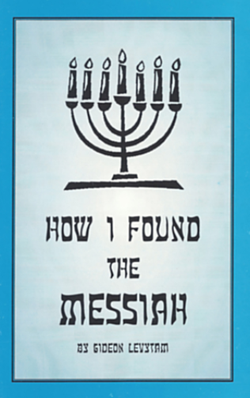
Follow Gideon Levytam's journey and discover how he was led by God, through a series of exciting circumstances, to find the One his people are still waiting for.
Past Episodes

Featured Offer
Follow Gideon Levytam's journey and discover how he was led by God, through a series of exciting circumstances, to find the One his people are still waiting for.
About Holy Scriptures and Israel
As time passed by, the Lord Yeshua took dear brother John Van Stormbroek to himself. The ministry of Holy Scriptures and Israel continued with additional development. In the early 1990’s, a weekly morning Bible class began which brother Gideon Levytam led regularly in the City of Toronto. This weekly open Bible class was held in the Willowdale assembly meeting hall. Eventually, a second mid-week evening Bible class was added. In April 2002, the need for an additional outreach Bible teaching meeting arose. We begun a Saturday (Shabbat) ministry meeting in which a systematic teaching of God’s word is presented to all who attend. Together we learn God’s Word, pray for each need and the salvation of Israel, and sing songs of worship unto our God, praising Him and our Lord Yeshua the Messiah.
In Mid 2004 we started to air on Joy 1250 Radio station a 15 minute Bible teaching program called "The Holy Scriptures and Israel" with Gideon Levytam. The broadcast teaches God’s word from a Hebrew Messianic perspective and has proved to be a blessing to many. It's now aired seven days a week. Our prayer is that many more of our Israeli people will have a clear understanding of who Yeshua is, why we all need him, and come to know him as their Lord and Messiah.
About Gideon Levytam
Contact Holy Scriptures and Israel with Gideon Levytam
426 Simcoe Street
Niagara-on-The-Lake
Ontario L0S 1J0
Canada
(905) 325-1234