

Esther 9:1 to 10:3, Part 2


The Victory of the Jews and the Feast of Purim Part 2
Guest (Female): Shalom! Holy Scriptures and Israel is a ministry designed to share with the Jewish people the good news of the Lord Jesus, Yeshua the Messiah, and to instruct Christians on the Jewish roots of their faith. And now, teaching God's word from a Hebrew Messianic perspective, here is Gideon Levytam.
Gideon Levytam: The study of Esther Chapter 9 and Chapter 10. You see, they didn't just lay hand on anyone. They didn't go and attack anyone, but they sought to attack back those that have hurt them, those that hated them according to verse 1, those that hoped to destroy them according to the first verse of Chapter 9.
God has somehow in a supernatural way, in His providence and divine design, put fear upon the enemies of the Jewish people, just like He have done it throughout history. Whether it is in the time when Israel came out of the land of Egypt, or whether it is the time in the whole human history, He put fear on the enemies of the Jewish people in order to stop them from continuing what they had intended to do.
It says in verse 3 that even the rulers have helped the Jewish people. It says, "And all the rulers of the provinces and the lieutenants and the deputies of the officers of the king, they helped the Jews because the fear of Mordecai fell upon them." Remember, Mordecai now became prominent and now he became second to the king. Haman has already been killed and hung on a tree, this wicked man, but now we find Mordecai becoming prominent and there was a fear of Mordecai.
In verse 4, Mordecai was great in the king's house and his fame went out throughout all provinces, for this man Mordecai waxed greater and greater. We read in Hebrew, it says, "Haish Mordecai holech v'gadol." He became greater and greater and greater, not in himself because he sought for that, but God in a supernatural way has placed him in that position.
Of course, it reminds us so wonderfully of Yeshua the Messiah that we read in Philippians Chapter 2, "Therefore God have highly exalted him and given him a name which is above every name, that at the name of Jesus, of Yeshua, every knee shall bow and every tongue will confess that Yeshua HaMashiach is Lord to the glory of God the Father."
The Lord in a supernatural way elevated Mordecai, protected His people, the Jewish people, and placed fear upon those that hoped to destroy the Jews, those that became the enemies of the Jews, that hated the Jewish people and sought their hurt.
It says in verse 5, "Thus the Jews smote all their enemies with a stroke of a sword and slaughter and destruction and did what they would unto those that hated them." In other words, if the Jewish people would not get the help of the Lord and the help of the leaders of the Persians, they would not be able to succeed. They would be the ones who would ultimately end up dying.
By divine design, the Lord helped them against their enemies. Note as from verse 6 to 10 of Chapter 9 of Esther, the slaying of 500 men in Shushan the city and all of Haman's 10 sons. Now, that is very interesting.
It says in verse 6, "And in Shushan the palace," Shushan is the capital city of Persia, "all the Jews slew and destroyed 500 men." And then it gives you the list in verse 7, 8, and 9, the names of the 10 sons of Haman: Parshandatha, Dalphon, Aspatha, Poratha, Adalia, Aridatha, Parmashta, Arisai, Aridai, and Vaizatha. All the 10 names that you have here.
Apparently, those 10 names had 10 meanings. There is a meaning to every one of these names and the meanings of those names definitely speak of pride, speak of selfishness, speak of the flesh that is existing in the heart of mankind.
In verse 10, it says the 10 sons of Haman, the son of Hammedatha, the enemies of the Jews they slew. But on the spoil, they laid not their hands. It is repeated again in verse 15 at the end, "But on the prey they laid not their hand." It's repeated once again in verse 16 at the end, "But they laid not their hand on the prey."
Immediately you start to ask the question, "Wait a minute, they have been successful in killing Haman, they have been successful in slaying his 10 sons, and yet they could take all their possessions and all what it's called here the spoil, but they didn't want to touch it. They didn't lay their hand on it."
Three times it's repeated in this 9th chapter of the Book of Esther and immediately the question is rising: Why? Why is it that the Jewish people of the time that they were in Persia did not want to touch anything that belonged to Haman the Amalekite? Even though they killed him and they killed his sons, they didn't want to touch all the spoil that they could take in their hands for themselves, for their possession.
Think with me for a moment. If we know biblical history and if we know Jewish history, remember, beloved brothers and sisters, that Haman is a descendant of Amalek. Amalek was the first nation that attacked the Jewish people, the Hebrews who came out of the land of Egypt. Amalek is a picture of the self, old, sinful nature that all men possess.
God said to the people of Israel through Moses, in fact, go with me to Exodus Chapter 17 for a moment. I'll read just the last verse. Listen to the word of the Lord. He said to Moses, "For he said, because the Lord has sworn that the Lord will have war with Amalek from generation to generation."
Amalek became a picture of the sin nature and God has constantly an enmity against Amalek. It is a picture of the sin nature and from generation to generation, there is constant fighting against Amalek until God is intending to destroy Amalek.
Because of this, we learn that in our lives as believers in Yeshua the Messiah, though we are born again, born from above, though we have a new nature, those that are in the Messiah Yeshua are a new creation. Old things have passed away, all become new, and we still have that old nature within us.
There is from generation to generation a conflict between the new man and the old man, the new nature and the old nature. The spirit lusteth against the flesh and the flesh against the spirit, and they are contrary to each other.
We find out immediately that Haman, a descendant of Amalek, is a picture of the sin nature and the enemy of God and God's people. The Jews defeated him with the help of God, they killed his 10 sons with the help of God, but they didn't touch anything that belonged to him. It suggests for us that they understood something about their biblical history.
Turn with me to 1 Samuel Chapter 15 also, please. And here I want you to notice the reason that these individuals understood why they are not going to touch anything that Haman and his sons have had. 1 Samuel Chapter 15, let me just read a few verses there.
Samuel said unto Saul, verse 1, "The Lord sent me to anoint thee to be king over His people, over Israel. Now therefore hearken unto the voice of the word of the Lord. Thus saith the Lord of hosts, I remember that which Amalek did to Israel and how he laid wait for him in the way when he came out from Egypt. Now go and smite Amalek."
Notice that God said through Samuel to King Shaul, "You go and you kill Amalek completely." Verse 3 says, "And utterly destroy all that they have and spare them not, but slay them both men and women and infant and suckling and ox and sheep, camels and ass." Everything that belonged to Amalek, completely destroy, including the little ones.
You might say, "How can God say this to Shaul, to the King of Israel?" Again, the spiritual lesson is that Amalek represents the sin nature and anything that comes out of this sin nature is a continuation of that sin nature represented by Amalek.
What do you think Shaul did, Saul the King of Israel? Instead of submitting to the Lord, what did he do? Verse 4, notice that. It says, "And Saul gathered the people together and he numbered them," and so on. Verse 5, "And Saul came to the city of Amalek and he laid wait in the valley."
Shaul said unto the Kenite, "Go, depart, get you down from among the Amalekites, lest I will destroy you with them." Verse 7, "Saul smote the Amalekite from Havilah until you come down to Shur that is over against Egypt."
He took Agag the king of the Amalekites alive and he utterly destroyed all the people with the edge of the sword. But notice what we read in verse 8 and on. Shaul, Saul, and the people spared Agag and the best of the sheep and of the oxen and of the fatlings and the lambs and all that was good and they would not utterly destroy it.
You see what King Saul did, the first King of Israel? Instead of listening to the voice of the God of Israel through Samuel, to destroy Amalek completely and all what belonged to him, they kept the king alive. They kept all the good things that they possessed and they took them for themselves and by doing so, he violated the word of God.
Because he violated the word of God, look what God said in verse 11, "It repenteth me that I have set up Saul to be a king, for he turned back from following me and he has not performed my commandment." And Samuel was grieved.
Shaul did not obey God. He kept back all what belonged to the Amalekite. He even kept Agag the King of Amalek alive. And by the way, this is how we get Haman in the Book of Esther. He is a descendant of Agag the king and he became an enemy of the Jews years later.
He sought to destroy all the Jewish people as we have it in the Book of Esther. It is so interesting to take a note and it was so vivid to see that so clearly, these Jewish people were not in the land of Israel, they were not in the city of Jerusalem, they were far away from the Lord spiritually.
But they understood in a time such as this, when they knew that they were going to be destroyed by the letter that Haman the wicked man sent and they were going to be destroyed on the 13th day of the month of Adar, somehow it's dawned upon them. Again, we don't have the mention of God here, not the mention of prayer, not the mention of Jehovah, nothing of that sort, but you see behind the scenes that God is working in their hearts.
They saw the necessity of destroying that one that is representing the flesh, this old sin nature, to put it where it belongs. In Chapter 9 and verse 10, notice we read there very clearly what they did, the 10 sons of Haman the son of Hammedatha they slew.
But on the spoil, they laid not their hand. They probably had a recollection of what happened historically to our Jewish people in the time of King Saul. Three times we read it in Esther Chapter 9, that they did not take of the prey, they did not lay their hand on it because King Saul had done it in the past and look what happened to him.
You can see, beloved brothers and sisters, that even though these Jewish people were far away from the Lord, yet they somehow have been awakened and alerted in their conscience and their hearts. Who knows what happened to many of them later on? We do not know, because the Book of Esther is going to be concluded very shortly, but perhaps many of them, maybe on an individual basis, have returned back to the Lord and back to the city of Yerushalayim.
That is exactly what happens in the life of believers today. Sometimes we as believers in Yeshua the Messiah do not live close to the Lord. We don't go to meetings, we don't read our Bibles, we don't pray, we don't mention the name of the Lord, we don't testify, and we live far away. Oh yes, I'm a believer, I go to heaven, the ticket has been paid for me.
The Lord says, "No, no, no, no, I didn't send my son to die for your sins so you can carry on in your own life and do whatever you want and live away from me. I sent my beloved son to die for your sins in order that you will live for me and enjoy fellowship with me and be a testimony for me here in this world."
He's awaking them and you can see it's so precious if you see the text. Can you imagine when you are going to be sentenced to death by the people who hope to kill you, and now God in a supernatural way helps you to survive and to have victory over your enemies?
Haman died, now his 10 sons have been killed. You can just take everything that belongs to them and so on and you say, "No, no, wait a minute, we are not going to take that. We leave it there, we have realized the supernatural preservation of the Lord in our lives."
Whatsoever things were written aforetime, the Apostle Paul said in Romans Chapter 15, were written for our learning. We need to take this passage and apply this spiritually, how we can learn from these experiences that the Jewish people have had historically.
Verses 1 to 10, the victory of the Jews in the very same days where the enemies' hope was to destroy them. Then verse 11 to verse 19 is a second section. Here we find the King Ahasuerus questioning Esther and giving her another opportunity to ask him for whatever she would want him to do for her.
I want you just to notice here from verse 11 and 12, the king heard the report. You notice that we read on the day the number of those that were slain in Shushan the palace was brought before the king. Somebody came and said, "Hey, King Ahasuerus, do you know what? 500 people died in Shushan the capital city."
The king now comes to Esther in verse 12 and he says to Esther, after the report about the 500 men that were killed, "Now what is thy petition and it shall be granted unto thee? Or what is thy request further and it shall be done?" He is now, remember, Esther is his wife, asking her what more do you want.
I've already sent the letter, we have already seen that on the 13th day of the month of Adar, 500 people were killed in Shushan the palace, 10 of the sons of Haman were killed, what more do you want? This is only in Shushan. We're going to read in a moment what happened away from Shushan the palace.
Esther has two requests. In verse 13, she says, "If it please the king, let it be granted to the Jews which are in Shushan to do tomorrow, this is on the 14th day of the month of Adar, also according to this day's decree."
"Let us have another day to protect ourselves from the enemies. As it was today, also give us tomorrow." Let Haman's sons be hung upon the gallows. Now, they're already dead. Now, Queen Esther asks Haman's sons to be hung on trees to be a presentation to all that seek to kill the Jewish people, to show to all the consequences of seeking to destroy all the Jewish people.
You have to realize, beloved brothers and sisters, that Agag the Amalekite, Haman and his sons represent evil. It represents that which leads God's people away from Him, that which is against God. It's a representation of the flesh and its sinful ways. It must be put to death.
That which is of the flesh is flesh and that which is of the spirit is spirit. God has no pleasure in our sin nature whatsoever. When Nicodemus, Nakdimon came to Yeshua by night and asked him, "How can I receive salvation?" Yeshua told him, "You must be born again. That which is born of the flesh is flesh, that which is born of the spirit is spirit. You must be born from above, born again."
You have to be saved. You have to receive forgiveness from Yeshua the Messiah, otherwise, you will die in your sins. So, it is so important to display before all that which of the flesh that has no good whatsoever.
Those 10 sons of Haman, spiritually speaking, represent also that which is going to happen in a future day. If you remember, the Book of the Revelation talks about the tribulation period when the Antichrist will rise and he will rule over 10 kings. And those 10 kings are being represented here, that ultimately God will destroy the enemies of the people of God.
In the future day, beloved brothers and sisters, during the tribulation age before the kingdom, there will be risen those 10 kings which will follow the beast, the Antichrist. They will hand to him their power and they will seek to destroy and to harm the Jewish people specifically during the tribulation period.
The Lord Yeshua the Messiah, they make war with the Lamb and the Lamb, this is Yeshua HaMashiach, He shall overcome them and ultimately destroy them. Why? Because He is Lord of lords and King of kings, Adon HaAdonim and Melech HaMlachim.
What we really see here again is something that we must see as we study the whole scope of the word of God, that these 10 sons of Haman represent his continual ways of evil against God and God's people.
Esther, with the little bit of understanding that she has, she says, "No, no, no, they're not only dead, but I would like them to be displayed publicly." And you remember what we read in the Book of Deuteronomy, "Cursed is the man that is hanging on the tree." It points us spiritually speaking by typology, by a picture lesson, by an application, it points us to the Antichrist, the counterfeit Messiah of the tribulation period and those 10 kings that will hand over to him their power against God and God's people.
In the next verses in Esther Chapter 9, after the two requests of Esther, verses 14 and 15, Esther's request is granted. Then verses 16 to 19, there is the two days of rest that the Jewish people finally have had.
It says in verse 14, "And the king commanded it so to be done, and the decree was given at Shushan and they hung Haman's ten sons." Verse 15, "And the Jews that were in Shushan gathered themselves together on the fourteenth day of the same month of Adar and they slew additional three hundred men at Shushan, the capital city of Persia."
The 13th and the 14th are kind of linked together.
Guest (Female): You have been listening to Holy Scriptures and Israel with Gideon Levytam. Gideon teaches God's word from a Hebrew Messianic perspective. For more information about this ministry, write to Holy Scriptures and Israel, Box 1411, Niagara-on-the-Lake, Ontario, L0S 1J0, or visit our website at holyscripturesandisrael.com. You are also invited to Gideon's weekly Bible teaching on Fridays at 11:00 AM and 7:00 PM and Saturdays at 1:00 PM at Willowdale Christian Assembly Hall, 28 Martin Ross Avenue in Toronto. Holy Scriptures and Israel is made possible by your prayers and financial support. If you would like to support the program, visit holyscripturesandisrael.com. God bless you. Shalom, shalom.
Featured Offer
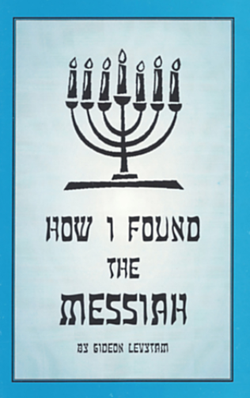
Follow Gideon Levytam's journey and discover how he was led by God, through a series of exciting circumstances, to find the One his people are still waiting for.
Past Episodes

Featured Offer
Follow Gideon Levytam's journey and discover how he was led by God, through a series of exciting circumstances, to find the One his people are still waiting for.
About Holy Scriptures and Israel
As time passed by, the Lord Yeshua took dear brother John Van Stormbroek to himself. The ministry of Holy Scriptures and Israel continued with additional development. In the early 1990’s, a weekly morning Bible class began which brother Gideon Levytam led regularly in the City of Toronto. This weekly open Bible class was held in the Willowdale assembly meeting hall. Eventually, a second mid-week evening Bible class was added. In April 2002, the need for an additional outreach Bible teaching meeting arose. We begun a Saturday (Shabbat) ministry meeting in which a systematic teaching of God’s word is presented to all who attend. Together we learn God’s Word, pray for each need and the salvation of Israel, and sing songs of worship unto our God, praising Him and our Lord Yeshua the Messiah.
In Mid 2004 we started to air on Joy 1250 Radio station a 15 minute Bible teaching program called "The Holy Scriptures and Israel" with Gideon Levytam. The broadcast teaches God’s word from a Hebrew Messianic perspective and has proved to be a blessing to many. It's now aired seven days a week. Our prayer is that many more of our Israeli people will have a clear understanding of who Yeshua is, why we all need him, and come to know him as their Lord and Messiah.
About Gideon Levytam
Contact Holy Scriptures and Israel with Gideon Levytam
426 Simcoe Street
Niagara-on-The-Lake
Ontario L0S 1J0
Canada
(905) 325-1234