
Esther 6:1-14, Part 2


The Man Whom the King Delighted to Honor Part 2
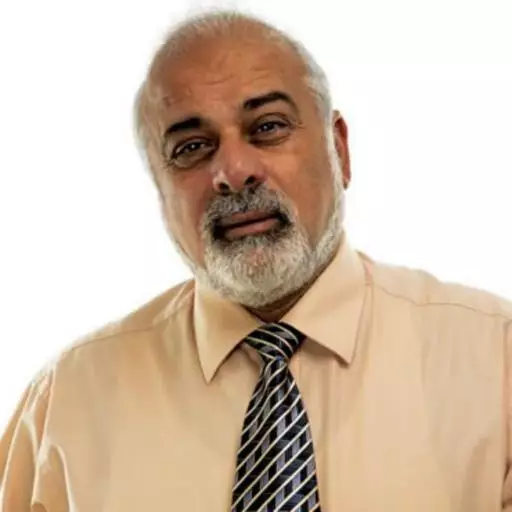
Guest (Male): Shalom. Holy Scriptures and Israel is a ministry designed to share with the Jewish people the good news of the Lord Jesus, Yeshua the Messiah, and to instruct Christians on the Jewish roots of their faith. Now, teaching God's word from a Hebrew Messianic perspective, here is Gideon Levytam.
Gideon Levytam: The study of Esther Chapter 6. Notice that verse 3, the king said, "What honor and dignity has been done to Mordecai for this?" Did he receive any reward? He didn't. What honor did he receive? What dignity was given unto him? Notice what they said, the servants in verse 3b, those that serve him and minister to him, there was nothing done for him. He was not rewarded.
Mordecai could have probably complained. He could have said, "I've helped, I've saved the king, and I've done so much for him, and look, nobody cares." Mordecai was not this kind of a man. We never hear of him complaining about the fact that he didn't get the reward. Even though he should have been in Jerusalem, he should have been in the right place where God called our Jewish people to be, he was not. Yet you could see that he is in a sense waiting on the guidance that God would ultimately direct him and the Jewish people in a faraway land, away from the Promised Land.
Mordecai, now his name was mentioned. What had been given to him? Nothing. Nothing had been given to him. Now, brothers and sisters, notice in the next verses, we see Haman's pride and the king's command beginning here with verse 4 with the early arrival of Haman to the very court of the palace of King Ahasuerus. Look at this. It seemed to be a coincidence. Again, we know very well there are no coincidences. Here is the guidance of the Lord. The very same time that the king is asking what has been done, what honor did Mordecai receive, at the very same time Haman is coming to the king.
Notice that it says in verse 4, the king asked him immediately, "Who is in the court?" Now Haman, according to verse 4, he came into the outer court of the king's house to speak unto the king to hang Mordecai on a gallows which he had prepared for him. Notice that. The king could not sleep, and then God in a supernatural way allowed him to open the book of the chronicles of the Persians and to read about the events that happened a few years by a Jewish man by the name of Mordecai who saved his life. At the very same time, this Haman, this evil Haman, he already prepared a gallows, a tree for that Jewish man by the name of Mordecai, and he's coming to the king to ask him to hang this man upon the gallows.
You and I might say, "What a coincidence. It's happened by chance." No, it's not, beloved brothers and sisters. There is no such thing by chance. Everything that happened to us in our life, there is a reason for that. Every challenge, every difficult thing, every easy thing, every problem, every benefit, all things work together for good to them that love God, to them who are called according to His purpose. There is a purpose in the life of God's people. There is a purpose in the life of the Jewish people. There is a purpose in the life of the believers in Yeshua Hamashiach. There is a purpose that God has for you and me.
Haman is coming to ask the king to hang Mordecai. Yet the king is asking what have been done to the man by the name of Mordecai who saved my life. In other words, look at this, there's a real dilemma here. The king wants to lift up Mordecai who saved his life. Haman wants to destroy this very same man by the name of Mordecai the Jew. Notice in that very same verse 4, the king said, "Who is in the court?" Haman was there, and Haman really wanted to speak to the king to hang Mordecai on that gallows.
The Hebrew word for gallows simply means a tree. A high tree, 75 feet high, the tree that he prepared for the destruction of Mordecai the Jewish man. Well, we can see now, brothers and sisters, the sovereignty and the providence of God because as Haman approaches the king, the mind of the king right now is not about Haman's desires, but it is to reward the man that just a few years ago saved his life. In verse 5, the king's servants said to him, "Behold, Haman is standing in the court."
The king said, "Let him in." Notice by the way that Haman had some sort of permission to come closer to the king that none else could even come. Even the Queen Esther herself said, "I cannot approach the king. There is a sure death if I'm coming to stand before him unless he brings forward the scepter and allow me to touch it and accept me. But there is not the possibility for anyone to approach the king." We read that Haman had this privilege. He could come to the outer court, and then the servants said unto the king, "Haman is here. He's standing there outside in the court."
The king said, "Let him come in." He's drawing Haman now to come to listen to him. He wanted to tell him something. Remember that, and now notice that the very beautiful verse in verse 6, we find out that so Haman came in. The king said unto him, "Haman, what shall be done unto a man whom the king delights to honor?" Finally, he realized that Mordecai did not receive the honor that he deserved after he saved his life. He's asking his counselors, second next to him, this man by the name of Haman, "You tell me. I want to honor someone. What shall be done unto the man whom the king delights to honor?"
When I think about that verse, I often think about our blessed Lord Yeshua, Jesus the Messiah. If there is anyone that God would love to honor, it is His beloved Son. He loves to honor His Son Yeshua the Messiah. You remember he said to him in Psalm 110:1, "Sit down at my right hand until I make thine enemies thy footstool." The Lord Yeshua the Messiah gave so much glory to God the Father that from heaven at his baptism he said, "This is my beloved Son in whom I'm well pleased. I found all my delight."
At the mountain of the Transfiguration, Matthew Chapter 17, we find out God is saying, "This is my beloved Son. Hear him. That's the one that I delight to honor." We read in Philippians Chapter 2, because Yeshua humbled himself, therefore God had highly exalted him and given him a name which is above every name, that at the name of Yeshua every knee shall bow and every tongue shall confess that Jesus the Messiah, that Yeshua Hamashiach is Lord to the glory of God the Father. You can see the picture here, beloved brothers and sisters. The king delights to honor the man, and the man from Nazareth, from Natzeret, who was born in Bethlehem and lived in Natzeret and died in Jerusalem is the man whom God delights to honor.
We find out that the question may arise, "What shall be done unto the man whom the king delights to honor?" But you see immediately on the other side, beloved brothers and sisters, the pride that existed in Haman. Haman is a representation of the old sinful nature. He is the one who is following the Satan, Satan and his ways. Notice what he says in verse 6. It's very interesting because in verse 6 Haman is now thought in his heart. He doesn't say it publicly. He is in his heart. Jeremiah, the prophet of Israel, said the heart of man is desperately wicked. Who can know it?
In Hebrew, the word comes from the word Yaakov, Jacob. It means supplanter. The human heart, our own heart, is so deceitful. Haman doesn't say it publicly at this point of time because he's before the king. The king, he wanted to sway him like he already tricked him before to kill all the Jewish people. He's already claimed to promise him all the money that he has in order to help him to destroy the Jewish people. Now he says in his heart, "To whom would the king delight to do honor more than to myself?"
Remember last week in our ministry meeting, it is me. It is mine. It's what belongs to me, what I have done. Remember when he showed to his own family, he said, "Look at the things that happened to me, my riches and my children and my promotion." He showed this to all the neighbors. Remember what the Bible teaches out of the abundance of the heart the mouth speaks. In his heart, he said, "The king wants to honor someone? Who could it be unless me? It couldn't be anybody else. It is only me. It's myself."
Brothers and sisters, listen. This is the reality of the human heart. We have to remember that. It's us. It's me. All of us, each one of us can say, "Lord, you know my own heart how deceitful I am." Listen how the Book of Proverbs, turn to Proverbs Chapter 16 with me please. It's the king of Israel, Solomon, who said in Proverbs Chapter 16 and verse 18, "Pride goeth before destruction, and a haughty spirit before a fall." Look at Proverbs Chapter 18 and verse 12, "Before destruction the heart of man is haughty, and before honor there is humility."
Go to Chapter 29 of the Book of Proverbs and verse 23, "A man's pride shall bring him low, but honor shall uphold the humble in spirit." You see, beloved brothers and sisters, throughout the Scripture we find out that pride comes before destruction. Here it was this man by the name of Haman who prided himself and says, "Who is the one that the king delights to honor more than me, than myself? It could only be me. It could never be anybody else. It is only me."
It was Jacob, the servant of the Lord, who wrote in James Chapter 4 and verse 6b, "God resists the proud, but he gives grace unto the humble." Peter later on says, "Humble yourself under the mighty hand of God, and he will lift you up." You see, brothers and sisters, in Haman we see the satanic influence. We see the sinful nature that exists in humanity. That's why it was so necessary for the Messiah, for the Mashiach to come and give his life as a ransom for many because we by nature, unless the Lord will deal with us and judge our sins in the person of his son, the Messiah, none of us will ever be able to stand before him.
Haman in his pride said to the king, "To whom would the king delight to do honor more than to myself? It's me. I deserve to get this honor." Now notice, brothers and sisters, in these next verses, 7 and 8 and 9, Haman gives an answer to the king. He has a plan. Haman doesn't only want to kill the Jewish people. He really wants to take the place of the king. He wants to dethrone the king if he could and take the place of the king. Notice what he does. He doesn't tell it to the king, but in his own heart, deceitful heart, that's his plan.
Haman answered the king, "For the man whom the king delights to honor, let the royal apparel be brought which the king uses to wear, and let the horse that the king sitteth upon, and the crown royal which is set upon the king's head. And let the apparel and horse be delivered to the hand of one of the king's most noble princes, that they may array the man whom the king delights to honor, and bring him on horseback through the street of the city, and proclaim before him, 'Thus shall it be done unto the man whom the king delights to honor.'"
Very nice advice. In other words, you see, he says, "King, listen. You really want to honor someone? It's in my heart, but let me tell you what you're going to do to him. You know what? Let the king give your very own clothes that you wear as the King of Persia. King, not only this, you will put this man that the king delights to honor on the very horse that the King of Persia is sitting. And even more, King, let's put upon him the crown that you wear." Now, if somebody's going to come to you with this kind of a counselor and says, "Listen, you want to honor somebody? Give him your clothes, give him your crown, give him your everything, and you just stay aside. Just let him be the one that everybody's looking at."
Notice verse 9, he says, "Not only so, give the apparel, give all things to one of the princes, and then let him go all along the street of Shushan the capital, and let him proclaim, 'Thus it shall be done unto the man whom the king delights to honor.'" If there is not here a usurping of the place that belong to the king, you cannot find it anywhere else except one place specifically if you turn with me to Isaiah please, the prophet Isaiah Chapter 14. Look at this. In Isaiah Chapter 14, we see Lucifer, the son of the morning, Satan himself who did the very same thing who wanted to dethrone God and take the place of God as the God of the whole universe.
We read, notice that and I'm reading now in Isaiah Chapter 14, I read from verse 12, "How art thou fallen from heaven, O Lucifer, son of the morning! How art thou cut down to the ground, which didst weaken the nations! For thou hast said in thine heart," notice, just like the heart of Haman in his heart, Lucifer said in his heart, "I will ascend into heaven, I will exalt my throne above the stars of God: I will sit also upon the mount of the congregation, in the sides of the north: I will ascend above the heights of the clouds; I will be like the most High."
You see, Haman is really, you might say, a messenger of Satan. He does the very same thing what Satan did long before. Haman is just really following, like many in this world, following Satan and his ways, rejecting God, rejecting the place that God had given to him, rejecting all what God is offering to him, and in fact not only want to oppose God, but also dethrone God and take the place of God. This is so deceitful. Brothers and sisters, why do you think there are the conflict that existing today in the world in which we live in?
We live in this world with all the problems that exist in this world, the conflict between the living God, the Creator of the heavens and the earth, and Satan, Lucifer, who is leading astray humanity. He became according to Scripture the prince of the power of the air. He is called in 2nd Corinthians Chapter 4 the god of this world, small 'g,' who blinded the mind of them that believe not lest the glorious gospel of our Lord Yeshua the Messiah should shine unto them. That's what we find out here. There's a conflict that's existing.
God has a plan to send the Messiah through the Jewish people in order that the Messiah will become the sacrifice, the one that will forgive sin for mankind, and yet Lucifer, his plan is not to allow the Messiah to come to this world, not to take the place as a sacrifice for humanity. That is exactly what Satan is seeking to do. There is a battle. There's a battle of the gods, the living God and the false gods of this world headed up by Satan himself. So in pride, Haman is saying to the king, "You know what I suggest to you, King? Take the garments that you wear as a king. Take your horses you ride upon and take your crown. Give it to the man whom the king delights to honor, namely me Haman, and then let him be parade around the city of Shushan the capital city of Persia and let it be declared to all the people of Persia, 'Thus it shall be done unto the man whom the king delights to honor.'"
You see, brothers and sisters, in a future day, when our blessed Lord Yeshua going to come and take his rightful place here in this world, every knee will bow, every tongue will confess that Yeshua Hamashiach is Lord to the glory of God the Father. He will receive that which the King, namely God, the true and living King, desire to give him. He desire to give him a place as a ruler, as a King of kings, as Lord of lords. He will be the one that ultimately will receive that which belong to him. Not Satan and Satan's followers, nor any not the Antichrist, the counterfeit Messiah, but the true Mashiach, Israel's Messiah and the Savior of the world. He's the one whom the King desire to honor.
In the next verses, beloved brothers and sisters, verses 10 and 11, notice that honor is now going to be given to the right man here. Not to Haman the evil one, the hater of the Jews, but to Mordecai the Jew who was really the one who helped the king, saved his life. It must have been a great shock to Haman. Can you imagine when you think of yourself so much and you say, "Boy, I'm the one that the king must want to honor me," and now the king is going to tell him, "Wait a minute, Haman." Notice verse 10, he says, "And the king said to Haman, 'Make haste, take the apparel and the horse as thou hast said, Haman, and do even so to Mordecai the Jew.'"
Can you imagine, beloved brothers and sisters? It must have been like a knife came into his heart. He was preparing the tree. He's done. He's on the way to tell to the king, "Let's hang Mordecai. He's no good for you. Let's hang him." And how the tables turn over. You see again, brothers and sisters, it is so important. If there's any lesson we learn from that, it's so important for us to ask the Lord to help us not to be proud because pride comes before a fall. It is so important for us not to exalt ourselves and to think much of ourselves because the Lord will teach us a great lesson.
There is no need to pride yourself if the Lord knows our hearts, know our weakness, know our sinful nature, and He is able to deal with His own people and to deal with mankind. The king now told Haman, notice it's the first time in this chapter when even the king now call him Mordecai the Jew, Mordecai the Jew. Notice that the king said to Haman, "Make haste. Don't delay. Make haste. Take the garments, take the horse and go quickly and do it, no, not to you Haman, but to Mordecai the Jew."
Notice by the way, I've made a note out of it that by now many times we see that he got very bad advice. But here you can see that he's starting to discern who Haman really is. Haman told him, "Take the royal apparel, take the royal horse and take the royal crown." But the king does not give the royal crown. He only tell him take the royal apparel and take the horse, but you don't read of him giving the crown. Why? Because he know very well, "Wait a minute, this Haman that gave me all this advice all along, the guy want to take my throne. He want to become king. He want to dethrone me."
The king started to see. He says, "Listen, I might be foolish, but I'm not that foolish." You see what I mean? He's starting to discern. There's something not kosher with this man by the name of Haman. So he says, "Okay, Haman. You take the apparel, you take the horse and you go do this very thing to Mordecai the Jew that sitteth at the king's gate. Let nothing fail from all that you have spoken." Here you can see how the tables turn over. The lesson from this, beloved brothers, for us all is that we need to learn that we are not always can carry on and do wrong things.
Payday come one day. In other words, we cannot just carry on and be proud and carry on in our own way and reject God's ways and God's will. God is really saying, "Listen, I'm going to correct that one day. You will see that I will allow in your life some things to happen in order to fix things up for you." Sometimes the Lord allow us in our own life to experience disappointments. Sometimes the Lord allow to humble us because He knows very well that we were priding ourselves. We thought, "I'm the captain of my ship. I'm the pilot of my plane. I can do my own thing." Remember the song, "I Did It My Way"?
The Lord going to say, "No, no, no. You will have to learn that My way, God's way is the better way." Haman with all the exaltation, he was promoted and he had all this, and now there's a final time when he would think that the king delight to honor him. All of a sudden he finds out it's not you, Haman. It is Mordecai the Jew. You can see the hand of God, the sovereign hand of God, the providence of God. "You go, make haste, do this unto Mordecai the Jew. Don't let nothing fall out of all that you have said." This is in verse 10.
In verse 11, you see the humility of Haman. Notice three things Haman does. Then took Haman the apparel and the horse, and number one, he arrays Mordecai. He clothed him. Number two, he brought him and set him on the king's horse. And number three, notice that, he pulled him throughout the city of Shushan, and he proclaimed loudly for everyone to hear, "Thus shall it be done unto the man whom the king delights to honor."
Guest (Male): You've been listening to the Holy Scriptures and Israel with Gideon Levytam. Gideon teaches God's word from a Hebrew Messianic perspective. For more information about this ministry, write to Holy Scriptures and Israel, box 1411, Niagara-on-the-Lake, Ontario, L0S 1J0, or visit our website at holyscripturesandisrael.com. You are also invited to Gideon's weekly Bible teaching on Fridays at 11:00 AM and 7:00 PM and Saturdays at 1:00 PM at Willowdale Christian Assembly Hall, 28 Martin Ross Avenue in Toronto. Holy Scriptures and Israel is made possible by your prayers and financial support. If you would like to support the program, visit holyscripturesandisrael.com. God bless you. Shalom, shalom.
Featured Offer
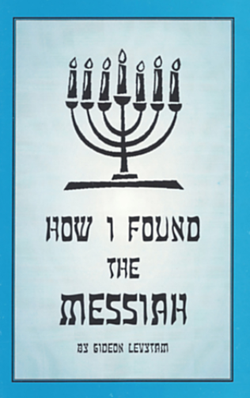
Follow Gideon Levytam's journey and discover how he was led by God, through a series of exciting circumstances, to find the One his people are still waiting for.
Past Episodes

Featured Offer
Follow Gideon Levytam's journey and discover how he was led by God, through a series of exciting circumstances, to find the One his people are still waiting for.
About Holy Scriptures and Israel
As time passed by, the Lord Yeshua took dear brother John Van Stormbroek to himself. The ministry of Holy Scriptures and Israel continued with additional development. In the early 1990’s, a weekly morning Bible class began which brother Gideon Levytam led regularly in the City of Toronto. This weekly open Bible class was held in the Willowdale assembly meeting hall. Eventually, a second mid-week evening Bible class was added. In April 2002, the need for an additional outreach Bible teaching meeting arose. We begun a Saturday (Shabbat) ministry meeting in which a systematic teaching of God’s word is presented to all who attend. Together we learn God’s Word, pray for each need and the salvation of Israel, and sing songs of worship unto our God, praising Him and our Lord Yeshua the Messiah.
In Mid 2004 we started to air on Joy 1250 Radio station a 15 minute Bible teaching program called "The Holy Scriptures and Israel" with Gideon Levytam. The broadcast teaches God’s word from a Hebrew Messianic perspective and has proved to be a blessing to many. It's now aired seven days a week. Our prayer is that many more of our Israeli people will have a clear understanding of who Yeshua is, why we all need him, and come to know him as their Lord and Messiah.
About Gideon Levytam
Contact Holy Scriptures and Israel with Gideon Levytam
426 Simcoe Street
Niagara-on-The-Lake
Ontario L0S 1J0
Canada
(905) 325-1234